![[#1] SISTEMA NERVOSO AUTÔNOMO PARASSIMPÁTICO E SIMPÁTICO: Diferenças anatômicas | MK Fisiologia](https://i.ytimg.com/vi/7OIIYv2oXJw/maxresdefault.jpg)







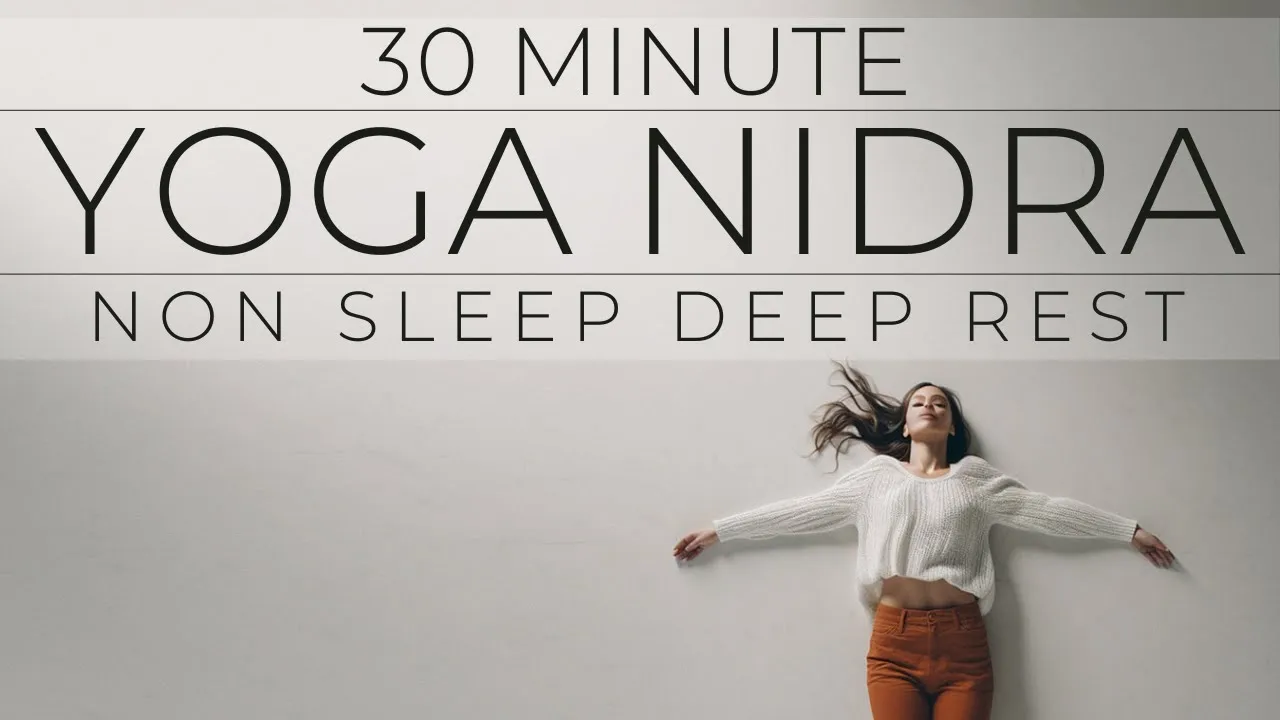













Non-Sleep Deep Rest (NSDR) is a 20-minute protocol developed by Dr. Andrew Huberman that allows individuals to voluntarily shift their nervous system from a stressed, thinking state to a deeply relaxed state by combining controlled breathing (deep inhales through the nose followed by slow, pursed-lip exhales) with directed attention to specific body sensations. The technique works by leveraging the brain's ability to control perception—specifically directing attention to body parts through an imagined spotlight visualization—thereby slowing heart rate and inducing relaxation without requiring actual sleep. This practice can restore mental and physical vigor, partially offset the negative effects of insufficient sleep, and improve sleep quality when practiced regularly.
20-Minute Non-Sleep Deep Rest Protocol for Mental and Physical Restoration
Added:ANDREW HUBERMAN: Welcome to this 20-minute non-sleep deep rest protocol.
Non-sleep deep rest is a powerful tool that can allow you to control the relaxation state of your nervous system and your overall state of mind.
It can restore mental and physical vigor, and it can be done any time of day or night.
It can even partially offset the negative consequences of getting too little sleep.
Non-sleep deep rest takes advantage of the fact that specific forms of breathing place us into a state of deep relaxation by slowing our heart rate down.
It also takes advantage of the fact that we can control our perception-- that is, which sensations we are focused on.
Sensations are simply the conversion of physical events in the world into a language that our body and brain can understand.
It's a process by which things like photons of light, mechanical pressure on our skin, sound waves, and so on, are converted to electrical and chemical signals in our neurons, or nerve cells.
Perception is simply the sensations that we happen to be focused on at a given moment.
And perception is an incredible aspect of our nervous system.
We can't directly control what sensations are around us and inside of us, they are just there.
But we can control our two kinds of perceptions.
One kind of perception is called exteroception, and is when we pay attention to things around us beyond the confines of our skin.
The other type of perception is called interoception, and it's when we pay attention to things at the level of the surface of our skin and inward, inside our body.
With non-sleep deep rest, you can shift your brain state from one of thinking, stress, planning, from anticipation of any kind, positive or negative, to one of pure sensation and deep relaxation.
It's very simple to do.
You'll want to do this protocol seated or lying down.
So if you're not already seated or lying down, please do so now.
You'll also want to close your eyes.
So if your eyes aren't already closed, please close them now.
Throughout this protocol you'll want to breathe normally, unless instructed to do otherwise.
One pattern of breathing you'll be asked to do is to Inhale deeply, ideally through your nose.
But if you can't do it through your nose, inhale through your mouth.
Try that now.
Inhale deeply through your nose, and then exhale all of your air through your mouth.
Let's do that again.
Inhale deeply through your nose and then exhale completely through your mouth.
And as you exhale, exhale through thinly pursed lips as if through a small straw.
Let's repeat that two more times.
Inhale deeply through your nose, and then exhale completely through thinly pursed lips.
One more time.
Inhale deeply through your nose, and then exhale completely through your mouth through thinly pursed lips.
Breathing in that way, that is, inhaling deeply through your nose and then exhaling completely through the mouth through thinly pursed lips, is known to slow your heart rate down and relax your nervous system.
Feel free now to simply breathe normally.
Now, in your mind's eye, imagine yourself standing over yourself, looking at your body which is seated or lying down, and imagine holding a flashlight or a spotlight and directing it at your feet.
Focus your attention on whatever it is that your feet happen to be in contact with.
It could be socks, sandals, shoes, or merely the air.
It doesn't matter.
Focus your attention specifically on the bottoms of your feet, and try to perceive whatever it is they are sensing.
They could be tingling.
They could even be numb.
It doesn't matter.
Now imagine expanding that spotlight to include the tops of your feet, your shins, your calves.
Expanding that spotlight further to include your thighs, your hamstrings, and up to your waist.
Now, with your entire lower body illuminated inside the beam of light from that spotlight, inhale deeply through your nose or through your mouth.
And then exhale completely through thinly pursed lips until your lungs are empty.
Repeat that twice more, and each time as you exhale, imagine your lower body sinking down about a centimeter into whatever surface you happen to be in contact with now.
Now continue by breathing normally.
Inhale deeply.
And as you exhale, imagine your body sinking another centimeter into the surface you are lying or sitting down on.
As you inhale, remember to have your belly expand ever so slightly.
And as you exhale, your stomach will fall ever so slightly.
As you breathe in this manner, continue to imagine the spotlight illuminating your entire body.
As you Inhale, you can imagine that spotlight getting slightly brighter.
And as you exhale, imagine the spotlight getting slightly dimmer.
Continue to inhale and to exhale while imagining your body sinking down.
Now pay attention to the muscles of your face.
And as you continue to breathe normally, try to relax the muscles of your face-- at first only slightly.
And then with each subsequent breath, relaxing the muscles of your forehead and face more and more.
Now, regardless of the environment you're in, try to listen to sounds within that environment.
Whatever happens to be surrounding you, try to hear it.
Perhaps you can only hear the sound of your own breathing.
Perhaps there are noises in the room.
Regardless of the sounds you hear, tried to focus on them.
Now you will breathe in the same manner you breathed before, with a deep inhale through your nose until your lungs are full.
And then a slow, complete exhale through slightly pursed lips.
Let's repeat that again.
Inhale through your nose until your lungs are full.
Then exhale slowly through your mouth with slightly pursed lips.
Now, in your mind's eye, try to imagine your body again illuminated by a spotlight.
Imagine looking down at yourself, and your entire body is illuminated by that spotlight.
Dim that spotlight in your mind by about 50%.
And as you do so, deliberately relax the muscles of your legs.
Then deliberately relax the muscles of your hands, sensing your palms, wrists, and fingers.
Continue to breathe normally.
And in your mind's eye, dim the spotlight 50% further still so that the image of your body in your mind's eye is barely a silhouette.
Now, in your mind's eye, make the spotlight brighter.
Try to see any portion of your body in your mind's eye-- your hands, your arms, your torso, your feet.
No matter if you see one or all of these parts, try to see them as if you are staring down at yourself.
Now move the spotlight to your abdomen and focus your attention on whatever it is your abdomen is sensing.
As you inhale, your stomach should move out slightly.
And as you exhale, it should sink down.
Expand the spotlight to include your upper abdomen, your chest, your neck.
And now in your mind's eye, imagine that spotlight is expanding to include your arms as well.
Continue to breathe normally.
Now focus your perception on whatever surface your back happens to be in contact with-- a shirt, a chair, a sofa.
Whatever surface it happens to be contacting, focus on that contact now.
Simply bring your attention and your perception to those points of contact.
And as you do so, inhale deeply again through your nose or through your mouth.
And then as you exhale, imagine your back and your upper body sinking about a centimeter into whatever surface they happen to be in contact with.
Now move the spotlight to include your face, the top of your head, and the back of your head.
And as you continue to breathe normally, focus your perception on relaxing the muscles of your face.
And as you continue to breathe normally, see if you can extend the duration of your exhales ever so slightly.
And now in your mind's eye, expand the spotlight downward to include your neck, your chest, your arms, your abdomen, your waist, your legs, and down to your feet.
Imagine yourself looking down at your own body, illuminated inside of the spotlight.
And in your mind's eye, deliberately dim that spotlight.
Make the illumination less intense.
Inhale deeply again through your nose or through your mouth.
And then exhale completely through thinly pursed lips.
And as you do so, imagine your entire body sinking into the surface it's in contact with.
Now, while continuing to breathe normally, move your toes ever so slightly.
You'll notice that you are in control of your nervous system.
You can direct your perceptions and your actions.
In doing so, you'll notice that you are in control of your nervous system, meaning you direct your perceptions and your actions.
Move your ankles and bend your knees just the slightest bit.
You can move your upper body from side to side, your head from side to side, or even nod just slightly.
Now move your hands.
Lift your arms just a tiny bit, then set them down again.
And now, whenever you are ready, slowly open your eyes.
And as you do so, you'll notice that normally your nervous system is bombarded with sensory information, mostly visual information, which you have eliminated during this non-sleep deep rest protocol.
As you have now experienced, you are in control of your perceptions.
Controlling your perceptions is simply directing your attention to specific sensations, and you control which sensations you perceive by directing your attentional spotlight to whatever part or parts of your body that you choose.
This reflects the remarkable power of the human brain.
You can direct your actions, your perceptions, and you can do so in order to bring about deep relaxation.
You can also do that to achieve heightened states of alertness or attention to any sensation outside of you, or within you.
Non-sleep deep rest protocols such as this one can help you restore your sense of mental and physical vigor, can partially offset the effects of not getting enough sleep, and can also help you get better at falling and staying asleep.
It can be done any time of day or night when you feel you need a mental and/or physical reset.
Thank you for joining me for this non-sleep deep rest protocol brought to you by Huberman Lab and AG1.
Up Next

Andrew Huberman's Evening Routine: Science of Sleep Supplements
@tkppodcast
285.7K views•2023-07-19

Triumph of Orthodoxy Icon: Byzantine Art & History Explained
@BenCallan
2.1K views•2024-08-06
Tap Water Safety: Endocrine Disruptors and Filtration Methods
@HubermanLabClips
1.4M views•2023-10-27

Game of Thrones Opening Credits: A Cinematic Analysis
@gameofthrones
46.3M views•2011-04-18
Related Study Plans & Knowledge Roadmaps
Structured learning paths in General & Interdisciplinary Studies