



























Tap water contains disinfection byproducts (DBPs) and fluoride that can negatively impact thyroid hormone function and reproductive health, even at standard concentrations; however, inexpensive filtration methods such as pitcher filters ($80-$100) or countertop systems ($200-$500) can effectively remove these contaminants while preserving beneficial minerals like magnesium and calcium, making tap water safe for consumption.
Tap Water Safety: Endocrine Disruptors and Filtration Methods
Added:Basic understanding of the human endocrine system, including hormones, glands, and receptor binding mechanics.
Fundamental concepts in chemistry, specifically chemical solutions, solubility, and concentration measurements like parts per million (ppm) or parts per billion (ppb).
An introductory knowledge of toxicology, including how toxins enter the human body and the difference between acute and chronic exposure.
Overview of standard municipal water treatment processes and how typical public water infrastructure operates.
In-depth analysis of advanced physical and chemical water purification technologies, such as reverse osmosis, nanofiltration, and activated carbon block mechanisms.
The study of specific classes of endocrine-disrupting chemicals (EDCs), such as PFAS, phthalates, bisphenols (BPA), and their bioaccumulation pathways in organisms.
Environmental policy and regulatory frameworks, focusing on the Safe Drinking Water Act (SDWA) and the EPA's process for setting Maximum Contaminant Levels (MCLs).
Investigation of the ecological impacts of endocrine disruptors on aquatic ecosystems, wildlife reproduction, and biodiversity.
1.4M views25.8Klikes18:48Original Release: 2023-10-27
Let's talk about tap water.
And here I have to take a deep breath, not a deep gulp, but a deep breath because in researching tap water and what's contained in tap water in different regions, not just in the US but around the world, I confess the picture is a pretty scary one.
I want to be clear, I'm not somebody who naturally orients towards fear or conspiracy theories.
However, in researching tap water for this episode by way of looking at the peer-reviewed research, meta-analysis, reviews, specific research articles where specific hypotheses were tested, and in talking with experts in toxicology and so on, it's a pretty grim picture, frankly, when one looks at what's contained in most tap water and whether or not the compounds that are contained in tap water are present in sufficient concentrations to negatively impact our health.
And the bad news is that much, if not all tap water, believe it or not, much if not all tap water contains things that are bad for the biology of our cells.
There is a silver lining, however, and the silver lining is that very simple steps that are very inexpensive can be used to adjust that tap water to make it not just safe to drink, but that makes it perfectly fine to drink.
So that's the good news, and we'll get to that in a moment.
If you are somebody who is interested in whether or not tap water contains things like endocrine disruptors, hormone disruptors that can negatively impact reproductive health in males or females or both, there's a wonderful review, wonderful because it's so thorough.
Although the news isn't great, it's very thorough, which is great, which is entitled "Endocrine Disruptors in Water and Their Effects on the Reproductive System".
This is a review from 2020 that analyzes water from a bunch of different sources within the world and essentially focuses on a few key components.
First of all, it focuses on the concentration of minerals that is magnesium and calcium within water.
Many people don't realize this, but so-called hard water.
Sounds terrible, right?
But hard water is water that contains magnesium and calcium, which turns out to be a good thing.
Some water contains more magnesium and calcium.
Other water contains less.
They looked at the presence of magnesium and calcium because that is going to impact the pH of water.
In general, the higher concentrations of magnesium and calcium in water, the higher the pH.
That is, the more alkaline that water is.
And the lower levels of magnesium and calcium, the more acidic or lower pH that water tends to be.
The other thing that this review addresses is the concentration of so-called DBPs, dog bulldog porcupines, DBPs, which are disinfection byproducts contained in water.
So obviously, local governments, the government wants your drinking water to be clean.
They don't want contaminants in it.
They don't want sewage in that water.
They don't want chemical contaminants that are going to make people immediately sick, so they treat water.
Water treatment plants treat water with disinfection products and those disinfection products create things called disinfection byproducts.
And the presence of those DBPs or disinfectant byproducts can strongly impact the pH of water by way of changing the concentrations of magnesium and calcium.
Put differently, I do believe that governments are trying to provide people with clean water, but in doing so, oftentimes, we'll introduce things to that water that are not good for us.
Now, it's very clear that DBPs can cause endocrine disruption in ways that are not good for reproductive health.
I did a very long, in fact, four and a half hour episode on fertility and vitality.
That was male and female fertility, by the way, and vitality.
That, again, you can find at hubermanlab.com that talks about all the biological processes involved in the generation of healthy eggs and sperm and creating a healthy embryos, implantation embryos, and so forth.
It's very clear that DBPs have been shown to disrupt ovarian function, spermatogenesis, and fertility outcomes, even at concentrations of DBPs that are present in drinking water that comes from the tap.
Now, does that mean that you shouldn't drink tap water?
Well, the answer to that is a it depends.
What does it depend on?
Well, it depends on several things.
First of all, I highly recommend that everybody go online and put in your ZIP code and ask for a water analysis of water that comes out of the tap in that ZIP code.
This is something that is readily available online, at least to my knowledge.
And unfortunately, there's no specific one site that I can send everyone to to get an in-depth analysis of the drinking water that comes out of your tap.
However, I highly recommend that you go online and put in your ZIP code or municipal area code and figure out whether or not your water contains X amount of DBPs or Y amount of DBPs.
Now, of course, you're going to get a bunch of values back and unless you're a toxicologist, probably not going to know what those values mean.
But what you're really looking for is whether or not there are high, low, or moderate levels of fluoride in that drinking water.
Why do I say that?
Well, there are studies that show that the concentration of fluoride in drinking water is of particular concern for the thyroid hormone system of the body.
Now, thyroid hormone has a lot of different roles in brain and body, and thyroid hormone is very important for everything from metabolism to levels of energy.
When thyroid levels are disrupted or if thyroid receptors are disrupted, it can lead to depression.
When thyroid hormones are optimized, it can lead to optimal mood, if there is such a thing.
But in other words, it helps keep your mood elevated.
It relates to everything from sleep to reproduction.
Thyroid hormone is involved in many, many things including bone health and tissue health generally.
So essentially every biological process in your body is impacted by thyroid hormone.
And there's a study that I'd like to highlight which was published in 2018 and the title of the study is "Impact of Drinking Water Fluoride on Human Thyroid Hormones".
This was a case control study so this is not an extensive analysis of many individuals.
However, what it shows is that fluoride negatively impacts thyroid stimulating hormone and so-called T3 levels.
So you have thyroid hormone T3 and T4.
Even in the standard concentrations that are present of, and here's an important number, 0.5 milligrams per liter, okay?
So if you can get a hold of the fluoride concentrations in your tap water and find out whether or not the concentrations are at, below, or exceed 0.5 milligrams per liter, what you'll find is that even just 0.5 milligrams per liter of water can disrupt thyroid function and this is going to be a particular concern for people to have familial, so genetically related thyroid issues, or that are concerned with keeping your thyroid hormone levels healthy, which I think is everybody.
So I am telling you that you should try and get a hold of some data about the water that comes out of your tap if you intend on drinking tap water, and probably even if you don't, just know what's in your drinking water.
Your local government should provide that information and/or it should be readily available online.
And in particular, I think it's worthwhile to address how much fluoride is present in your drinking water.
Again, I don't want to create a lot of scare.
I'm not trying to trigger fear here.
I do think, however, by way of reading this review, by way of reading the paper that I just referred to a moment ago, again, links to these are going to be provided in the show note captions, that there is extensive evidence that elevated levels of fluoride in drinking water are simply not good for us.
Now, that could open a whole discussion of why fluoride is in our drinking water in the first place at all.
But leaving that aside, it seems to me that most everybody should know how much fluoride is in their drinking water.
And ideally everybody, yes, everybody is filtering their drinking water.
Now, that raises the question of how best to filter drinking water.
And that brings an answer of it depends on a couple of things.
First of all, how healthy or unhealthy do you know yourself to be?
Okay, so if you're somebody who has no health issues, you have plenty of vigor, you're sleeping well at night, you have no autoimmune disease, you're not aware of any health concern, minor or major, well then, perhaps you're somebody that doesn't want to filter your water.
I would argue that why wouldn't you employ some very low or even zero-cost approach to filtering your water?
There are going to be other individuals who are suffering particular ailments of brain or body or both that absolutely should be filtering their drinking water if they're getting their drinking water from their tap because it is pretty well established now that tap water contains a lot of these disinfectant byproducts as well as, in most cases, exceeding the threshold of fluoride that we know to be healthy for us.
How should you filter your tap water?
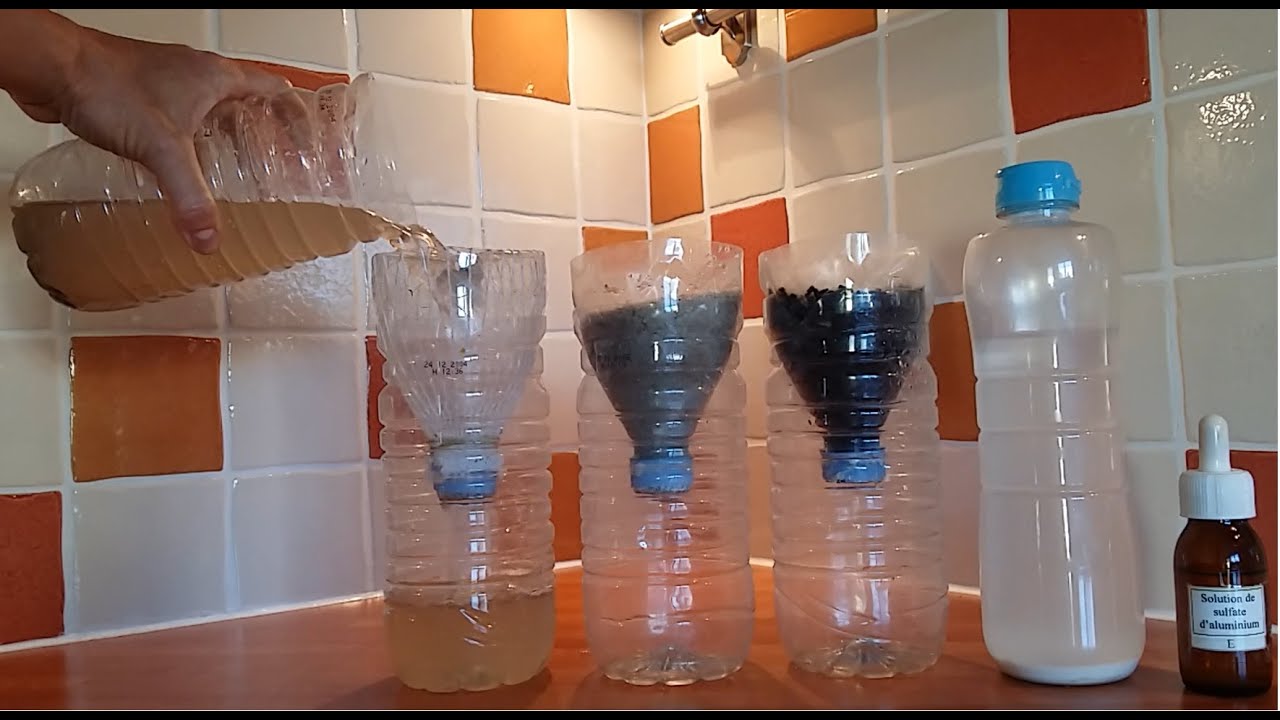
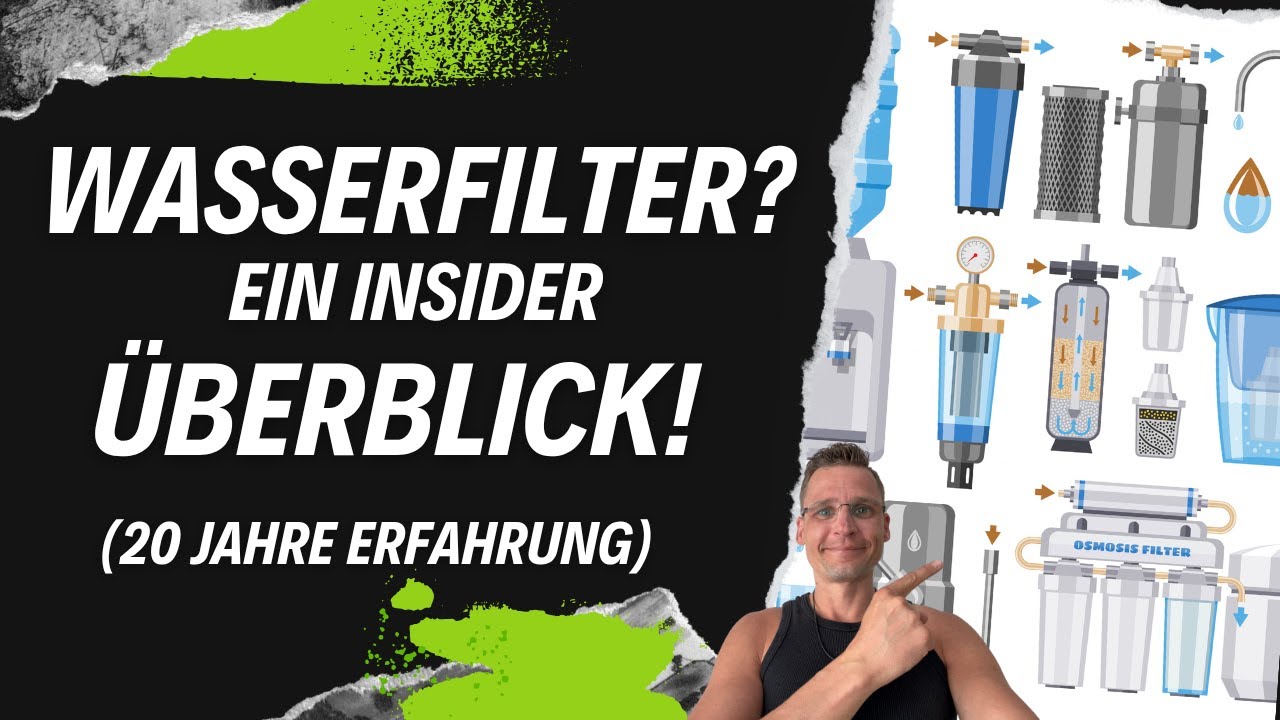
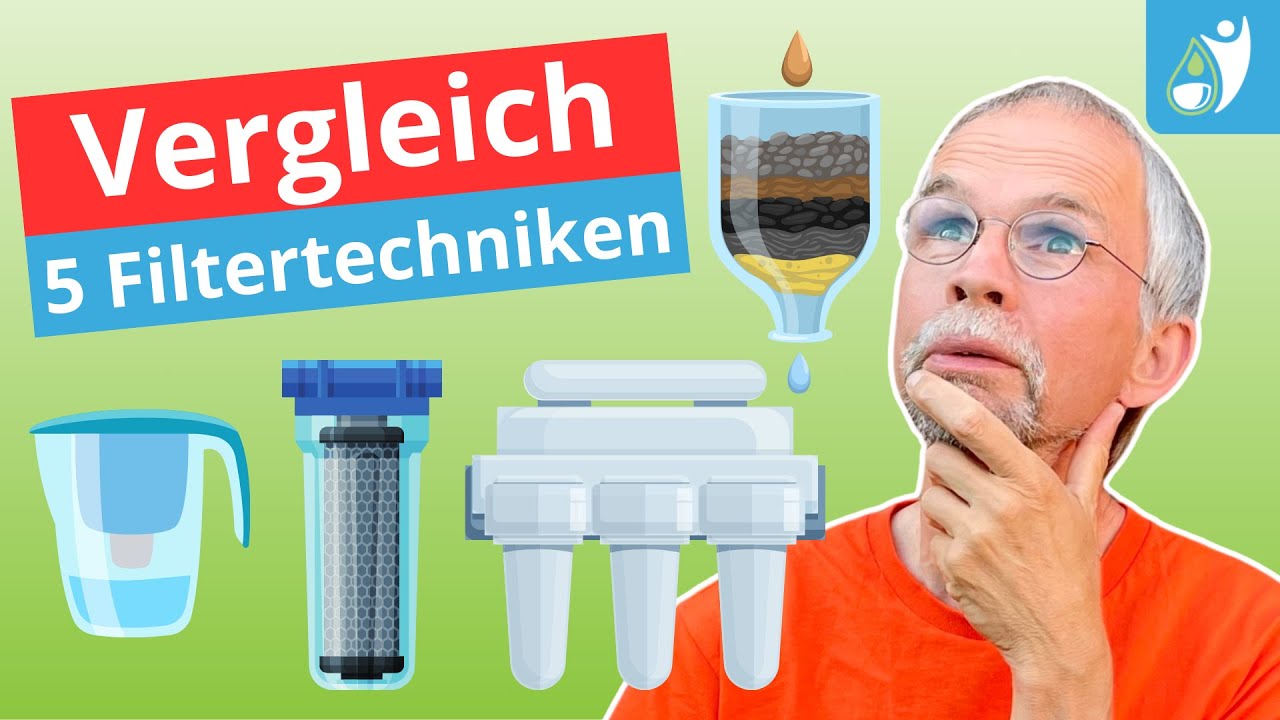
Well, you have everything ranging from the so-called Brita type filters.
These are going to be carbon type filters or other filters that you essentially put over a container or a compartment where you can pour the water over it and it goes into the compartment below.
Will those work?
Are they sufficient to filter out the disinfectant byproducts?
The general answer is yes, provided you change the filters often enough.
However, it is not thought, unfortunately, not thought that they filter out sufficient fluoride.
So what I highly recommend is depending on your budget that you go online and you search for at-home water filters that can filter out fluoride.
There are a number of straightforward and inexpensive tools to do that.
And here I don't have any relationship to any of the water filters or things that I'm going to mention now.
I want to be very clear about that.
There's no brand coder affiliation here.
I'm simply trying to direct you to resources that will allow you to filter your tap water for it to be more safe for you to consume in a way that meets your budget with the understanding that people have very different disposable incomes.
So the range of costs here is going to be pretty tremendous.
I just want to get that out of the way first.
You know, there are water filters that you can use repeatedly.
So these are what I'll refer to as pitcher filters that are less than $100.
Now, keep in mind that that's a one-time purchase, except for the replacement of the filters, which fortunately, doesn't have to be done too often.
So there are different filters.
I'll provide a link to one that I found that is, at least by my read, of the lowest possible cost.
So this is the so-called Clearly Filtered water pitcher with Affinity filtration.
So this is a filter that can adequately remove fluoride, lead, BPAs, glyphosates, hormones, and some of the other harmful things that are contained in most tap water.
Again, I do realize that for some people, even an 80 US dollar cost is going to be prohibitive.
But do realize that what you're doing here is you're purchasing a unit that can be used repeatedly over and over.
The reason why it's lower cost than some of the different filtration approaches that I'll talk about in a moment are that you can't really put all the drinking water that you would use, say, for an entire week or for an entire month in one pitcher.
You're going to have to repeatedly pour water into the pitcher in order to filter it.
Now, as I mentioned before, the range on water filter costs for filters that can adequately remove fluoride and all the other things that you want out of your top water is immense.
In fact, you can find, you know, whole house water filters that are, you know, $2,000 or more.
Again, these are going to be filters that are going to be in your garage or in a laundry room that are going to basically pull from the piping system of your house and deliver purified water.
Technically, it's not purified, but that's removing these contaminants and fluoride from all the sinks in your house.
So you could effectively drink from any or all sinks in your house.
That's what explains the higher cost.
I think most people are probably not going to have the disposable income or have the opportunity to include one of these whole house filters.
Although if you do have the means and it's important to you, you could do that.
And then there are going to be what I would call intermediate systems.
So systems that cost somewhere between 200 and $500.
Probably one of the more common ones or popular ones is a so-called Berkey filter system.
These are filter systems that, again, remove the things that you want removed from your tap water and they can do it at higher volumes.
And they're typically countertop units.
They don't require any plugin, typically, or they only require brief plugin and electricity and they're going to filter out many, many liters or tens of liters of water so that you can always have access to that clean filtered water anytime or day or night without having to pour over into the pitcher.
So I mention these different options because again, I realize that people have different levels of disposable income.
As far as I know, there's no tablet or simple mechanism that can be purchased as a transportable, you know, pill that you can just simply throw in water and remove the contaminants.
If anyone is aware of one that can adequately remove fluoride and other contaminants, please put in the comment section on YouTube.
That'd be the best place so that I and everyone else can see it.
But hopefully the mention of the different filtration systems that I mentioned will give you some choices that I would hope would fall within the range that one could potentially afford.
An important note about filtration, just as in our body, there are mechanisms to signal mechanical changes and chemical changes that occur in our gut and our brain, et cetera, elsewhere.
And in general, both mechanical and chemical changes are signaled across the body to invoke different changes whether or not those are, you know, a response of the immune system or to make us more alert or more asleep, et cetera.
So too filtration capitalizes on mechanical and chemical filtration.
What I mean by that is when you run a fluid, water or any other fluid through a filter, those filters are doing two things.
They are physically constraining which molecules can go through by creating portals, pores that allow certain size molecules to go through and not others.
And almost always, they contain certain chemicals themselves, right?
Those filters have been treated with certain chemicals that neutralize certain other chemicals, okay?
So you may be wondering how when you filter water, you know, magnesium and calcium can get through but fluoride doesn't.
And that's because these filters have been very cleverly designed in order to neutralize fluoride or to prevent large molecules such as sediment and dirt, which is kind of easy to imagine being filtered, but also to allow certain small molecules like calcium, which is small-ish, or magnesium, which is small-ish, to still pass through into our drinking water.
And this is wonderful because what it means is that by filtering our water using any of the methods that we talked about before, you're still going to get whatever magnesium and calcium was present in that water while still adequately removing the fluoride and other disinfectant byproducts.
Now, what if you can't afford any of those options?
Okay, well, here you have an interesting zero-cost option.
It's not as good as the other ones at filtering that water but it is an option and I do think it's important to give options to people who don't have any disposable income for the purpose of filtering their water, which is to draw a gallon or five gallons or maybe even more tap water out of the tap and put it into some container, some vessel.
So it could be one gallon, five gallon, 10 gallon container and then to let that tap water sit for some period of time to allow some of the sediment to drop to the bottom.
Now you might say, well, there's no sediment.
There's nothing contained in that tap water and isn't fluoride diluted in the water?
And indeed, the answer to that is yes.
However, there is some evidence that letting tap water sit out at room temperature and outside the pipes that deliver that water can help remove some, not all of the contaminants in that water.
If however, you are filtering the water using any of the methods that I talked about a few moments ago, you do not need to do this, okay?
I realize there's a whole world out there of people who insist on putting their water in the sun or only keeping it in certain containers and putting it out for a few days before they ingest it.
That, to me, seems a bit extreme.
If you want to do that, be my guest.
But I don't think most people need to do that.
However, I do believe that for people who have zero disposable income to devote to paying for any kind of filtration system for their tap water, that taking that tap water and putting it into some container at room temperature and keeping it room temperature for a half day or a day or more, and then pouring off the top two thirds of that water into another container and consuming the water from that second container is going to remove some, not all of the contaminants that one would need to be concerned about.
And here I should mention something that I neglected to mention a few moments ago.
If you're going to do this zero-cost option and let the water sit out for a bit, you would want that water to sit uncapped.
Sorry, I should have mentioned that before.
Uncapped, of course, trying to keep things from falling into that water.
In fact, you could even put a little bit of cloth above it.
So you don't want things falling into that water but you want certain things to be able to evaporate off.
And you also want some of the sediment to drop down.
And the reason why this process of letting water sit out would work at all is because many of the contaminants contained within water are not present because of the source of that water or even the treatment of that water but rather because of the pipes that that water arrives to your glass or the pot that you have from, okay?
And here again, there is an infinite number of variables.
So some people are living in buildings for which the pipes are very, very old, but very, very clean, believe it or not.
Some people are living in newer buildings and structures that have new pipes, but for which the seals between those pipes contain things that are not good for you to consume.
So by letting water sit out for a while, you are able to remove some of the contaminants present within the pipes of your home and the building and even the pipes that lead to your home or apartment.
Now, some people get really obsessed with this whole tap water thing and really want to find out all the details about the pipes and what sorts of, you know hard metals and how much magnesium and how much calcium are present in their water.
There are ways that you can test your drinking water for those sorts of things.
Most people, I realize, including myself, are simply not going to do that.
If you want to know what I do, I tend to drink water that is filtered through one of these lower cost filters.
Or if I'm going to be consuming a lot of fluid, I will drink certain kinds of fluid that later I'll tell you, I've been doing an experiment for the sake of this episode looking at so-called molecular hydrogen water, which sounds very fancy and esoteric and almost a little wacky, but it turns out has largely to do with the amount of magnesium and calcium and the pH of that water.
So if you are somebody who has a very low budget or simply just wants to spend a very small amount of money and try and still drink tap water, there is absolutely a way to do that safely.
But it does require a few of these steps.
[MUSIC PLAYING]
Up Next

21:21
Water Treatment: Slow Sand Filter Theory Explained for Civil Engineers (Unit 6) | Prashant YT | BE Civil | PU
@prashantyt1999
9K views•2024-01-19

12:54
Triumph of Orthodoxy Icon: Byzantine Art & History Explained
@BenCallan
2.1K views•2024-08-06

20:51
20-Minute Non-Sleep Deep Rest Protocol for Mental and Physical Restoration
@HubermanLabClips
2.5M views•2024-04-26

1:42
Game of Thrones Opening Credits: A Cinematic Analysis
@gameofthrones
46.3M views•2011-04-18
Related Study Plans & Knowledge Roadmaps
Structured learning paths in General & Interdisciplinary Studies
general-studies
Elevator Engineering: History, Physics & Cities
01From Hoists to Safety Brakes: The Dawn of Vertical Lift
02Hydraulic vs. Traction: The Engineering Physics of Elevators
03Modern Speed, Safety, and Algorithms
+ 2 more learning modules
12h5 modules
Explore Roadmap
general-studies
Rubber: Material Science, History & Geopolitics
01Origins of Natural Rubber & Mesoamerican History
02The Chemistry of Natural Rubber & Vulcanization
03The Geopolitics of the Rubber Boom & Colonization
+ 2 more learning modules
12h5 modules
Explore Roadmap
general-studies
Containerization: Evolution, Logistics & Trade
01Ancient Trade & Bulk Cargo: Amphorae to Barrels
02The Industrial Revolution & Cardboard Packaging
03The Containerization Revolution: Malcom McLean
+ 2 more learning modules
12h5 modules
Explore Roadmap
general-studies
Textile Tech: Evolution, Labor & Global Impact
01Pre-Industrial Textiles: Handloom & Cottage Industry
02Mechanization: The Spinning Jenny to the Power Loom
03The Factory System & Global Labor Transformation
+ 2 more learning modules
10h5 modules
Explore Roadmap