
















Nuclear meltdowns occur when a loss-of-coolant accident causes fuel rod temperatures to rise beyond safe limits, leading to zirconium alloy cladding failure, hydrogen gas production, and eventual core meltdown forming radioactive corium that can breach containment; however, modern nuclear reactors incorporate multiple safety systems including airtight containment structures, emergency core cooling systems with boron-infused water, and passive safety mechanisms that enable natural circulation cooling without human intervention or external power, significantly reducing meltdown risk compared to older reactor designs.
Nuclear Meltdown Risks and Prevention: A Technical Analysis
Added:Fundamental principles of nuclear fission, chain reactions, and the role of neutron moderators.
Basic components of a nuclear power plant, including fuel rods, control rods, primary coolants, and containment structures.
The concept of decay heat and why nuclear fuel continues to generate heat even after the fission reaction has been shut down.
Basic principles of thermodynamics and fluid dynamics related to heat transfer and cooling systems.
In-depth analysis of historical nuclear accidents, specifically Chernobyl, Three Mile Island, and Fukushima Daiichi, to understand specific failure modes.
The design and engineering of Generation IV and inherently safe nuclear reactors, such as molten salt or pebble-bed reactors.
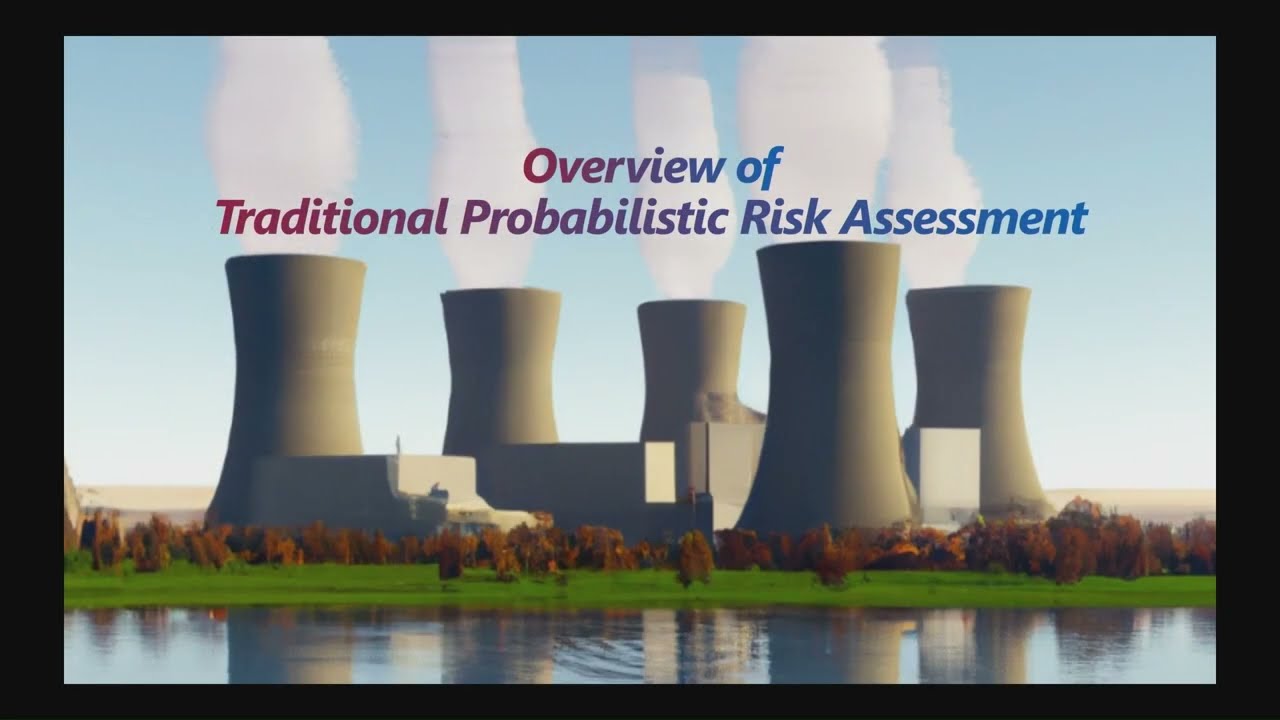
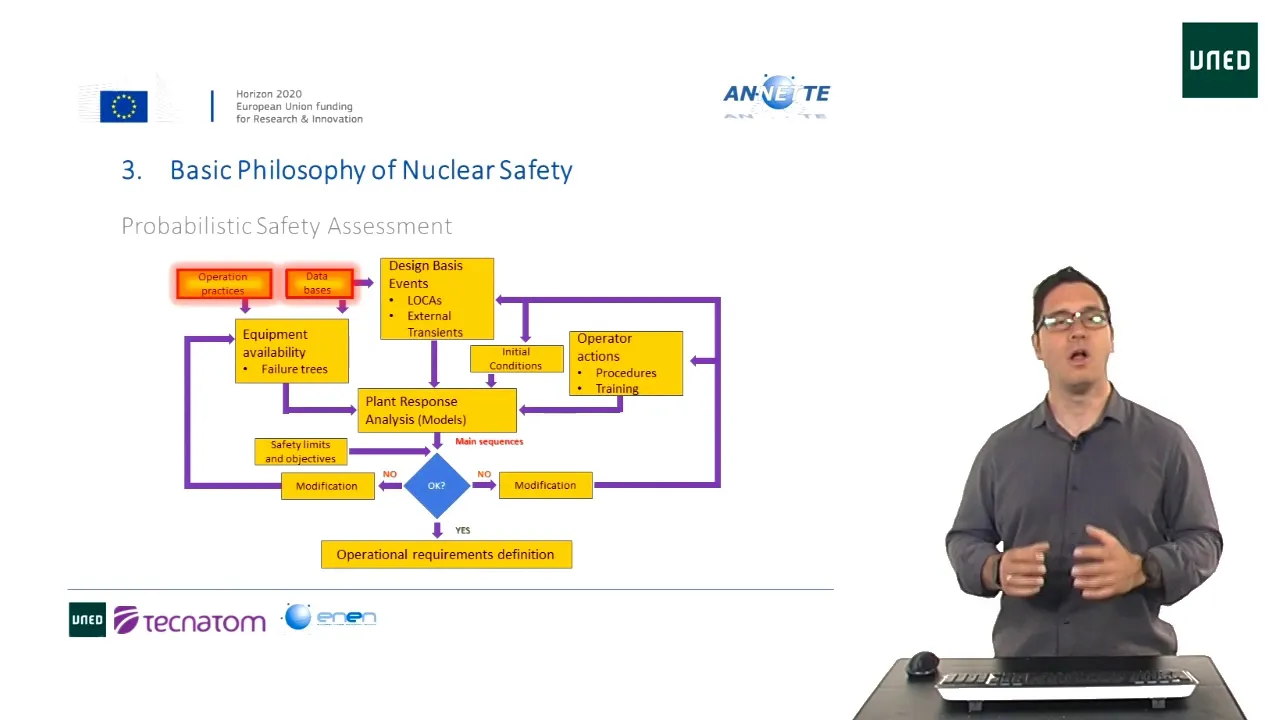
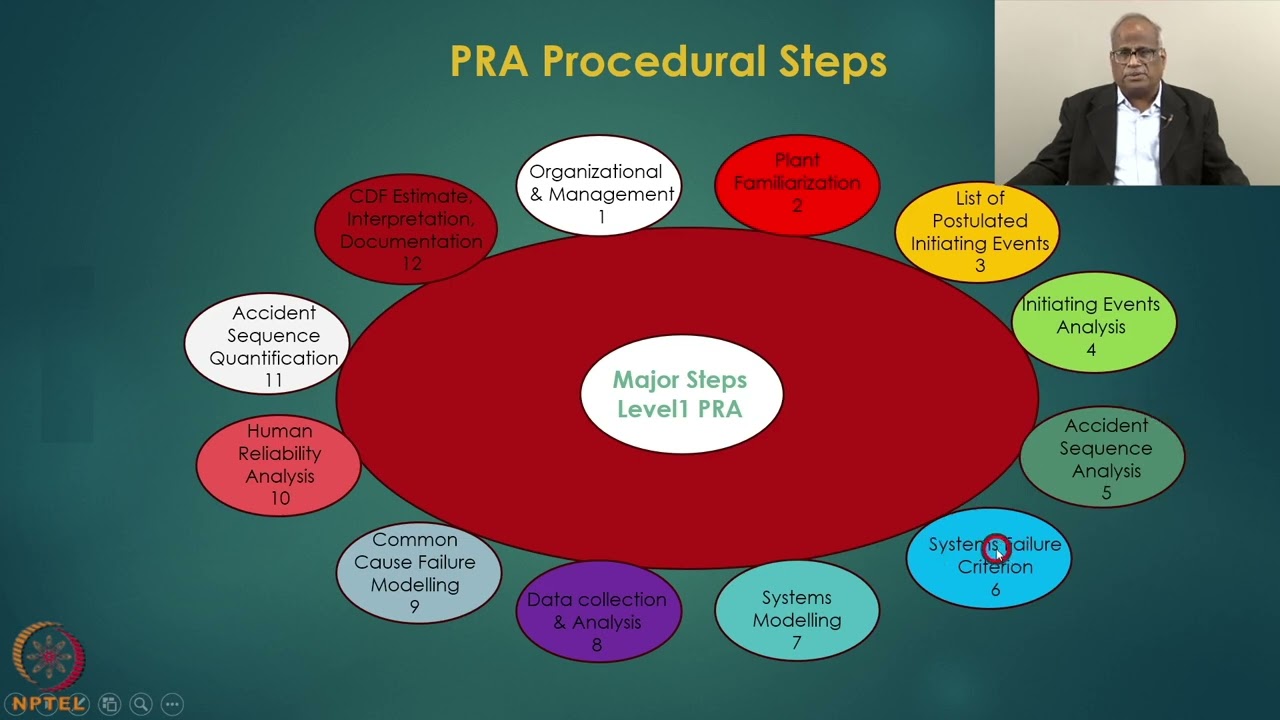
Probabilistic Risk Assessment (PRA) and safety margin calculations used by nuclear engineers and regulators.
Nuclear regulatory frameworks, international safety standards, and emergency preparedness protocols established by organizations like the IAEA and NRC.
79K views2Klikes15:51Original Release: 2025-05-05
In the 1960s, an energy revolution was taking shape. Nuclear power was going to provide us with all the electricity we needed. It was clean, cheap, and it was a symbol of progress. Fast forward to now, though, and a lot of the world is not so sure about nuclear power. One reason for this is the fear of nuclear meltdown and the devastation it can bring. But how do meltdowns happen? And are they really something we should be worried about? To answer those questions, we first need to understand how nuclear power plants work. Most nuclear power plants in operation today use pressurized water reactors or PWRs for short like this one. Central to these is the reactor pressure vessel and the core. This is where you find the nuclear fuel and is where the power production process begins.
In terms of the fuel, uranium 235, which is a particular form of uranium, is suitable because its atoms are unstable and can be split. The splitting process is called nuclear fishision and occurs when a flying neutron from one atom hits another. The split emits more neutrons and the chain reaction that follows releases huge amounts of energy. In fact, one uranium fuel pellet, which is about the size of a marble, produces the same amount of energy as burning 1 ton of coal. This is even more amazing when you consider a typical pellet is enriched to contain no more than 5% uranium 235. The bulk of it is the more naturally abundant uranium 238 and does not take part in the chain reaction.
In the reactor core, the pellets are arranged into rods with a protective zirconium alloy casing and then bundled into fuel assemblies. A few hundred pellets per rod times by tens of thousands of rods gives the average reactor over 10 million fuel pellets.
The immense amount of energy this contains means the fuel does not need to be changed for often years at a time.
And it saves millions of tons of coal from dirting up the air we all need to breathe. In the reactor, water surrounds the fuel rods. This water has two jobs.
It firstly acts as a moderator, meaning it slows the neutrons down to allow the fish reaction to occur. It secondly absorbs the energy from the fish and is heated to around 315°. Normally, water boils into steam well before this temperature at 100°.
However, pressurized water reactors pressurize this water, hence the name, to around 150 atmospheres. This raises its boiling point beyond 315° and stops it from vaporizing. Pumps then move the hot water from the reactor pressure vessel to the steam generator. Here, the water exchanges heat with a separate loop. The water in the secondary circuit is not pressurized, which allows it to boil off into steam. This steam then spins a large turbine which in turn drives an electric generator connected to the grid and that's how we use the power of the atom to make clean and reliable electricity for everyday life. A typical reactor produces around 1 gawatt of power. This is roughly enough for a city of 1 million residents in a developed country like the USA. For comparison, it takes around 300 big onshore wind turbines and not to mention a windy day to produce a gawatt of power. Or it requires a solar farm to have a couple million solar panels across something like 20 km of land along with sunshine which is obviously not available all the time. But anyway, the cycle doesn't stop there. So the process continues. Another separate water loop at the condenser cools the turbine steam back into water.
The cool water supplying the condenser comes from cooling towers or a large heat sink like a lake. The secondary circuit water then returns to the steam generator as liquid ready to be vaporized again. And probably more importantly, the cooling process then flows onto the reactor core. The returning secondary circuit water cools the primary reactor water from 315 to around 275°. And although this is still very hot, it's cool enough to reject heat from the fuel rods, which operate at even higher temperatures. Now that we understand the basics of nuclear power, let's go over how it can all go wrong.
To start with, nuclear material can be incredibly dangerous stuff. Exposure to high levels of radiation leads to death or serious illness like cancer. So, if any part of the core somehow breaks free from the reactor, it is a major problem.
The next thing to know is that you can't really shut down a reactor completely in a short amount of time. During an emergency, hitting the scram kill switch lowers control rods into the reactor.
These control rods are made from a neutronabsorbing material like boron. By stopping the flow of neutrons around the uranium atoms, the control rods put a stop to the chain reaction very quickly within a couple seconds. However, even after the control rod stop the fish reaction, residual heat continues to be made. This is known as decay heat and comes from unstable fishing products like iodine 131 as they naturally emit radiation. At first, the decay heat can be as high as 7% of the reactor's prior output. It then drops below 1% within a few hours. While it may not sound like much, this level of heat is still a lot given how much reactors produce at full output. If we encounter what is known as a loss of coolant accident, even after the reactor has been shut down, the fuel rods start to overheat and what follows is a spiraling set of events leading to meltdown. For example, if the pump stops for whatever reason, there is nothing to carry heat away from the reactive pressure vessel. As a result, the primary circuit water rises beyond its intended temperature. With this comes an increase in pressure. as the water expands. To avoid bursting pipes, pressure relief valves open. But in doing so, the water escapes from where it really needs to be, around the core.
And as the reactor now loses pressure, the water is no longer kept below its boiling point. This is where things really start to go wrong. As the water boils off, it uncovers the core. Without the water, there is effectively nothing to absorb heat from the fuel rods, and they quickly reach dire temperatures. At around 830° C, the protective zirconium alloy cladding of the fuel rods balloons. Bursting can follow, which spills hazardous radioactive material into the water. As the water continues to boil off, the steam oxidizes the zuconium alloy cladding at around 1230°.
This reaction creates flammable hydrogen gas and the heat made by this process can even exceed that of the decay heat which obviously does not help the situation. With this massive buildup of heat, the core temperature can soar to the melting point of the control rods.
As a result, they flow downwards and settle in the lower section of the core where the temperature is cooler. But the thermal runaway does not stop at this point. With the core temperature continuing to climb, the zuconium alloy cladding then melts at around 1880°. As this happens, the uranium fuel within dissolves and a radioactive lava forms. This hellish substance is called choreium and consumes its way towards the bottom of the vessel. During a loss of coolant accident, a pool of water typically remains at the bottom of the vessel. The interaction between the molten core and the water once again produces steam and possibly hydrogen.
And if this interaction happens too suddenly, a steam explosion can occur and could blow the vessel open. But even without an explosion, there's still plenty to be worried about. If the corium leaves too much control material behind, the fishing reaction could flare up again with water present to act as the moderator. This would once again speed up heat production. The thermal runaway during a meltdown can peak at a corium temperature of around 2,800°.
This is far hotter than the melting point of steel. So at this point, there is nothing stopping the corine melting through the reactor pressure vessel.
Once it does, lava and deadly radiation ooze out into the open. It doesn't stop there, though. The extreme cororeium temperatures are also high enough to melt concrete. In the scenario dubbed the China syndrome, the cororeium eats its way down through the ground below and figuratively to the other side of the world, i.e. China.
However, experience has shown us cororeium should cool enough before it tunnels its way completely through the reactor building floor, thankfully. But before we relax too much, there's something else probably just as concerning as the cororeium. The large amounts of hydrogen made during the meltdown. If this comes in contact with oxygen and ignites, an explosion follows. This blasts deadly radioactive material into the surrounding environment and creates what is known as nuclear fallout.
So, should the threat of meltdown stop us from using nuclear power? Despite the scenario we just covered, I think the answer is no. And let me explain why. Firstly, airtight containment structures are built around reactors to seal off radioactive material from the outside world. These are often dome-shaped buildings and are extremely strong with reinforced concrete walls up to 2 m thick. This allows them to withstand high internal pressures, extreme weather events, and even aircraft impact. As a fun fact, the US government once launched a fighter jet into a concrete wall at almost 800 km an hour to test containment efficacy.
The jet basically turned to dust on impact, while the concrete wall got away with just a 64 mm deep scratch. Another key aspect of nuclear safety is the emergency core cooling system, or ECCS for short. An ECCS is basically a backup cooling system that in the event of a cooling failure ensures the core stays covered with water. As long as the fuel rods stay covered, meltdown does not occur. And ECCS's often use water containing boron to keep fishing reactions from flaring up. A reactor will typically have several levels of ECCS so that even the backup systems have backup. This goes for backup power systems, too. In the event of a power failure, nuclear power plants use layers of backup generators and batteries to ensure cooling systems do not stop. But I probably can't talk about nuclear safety systems without quickly bringing up the mishaps we have seen. The Soviet era nuclear reactor at Chernobyl was a fundamentally flawed design that needs a separate video on itself to explain what went wrong there. At very least though, if it had an adequate containment structure, which it didn't, the result may not have been as bad.
Fukushima, which also used a decades old design, saw a pretty basic floor turn into disaster. The backup power systems were not protected from the tsunami flood waters. As a result, the ECCS failed and meltdown followed. There's no hiding that these events were serious failings of nuclear safety. But we also have to acknowledge that nuclear engineering has come a long way since these reactors were designed and built.
One very neat concept that modern reactors use is called passive safety.
This involves the use of emergency systems that kick in without the need for human intervention or even power, which makes the reactor inherently very safe. Passive safety systems can take shape in several ways. But one example is that of the Westinghouse AP-1000 reactor. In the event of a power failure with ease, natural circulation caused by temperature differences allows the reactor water to flow without the pumps running. This water then flows too and exchanges heat with a water storage tank inside the containment building. The cooled water then flows back to the core and the cycle continues. But as the water tank absorbs the heat, its water boils off. The resulting steam flows upwards where it hits the inner containment boundary made of steel. Upon contact, the steam then condenses back into water, and as it flows down, catchments funnel it back to the storage tank. A large water tank on top of the containment building is also present. It releases water and spills it over the outside of the steel boundary. As this water evaporates, it absorbs heat and cools the containment. Air drawn into the outer containment by natural convection then carries the heat away to the atmosphere. This ingenious cooling system allows for 72 hours of emergency operation without user action or power.
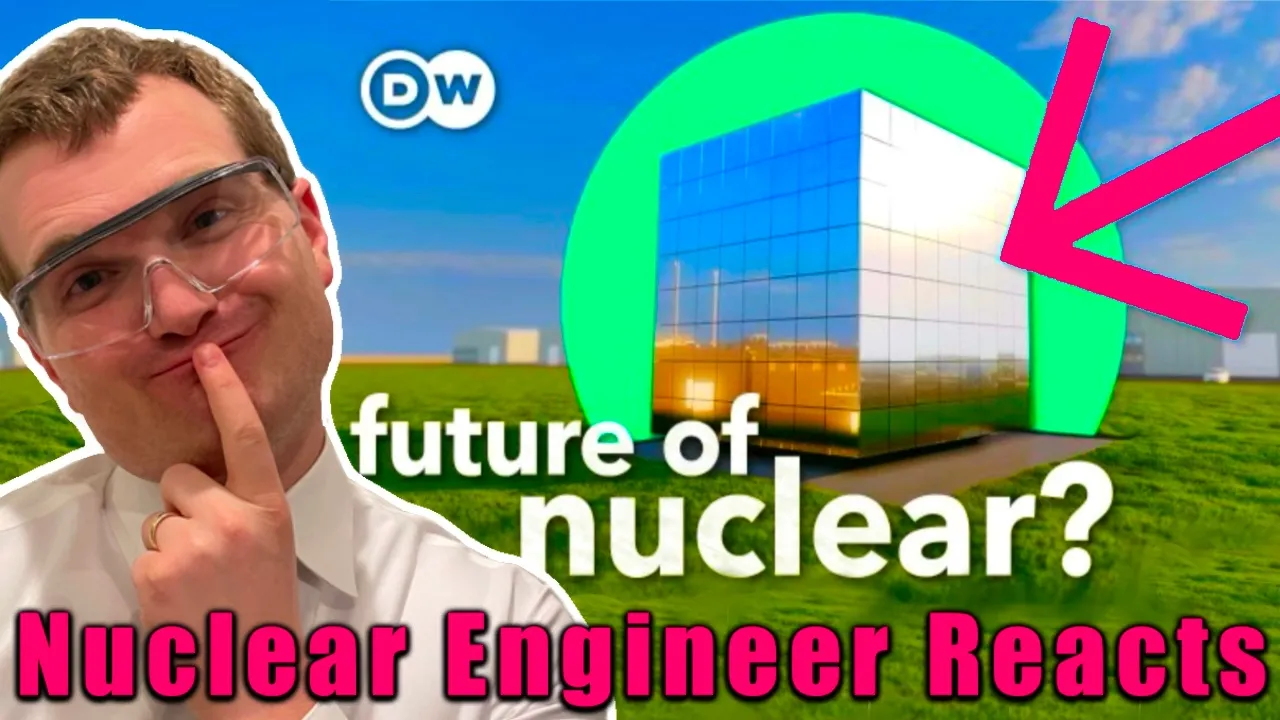
And if you liked this concept, the passive safety systems of nextg reactor designs are even more impressive. The same goes for small modular reactors, which are currently creating a lot of interest.
Even with the less refined reactors of the past, you may find it surprising to see that nuclear power actually has an exceptional safety record. Just have a look at this chart which outlines the number of deaths from accidents and air pollution per terowatt hour of electricity made. As we can see, coal and oil easily lead the pack in terms of harm, and the total number of people they kill through air pollution each year is in the hundreds of thousands.
Then at the bottom of the chart alongside solar and wind is nuclear power. Despite the fear surrounding it and the disasters we have seen, nuclear power's impact is barely visible on this chart relative to the fossil fuels we are ever so reliant on. When you consider these numbers, nuclear power doesn't really deserve the malignant reputation it seems to have attracted.
And this reputation may need to wear off urgently with the challenge we have in front of us. Somehow we are supposed to cut our carbon emissions to avoid climate disaster all while satisfying the globe's ever growing demand for power. There's no doubt solar and wind will play a large part in our efforts to meet this challenge. However, their intermittent nature and low energy density comes with complications that make it hard to power a grid solely off them. Unless we see some advances in longduration energy storage, we are very likely going to need something more to overcome our reliance on fossil fuels and nuclear power may just be the answer, provided we do hold it to higher safety standards and continue to advance the technology forward. There are of course other issues to consider with nuclear power like the cost to build the power plants, what to do with the waste and nuclear proliferation, but there is definitely room for interesting discussion around these points too. So, what's your thoughts on nuclear power?
Let us know in the comments below.
Should the risk of meltdown stop us from using it? And if you enjoyed the video, please make sure you give it a like and subscribe to the channel. It will help me figure out if I should spend all that time making another one.
[Music]
Up Next
8:08
Alpha, Beta, and Gamma Decay: Visual Guide in Nuclear Physics
@dr.paulinemoyaert
136.8K views•2022-06-07

12:53
21cm Hyperfine Transition in Neutral Hydrogen: Radio Astronomy Basics
@AaronRobertParsons
12.4K views•2011-10-13

32:32
NMR Spin Physics I: Zeeman Effect, Resonance Condition & Larmor Frequency
@nptel-indianinstituteofsci8064
2.3K views•2024-01-17

27:14
Entropy and the Second Law of Thermodynamics Explained
@veritasium
27.5M views•2023-07-01
Related Study Plans & Knowledge Roadmaps
Structured learning paths in Physics
physics
Nuclear Physics (Decay, Fission & Reactors)
01Atomic Structure and the Binding Force
02Radioactive Decay and Half-Life
03Nuclear Fission Mechanics and Chain Reactions
+ 2 more learning modules
12h5 modules
Explore Roadmap
physics
Soft Matter (Polymers, Colloids & Rheology)
01Foundations of Soft Matter & Thermal Forces
02Polymer Physics and Macromolecules
03Colloids, Surfactants, and Self-Assembly
+ 2 more learning modules
38h5 modules
Explore Roadmap
physics
Analytical Mechanics: Lagrangian & Hamiltonian
01Mathematical Foundations: Calculus of Variations
02From Newtonian Mechanics to Constraint Dynamics
03The Principle of Least Action & Lagrangian Mechanics
+ 3 more learning modules
28h6 modules
Explore Roadmap
physics
General Relativity (Spacetime & Cosmology)
01Foundations of Relativity: Special Relativity
02The Geometry of Spacetime: Equivalence Principle & Curvature
03Einstein's Field Equations: The Mathematics of Gravity
+ 2 more learning modules
55h5 modules
Explore Roadmap