







![Uwolnij Się Od Stresu! 3 Proste Ćwiczenia. [ep.174]](https://i.ytimg.com/vi/RTiBu9fEzeY/maxresdefault.jpg)


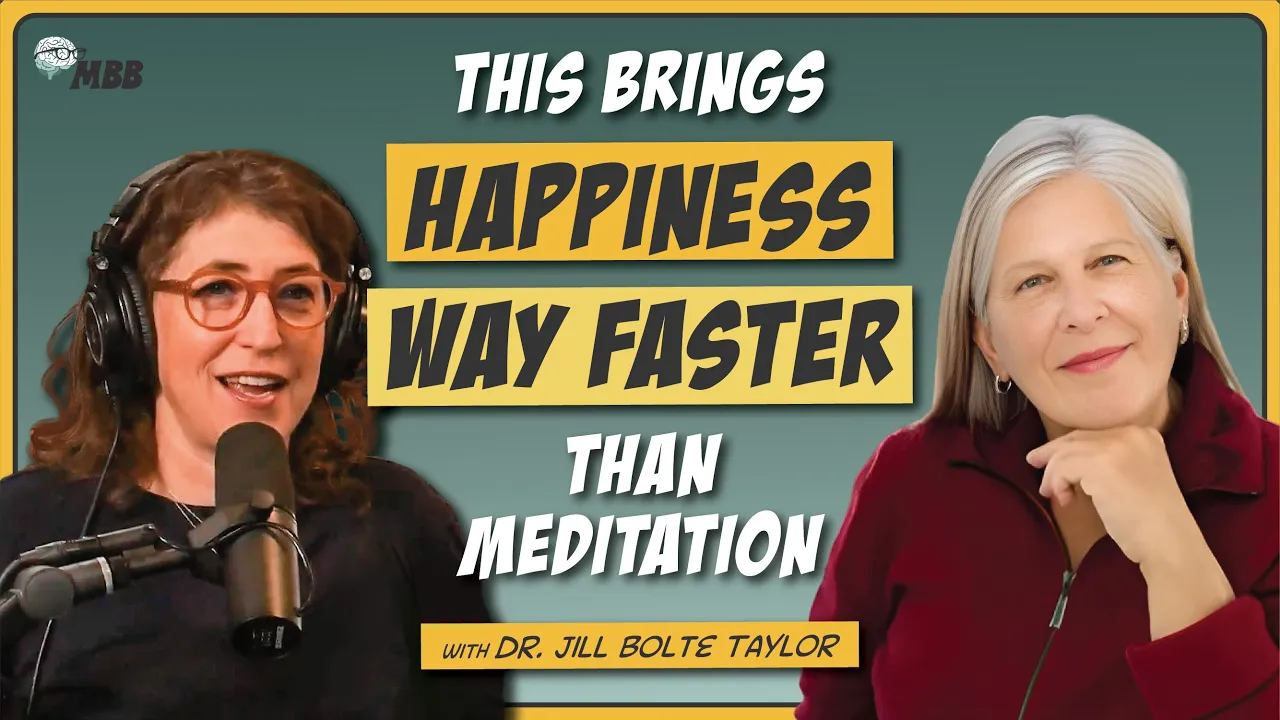









The human brain contains four distinct anatomically structured parts that function as separate personalities or 'characters': Character 1 (left thinking) handles logic, organization, and social fitting; Character 2 (left emotion) stores past pain and triggers reactivity; Character 3 (right emotion) experiences present-moment sensations playfully; and Character 4 (right thinking) provides wisdom and self-soothing. By understanding these four characters and learning to consciously shift between them, we can move beyond our society's left-brain dominance toward whole-brain living, which allows us to access the present-moment peace and connection that the right hemisphere provides.
Retrain Your Brain: Harvard Neuroscientist on Trauma, Emotions & 4 Brain Characters
Added:Basic neuroanatomy, specifically the functional differences and communication pathways between the left and right cerebral hemispheres.
The role of the limbic system (particularly the amygdala) in emotional processing and the prefrontal cortex in executive functioning and cognitive control.
The core concept of neuroplasticity, which is the brain's ability to structurally and functionally adapt in response to experience and learning.
An introductory understanding of psychological trauma and how acute stress impacts the autonomic nervous system's fight-or-flight response.
A deep dive into Dr. Jill Bolte Taylor's 'Whole Brain Living' framework to analyze the specific functions and archetypes of the four brain characters.
The application of emotional regulation strategies, such as the physiological '90-second rule' for processing anger and anxiety.
Advanced study of trauma-informed therapies, such as Eye Movement Desensitization and Reprocessing (EMDR) and Somatic Experiencing, which leverage brain-body connections.
Researching how mindfulness meditation and cognitive behavioral therapy (CBT) can physically alter neural pathways to alleviate chronic stress.
2.8M views102.7Klikes1:35:55Original Release: 2025-11-06
You've bought a present for me in this box and I feel nervous and excited.
>> So, this is a human [music] brain with a spinal cord. Such a masterpiece. But what people don't know is that we have four different structured parts of our brain that automatically shape how we think, feel, and behave. But what if it's not unconscious? What if we could pick and choose how we want to be in any moment on purpose? Like we can manifest our own mental health. And by the end of this conversation today, you're going to teach me how to do that.
>> Absolutely. You're going to so get it.
>> Harvard neuroscientist [music] Dr. Jill Bolty Taylor >> has transformed how we understand the brain through her research and own traumatic experience. She's teaching the world how to unlock every part of their brain to regain control of [music] their thoughts, emotions, and behavior.
>> We have a problem. We are skewed as a society to the two parts of the left brain which focuses on me, the individual. How do I fit myself into a society? And trauma is living in there as is cravings and addiction. And we need this. It [music] protects us. We get in trouble when this is the only portion of our brain that we value because look at the world we currently live in.
>> So is there a strategy for making sure that you don't act upon it?
>> Well, so many people are trying to get rid of their emotional reactivity. But the way to heal it is not to get rid of it. I mean, we're wired for this. Why do I want to just put myself in a little box and say, "I don't want to have pain.
I don't want to be mad. I want to be a robot. I don't want to be a robot. I want to be a whole human with a whole brain. Like this is life and it lasts this long and then it's gone. And it took me losing the left side of my brain for 8 years to realize just how how precious this thing is.
>> So how do I control and protect my brain at all costs?
>> Well, there's a lot. So you ready?
Want some hot stuff?
>> I see messages all the time in the comment section that some of you didn't realize you didn't subscribe. So, if you could do me a favor and double check if you're a subscriber to this channel, that would be tremendously appreciated.
It's the simple, it's the free thing that anybody that watches this show frequently can do to help us here to keep everything going in this show in the trajectory it's on. So, please do double check if you've subscribed and uh thank you so much because in a strange way, you are you're part of our history and you're on this journey with us and I appreciate you for that. So, yeah, thank you.
Dr. Jill Balty Taylor, what have you spent your professional career endeavoring to understand and why does it matter?
>> I am fascinated with how does our brain create our perception of reality and based on that information what a wonder it is any two of us can communicate at all. I think I am fascinated by what we are as biological creatures. And most of us are so consumed with everything outside of ourselves that we have missed the wonder of what we are as this biological conglomeration of cells. I think we're absolutely beautiful. You know, none of us came into this world with a road map about how to get it all right. And the road map is the brain cells. And when we understand the brain cells and what they do and how to work with them and how to keep them well, then we can manifest our own mental health.
>> And do you think the average person understands the brain?
Did you understand the brain before you started studying it?
>> Well, I understood it because I had a brother who was diagnosed would be diagnosed with a brain disorder schizophrenia. So I became fascinated by five or six about what are we and why is he the way he is? We are so different from one another. Our interpretation of our experiences are so different from one another. What's what are we? I just I just became a philosopher very young and fascinated with the biology and the anatomy of what we are. What do you think an understanding of the brain, the understanding that you're going to communicate to myself and my audience today, >> how do you think that can help me improve my life?
>> Oh my goodness. If I understand what part of me interacts with the external world and is smart and is good with details and is well organized, then I know how to use that part. And that's this. We are skewed as a society to that leftinking portion of our brain. In fact, as far as traditional medicine is concerned, that thinking portion of our brain is the only portion that is actually conscious. So then we live our lives literally with our left emotional tissue, our left our right emotional tissue and our right thinking tissue all as part of our unconscious brain. But what if it's not unconscious? What if we actually know what those groups of cells also do? So that when I'm experiencing my pain from the past, I can actually call on the portion of my brain that knows how to self soothe me so that I can lift myself out of my pain, learn from those experiences, and then live a more fulfilled life. It's the power to choose who and how we want to be in the world when we understand what our choices are.
>> So is it possible to choose which part of your brain to use in a certain moment? Once >> you do it all the time, you're just probably not aware of it. Let's say you're going to have a business call and uh you got your stats and you got your data and you pick up the phone and you say, "Yes, this is Steve and blah blah blah." And you work into your details and then let's say uh someone peaks in to to let's say a little dog comes running in. Okay. Well, you're going to have a couple of responses potentially responses. One, you're going to smile, right? You just smiled. You just moved into, "Oh, I love my little fuzzy." And yeah, okay. Now you know now you're a little gentler because now you shifted into a different portion of your brain that is open to the present moment and now you just got uplifted. So we have these four different anatomically neuroanatomically structured parts of our brain and we can pick and choose who and how we want to be in any moment when we know what our choices are. But we don't know what our choices are as our society because we are functioning skewed to that left thinking portion of our brain and everything else is running on automatic.
>> And the left thinking portion of the brain is the what more logical >> logical rational analytical likes to control people's places. There's a me uh definition ego center of I exist. I am Joe Bolty Taylor. This is my phone number. This is where I live. I know that this is where I begin and end, where my skin meets air because a group of cells tells me where I begin and end.
But you've probably had flow moments where you were doing your sports or you were making love or you were whatever you were doing and and you didn't begin and end here. You were vast and open and you were this big energy ball that you are. But the left hemisphere focuses on that little group of cells and those skill sets and the right and the wrong and the good and bad and that that portion of the brain defines the social norm. And we all have to fit ourselves in the social norm. But it's only a quarter of our brain.
>> Is it making us unhappy the way that we use our brain currently?
>> Well, we're out of balance. We're completely out of balance because we're at the balance of the value of that left brain. What's going on in the right brain? The right brain is right here right now. We spend so much of our time.
So fundamental differences between the right hemisphere and the left hemisphere. And I know this only because I lost my left hemisphere and that's all I had for eight years. I had to use what I had currently going on in my right hemisphere after I lost those cells of the left hemisphere in order to rebuild the skill sets of the left brain so that I could become completely functional again. Are we unhappy? Well, that's not a happy part of the brain. When you're being analytical and organized and structured, you probably got that that burr that frown right there. You know, you're and and it's a different expression. Then as soon as, as I said, a little puppy comes in and then all of a sudden your face happens. Well, what happens is you're shifting into a different part of your brain. And that's what we do. We're running it on automatic. So, if we are running our brain on automatic, imagine how much better we might do if we were actually picking and choosing who and how we wanted to be on purpose.
>> And you're telling me that's possible.
>> Absolutely.
>> And by the end of this conversation today, you're going to teach me how to do that.
>> Absolutely. You're going to so get it.
And it will. And once you see you, you will no longer ever not see you. And then you're going to see these four characters inside of yourself. And now you're going to be looking at your partner who you speak about often. And you're going to be going, "Oh yeah, I recognize all four parts of her, too."
But what that means is that any relationship that we have, there's eight of us. There's eight of us. Eight very specific personalities in every relationship. So I have four very predictable character profiles, as do you. It's the way the anatomy of the brain is built.
>> You've bought a present for me in this box.
>> I did.
>> What is in that box? This is a very special brain with a spinal cord.
>> This is a real brain with >> This is a real brain with a spinal cord.
>> A real spinal cord. A >> And do you own this brain?
>> This I did this dissection and uh yes, this brain was specifically donated to me for educational purposes.
>> How old was the person? What was >> in their 40s?
>> Do you know how they passed away?
>> Brain cancer.
>> And can you see the brain cancer?
>> You cannot. Not until I cut this open.
And I've had this brain for over a decade and I haven't cut it open. It is very rare to have an dissection which is actually brain and spinal cord. Usually you dissect the brain and we learn about the brain but I wanted to have the brain and spinal cord because that's the central nervous system and it's a spectacular dissection.
>> Um I feel nervous and excited.
>> Excited is good. I'm excited >> cuz you're right here right now going, "Oh my gosh, something new."
>> Yeah, >> it's exciting. Right here, right now is an exciting time. Are you ready?
>> I am ready.
>> Okay.
>> Should I put my gloves on?
>> I encourage you to do so. Okay.
So, this is a real human brain. And right now, it is um hydrated in rubbing alcohol. So, that's what this is.
So, you don't have to be afraid of that.
So, this is a real human brain and spinal cord.
And I think what I'll do is I'll just move this over here.
>> Yeah.
>> Out of the way. Okay. So, this is a human brain.
>> What's that skin on the top of it >> with a spinal cord?
>> This thing here.
>> We'll get there.
>> Oh.
>> So, you've heard about menitis.
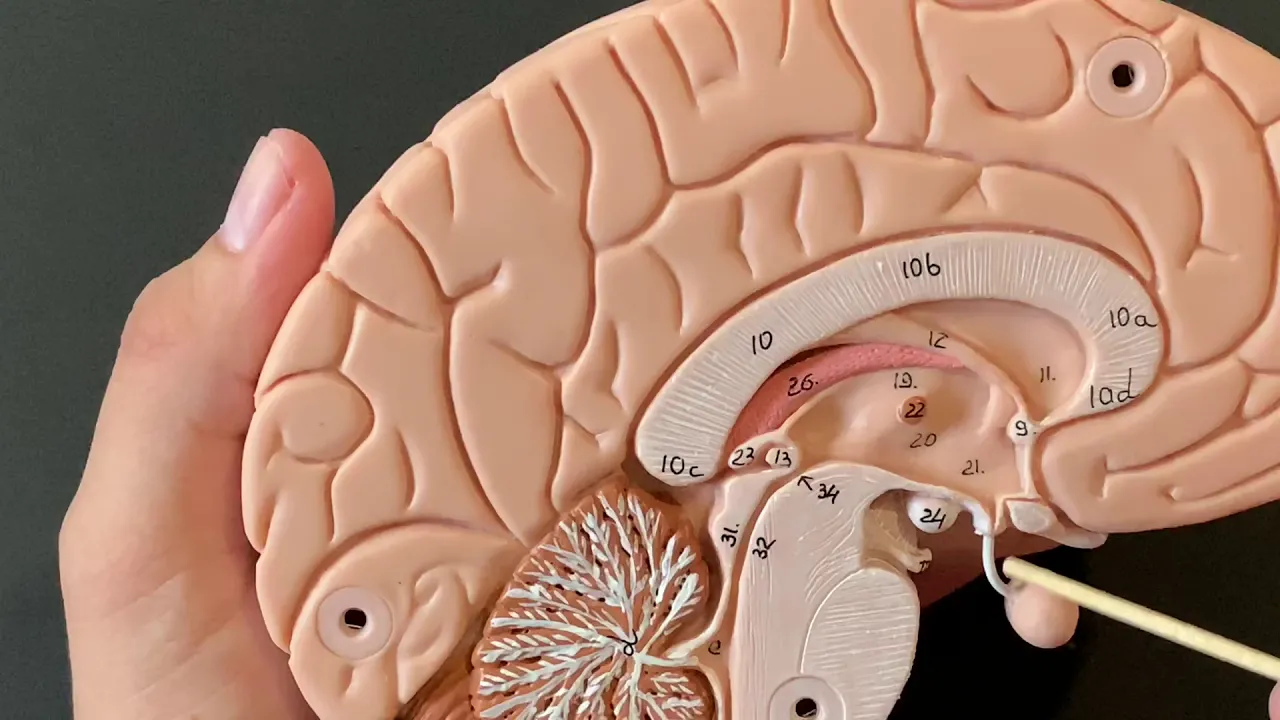
>> Yeah. It's layers that support between the bone and the brain tissue and it protects it. So this is called these there are three layers called the meninges. So when you've heard of menitis. So this is the dura mater. It's very tough and you'll feel that. It's like a really tough lettuce. And this is is essentially strapping the brain into the cranial vault and holding it into position because you don't want this thing flopping around and having wounding and uh injury.
>> So it it straps it into here.
>> It well it straps it in certain spots.
Yes. And generally often when you do a dissection, you actually have to uh put a like screwdriver in there to peel the dura off the bone. So it straps it into position. It's kind of like a bra for the brain.
>> Okay.
>> Okay. So this is the dura and then what I'm touching now is called the arachnoid and that's the second layer of the meningis. And what you're looking at in there is blood is blood inside of the blood vessels. So one of the things about why the brain is so fragile is the blood vessels are transparently thin.
>> So the pressurized system of what's going on inside of the cranial vault has to be highly regulated. And it's actually the pressure of the cranial vault versus the pressure in the thorax of the chest and the pressure of the abdomen. It's a system and they all work together in order to to keep everything well regulated homeostasis a state where the cells are happy and so the third layer is like right here and it's you can see this layer is peeled away the arachnoid and under here I'm now touching pia and pia is the external layer of the brains brain cells themselves the brain tissue so so this is a beautiful brain and it would be positioned in my head like this.
So front of the brain, back of the brain coming down, hanging down as the spinal cord. And then as you look at the spinal cord, this is called the cottoina or cotquina. And these are the nerves that are actually going to go down into your lower extremity. So all the information that's going to go down into your lower extremity to control your body is controlled and the sensory information is coming in through those nerve fibers.
>> Looks like a bunch of wise.
>> It does. Well, you know, we are quite a welldesigned machine in its own way. It a difference is we are organic. We are biological. And I think one of the biggest mistakes that we make as a society is we think ourselves and we think ourselves as a machine. Push it, push it, push it, push it, push it, push it, push it. Well, you can do that with a computer. You plug it in and it stays on until you turn it off or it blows up.
We have to go to sleep. Yeah. Have a good time with that.
>> Yes.
It's okay. We won't hurt it.
>> Wow.
>> We hope. Gosh.
>> Uhhuh.
Beautiful.
Our design such a masterpiece. We are this massive conglomeration of 50 trillion molecular geniuses making up our form.
Beautiful.
>> It's so crazy that every single person listening right now has one of these processing my voice as you're hearing my voice. That's right. And it is this, for anyone that has never felt a brain before, which I imagine is most of you, it is like this very, very soft but dense sort of tofuy.
How would you describe the feeling?
>> Pork roast.
>> Pork roast.
>> It's very soft though. Do you know what?
It makes me It makes me realize >> Yes.
>> how easy this would be to damage. Now, this has been in alcohol or from aldahhide for since at least 2008, probably earlier. And when you first pull a brain out, it's even softer. It's like a it's like a tough jelly. So that when you first bring out a fresh brain, if you take your finger and you just poke it into the tissue, it'll squeeze right in and then you pull your finger out and then it goes it'll scrunch right back together again.
>> Oh, okay.
>> Yeah. So, so this is a prepared specimen and and we have to do that and and lock together the proteins or the lipids in order for us to be able to handle it for educational purposes.
>> So, this is the computer and then this is the wires that control the rest of the body. Well, it's part of the system because um this this what you're holding is the central nervous system and then the central all of it and then the central nervous system sends u between each of the vertebrae. Here you have different vertebrae between different vertebrae. You will have different nerves coming out and then going around the body. And then you're also going to have vagus nerves coming off of the brain stem area and going down into the abdomen taking care of the visca.
>> The first time you saw a brain like this, >> how did it change your perspective of life?
>> I love it. I love it. I was I was very blessed to have an aunt who was a debutant back in the years where debutants did not get jobs and she wanted to be an emergency room uh doctor but there was no way that she was going to do that. So she would actually encourage me to pick up roadkill and we would take it home and dissect it. It's beautiful. See that look? We have two responses. The left brain says, "Oh my gosh, this is disgusting. This is the worst thing I ever had." And that's a part of your brain that's designed to kind of critically judge and say, "No, it's not safe. It's not cool. Push it away." But the right hemisphere comes online with curiosity. So people see these things and they go, "Oh, no, not my thing." Or they go, "Oh my gosh, that is like so cool."
>> I feel both at the same time. I feel I feel um >> I have like almost a respect for the person.
>> Yes. who grew the brain, whose brain that [clears throat] belongs to >> and then the other part of me is just like totally fascinated and it almost you know when you look at it you go you you still don't realize that you have one of those in your head.
>> I still don't.
>> Now so you you're still looking at that as that's a one thing. I don't look at it like that at all. This is a brain.
But what's important about this brain is our brain health, our brain abilities is 100 dependent on the cells that make up that brain. So most people, many neuroscientists talk about the brain and how the brain does in the external world and the behavior and the neurotransmitter systems and all of that. I go down to the raw data of the cells. So, I am a cellular neuroanatomist and so I care about the cells making up the nervous system and how do we how do we interact with them?
How do we relate to them? How do we care for them? How do we feed them? How do we provide for them so that they can be healthy so that I can live a whole brain life in a healthy way?
>> For context, where did you do your PhD?
You did your PhD in neur neuron anatomy at Indiana State University.
>> Indiana State. And my research was at the IU School of Medicine, Indiana University School of Medicine. So that's where I focused on neuro.
>> Yeah.
>> And uh then from there I went to Harvard Medical School.
>> Yeah.
>> And uh did two postocs, one in neurobiology and then one in psychiatry.
>> And when I say the 10th of December, >> yes, >> 1996.
>> Yes.
>> Which was [snorts and sighs] 4 years after I was born roughly.
>> Mhm.
>> You're 37 years old.
>> Yes.
What happened on that day? Can you give me a playbyplay?
>> Yes. Well, the day before that I was teaching and performing research at Harvard Medical School and I am a gross anatomist which means cadaver entire body as well as hisytologology which is tissue as well as neuro. So I am all about anatomy. So I teaching and performing research at Harvard Medical School. And uh I woke up the next day and I was experiencing a major hemorrhage in the left half of my brain.
So I woke up, I sat up and I immediately had a pulsing pound behind my left eye and uh generally I didn't have that and it was pretty severe and it got all of my attention and I have my before and after is before and after that morning.
>> What happens next? So, you've got a pulsing pain be behind your left eye.
What did you do then?
>> Well, I thought, "Wow, that's weird."
And it was the costic pain that you get when you bite into ice cream. It's like that freeze brain.
>> Uh, and I thought, uh, okay. And I felt, uh, I felt suddenly weak. And, um, and I thought, okay. So, I got up and light was, um, kind of burning on my eyes. It was I didn't want light in the morning that day. So, I closed the curtains and I thought, well, let's get my blood flowing. Maybe I'll feel a little better. So, I jumped onto my cardio glider, which was a whole body full exercise machine. But I'm looking at my hands and realizing that my hands look like primitive claws, grasping onto the bar, and I look at my body and I'm thinking, "Whoa, I'm a weird looking thing." and my perception of reality shifted away from my perception of being the one on the machine having my normal morning experience to wow I was witnessing myself having this experience and I'd never had that happen before and I thought okay so this isn't helping so I get off the machine and I uh head across my living room table and I'm realizing Every movement is very rigid and very precise and I'm actually kind of directing. I felt very robotic getting into the bathroom. So I remember pulling on the water and when the water came out, it smashed into the tub and the volume just reverberated in my brain. It was so loud the sound was amplified and it pushed me against the wall. But when the volume hit, I'm a neuroanatomist. So what that means is that I'm teaching students about all of the anatomy here and which fibers are coming in and going where and what is the tracks of everything. And so sound comes into the ears and it goes right down to the pawns region of our brain down here. And this is where life and death is. This is where those cells, if you're going to inspire, you need your pounds and and your your medulla in order to have those [clears throat] cells functioning. So, when mine went were being disturbed, that was the moment I realized I've got a problem.
This is a grave problem. Uh, this could kill me. So, I got out of the shower. I dressed mechanically, just dressed. I'm still going to work. And then my right arm went totally paralyzed by my side.
And and it's really strange when a limb goes paralyzed. It doesn't just like drop down. It goes bomb. I mean, it's a heavy entity. And I thought, "Oh my gosh, paralysis. Oh my gosh, I'm having a stroke." And then I'm thinking, "Okay, you know, oh my gosh, how many brain scientists have the opportunity to study their own brain from the inside out?"
And I literally thought, "Okay, I'll do this stroke thing for a week or two and then I'll get back to my job." Right? So then it was a matter of I have to get help. I have to communicate with the external world. And a problem was that the hemorrhage was happening inside of the left thinking portion of my brain which is where language is. So I was drifting for 4 hours. I was drifting in and out of the consciousness of the present moment. And the present moment the pres in in the present moment I don't know who I am. I don't know what I am. All I can know is what's in the present moment.
>> So explain that for me. So yeah, >> the left side of your brain >> was where the stroke was happening.
>> Yes, it was.
>> So you were in the right side of your brain.
>> I was waffling back and forth because it was growing. It started small. So I had what we call an arteriovenus malf for an artery which is a high pressure system.
It's bringing blood into the system. And then I have a vein and the vein is a no pressure, low pressure system. And then we have these little capillary networks in between.
Yeah, this is an es schemic stroke. I had the the uh the hemorrhagic stroke.
So when you think about stroke, most people think, oh, blood clot >> and the blood clot blocks a So the thing about um arteries is they taper taper taper taper taper until they get down to the capillary level, which is where the blood uh the red blood cells kind of line up in single file and pass through that. And it's a very low pressure system, and then it absorbs back up into the vein. Well, what I had was the hemorrhagic stroke and a blood vessel exploded. And when it exploded, then the blood goes out into the extracellular matrix, which is extracellular between the cells and the cells cannot function.
Blood is essentially poison to cellular communication. So, it's no good. And whatever blood wherever it goes, those cells start going offline. And then as that uh hemorrhage grows inside of the brain across time, more and more cells are becoming incapacitated.
>> So you were in that moment unable to remember how to speak properly, unable to >> nothing. I had nothing. I didn't even have me. I had no Jill Bolty Taylor because she was over in the left hemisphere. And eventually that whole hemisphere ended up swimming in a pool of blood and was nonfunctional. But it took four hours to get there. So, I was waffling into the present moment, blissful euphoria. I didn't exist. I h I know who I am and that I exist at all because I have a tiny little group of cells inside of my left hemisphere that tells me who I am. Have you ever awakened in a hotel somewhere because you've traveled so much and you're going, "Where am I?"
>> Yeah.
>> There's this blank, right? And it's like, "I don't know, but the bed's comfy." You know, what a nice room. you know, and all of a sudden you're just right here, right now, and you're not about the past, and you're not about the future, and you're just in the present moment. And joy lives in the present moment. Love lives in the present moment. Laughter lives in the present moment. The present moment is a fantastic place. And we are wired to that by literally half our brain.
So why wouldn't we spend more time over here or at least balance it out? That's all I ever ask for. I am not here to uh uh you know uh as a waving the flag of the re of the right hemisphere. I want whole brain living. I want people to understand the different parts of their brain what they do so that it says okay so let's say do you meditate >> sometimes.
>> Okay sometimes. What's it like for you?
>> Difficult.
>> Okay. Why?
>> Because the you start thinking about stuff.
>> Okay. Because this part of your brain won't be quiet.
>> The left is that that's >> left thinking brain. We're languages. it won't be quiet. Or uh you just had a little argument with your with your sweetheart and so down here now you're in your emotional system and you're not really feeling peaceful and you got on that airplane and things weren't like perfectly smooth. So now you're kind of, you know, ruminating about, you know, oh my gosh, oh my gosh, oh my gosh, you know, and whatever. And that takes you away from the present moment. But the present moment is it's not about me, the individual. I think about this the the so I look at the brain it's divided into four categories very specific anatomically each one of those result in a constellation of skill sets and then that constellation of skill sets actually manifests in our lives as personalities and we all have all four now do we all practice all four of us do we usually have a dominant you seem to like your left thinking brain a lot. When do you have fun? What does Steve do for fun?
>> This.
>> This?
>> No. Also, I watch I watch Manchester United play and I >> You lift weights.
>> Yeah.
>> What's that like for you? Is it work or is it refreshing to be in your body?
>> Oh, when I'm at the gym, it's Yeah, it's I'm just in my body, which is Yeah.
>> Okay. But no, not just But when you're at the gym, you're in your body. Now, can you go back in your own mind and have that feeling?
>> Can I?
>> Yes.
>> How?
>> Well, go there in your mind.
>> I actually imagined myself on the treadmill at my favorite gym and how that felt. And I had a brief moment of that feeling emerge in my mind.
>> And what did it feel like?
>> Present.
>> Present.
>> Yes.
>> Okay. And any other emotions that you can attach to it?
>> Just like calm, peaceful, without without concern. Very present.
>> Yeah.
>> Very present.
>> Yeah.
>> Yeah.
>> Yeah. So the present is a nice place for you.
>> Yeah.
>> Yeah. Okay. What else do you do to get there?
>> Massages.
>> Massages. You receive massages. Okay.
>> Okay. And what happens to your brain? Do you analyze what's coming and just work your butt off? Or do you allow yourself to actually drift and shift into the present moment of, "Oh my gosh, I'm so glad I'm here."
>> I allow myself to drift.
>> Good. Where do you go?
>> I don't know. It's like a fuzzy.
>> Yes.
>> Middle ground place.
>> Yes. No boundaries.
>> Some kind of limbo.
>> This portion of the brain up here is going to be the part that says who you are as an individual. It's your ego center. This hemisphere, the left hemisphere, has the picture of nature with you in the middle because you exist in your left hemisphere.
>> That's where the the world revolves around you.
>> The world revolves around you. In the right hemisphere, you don't even exist.
You exist as a part of it all. So what you hear gets integrated with what you smell, with what you feel, gets integrated in the excitement of possibility. So, I'm not working from a plan. I'm not in the past. I'm not in the future. I'm not all about me. I'm just here. So, when you're on a table, massage table, and you're allowing yourself to go fuzzy, that's essentially the skill set of what's going on in the right hemisphere.
When you dive into water, you swim.
>> Uh, not not not well.
>> Okay. But do you dive into water? I do.
Yeah.
>> Okay. Or even just in the shower. When you feel when you dive into water and you feel the water, the pressure against your body, the temperature of the wa of the water, you feel the phenomenon of wetness. This is a present moment experiential opportunity diving into the water. Now, a lot of people might dive in the water because I'm racing and the whole goal is to get to the end because I got that left brain thing going on and it's that's the goal. But if I'm just being, this is, you know, are you being or are you doing, right? When we're being, we're simply being here. We're being alive. We're being aware. We're being in experience. So, as I take in this room, I take in this whole room. My left brain says, "I'm going to focus on you, and I got these books, and I've got these things, and I got the brains, and everything, and everything's a thing."
But to the right brain, everything is one thing. And when I live my life knowing that I can shift out of the stress circuitry of that left brain that says more cortisol, more cortisol, do do then when I it's the it's the that's the push. The right brain is the pause. And that's why I was saying before, we're not a robot. We're not a computer. We are a biological organism. And so we don't plug ourselves in and turn it on and it stays on and forever until it dies and then we buy a new one. We have rhythms. We have natural patterns and we have to push and we have to pause and we have to pause because we are 50 trillion molecular geniuses that are eating and creating waste and we need to clean up the mess and that's what happens during sleep.
>> And so when you were stood there you'd put your clothes on the left side of your brain was offline. So you were very much in this sort of blissful, euphoric, present moment state. What did you do next?
>> I I go through all the details of trying to get myself help. And that meant to me the one plan I could get between shifting black back out into the euphoria of my right hemisphere where I'm just in bliss. I'm just happy. I'm just there and I don't have a plan.
>> Why didn't you call 911?
>> Because it was just floating in a pool of blood. It wasn't there for me.
>> What do you mean? Well, when you look at where my hemorrhage happened, it happened. So, so language, the creation of sound and language, dog, dog is a sound. It's going to come out of uh Broca's area. And then Waricki's area back here is going to place meaning on that sound. And my hemorrhage was impacting this whole area. And in there with language is numbers. 911 didn't exist for me. Was not an option. you can remember 911 >> didn't exist for me. It'd be kind of like I say to you, um uh what's 8,322* 4 million?
It doesn't exist for you until you figure it out.
>> 164,374.
I'm checking [laughter] >> exactly. So 911 didn't exist for me. So I had to when I would come back into the left hemisphere consciousness, then I would I got to my phone and I put have a phone pad here and I spent 45 minutes waffling in and out right hemisphere, left hemisphere and finally I found my business card that had my phone number of work and I had to set the pad of the phone pad up against right next to the business card and match the shapes, the squiggles in order to figure out how to call my office because I had no idea what numbers were.
>> And what did you say when the person answered on the other end?
>> I said, "This is Jill. I need help." And what came out of my mouth was.
And then I thought, "Oh my god, I sound like a golden retriever." And then he spoke to me and I thought, "Oh my god, he sounds like a golden retriever." I had had a golden retriever and they're very verbal.
So I knew at that point I did not know because I could still hear myself my language inside of my brain language is very complex in this because different cells do different things and in this this left thinking portion we can read we can write those are completely different circuitries we can speak we can comprehend when others speak I mean it's complex so this is a busy busy busy place but as long as this is the only portion of our brain bra that we value.
Then we live based on the values of that portion of the brain. And what that brain values is me and mine and I want more. And that's the world we're living in.
>> It's selfish. Well, it certainly is >> because people talk about there being a spiritual crisis in society at the moment with many of the things you're describing, the individualism, the narcissism, sociopathism, the leaders of the world being very >> uh zero sum and how they approach >> Yeah.
>> economies and how they treat others.
>> You're saying that's because we're so >> right there over here >> on the right side.
>> On the right side, it's right here right now. And in the right here, right now, what do I care about? I care about connection because I'm not individualized here. I'm a part of the whole. I am. We are all standing around this beautiful planet. And I, man, is equal to all the other creatures and all the other life and to the life of the planet. We are one construct here. And we either figure out how to nurture and support and be one thing. We are one human family in our right hemisphere.
You are my brother. I love you. I can support you. I can nurture you. I can encourage you because you're a part of me. And then the left hemisphere comes online and says, "Oh, Jill, that is so inappropriate for you to say."
and he has his body space and I have my body space and we need to be formal and we need to right and wrong and good and bad and we need to establish how the construct of the social norm is that we are now going to take the mass of all that we are and fit ourselves in that so that we can communicate with one another and run a world >> you make that phone call >> you you sound like a golden retriever um what happens next does your colleague get >> he recognizes it is me it is I and he comes to my home and back in those days we had a managed care so you have to go to the right place or you don't get coverage. So he took me there and then they took a picture of my brain and then they they put me in an ambulance and sent me to Mass General Hospital and as and I'm still curled up in a little fetal ball going hold on hold on and I was slowing down and I knew that I was becoming weaker and weaker and I wondered how detached from my own ability my own body can a person become before they can never get back inside this tiny little body because I felt that I was literally energetically as big as the universe.
And what did that scan show? It showed a a >> major hemorrhage in the left half of the brain. Yeah, about that size. Actually, it was a little bigger than that on that on that day. Uh but by the two and a half weeks later when they removed uh that's why we have a golf ball a golf ballized blood clot from the left half of my brain. Two and a half weeks later, December 27.
And then I woke up and I had this huge hemorrhage. I I mean I had this huge scar, but my mother comes rushing in and she says, "Speak to me. Speak to me because this is my language. If my language cells are gone, I will have no language and I will struggle the rest of my life for language." And I I whispered to her, "I'm better. I'm better." And what I meant by I'm better was that I felt bright again. I felt bright. I felt like whatever life was going to give me at that point in time, I had brightness.
I was still alive. I did not die that day. And when, you know, so many people have said, "How what motivated you to get better or or how can you could you have been so happy?" And it was like I did not die that day. And that meant no matter how disabled I was, I could not walk, talk, read, write, recall any of my life. I became an infant in a woman's body at the age of 37. I completely fell off the Harvard ladder and none of that mattered. All that mattered was I was alive. And what that meant was I had the potential to grow and heal and become whatever I would become. And it didn't matter. And it still doesn't matter.
What matters is I'm alive. It's the gift of life. And that's for me the wonder of what we are as living beings. And we, you know, we are at a time where we are in a mental health crisis. And our mental health is 100% dependent on the health and well-being of the brain and the health and well-being of the brain is 100% dependent on the health and the well-being of the brain cells. So how do we nurture those cells and love those cells so that we can live the life we want to live and we can live in joy. We can live in present. We can live feeling connected to something that is is magnificent as a life force power of the universe and have this magnificent left brain that allows me to have language allows me to be a part of society in an effective way and allows me to have pain from my past so I can learn and grow from experiences that have happened to me that I would rather not repeat.
>> What is the complex range of emotions you're experiencing as you recount the story?
Oh, I feel such awe for life. Life. This is life. This is life and there is death. And we have life. And life is the miracle construction of the universe.
Argue about it all you want. Have a million conversations about it. Analyze it to death. But the fact of the matter is you are alive in this moment. You are alive. You can say you have eyes that can see and ears that can hear. And you have a digestive tract that can bring in nutrition and you have manual dexterity and you have mobility. You have legs that can run around the planet and you have this magnificent mind so that you can do what you want to do. You are a miracle and we have forgotten that. And for me, it took me, this whole stroke experience took me straight back to the part of my brain, that right thinking part that connects me in that transformation or that trans transcendence experience of being so much more than just a little human being running around the planet. Oh my gosh, life is this miracle.
And it makes me feel awe and wonder. It excites me so much. If everybody had that and recognize that and could grasp that and hold that, imagine the different world we'd be living in.
>> Eight years.
>> Eight years >> of recovery.
>> Yes.
every day, every breath, every everything I thought of nothing else other than what can I do and what's in the way of being able to do what I want to do next and rebuilding using what I had in the right hemisphere to rebuild the circuits. I knew I had language. I knew I could speak. I knew I had vocabulary. I knew I had ideas. I knew somewhere in there I had numbers. It took eight. It took four years for me to uneven understand what's a one.
I mean, wow.
Wow. I did not die that day. I did not die that day. And so, I have all the possibility of what will be. And it was wide open. I wasn't going to be a neuroscientist again because that left hemisphere. I never held myself to returning to whom I had been before the stroke. That girl died that day as far as I was concerned. But the phenomenon was that as I'm a gross anatomist so I taught K cadaavver lab and when you are teaching you have a whole body there and you're teaching medical students about what's inside of there. You get your hands in there and you say, "I want you to slip in behind the stomach and I want you to slip this hand in here and I want you to know the relationship between the stomach and the deadum and the liver and and the splenic nerve and the kidney. I want you to feel it because I want you to have a three-dimensional image of that inside of your mind so that you can use that information."
Very rightrained. So when we learn, we learn facts and details with the left brain, but we learn context and big picture with the right brain. So we have these two very different ways of working it out.
I've had so many founders speak to me and say, "Why didn't this particular ad that I ran on this platform work for me?" Maybe the copy wasn't good, the creative wasn't strong, but usually the problem is they're not having the right conversation because that ad never reached the right person. And if you're in B2B marketing, that is much of the game. And this is where LinkedIn ads solves that problem for you. Their targeting is ridiculously specific. You can target by job title, seniority, company size, industry, and even someone's skill set. And their network includes over a billion professionals.
About 130 million of them are decision makers. So when you use LinkedIn ads, you're putting your brand in front of the right people. And LinkedIn ads also drive the highest B2B return on ad spend across all ad networks in my experience.
If you want to give them a try, head over to linkedin.com/diary.
And when you spend $250 on your first LinkedIn ads campaign, you'll get an extra $250 credit from me for the next one. That's linkedin.com/diary.
Terms and conditions apply.
>> So, you said there's four personalities in everybody's brain.
>> What are those four personalities? As we're looking at the brain, just from an anatomical perspective, the way evolution happens for the mamalian brain is that there are creatures who have a spinal cord and they have and then and there are creatures like that like worms and then a little brain, a little medulla will form at the top of that tissue and then now that brain controls and streamlines information processing to the rest of the system and Then we add a pawns.
What's that?
>> It's just a structure of cells. So this is the medulla.
>> Yeah, >> we would have spinal cord there. And this is the pawns. Call that the pawns.
It's a group of cells. Yeah. It's a smaller brain. [snorts] And in relationship to that pawns is this cerebellum. And the cerebellum has this gorgeous cell in it called the perkenji cell. And they're they're like a hand.
They're like, you know, two-dimensional.
And they all line up like this. And then fibers run through those.
And it's part of the mechanism of timing so that you have fluidity of movement because of the way those cells are aligned. So not all cells are created equal and not all cells look alike.
Cells have the right shape for the right job. So as then we we grow and now we have the mamalian brain. We're going to have the hippocampus. You've heard of that for learning and memory. The amygdala, you've heard that for am I safe?
>> Am I safe?
>> Are you safe? the amydala. Yeah, the there's a group of cells right there that is scanning constantly. Am I safe?
Am I safe? Am I safe? And you're fine until you're not safe.
>> Okay. So, like threat detection.
>> Yes, that's exactly what it is. You have two emotional systems.
>> One in your left hemisphere and one in your right hemisphere. And the right hemisphere is going to be right here right now. Am I safe in the right here right now? So, let's say all of a sudden a snake ro went by and we would jump. we would startle because it's your right amydala saying, "Oh my gosh, am I safe?"
And then the left hemisphere is going, "Oh my gosh, it's a snake. No, I'm not safe. Push it away."
>> And when we're calm, that's when the hippocampi, because we have two amydala, one in each hemisphere, two hippocampi, one in each hemisphere. And when the amygdala are calm and you feel safe, now you can learn and focus, focus with the anter with the singular gyrus and learn new things. So, so you know these groups of cells. Now, if you wipe out an amydala, you're not going to feel any fear. You wipe out a language center, you're not going to have any language.
You wipe out motor skills to your index finger and you can't, you're paralyzed.
So, every ability you have is because we have these brain cells that perform that function.
So, for the four parts of us, so we have an emotional system in each hemisphere.
The emotional system of the right hemisphere. This is a right here, right now machine. Right here, right now.
That's all it has. Doesn't have the past. Doesn't have the future. Doesn't know who you are.
>> Doesn't have anxiety, depression.
>> Well, it has anxiety, but most of that is going to be based in the left hemisphere because this machine, the left hemisphere, has linearity across time. So, this emotional system is remembering every traumatic event that ever happened to you that you don't want to have happen again. Is that where trauma lives in the brain?
>> Trauma is living in there as is addiction. Addiction, there's a group of cells in here called the insular cortex and that's where craving is and that's a part of the lyic system of the left hemisphere. And if you wipe out craving, do you still have an addiction? So this is so so let me just keep going. So we have these two emotional systems and then we have these two thinking systems.
And the thinking system is what distinguish us as humans from all other mammals. Okay? So our mammals, our dogs love us. There isn't any question about that. Our dogs can punish us when we're not very, you know, we don't show up and we've sent them to doggy care if they're not happy about that. So mammals have other forms, but we have this higher executive functioning. And in the right hemisphere, it's right here right now.
And in the left hemisphere, it's all about me. Because in there in that thinking is my ego center in that preffrontal region. I me I exist back here orientation association area. I begin and I end here. This is the package of me the individual. I have a language. I can create language. I can understand language. I can read. I can write. I have mathematics in there. And this motor system controls the opposite side of my body. So that's a personality. So what are the to summarize then what are the four types on >> okay so I when I look at a brain and this is totally randomly named um and I did that because I had to communicate about it somewhere so I call left thinking character one and I actually give that part of my brain a name I call her Helen hell on wheels she gets it done you're talking to Helen right now she's giving you facts and details she is all about what is right and wrong and good and bad how do I fit myself into a society how do I use my words in order to communicate So this is the part of us that goes to work. It's our A type personality.
Character one left thinking >> and that's that's on this side here.
>> Yeah. Well, it's all it's it's this outer this outer layer of cells is called the cerebral cortex. And the cerebral cortex is actually in human made up of mostly six layers of cells.
It's very complex. In some areas, especially where you have uh sensory systems, it's just going to be four layers. But this is a complex portion of the organ that separates us from other animals.
>> What about character 2?
>> So character 2 is going to be the left emotion. Now the difference between the the the things you can say predictably about the left hemisphere is it has linearity across time and it has me the individual and my emotional system then has my past pain and it wants and and it's kind of always looking for a reason to knee-jerk react and have emotional reactivity. So so many people are trying to fix or heal or get rid of their emotional reactivity when re this is a portion of our brain which is running constantly in the background to protect us from in the present moment when new information comes in. So we want to work with that and we want to appreciate it and we want to love on it and we want to be kind to it because it's generally not very happy because it is storing all of our pain from the past.
>> And would you call that >> character two? I call mine Abby. We could spend a whole semester talking about character two because character two is our pain from the past and in our society everything's about our pain from the past and our professional self. Character three is going to be the emotional content of the right hemisphere. Well, this is right here right now. What am I experiencing emotionally? Experiential. This is where what's the temperature of the air? What does it feel like to have clothing on?
What does that feel like on your body >> when when you meditate? They ask you to be become aware of your environment, right?
>> And focus on your breath. Exactly.
Because because they want you to expand yourself one out of the thinking consciousness and right and wrong and good and bad structure, the box that we think in of the left thinking and they want you to stop, you know, thinking about your girlfriend and boy, we didn't really end it very well or boy, I had a great morning this morning. Okay. So, so this is playful. So, character three, it's young. We have two little people inside of ourselves and that's the emotional. They're immature. We are feeling creatures as biological creatures. We are feeling creatures who think. So a lot of character 3es actually we have character 3 moments that land us in jail because it's not thinking about consequences of behavior.
It's just thinking, "Oh yeah, the neighbor's pool. It's 3:00 in the morning. They won't notice. Let's go jump in their pool." And then the next thing we know, you know, we've been arrested. So then character four is the thinking portion of our brain. This is our w this is our wisdom. We we go and we have experiences and we learn because neuroplasticity is real and every we have to have neuroplasticity these and this is all about the cells neurons in real time reaching out making new connections constantly but their cell bodies are in position but in order for me to make an association between you and something else then I actually grow to you and I grow to the something else and then I learn about that. So our capacity to learn is what neur is the underlying feature is neuroplasticity. I would not be sitting here talking to you today if neuroplasticity didn't turn on fire when I needed it for eight years and it took eight years for me to use what I had in this brain to rebuild the skill sets of this brain. But the thinking portion, the character 4 portion of our brain is the wisdom that we gain from the knowledge that we have had and we have associated it and we can relate to it. And this part all it cares about is that emotion that I felt that morning which was all all that I'm allowed alive at all. And when we can connect to that people, people people, you know, it's billiondoll industry of meditation to quiet what's going on in the left hemisphere so that we can open up the possibility to what's going on in the right hemisphere. And and it's it's our peace. We are wired at the core of our being of our right thinking tissue to feel peace. And we do not exist in a world that is peaceful. So if we are functioning on an extreme left brain left thinking and we are emotionally volatile when people insult us and we're all about the me me and we have forgotten about the we look at the world we currently live in. And right now we are so skewed to me the individual and I want more and I'm against you because you're not a part of my tribe.
And we balance that by knowing that I'm alive. It is this incredibly precious gift. The odds that I had to beat just to be here. Have you ever stopped to think about the odds you had to beat just to be here? Think about this now.
First of all, think about this. The little egg cell that would evolve into you eventually, it took form. It's about the size of of uh you know, it's an egg cell. It's tiny, but it took form during your mother's fifth week of gestation.
So, your mother your your grandmother's pregnant, right? And that little egg cell that would be your mother has now made it into the womb. And during the fifth week of being there, the little egg cell that would grow into you took form. It differentiated into the OAM.
And so you, the little egg cell, witness the next eight months of your mother's gestation, your mother's birth, your mother's screaming, your mother's toddler years, your mother's learning to sing and laugh and play and learn geography and mathematics all the way through her puberty. And then so she's born with some 400,000 egg cells in her of two ovaries. And out of those 400,000 egg cells, approximately 500 of those egg cells are going to be the next follicular eruption month by month by month with her period. And your little egg cell, imagine you're hanging out in your little ovarian follicle and it's your turn and you're getting all prepped by the hormones of the body and you're going, "Oh my god, it's my ride." Right?
and you're this little egg cell and then the hormones swoop by your little egg cell and it beams you out and the fimbria the fallopian tubes gather you up and you begin your prominade your fallopian prominade on the way road to your mother's sacred womb and in that moment your father was there for you and you were one of the lucky ones and you beat the odds of all those egg cells you beat the odds and How can that not be something that we celebrate the wonder of the odds you had to beat just to be here? And then for the next nine months, that little egg cell is going to multiply its DNA, repackage that DNA.
One cell becomes two, becomes four, becomes eight, becomes 16, becomes 50 trillion cells over the course of nine months. And you're multiplying egg cells as a at a rate of 250,000 new cells per second.
per second, not per minute, per second.
You're this explosion and literally the energy of the universe is what is fueling all of this from happening. You are nothing other than mass and energy working together. And then there's you.
And it's like, how on earth can I have mental health problems and not acknowledge and have awe for what we are? Oh my gosh. And that's what that was the gift that stroke gave to my life. And you can see I get a little excited about it >> a little. Yeah.
>> We are so beautiful. We are so beautiful. We are perfect and whole and beautiful just the way we are. And it's like if we would become balanced as a society, we would I truly believe truly believe with every essence of my being that our number one job is to love one another. When we love one another and we support one another and we encourage one another, we all grow and we will benefit as humanity. And when that happens, we will really recognize we have fragile resources on this planet and we need to nurture the planet as a part of us because we have a symbiotic relationship with this planet.
Chokes me up.
>> Why? because it's [sighs and gasps] you know lots of conversations about are we going to make it or are we not going to make it. What is the future of humanity?
Where do we go? How do we how what happens? We we live in a threat every day of our exist of our uh you know existence being completely blown apart.
Okay.
>> What are these?
>> I would like for you to put those on.
>> Okay.
>> Now.
Okay. And I just want you to sit in that for like oh just uh you know 30 seconds 20 seconds. Actually it's pretty good look on you there.
>> Minute black.
>> Yeah. Exactly. Okay. Now I would like for you to pull your right one. The little Do you see how it's got a little little edge? Yeah. Yeah. Flip it up.
It'll flip up. Yeah. And flip it all the way up. Now what you're doing right now is you are bringing light in from the lateral portion of your visual field.
What does that mean? Of that eye. So close one eye and open. Leave one eye open. Okay. That's a ball. Okay. Down the middle is an artificial line.
>> Yeah.
>> Outside the outside portion that is called lateral >> and the inside side is called medial.
>> Okay. [clears throat] >> And so the lateral light is now coming in and that hits the the medial side of your retina. Okay.
>> And the retina is the back of the eyeball.
>> Okay. So, the light's coming in from the the outside of my eye and it's hitting the inside of my eye.
>> It's hitting the in it's coming out from the outside of your visual field. It's hitting the uh medial internal side of your retina and then those fibers are boom crossing over to the opposite hemisphere.
>> Okay. I'll put a diagram on the screen for anyone that's Yeah.
>> Yeah. So, right now you are purposely stimulating your left hemisphere. So I just want you to just how do you feel inside of your body? Just describe a few things to me. How do you feel >> feeling analytical about anything? Think about >> my back has got a little bit of a pain in it. Um but otherwise just very focused on doing this job as the host of the D of CEO.
>> Beautiful. Just focus which is what that left hemisphere should do. So go ahead and flip that down.
>> Okay.
>> Yeah. And then just like stay for like 20 seconds and let everything kind of equilibrate to whatever the darkness is that's in there.
>> Yeah.
>> All right.
Okay. Go ahead then and pull up the other side.
It's a good look. It's like a little flag right there. Mhm.
>> Yeah. Okay.
How do you feel?
Weirdly I felt more relaxed.
>> Now or before?
>> No, now I feel more relaxed.
>> Your whole body just went calm.
>> Yeah.
>> What else? Tell me something more. Any aches or pains in your body?
>> I just feel way more relaxed. I feel like I'm laying low on a sun lounger.
>> Yeah, that's what the right brain feels like. So you're bringing less information in from that the light of the lateral side of your visual field.
It's hitting the medial portion of your retina and crossing into your right hemisphere. So what you're doing right now is you're sending light energy photons into the right hemisphere and it is pushing through. And now this is a an easy easy way for people to control and choose how they want to be between their two hemispheres and really get to know oh >> how do I know this isn't just a placebo like how do I because I said I do feel way more relaxed like I can't be bothered to carry on this >> well if you look at the anatomy if you look at the the anatomy this is where light is coming in on the um you can't really see it on here, but that's going to be information from your eyeballs, which would be sitting right here, right there.
>> This is fibers. You're wired for this.
This is how you are wired. That's why everything about you, this isn't about a placebo having a behavioral impact. This is about the anatomy of the brain.
>> Have they tested this in trials to see?
>> Oh, absolutely. In fact, they just did a brand new one at Harvard um and and showed it on fMRI.
Yeah. And um >> have they done like a double blind control trial where they they put these glasses on and then ask people how they feel?
>> Well, even more than that, they're doing they're manipulating the light source in different kinds of ways. I'm not involved with that work, but I know that Marty Tyer at Harvard as well as Frederick Schiffer. Now, Frederick Schiffer is a psychiatrist who has been doing psychiatry at Harvard Medical School for his whole career. and he would use these types of of glasses with his psychiatric patients and would show the patient that there is a part of them that is less well and one side that is more ill. And so he would use the relationship between these two different characters, these two different personalities to find more peace and healing.
>> I feel very I it's weird. I felt I just lifted up the right side again and put the left side down and I immediately felt well not immediately but it took a little while to 20 seconds I felt focused again.
>> Mhm.
>> Is that is that just placebo? Am I >> No, that's what your why that's that's why you can feel focus because of the cells that you are now stimulating. In the other hemisphere it's not about focus. It doesn't care about focus. It cares about the big picture and your relationship to the big picture. So, it's not like the brain is just this soup of cells. These cells are very specifically organized. Every ability you have is because you have brain cells that perform that function. And all you're doing right now is preferentially stimulating certain cells. It's kind of like, okay, I'm going to stim I'm going to open my eyes and I'm going to experience vision. Well, that's not a placebo. If I want to be able to actively switch between these different parts, these four personalities in my brain so I can be most effective in a given situation.
>> Yeah.
>> Is there a practice where where I can control my brain in that way?
>> Absolutely. In your life, this is a practice.
>> You don't just learn it and then go do it. This is a practice. You got to say to yourself, first step, step number one, recognize in this moment, am I using my leftinking judgment, listening to this conversation, and what is my judgment? Is my judgment, yes, this makes sense. This is interesting. I want more. Or is this, oh, this is just crap.
I just can't go there. I got to turn it off. Or, okay, I'll give you an example.
Uh once you know who your four characters are, once you have really thought about them, studied about them, paid attention to what your when they come out in you, what they feel like inside of your body. I can I can jump between all four in an instant because I know them so well.
>> But would you is there a practice you have to say?
>> So this is what I do. So this is what I do. Well, once you know the four of them, and the only way to know them is to practice with them, get to know them.
>> When do you get really unhappy? Who unhappies you?
>> When do you want to growl at people?
>> I would name my name.
>> Don't name a name. But, you know, see, you went straight into that character too part of you. That's the only part of you that holds grudges.
Your right thinking doesn't care about that. It doesn't even know about that because that's in the past.
So when so so here's the key. Step number one, observe yourself. When am I being a character? One, when am I at work? When am I speaking and organizing and making a to-do list and when do I like to be the boss and when do I like to control people, places, things, and time and all of that? When am I doing that? Well, you know that part of yourself very well. He's probably called Steven.
The part of you that is not very happy.
You know, your parents probably know this part of you. Your girlfriend definitely knows this part of you, right?
>> Yes.
>> Okay. When are you playful? What does it feel like? It feels completely different than when you're at work or when you're not happy. When are you at play? And if you're not at play much, then you might want to give yourself a little bit more play. So, I was working with a group of physicians because physicians are very busy people. And right now, the physician is a very high level of suicide. So, I care passionately about this population because they're not finding any peace because society expects them to be left thinking all the time. They're supposed to be the authority and they can't have any mental health issues because they're the ones we go to for mental health issues. So, all they can do, they don't have time.
They are busy, busy, busy and they're not very happy about it. And our system is a mess. So, they're having to deal with that. So I was working with a group and I said, "Okay, I want you to take a pair a chalk outside of the ER room and I want you to draw a hopscotch." And what happened was all these doctors in and out and these medical professionals were hopscotching in and hopscotching out. And that just that helped them bring their glee back just for a moment, just for an instant. So, this is the glee and it's exciting and it's fun and it's like figure out what brings you joy and do that and know and and and this is why it really helps to know this because if you're going to say, "Okay, I'm going to go uh I'm going to go play basketball. I come from Indiana.
Everybody plays basketball. I'm going to go play basketball and I'm going to go do it for 20 minutes and my character one is over here saying, "We don't have time for you to go shoot some hoops, girl. We got business to take care of.
We're on a deadline." And little character three comes in and says, "I will refresh you. I will be your pause.
I will refuel your spirit. I take the stress away from that subject. I release I I have all kinds of endorphins and excitement stuff going on. And then I go back and I do such a more creative and open job because I made space instead of just the drive drive do linear linear linear." The beauty of being a human is you have all four parts of this brain.
This is our design. But we are functioning with only one online as conscious. Imagine.
Imagine if you could say in this instant I want to um I want to I want to feel as though just feel as though whatever your spiritual beliefs or your beliefs about a higher power whatever just call it the universe because we know there's a bunch of rocks spinning around in space and we're on one of them hanging on for life just being human right so that's all happening. So, oh my gosh, I can say thank you to all those rocks for being in the positions they're in so that we're still here and I can feel this deep sense of gratitude and as soon as I feel that gratitude and that awe, oh my god, I existed all and it could be over like that and then it's over, but right now it's a party. Life can be play.
>> Did I ever tell you about the uh data breach that we had at my previous company?
>> Yeah, I remember hearing about that >> which which um was a total nightmare.
So, I'm glad that we now use One Password.
>> What actually is it, Steve?
>> It's called um One Password, and they're the sponsor of the podcast now. And they have this feature called Enterprise Password Manager, which means that if any of our passwords across the team are compromised or leaked, then it notifies us. And obviously, if that were to be the case, we're at huge risk across the entire team. Through one password EPM, you can also store all of your sensitive information. and it's helping us to move closer towards pass keys, which means eventually everybody will be able to log in to pretty much everything without ever having to put a password in.
>> Sounds like a good addition.
>> Yeah, I think it's like the single most impactful security addition you can make to your team, especially if your team has tons of passwords that are all like hidden in Excel files and stuff. To my listeners, if you want to secure your business, head to onepass.com/doac.
One password is a game changer. It's the future that I always wished would be the case as someone that has, you know, 20 30 different passwords for 2030 different applications. In my second book, The Diary of a CEO, 33 Laws of Business and Life, one of the laws I talk about is always prioritizing your first foundation. And by that, I mean your health. After speaking to hundreds of scientists and doctors and thinkers, I'm convinced we can all change the trajectory of our long-term health through the daily actions that we take.
So, for me, partnering with our new sponsor, Function Health, made complete sense. Their membership includes over a 100 advanced lab tests covering hormones, toxins, inflammation, heart health, stress, and more. And when you sign up, you schedule your tests, complete them, then you're sent a personalized summary with insights backed by doctors and thousands of hours of research. And if anything critical shows up, you'll get a call from a doctor. These are the insights most people never get, but you can get them now. So, if you want to learn more, head to functionhealth.com/doac where you can sign up right now. And for the first thousand of my listeners, you can get $100 credit towards your membership when you use the code DOAC 100. But do not tell anybody. That's DOAC110.
>> How long do you think emotions are supposed to last?
>> 90 seconds. From the moment you think a thought, we're only doing three things inside of our brain at any moment in time. We think thoughts, we feel emotions, and we run physiological loops to what we're thinking and feeling. So, let's say I'm going to think a thought like you did. I said, "Uh, think of somebody you're not happy with." And you went and you thought about it and then you felt it and we could see it in your body. So, you thought the thought, "Oh, that's the person. I'm mad at them." And then it's like, "Oh, I'm really mad at them." You could see you feel I'm really mad at them. And then you either act on it or you don't act on it. But if you simply observe it, it will loop right through just like a a muscle reflex.
It's an a emotional reflex. less than 90 seconds, which means, and everybody's saying, "Oh, I can stay mad for a whole lot longer than 90 seconds." But what you're doing then is you're rethinking the thoughts. That's restimulating the emotional loop, restimulating the physiological response and and it just goes on forever.
>> When you feel that emotion, is there a way to is there a strategy for making sure that you don't act upon it or you don't reloop?
>> Well, I enjoy it.
>> You enjoy the emotion?
>> I enjoy it.
>> Even if you're angry.
>> Even if I'm angry. Thank God I'm capable. I am wired to be mad. I am wired to be angry. I'm wired to push things away and say that is not okay. I get big. I get ugly. I get I make myself heard because that's a healthy boundary I'm going to establish. So I celebrate the fact that I'm capable of anger. I I love that I can be sad. I'm glad that I can grieve. Oh my god. Grief is this powerful emotion that can consume us, totally envelop us, take us to our knees. And it's like it's like I have a friend right now who's about ready to pass away. Beautiful, beautiful person.
She's been great. Wonderful friend in my life. I love her. And I will celebrate every time the wave of emotion hits me because that's how much I loved her.
That's how much I loved her. I celebrate. I'm capable of being taken to the floor in that kind of pain and just weep my whole soul. I mean, I'm wired for this. This is life. Why do I want to just put myself in a little box and say, "I don't want to have grief. I don't want to have pain. I don't want to be mad. I don't want to do this. I want to be I want to be a robot. I don't want to be a robot. I want to be a whole human with a whole brain. I want all of it.
It's delicious. Oh my gosh. And it lasts this long and then it's gone.
Thank you.
And I'm guessing your headache feels a little better.
>> Why did you say thank you?
>> Because it's so rare that people will really connect with another human being for anything more than like three seconds and then I'm uncomfortable and I can't do that anymore. But we're here to love one another. You're the gift of my life. People on this planet are the gift of my life. We are the gift of your life. And if we are constantly judging each other negatively and pushing each other away and killing each other, we are violent against each other. And it's like, oh my gosh, we are so off track of what we could be as whole breed living.
I truly believe the next step for our evolution is waking up the whole brain. And if we wake up our whole brain, the game is changed. And that becomes no. It's not okay for us to create war. It is not okay for us to create hate. It is not okay for us to make that division anymore. That is not what we we respect and that is not what we want as humanity. We want to be whole. We want to be the next level. We want to feel safe with each other.
>> Are you hopeful?
>> Completely 100%.
That doesn't mean we couldn't be gone in an instant. But absolutely. That's the beauty of the right hemisphere is it is hope. It's possibility. And that's why when you talk to me about AI, yes, I think a lot about AI. AI is uh wow. I listen to your podcast. There's a whole lot of wow and I don't have that. And this is why >> sensory, >> you know, it's hard. It's hard. You've had some really difficult conversations about, you know, the reality of of the potential dangers. But here's why that doesn't bother me. Because I have a whole brain. And my whole brain says, "Yes, that is that and that is going on and that is scary." And I think about it through the the perspective of a neuroanatomist. So I see the internet as like this higher level of consciousness that we're feeding ourselves into and everybody's plugged in. And now we're creating robots and consciousnesses that we'll think independent of us. So we're essentially creating an other that we cannot control. Well, I can't control who's got those nuclear codes.
So from my perspective, I'm just glad I wake up every day and it's like, oh, I get another great day and it's like, woo, possibilities. So, >> have you always been like this?
[laughter] >> No, this is this is really came with a stroke. This so much came with a stroke because I lost all of the box. I lost the box.
>> The box.
>> The box of thinking this is right. This is wrong. This is the way we're going to do it. Uh, I value money. I was climbing the Harvard ladder. Uh, you know, I was a little girl from Indiana. I was climbing the Harvard ladder. I mean, that was pretty big deal to a little girl in her family. And so, so I was climbing the Harvard ladder. And then bam, that was all gone. And when that was all gone, what I gained was [sighs] [snorts] connection, heart, time, possibility. I my business perspective has shifted in that I don't reach out to people. I don't solicit. I don't hustle.
I don't need to because if I'm working, great. I love to work. I love my work.
It's yummy. I mean, it's like, how can I not? But I love to paddle board. I live half of a life, half my time on a boat out in a beautiful cove pretty much in isolation with the bear and the deer and the fish and the bobcat. I live in nature. I live the life I want to live and then I get off the boat and I come and visit people and we talk or I go and I do whatever it is I'm doing.
>> Had you not had the stroke, how different do you think your life would look? Oh, I'd be probably a professor of neuroanatomy at Harvard Medical School, teaching and performing research, doing that thing. That was my dream.
>> Do you think you'd be happier or less happy?
>> Oh, no. I'm so glad I had that stroke. I am so glad I had the stroke. It set me free. It set me free. Having the stroke set me free from having to live a life based on other people's expectations about what my life should be >> because it changed something in your brain.
>> Because that went totally offline and it wasn't going to be a choice anymore.
>> Is it still offline?
>> No.
>> So it went offline which allowed you to focus on other things. Think about the brain and think about your consciousness and think about you have four parts of you and all four parts are always running and they're kind of vying for the microphone. Who's going to talk in this moment, right? Who's going to think what? Who's going to perform what? Who's going to do what? So, we have these these whole brains and um and then imagine that you lose your business sense. You lose that guy. Character one.
>> Character one falls off the planet >> which is the facts, factual part, the working part. So that would leave me with just the sort of emotional part and the present part and the wisdom.
>> Yes.
>> Yeah.
>> So do you miss it? Well, it's gone. Your ego has pretty much dissolved because that's a part of it.
>> So, but you might be angry. You might be angry because I was doing so well and I was living a life and I liked those facts and d I wanted to do more business and I wanted to do more businesses and I I and you are that guy. I mean you are so diverse in your business. You are so good at being character one. But let's say he goes offline. What do you have left? So my character went offline.
Would you still value? Would you have value? What value would you have if you weren't him? Tell me.
>> [snorts] >> I think my girlfriend would appreciate me still. My dog would probably appreciate me >> maybe more because you probably spend a little more time with it.
>> Yeah, probably. Yeah, my girlfriend would definitely appreciate me more.
>> Mhm.
Mhm. Because you'd have time. You wouldn't be running that wheel.
You'd be a different part of you. And then if you can master and help heal your pain from the past or your disgruntled self that well, you know, I had this problem and now I can't use my left arm and so I'm going to be a miserable human being the rest of my life because my left arm doesn't work anymore.
>> How do we do that? How do we heal our trauma from the past from a neurological perspective?
>> Well, I think what we do is we recognize first of all um the question everybody wants to heal it. So the way to heal it is not to get rid of it. I cannot get rid of my trauma from the past. My pain from the past is real and it is mine and it is expansive and it is mine and everybody has their pain from the past, their trauma. We all have trauma. So what do I do with that trauma? Do I let that trauma just fester in that character two part of my brain and then I just look at everyone else who's not like me now and say, "Well, you didn't have any trauma. You know, you're better off than I am." You know, I start making a negative, hostile judgment about, "Well, this is my trauma and I want to protect it." The purpose of trauma is to say to you, you're a biological creature. You're in the present moment.
You're a real human being. You have a life. my life, part of my life is my trauma. And I will bounce from trauma to trauma to trauma to trauma. And if I look at the trauma and say, "This is a horrible thing." Well, maybe it was a horrible thing. And maybe that was 30 years ago and that was a horrible thing.
And you're keep the more you think about it and you root into it. And the more often we run a circuit, the more of that circus, stronger that gets and begins to run on automatic. And so now I'm always worrying about, oh my god, am I going to have more trauma? and I put all my energy into that trauma. Well, what am I doing? It's just the same as if I'm just a workaholic and doing nothing but character one. And and so the power of whole brain living is to know that I I have four parts of me. And that trauma is important information. And let's say I I I was attacked or I was raped or I was I had a horrible experience with a person. And now in the future whenever I see a person that looks remotely like that I kneejerk away from that because I perceive myself from my drama that that's not safe. So I push it away. That is an appropriate response. But then I say, "Oh, but this is actually a different person." And I can open up my right hemisphere and with curiosity look at this new person and say, "Well, you might look like somebody who hurt me many years ago, but you're not that person. Who are you?" and make a connection in the present. So the trauma is supposed to be information. We get in trouble when we turn it into a lifestyle.
So how do I heal that? I acknowledge it.
I value it. I say thank you to it. I acknowledge its its purpose and I pull my energy into the other parts of my brain. My character four, Queen Toad, can come in and self soothe me and hold me.
>> And what would character 4 say to the trauma?
>> You're loved. You're okay. Thank you.
Thank you for this information.
Thank you. And hold it. Well, trauma needs to be heard. Needs to be held and it needs to be heard. And and then it can like transform itself into into the next level of, oh, okay, I'm okay. Even though I had that trauma, even though I I had this stroke that all but killed me, I'm not resentful. Why would I be resentful? It's my life. This happened to be the life story of me. We all have a life story. So the question is, how much energy am I going to put into that and hold myself back when I have all these other incredible possibilities?
And if I was hurt or I was raped, then I can actually if I want to take that anger because I matter than hell about it, then I can I can advocate for other people to help women get self-defense courses so that we can actually protect ourselves. I mean, I can turn it into something else. I can make lemonade out of lemons. We all can. We're wired for that. You've talked a lot about how you think about the brain from a cellular perspective and how we keep it healthy from a cellular perspective. So I wanted to get some of your advice on lifestyle choices that I should be making to have an optimally healthy brain at the cellular level.
>> Number one, sleep. Sleep is everything.
Sleep, sleep, sleep. These are billions, 800 billion cells that are eating and creating waste for you to have a consciousness in every instant. Imagine the number of cells it takes for you to just look at me and have a relationship in this moment with me. I mean, your brain is working hard.
So, it's eating, it's creating waste. Go to sleep. Sleep should be a priority.
And if you sleep then the micro ga can come out and then all the garbage and waste can get cleaned up. The waste gets pushed away and you wake up crisp and fresh the next day because your brain cells have been taken care of. What are you feeding them? If you are feeding them preservatives, you are preserving them. Oh my gosh. Pay attention to what you're consuming. Fresh fruits, fresh vegetables.
try to do it if you know I know we exist in a world where not everybody can eat organic but boy pesticides are poison.
So paying attention to what we are consuming. How much sugar are we eating?
Sugar. Sugar is just not a healthy choice no matter what. Now I love chocolate and I'm going to eat chocolate. It's my, you know, vice. I'm going to do it anyway.
Dark chocolate. It's a bean. It's a vegetable.
Somebody said that to me once and I believed him. Okay, so um what are you eating? Movement. You have to move your body. You are an organism. So many of us think that especially if we're in that character one left thinking brain. My body is designed to like move my left my brain around. No, you are an organism.
So finding ways to get yourself into the different characters is great for you.
If you can't get into your body, name for me a song if you would that as soon as you start in on it, your body goes.
What gets your beat going?
>> Give me one.
>> Why did I think of gigs walking the hardest? Um Um >> then do it.
>> No, I can't I can't do it.
>> Yes, you can do it.
>> It was No, it was I was thinking of cuz it was playing outside before we started recording. I was thinking of Olivia Dean's new song, Man I Need, but I can't sit here and sing Man I Need. And then the little >> Well, then don't sing it. Just give. So for me, she's like >> Exactly. Yeah.
>> Yeah. But that was forced. Now, can you do it like you mean it?
>> We ought to put the glasses back on you and see what happens. Okay. For me, I'm disco era.
I want some hot stuff, baby. This I cannot not do this. I become my body.
All of me. It's like dance like nobody's watching. That's what character 3 is all about.
>> So why is that important for a healthy brain at a cellular level?
>> Oh my gosh. It's the break. It's the pause. It's the fun. It's the joy. It's the present moment connection. What is my life going to be like if I don't have any of those things I just listed?
>> So exercise, quality sleep, nutrition, >> hydration.
>> Hydration.
>> Hydration.
>> Why is that so important?
>> Oh my god. Your body is nothing but cells connected to one another. And cells are filled with water and the space between them is filled with water.
And it's a delicate balance of what what atoms and molecules are inside the cells versus outside the cells. But you're just a big liquid ball.
>> Excuse me.
>> Yes, you are. I said it and I meant it.
That's what you are. You are a fleshy ball of you. That's it. Water. You need to be hydrated. Now, you can't overhydrate. If we overhydrate then we're we're distilling uh what's going on in those populations of in the cell or extracellular matrix.
So don't just you know drink your weight in water every day but you have to stay hydrated.
>> What about learning? Is it good for the brain or >> Oh yes. Yeah. It's it's wonderful. When I learn let's say I'm going to learn to do a sport.
>> Yeah.
>> So uh and let's say that sport's going to be uh tennis.
>> Yeah. And so I'm going to go to my character one. And character one is going to say, "Okay, this is how you hold the racket." And um and this is how you hold your body and this is where how you're going to swing that. And try that. And so left hemisphere comes in and gives you the plan and it gives you the details and you you do that. And then uh at some point you've done it enough that now you're just going to start whacking a ball, right? Whacking a ball. And you're going to practice it over and over again. And then it gets like really fun. And then it's back in your body and now we're back to girls just want to have fun, you know? I mean, we're back into character three.
>> Well, we know alcohol's bad.
>> Well, you're drunk because your cells are drunk. I mean, just think about it.
If I'm going to consume alcohol, it's going to suck the water out of those cells. They're going to de they're going to be dehydrated and I'm going to end up with a headache. And when they get fragile because the membrane has been drunk, drunk, drunk, drunk, you know, abused, abused, abused, eventually they tend to cremate and blow up and that's the end of those cells. So alcohol is not good. Addiction is um you know, we exist in a society and and I think that this is important. We exist in a society where the left hemisphere, especially character 2, where our cravings and addictions are. Is if I'm not happy because I'm not living a fulfilled life because I'm on YouTube or I'm watching social media and all these people are getting all these clicks and I'm not getting all these clicks and I'm not living this lavish life that these other people are living and I'm down on me and I'm just like not very happy. I'm going to make poor choices because that is what that part of us is designed to do.
So I say take responsibility for the energy you bring into a room. And if you pay attention to who walks in and what part of you walks in and you come in as a whole person, now I am completely available to master the moment, whatever the moment is.
>> Dr. Jill Balty Taylor, uh >> oh, >> if you if you had a closing message for my audience, something that maybe maybe we've a subject we've missed.
>> Yeah.
>> Or something that you think is the most important thing to close upon, what would it be? Your life is worth 30 seconds.
If you're in your car and you're getting ready to pull out between those two cars that are coming, your life is worth 30 seconds. Take a breath. Take a pause and save your own life. It has changed my life. As soon as somebody said to me, Jill, isn't your worth your life worth tw 30 seconds? And I thought to myself, oh my gosh, actually it is.
>> And what does that mean? It means just relax. It means I'm not going to try to squeeze myself into boxes where I maybe don't fit or belong.
I'm going to pause physically. I'm talking about physical.
Physical. So, seriously, if you're driving, >> okay, so you're saying slow down.
>> Slow down. 30 seconds. Your life is worth 30 seconds. Be conscious about it.
>> Thank you. Very fascinating. Incredibly fascinating. You have a remarkable energy and you have a wonderful way of reminding me of the I guess transitioning me from the uh the working factual part of my brain to being more present in the moment. And I imagine you've done that for everybody that's listened today. There's a real puress to you that I wonder if many of us might have just lost along the way somehow.
So, thank you so much for being who you are and your your journeys are unbelievably incredible, unbelievably inspiring. And the fact that you've you've been so centered on gratitude and an appreciation for life despite all that you've been through is a remarkable thing. We have a closing tradition on this podcast with the Alaska leaves a question for the next not knowing who it's for. And the question left for you is what do you do when your life doesn't turn out the way that you had hoped?
>> I thank the universe that option wasn't for me.
Next.
So easy.
So easy. Thank you to that right hemisphere consciousness that connected to the universe with all those atoms and molecules and big old rocks floating around that that wasn't meant for me.
Something better is on its way or I'm going to go paddle board. I'm perfectly good with that.
>> Thank you so much. Thank you.
[music] >> If there's anything we need, it is connection. Especially in the world we're living in today. And that is exactly why we created these conversation cards. Because on this show, when I sit here with my guest and have those deep, intimate conversations, this remarkable thing happens time and time again. We feel deeply connected to each other. At the end of every episode, the guest I'm interviewing leaves a question for the next guest, and we've turned them into these conversation cards. And we've added these twist cards to make your conversations even more interesting. And there are so many more twists along the way with the conversation cards. This is the brand new edition. And for the first time ever, I've added to the pack this gold card, which is an exclusive question from me, but I'm only putting the gold cards in the first run of conversation cards. So, if you want them, join the wait list now and you'll get early access when they get released. Head to the link in the description below.
[music] [music] [music] [singing] >> [music]
Up Next
8:13
How to Query Pending Mempool Transactions Using Ethers.js
@Quicknode
13.2K views•2022-04-15

12:54
Triumph of Orthodoxy Icon: Byzantine Art & History Explained
@BenCallan
2.1K views•2024-08-06

96:29
Why the Calorie Myth Is Wrong: Gut Health & Nutrition Science Explained
@TheDiaryOfACEO
4.7M views•2023-01-02

1:42
Game of Thrones Opening Credits: A Cinematic Analysis
@gameofthrones
46.3M views•2011-04-18
Related Study Plans & Knowledge Roadmaps
Structured learning paths in General & Interdisciplinary Studies
general-studies
Elevator Engineering: History, Physics & Cities
01From Hoists to Safety Brakes: The Dawn of Vertical Lift
02Hydraulic vs. Traction: The Engineering Physics of Elevators
03Modern Speed, Safety, and Algorithms
+ 2 more learning modules
12h5 modules
Explore Roadmap
general-studies
Rubber: Material Science, History & Geopolitics
01Origins of Natural Rubber & Mesoamerican History
02The Chemistry of Natural Rubber & Vulcanization
03The Geopolitics of the Rubber Boom & Colonization
+ 2 more learning modules
12h5 modules
Explore Roadmap
general-studies
Containerization: Evolution, Logistics & Trade
01Ancient Trade & Bulk Cargo: Amphorae to Barrels
02The Industrial Revolution & Cardboard Packaging
03The Containerization Revolution: Malcom McLean
+ 2 more learning modules
12h5 modules
Explore Roadmap
general-studies
Textile Tech: Evolution, Labor & Global Impact
01Pre-Industrial Textiles: Handloom & Cottage Industry
02Mechanization: The Spinning Jenny to the Power Loom
03The Factory System & Global Labor Transformation
+ 2 more learning modules
10h5 modules
Explore Roadmap