

























The extreme value of Stradivarius violins ($14 million+) cannot be explained by superior sound quality alone, as double-blind studies show modern violins are sometimes preferred; instead, their astronomical prices stem from a combination of historical prestige, celebrity endorsements, strategic branding by the Hill family in 1902, and the Veblen effect of conspicuous consumption, where demand increases as price increases because high cost itself becomes a status symbol.
The Economics of a $14 Million Stradivarius Violin
Added:The Law of Supply and Demand, specifically how perfectly inelastic supply affects the pricing of finite historical assets.
The Subjective Theory of Value, which explains how an object's worth is determined by consumer perception and utility rather than material costs.
The concept of Veblen Goods, where the demand for an item increases as its price rises due to its status symbol appeal.
The basics of alternative asset classes and how collectibles (like art or rare instruments) function as wealth-preservation vehicles.
The economics of the fine art and antiquities markets, focusing on the mechanics of high-end auction houses and price discovery.
The psychology of prestige branding and blind testing, specifically looking at scientific studies comparing Stradivarius violins to modern counterparts.
The role of provenance and historical documentation in maintaining and multiplying the financial value of physical artifacts.
Risk management and asset preservation strategies for high-value physical goods, including specialized insurance and climate-controlled storage.
610.2K views10.8Klikes20:04Original Release: 2025-05-05
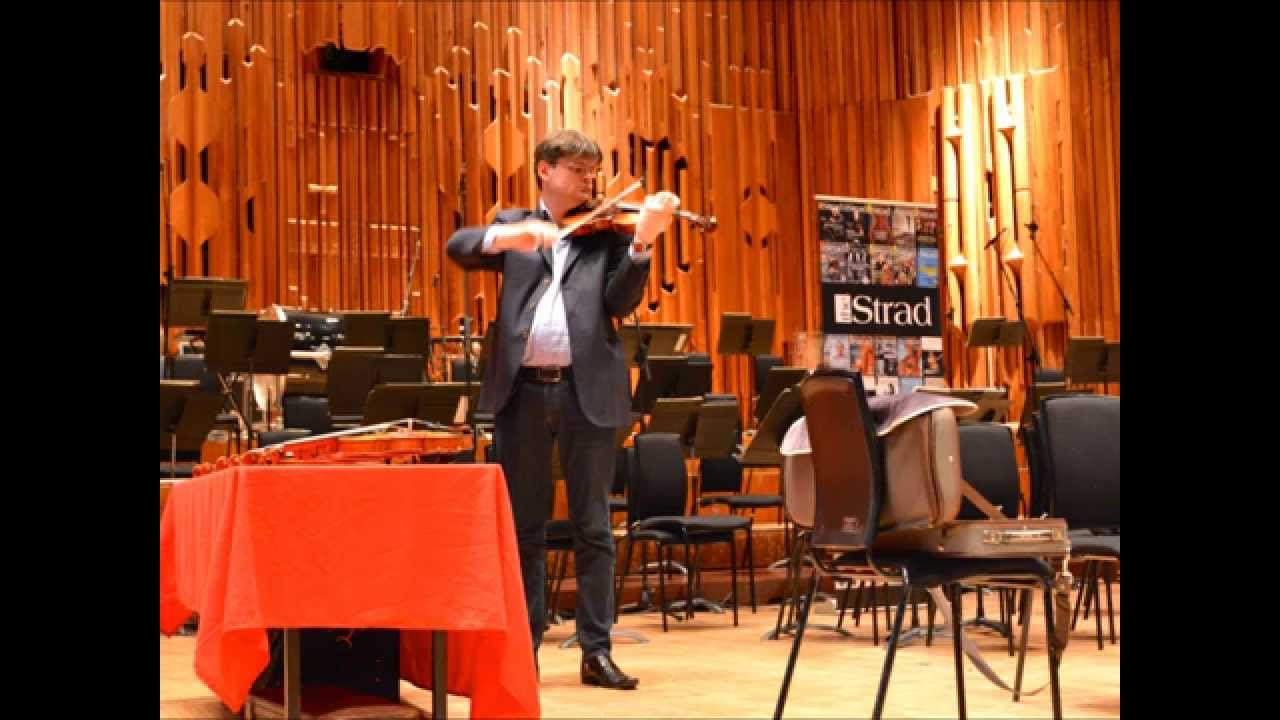
Can you guess which one of these violins is worth $14 million and which one is [Music] not? One of them is a stratavarius and the other is a violin that my parents got for me when I was 12. If you're like me, you probably can't really spot the difference. In fact, double blind studies have shown that sometimes modern violins are preferred over strats. I never understood the hype at all. If a violin is built to be heard, then why is something that has been scientifically proven to sound sometimes worse than a modern violin so ridiculously expensive?
Sold $10 million. Your average professional violin can cost around $50,000. The most expensive violin ever, the Baron Nupstrad, just sold at auction for a record-breaking $23 million. That is a nearly 46,000% premium. But why? In my pursuit of answers, I found out so much more about how humans value things and why.
Oh, and in my journey, I also found out that my violin might be even better than I thought in terms of its value. Uh-oh.
It's probably going to be worth a little bit more because [Music] it's there's only one place to start my journey at rare violins of New York where they house some of the most elite and expensive instruments in the world.
So you are literally above Carnegie Hall.
So our primary mission is to sell and restore fine antique violins. We do see top players, professionals, students, collectors, investors of all types.
Here's our vault. We've got all the violins and vias actually in little cubbies. They're arranged by value starting from the top left 15 million down to about 1 and a.5 million on the top row. Wow, that's incredible. with Stratavari being the most expensive.
This is Antonio Stratavari. He was born in 1644 in Cremona, Italy, the epicenter of violin making at the time. He came on the scene about a century after the invention of the modern violin. He redefined the instrument with a longer body with acoustically ideal curvature. The result was a violin with extraordinary warmth, clarity, and range. often likened to the human voice, especially the soaring tamber of a soprano vocalist. Just listen for [Music] yourself. In 1737, Stratavari died a wealthy and respected craftsman. He lived to a whopping 93 years, which is an old old man for the times. And that allowed him to be more prolific and subsequently more famous than other talented makers of the time. So let's go into some of the oldest violins you have here, specifically Nicolo Amati, because I know it's rumored at least that Strad trained under him. Yes. This is a 1656.
1656 Nicoli. Could we compare this violin to avivarius? Absolutely. One and maybe compare a little bit of the differences. How about the Earl Spencer?
You'll like this one. I've heard of this one.
The Earl Spencer Strad was once owned by the British royal family. Like many Strads, its value goes up because of who has previously owned it. What did Stratavari do to improve uponati? It's actually in the back really that the biggest changes came. Nicolo Marti had this scooping out towards the edges. And here Stratavari the arching goes way out to the side. And did Stratavari intentionally make these changes so that the instrument could project and sound better or he just always with the dawn of the concerto and the celebrity players? I think Strat was always the instrument that people sought out. Now, the real explosion of popularity came after his death in the perfect storm of right place, right time. By the early 1800s, the world had changed.
Romanticism was in full bloom. Public concerts were growing. And for the first time, violinists were becoming celebrities. I mean, just look at these guys. Enrique Finioski, Pablo Desarat, Ysef Yookim. They toured across Europe performing for royalty and at soldout halls. And many of them played Strads.
These players believe Strads were objectively the best of islands at the time. And this is before microphones were around and Strads could project into cavernous concert halls. And when audiences were wowed, each performance became a kind of commercial for Strads.
Celebrity violinists of the 1800s were basically the influencers of their time.
And one group that was influenced were rich guys. The growing prestige of Strads was appealing to a new class of industrialists who didn't just want to be rich, they wanted to look it. Owning a Strat became the ultimate flex, even if they didn't know how to play it.
Okay, I'm starting to understand why Strads were the instrument of choice for at least a couple hundred years. But this still doesn't explain why Strats cost so much today and are preferred by some of the best players over objectively better sounding modern violins. We have had 400 years to improve on the form. So why is a Stratavari still considered the best and why does it command a wildly outsized price tag? There has to be more. I need to get my hands on a Strad like right now. Okay, so for comparison's sake, let's grab a few nonstrads, too. I'm afraid to even touch them. I will have to have you carry at least one. Yes, you can carry. What's that worth? It's about 700,000. Wow. They gave me a cheap one.
Marco. All right, I'll grab a bow. We have one bow that's over a million. This $180. $180,000. It's a nice car. It's a It's a a very nice car. Okay. To the recital hall. All right.
So we have a really good contemporary Italian instrument made I think in the last 5 years. Then we have Nicol Mati, his student Andrea Gorneri and the Antonio Stravari Earl Spencer. Okay, I guess let's get started with the the Amati.
First of all, I can't believe I'm holding something this old just like realizing this was 1656.
[Music] Okay. What would you say is the type of clientele who comes in? Is it people who are trying to diversify their assets?
Music lovers. Yes. A lot of times it is people who are looking to put money into something different and there has to be some passion for music. We encourage that and we try to convert that sort of or investor type into more of a benefactor.
So most Strat buyers today don't even play them. These buyers loan their prized violins to top tier musicians who elevate the instrument's value through performance, prestige, and name recognition. So Strats had celebrity endorsements. They had rich guys buying them. But I came across another big reason why Strads have taken on this almost mythic quality today. A good story. And that story came from these folks, the Hill family. At the turn of the last century, the Hills were London's most influential violin dealers and experts. Their firm We Hill and Sons had handled more Stratavari instruments than anyone else in the world, and they were the ones who shaped his legacy in writing. In 1902, they published Antonio Stratavari, his life and work. And this was the first definitive biography of the maker. And it wasn't just his life story. It was actually a masterclass in branding. The book combines deep scholarship with reverence. The book even includes testimonials from elite musicians. This glowing account of Stratavari's life and craftsmanship helped elevate his brand and in turn his market value. I mean, just look at these prices. The value of Strads didn't just grow, it exploded. The Hills were luxury brand strategists before brand strategy was officially a thing. And for decades after the original story was cemented, something surprising helped drive prestige and value and mystique over time. And that was true crime.
In 1936, Bronlov Huber Monstrad vanished from Carnegie Hall and stayed missing for 50 years. Its whereabouts a total mystery until the thief confessed on his deathbed, revealing he'd been secretly performing with it the entire time.
There he is, hiding in plain sight. In 1980, the Ames Strad vanished for 35 years, resurfacing only when the thief's ex-wife tried to get it appraised. In 2014, the Leinsky Strad was stolen after a concert in a parking lot where the thief used a stun gun on the owner in a firstofits-kind attack. That kind of mystery only adds to the allure. The longer a Strad stays hidden, the more valuable and mythic it becomes. The intrigue is so powerful that sometimes people just start making things up. Take the Earl Spencer Strad we saw over at Rare Violence. It belonged to Princess Diana's grandfather and some claim she played it as a child. Some dealers pass it off as fact. It is not. But the story sticks because the story sells. I learned that the Earl Spencer was played by Nicola Benadeti, one of my favorite violinists ever, and another celebrity violinist whose hands increase the value of the Strrad.
My hands aren't famous enough to raise a violin's value, but they've held the same one for 20 years. So, I'm getting my own violin appraised to find out what it's actually worth and why. Okay, so this is my violin. I got it when I was 12 in a blind play test. And they told me, "Oh, this is by far the most expensive one." So, here I'll let you.
Did they say this is the last violin we're buying for you? They implied that.
Yes. Yes. My parents did the same. If you look at those sound holes, it's not Strat, is it? It's rub it in.
You know, it's not a Strad model. This is a Graner cuz Chanel was known for making copies of Strat and Guer. Yeah.
In terms of its value, it's probably going to be worth a little bit more because it's a Guinary model than a Strat model just because people find them easier to play. Oh, but it's been a long time since you've been at a shop, hasn't it? A long time. Tatso Imayishi is a master violin maker and head of the rare violins workshop where he handles and restores some of the rarest instruments on earth including multi-million dollar strats. What he'll do is look at your violin and assess what he believes it needs. I have brought you a gift. When was the last time you had this in check? You said like maybe 15 years. Yeah. 19 not bad.
Born is a little bit dry. And can you talk through what you're looking for?
See, I see bridge forwards a little bit.
Um, so the density of the wood during time was different. There's a a mini ice age and that particular one was a lot denser than what we normally see. So he understood what he needed to do depending on the material he had and he modified um like thickness to get the best out of it, you know, the material he had.
two open seams. Two open seams right here and there. Okay. Condition wise, I mean it's mostly a maintenance issue and this instrument doesn't have any um problem. After Tatsuo gives the thumbs up on my violence condition, Bruno steps in for the final checks, including verifying the authenticity of the label.
So, this label, it's had water damage, but I think it's probably real. So 1870 something maybe. Okay. Do you already have a number in your head? Don't say idea. Yeah, you do have a number in your head. Okay. So what I what I'd like us to do is Bruno write down his idea. Zeve write down your idea. I'll write down what my family paid for it. And then we'll compare. Oh, okay. So Zeve said between 75 and 80,000. Okay. I think probably between 85 and 90. That's pretty good. My family paid 50. So doubled in value pretty much. That's pretty darn good. So when you value this instrument, you're thinking about it from the performance perspective because an investor isn't going to buy. It's again it's what what would I sell it for? Yeah. If I sell it to you today for $85, $90,000 and 6 months later you said, I'm just buying a Strad. Can you sell this for me? Can I get you what you paid? Can I resell it? Okay, now it is all starting to click. Strats are not priced for players. They're priced for patrons. Wealthy collectors buy them.
Musicians borrow them. Two markets, two realities. Meanwhile, for violins like my Chanel, those have to be affordable, relatively speaking, to the people actually playing them. Okay, my head is spinning. I think it's time to talk to our favorite economics professor and fellow Dynamo host to try to make economic sense of it all. What lessons can we take away from how this brand of Stratavarius was created in that the price is so much higher moderners have been able to replicate the sound in many ways. I mean this is all just sounds like a vellin good. The immediate theory to explain Estradavarius is that it is a Velin good coined by Thorine Vein. A product for which demand increases as the price increases because the high cost itself makes it more desirable as a status symbol. He wrote theory of the leisure class in 1898 and he is commenting on the guilded age. He is commenting. right when stratavir becomes a a signal of wealth when it becomes conspicuous consumption is right at the period when that concept was even put to bed and most of the economics of the art world are centered around this. It's not necessarily the beauty of the art or the innovation of the art or all those things but it's just because other rich people said it's good. Yeah. It feels like there isn't one singular product you can compare a Stratavari violin to.
No, in the art industry, a Monae or a Van Go. The difference though is you just rattled off several names in the art world, whereas in the world of violence, it is the one name. That's a good question. Yeah. Why is there only one? Yeah. Oh. Oh, Fabra. What about the Fabra?
One comparison might be Fabra eggs.
Ornate masterpieces made for the Russian imperial family. With fewer than 50 known to exist, they've become blue chip collectibles, coveted by investors and collectors alike, much like Strats in the world of violins. Can you think of another brand off the top of your head that makes luxury eggs? Probably not.
And that's kind of the point. But what sets the Strat apart is that it's a tool, not just art or jewelry to be admired. It was built to be played. So here's the part that resists any kind of economic theory. What I came to understand is that the real magic of a Strad lies in how it makes the player feel. And the only way for me to grasp that was to finally play one myself. And here is how it went. I don't know. I'm scared.
$14 million in my hands right now. Oh my gosh. I'm not faking this, guys. This is really how I feel.
[Music] [Applause] [Music] This is the crux of what we're trying to figure out. Why, if you had to describe in one sentence, why Stravavari became the name that he is. What is that one reason, one sentence? Well, for me it's simply that he was the best at everything in terms of sound, how it inspires the musician, how it inspires the listener. And like a great great painting, you think it's perfect and then you look and you realize there's a little blemish and there's always there's something very personal with everything. M the question is was it the fact that the great violinists play on them and then with recordings we are all used to hearing that sound and that's what we associate as being the the perfect violin sound. No one can tell. Yeah. The order of operations is unclear but at this point it's just is the best. The best people play them. The wealthiest collectors buy them. And and you have one. And I have one. Have is a strong word. I am holding one. Yes.
[Music] Amazing. Okay. So, modern brands can only attempt to emulate aspects of the Stratavari playbook. Take this La Prairie cream priced over $1,000. The eyepopping cost and celebrity backing from the likes of Margarabi make it feel like it's really working regardless of what's actually inside. And take Gucci's Gucci is a feeling campaign. It doesn't just sell a product. It literally sells a feeling, an aura of luxury. Through first mover mastery, a perfect storm of timing, celebrity endorsement, and a firm that shaped the narrative, Stratavari claimed his place at the top early. and no one could surpass him.
It's not just craftsmanship. It's history and timing. It's the feeling for the player, the buyer, and even the audience. As long as they know it's a Strad. As for which violin was which up at the top, here's the [Music] Strrad. And here's my own piano.
[Music] Now I get it. The stratavarious effect is real. Could anyone else pull it off?
Probably not. But modern luxury brands surely can try.
[Music]
Up Next

50:55
True Cost of Fast Fashion: Environmental & Social Impact
@ENDEVRDocs
1.3M views•2021-02-07

12:54
Triumph of Orthodoxy Icon: Byzantine Art & History Explained
@BenCallan
2.1K views•2024-08-06

9:49
FastAPI vs Flask vs Django: Choosing the Right Python Web Framework
@TechWithTim
302.5K views•2024-05-26

1:42
Game of Thrones Opening Credits: A Cinematic Analysis
@gameofthrones
46.3M views•2011-04-18
Related Study Plans & Knowledge Roadmaps
Structured learning paths in General & Interdisciplinary Studies
general-studies
Elevator Engineering: History, Physics & Cities
01From Hoists to Safety Brakes: The Dawn of Vertical Lift
02Hydraulic vs. Traction: The Engineering Physics of Elevators
03Modern Speed, Safety, and Algorithms
+ 2 more learning modules
12h5 modules
Explore Roadmap
general-studies
Rubber: Material Science, History & Geopolitics
01Origins of Natural Rubber & Mesoamerican History
02The Chemistry of Natural Rubber & Vulcanization
03The Geopolitics of the Rubber Boom & Colonization
+ 2 more learning modules
12h5 modules
Explore Roadmap
general-studies
Containerization: Evolution, Logistics & Trade
01Ancient Trade & Bulk Cargo: Amphorae to Barrels
02The Industrial Revolution & Cardboard Packaging
03The Containerization Revolution: Malcom McLean
+ 2 more learning modules
12h5 modules
Explore Roadmap
general-studies
Textile Tech: Evolution, Labor & Global Impact
01Pre-Industrial Textiles: Handloom & Cottage Industry
02Mechanization: The Spinning Jenny to the Power Loom
03The Factory System & Global Labor Transformation
+ 2 more learning modules
10h5 modules
Explore Roadmap