











![[REPLAY#10] Sự Tiến Hóa Của Những Ngôi Sao | Thư Viện Thiên Văn](https://i.ytimg.com/vi/B3TlJyJcd34/hqdefault.jpg)


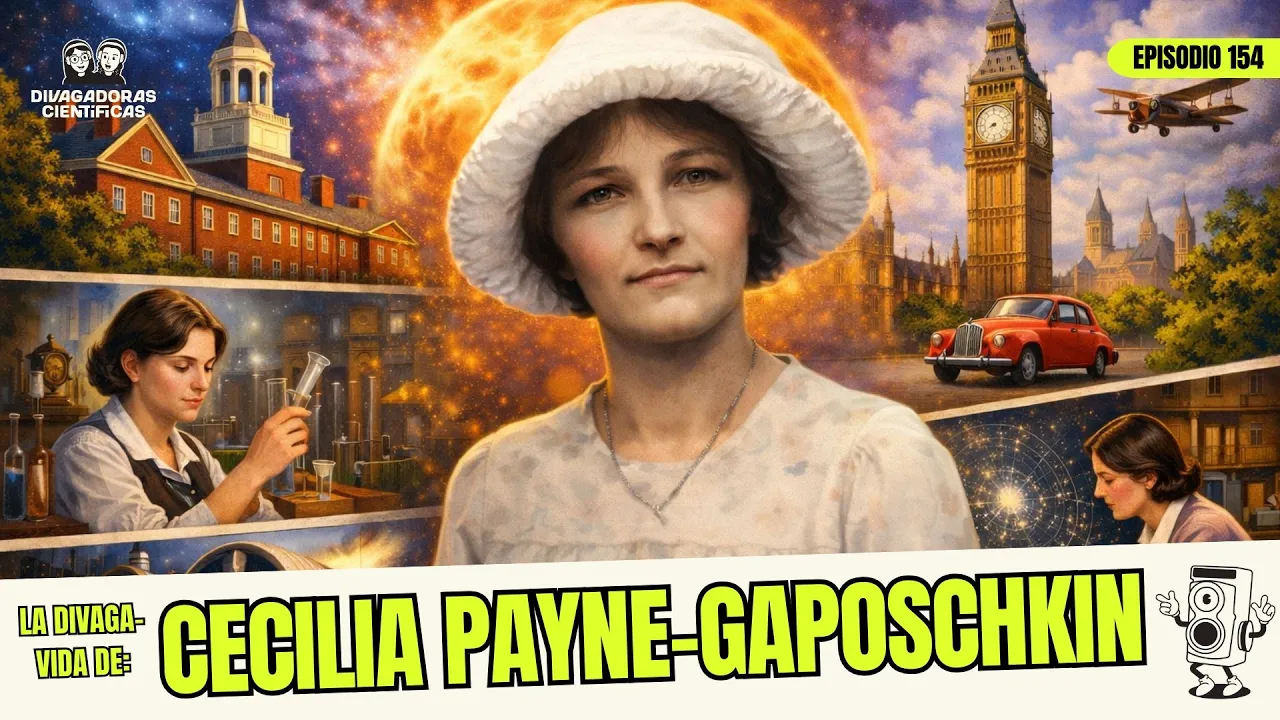
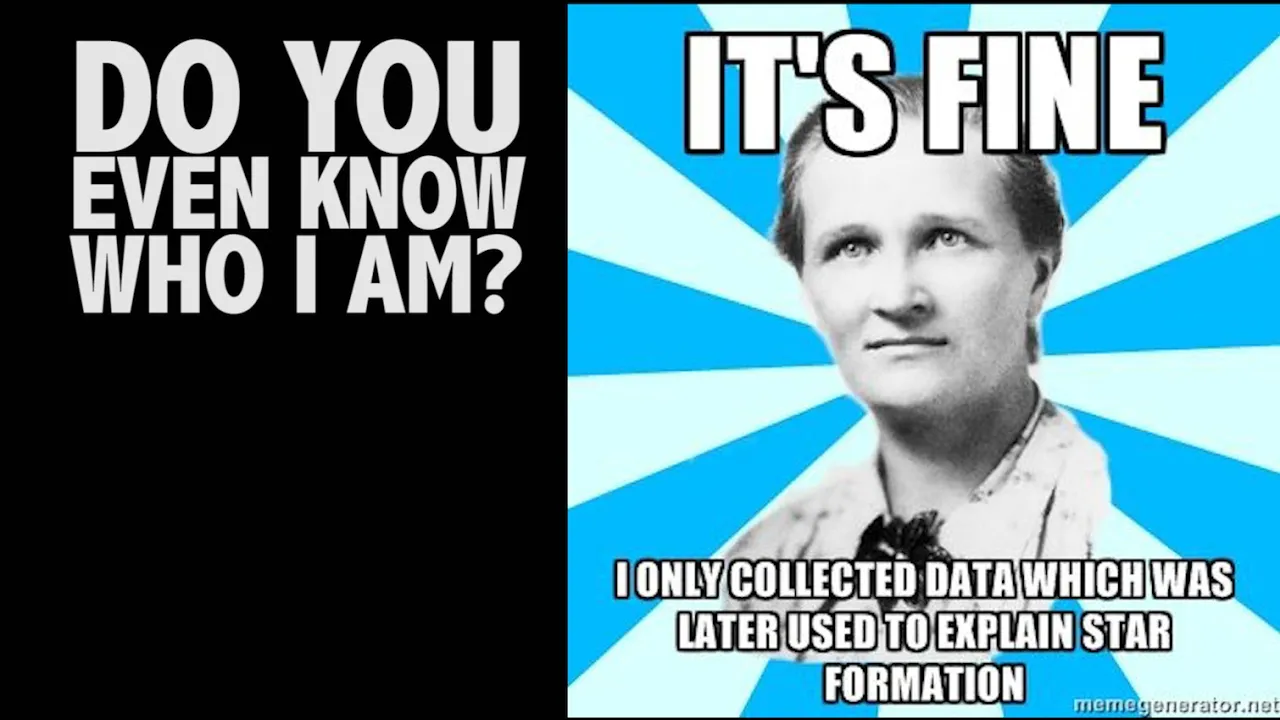



Astronomers determine what stars are made of by analyzing their light spectra, specifically looking at absorption lines caused by atoms and ions in the star's atmosphere blocking specific wavelengths of light; this technique revealed that stars are primarily composed of hydrogen and helium, contrary to the earlier assumption that they had similar compositions to Earth.
What Stars Are Made Of: Cecilia Payne's Discovery
Added:The basics of spectroscopy, specifically how elements absorb and emit light at characteristic wavelengths to form spectral lines.
Basic atomic structure, including the properties of hydrogen and helium, and how thermal energy can affect electron energy states.
The historical scientific consensus of the early 20th century, which assumed that the chemical composition of stars was nearly identical to that of the Earth.
The Saha Ionization Equation, the fundamental astrophysical formula Cecilia Payne applied to interpret stellar spectra quantitatively.
Stellar nucleosynthesis, exploring how stars fuse hydrogen and helium to create heavier elements during their lifecycles.
Stellar evolution, studying how a star's initial chemical composition dictates its temperature, classification, and ultimate cosmic fate.
The history of women in early 20th-century astrophysics, focusing on the barriers Payne-Gaposchkin overcame to have her revolutionary thesis accepted.
325.3K views14.4Klikes12:44Original Release: 2020-09-01
Thank you to Target for supporting PBS.
Pin-pricks in the celestial sphere, through which shines the light of heaven?
Or gods and heroes looking down from their constellations?
Or lights kindled above middle earth by Varda Elbereth and brightened with the dew of the trees of Valinor?
Science has long pondered the mysteries of the stars.
And this is how we finally figured them out.
The first thing you learn in astronomy is that the sun and the other stars are giant balls of fiery hydrogen and helium, powered by raging nuclear furnaces in their cores.
But this knowledge is surprisingly recent.
A hundred years ago, we were starting to plumb the deepest mysteries of the universe with Einstein’s relativity and with quantum theory.
But we had no idea what that giant bright thing in the sky was.
We didn’t know what stars were made of nor where their energy came from.
On the other hand, it’s impressive that we figured it out at all - afterall, we’ve never been to a star, never sampled its stuff to put under a microscope.
And yet in a handful of years during the 1920s we went from no idea to having a pretty solid understanding of stellar physics.
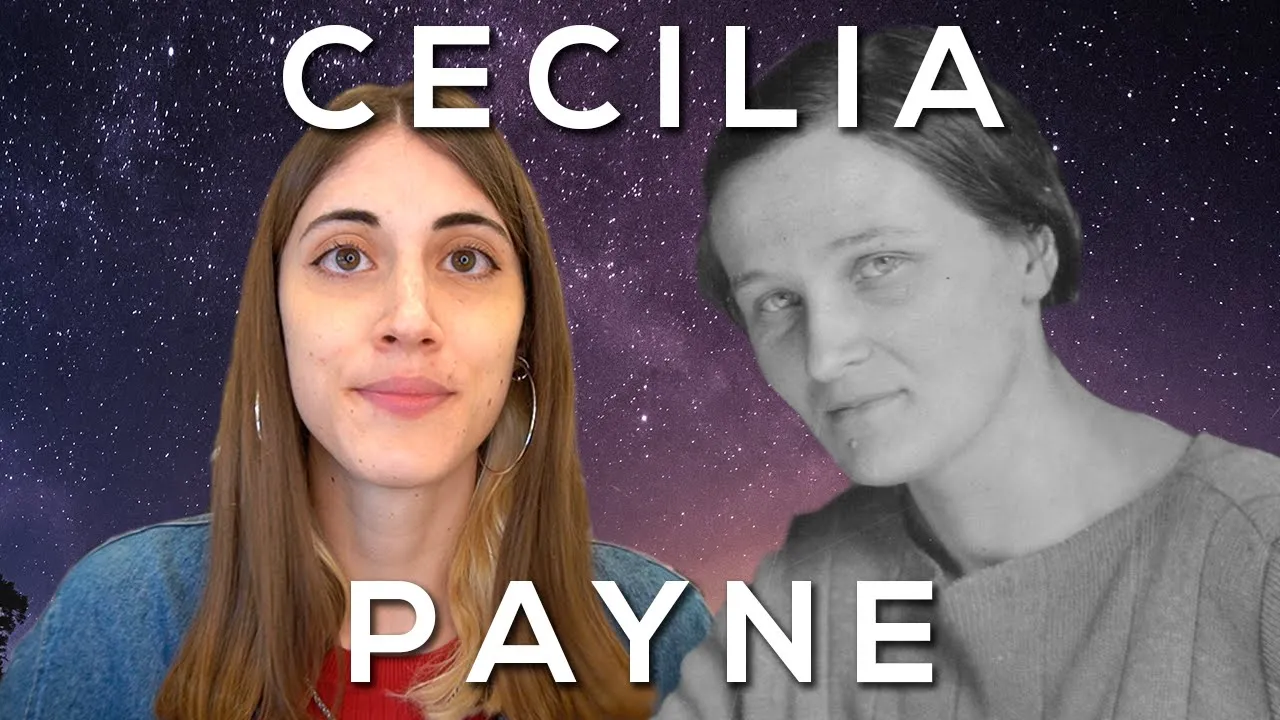
And a lot of it was thanks to a brilliant young astronomer named Cecilia Payne.
You may not have heard of Cecilia Payne - later Cecilia Payne-Gaposchkin - and that’s a shame.
She not only revolutionized our understanding of the stars, but she helped blaze a trail in astronomy and physics for the women who would come after.
We’ll get to the physics in a minute - but Payne deserves a quick bio.
She was born in Great Britain in 1900 and always knew she wanted to be a scientist.
She was tending towards biology at Cambridge University where she ended up in a lecture by the great astrophysicist Sir Arthur Eddington, who recounted his recent solar eclipse expedition in which he verified Einstein’s new general theory of relativity.
In Payne’s own words: “The result was a complete transformation of my world picture.” She switched from biology to physics, finished her studies, but couldn’t even graduate properly - Cambridge simply did not award such degrees to women.
Cecilia Payne set her eyes on the New World.
Harvard University in Massachusetts was already proving itself at least a little friendlier to women.
Annie Jump Cannon and Henrietta Swan Leavitt - two of the greats of stellar astronomy - had come through Radcliffe College - the women’s college adjoining the all-male Harvard.
And Harvard itself was just now opening its doors to female graduate students.
This was 1923, and just out of her degree Payne was already extremely broadly knowledgeable.
Enough so that she knew what she wanted to research - she wanted to unlock the mysteries of the stars.
We’ll come back to Cecilia - for now let’s get to some stellar science.
The secret to understanding the stars is not exactly in the light they send to us.
Rather, it’s in the light that they fail to send.
This is a modern spectrum of the Sun - it’s the amount of light we receive at different colors - or in other words, from photons of different energies of frequencies.
Most of this light comes the photosphere - a layer around 100 km deep at the surface of the Sun.
It’s the glow of the 6000 K hot material in that layer.
The colour of a star depends on that temperature - blue for hot stars, red for cooler stars, and sort of greenish-yellow for stars like our Sun.
But on its own, that thermal light is a very smooth curve across the spectrum.
So what about these dark bands?
Those are where photons of very specific energies have been plucked out of this thermal light.
It works like this.
A photon trying to escape from inside the Sun encounters a lot of obstacles.
One of the most severe is that the Sun is full of free electrons - electrons that were stripped from their atoms due to the intense heat.
Electrons deflect the path of a photon very easily.
So any given photon has to bounce its way between many electrons before finding its way to the surface.
A photon coming from the core of the Sun will be or scattered so many times that what should be a 1-second journey to the surface can take 10s of thousands of years.
Once it gets close to the surface, material is much less dense, so there are fewer free electrons to do the scattering.
By the time a photon reaches the photosphere it has a 50-50 chance of traveling the final 100km to space without bumping into anything.
At least, that’s true for most of the light.
But some photons encounter a new obstacle.
As temperature drops, it becomes possible for some electrons to be captured by nuclei to form atoms.
And if free electrons are good at stopping photons in their tracks, these atoms are even better.
An atom can absorb a photon if doing so would cause one of its electrons to jump up to a higher energy level.
The energy of the photon and the energy of the electron jump have to be exactly the same.
So any photons trying to escape the Sun that happen to have one of these particular energies are going to get sucked up on its way out.
And that’s what these dark lines are - we call them absorption lines.
Each element on the periodic table produces a different set of lines corresponding to its unique energy levels.
Just seeing which absorption lines are present tells you which elements are present inside the Sun.
When the spectrum of the Sun was first studied, it was noticed that the most prominent lines corresponded to the most common elements on the surface of the Earth.
The prevailing wisdom came to be that the sun was made of exactly the same stuff as the Earth - just a lot, lot hotter.
But to test this - to figure out the true composition of the sun from these absorption lines - was going to take some serious advances in understanding how both stars and atoms work Fortunately help was at hand.
The brand new field of quantum mechanics was emerging in Europe, and a young astrophysicist named Cecilia Payne had just arrived at Harvard.
Even that early in her career, Payne was widely read and so she knew about some groundbreaking work in early quantum theory that she could use to decode the complex patterns of absorption lines in stars.
One of the reasons for the complexity of stellar spectra is that you don’t just get one pattern of absorption lines per element.
You get a different pattern for every different ionization state of every different element.
In energetic environments like the Sun, electrons are regularly kicked free from their atoms.
The atoms are ionized.
That changes the energy levels of the electrons that remain, resulting in a different set of possible absorption lines depending on how many electrons have been kicked free.
So the pattern of absorption lines depends on the abundance of each element AND on the abundance of each ionization state of that element.
Not long before Celilia Payne started her research, Indian astrophysicist Meghdad Saha had used early ideas in quantum theory to crack the ionization problem.
He figured out a formula that told how much of each ionization state you should get if you have a cloud of some element at a given temperature and pressure.
Saha and others began to apply this theory to stellar absorption lines.
But it was Cecilia Payne to figured it all out.
Payne realized that it should be possible to translate a star’s absorption line pattern into measures of temperature and composition.
But it wasn’t straightforward - there are multiple competing influences determining the strength of a given absorption line.
For one thing, each absorption line is formed as light deeper within the sun traverses a large distance, over which temperature and pressure drop dramatically.
And different lines are predominantly formed at different depths.
In astrophysics, these sort of messy, competing effects rule the universe.
It’s literally impossible to disentangle everything.
A big part of making progress in astrophysics is finding clean relationships amid the chaos.
Cecilia realized a couple of things - first was that although the strongest absorption lines were hard to interpret, theoretically the strength of the weakest lines should be proportional to the abundance of the particular ionization state of that element.
That didn’t tell you exactly how much of that ion type there was - just the relative amount compared to other ion types.
So the second realization was that although she couldn’t get the total quantity of each ion or of the element, with certain assumptions she could get the relative amounts of the elements compared to each other.
Cecilia Payne set about analyzing the many spectra of stars that had been observed at Harvard Observatory.
She calculated the relative abundances of the elements and found they varied between stars, but were generally similar to what we find on Earth’s surface - but with a couple of extreme differences.
On Earth, hydrogen is the third most abundant element after oxygen and silicon, while helium is extremely rare.
Her results suggested that hydrogen was by far the most common atom in the sun, followed closely by helium.
Cecilia Payne had discovered what the sun and stars were made of.
This was totally against the current scientific consensus - which was that the Sun was made of the same stuff as the Earth.
Payne was advised to downplay that result in her thesis.
She glossed over the result, saying that it was “almost certainly not real” - that it was likely the result of not understanding the atomic theory of hydrogen and helium well enough.
But the fact of the sun being made mostly of hydrogen and helium was confirmed only a few years later, and Cecilia Payne is widely recognized for discovering this.
By the way, the whole finding out what stars are made of thing wasn’t even the main point of Payne’s thesis.
She also developed a way to calculate the temperatures of stars just based on the absorption lines.
This was much more precise than the previous method of just observing the overall color of the thermal light.
So, yeah, that’s how we know what the stars are made of.
At around the same time as Ceclia Payne was doing all of this, other scientists were figuring out the rest of the mysteries of the stars.
Arthur Eddington himself had postulated the whole nuclear fusion thing just a few years earlier in 1920, but now knowing what stars are made of, he and others were able to develop a detailed theory of stellar physics.
Stars went from being utterly mysterious to one of the best-understood denizens of the universe.
And Cecilia?
She stayed in the US and became the first female professor at Harvard, and the first female chair of one of its departments.
So, here’s to the stars - both types - Cecilia Payne-Gaposchkin, star astrophysicist, and also the type she figured out for us - the giant balls of burning hydrogen scattered across space time.
Today's episode was part of PBS's American Portrait Series.
We know we have a very international audience, but for those of you within the USA, PBS is asking you to share your stories, experiences and ideas on your life in America today.
PBS American Portrait is a nationwide storytelling project — a chance to be seen, heard, and to give a glimpse into your own life.
Everyone has a story.
Share yours at:pbs.org/americanportrait.
We’d like to thank Target for being a proud supporter of PBS.
Since the first Target opened in 1962, their mission has been to help families discover the joy of everyday life.
In all 50 states, Target is dedicated to being a good neighbor, and working with their communities and partners to make life a little better.
There are over 350,000 team-members employed by Target to continue their mission every day.
To learn more about Target’s commitments, you can check out target.com/community or click the link in the description.
So we’re going to have to skip comment responses for a week due to some travels.
We’ll do double comments next week.
But I do want to take this opportunity to send a big, big thank you to one of our Patreon supporters, Mark Rosenthal.
Mark supports us at the big bang level - which basically means we get to film the show, animate it, AND each lunch.
Mark, we've talked about a lot of stars today, so it’s fitting we end on you, the starriest star of all.
Thanks for helping us to.... shoot for the stars?
Up Next

19:58
Gaia Mission: Mapping the Milky Way in 3D | ESA Astrometry
@cambridgeuniversity
566.4K views•2013-12-19
61:17
First Billion Years of the Universe with the Square Kilometre Array
@iaaudc
121 views•2022-05-26
13:37
Starstuff: The Cosmic Origins of Elements and Supernova Chemistry
@pbsspacetime
480.3K views•2016-04-06
6:10
Gamma-Ray Bursts: Cosmic Snipers Explained | Astronomy
@kurzgesagt
15M views•2016-07-31
Related Study Plans & Knowledge Roadmaps
Structured learning paths in Astronomy
astronomy
Reionization: Pop III Stars, IGM & 21cm Line
01Foundations of Cosmology & the Early Universe
02Population III Stars & Cosmic Dawn
03Physical Mechanisms of Reionization
+ 2 more learning modules
17h5 modules
Explore Roadmap
astronomy
Planetary Rings: Dynamics, Roche & Resonances
01Foundations of Gravity and Orbital Mechanics
02Tidal Forces and the Roche Limit
03Structure, Composition, and Collisions
+ 2 more learning modules
10h5 modules
Explore Roadmap
astronomy
Asteroseismology: Stellar Waves, Ages & Cores
01Foundations of Stellar Astrophysics & Wave Mechanics
02Stellar Oscillation Modes: P-modes and G-modes
03Mathematical Framework of Asteroseismology
+ 2 more learning modules
35h5 modules
Explore Roadmap
astronomy
Adaptive Optics: Physics, Engineering & Control
01Foundations of Wave Optics and Wavefronts
02Atmospheric Turbulence & Optical Distortion
03Wavefront Sensing Technologies
+ 3 more learning modules
35h6 modules
Explore Roadmap