
















The Gaia spacecraft, launched by the European Space Agency in 2013, is creating the largest and most precise three-dimensional map of the Milky Way by measuring the positions, distances, and motions of approximately one billion stars using parallax measurements with microarcsecond precision; this revolutionary mission employs advanced silicon carbide optics, operates from the stable L2 Lagrange point, and generates petabyte-scale data to transform our understanding of galactic structure, stellar evolution, and the distribution of dark matter in our galaxy.
Gaia Mission: Mapping the Milky Way in 3D | ESA Astrometry
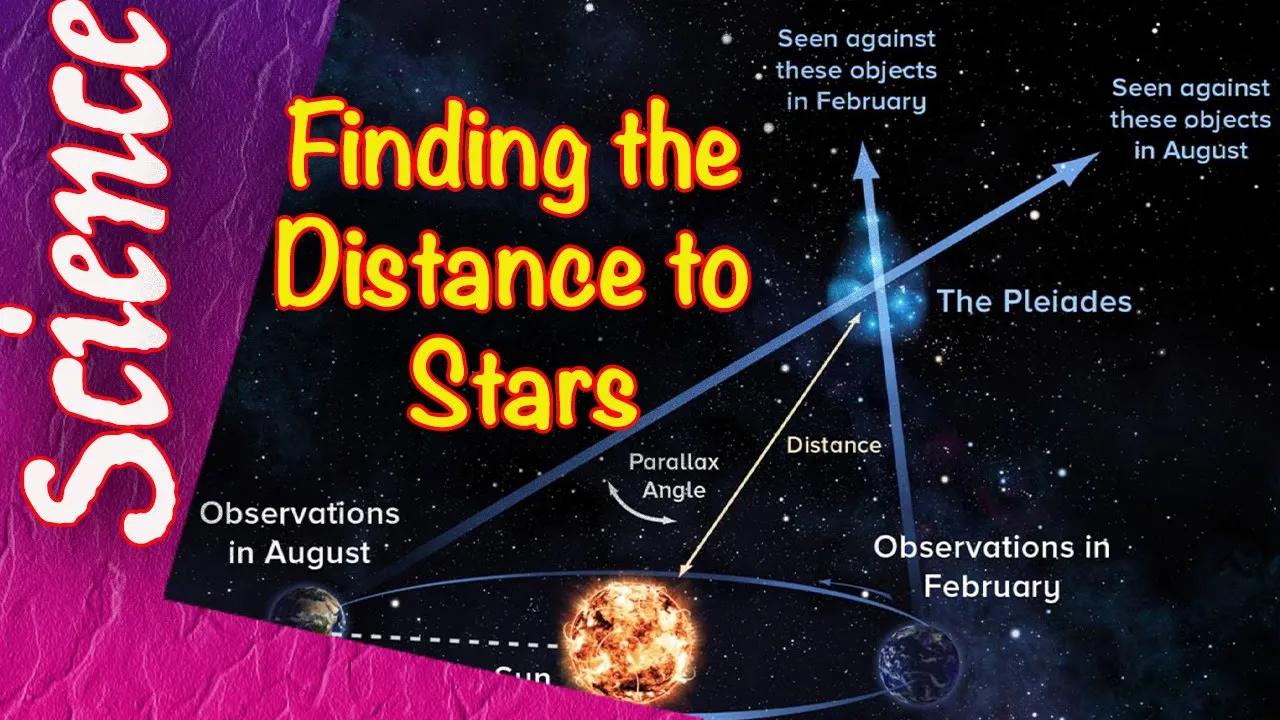
Added:Understanding the concept of stellar parallax and how it is used to measure cosmic distances.
Basic knowledge of the Milky Way's structure, including the disk, bulge, halo, and spiral arms.
The fundamentals of astrometry, specifically how astronomers measure the positions, distances, and movements of celestial bodies.
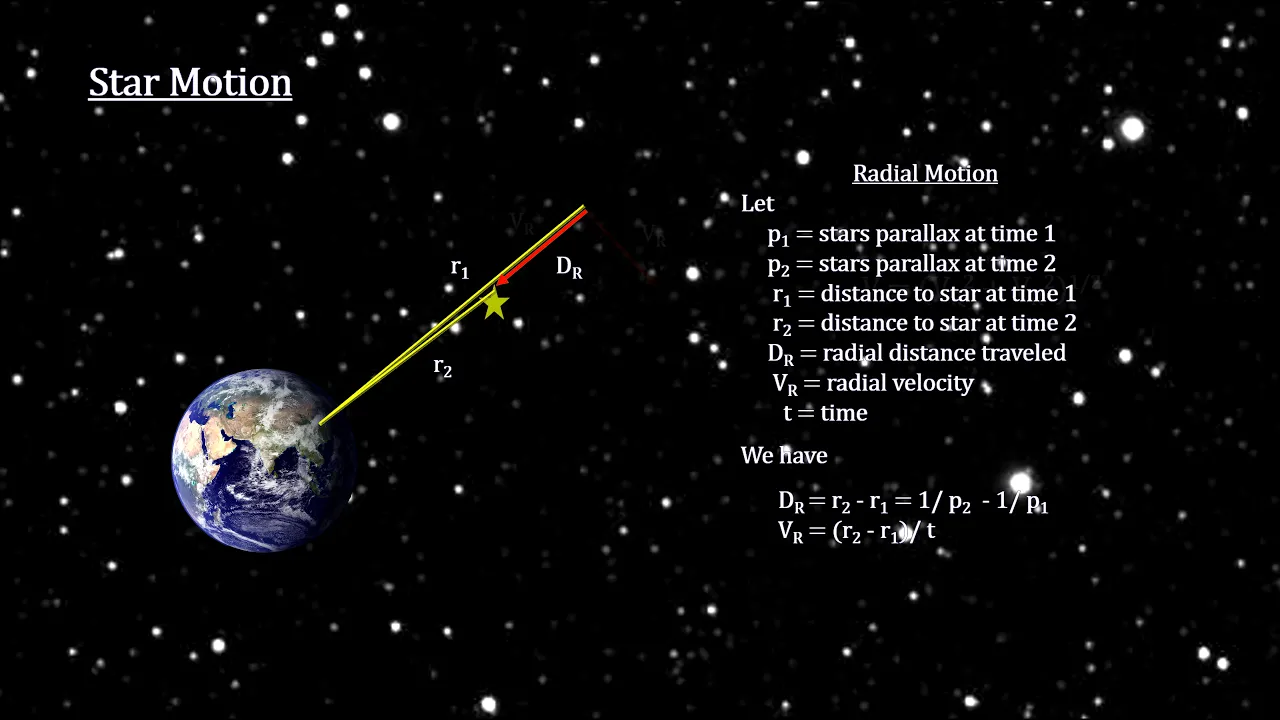
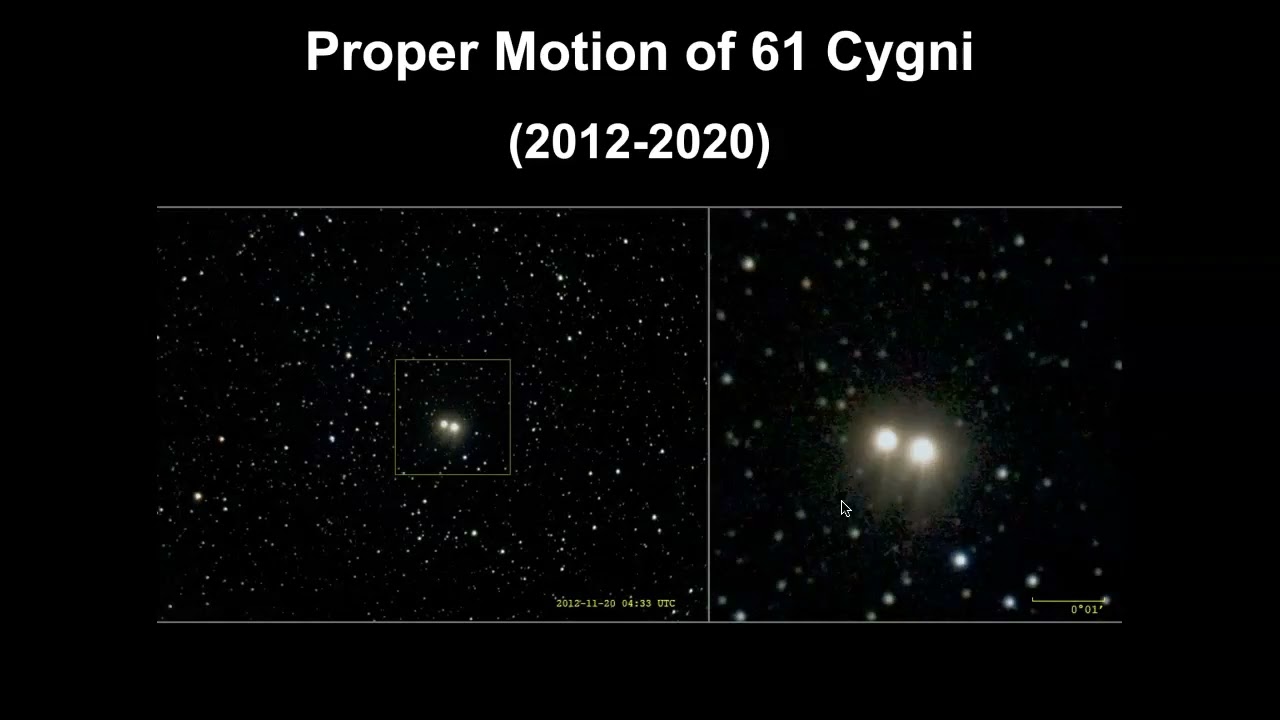
An introduction to stellar motion concepts, such as proper motion (transverse velocity) and radial velocity.
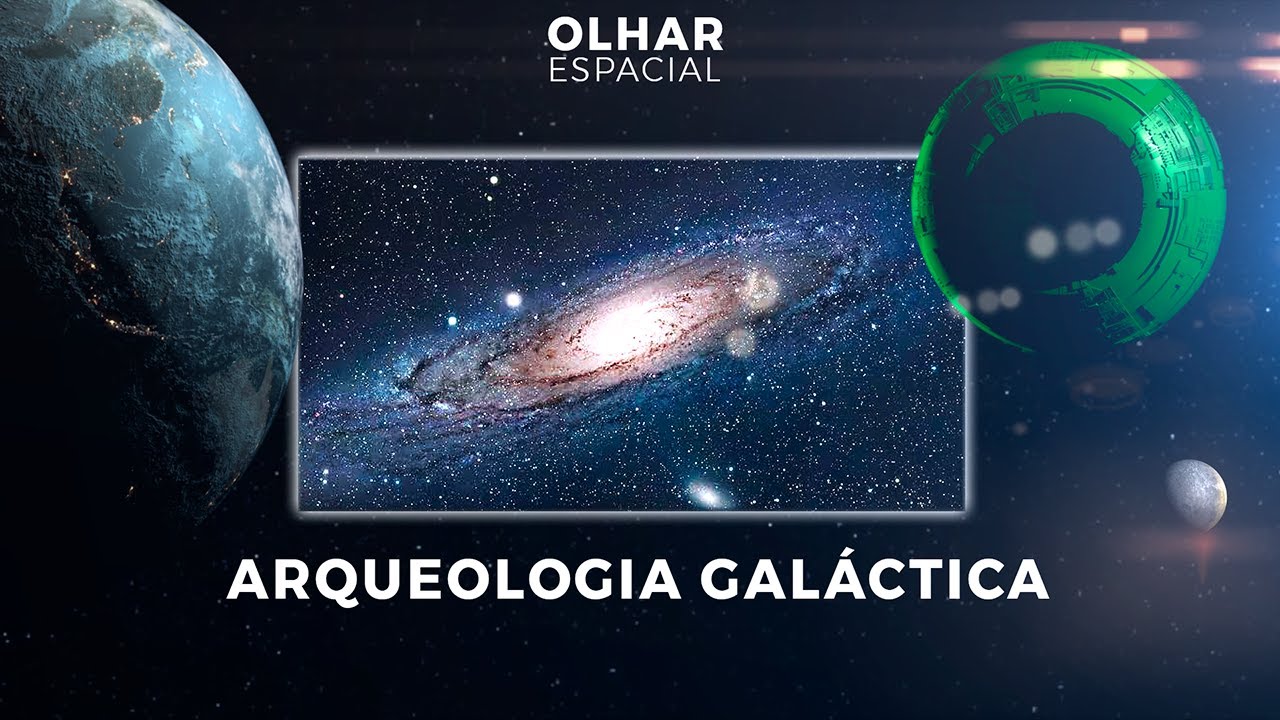
Galactic Archaeology: Using Gaia's chemical and kinematic data to reconstruct the merger history and evolutionary timeline of the Milky Way.
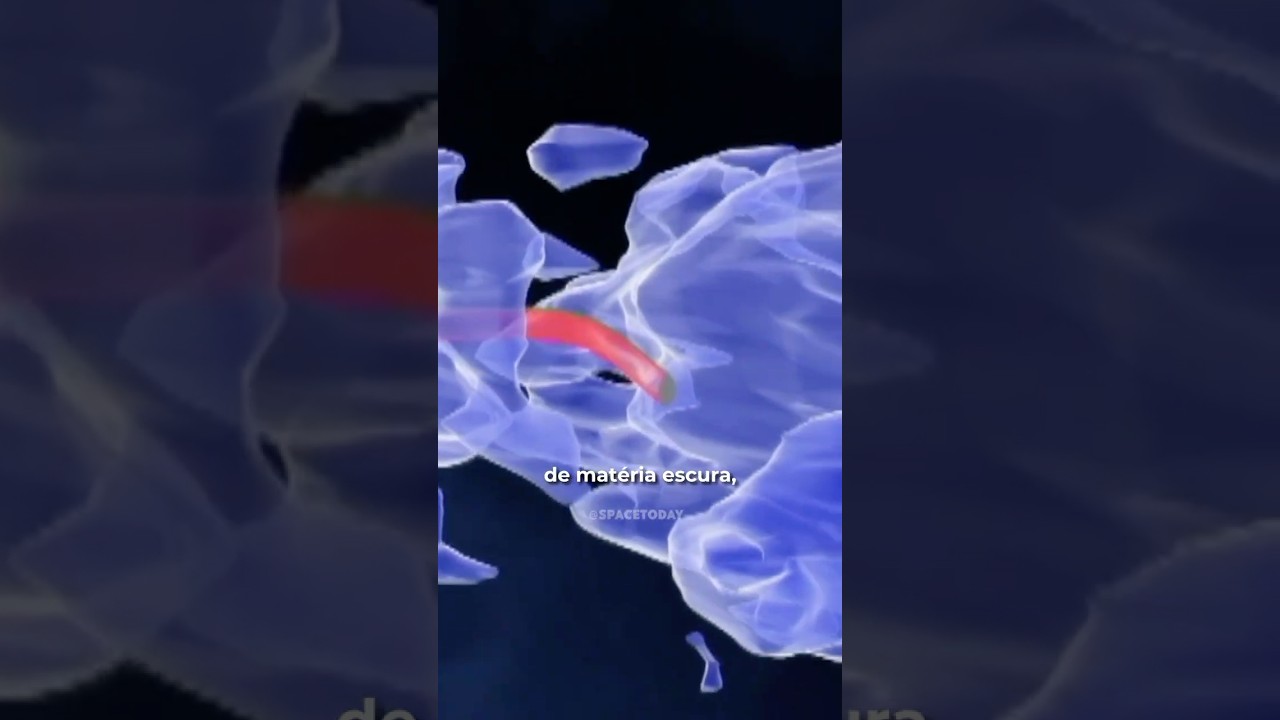
Mapping Dark Matter: Analyzing the gravitational potential and rotation curves of the galaxy using Gaia's precise stellar velocities to map dark matter distribution.
Calibrating the Cosmic Distance Ladder: How Gaia's parallax data refines the distance measurements of Cepheid variables and Type Ia supernovae to determine the expansion rate of the universe.
Astrometric Exoplanet Detection: Exploring how Gaia's high-precision measurements are used to discover exoplanets by detecting the subtle gravitational wobbles of host stars.
566.4K views5.7Klikes19:58Original Release: 2013-12-19
The heavens are alive. Do not be deceived by the apparent peace and tranquility of the night sky above you. The celestial ballet of stars that dance and flicker gently to the human eye are raging and burning in a near vacuum of space. Living and dying with a beauty, ferocity, and magnificence that is almost impossible to comprehend.
Stars explode into life, then explode in death. We are all produced from the hearts of these dying stars. Charting these dark heavens is an essential part of astronomy. But in order to investigate a celestial body, astronomers must know where to find it.
Without this knowledge, astronomers would wander blindly in what Galileo once termed a dark labyrinth. In 2013, a rocket will blast into the sky from a launch site in French Gana and travel some 1.5 million km to reach its destination in orbit around the sun. The spacecraft is called Gaia. Its mission is to make the largest, most precise three-dimensional map of the Milky Way ever attempted. The science behind GIA was recognized by everybody right from the start as something that that mankind must do.
Gaia is going to be a revolution in fundamental astronomy. It's going to be a mission that's going to affect everything in astronomy.
Guyia is going to produce tomorrow's version of all the great star cataloges that have gone back in history to the very dawn of astronomy. The answer is just one. Uh, and there's one Milky Way and we'll find out what it's all about.
Jerry Gilmore, professor of experimental philosophy at the University of Cambridge, is the UK's principal investigator and has been involved in the evolution of GIA since 1990.
The way astronomy works is really very simple. The first thing you have to do is look at the sky and say, can I see anything? Yes or no? And so you see something and so you can measure it. You can count stars. And the ancient Greeks made these cataloges of stars. The um Babylonians and Mesopotamians were very sophisticated astronomers. They have these very very elaborate clay tablets, thousands of them, the British Museum detailing star charts and so on. There are ancient Chinese star maps. So every culture had that model of the universe and distances and scales and times in astronomy are so vast compared to a human lifetime. You can't see anything changing over a lifetime or even over centuries, even over the lifetime of a culture without the sort of technology that's become available only since the electronic age in the last half a century. So every culture had a view of the Milky Way, which was a static background, sort of thing you see painted on cathedral roofs. And we're going to turn that into something vibrant.
In 1989, the European Space Agency launched the first space-based mission, Hipparacos, which charted some 100,000 stars. So, Hippacos did make significant discoveries. It showed us immediately that even our little tiny local neighborhood, our tiny patch around the sun was much more complicated in terms of the way stars move than people had realized. But, Hpacos was really a proof of principle and fire is the real McCoy.
The Milky Way, the galaxy in which planet Earth soarses around the sun at 67,000 mph, is so vast that it takes a beam of light 100,000 years to travel across it. It is home to more than 100 billion stars and maybe as many planets.
It includes such exotic phenomena as star clusters, supernovi, gas clouds, super massive black holes, and an elusive substance believed to be the fabric of our universe called dark matter. It's also, we believe, perfectly typical of all the big galaxies that dominate the light in the universe. And so it's a perfect thing to study because it's it's a good average everyday galaxy. And once we can understand this, we'll understand the general principles that underly all of the way galaxies form and evolve. But also, it's the only one that's close enough that we can actually do it in 3D.
And so we'll be able to, or at least we hope we will be able to distinguish between the many, many, many different complex processes and events that happen in the lifetime of something as complex and big and old as the Milky Way. both most of the galaxies that are like the Milky Way, but also the ones that are different, find out why they're different. So, it's our chance to understand how nature actually put together our night sky. The GIA spacecraft is an extremely complex and sophisticated satellite. It consists of three major functional modules. The payload module providing astrometry, photometry, and spectroscopic data.
the mechanical service module featuring the thermal control system and an intricate micropulsion system to help guide the satellite. Finally, the electrical service module which manages the power and contains the most powerful computer to be housed in an astronomy satellite to date. The payload consists of a single integrated instrument, the design of which is characterized by a dual telescope concept. a small beam combiner and the largest focal plane ever sent into space. Designing GIA has been a major European collaboration with UK companies Astrium and E2V providing pivotal technological advances in electronics.
Well, the particular responsibilities um here in the UK on on GIA focused on what we'd call the the electrical platform.
And that's all the aspects which are to do with the power, the control, the computing aspects of GIA that will support the mission. The the attitude control of GIA has been a very particular focus and it's it's very specialized in the case of this mission.
It actually uses one of the main instruments, main scientific instruments to help perform the very precise guidance that's required because this is over and above what we would normally have to do on a spacecraft.
The the sensors are called CCDs, charge coupled devices. And these silicon sensors, their job is to receive photons of light and convert them into electrical charge, which the sensor stores in a two-dimensional array of pixels. If you've got a a mobile phone or even a digital camera, the sensor will normally just be millimeters or centimeters across. Whereas because Gaia requires a very large area sensing area, a large focal plane, um the the chips are about 50 millimeters square. So they're really large by camera standards. The GIA focal plane has more 106 of these sensors each about 10 megapixel which adds up to a gigapixel of image area. When I started work in infrared astronomy, I was using single pixel sensors which is laughable now because you can get multimegapixel sensors and um it's very interesting to see that evolution and be part of it.
The distances to stars are really hard to measure and the number that we know accurately is tiny and we know it only in the immediate neighborhood of the sun. For almost everything in the universe, we've actually only got a very crude indirect idea of of their real distances.
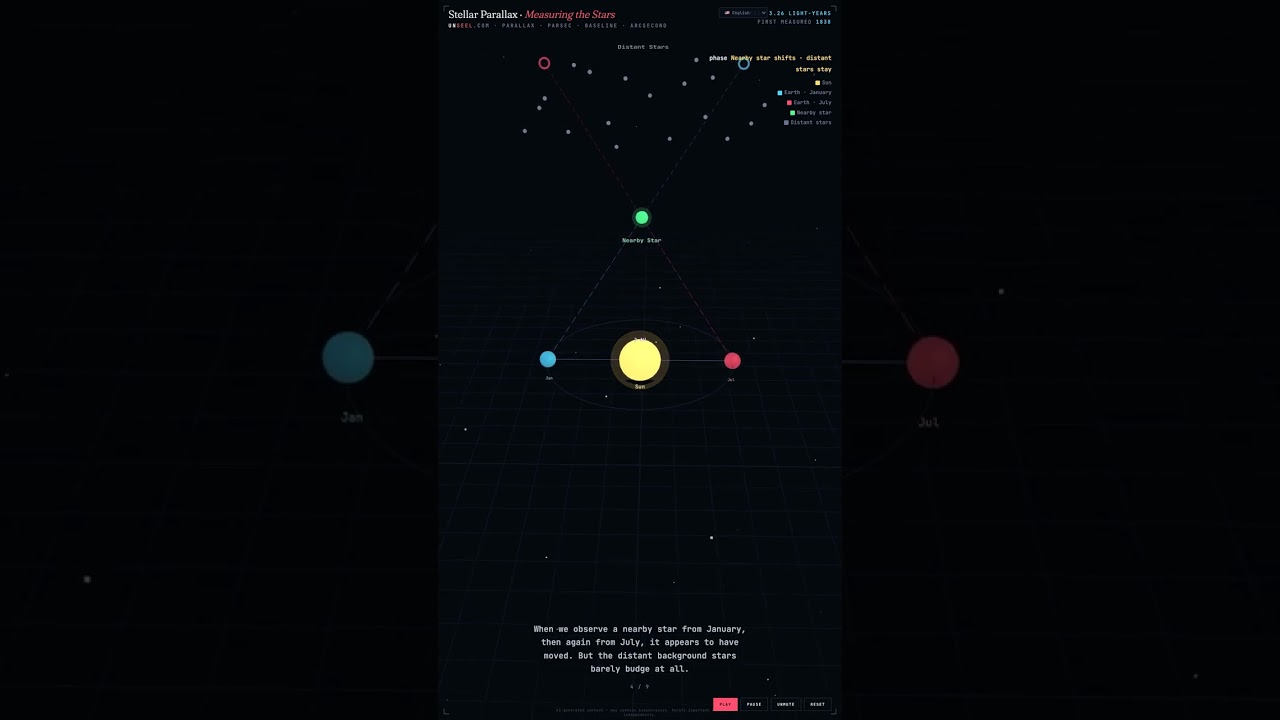
So the unique special feature that guy is going to do is going to be a distance machine. It's going to be the first time ever where we're actually going to be able to get real distances for a very very large number of stars on getting on for a billion and we'll be able to walk in 3D at least mentally through the fields of stars. And Gia does this by measuring parallaxes. Imagine us here the earth star here distant stuff miles away. As we move around this star appears to move. It's not the star moving, it's us moving. But fortunately, we know exactly how we're moving because that's uh that's us around the sun. And so by converting how we are moving into the way the star appears to move, we can determine the distance. If that apparent motion is very large, the thing's close.
If that apparent motion is tiny, the thing's very far away. It's as simple as that. So guy will just measure just it will just measure with exquisite precision how everything is moving a billion times.
There's two telescopes on Guyia. So it's taking two different snapshots of the sky. But what Gia does is measure at an instant all the stars on some direction of the sky and from that we measure very very accurately the relative positions of all the stars one relative to another. Then the satellite moves a little bit takes another picture. We repeat that process moves a bit quite quickly. You build up a whole picture of the sky in which you know the exact relative positions to very high accuracy of one star relative to another. But that's still not much use. What you really need to know is well what's the absolute measurement? Which way is up?
Uh so what we have to do is lock gire in some way into the universe. And that turns out to be quite an interesting challenge because it's never been done at this level of precision before. So what we do is from our own measurements we will identify roughly 1 million quazars. These are super massive black holes at huge distances across the universe at vast distances. Such vast distances they don't move as seen by us. And we will use these to define the reference grid.
So guy will measure the positions of all the stars relative to the other stars relative to a million super massive black holes 3/4 of the way across the universe.
The complexities of measuring the distances and motions of a billion stars across our galaxy with such finite precision has a number of fundamental challenges.
The techn is cute though. What you have to do to measure the distance to a typically interesting star is measure the parallax angle in units of a few microarch seconds. Now that's a number that doesn't mean anything to anybody, but just to put it in perspective, a micro arcsec is the thickness of a human hair as seen across the earth. It's the size of a my thumbnail as seen on the moon. And so one's measuring precision measurements, ex exquisite precision measurements. So at the level of precision that Gia is measuring stuff, the whole of spaceime is just quivering as the earth goes around the sun. It's just warping and morphing. And so we have to do these amazing calculations in which we actually have to correct everything with general relativity effects. And equally we can test general relativity to much much higher precision that ever been tested before. So that's the level at which we're doing is real precision measurements. One of the key challenges for a mission like Gaia in fact a whole enabler for the mission itself is to find a technology that is sufficiently lightweight and stable to be used for the optical benches and for the optical components. So the package that we developed uses a modern sort of high-tech ceramic material. It's called silicon carbide which is almost a magic material for this application. It's um perfect because it's very strong. It's very lightweight which is really important for space applications. Um and the other important parameter is that it's a very low expansion material in order to ensure that Gaia can measure things with exquisite precision. The satellite itself has to be exquisitly stable. In fact, the satellite is the size of a couple 3 meters size of a typical office. Uh it's not huge, but it's got this ginormous half a tennis court size sunshield underneath it. So it's a huge great screen and Guyia itself will sit in the shadow and be super cold and the reason it's doing that is because heat distorts things and so the distortions distortions that would be caused by GUI changing temperature will be so large compared to the precision we need there'd be a real problem to get rid of. So GIA will be sitting there no it doesn't have any coolers on it. It just sits there passively. Uh but it will be temperature stable such that the temperature difference from one side of the room to the other will be less than 1 millionth of one degree.
In order for Gaia to measure with such exquisite precision, it has to be positioned in an orbit in which radiation and gravity are stable. There are five naturally occurring orbits in our solar system in which the gravity of the Earth and the gravity of the sun exactly cancel each other out. These genuinely weightless spots are known as Lrangee points. Named after the Italian astronomer Joseph Louie Lrange, Gia will sit in a second of these orbits termed Lrangee point number two or simply L2. You can put a satellite there and it takes almost no fuel to keep it there.
And so this is a critical thing for GIA because we don't want to be turning a motor on and off and shaking it because takes a long time to stop shaking and it messes the measurements. If you want something else, you're going to sit there and with almost no effort, it'll just keep smoothly careering on. And so this is this space called L2, 1 and a half million kilometers beyond the Earth from the outside. You'll you'll be able to see it actually. Well, you'll need a moderate size telescope to see it, but it'll Guyia itself will be a star in the sky. Once securely locked into the L2 orbit, Guiaire will begin transmitting vast quantities of data across the dark oceans of space. data which over its 5-year mission will help to unravel the secrets of our galaxy.
So, currently a normal sort of serious movie that you would download in a few minutes or something. It's a few gigabytes, a few billion bytes. The next scale up after that, it's called a terabytes, a thousand of those in an hour. Guyia goes a thousand times bigger again. And so, the Gaia data scale is um more than exists in all the libraries of the world today. There's a gigantic supercomputer over the road that's going to be processing this stuff. It's a pabyte if you want a jargony nerdy term scale. So, it's a typical example of the next generation of big data projects. uh the data products will be very uh complex but we're designing a system to make them accessible to to everyone and not only to to research astronomers but we will also have uh data and open data to uh interested uh members of the public to amateur astronomers and so forth. We're going to announce here from Cambridge in real time these new discoveries and if we're setting up a scheme with school kids where they can go off and look at robot telescopes and look at them. So, we'll have an adopt a supernova for a class. Your local class can guarantee Tuesday of two years from now, we'll find you a supernova and it can be yours. So, I think that's a cool stat. But it's not just those stars ablaze with nuclear fusion at their burning heart that we're interested in.
Gaia is also looking for failed stars, brown dwarves, stars that never truly ignited and are left to drift across space as interstellar itinerants.
It will also provide an inventory of our solar systems asteroids and comets from the near earth objects to those located in the furthest frozen reaches of the outer solar system revealing exoplanets as well as objects that could pose a threat to life here on Earth.
For a mission so epic in this scale, it's easy to forget the very personal and human stories behind the drama and excitement of Gaia's launch.
Star clusters are a a very ele basic element in the whole process of star formation and stellar evolution. They give us a lot of information on stellar structure, stellar star evolution and things like that. This mission allow allows me for the first time to look at the star cluster in a way that has never been possible from the ground. It it can observe the whole cluster. It can observe velocities in the cluster. It can observe uh faint stars in the cluster that that all all things that were very difficult from the ground because they required very longterm projects 50 to 100 year projects. And with GAA we can do this over a period of five six years to an accuracy level and a complete list level that has never been obtained from the ground. We'll be able to discover who are our neighboring stars and perhaps which stars were the stars that emerged out of the same uh out of the same birthplace as as our son did. We can look for our son's brothers and sisters. we can look for uh perhaps their own planetary systems to find other earths like us. it I think psychologically and emotionally we are just about to enter the same era for our Milky Way as Western Europe entered when the voyages to the new world and the great voyages of discovery of the earth happened entire psychology changed people's view of who they were and where they were in the world was completely revolutionized it was no longer in western Europe and that's it you know we have our neighbors and tough we are part of this whole new approach and there was this burst of intellectual achievement ment, cultural achievement. It It just revolutionized people's view. And I think we're going to do the same thing here. We're going to be able to walk through the universe, and we're going to realize just exactly what we are compared to other people. We're going to find tens of thousands, if not hundreds of thousands of other planetary systems, some of which will be like our own.
Quite close. We'll be able to take pictures of those planets. We're going to discover the things we can't see, the dark matter. We will go beyond what we can see to be able to understand reality. And I think this is exactly the same transition that Captain Cook made. We go beyond our preconceptions to see, hey, this is what the world is like, guys. And we'll be able to just walk through it. We will see the remnants, the debris streams of the first shards that became what is today the Milky Way. We can run the process right back to the first things that ever happened.
We will see the entire history of the Milky Way unfolding before our eyes.
We're going to discover completely new things. We're going to discover that stars are moving in ways that we think are impossible. And so, we're going to learn completely new things about what happens. We're going to discover that there's actually an awful lot of matter there and hardly any there. And we'll be able to say, well, what is it then? How is that possible? So, we'll learn a lot about elementary particle physics and possibly even about theories of gravity.
So, I think that's going to be the real dramatic change. the the stuff that's going going to come out of Guyire is not the spectacular science that we know it's going to do. It's the stuff that we don't the questions we don't know how to answer.
[Music] [Music]
Up Next
29:29
Stellar Motions: Parallax, Proper Motion & Radial Velocity
@JasonKendallAstronomer
9.6K views•2018-07-16
61:17
First Billion Years of the Universe with the Square Kilometre Array
@iaaudc
121 views•2022-05-26

6:25
Kepler's Laws of Planetary Motion Explained (Educational Astronomy Video)
@Peekaboo_Kidz
404.9K views•2023-02-17
6:10
Gamma-Ray Bursts: Cosmic Snipers Explained | Astronomy
@kurzgesagt
15M views•2016-07-31
Related Study Plans & Knowledge Roadmaps
Structured learning paths in Astronomy
astronomy
Reionization: Pop III Stars, IGM & 21cm Line
01Foundations of Cosmology & the Early Universe
02Population III Stars & Cosmic Dawn
03Physical Mechanisms of Reionization
+ 2 more learning modules
17h5 modules
Explore Roadmap
astronomy
Planetary Rings: Dynamics, Roche & Resonances
01Foundations of Gravity and Orbital Mechanics
02Tidal Forces and the Roche Limit
03Structure, Composition, and Collisions
+ 2 more learning modules
10h5 modules
Explore Roadmap
astronomy
Asteroseismology: Stellar Waves, Ages & Cores
01Foundations of Stellar Astrophysics & Wave Mechanics
02Stellar Oscillation Modes: P-modes and G-modes
03Mathematical Framework of Asteroseismology
+ 2 more learning modules
35h5 modules
Explore Roadmap
astronomy
Adaptive Optics: Physics, Engineering & Control
01Foundations of Wave Optics and Wavefronts
02Atmospheric Turbulence & Optical Distortion
03Wavefront Sensing Technologies
+ 3 more learning modules
35h6 modules
Explore Roadmap