




![КАКИЕ КНИГИ ЧИТАТЬ, ЧТОБЫ ПОНЯТЬ МИР? [ч.1, Эволюция, нейробиология, антропология]](https://i.ytimg.com/vi/MC1CxPMkcvM/maxresdefault.jpg)
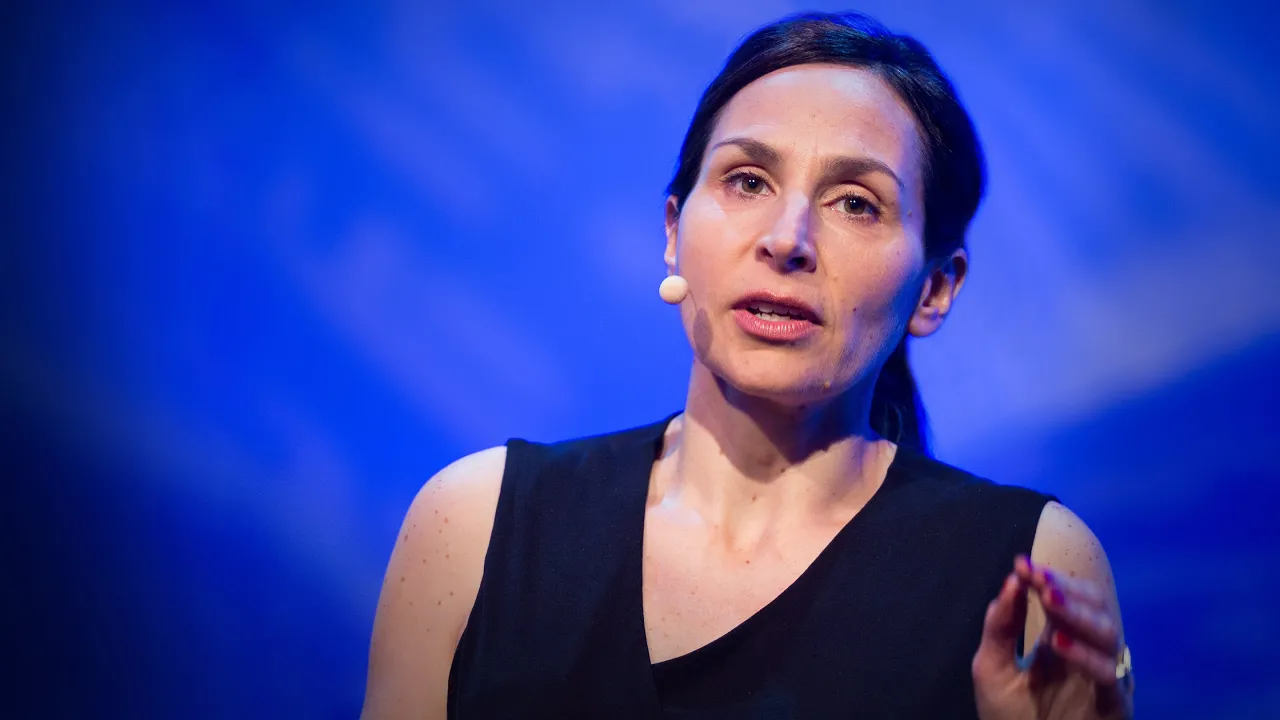






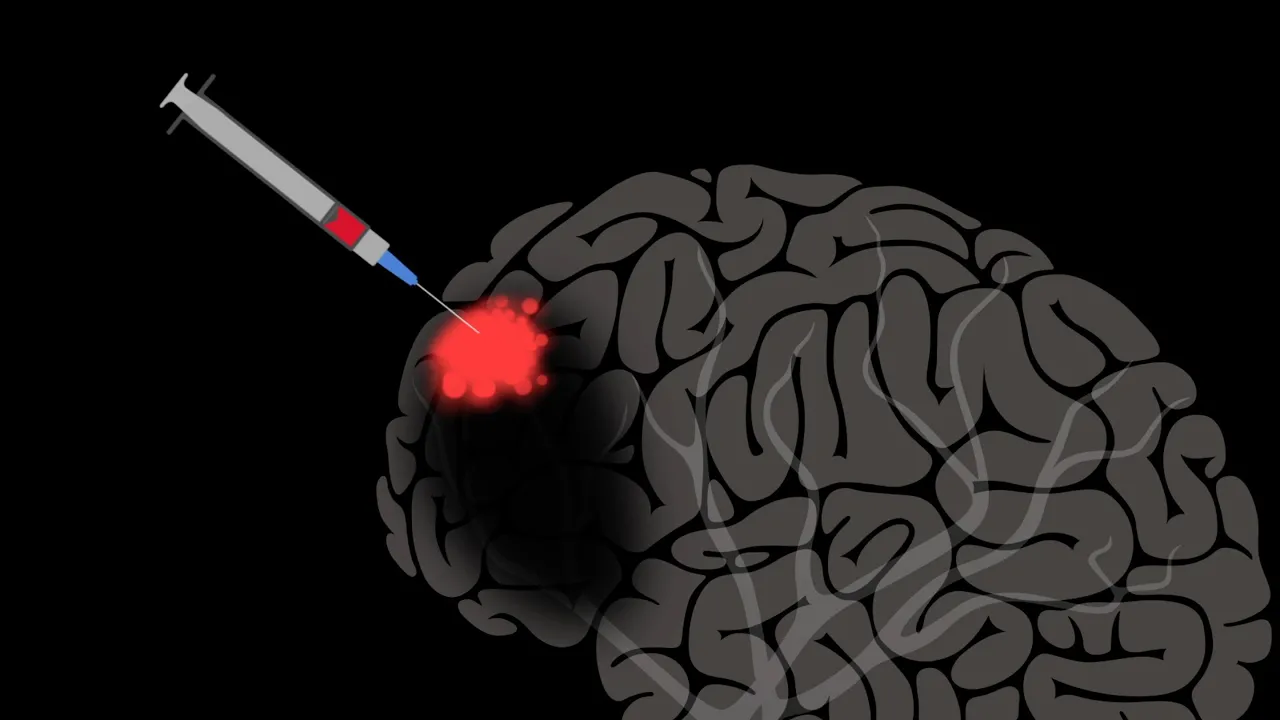







Neurosurgeon Jocelyne Bloch presents her 14-year research on using adult brain cells (doublecortin-positive cells) to help stroke recovery; these cells, normally present in the cortex, can be harvested, cultured, and re-implanted near brain lesions where they migrate back to the damaged area and mature into functional neurons, improving motor function in animal models, offering hope for future human stroke treatments.
Brain Cells That Could Heal Stroke Patients | Jocelyne Bloch | TEDxCHUV
Added:Pathophysiology of a Stroke: Understanding how a stroke deprives brain tissue of oxygen, leading to localized cell death and subsequent functional deficits.
Introduction to Adult Neurogenesis: The biological process by which new neurons are generated in specific niches of the adult brain, challenging the historical dogma that the adult brain cannot renew itself.
Basic Neuroanatomy and Cellular Markers: Familiarity with the roles of neurons and glial cells, as well as how researchers use specific proteins (such as doublecortin) as markers to identify immature, migrating cells.
The Principle of Neuroplasticity: The brain's inherent capacity to reorganize its neural pathways and attempt self-repair in response to learning or traumatic injury.
Autologous Brain Cell Transplantation: Exploring the surgical and laboratory protocols for harvesting a patient's own neural progenitor cells, expanding them, and re-implanting them into damaged areas.
Neural Scaffolding and Biomaterials: Investigating how bioengineered hydrogels and extracellular matrix mimics can be used to support and guide transplanted cells to injury sites.
Comparative Stem Cell Therapies: Analyzing the therapeutic advantages and limitations of doublecortin-positive cells compared to induced pluripotent stem cells (iPSCs) and embryonic stem cells in neuroregeneration.
Translational Hurdles in Clinical Neurosurgery: Understanding the rigorous clinical trial phases, safety parameters (such as avoiding tumor formation), and ethical considerations involved in human brain-cell therapy.
68.7K views388likes12:50Original Release: 2014-11-20
Transcriber: Reiko Bovee Reviewer: Denise RQ I would like to share with you today a very interesting experience I had in my neurosurgical life.
I am a neurosurgeon, and I have to deal with human tragedies daily.
It's a real disaster to see people after a car accident or after a stroke.
If you have a big part of your brain that is destroyed, unfortunately, the central nervous system has very little ability for self-repair.
One of my neurosurgical dreams was always to try to give back a function to someone who has lost it because people remain severely handicapped, and it's revolting to see that every day.
So that's probably why I've chosen this specialty called functional neurosurgery.
Functional neurosurgeons try to give back functions or to improve them through surgical strategies like deep brain stimulation, for example, that's the most famous strategy.
14 years ago, I participated in a major discovery that, in my opinion, would have an important impact on the patient's recovery after a major insult to the central nervous system.
That's the story I would like to tell you today.
Before telling you the story, I have to introduce you to two very important and different actors; without them it'd never have been possible to have this story today.
The first one is not in the room.
You can understand why.
It's not exactly this cow, but she represents her cousin, the South American cow.
Without the serum of this South American cow, we would not have been able to grow adult brain cells.
The second actor, he is not in the room, but he is not eating grass.
He is my very good friend and collaborator, Jean-François Brunet, who is a biologist and without whose patience and pugnacity, we would never have been able to grow brain cells.
So now, let's go back to the story.
You have to imagine that about 14 years ago, I was a chief resident in neurosurgery, and chief residents work a lot, day and night, doing a lot of emergencies.
And sometimes, during these emergencies you have to remove a piece of the brain.
It's not for fun, it's because someone had a car accident, has a swollen brain, and you have to do craniectomy, otherwise the patient is going to die; so, sometimes, you have to remove a piece of the brain.
And we thought with Jean-François who is a biologist in his lab: "Why shouldn't we do something with these pieces of the brain that we have to sample so often?"
Jean-François and his patient said: "I'm sure I am going to do something very interesting with that."
He tried with different types of serums, and he saw, finally, after many, many attempts, that the serums from the cow I introduced to you previously... One day he saw that under his microscope.
And you have to realize is that this type of culture really looks like a stem cell culture.
But you also have to know that at that time, 14 years ago, we thought that the only stem cells we have in the central nervous system were really deeply located in the brain in two very small niches.
But here, Jean-François with any type of samples he got from cortex, got this type of cells, which was incredible.
And what you can see, on this type of cells, the green cells here are astrocytes those are the cells that are supporting the neurons in the normal brain, and inside these little round cells are immature neurons, immature little cells that could turn into mature cells.
So when we showed that to people at that time, they said: "That's not possible to have stem cells in this type of culture from the cortex, you must have taken some stem cells [from the cortex into the culture]."
We said, "No," because they do not behave like stem cells, they divide much more slowly, and they never form tumors, and they are really more indolent, and after awhile, 10 or 15 weeks of culture, they also die.
It's not like something which is renewing and renewing.
Finally, we realized where these cells came from - because they were not coming from stem cells - these blue cells you see here.
All of you have these cells in your brain.
And that's something that was discovered quite recently.
These cells are called doublecortin positive cells.
They are very abundant in fetuses because they help the formation of the folding of the cortex.
Our cortex is like a folded structure, and these cells help with that.
But we thought that they disappear in adults, but we discovered more recently that it was not true.
4% of the cortical cells are doublecortin positive cells.
We don't know what they are for.
Or what they are.
Do they help us when we have a lesion somewhere? We don't exactly know that.
But what we know is that from these cells we got this cell culture that I showed you.
So of course, when biologists work with neurosurgeons, neurosurgeons are always very pragmatic: "Wow, that's a great source of cells. We may do something."
I told you that we are so frustrated because the central nervous system has so little ability for self-repair.
Maybe we've found something to help our patients.
We thought a little bit, and we came up with one concept.
Why shouldn't we take a biopsy of one individual?
-Because we know how to do it; we put these cells in culture - we know how to do it - we labeled the cells, and then we re-implant the cells somewhere else in the brain.
Great. Let's do it.
Of course, you can't do it on a human first, everybody knows you have to do it first in a rodent model.
But unfortunately, rodents don't have these double-quotient positive cells in their cortex.
We don't know why, but a rodent doesn't help us.
So we had to find another type of animal to work with.
Fortunately, we met... - I already knew him, he was a good friend and he believed in our concept - Eric Rouiller, Professor of Physiology in Fribourg, who has the biggest monkey facility in Switzerland and he helped us.
He said: "Your concept is great, I believe in what you are doing.
Try with these two monkeys."
We were very excited.
First we could prove that we were able to do exactly the same culture as that in humans, because monkeys have exactly the same cell composition as us.
Then, we did the cell culture labeling and re-implantation.
The first question we had was: how will these cells behave, if are re-implanted in a normal brain?
What will they become if are re-implanted in a lesion or close to a lesion?
Very interestingly, when they're implanted close in a normal brain, they disappear.
It's as if you take a biopsy, you take the cells out from their home, you put them in culture, re-implant them in the same individuals - so you don't have immunoresponse, they recognize they're here, but they see the space is already busy, so they say: "I am not necessary here, so bye-bye, I go."
But if you implant them close to a lesion, they go back home and they say, "There's an empty space," they start to accommodate, and it would take them a month, a month and half, but then they start to grow and become mature neurons.
That was exactly what we saw three months after a re-implantation close to a lesion.
You see these red cells which are those we re-implanted, and note they are not little round cells I showed you in the beginning, but they are bigger neurons with axons; we were under the impression that they recolonized the area.
We could also prove very nicely that these were the same cells we had used in our culture.
Because here you see here that's the dye we use in our culture, the red dye, while the green dye is the marker for the mature neurons.
So you see that these two cells have a double labeling: it means there are both green and red; it means they are mature neurons that were previously in the culture, as immature neurons, and they turned into mature neurons.
Of course what is the next step?
Especially for a neurosurgeon, you want to know what the implications are: Is it working? Is it good to have these cells in?
So that's what we did.
What we did was we trained a few monkeys to do a specific task - to take and grab some food pellets in a drawer on a tray - and they were really good at it.
It took some time to train them well.
They reached a very good level of performance.
When they were stable at this level of performance, we performed a little lesion in the central motor cortex corresponding to the hand motion.
So of course, immediately after that, they are plegic, they can not move the arm any more; they are not able to do the task.
But nature's done quite well.
We are able of recovery, spontaneous recovery, - probably due to the spasticity - and performance becomes better but only to a certain extent.
So they are able to so something but not as well as before.
At that stage, we took the biopsy, we did the culture, we re-implanted.
And what we saw, and I think this picture is better than any graph... So you see, on the left there is the money at the end of his best recovery, when he has spontaneously recovered.
On the right, a monkey two months after re-implantation.
So all the monkeys we re-implanted performed better than those that haven't been re-implanted.
Well, I think it's a nice story.
So now what is the next step?
Of course, we have a lot of experiments done, with different models, and we have understood many things since then.
But still, my aim, and from the beginning of my talk, is to apply this to humans.
I must say that enthusiasm decreases a little bit when you realize how difficult it is to go through all these processes.
And to obtain the authorization to go into human trials.
But, I still hope I'll be able to do it before I retire.
Thank you so much for your attention.
(Applause)
Up Next

101:57
What Are Memories Made Of? Neuronal Plasticity Explained | Dr. Zafar Bashir
@conferenceworkshop6414
299 views•2022-01-06
21:55
Deciphering Neural Circuits Controlling Anorexia in Mice | Richard Palmiter
@AllenInstitute
2.3K views•2011-10-10
11:35
Heart-Brain Connections: Science of Interoception and Empathy
@TEDx
24.2K views•2018-01-23
13:03
How Exercise Benefits Your Brain: Science Explained
@TED
11.4M views•2018-03-21
Related Study Plans & Knowledge Roadmaps
Structured learning paths in Neuroscience
neuroscience
Appetite Regulation: Brain Circuits & Hormones
01Foundations of Endocrinology and Brain Anatomy
02Introduction to Energy Homeostasis
03Peripheral Signals: Leptin, Ghrelin, and Insulin
+ 2 more learning modules
14h5 modules
Explore Roadmap
neuroscience
Neuroeconomics: Value, Risk & Brain Mechanisms
01Foundations of Neuroscience and Brain Anatomy
02Introduction to Neuroeconomics and Subjective Value
03Dopaminergic Prediction Errors & Reinforcement Learning
+ 3 more learning modules
18h6 modules
Explore Roadmap
neuroscience
Spatial Navigation: Cells, Grids & Brain Maps
01Foundations of Brain Anatomy and Memory
02Place Cells and Head-Direction Cells
03Grid Cells: The Brain's Coordinate System
+ 2 more learning modules
12h5 modules
Explore Roadmap
neuroscience
BCIs: Neural Decoding & Prosthetic Control
01Neuroscience Foundations: How the Brain Signals Intent
02Signal Acquisition: Recording the Brain's Activity
03Neural Decoding: Translating Brain Waves into Data
+ 2 more learning modules
25h5 modules
Explore Roadmap