












![Atmungskette / Oxidative Phosphorylierung / Chemiosmose - [Zellatmung, 5/6] - [Biologie, Oberstufe]](https://i.ytimg.com/vi/-rA7xHozhn4/sddefault.jpg)




Mitochondria are membrane-bound organelles in eukaryotic cells that serve as ATP factories, generating cellular energy through cellular respiration; they possess a double-membrane structure consisting of an outer membrane with porins allowing small molecule passage, an inner membrane folded into cristae to increase surface area for the electron transport chain, and a matrix containing mitochondrial DNA and ribosomes; these organelles are believed to have originated from free-living bacterial ancestors through endosymbiosis, explaining why they retain their own genetic material and replicate independently within the cell.
Mitochondria Structure and Function | Cellular Biology | Khan Academy
Added:Basic eukaryotic cell structure and the definition of membrane-bound organelles.
The structure of biological membranes, specifically the phospholipid bilayer and membrane proteins.
The concept of ATP (Adenosine Triphosphate) as the primary energy currency of the cell.
An introductory understanding of cellular respiration as the process of converting glucose into usable energy.
The detailed biochemical pathways of the Krebs (Citric Acid) Cycle and the Electron Transport Chain.
The mechanism of chemiosmosis, the proton-motive force, and how ATP synthase functions.
The Endosymbiotic Theory, which explains the evolutionary origin of mitochondria from free-living prokaryotes.
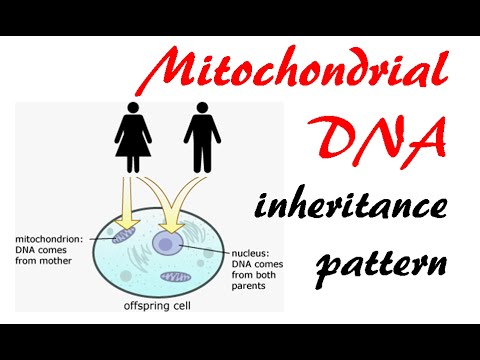
Mitochondrial DNA (mtDNA), maternal inheritance patterns, and how mitochondrial mutations lead to metabolic diseases.
640.4K views6.1Klikes14:20Original Release: 2015-07-27
- Let's delve into the world of mitochondria which are probably my favorite organelle.
So let's just have a little review of what mitochondria are and then we can delve a little bit deeper into their structure.
So let's just think about a cell and not just any cell, but a eukaryotic cell.
So that's the cellular membrane and when people say a eukaryote or a eukaryotic cell they most typically say, "Oh! That must have its nuclear DNA "in a membrane-bound nucleus." and that would be true, so let's draw our membrane-bound nucleus.
That's our nuclear membrane.
You have your DNA in here, so let's draw some DNA.
But when we talk about eukaryotic cells, we're not just talking about a membrane-bound nucleus, we're also talking about other membrane-bound organelles and in a close second place for a membrane-bound structure that is very important to the cell would be the mitochondria.
So let's draw some mitochondria right over here.
So I'll talk a little bit more about what these little squiggly lines that I'm drawing inside of the mitochondria are and this is actually a little bit more of a textbook visualization, as we'll learn in a few minutes or seconds that we now have more sophisticated visualizations of what's actually going on inside of a mitochondria, but we haven't actually answered all of our questions, but you might have already learned that, so let me make it clear, these are mitochondria.
That's the plural.
If we're just talking about one of them, we're talking about a mitochondrion.
That's the singular of mitochondria.
But you might have already learned, some time in your past or in another Khan Academy video, that these are viewed as the ATP factories for cells.
So let me right it this way.
So ATP factories.
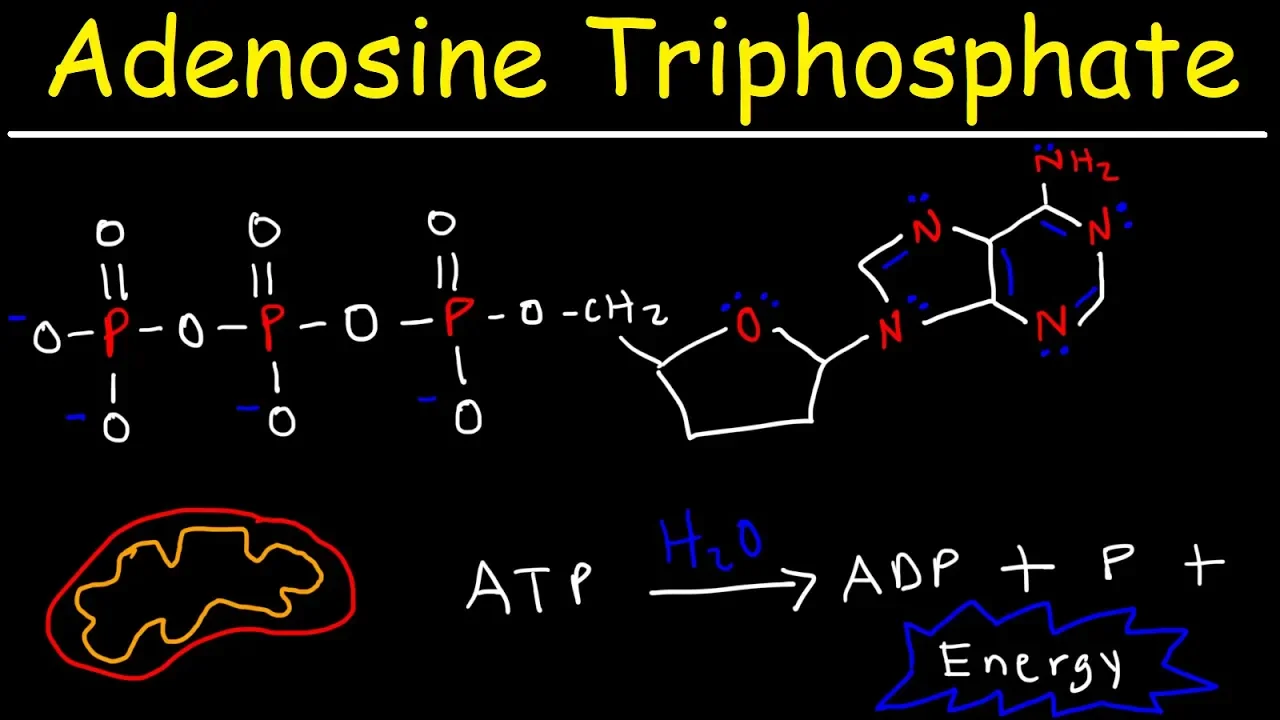
A-T-P factories and if you watched the videos on ATP or cellular respiration or other videos, I'd repeatedly talk about how ATP is really the currency for energy in the cell that when it's in its ATP form you have adenosine triphosphate.
If you pop one of the phosphate groups off, you pop one of the P's off, it release energy and that's what your body uses to do all sort of things from movement to thinking to all sorts of things that actually go on in your bodies, so you can imagine mitochondria are really important for energy, for when the cell has to do things.
And that's why you'll find more mitochondria in things like muscle cells, things that have to use a lot of energy.
Now before I get into the structure of mitochondria, I wanna talk a little bit about its fascinating past because we think of cells as the most basic unit of life and that is true, that comes straight out of cell theory, but it turns out the most prevalent theory of how mitochondria got into our cells is that at one time the predecessors, the ancestors to our mitochondria, were free, independent organisms, microorganisms.
So they're descendent from bacterial-like microorganisms that might have been living on their own and they were maybe really good at processing energy or maybe they were even good at other things, but at some point in the evolutionary past, they got ingested by what the ancestors of our cells and instead of just being engulfed and being torn to shreds and kind of being digested and eaten, it was like, "Hey, wait, if these things stick around, "those cells are more likely to survive "because they're able to help process glucose "or help generate more energy out of things."
And so the cells that were able to kind of live in symbiosis have them kind of give a place for the mitochondria to live or the pre-mitochondria, the ancestor mitochondria, those survived and then through kind of the processes of natural selection, this is what we now associate, we now associate eukaryotic cells as having mitochondria, so I find this whole idea of one organism being inside of another organism in symbiosis even at the cellular level, that's kind of mind-boggling, but anyway, I'll stop talking about that and now let's just talk about the present, let's talk about what the actual structure of mitochondria are.
And I'll first draw kind of a simplified drawing of a mitochondion and I'll draw a cross section.
So, I'm gonna draw a cross section.
So if we were to kind of cut it in half.
So what I've drawn right over here this would be its outer membrane.
This is the outer membrane right over here and we label that.
Outer membrane.
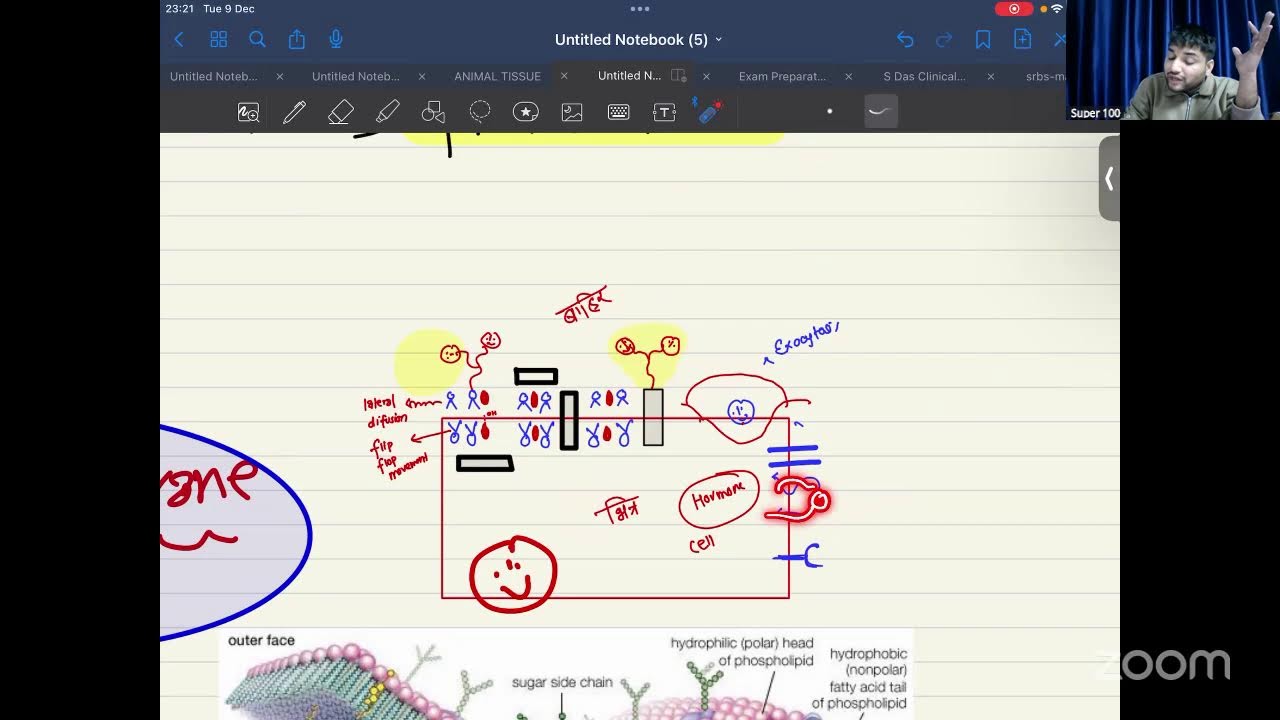
And all of these membranes that I'm gonna draw, they're all going to be phospholipid bilayers.
So if I were to zoom in right over here, so let me, if I were to zoom in, we would see a bilayer of phospholipids.
So you have your hydrophilic heads facing outwards, hydrophilic heads facing outwards and your hydrophobic tails facing inwards.
So.
You see something just like that, so they're all phospholipid bilayers.
But they aren't just phospholipids.
All of these membranes have all sorts of proteins imbedded, I mean cells are incredibly complex structures, but even organelles like mitochondria have a fascinating, I guess you would say sub-structure to them.
They themselves have all sorts of interesting proteins, enzymes imbedded in their membranes and are able to help regulate what's going on inside and outside of these organelles.
And one of the proteins that you have in the outer membrane of mitochondria, they're called porins and porins aren't found only in mitochondria, but they're kind of tunnel proteins, they're structured so they kind of form a hole in the outer membrane.
So I'm drawing them the best that I can.
These are porins and what's interesting about porins is they don't allow large molecules to pass through passively, but small molecules like sugars or ions can pass passively through the porins.
And so, because of that, your ion concentration and well, I should actually say, your small molecule concentrations tend to be similar on either side of this membrane, on either side of this outer membrane.
But that's not the only membrane involved in a mitochondrion.
We also have a inner membrane.
I'll do that in yellow.
We also have a inner membrane and I'm gonna draw it with a textbook model first and then we'll talk a little bit about, since we think this model is not quite right, but in this, so we have this inner membrane, inner membrane, and this inner membrane has these folds in it to increase their surface area and the surface area is really important for the inner membrane because that's where the processes of the electron transport chain occur across, essentially, these membranes.
So you want this extra surface area so you can essentially have more of that going on.
And these folds have a name.
So if you're talking about one of them, if you're talking about one of these folds, you're talking about a crista, but if you're talking about more than one of them, you would call that a cristae, cristae.
Sometimes I've seen the pronunciation of this as cristae, cristae or cristae, that's plural for crista.
These are just folds in the inner membrane and once again the inner membrane is also a phospholipid bilayer.
Now inside of the inner membranes, so between the outer membrane and the inner membrane you could imagine what this is gonna be called.
That space is called the intermembrane space, not too creative of a name, intermembrane space and because of the porins, the small molecule concentration of the intermembrane space and then outside of the mitochondria, out in the cytosol, those concentrations are gonna be similar, but then the inner membrane does not have the porins in it and so you can actually have a different concentration on either side and that is essential for the electron transport chain.
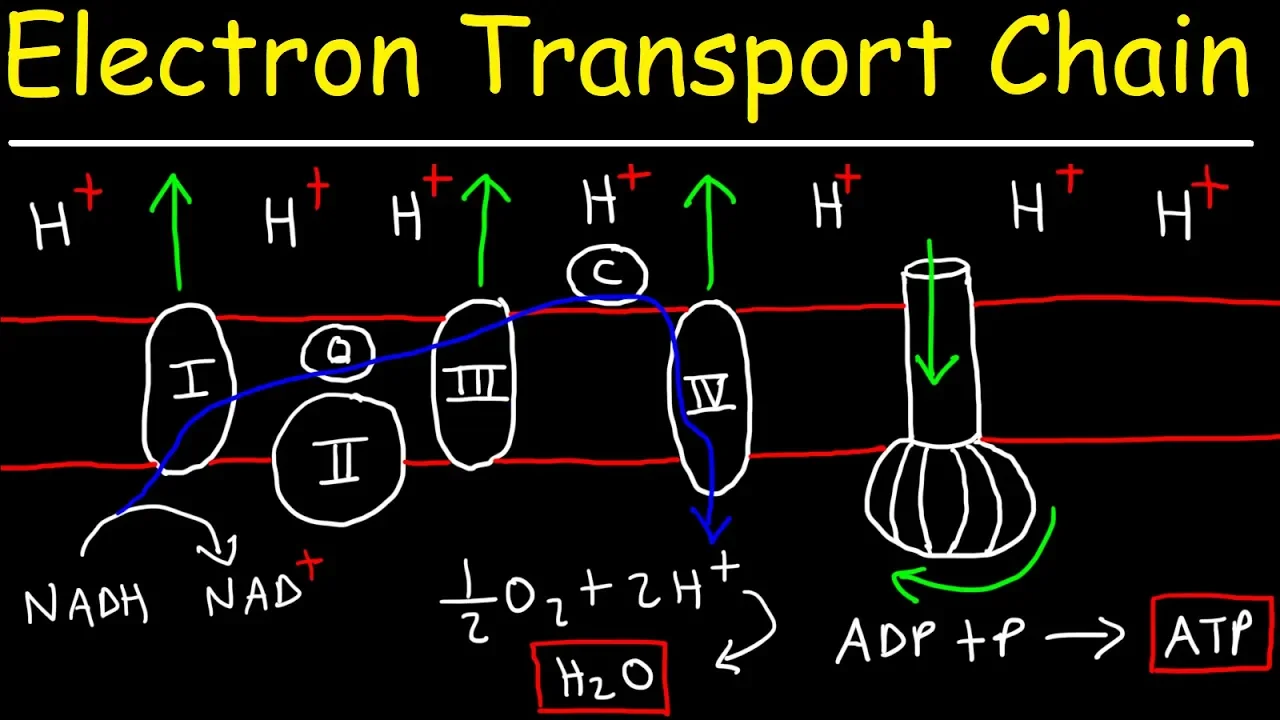
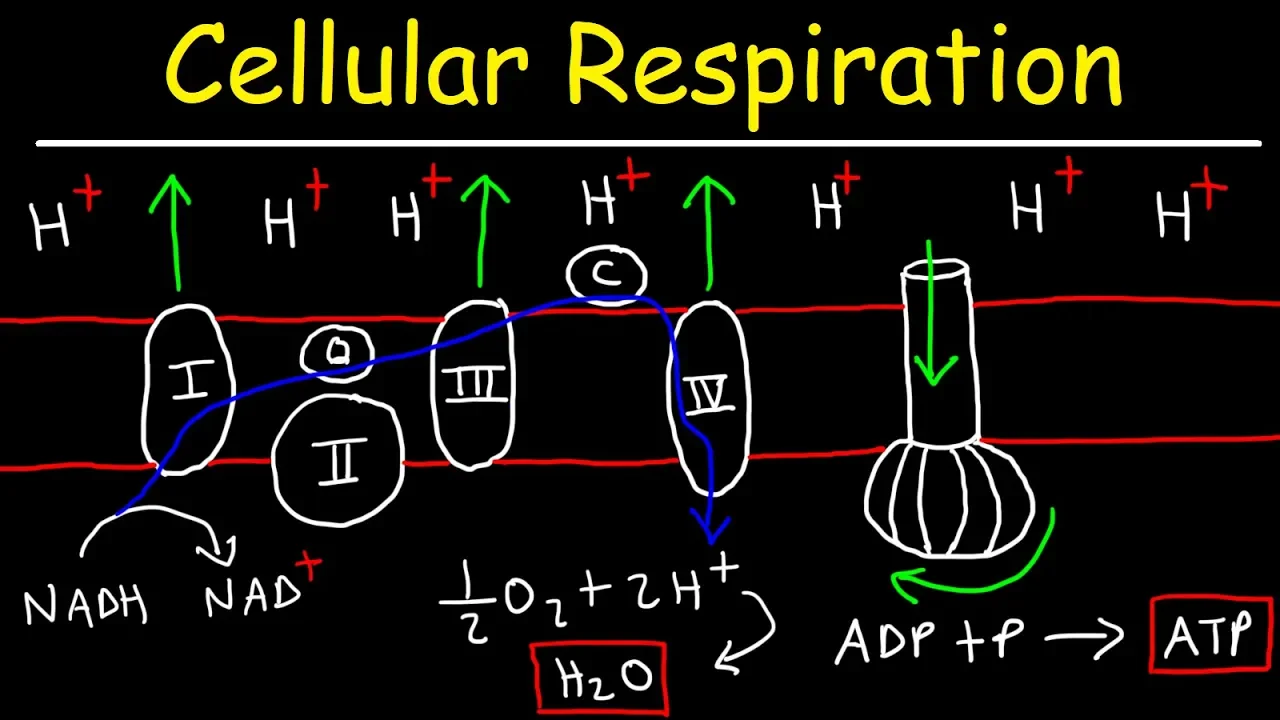
The electron transport chain really culminates with hydrogen, a hydrogen ion gradient being built between the two sides and then they flow down that gradient through a protein called ATP synthase which helps us synthesize ATP, but we'll talk more about that maybe in this video or in a future video, but let's finish talking about the different parts of a mitochondrion.
So inside the inner membrane you have this area right over here is called the matrix.
It's called, let me use this in a different color, this is the matrix and it's called the matrix 'cause it actually has a much higher protein concentration, it's actually more viscous than the cytosol that would be outside of the mitochondria.
So this right over here is the matrix.
When we we talk about cellular respiration, cellular respiration has many phases in it.
We talk about glycolysis.
Glycolysis is actually occurring in the cytosol.
So glycolysis can occur in the cytosol.
Glycolysis.
But the other major phases of cellular respiration.
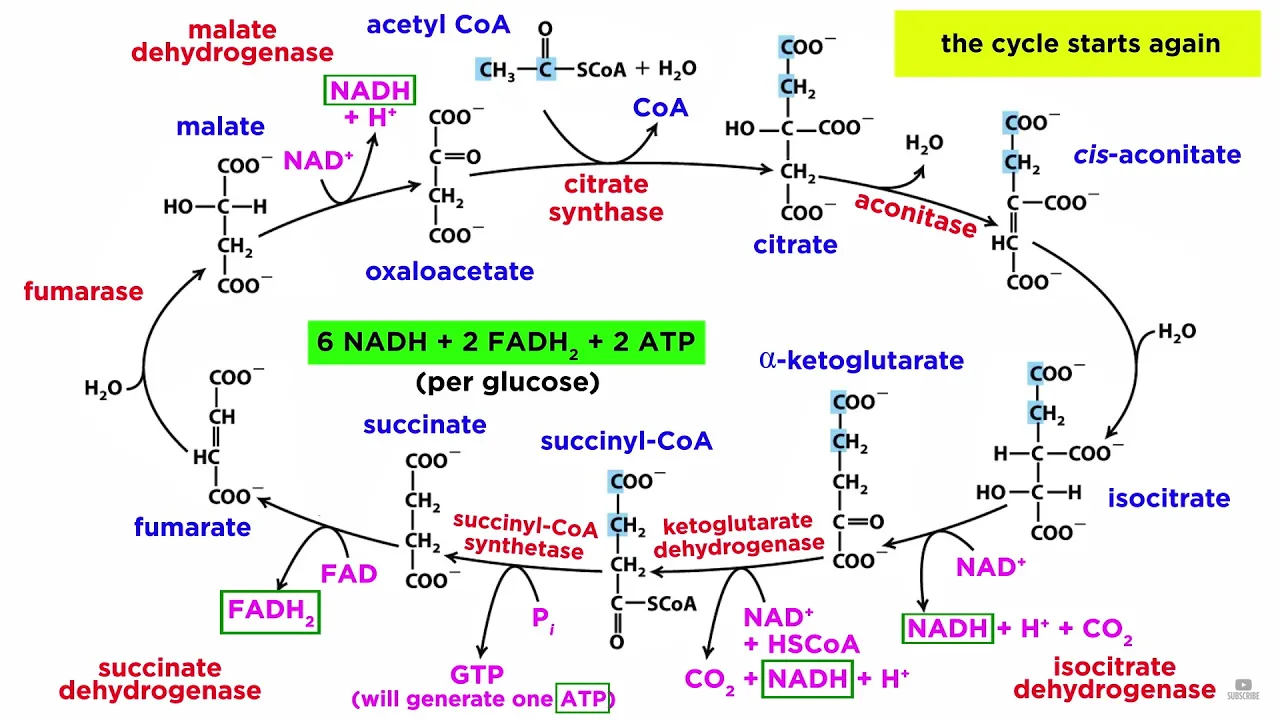
Remember we talk about the citric acid cycle also known as the Krebs cycle, that is occuring in the matrix.
So Krebs cycle is occuring in the matrix and then I said the electron transport chain which is really what's responsible for producing the bulk of the ATP, that is happening through proteins that are straddling the inner membrane or straddling the cristae right over here.
Now we're just done.
Probably one of the most fascinating parts of mitochondria, we said that we think that they are descendent from these ancient independent lifeforms and in order to be an ancient independent life form, they'd would have to have some information, some way to actually transmit their genetic information and, it turns out, mitochondria actually have their own genetic information.
They have mitochondrial DNA and they often don't just even have one copy of it, they have multiple copies of it and they're in loops very similar to bacterial DNA.
In fact, they have a lot in common with bacterial DNA and that's why we think that the ancestor to mitochondria that live independently was probably a form of bacteria or related to bacteria in some way.
So this is, this right over there, that is the loop of mitochondrial DNA.
So all the DNA that's inside of you, the bulk of it, yes, it is in your nuclear DNA, but you still have a little bit of DNA in your mitochondria and what's interesting is your mitochondrial DNA, your mitochondria, are inherited, essentially, from your mother's side, because when a egg is fertilized, a human egg has tons of mitochondria in it and I'm obviously not drawing all of the things in the human egg.
It obviously has a nucleus and all of that.
The sperm has some mitochondria in it, you could imagine it needs to be able to win that very competitive fight to get to fertilize the egg, but the current theory is all or most of that gets digested or dissolved once it actually gets into the egg.
And anyway, the egg itself has way more mitochondria, so the DNA in your mitochondria is from your mother or is essentially from your mother's side and that's actually used, mitochondrial DNA, when people talk about kind of an ancient Eve or tracing back to having kind of one common mother, people are looking at the mitochondrial DNA, so it is actually quite, quite fascinating.
Now I said a little bit earlier, and you know, obviously, it has its own DNA and then because it has its own DNA it's able to synthesize some of its own RNA, its own ribosomes, so it also has ribosomes here.
But it doesn't synthesize all of the proteins that are sitting in mitochondria.
A lot of those are still synthesized by or encoded for by your nuclear DNA and are actually synthesized outside of the mitochondria and then make their way into the mitochondria, but mitochondria are these fascinating, fascinating things.
They're these little creatures living in symbiosis in our cells and they're able to replicate themselves and I don't know, I find all of this mind boggling.
But anyway.
I said that this was the textbook model because it turns out, when you look at a micrograph, a picture of mitochondria, it seems to back up this textbook model of these folds, these cristae just kind of folding in, but when we've been able to have more sophisticated visualizations it actually turns out that it's not just these simple folds that the inner membrane essentially hooks into the matrix and it turns out it has these little tunnels that connect the space inside of the cristae to the intermembrane space.
So I like to think about this because it makes you realize, you know, we look in textbooks and we take these things like mitochondria for granted, like, "Oh yeah, of course.
"That's where ATP factories are," but it's still an area for visualization research to fully understand exactly how they work and even how they are structured that this Baffle Model where you see these cristae kind of just coming in and out of the different sides.
This is actually no longer the accepted model for the actual visualization, the structure of mitochondria.
Something more like this, something more where you have this cristae junction model where you have, if I were to draw a cross section where this is the, I drew the outer membrane and the inner membrane, I'll just draw has these little tunnels to the actual space inside of the cristae.
This is actually now the more accepted visualization, so I want you to appreciate that when in Biology, you read something in a textbook you kind of say, "Oh, people have figured all "of this stuff out," but people are still think about, "Well, how does this structure work?
"What is the actual structure?" and then, "How does it actually let this organelle, "this fascinating organelle do all of the things "that it needs to do?"
Up Next
4:52
Citric Acid Cycle Explained: Biochemistry of Cellular Respiration
@ProfessorDaveExplains
573.1K views•2016-09-15
50:12
Bacterial Communication: Quorum Sensing and Biofilm Formation Explained
@JHUAAP
12.6K views•2011-06-28
5:10
Mendelian Genetics: Alleles, Genotypes & Punnett Squares
@khanacademymedicine
648.4K views•2014-06-16
7:08
Bacteriophages: Earth's Deadliest Killers and Future Antibiotics
@kurzgesagt
34.6M views•2018-05-13
Related Study Plans & Knowledge Roadmaps
Structured learning paths in Biology
biology
RNAi: Biogenesis, RISC & Gene Silencing
01Molecular Biology Foundations: DNA to Protein
02Introduction to RNA Interference (RNAi)
03Molecular Biogenesis of miRNA and siRNA
+ 2 more learning modules
10h5 modules
Explore Roadmap
biology
Mycorrhizae: Signaling, Biophysics & Ecology
01Foundations of Mycorrhizal Symbiosis
02Molecular Signaling and Root Colonization
03Biophysics and Bioenergetics of Nutrient Exchange
+ 1 more learning modules
11h4 modules
Explore Roadmap
biology
Circadian Clocks: TTFL, SCN & Periphery
01Foundations of Molecular Biology & Gene Expression
02Introduction to Chronobiology and Actograms
03The Core TTFL: Molecular Architecture of the Clock
+ 3 more learning modules
14h6 modules
Explore Roadmap
biology
Population Genetics: Math, Drift & Selection
01Genetic & Probability Foundations
02The Hardy-Weinberg Principle and Baseline Models
03Mathematical Modeling of Natural Selection
+ 3 more learning modules
18h6 modules
Explore Roadmap