The 1951 UN Refugee Convention, established in Geneva, Switzerland, created international legal protections for refugees by guaranteeing fundamental rights such as education, freedom of religion, access to justice, and housing, regardless of where they find themselves in the world; this convention remains critically important today as the planet faces its worst refugee crisis since WWII, with nearly 1% of Earth's population being displaced.
The UN Refugee Convention of 1951 | Human Rights Explained
Added:Deep Dive
The historical context of World War II, the displacement of millions of people in Europe, and the establishment of the United Nations (UN) in 1945.

History of Europe 1870–1945 | BA PROGRAM 6th Semester| Most Important Questions with Answers #beeraj
3.1K
World War II (1939-1945) was the deadliest war in history, involving almost all countries. Causes included: harsh Treaty of Versailles terms, rise of Hitler and Nazism, Fascism in Italy and militarism in Japan, League of Nations failure, 1929 Great Depression impact, Germany's expansionist policies, and invasion of Poland on September 1, 1939. Results included massive destruction, establishment of the United Nations (1945), emergence of US and Soviet Union as superpowers leading to Cold War, decline of European powers, end of colonialism, and fundamental changes in world politics. The UN was created to maintain international peace and security after the League of Nations failed.
Click to watch →
The United Nations: Chapter III : Class XI | All Faculties| Reading, and Explanation| Part 1
308
The United Nations emerged from the devastation of World War II, which killed millions of people including women and children, destroyed vast amounts of property, and left millions homeless. The war also caused widespread poverty, hunger, and disease. This catastrophic experience convinced world leaders that a new international organization was needed to prevent future conflicts. The organization was formally established in April 1945 in New York City, representing a collective commitment to peace, cooperation, and addressing global challenges through diplomatic means rather than military force.
Click to watch →

Początek zimnej wojny - Historia Klasa 8 - Z historią przez życie
578
World War II caused unprecedented devastation, with cities like Warsaw, Stalingrad, and Leningrad completely destroyed. An estimated 50 million people died between 1939-1945, with 58% being civilians and approximately 6 million Jews murdered in the Holocaust. Following the war, the League of Nations was dissolved and replaced by the United Nations in 1945. The UN was established through a special delegation from April to June 1945, culminating in the Charter of the United Nations. The organization operates through a hierarchical structure: the General Assembly where all member states participate with one vote each, the Security Council with five permanent members (USA, Soviet Union, France, Great Britain, China), and the Secretary-General at the top.
Click to watch →

Die Geschichte der Vereinten Nationen (UNO)
380.2K
In July 1945, as World War II was ending in Europe, 59 states founded the United Nations. The organization was established with the goal of learning from the failures of the League of Nations, particularly addressing weaknesses such as the inability of member states to effectively constrain aggressors and prevent hostile actions.
Click to watch →

#Notes world in the twentieth century#SSLC Social Science Notes easy@SocialScienceCorner
56K
World War II caused unprecedented destruction with over 3 million deaths and devastated European economic systems. The war diminished European global dominance and accelerated the decline of colonial empires. Freedom movements in Asia and Africa intensified as peoples sought independence. The United Nations was established on October 24, 1945, with headquarters in New York, USA. The UN aims to save succeeding generations from war and promote international cooperation. It facilitates international treaties and works to address social and economic development challenges through coordinated global efforts.
Click to watch →
Deep Dive
The basic principles of international law, including how treaties and conventions are drafted, signed, and ratified by sovereign nations.

Curso Intensivo de Temas Quentes Magistratura do Trabalho - Direito Internacional e Comunitário
2.4K
According to Professor Varela, the fundamental principles of international law include: (1) sovereign equality among states, (2) non-intervention in internal affairs of other states, (3) prohibition of the use of force and peaceful settlement of disputes, (4) respect for human rights, and (5) international cooperation. The principle of sovereign equality means all states are equal before international law, demonstrated in the UN General Assembly where each state has one vote regardless of population, territory, or economic wealth. Treaties are the primary written source of international law and represent the main form through which states express their consent to be bound by international obligations. The Vienna Convention on the Law of Treaties (1969) defines a treaty as an international agreement concluded in writing between states, governed by international law, whether in a single instrument or multiple connected instruments. Treaties can have various names (treaty, convention, protocol, charter) but all constitute international agreements under international law.
Click to watch →

Международное право как особая правовая система
443
Basic principles are fundamental international legal norms with universal character and highest legal force, constituting the constitution of international law. They include sovereign equality of states, good faith performance of obligations, peaceful dispute resolution, non-use of force, non-intervention in internal affairs, territorial integrity, respect for human rights, right to self-determination, cooperation between states, and non-acquisition of territory by force. These principles are interconnected - violation of one entails violation of others. They exist in treaty form (UN Charter) and customary form, with Article 103 establishing UN Charter obligations prevail over other treaty obligations.
Click to watch →

القانون الدولي العام - المحاضرة رقم 1
122
The two primary sources of international law are international custom (rules emerging from consistent state behavior) and international treaties (written agreements creating legal rights and obligations). The treaty-making process involves negotiation by state representatives, drafting with a standard structure including Preamble and operative provisions, and signing which authenticates the text but does not create final legal commitment. Ratification is the crucial internal procedure where a state's competent authority declares final approval, making the treaty legally binding. States have absolute freedom to ratify or not ratify, even after signing.
Click to watch →

主権国家と国際法
721
Unlike individual nations with governments and constitutions, the world lacks a world government or world constitution. International relations are governed by international law, which consists of treaties (formal written agreements between countries) and customary international law (rules developed through historical practice). The two fundamental principles of international law are: (1) Non-intervention in internal affairs (内政不干渉の原則), meaning countries cannot interfere in each other's domestic politics; and (2) Sovereign equality (主権平等の原則), meaning all sovereign states possess equal sovereignty regardless of population, size, or economic power. These principles, along with specific treaties like the Law of the Sea Treaty, establish the rules that govern how nations interact with one another.
Click to watch →

04.C2_I_KhaiNiem
122
Legal principles are political and legal ideas forming the foundation of legal systems. Basic principles of international law are fundamental political and legal viewpoints with directive nature, serving as the basis for building and implementing international law. They possess the highest legal value and mandatory nature (peremptory character), demonstrated through: (1) binding all subjects (states, organizations, peoples) when participating in international relations; (2) binding all international legal relations regardless of bilateral/multilateral or economic/political nature; (3) serving as foundation for building treaty and customary rules; (4) serving as criteria for determining legality of treaties and customs. They are the 'golden thread' measuring legal value of all other norms. Additionally, they exhibit universal recognition through voluntary acceptance by subjects and documentation in fundamental documents like the UN Charter and Non-Aligned Movement declarations.
Click to watch →
Deep Dive
The Universal Declaration of Human Rights (UDHR) of 1948, particularly Article 14, which establishes the right to seek asylum from persecution.

UP CONSTABLE GK SPECIAL TOPICS | मानवाधिकार | UP CONSTABLE GS PRACTICE SET - VIVEK SIR
50.9K
Article 14 of the UDHR establishes the right of everyone to seek and to enjoy in other countries asylum from persecution. It further establishes that this right may not be invoked in the case of persecution justified by genuine national security considerations.
Click to watch →

UP HOME GUARD GK SPECIAL HUMAN RIGHTS | UP HOME GUARD GK GS MARATHON CLASS - VIVEK SIR
78.8K
Article 14 of the Universal Declaration of Human Rights guarantees the right to seek and enjoy asylum from persecution. It states that 'Everyone has the right to seek and to enjoy in other countries asylum from persecution.' This article establishes the fundamental right to seek refuge in other countries when facing persecution, recognizing that individuals have the right to escape from situations where their lives or freedom are threatened.
Click to watch →

मानवाधिकार / Human Rights | Explained by Madhukar Kotawe | UPSC/IAS 2024/25
217.5K
Article 14 of the Universal Declaration of Human Rights states that everyone has the right to seek and to enjoy in other countries asylum from persecution. This article establishes the right to seek asylum from persecution in other countries.
Click to watch →

DUDH 03 - Declaração Universal dos Direitos Humanos - 1948
11.3K
Article 14 of the UDHR establishes that every person subject to persecution has the right to seek and enjoy asylum in other countries. This right corresponds to Article 4, Section 10 of the CF/88, which recognizes the principle of political asylum in Brazil's international relations. The right applies to persons fleeing persecution based on their political, ideological, philosophical, or religious convictions.
Click to watch →

UP HOME GURARD 2026 || POLITY || 10 MINT SHOW || मनवा आधिकार || BY PANKAJ SIR
18.6K
The Universal Declaration of Human Rights (UDHR) was adopted on December 10, 1948, by the UN General Assembly in Paris, consisting of 30 articles establishing fundamental human rights. Article 14 addresses the right to seek asylum from persecution. The declaration was drafted by Eleanor Roosevelt, wife of US President Franklin D. Roosevelt. No country voted against it during adoption, though eight countries were absent. The Vienna Declaration of 1993 reinforced the universality, indivisibility, and interdependence of all human rights. India's National Human Rights Commission (NHRC) was established on October 12, 1993, under the Protection of Human Rights Act, 1993, operating under the Ministry of Home Affairs with 7 permanent members. The NHRC cannot impose punishments but can recommend actions. The Universal Declaration has been translated into over 500 languages worldwide.
Click to watch →
Deep Dive
Fundamental terminological differences between key terms: 'refugee', 'asylum seeker', 'economic migrant', and 'internally displaced person' (IDP).

Чем отличается закон об иноагентах в США от российского
698.2K
The video reveals a critical terminological difference between the US and Russian laws. While the US law uses the term 'Agent of a Foreign Principal' (Агент иностранного принципала), the Russian law uses 'Foreign Agent' (Иностранный агент). This seemingly small difference fundamentally changes the meaning of the law. In the US version, the focus is on the foreign principal (the foreign entity being represented), while in the Russian version, the focus is on the person or organization itself, which can be interpreted more broadly and subjectively. The video explains that in the US law, the definition of 'Agent of a Foreign Principal' is 'any person who engages in public relations on behalf of a foreign person,' which requires establishing a connection to a foreign principal. In contrast, the Russian law does not specify any foreign principal or ordering party, leaving the definition more open to interpretation. This fundamental difference means that in the US, one must prove the existence of a foreign principal, while in Russia, the designation can be applied more broadly without such proof.
Click to watch →

Juristische Fachsprache
2.9K
Legal language systematically deviates from everyday usage in key terms. 'Besitz' (possession) means actual dominion over a thing, distinct from ownership, while everyday language uses them synonymously. 'Unverzüglich' means 'without culpable delay' (potentially several days), not 'immediately'. 'Gefahr im Verzug' requires imminent danger, not just threatening danger. 'Leihe' (loan for use) is gratuitous, while paid transfers are rentals. 'Verwirken' means legal sentencing, not 'losing' as colloquially used. 'Billig' means 'reasonable', not 'cheap'. 'Tatsächlich' means factual circumstances, not 'really'. These systematic deviations create significant comprehension barriers for non-legal audiences.
Click to watch →

Direitos Humanos | Mentoria OBA
2.6K
Four key terminologies in human rights theory: (1) Human Rights - rights expressed in international documents, treaties, and conventions (positivist view); (2) Fundamental Rights - rights protecting dignity within a specific state's legal order (internal and limited in time/space); (3) Rights of the Human - rights inherent to human nature, independent of being written (natural rights view); (4) Humanitarian Rights - rights protecting minimum dignity in armed conflicts (law of war). These terms are often confused but represent fundamentally different concepts. The distinction between human rights and fundamental rights is particularly important: human rights are international and universal, while fundamental rights are domestic and state-specific.
Click to watch →

Prinsip Asas Ahlussunnah wal Jama'ah dlm Tauhid, Fikah dan Aqidah - Kelas 1
252
The speaker explained key Islamic terms: 'Al-Mabadi'ul Mufidatu' means 'beneficial principles' (plural of 'mabdaun' - principles, from 'afada' - to benefit). 'Tawhid' linguistically means making something 'wahid' (one), with no duality. 'Fiqh' linguistically means 'deep understanding' (fahmul asya addqiqah), and according to al-Qarafi, it is 'knowledge of Islamic legal rulings derived from detailed evidence.' 'Aqidah' linguistically means 'a strong bond' (arrabtu ikatan), referring to fundamental beliefs. These terms form the foundation of Islamic sciences and understanding.
Click to watch →

الحلقة(3)الشرح الميسر لبعض مصطلحات أصول الفقه(باب القياس)الفرق بين المقتضي والمقتضى
5.3K
This lecture covers essential terminological distinctions in Islamic jurisprudence (usul al-fiqh). The first distinction is between Al-Muqtadi (المقتضي) - what scholars infer to make speech coherent - and Al-Muqtad (المقتضى) - the meaning indicated by that inference. The second distinction is between Al-Malzum (الملزوم) - the meaning a word is designated for - and Al-Lazim (اللازم) - the consequence that necessarily follows. The third distinction is between Al-Sabab (السبب) - the cause that brings about an effect - and Al-Masbub (المسبب) - the effect produced. The fourth distinction is between Al-Ilah (العلة) - the rational cause involving intellectual connection - and Al-Ma'lul (المعلول) - the effect produced by that rational cause. These distinctions are fundamental for understanding how Islamic legal rulings are derived from texts.
Click to watch →
Prerequisite Knowledge
- Concept 01The historical context of World War II, the displacement of millions of people in Europe, and the establishment of the United Nations (UN) in 1945.
- Concept 02The basic principles of international law, including how treaties and conventions are drafted, signed, and ratified by sovereign nations.
- Concept 03The Universal Declaration of Human Rights (UDHR) of 1948, particularly Article 14, which establishes the right to seek asylum from persecution.
- Concept 04Fundamental terminological differences between key terms: 'refugee', 'asylum seeker', 'economic migrant', and 'internally displaced person' (IDP).
Subsequent Learning
- Step 01The 1967 Protocol Relating to the Status of Refugees, which removed the geographic and temporal restrictions of the original 1951 Convention.
- Step 02The legal principle of 'non-refoulement' and its application, challenges, and enforcement in contemporary international law.
- Step 03The legal status of 'climate refugees' or environmental migrants, and the ongoing debate over whether the 1951 definition should be expanded to include them.
- Step 04Regional refugee instruments that expanded upon the UN definition, such as the 1969 OAU Convention in Africa and the 1984 Cartagena Declaration in Latin America.
- Step 05Case studies on how individual nation-states implement international refugee law into their domestic policies, and the resulting tensions between state sovereignty and human rights obligations.
Migration History
Refugee Rights
Migration History
0:03Playing Section
- 1
Traces historical mass migrations driven by war and persecution.
- 2
Highlights early 20th-century refugee crises and legal milestones.
Critiques of the 1951 Refugee Convention: Obsolescence, Eurocentrism, and Enforcement Gaps
While the 1951 Convention is a cornerstone of international humanitarian law, critics argue it is an outdated, Eurocentric framework ill-equipped for modern crises. Drafted in a post-WWII context, its narrow definition of a refugee requires proof of individual persecution. This excludes millions fleeing contemporary drivers of displacement, such as climate change, systemic economic collapse, and generalized violence. Furthermore, critical legal scholars argue the Convention inherently privileges state sovereignty. Because it lacks a centralized enforcement mechanism, wealthy nations can exploit legal loopholes to evade their obligations. This has led to policies of 'border externalization'—such as offshoring asylum processing and maritime pushbacks—which undermine the spirit of the treaty and the principle of non-refoulement. Critics suggest the Convention requires comprehensive reform or a complete successor framework to address 21st-century realities.
Deep Dive
The 1967 Protocol Relating to the Status of Refugees, which removed the geographic and temporal restrictions of the original 1951 Convention.

BPSC 110 | Global Politics | BPSC 110 Important Questions June 2026 | IGNOU BPSC 110 Paper 2026
113
The 1967 Protocol relating to Refugees removed the geographical and time limitations of the 1951 Convention. Originally, the 1951 Convention only focused on refugees in Europe after World War II. The 1967 Protocol made the convention more global and universal, allowing refugees from any country worldwide to receive protection.
Click to watch →
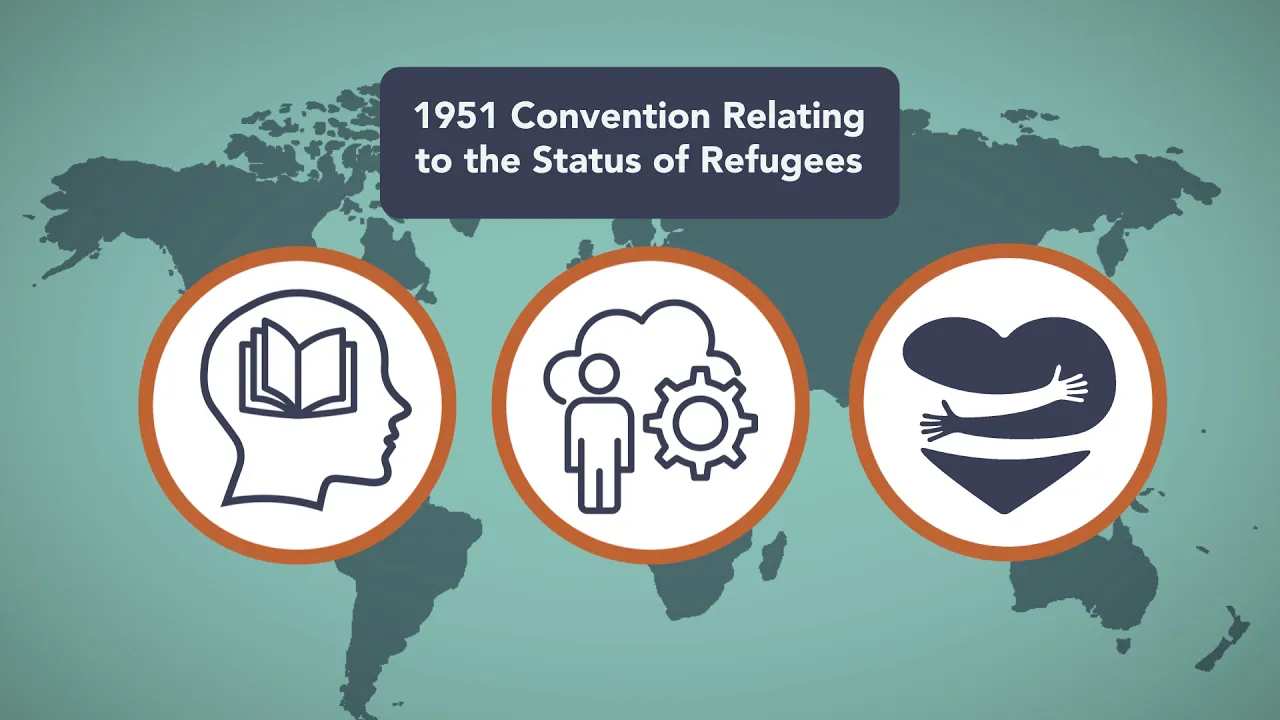
Immigration and International Law: Module 5 of 5
758
The 1967 Protocol Relating to the Status of Refugees removes the geographic and date-based restrictions of the 1951 Convention. States can be signatories to the 1951 Convention, the 1967 Protocol, or both. For countries that did not sign the 1951 Convention, signing the 1967 Protocol effectively adopts the convention. The United States did not sign the 1951 Convention but did sign the 1967 Protocol. The 1967 Protocol was not self-executing in U.S. law, requiring domestic legislation to implement its provisions.
Click to watch →

Free Crash Course: Target Prelims 2022 | International Relations Current Affairs - 1
111K
The 1951 UN Convention on Refugees (Geneva Convention of 1951) was originally limited to persons fleeing events occurring before January 1, 1951, and within Europe. The 1967 Protocol removed the geographical and temporal boundaries, making the convention universally applicable. India has neither signed the Refugee Convention nor the 1967 Protocol, as it has a history of accepting refugees (Tibetan, Bengali, Afghan, Sri Lankan) without being bound by international conventions and feels the convention doesn't address unique South Asian situations.
Click to watch →

Covering Immigrants & Refugees: Immigrant and Refugee Law & Policy: An Overview
3.7K
The 1967 Protocol relating to the Status of Refugees amended the original 1951 Convention by removing restrictions on when refugees left their country (before 1952) and where they came from (Europe only). This expansion allowed people fleeing persecution from anywhere in the world to qualify for refugee status, regardless of when they fled or their geographic origin.
Click to watch →

The 1951 UN Refugee Convention: its origins and significance | 10-Minute Talks
9.3K
The Refugee Convention was adapted notably in 1967 when the original geographic and temporal limitations were lifted by the New York Protocol relating to the Status of Refugees, signed in 1967. This decision suggests that with sufficient political will, there is scope to take account of new circumstances. The protocol allowed the convention's protections to apply universally, removing the European-only and pre-1951 restrictions that had limited its original scope.
Click to watch →
Deep Dive
The legal principle of 'non-refoulement' and its application, challenges, and enforcement in contemporary international law.

Comienza la migración electoral: fenómeno inédito
171.6K
The video explains that under international law, anyone who flees a country due to discrimination, political persecution, racial, ethnic, or religious persecution has the right not to be returned to that country. This is known as the principle of non-refoulement. The video argues that this principle is being violated when Iceland is deporting Venezuelans to Venezuela, as their lives would be in danger upon return.
Click to watch →

ZALDY CO, WALA SA PRAGUE
75K
European Union law includes the principle of non-refoulement, which prohibits returning individuals to countries where they face persecution, torture, or death. The video explains that EU law, including French law, provides protection for individuals whose lives are in danger. This principle applies regardless of the individual's immigration status. If someone can demonstrate that they face genuine threats in their home country, they may be protected from deportation under international and EU law.
Click to watch →

Trump PANICS as Supreme Court DOJ "BLESSING" FALLS APART!!!
13.9K
Non-refoulement is a principle in international law that prohibits states from returning or expelling individuals to a place where they will be tortured or killed. This principle exists under long-standing international law and creates a moral and human rights obligation for states not to send people to countries where they face persecution or harm. The principle is particularly relevant in cases involving individuals from countries with authoritarian or unstable governments.
Click to watch →

Mrunal's Daily Current Affairs:March-23-2021: Citizen rating system, NABFID 007 License, etc
66.9K
Non-refoulement is a fundamental principle of international law that prohibits governments from forcibly returning refugees or asylum seekers to their home countries if they face persecution based on race, religion, nationality, or political opinion. This principle applies during political and humanitarian crises. However, India has not signed the 1951 Refugee Convention, creating challenges in implementing clear policies for handling asylum seekers from neighboring countries like Bangladesh, Sri Lanka, and Myanmar.
Click to watch →

Polity Current: Non-refoulment Principle, Dualism of International Law, Veer Baal Diwas for UPSC
56.1K
The principle of non-refoulement, a fundamental rule in international refugee law, prohibits countries from returning refugees to territories where their life or freedom would be threatened. However, international treaties cannot be directly applied in domestic law without parliamentary ratification, creating a dualism between international and domestic legal systems. This principle was highlighted when the Supreme Court of India rejected appeals against the deportation of Fijian refugees, demonstrating the gap between international legal protections and domestic implementation.
Click to watch →
Deep Dive
The legal status of 'climate refugees' or environmental migrants, and the ongoing debate over whether the 1951 definition should be expanded to include them.

Climate everything? How the 'climate crisis' narrative undermines science and solutions
882
The 1951 Refugee Convention defines refugees based on persecution for race, religion, nationality, social group, or political opinion—nothing environmental. 'Climate refugee' is legally impossible under current international law. Climate migration has occurred throughout history, but evidence cannot show human-caused climate change is the primary driver. Numbers like '1 billion climate refugees' are unverifiable. Focusing on these narratives can denigrate actual refugees and asylum seekers forced to migrate for environmental reasons like dam-building.
Click to watch →

Trouble with the Term "Climate Refugee"
117
The term 'climate refugee' is legally incorrect because the 1951 Refugee Convention only grants refugee status to individuals fleeing persecution by their government or due to religious beliefs, not environmental harm; most people displaced by environmental factors are internally displaced within their own countries rather than crossing international borders, making 'environmental migrant' the more accurate terminology, and affected communities often resist this label because their governments are actively seeking protection through international negotiations.
Click to watch →
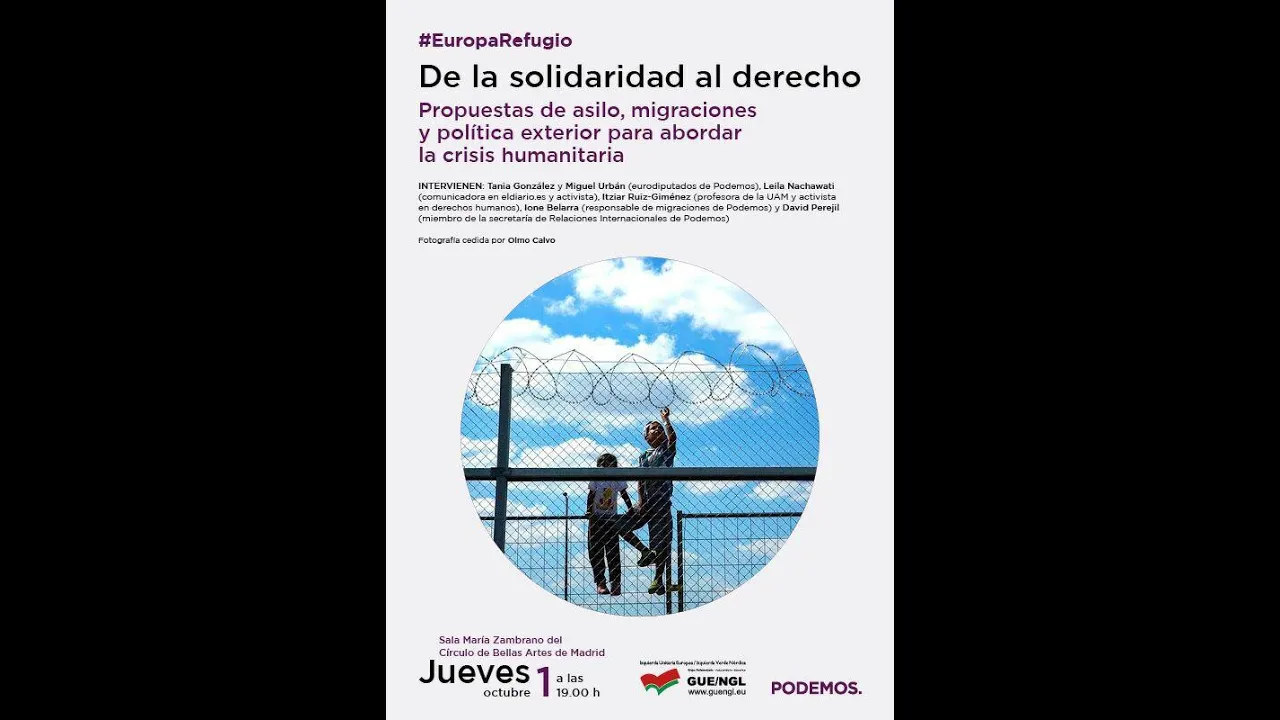
#EuropaRefugio De la solidaridad al derecho
2K
The 1951 Refugee Convention is outdated and only covers five types of persecution (race, religion, nationality, political opinion, and membership in a particular social group). A new process at the international level is needed to revise treaties and improve conventions. Climate refugees represent an emerging category, as seen in cases like Kiribati, where citizens are fleeing rising sea levels. This requires expanding the definition of refugee to include those displaced by environmental factors.
Click to watch →

CLIMATE CHANGE: LEARN AND DO
990
Climate refugees do not officially exist under international law. According to the 1951 Refugee Convention, a refugee must face danger to life or freedom in their homeland. Ioan Teitiota, a citizen of Kiribati (3 meters above sea level), became the first to apply for climate refugee status, but his applications were denied because he lacked immediate danger. The UN Commission on Human Rights acknowledged climate change may lead to human rights violations in the future. The term 'environmental immigrants' is broader, including those displaced by geological hazards. Climate is rarely the only migration reason, as demonstrated by the Syrian conflict where climate was one of multiple contributing factors.
Click to watch →
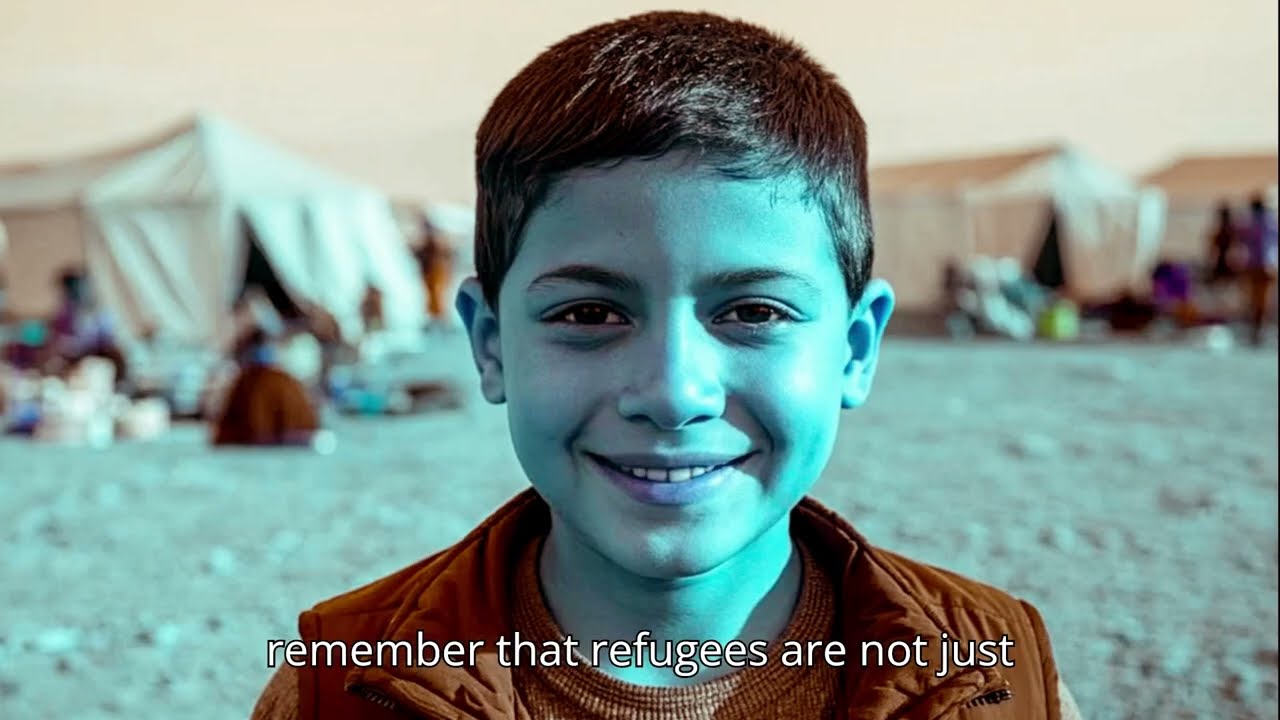
The Climate Refugees
146
The first essential step to address climate refugee crisis is expanding the legal definition of refugees to include those displaced by climate change. This requires either amending the 1951 Refugee Convention or creating a new international treaty specifically for climate refugees. International recognition that climate displacement is real is necessary to provide legal protection and status to these displaced populations.
Click to watch →
Deep Dive
Regional refugee instruments that expanded upon the UN definition, such as the 1969 OAU Convention in Africa and the 1984 Cartagena Declaration in Latin America.
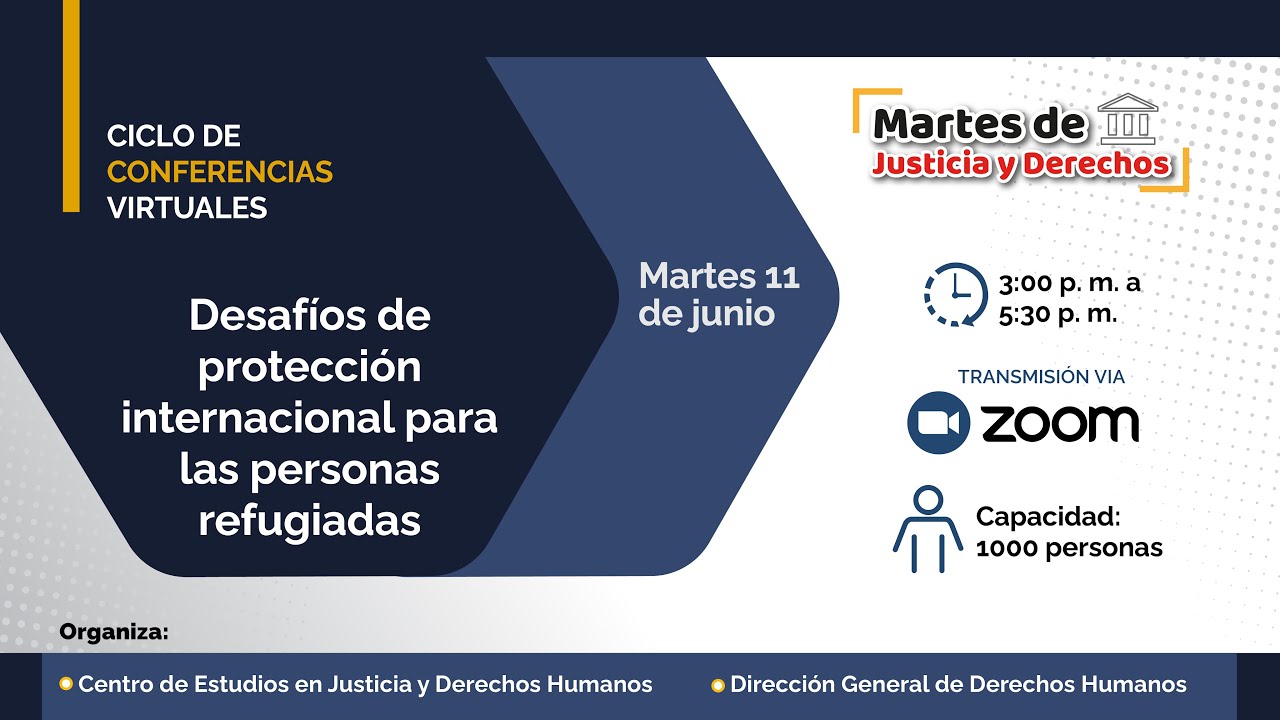
Desafíos de protección internacional para las personas refugiadas | #MartesDeJusticiaYDerechos
210
This segment explains the Cartagena Declaration on Refugees (1984), which provides a regional definition of refugees for Latin America that expands beyond the 1951 Convention. It recognizes as refugees persons who have fled their countries because their life, liberty, or security has been threatened by generalized violence, foreign aggression, internal conflicts, massive violations of human rights, or other circumstances that have seriously disturbed public order. This definition has been incorporated into the legislation of 15 Latin American countries including Peru. The region has adopted regional refugee declarations every decade since 1984 (Cartagena, San José, Ciudad de México, Brasilia) and action plans to monitor implementation of the Global Compact for Refugees (2018), providing strategic frameworks for refugee protection.
Click to watch →
The 1951 UN Refugee Convention: its origins and significance | 10-Minute Talks
9.3K
The Refugee Convention's legacy involves both adaptation and persistent limitations. Major hosting states like the US, Lebanon, Jordan, Turkey, and Bangladesh either delayed signing or refused entirely, preferring voluntary arrangements over binding commitments. Regional responses emerged through the 1969 OAU Convention and 1984 Cartagena Declaration, expanding definitions to include generalized violence and internal conflicts. The 1967 Protocol finally removed geographic and temporal restrictions, demonstrating potential for international legal evolution. Yet 70 years later, 145 signatories still leave many refugees unprotected, particularly internally displaced persons and those fleeing non-traditional persecution. The convention remains imperfect but essential—a fragile framework better than nothing, requiring ongoing vigilance against legislative threats that could undermine its core protections.
Click to watch →

Universo U 567
239
The Cartagena Declaration on Refugees, signed in 1984, is a regional instrument that expanded the definition of refugee to include individuals who flee their countries due to generalized violence, massive human rights violations, or other alterations of public order, thereby guaranteeing their access to rights and protection.
Click to watch →

Aula Pública: A política de refugiados no Brasil - 1/2
3.7K
Refugee protection operates through multiple legal frameworks. The 1951 UN Convention defines refugees as those fleeing persecution based on race, religion, nationality, social group, or political opinion. The 1984 Cartagena Declaration expanded this to include those fleeing grave human rights violations and recognized stateless persons. The 1969 OAU Convention added those fleeing foreign aggression or occupation. Brazil's 1997 law incorporated the Cartagena definition, allowing recognition of those fleeing to protect life, liberty, and security from generalized human rights violations.
Click to watch →
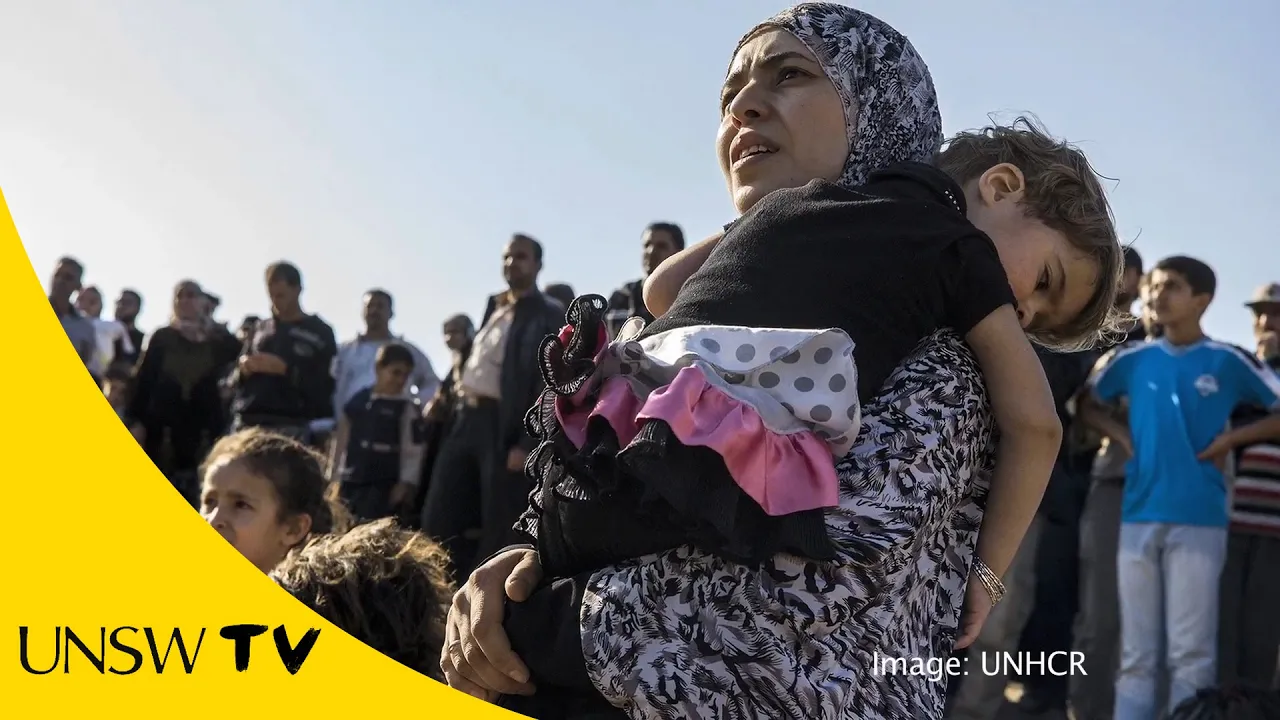
Professor Jane McAdam - The Refugee Convention
12.7K
Beyond the Refugee Convention, human rights law provides complementary protections against return. Under the ICCPR and Convention Against Torture, countries cannot return individuals facing torture, death, arbitrary deprivation of life, death penalty, or cruel treatment. Refugee law operates within broader human rights frameworks, ensuring refugees receive both specialized and general protections. Regional instruments supplement the 1951 Convention: the 1969 OAU Convention covers African refugees fleeing occupation, foreign aggression, or public order disturbances; the 1984 Cartagena Declaration protects Latin Americans escaping foreign domination and human rights violations. Article 1F excludes individuals who committed war crimes, genocide, crimes against humanity, or acts contrary to UN principles, including terrorism.
Click to watch →
Deep Dive
Case studies on how individual nation-states implement international refugee law into their domestic policies, and the resulting tensions between state sovereignty and human rights obligations.

Quo Vadis CEAS #5 I Sandra Lavenex on Organised Hypocrisy and beyond
173
Refugee law contains a fundamental normative tension between state sovereignty and human rights universalism. Under the Geneva Convention, asylum is defined as a prerogative of the state to grant asylum, not as an entitlement of the individual. This differs from the Universal Declaration of Human Rights (1948), which states that everyone has the right to ask for and be granted asylum. Article 33 of the Convention of Non-Refoulement has been interpreted de facto as creating an obligation on states to admit persons on their territory and grant access to asylum procedures.
Click to watch →

Thomas von der Osten-Sacken: Vom Elend der Flüchtlinge und derer, die ihnen helfen wollen (2021)
1.1K
Refugee policy operates within an unresolvable dilemma between state sovereignty and human rights protection. The Geneva Refugee Convention attempts to grant refugees legal subject status with rights nearly equivalent to citizens, but this fundamentally conflicts with national states' interests in controlling who enters their territory. States simultaneously need foreign workers (migration) while wanting to minimize refugees (asylum), creating a structural contradiction. This dilemma manifests in practices like the EU-Turkey border wall, which prevents people from becoming refugees rather than addressing root causes, and in the outsourcing of refugee responsibility to peripheral states like Greece, where inadequate conditions create humanitarian crises that NGOs then exploit for funding. The system has been transformed from a political issue into a humanitarian industry, with billions flowing to Greece for 130,000 refugees while basic rights remain unfulfilled.
Click to watch →

Solomon Wasia on Kenya's Crackdown of Somalia Refugees
12.8K
Countries must domesticate international refugee law through their national legislation. Kenya has enacted the Refugees Act 2006, which incorporates international refugee conventions into Kenyan law. Section 16 of this Act states that refugees are entitled to rights contained in international law and conventions to which Kenya is a party. Section 6 and 7 require that any policy formulated by the Commissioner for Refugee Affairs shall be in accordance with international standards. This demonstrates how international obligations are translated into domestic legal requirements.
Click to watch →
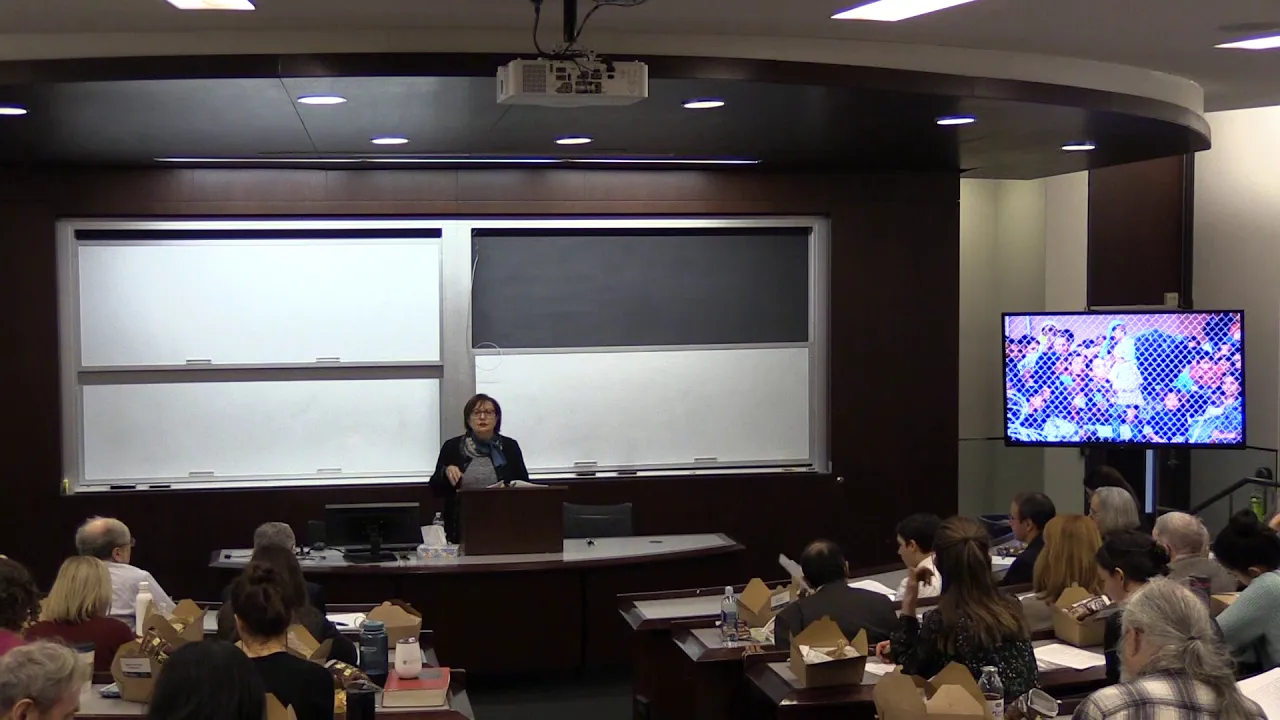
Seyla Benhabib, "The End of the 1951 Refugee Convention?"
2.4K
The lecture examines the revival of sovereignty concepts on both right and left wings, and the contentious relationship between state sovereignty and international law. Using the Aquarius incident (2018) where a ship carrying 629 refugees was denied entry to Italy by Interior Minister Salvini, the speaker illustrates how European states increasingly violate international refugee obligations. The UNHCR reports 70 million forcibly displaced persons worldwide—the highest level on record—with conflicts in Syria, Somalia, Afghanistan, Iraq, and other regions driving displacement. The fundamental tension lies between territorial sovereignty commitments and international human rights obligations, creating contradictions that neither theory nor practice easily resolves.
Click to watch →
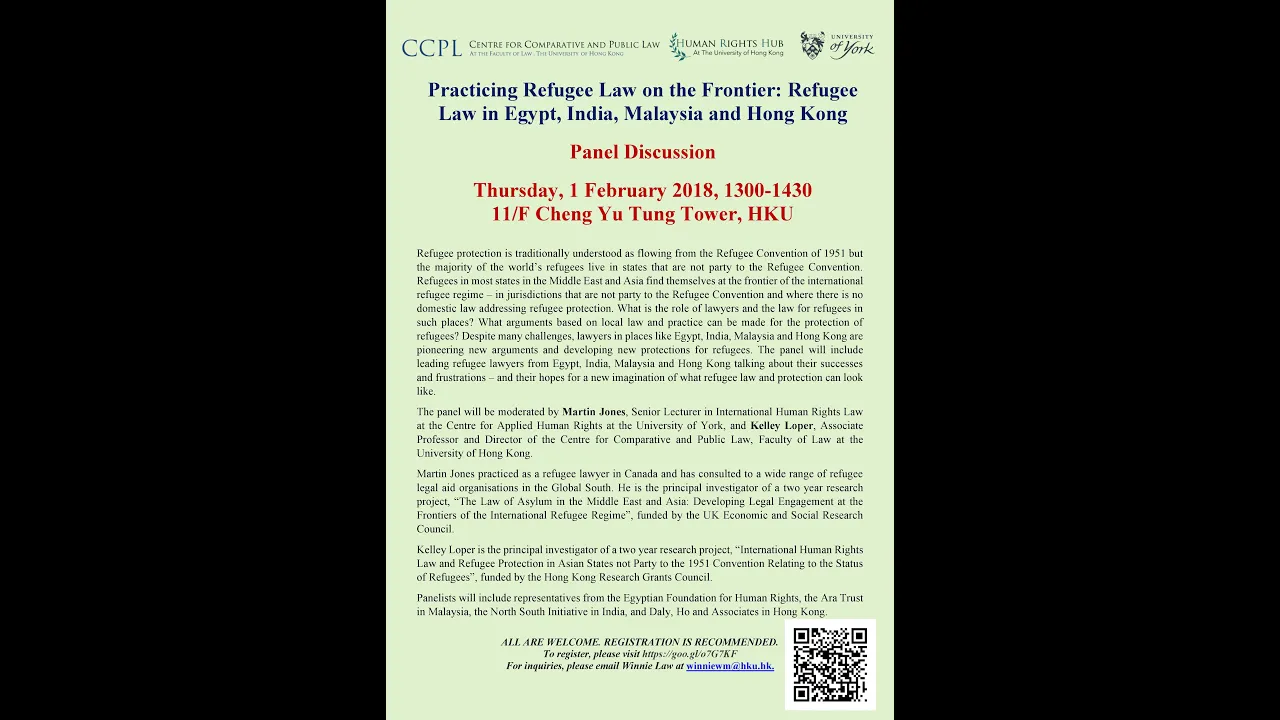
20180201 Practicing Refugee Law on the Frontier: Refugee Law in Egypt, India, Malaysia and Hong Kong
296
Four jurisdictions illustrate refugee protection strategies in non-Convention states: (1) India manages refugees through a dual regime with UNHCR handling 40,000 persons while the government manages the rest, with the IRA Trust providing legal representation in this legal vacuum; (2) Malaysia allows 150,00 refugees primarily from Myanmar without comprehensive refugee laws, with NGOs navigating network-based policies; (3) Hong Kong screens asylum seekers under the Unified Screening Mechanism with under 1% acceptance rates; (4) Egypt has no domestic refugee law but the Egyptian Foundation for Refugee Rights achieves over 50% success rates using international human rights arguments. Each context reveals unique challenges and creative legal responses.
Click to watch →
Migration History
Refugee Rights
Migration History
0:03- 1
Traces historical mass migrations driven by war and persecution.
- 2
Highlights early 20th-century refugee crises and legal milestones.
Critiques of the 1951 Refugee Convention: Obsolescence, Eurocentrism, and Enforcement Gaps
While the 1951 Convention is a cornerstone of international humanitarian law, critics argue it is an outdated, Eurocentric framework ill-equipped for modern crises. Drafted in a post-WWII context, its narrow definition of a refugee requires proof of individual persecution. This excludes millions fleeing contemporary drivers of displacement, such as climate change, systemic economic collapse, and generalized violence. Furthermore, critical legal scholars argue the Convention inherently privileges state sovereignty. Because it lacks a centralized enforcement mechanism, wealthy nations can exploit legal loopholes to evade their obligations. This has led to policies of 'border externalization'—such as offshoring asylum processing and maritime pushbacks—which undermine the spirit of the treaty and the principle of non-refoulement. Critics suggest the Convention requires comprehensive reform or a complete successor framework to address 21st-century realities.
The historical context of World War II, the displacement of millions of people in Europe, and the establishment of the United Nations (UN) in 1945.
The basic principles of international law, including how treaties and conventions are drafted, signed, and ratified by sovereign nations.
The Universal Declaration of Human Rights (UDHR) of 1948, particularly Article 14, which establishes the right to seek asylum from persecution.
Fundamental terminological differences between key terms: 'refugee', 'asylum seeker', 'economic migrant', and 'internally displaced person' (IDP).
The 1967 Protocol Relating to the Status of Refugees, which removed the geographic and temporal restrictions of the original 1951 Convention.
The legal principle of 'non-refoulement' and its application, challenges, and enforcement in contemporary international law.
The legal status of 'climate refugees' or environmental migrants, and the ongoing debate over whether the 1951 definition should be expanded to include them.
Regional refugee instruments that expanded upon the UN definition, such as the 1969 OAU Convention in Africa and the 1984 Cartagena Declaration in Latin America.
Case studies on how individual nation-states implement international refugee law into their domestic policies, and the resulting tensions between state sovereignty and human rights obligations.
61.3K views816likes3:39@KreisauInitiativeeVOriginal Release: 2018-06-13
Human migration is nothing new.
For more than a million years humans have moved their homes to escape famine, persecution, natural disasters and war.
Sometimes migration has been voluntary.
But more often people were forced to move to new places, often at great risk.
In the last century we have seen hundreds of millions of people migrate across the planet.
World War I created massive waves of international refugees.
This sparked new, international guidelines, laws and conventions to protect a refugee’s basic human rights.
These guidelines were tested soon afterwards: at the start of World War II more than a million people - most of them Jews - attempted to escape Nazi Germany.
By 1945, some 40 million people had been forcibly displaced, deported and resettled in Europe and elsewhere.
The United Nations was established at the end of WWII.
It made a commitment to protect the most vulnerable people wherever in the world they found themselves.
The Universal Declaration of Human Rights was established in 1948.
Before this time, the rights of refugees were not anchored in international law, but subject to the laws of the countries they had fled to.
An important, United Nations-backed convention relating to the status of refugees took place in Geneva, Switzerland in 1951.
In 1967, a protocol was also adopted; 148 countries signed on to one or both.
International support was clearly established.
The convention states that people have these basic rights no matter where they are in the world. The right… to an education To exercise religion to justice to remain in a country to not be punished for illegal entry into the territory to practice a profession to housing and to own property to form and join trade unions to public relief and assistance to freedom of movement within the territory to be issued identity and travel documents.
All refugees are required to abide by the laws of their host country and respect the maintenance of public order.
Today, the Convention is more important than ever.
The planet is facing its worst refugee crisis since WWII.
Almost 1% of the earth's population is an asylum-seeker, internally displaced or a refugee according to a 2015 UNHCR report.
That’s about 24 people displaced every minute.
There will always be war, famine, drought. Hunger, crises.
There will always be refugees.
But respect and care for refugees is a universal human value.
The content of this video does not reflect the official opinion of the European Union.
Responsibility for the information and views expressed in the video lies entirely with the author(s).
Up Next
6:40
Plessy v. Ferguson: The Origins of Separate but Equal | US History
@iammrbeat
206.6K views•2019-10-04

4:27
US Secondary Sanctions Impact on EU Businesses and Blocking Legislation
@Bureauvandijk
1.6K views•2019-03-20

5:27
Forensic Phonetics: Speaker Identification in Legal Cases
@nptel-nociitm9240
539 views•2025-03-19

24:42
Police Interrogation Tactics: False Confessions & Legal Reform
@LastWeekTonight
7M views•2022-04-18
Related Study Plans & Knowledge Roadmaps
Structured learning paths in Law
law
Self-Defense Law: Imminence & Castle Doctrine
01Foundations of Self-Defense Law
02Imminent Threat & Reasonable Belief
03The Principle of Proportionality
+ 3 more learning modules
12h6 modules
Explore Roadmap
law
Defamation Law: First Amendment & Actual Malice
01Introduction to civil torts and the First Amendment
02Elements of Defamation: Libel and Slander
03Public Figures vs. Private Individuals
+ 2 more learning modules
8h5 modules
Explore Roadmap
law
Hearsay Rule: Trial Evidence & Exceptions
01Introduction to Trial Evidence & Courtroom Basics
02Demystifying Hearsay: The Core Definition
03Non-Hearsay: Exclusions Under FRE 801(d)
+ 3 more learning modules
14h6 modules
Explore Roadmap
law
Medical Malpractice: Law, Liability & Care
01Foundations of Tort Law and Civil Liability
02The Four Elements of Medical Malpractice
03Defining and Proving the Standard of Care
+ 2 more learning modules
12h5 modules
Explore Roadmap