























![드디어 순간이동을 성공 시켜버린 미친 과학자들(143km ㄷㄷ) [양자얽힘 완전판]](https://i.ytimg.com/vi/7VV9qJvz-Js/maxresdefault.jpg)
Physicists David Kaiser and colleagues conducted a Cosmic Bell Test experiment in 2015 that used starlight from stars 600 light-years away to randomly determine detector settings for measuring entangled photons, thereby closing the 'locality loophole' and providing strong evidence that quantum entanglement is real rather than an illusion caused by hidden variables or experimental bias.
Quantum Bell Test: How Stars Validate Entanglement
Added:The concept of Quantum Entanglement, specifically how two spatially separated particles can have instantly correlated physical states.
Einstein's concept of 'Local Realism' and the EPR (Einstein-Podolsky-Rosen) paradox, which challenged the completeness of quantum mechanics.
Bell's Theorem and how Bell inequalities mathematically distinguish between classical local-hidden-variable theories and quantum mechanics.
The 'Freedom-of-Choice' loophole in experimental physics, where the choices of measurement settings might be influenced by prior shared events.
The basic wave-particle nature of light (photons) and how polarization is measured in quantum optics experiments.
Cosmic Bell tests utilizing Quasars, which push the boundary of the 'freedom-of-choice' loophole billions of years back in cosmic history.
The practical application of validated, loophole-free entanglement in Quantum Key Distribution (QKD) and device-independent quantum cryptography.
The philosophical and physical implications of Superdeterminism, the absolute loophole that questions free will and determinism in physics.
Other primary experimental loopholes, such as the detection (fair-sampling) and locality loopholes, and the milestone 2015 loophole-free tests.
Advanced concepts in Quantum Information Theory and how verified entanglement serves as a resource for quantum teleportation and quantum computing.
392.7K views13.7Klikes11:19Original Release: 2017-05-11
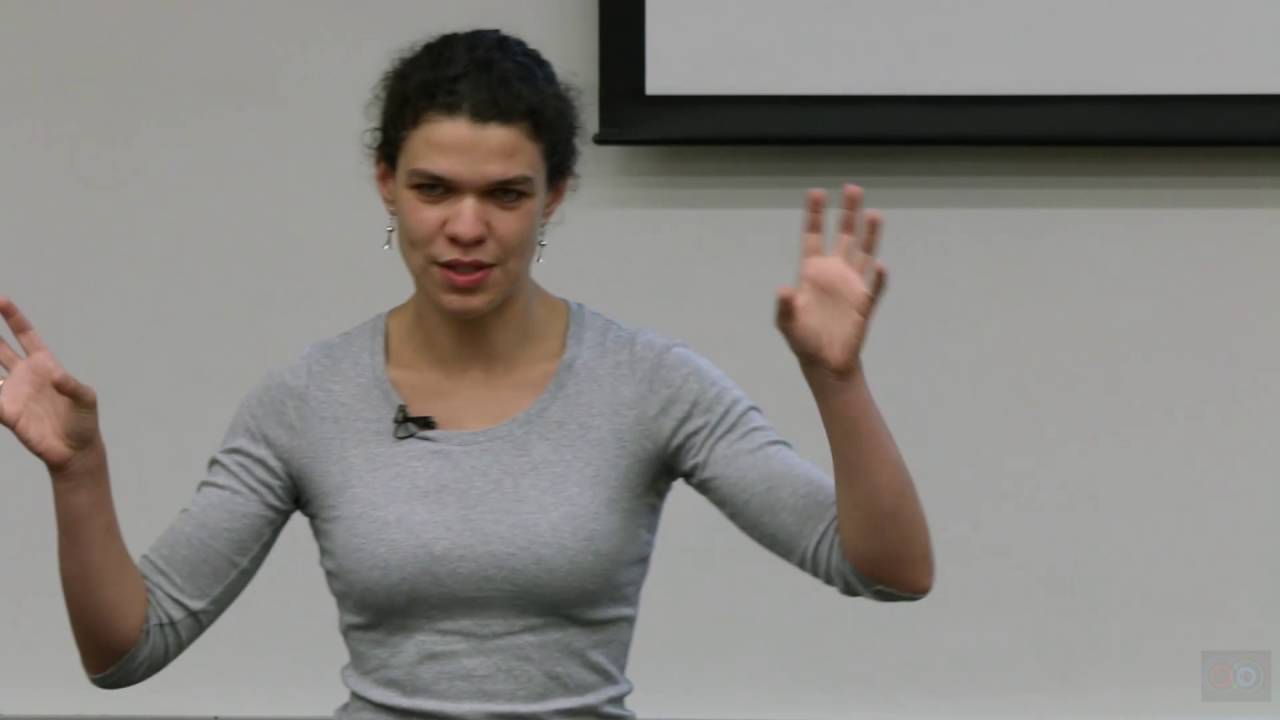
[Music] this episode is supported by 23 and me hey I'm Diana and you're watching physics girl I want to talk to you about whether the laws of physics are possibly wrong like so wrong that say you made a quantum computer to encrypt your million dooll self-driving AI Butler but because we got the laws of physics wrong it could be hacked like that chances are the laws are not wrong because we've tested this stuff a lot but it's kind of the point of science to be skeptical sometimes you have to revise laws like when quantum mechanics was first discovered classical mechanics couldn't fully explain light to this day physicists are testing accepted laws of physics and this video is about a brand new experiment with breaking results testing Quantum behaviors using lasers and telescopes and stars 600 light years away and the Austrian Bank my name is David Kaiser I teach physics and the history of science here at MIT Dave Kaiser and his colleagues have conducted an experiment to test whether quantum entanglement is real but first we've got to get on the same page about quantum mechanics quantum mechanics is a physical theory that describes how the tiniest things in the universe act and some of their behaviors are weird you know we really we've had quantum mechanics in one form or another now for 90 years not quite a century of quantum mechanics it is never never failed us it has led us to predictions albeit probabilistic ones in most instances that match observations sometimes to extraordinary accuracy sometimes we can match to 13 decimal places that's amazing it's the most in that sense by far the most accurate scientific theory ever developed by people untested but it also has these very strange sort of inbuilt features that still make some people uncomfortable in other words Dave agrees quantum mechanics is strange stuff like quantum entanglement and schrodingers cat Schrodinger's cat was a thought experiment devised by Irwin Schrodinger when he thought that quantum mechanics had become just too strange the math of quantum implies something called superposition where a Quantum particle can be in two or more States at the same time when you're not observing it take for example spin which is a property of particles if you don't know what it is you're probably the only one just kidding so if you had an electron in a box quantum theory says it can be both spin up and spin down at the same time time shinger thought superp position was weird because it's unintuitive for something to be two different things at the same time it'd be like a cat in a closed box being both dead and alive at the same time but when you open the box and observe the cat it instantly is just one state it's dead or it's alive and this is real life stuff and it gets weirder with quantum entanglement imagine two kittens each in a box who happen to behave like Quantum particles their two possible states are asleep and awake each kitten has a 50% probability of being awake and 50% probability it's asleep they're in that weird state of both and they're not just any Quantum kittens they are entangled which basically means that their Fates are connected determine the state of one and you will instantly determine the state of the other mess with one and you will affect the other one instantaneously so for example you could have two entangled kittens wherein one has to have the opposite state of the other so both kittens start in a super position I of awake and asleep you open one box observe kitten find it asleep so the other one must be awake you could separate these kittens to opposite sides of the planet and you'd still get the same results instantaneously do you see why this is weird it's almost like the kittens or Quantum particles communicated with each other instantaneously and telepathically this was enough to freak Einstein out you may have even heard of his over qued description of it spooky action at a distance quantum mechanics says that in lement is real even if it's weird and we've seen its effects in many many experiments but there's still a slim chance it's just an illusion like this trick it's funny because for a split second the kid actually thinks their head is full of coins so when it comes to entanglement maybe the physicists are the kids who haven't figured out yet that the hand brought the coin there like maybe it just looks like entangled particles can communicate instantaneously but it's just some trick of the universe pulling it off Dave Kaiser is checking for a mystery hand creating the illusion of entanglement he's looking for some unknown thing and he knows it's a little far-fetched no I it turns out think there's a lot of good reasons to still believe and have great confidence in quantum mechanics and I had that go assumption going in he may as well be looking for a unicorn he's pretty sure unicorns don't exist but he hasn't logically disproven it yet which for a physicist means that it's possible unlikely but possible so Dave and his experimentalist colleagues came up with an idea for an experiment to test for this invisible hand fooling us and so we were able to put the team together so by 2015 Orly yeah 2015 or so we had things in place so how do you look for something when you don't know what you're looking for you do what YouTube is doing to you right now you collect statistics in a clever way conceived by physicist John Stewart Bell just over 50 years ago uh in 1964 John Bell a really great very creative physicist published um an article that was really not very much noticed or talked about in its day but now has come to be this a really incredibly interesting thing and his argument was that one could actually put to the test put to real experimental quantitative test a debate that had already been raging for 30 years before that Belle figured out that if measurements on close kitten were independent of far away kitten then the results of tests on the pairs of kittens could only line up so often they'd obey an upper limit known as Bell's inequality but if the kittens were were genuinely entangled then measurements on the pairs of kittens should line up more often than Belle's limit would allow quantum theory predicts their behavior should be more strongly correlated with each other people have taken lots of statistics on entangled photons and everything so far supports that entanglement is real but physicists argue that there's a slim yet real possibility that these experiments are flawed income Dave and his colleagues they sent pairs of entangled photons in two directions so we set up in the city of Vienna and we shot lasers to the night sky of Vienna first of all let's just pause on that for a second that's amazing it's amazing so we set up a very powerful laser in Anton's laboratory near the roof and that shot these entangled particles really specially prepared laser light half a mile in this direction a mile in that direction One got sent to a telescope at a university and the other to another detector at the Austrian national bank these detectors were designed to make a measurement like checking whether the kitten is awake or asleep but in this case determining the p polarization state of the photon the thing is the measurement depends on how the detector is oriented and you have to set that before your measurement which is the Crux of the experimental test here in the past people have worried that somehow something could have biased the detector settings either one detector was transmitting information to the other or the person operating was somehow unconsciously biased or who knows why but Dave and his team came up with this crazy idea to make sure that their detectors were not biased cuz human influence things things are notoriously bad at generating random numbers so instead of using conventional random number generators to set the detectors they decided to use giant burning balls of plasma yeah Stars each detector had an accompanying telescope pointing at a different star in our galaxy closest of which was 600 Lighty years away and as each Photon from the Star hit the telescope the detector would reorient itself depending on the random color of the Starlight so cool they were using Starlight as a tool in their experiment the detectors were randomly resetting after the entangled particles were emitted but before they arrived at the detectors so the measurements performed on each particle couldn't have been known at the time the particles were created they counted them up and looked for correlations between the measurements and they found them they found exactly what quantum mechanics said that they would find so in the end the only way that entanglement could have been faked is if some thing had interfered over 600 years ago to buyas the detectors because 600 light years as I said you know that's before there was a Gutenberg printing press where as I'm fond of saying it's when Jon of Arc was so young her friends still called her Joanie I me that's really that's that's a long time ago yeah like the knights in the Crusades or the Mayans and they would have had to have been at that star 600 light years away anyway it seems pretty convincing that entanglement is real but Dave thinks he's just narrowed the odds of finding his unicorn he eventually wants to use the oldest light in the universe maybe even the cosmic microwave background to set his detector that way we can make sure that no bias snuck into the experiment since the Big Bang so part of this is just that like quantum mechanics came along and it was weird and it made people uncomfortable and this is like let's make sure we're validating it let's make sure that it it is true through all these different experimental means and checking any ways that there could be some weirdness sneaking into the experiments that's right I don't know anyone in the field who says I think this is a likely a plausible alternative to quantum mechanics and I I don't I me I don't think this is like really how I think the world's going to work if we could zoom in and and watch it unfold but there's still some I think interesting motivations to keep to keep trying people around the world as you know are working hard to build actual Industries now at the basis for which are things like quantum entanglement the whole uh spheres of quantum Computing of quantum encryption of quantum teleportation of everything else that people dreamed up for Star Trek many years ago all these ideas depend at their core on quantum TMA being real in the world not just some trick that somehow we got duped by in a handful of experiments so no cracks in the foundation of quantum mechanics which is great because that means I can still use it to explain how lasers work but not now I have some I got some cats to go play with but thank you for watching this video and happy physicing thanks to 23 and me for sponsoring this episode the name 23 and me comes from the fact that human DNA is organized into 23 pairs of chromosomes 23 in me is a person genetic Analysis company created to help people understand their DNA you'll be able to see which regions around the world your ancestors came from or learn how DNA impacts your health facial features sense of taste and smell hair or Sleep Quality learning this information starts with just spitting in a tube I recently learned that my DNA relatives are 70% less likely to have skydived go to 23andme.com physicsgirl to support our show and learn more about your person personal DNA story
Up Next

93:18
Exploring the Quantum World: From Atoms to Subatomic Particles
@wondody
766.3K views•2023-07-17

12:53
21cm Hyperfine Transition in Neutral Hydrogen: Radio Astronomy Basics
@AaronRobertParsons
12.4K views•2011-10-13

9:24
How to Build an Acoustic Levitator: Physics of Sound Levitation
@physicsgirl
689.7K views•2017-12-14

27:14
Entropy and the Second Law of Thermodynamics Explained
@veritasium
27.5M views•2023-07-01
Related Study Plans & Knowledge Roadmaps
Structured learning paths in Physics
physics
Nuclear Physics (Decay, Fission & Reactors)
01Atomic Structure and the Binding Force
02Radioactive Decay and Half-Life
03Nuclear Fission Mechanics and Chain Reactions
+ 2 more learning modules
12h5 modules
Explore Roadmap
physics
Soft Matter (Polymers, Colloids & Rheology)
01Foundations of Soft Matter & Thermal Forces
02Polymer Physics and Macromolecules
03Colloids, Surfactants, and Self-Assembly
+ 2 more learning modules
38h5 modules
Explore Roadmap
physics
Analytical Mechanics: Lagrangian & Hamiltonian
01Mathematical Foundations: Calculus of Variations
02From Newtonian Mechanics to Constraint Dynamics
03The Principle of Least Action & Lagrangian Mechanics
+ 3 more learning modules
28h6 modules
Explore Roadmap
physics
General Relativity (Spacetime & Cosmology)
01Foundations of Relativity: Special Relativity
02The Geometry of Spacetime: Equivalence Principle & Curvature
03Einstein's Field Equations: The Mathematics of Gravity
+ 2 more learning modules
55h5 modules
Explore Roadmap