







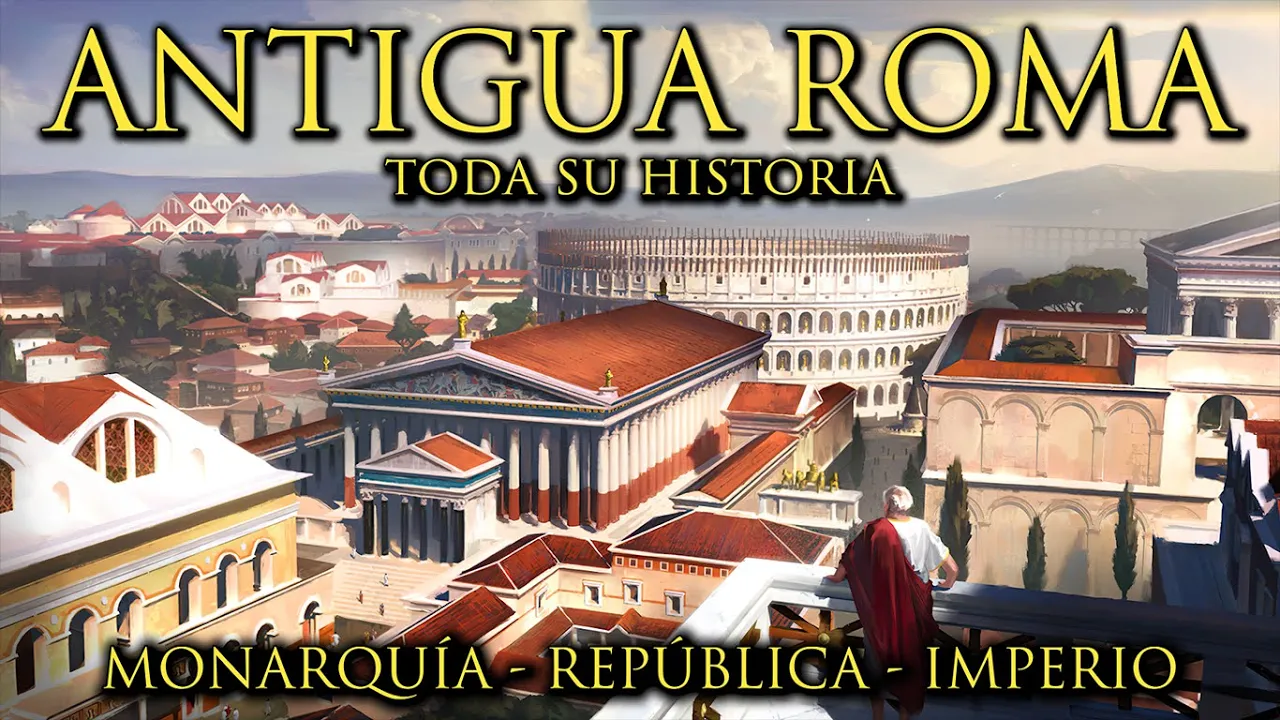


















This documentary explores how inflation and currency debasement contributed to the fall of the Roman Empire through an analysis of Roman coinage history. Beginning with the introduction of Roman currency in the late 4th century BC, the video traces how wars like the Punic Wars forced Rome to debase its silver coins, reducing purity from 98% to as low as 5% over time. Each emperor facing financial pressure resorted to debasing the currency, creating a cycle where reduced coin value led to higher prices, which in turn required more money to fund military expenses and government operations. This恶性循环 (vicious cycle) accelerated during the Crisis of the Third Century, ultimately contributing to economic collapse and the fragmentation of the Empire. The documentary illustrates how monetary policy failures can serve as a lens for understanding broader historical processes of imperial decline.
How Inflation and Coin Debasement Caused Rome's Economic Collapse
Added:Inflation has come roaring back into the news lately and justifiably has a lot of people worried. But this phenomenon has been a feature of civilization since the dawn of our earliest economic systems. While imprecise, especially when dealing with the past, a study of inflation can nonetheless often reveal much about the history of a people. So today let's explore the rise and fall of the Roman Empire through the lens of inflation.
While ancient Romans and ourselves battle inflation sometimes it's nice to just kick back and enjoy collecting hordes of loot without considering the pesky Economic Consequences and what better way to get that Rush than to build a team from over 600 Champions to fight epic bosses or explore mysterious dungeons you can find all this adventure and more through a sponsor rage Shadow Legends available on mobile and PC the game offers a ton of ways to play with my top two Champions being the following herndig the dwarf who gets faster and stronger with each kill as well as the royal guard for his deadly AOE attack which scales based on enemy health and is excellent for clearing waves and tough bosses having a wide range of champion options is one of my favorite features of the game you can test your medal in this month's newly released Awakening feature and a brutal new dungeon the iron twins Fortress in addition the champion Death Knight has now been upgraded with a new version Ultimate Death Knight which you can get for free from now until October 27th by playing raid for 7 Days use the promo code DK rise for a bunch of free items to instantly level up your strongest Champion all the way to level 50 and 5 Star Ascension there's never been a better time to get started so new players use my link or scan the QR code right here and get a free starter pack worth almost 30 dollars the free champion virgus and also this added in-game loot you will find your rewards here in your inbox for the next 30 days only enjoy Before we’re able to answer the question of how the Romans dealt with inflation, it’s important to first understand the history of Rome’s currency, how metals were sourced, and the emergence of the denarius as the most significant reform to the Roman monetary system.
The Romans entered the monetary system later than their Greek neighbors, only producing their own currency in the late 4th century BC. Like other civilizations, the Romans used their coins as both a way to trade precious metals and as a way to set a value to goods. Before coins were introduced, the Roman economy was largely based on a bartering system where folks exchanged goods and services, such as livestock.
While the early Romans did not mint coinage of their own, they did have a system of currency based on bronze weights known as the aes rude. These rather large chunks of raw bronze that were incredibly impractical for long-term use. That's no exaggeration either: one surviving aes rude weighs about 324 g - almost a pound of bronze. Despite their unwieldiness, they continued to be produced up to 218 BC.
As the Romans expanded over central Italy, war booty meant coins could be produced using precious metals: bronze, silver, and - rarely - gold. From the aes rude, four other coin types were introduced: cast bronze ingots known as aes signatum, coined silver and bronze, and cast heavy bronze discs known as the aes grave.
Initially, the aes signatum replaced the aes rude. These ingots were slightly more practical and aesthetic, and were cast with the inscription "Romano." There was no base weight standard for them - they were simply stamped bars of bronze, weighing anywhere from a pound and a half to over 10 pounds. The first Roman silver coins, meanwhile, were produced in Neapolis and they closely resembled Greek coinage. These copies of the Greek didrachm are called the quadrigatus today, a reference to the four-horse chariot of Victory on the reverse side. It was originally struck at 93% purity. Over time, the silver purity increased until it essentially became pure silver at 98%.
Finally, the aes grave were heavy bronze disks that weighed about one Roman pound. These were a slight evolution from the aes signatum - they were vaguely coin shaped - but just as impractical. With each coin being about the size of a human palm, they were still a better measure for metal trading than for coinage. Both the aes signatum and aes grave were cast in the city of Rome itself, and both were mainstays of the Roman world. While silver coins were infinitely more practical, Rome simply did not have any silver mines. No silver mines meant that any silver had to come either from plundering or from outside trade. In theory, this could work. In practice, it was a delicately balanced system that could not withstand any real pressure.
That pressure came relatively quickly. The First Punic War put horrific costs on the Romans, measured both in currency and in dead citizens. The Romans lost fleet after fleet to either battles or storms, and they simply didn't have enough silver to create enough money to replace them. Rome was able to mint about 6.5 million silver coins for the war. Carthage, on the other hand, was able to mint coins worth 37 times that amount. Rome was destitute, relying almost entirely on combat loot and bronze coinage to fund its military expeditions, and as a result they began to debase their currency. The pure silver coins became diluted: 98% silver became 75%, with the other 25% being copper or another base metal. The heavy aes grave and aes signatum were melted down for use in both these debased coins and in weapons, supplementing the state's metal supply. That 75% purity quickly became more diluted as the war continued, and by the end of the First Punic War, very little silver was involved in making Italian "silver" coins. Supposedly, these retained their face value - but merchants measured value in silver, and more coins had to be made to pay for the same services.
Victory in the war brought some relief to Rome. Carthage paid a huge amount of silver to Rome as part of the settlement, and Rome promptly used this silver to return to minting pure silver. These coins apparently circulated at the same time as not only the pre-Punic War coins, but also the incredibly debased ones. When the Second Punic War broke out, Rome's coinage system was even more fragile than it had been before the first, with people hoarding coins of higher value and attempting to get rid of the junk. Rome's entire economy depended on Carthage's supply of Spanish silver - so when that suddenly stopped, Rome's mints immediately began debasing the currency again. The silver coins were instantly reduced in value. Previously sacred gold was melted down into gold coins called aurei, but it was still not enough. After Hannibal's crushing victories, Rome's bronze supply was virtually nonexistent. Desperately, Rome began to mint the equivalent of "fiat currency." The Roman pound was split into six, and each of these bronze tokens - known as the as - was expected to be traded as if it was worth a full pound. Within a decade, almost no aes grave or aes signatum remained in circulation.
The only thing keeping Rome in the war was the intervention of Hiero II of Syracuse, who loaned enormous sums of silver to Rome. While this forced an incredible amount of debt on the Romans, it gave them a fighting chance - and as the war stabilized, Rome undertook a complete overhaul of its monetary system.
The old currency was replaced with the introduction of the denarius in 213-212 BC. This new silver coin weighed half as much as the old quadrigatus, but was essentially pure silver. The as was introduced as a standardized bronze coin, ten of which were worth one denarius. While some other coins were minted in this time period, the denarius became the mainstay of the Roman world for the next 500 years. With the victories of Scipio Africanus in the Second Punic War, the Romans gained full control of the silver mines in Spain - and their currency was stabilized. They exerted more pressure on the Mediterranean world, melting down millions of other silver coins from other states, restriking them into Roman coins and establishing the denarius as the eminent currency of the age. More than anything else, the Second Punic War forced the Romans to use cash.
Coins were now used for most transactions and salaries, instead of just for tax and governmental purposes. By 141 BCE, the denarius was revalued to 16 asses, and remained stable. Unfortunately, the increase of silver supply and decreasing the bronze weight standards pushed the economy into inflation. In the late Republic, prices flared as Rome was flush with silver. This, combined with nearly a century of regular civil wars, caused the Romans to resume minting gold coins in bulk. As with most aspects of the Roman world, the economy finally stabilized once again with the ascension of Augustus and the end of civil wars.
So far, we've talked a decent bit about coins being used. Let's take a small detour and look into how they were made.
There were several different methods of making metal with patterns in the ancient world. Casting was well known, as was engraving. While a skilled smith could make incredibly intricate patterns and art pieces, coinage was its own category. Casting was not an option for coins: not only was it too slow, the cost of making so many identical casts would have been astronomical. Instead, mints followed a relatively simple formula: Unmarked pieces of metal were made, (creatively known as "blanks") to the desired purity or weight and were used as the base metal for the coins. A bucket of these blanks would be warmed and brought to a stamp known as a "die." The bottom of the stamp was built into a stable surface, and the blank would be placed on top of it. A second person working the mint would place the top part of the die over the blank and strike it with a hammer. Thus, a new coin would be made. An efficient team could make about 20,000 coins in a single day using this method.
Predictably, these mints were heavily guarded, with some legionary fortresses being built around them. They were centrepoints of precious metals and so they were essential for any man who aspired to the imperial throne.
Despite the chaos engulfing the end of the Republic, Roman currency remained relatively stable thanks to the enormous amount of loot that streamed in from all quarters. Weights and values remained standardized, a policy that Augustus encouraged. The emperor, always a supporter of order, fixed some of the problems that had been inherent in the system. There was too large of a gap between the denarius and the as - and "smaller silver coins" had turned out to be impractical. Therefore, Augustus introduced a new brass coin called the sestertius. It was valued at 4 asses - meaning that 4 sestertii would equal one denarius.
The as would now be made of copper instead of bronze. It was a low-value coin that was essentially pocket change. The silver denarius remained the base currency, and could be trusted to literally be worth its weight in silver, while the gold aureus, worth 25 denarii each, was rare and only used for major transactions and large, ceremonial gifts. Not only were these values trusted and adhered to across the Empire, but they were equally valued even beyond the borders: because of their purity, these coins were used as a standard weight measurement for trading precious metals.
By now you’re probably thinking, what does all this mean? How far did money go in the Empire? What was the general cost of basic items? For the sake of ease, most of our discussion here will be about the sestertii and denarii. Let’s break this down and see where your money could take you in the Roman Empire.
To give you an idea of what each coin meant, take into consideration that a farmer in Egypt could expect to earn about 1-2 denarii a day in the mid-2nd century AD. In Dacia, however, a miner could expect to earn as little as 1-2 sestertii a day at about the same time period. Compare that to a casual worker earning 3-4 sestertii a day in the first century BC in Rome. A soldier generally earned an annual initial salary of 900 sesterii. Food and clothes were deducted from that, so soldiers would generally only see about 2/3 of that - roughly 2 sestertii a day.
So let's put that in perspective - what could a person buy with their money?
Since we don’t have local prices, the best we can do is estimate based on the surviving figures from Egypt and Dacia. Wheat prices were generally about 2 denarii per modius. In general, people lived on 5 modii of grain per month, meaning that, for many people, most of their income would go towards basic sustenance - which is why keeping the grain price artificially low was absolutely essential for every emperor who wanted to stay alive.
Beyond this, we have some small indications of prices in the early Empire. While a bad glass of wine could be had for as little as a single as, a good glass of wine would probably cost 2 sesterii. A good size bottle of wine went for 1 denarius. For 1-7 denarii you could get a nice red tunic, depending on quality. Most people would have to save just to buy that nicer tunic. While Indian trade exploded in the first century AD, some things would remain outside the ability of most people to buy. For example cinnamon was one of the most valuable imports, selling at a whopping 1,500 denarii per pound. Incidentally, when a fire burned down a warehouse holding thousands of medical texts, notes, and some small jars of cinnamon, the cinnamon was considered to be the most tragic loss.
The monetary system established under Augustus continued throughout the early principate, and the state minted high-quality coins from Augustus to Nero. Unfortunately for Nero, the great fire of Rome happened alongside a grinding war in Armenia, destroying most of the city and straining available resources. Incredible amounts of silver were being exported every year to distant lands, and now the state needed an equally huge amount of money to rebuild the capital - and a shiny new palace. With these mounting costs in sight, Nero dramatically debased the coinage. He believed that, by reducing the weight and fineness of the coins while retaining the same face value, the state could increase the actual supply of money. Therefore, he reduced the weight by an eighth and the purity from 98% to 93%. Thus, he could melt down a million pure denarii and produce 1.2 million debased denarii.
This, obviously, didn’t work. The debasement of the denarius had severe impacts on Roman currency that continued up until the beginning of the third century. Not only did he cripple confidence in the purity of the Imperial mint at home and abroad, he created a tradition where, when an emperor needed more cash than he had, he would simply debase the denarius. Initially, the Flavian emperors continued this policy. Thanks to the crisis of 69 AD, the imperial treasury was horrifically deep in debt - and as a result, Vespasian cut the purity of the denarius to 89%, with such little oversight that it sometimes dipped as low as 80%. Domitian attempted to return to the Augustan standard, but a lack of silver in the economy forced him to keep to Nero's silver standard of about 93% pure silver. This remained the standard, no matter the influx of silver, to the point that Trajan purposefully gathered all currency of the Augustan standard and recast it. While the coin would endure further shifts in purity, its actual value remained stable until the reign of Marcus Aurelius - the so-called Philosopher Emperor.
The economy took a severe hit under Marcus Aurelius’s reign due to a deadly plague that wiped out approximately 10% of the population. The plague was followed by repeated and costly military campaigns to fend off both Parthia in the East and Germanic invaders along the Danube. Marcus Aurelius desperately debased the coinage below 80% for the first time, but the worst was yet to come. Cassius Dio darkly writes that, upon his death, "[this history] now descends from a kingdom of gold to one of iron and rust, as affairs did for the Romans of that day." While Roman prices and coinage had remained relatively stable from 30 BC, the reign - and death - of Marcus Aurelius collapsed all faith and responsibility around the denarius. Each successive emperor was forced to offer massive bribes to the army, and to afford that, they would debase the denarius. Debasement gave the emperor an initial jolt of income until people caught on, but these debased coins coincided with a corresponding rise in prices. The face value of the denarius no longer had any respect: all that mattered was the weight in silver.
Eventually in 200 AD, Caracalla tried more financial trickery. The denarius was replaced with the introduction of the double-denarius - the Antoninianus. This coin type had the face value of two denarii, but was really worth one and a half as much in silver. This move essentially collapsed the economy. People hoarded denarii with as much silver content as possible, causing prices to skyrocket. Military expenditure also rose dramatically under Septimius Severus and Caracalla, with estimates of 70% of the state’s budget being for the military under Caracalla, with just 5% allocated to civic officials. The Severan dynasty was able to pause the spiraling effects of the currency for a short time, abandoning the antoninianus and actually increasing the purity of their coins by a small degree, but the crisis of the Third Century caused Rome's coinage to descend into mayhem.
The Crisis was noted by a few constant factors: constant warfare, immense debts, and an entirely unstable Imperial government. The Sassanid Empire, glorying in their golden age, carried out constant wars against Rome's East. European tribes flooded over Rome's borders in the north. These raids had a costly side effect, with the invaders carrying off enormous amounts of pure gold and silver, further depleting the Roman supply. To prevent raids and wars, Roman emperors gave enormous amounts of precious metals as tribute in a vain effort to pause the attacks. Not only that, pretenders to the throne grew up like weeds, and each one needed to pay their soldiers with lavish bonuses. With no gold or silver to pay off debts, the only thing that potential emperors could do to "make" money was to continue debasing the currency.
Third century coins were manipulated to appear more valuable than they were actually worth, with lower-content denarii given finer silver surfaces. Essentially, the Roman administration was issuing high quality "fakes." By about 238, the antoninianus was resurrected and the denarius was almost entirely abandoned. Unfortunately, it suffered the exact same problem as the now-defunct denarius. Emperors looking to make a quick buck promptly began debasing the antoninianus, and the coin became essentially worthless within 30 years. The general population noticed these changes and retaliated by paying taxes with the newer - more worthless - coins of the same face value, and either hoarding or melting down the older, more valuable coins. Because the Imperial coins were so debased, it became nearly impossible to detect actual forgeries, to the point that the money changers - known as nummularii - could not keep up.
In short, the economy of the Roman empire was almost completely defunct. As a result, the Empire itself was actively collapsing, with minor empires splitting off from the aged Roman state. Only a miracle could stabilize things. That miracle took the form of a humble soldier who rose through the ranks, eventually being proclaimed as the Emperor Aurelian.
Once Aurelian assumed power, his first goal was to restore the Empire by reclaiming the Gallic territories and achieving victory over the Palmyrenes. Once this task was done, the emperor took on a far greater task: restoring the economy. Aurelian inherited a completely bankrupt state and sought to restore trust in the currency. He began these reforms in 274, going after the workers at the imperial mint for minting debased coinage, in what is referred to as the “war of the moneyers." This was seen as a double-edged sword. On the one hand, the Emperor was arresting people for minting coins as they had been instructed. On the other hand, the mints were well known as hotbeds of corruption, often benefiting the moneyers far more than they did the Roman people themselves - and there's evidence to suggest that they actively debased the currency more than was requested.
Aurelian standardized the antoninianus, calling it the aurelianus - which bore a distinctive mark: XXI in Latin or KA in Greek. The mark indicated that this series of coins was now standardized - though it's a bit unclear exactly what it's referring to. Some speculate that it's indicative of the exchange rate to one of the old denarii, while some others think that it's an exchange rate to the sestertius. Either way, the coin - which could not with any honesty be called "silver" anymore - finally plateaued at 5% purity. The coinage also appears in much better shape, thanks to the reforms of improving the appearance and compositions of the new coins. This, in addition to new price controls and food availability, was very popular with the people.
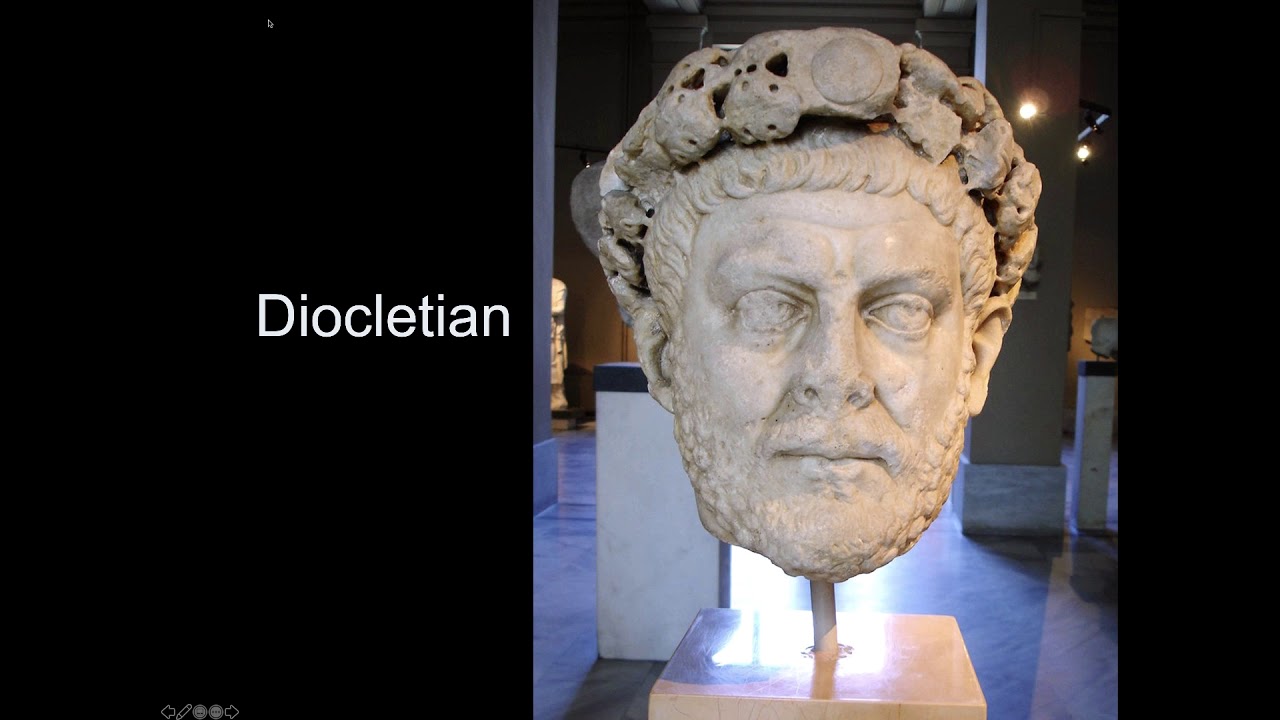
These coins were inscribed with Aurelian's title "restitutor orbis," “restorer of the world." Despite the grand reform program, Aurelian's ambitions struggled to survive his death. Successive emperors began to be tempted by the trap of debasement once again, and the coins lost any semblance of silver, reverting to simple bronze or other base metals. These coins were essentially worthless, and by the end of the third century, Rome experienced a period of hyperinflation, with prices rising weekly at a completely unsustainable rate. Another reform was necessary. This would culminate with one of Rome's most famous emperors: Diocletian.
Diocletian had a number of problems to fix - and one of the most pressing was the Roman economy. In the first years of his reign, he organized one of the largest and most successful financial reforms in human history. Diocletian's major monetary reform attempted to emulate the Augustan system that relied on gold, silver, and billon [BIL-uhn] (5% silver). Coins were minted exclusively by the Imperial mints, coinage was minted in Latin, and the denominations of the currency were now exclusively based in the Roman system. Because the army had doubled in size, imperial mints were established along the frontiers to accommodate the military.
The problem with this initial reform was that the Empire was minting coins at a loss. Prices had risen so high that the new coins - minted at a far higher purity than anything in the last two centuries - were too valuable for the current climate. So new coins were hoarded rather than being spent, and people would just take advantage of fixed prices to accept valuable coins in exchange for cheap ones. By 305, inflation had once again set in.
To combat rising inflation, Diocletian issued the Currency Edict which attempted to reform the currency and taxation system. Following this, Diocletian passed the Edict of Maximum Prices which attempted to set fixed prices on goods throughout the Empire. Anyone caught selling goods for more than the amount stated by law faced severe punishment and repercussions. Unfortunately, this was a blundered approach to resolving the crisis and just created more problems. If we believe Lactantius’ account, this Edict was a disaster: “He also, when by various extortions he had made all things exceedingly expensive, attempted by an ordinance to limit their prices. Then much blood was shed for the veriest trifles; men were afraid to expose aught to sale, and the scarcity became more excessive and grievous than ever, until, in the end, the ordinance, after having proved destructive to multitudes, was from mere necessity abrogated.” (Lactantius, On the Death of the Persecutors, 7) Despite Diocletian’s attempts at fixing the economy, ultimately these reforms failed. Diocletian’s Edict of Maximum Prices did not account for the law of supply and demand and that prices fluctuated from various regions across the empire. Bartering became more widespread in this period, but the exact numbers on how prevalent it was remains a mystery. Like Aurelian, his reforms were generally abandoned almost as soon as he abdicated the throne, and the finances of the Roman Empire once again fell into disorder. At this point, silver clearly could not handle the current system. Constantine was the final emperor to reform the Roman currency system in the west, replacing the aureus with the solidus. Unlike silver coins, gold coins had never been truly debased: only reduced in size. They, then, became the new basis of currency for a new age of Rome - which we now know as the Byzantine Empire.
Up Next

How Costume Design Shapes Film Narratives and Psychology
@TrendsoftheTimes
809.1K views•2025-02-04

Walking in the City: Urban Rituals and the Flâneur in Contemporary India
@PSBTIndia
1.9K views•2016-08-02

FastAPI vs Flask vs Django: Choosing the Right Python Web Framework
@TechWithTim
302.5K views•2024-05-26

Game of Thrones Opening Credits: A Cinematic Analysis
@gameofthrones
46.3M views•2011-04-18
Related Study Plans & Knowledge Roadmaps
Structured learning paths in General & Interdisciplinary Studies