
![Phonology: Intro to linguistics [Video 3]](https://i.ytimg.com/vi_webp/1JYahvKUvPU/maxresdefault.webp)





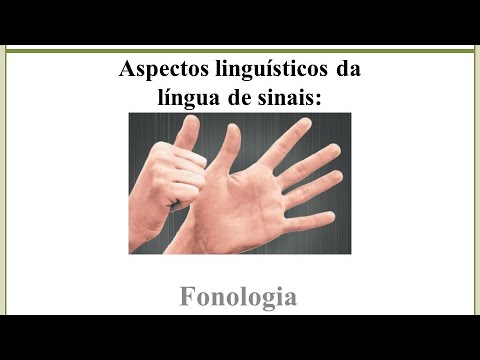


![[LIB] Inspire-se - Libras III](https://i.ytimg.com/vi/bRTa214nSvM/maxresdefault.jpg)



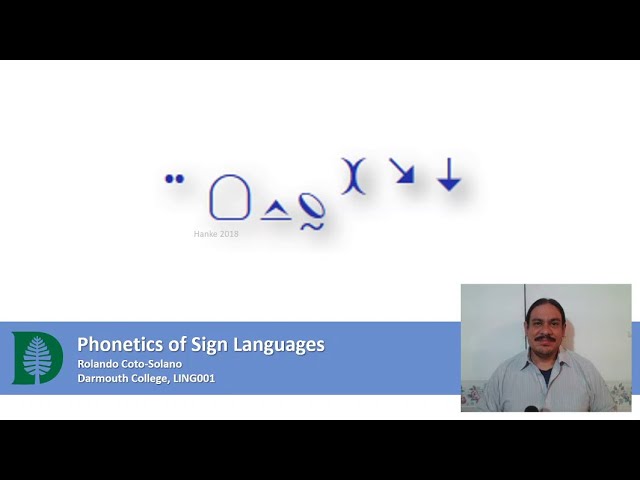





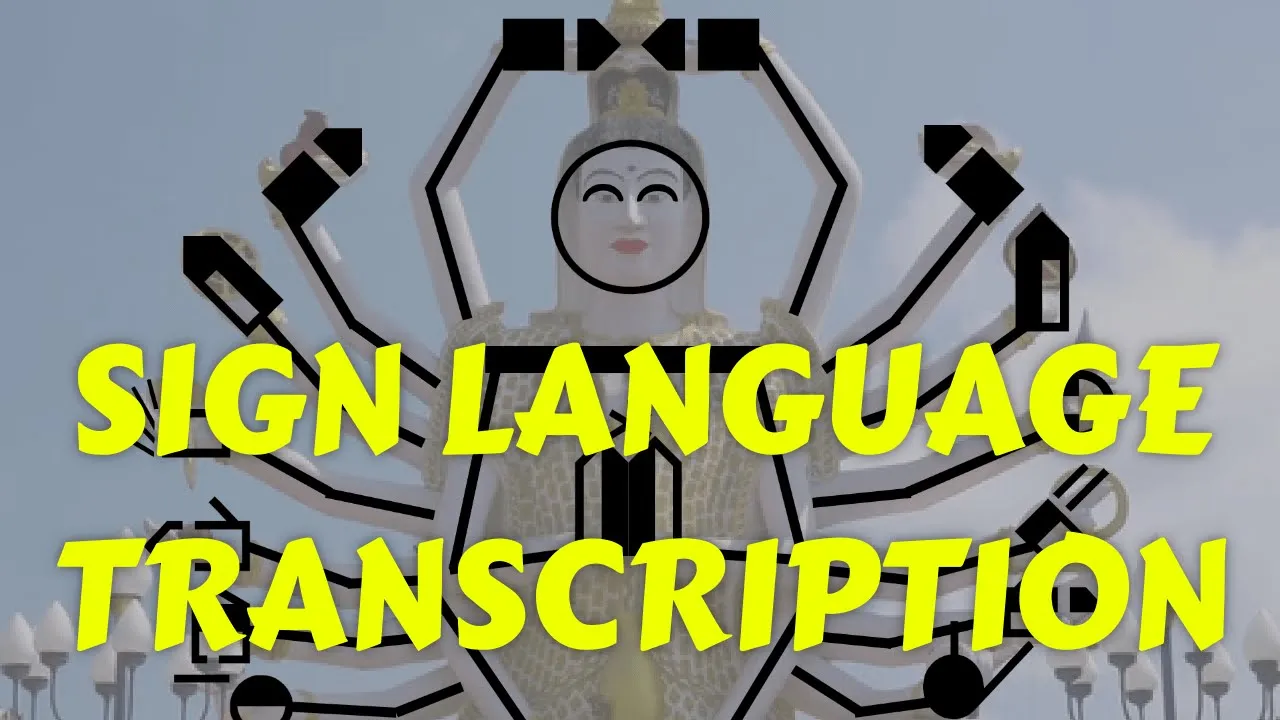


Stokoe notation, created by William Stokoe for American Sign Language (ASL), is the first phonemic script used for sign languages, employing Latin letters and numerals to transcribe handshapes (handshape), location (tab), and movement (sig) of signs, with signs arranged alphabetically by their phonemic transcription rather than English glosses, enabling readers to look up signs without knowing their English meanings; the notation was later adapted to British Sign Language and Australian Aboriginal sign languages, though it has limitations in representing facial expressions, mouthing, gaze, and body posture.
Stokoe Notation: Phonemic Script for Sign Languages Explained
Added:Basic concepts of phonetics and phonology in spoken languages, particularly the definition of a phoneme and how minimal pairs work.
The fundamental understanding that sign languages are natural, grammatically complex human languages, independent of spoken languages.
Familiarity with the primary articulatory parameters of sign languages, specifically handshape (dez), location (tab), and movement (sig).
A brief historical context of deaf education and the linguistic validation of American Sign Language (ASL) in the mid-20th century.
Alternative and modern sign language transcription systems, such as Sutton SignWriting and the Hamburg Notation System (HamNoSys).
Advanced sign phonology models that addressed the limitations of Stokoe's system, such as the Movement-Hold Model by Liddell and Johnson.
The application of sign notation systems in lexicography and the compilation of modern bilingual sign language dictionaries.
The integration of sign language transcription systems into computational linguistics, machine learning, and motion-capture technologies for sign recognition.
186 views1likes11:08Original Release: 2018-12-17
still Co notation is the first phonemic script used for sign languages it was created by William Stokoe for American Sign Language ASL with Latin letters and numerals used for the shapes they have in fingerspelling an iconic glyphs to transcribe the position movement and orientation of the hands it was first published as the organizing principle of sign language structure an outline of the visual communication systems of the American deaf 1960 and later also used in a dictionary of American Sign Language on linguistic principles by Stokoe at all 1965 in the 1965 dictionary signs are themselves arranged alphabetically according to their Stokoe transcription rather than being ordered by their English glosses as in other sign language dictionaries this made it the only ASL dictionary where the reader could look up a sign without first knowing how to translate it into English the Stokoe notation was later adapted to British sign language BSL in Kyle at all 1985 and to Australian Aboriginal sign languages in kenan 1988 in each case the researchers modified the alphabet to accommodate phonemes not found in ASL the stokoe notation is mostly restricted to linguists and academics the notation is arranged linearly on the page and can be written with a typewriter that has the proper font installed unlike sign writing or the Hamburg notation system it is based on the Latin alphabet and as phonemic being restricted to the symbols needed to meet the requirements of ASL or extended to BSL etc rather than accommodating all possible signs for example there is a single symbol for circling movement regardless of whether the plane of the movement is horizontal or vertical topic writing direction still Co notation is written horizontally left to right like the Latin alphabet plus limited vertical stacking of movement symbols and some diacritical marks written above or below other symbols this contrasts with sign writing which is written vertically from top to bottom plus partially free two-dimensional placement of components within the writing of a single sign topic symbol usage Stokoe coined the terms tab tabula or sign location desk designator or handshape and orientation and sig signification or motion and action these are used to categorize features of sign language phonemes somewhat like the distinction between consonant vowel and tone is used in the description of oral languages a sign is written in the order tab does sig TDs compound signs are separated with a double dashed pipe approximately T DS T DS a serious deficiency of the system is that it does not provide for facial expression mouthing I gaze and body posture as Stokoe had not worked out their phonemic sin ASL verbal inflection and non lexical movement is awkward to notate and more recent analyses such as those of Ted Sao Paulo have contradicted stokoe set of motion phonemes there is also no provision for representing the relationship between signs in their natural context which restricts the usefulness of the notation to the lexical or dictionary level nonetheless Stokoe demonstrated for the first time that a sign language can be written phonemic ly just like any other language in the tables below the first column as a web based approximation of the Stokoe symbol using the inventory available in unicode and the second as an ASCII substitution for the purpose of citing examples in this article proper display of the third column requires the Stokoe font available at the external link below without that font you will see the corresponding ASCII character as used in Mendel 1993 topic tab location the tab symbols are a null sign for a neutral location and iconic symbols for parts of the head arm and torso in addition the des papes symbols below may be used to indicate that the location is the passive hand in a specific shape given a hand shape des d asterisk QD would be designed at the face Jadey the same hand shaped signed at the elbow and 90 on the inside of the wrist asterisk D is not used for a specific hand shape but as a stand-in here for whichever des is used asterisk asterisk proper display requires installation of the Stokoe font available at the external link below topic does handshape the symbols for hand shapes are taken from the ASL manual alphabet a represents a fist the handshape used for fingerspelling and also s and T since the difference is not significant outside fingerspelling and initialisms b represents a flat hand the handshape used for fingerspelling be and for etc when a des involves two hands two letters are used des symbols may also be used as tabs for example cube e represents a flat hand be located at the face Q and represents a dominant flat hand be acting on a passive flat hand be the ladder is disambiguated from to be hands acting together by using another letter for the tab such as o stroke BB for to be hands acting in neutral space or qbb for both hands at the face besides the shape of the hands the des includes their orientation this is indicated when necessary with subscripts which are introduced in the next section there are three diacritics that modify the shape of the des a dot placed above it shows that a finger not normally seen is prominent usually because it is involved in the production of the sign for example a ski a is a fist with the thumb extended as in you not three dots or ticks over a letter shows the fingers are flexed so that be a ski B is a flexed flat hand and V V is two flexed fingers the forearm tab sign prefixed to the des ASCII J shows that the forearms are prominent in the production of the sign as in bjb querido mega-tree topics sake movement and des orientation the movement of the hand or sig is written with superscripted letters after the des as d sharp any des d which closes multiple movement SIG's are arranged linearly when the movements are sequential as in TD x times any des d which touches a tab t moves down and touches again one but stacked one above the other when signed simultaneously as in TD times a des which moves down while in contact with the tab to a dot placed above the sig indicates that the motion is sharp as in TD times sharp contact by the des d3 while a dot placed after the sig indicates that the motion is repeated as in TD times repeated contact by the desk T DX in ASCII a tilde with a two hand des TD DS tilde indicates that first one hand performs the sig than the other without the tilde both hands are understood to act together a subset of the sig symbols used for motion are also used to indicate the orientation of the hand in this use their sub scripted after the DES instead of superscript in as in D sharp any des D which starts off closed point for Stokoe analyzed the orientation of the hand as part of the tap the handshape asterisk proper display requires installation of the Stokoe font available at the external link below 1 TD xvx in ASCII 2 T DX V and ASCII 3 T DX in ASCII for closing hand and closed hand would be d sharp and hashtag d in the ascii system several linguists including kyle and wall state that stoke O's tab conflates two parameters handshape and orientation and split off Ori orientation of the hand as a fourth parameter Kendon however notes how this greatly complicates the phonological description of signs and prefers to retain orientation as an aspect of the handshape with changes of orientation analyzed as other changes in the hands rather than as changes in an independent parameter topic relative location when the tab is a handshape or the des consists of two hands a symbol may be placed between the two letters to indicate their relative position these include a few of the movement orientation letters above in addition there are symbols to indicate position above below next to and behind the underscore on the B and BL shows that the L hand is placed under a B hand with or without contact etc asterisk the free font does not cover these symbols topic example this is the ASL word snake and Stokoe notation the first letter like a you shows that the word is signed at the lower face mouth or chin the second V shows that the hand has the shape of a finger spelled V the V has two diacritics the three dots above it showed that the fingers are bent curled while the subscript shows that the hand is held with the back of the hand facing up the last letters at are a compound sig the spiral shows a circular motion and the tack underneath shows that the motion proceeds outward this is a mimetic sign for snake mimicking the motion of a fanged snake it is alphabetized under to the tab you then buy the DES V then by the sig I the searcher does not need to know what it means or that it is glossed with the English word snake in order to look it up following as a passage from Goldilocks the story Goldilocks and the three bears deep in the woods there is a house sitting on a hill if you go in you will see their Papa Bear reading the paper topic published use of stokoe notation the first use of Stokoe notation appeared in the ASL dictionary compiled by William Stokoe for which it was devised other indigenous sign language dictionary projects for example the dictionary of British sign language English ed David Bryan pub Faber and Faber 1992 and signs of a sexual nature have included Stokoe notation the notation has also been used to analyze Australian Aboriginal sign languages these non ASL projects have had to extend the notation to cover phonemes not found in ASL topic see also you a s alphabet a simplified notation used in ASL English dictionaries for deaf children and deaf education ham gnosis a phonetic notational system used primarily for linguistic research sign writing a popular system that arranges symbols in a two-dimensional space rather than in a line C fives
Up Next
16:40
Bilingualism Types & Cognitive Brain Research | Lecture
@csunprofmaggie1163
7.6K views•2020-11-25
36:52
Constraint Interaction in Optimality Theory: Epenthesis & Deletion
@Vidyamitra
180 views•2018-08-20

8:59
Forensic Linguistics: How Language Solves Crimes | PBS
@pbsstoried
1M views•2024-01-25

21:32
Accent Expert Explains U.S. Regional Dialects | Part 1
@WIRED
9.3M views•2021-01-21
Related Study Plans & Knowledge Roadmaps
Structured learning paths in Linguistics
linguistics
Optimality Theory: Tableaux & Constraints
01Phonological Basics: Sounds, Syllables & Rules
02Foundations of Optimality Theory: GEN, CON, and EVAL
03The Constraint Inventory: Markedness vs. Faithfulness
+ 2 more learning modules
15h5 modules
Explore Roadmap
linguistics
Morphosyntactic Alignment: S, A & P Systems
01Foundations of Syntax: Transitivity and Arguments
02The Linguistic Variables: Mapping S, A, and P
03Nominative-Accusative Alignment
+ 3 more learning modules
12h6 modules
Explore Roadmap
linguistics
Analyzing Sign Language: Phonology & Syntax
01Foundations of Sign Language Linguistics
02Phonology: The Five Parameters of a Sign
03Morphology: Word Formation and Classifiers
+ 2 more learning modules
14h5 modules
Explore Roadmap
linguistics
Pragmatics: Speech Acts, Grice & Politeness
01Introduction to Pragmatics: Meaning in Context
02Grice’s Cooperative Principle & Implicature
03Speech Act Theory
+ 2 more learning modules
14h5 modules
Explore Roadmap