











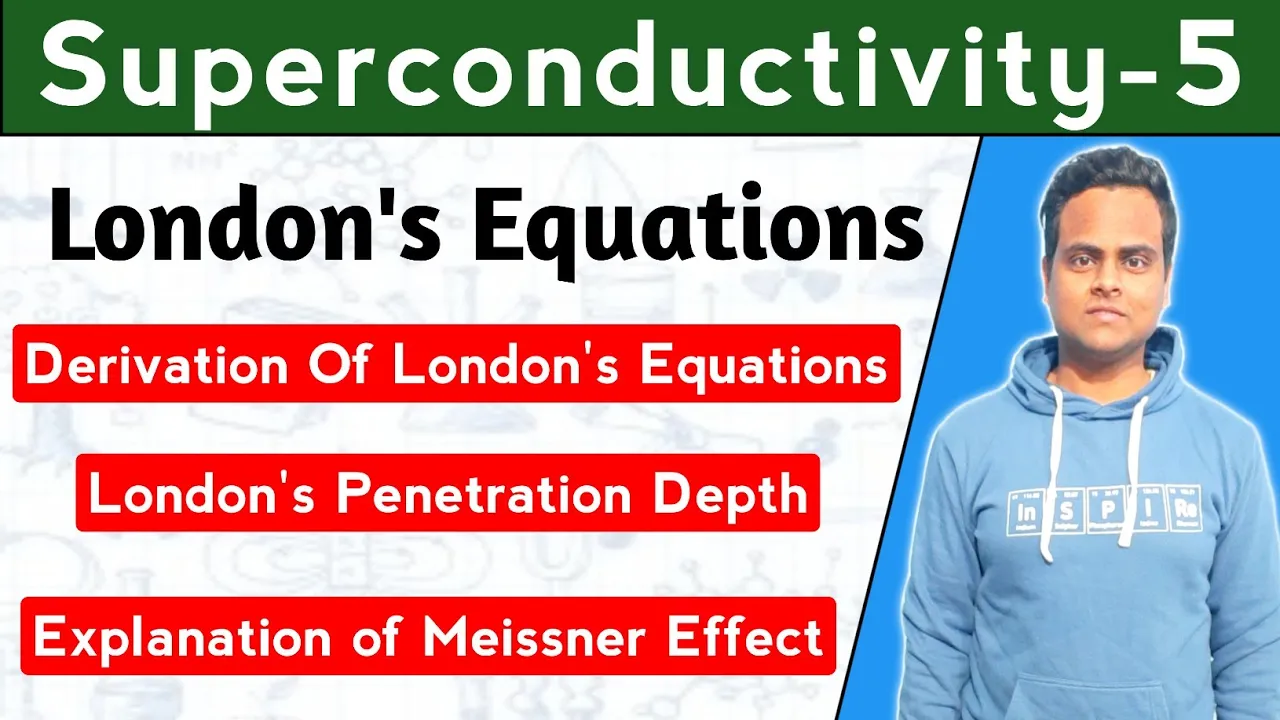






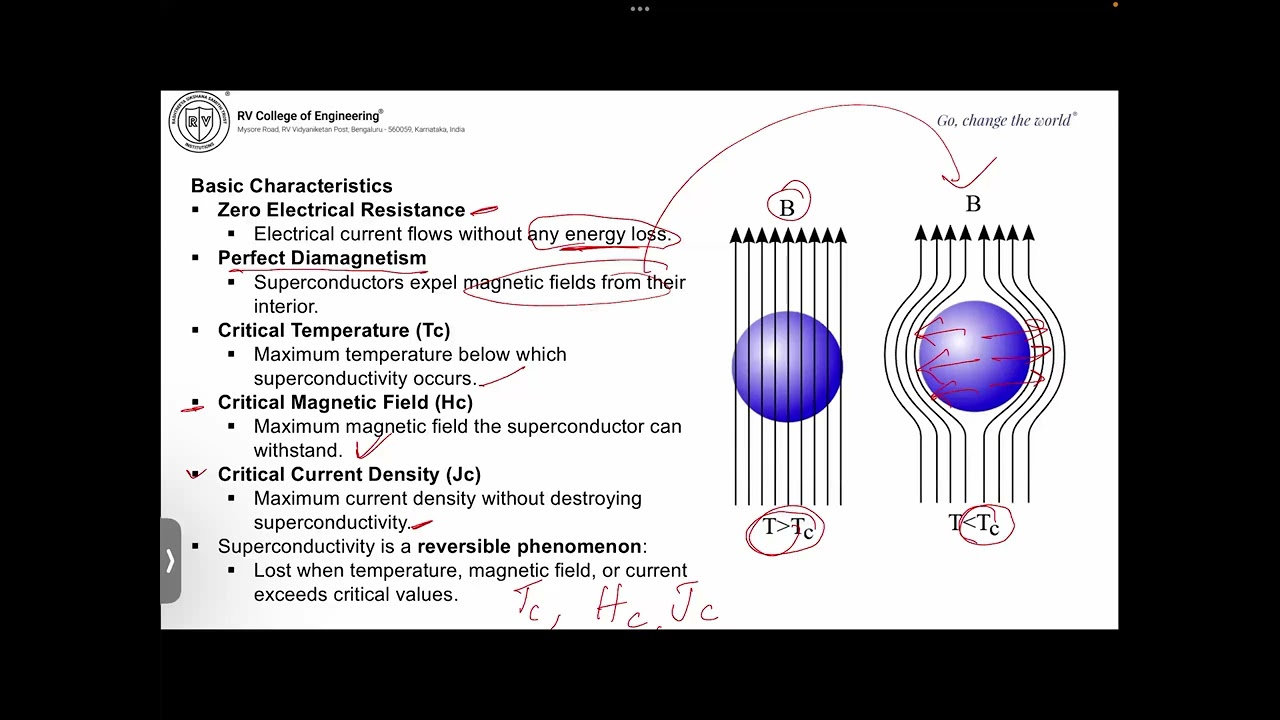

The Meissner effect, discovered by Walther Meissner and Robert Ochsenfeld in 1933, is a fundamental property of superconductors where they expel magnetic fields from their interior when cooled below their critical temperature, causing the magnetic flux lines to be completely pushed out of the superconducting material and making superconductors behave as perfect diamagnetic substances with magnetic susceptibility of -1.
Meissner Effect in Superconductors Explained with Proof
Added:Fundamental concepts of superconductivity, including critical temperature (Tc) and the phenomenon of zero electrical resistance.
Basic classical electromagnetism, specifically Faraday's Law of Induction and Maxwell's equations.
Classification of magnetic materials, particularly the definition and characteristics of diamagnetism.
Core vector calculus concepts, such as curl and divergence, which are essential for understanding electromagnetic mathematical proofs.
The London Equations, which provide the first quantitative, phenomenological mathematical model of the Meissner effect and penetration depth.
The distinction between Type I and Type II superconductors, including the concepts of magnetic flux quantization and vortex states.
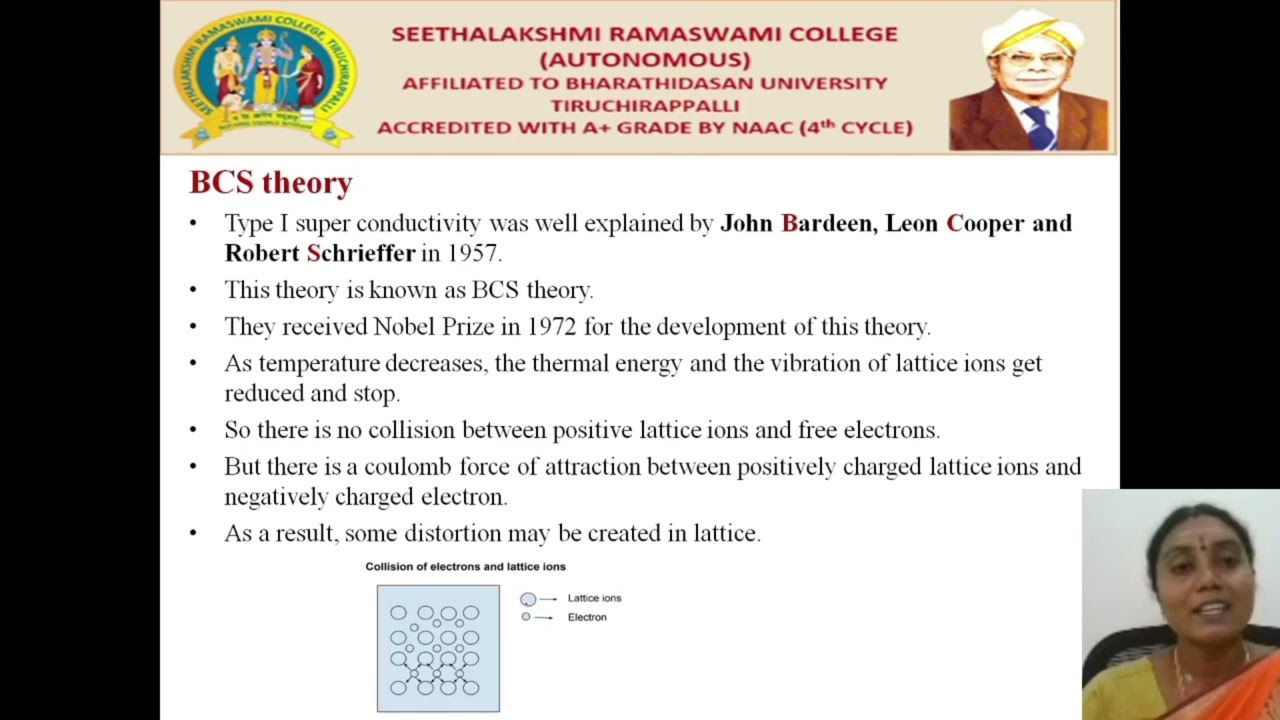
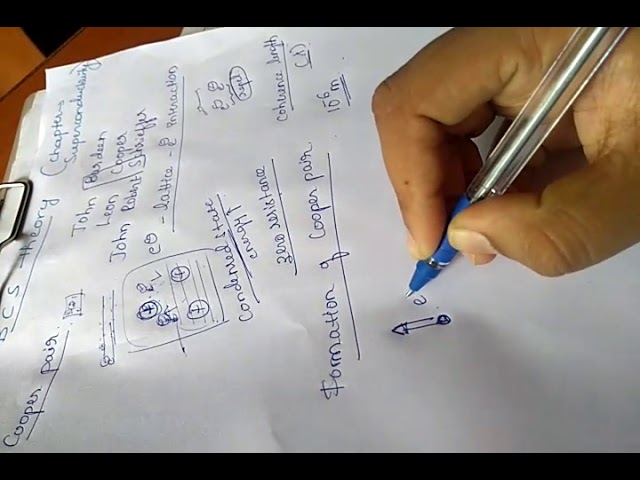
BCS (Bardeen-Cooper-Schrieffer) Theory, the microscopic quantum theory explaining how Cooper pairs enable superconductivity.
Practical engineering applications of the Meissner effect, such as magnetic levitation (Maglev) trains and lossless power transmission.
259.6K views6.1Klikes9:12Original Release: 2019-01-14
hello students how are you welcome to my youtube channel punk Quechua disability students are imparting a superconductive it is a related but the important effect this Konami original effect major effect cause of Japan lay discovered a thumb national or ocean filled Nampa those which is named 1933 made shred take a super conductivity key discovery with in 1911 man disco discover a guitar hi commercially honest means at scale on his neck man during 11 we discovered who sneaked a key opposed nay mercury cut temperatures 4.2 Calvin Kieth atoll and they can use the resistance where who completely vanish show via other resistant evoke a means can the Koran jajaja flow vanish Ryuga means no superconductor Urbania but just a super conductivity discover will touch the superconductor scale Allah Allah research key guy or 1933 memories not on oceans field edge of superconductors for research career they so no name a new effector observe Pia Toscano and Nam beyond reason and effect shred so they can have either an effect made hump a same diagram way through something X or freedom they can a key Casa zombies in fact Co use Calcagno me a proof or something just superconductor suit the hair book perfect dime and it is I'm Chokin to him is major effect say I make a proof with a hacky yo superconductor so they and they behave as perfect diamagnetic substances so certain salient diagram to to someone's they had Mason an effect those wouldn't be the effect of Matlock a ie chanting a diagram K through fully see the key he had my first equal substance a joke each time normal state may have means is kind of temperature have a critical temperature Sujatha means house of temperature have a critical temperatures they jog ahead oh yeah meeting normal conductor him at first okay normal state marriage of the physical shape bacon here is Kohan a magnetic field America where you risk a degree of the magnetic field line is a specimen conversed a completely pass falling Escobar sabina Correa all is kept under semi completely you have a cause for here means the magnetic flux have aa spicy penetrate cover utterance of nikana specimen kuzhambu so panicle specimen be a cool car now how's the temperatures you have a critical temperatures they come car denied or surah SAFF SAFF Championship Crisium specimen got temperature critical temperatures I conquer this they're so open Java has superconductor the superconductor ban jaga means a booster temperature critical temperatures a cow Moos Agra so the case will scour total magnetic field lines ot joke pal a specimen missive penetrate currently specimen message mrs. Bennet zero ok Gujarati a bow specimen may say expel uranium means our specimen miss a penitent man confine gay means is job become superconductor core temperature just a counter facing at the magnetic flux goes missing penetrate no pasta the lines of the magnetic induction key focus may say expelled out caged up teeny means pushed out of a jar Thea is he a fabulous just a superconductor though sometimes you look at a tree come is not a fad for some Omega 3 ka we suffered a major effect vote back ahead yeah my specimen has okay Norma statement means joy we do or means omar superconductor state when he means you're happy job temperature have arrived a critical temperature sigil is a public a nice specimen cook cool car the night Abby abnormality filming up like a match assembly panel case Mac like yoga IBM is abnormal state take specimen limit me super temperatures Ohio critical temperature stage other hey about liquid cooling means cut averages you have a critical temperature say conquer than I as I'm trooper Foreign Assets as I miss liquor take Takeo superconducting state my geology a normal state since state bar dominicana super collect a statement of Oh specimen Tiger common a minute if you look like curtain hand again I'm a boy visual technique men will you got my first case with technical Misrata the magnetic field lines I have okok wish miss a specimen was it passed in the only means do magnetic flux fo excluded agar specimen may say pushed out Rose I got expelled out of hoes I got whatever you want to say you can those who read see him even affect those photons of measure initially cameo or mathematically approving a que hizo specimen and those superconducting scared me I took the Haggard diamagnetism diuretics of Starsky throb behaved Quran means perfect diameter him shoka back to peacefulness of jumping and dominating materials move materials OT no magnetic field lines could repel kaftan socially specimen to superconductor state me I took a JB I said he cuz i him an attic village to propel Caray opening under the message passed me on Indira so means JB perfect diamagnetic substance cannot behave para yam proof cutting a mathematically those ruins potion guess I got coke exam can that NASA can write a short not on Mason of effect and prove that superconductors behaving perfect diamagnetic substances whose run Tina Charlie Murphy potion I got put dough diagram banana macadamia per definition liquid I give me general attea pedagogy mission respect dissing a discovered here from me is not on ocean field in 1933 one discover Kira conferences next section when taking a definition ki measured effect key or cassia mathematical proof calling a key measure effects a a proof who the heck II superconductors don't have a perfect diamond attics of Sanskrit cannot behave birthday ham so shouldn't speechless action element they cut diagram quit through Kathy German PCB specimen got temperature material temperatures are concurred with a means of because specimen superconductor budget us miss a magnetic field lines pasó una Bongo sathya means specimen under geomagnetic field about 0 ha ha ha so students market so magnetic field strength a map like et booty attractor also specimen we flux density a B vector so Dona make a relation of the the flux density B vector in a magnetic material is related to the strength of applied field H vector X vector or being a Tremec care elation of time here Arjuna classes not pursue k a correlation of the high B vector is equal to MU naught X vector plus M vector yapper and after high intensity of magnetization expected applied field strength or B vector a magnetic flux density of film is not affect at the edge of temperature material temperatures a commotion P less than P CEO dr. Toby specimen Kendall geo we have a be the Trojan of photographic name I'm universal constant at AVG Romeo that means yellow not equal to 0 or mu not to means either bracket h+ m EG Gogi those coefficients give a technical let them wanna he - a metal whose family I think we should number when I take susceptibility clinical candy when I did subset susceptibility Jose every show with intensity of magnetization got or applied field strength cop means a metro resurrected on a show with IBM natural unicornia - Emmett - medicine that reporters as a target - - and I better cancel with a 2-1 as I got makes magnetic susceptibility happen superconducting state my specimen key - one nickel KRA so means as a proof okay ego specimen has no superconducting state made diamond antics of Stransky trauma behaved contact okay so let's have some champagne the susceptibility okay diabetic substances they move - so T here or - 1 B of character - one of them is negative or ta going happen be super connected we do so susceptibility nickel k ra vu - one nickel carrier for example can get am in fact a question of kauai got or maybe octopus or else we proof KJ his superconductor behave as perfect diamond attics of Francisco you have to be dilution poof car gang it or Russell I make what definition they may attend we here at a fat kids home J rahaga here we so shouldn't last section on discuss Kirk thing we need refresh the definition so soon winner Fatima Kappa gap if a superconductor is cool in a magnetic field down to critical temperature TC then the magnetic field lines are pushed out of the body of the superconductor so for example diagram Ithaca or table metamaterial treatment when they come whose for my words key for my Alec denied he champion superconductor Co magnetic field because they have cool it mattaniah Co critical temperatures the cool can now scale means who spoke superconductor state will again a of booster superconductor community Filipinos who will contain critical temperature stuck close omen antics go past my him only superconductor your body may say missus when I take flux Joe have excluded eige body of the superconductor Mensa means magnetic field nice penetrate my company its Cohiba was a time we had an effect on me and if I could do something up that flux exclusion so inherent superconductor or super conductivity car effects a do da hua bhavati important effect disc amount immediate effect
Up Next

4:44
Difference Between Type I and Type II Superconductors Explained
@winnerscience
79.3K views•2013-06-16

12:53
21cm Hyperfine Transition in Neutral Hydrogen: Radio Astronomy Basics
@AaronRobertParsons
12.4K views•2011-10-13

16:38
Einstein's Theory of Brownian Motion | Derivation & Notes
@pankajphysicsgulati
44.1K views•2021-08-08

27:14
Entropy and the Second Law of Thermodynamics Explained
@veritasium
27.5M views•2023-07-01
Related Study Plans & Knowledge Roadmaps
Structured learning paths in Physics
physics
Nuclear Physics (Decay, Fission & Reactors)
01Atomic Structure and the Binding Force
02Radioactive Decay and Half-Life
03Nuclear Fission Mechanics and Chain Reactions
+ 2 more learning modules
12h5 modules
Explore Roadmap
physics
Soft Matter (Polymers, Colloids & Rheology)
01Foundations of Soft Matter & Thermal Forces
02Polymer Physics and Macromolecules
03Colloids, Surfactants, and Self-Assembly
+ 2 more learning modules
38h5 modules
Explore Roadmap
physics
Analytical Mechanics: Lagrangian & Hamiltonian
01Mathematical Foundations: Calculus of Variations
02From Newtonian Mechanics to Constraint Dynamics
03The Principle of Least Action & Lagrangian Mechanics
+ 3 more learning modules
28h6 modules
Explore Roadmap
physics
General Relativity (Spacetime & Cosmology)
01Foundations of Relativity: Special Relativity
02The Geometry of Spacetime: Equivalence Principle & Curvature
03Einstein's Field Equations: The Mathematics of Gravity
+ 2 more learning modules
55h5 modules
Explore Roadmap