










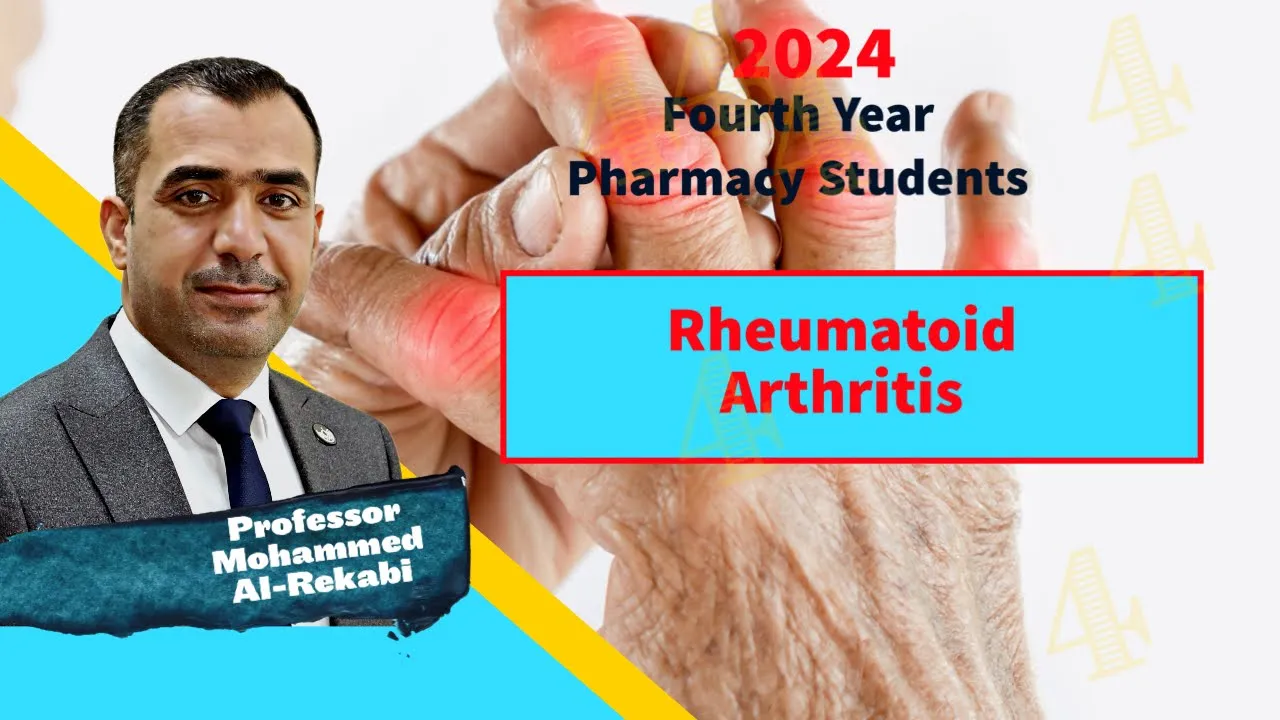


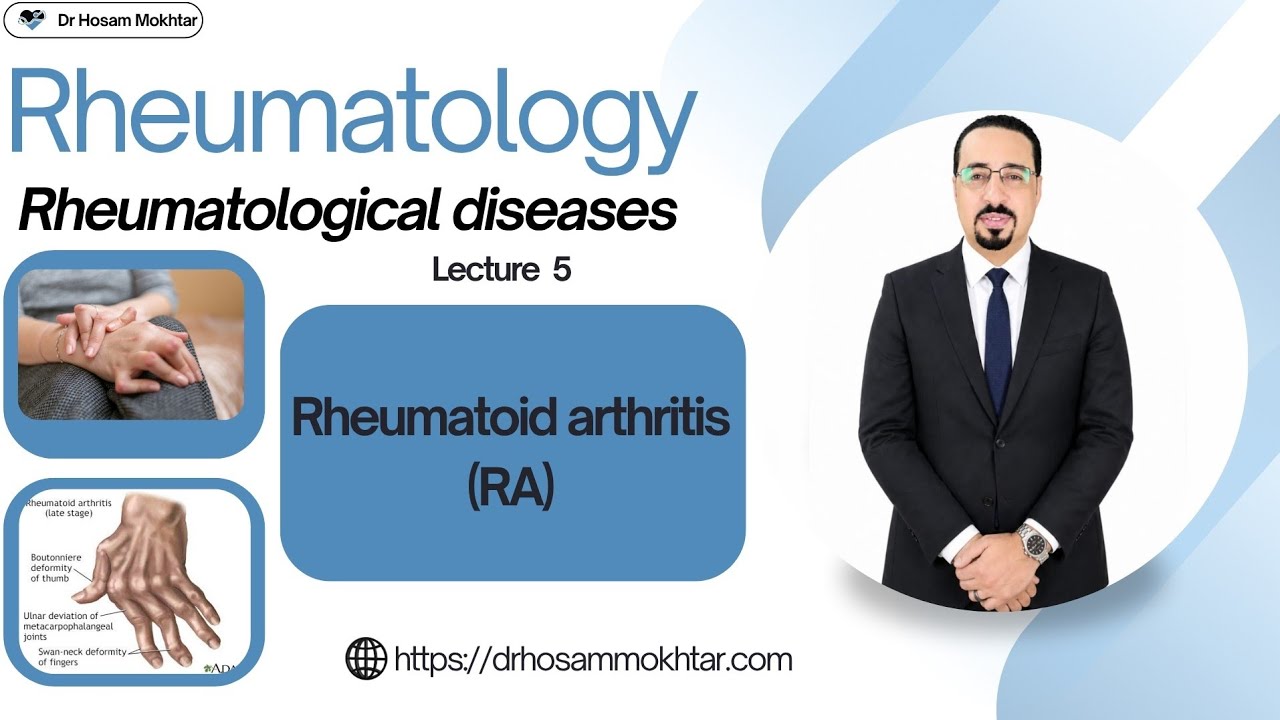






Rheumatoid arthritis (RA) is a chronic inflammatory autoimmune disease affecting approximately 4% of the Indian population, characterized by symmetric polyarthritis of small joints, morning stiffness, and systemic involvement. Diagnosis requires a systematic approach: first distinguishing articular from periarticular pain through clinical examination (active vs passive movement testing), then differentiating inflammatory from non-inflammatory arthritis based on morning stiffness patterns. Key diagnostic criteria include chronic (>6 weeks), persistent, symmetric, additive inflammatory arthritis. RF and anti-CCP antibodies are important but not definitive alone, as RF can be positive in 1-15% of healthy individuals. Treatment follows the 'treat to target' paradigm with early aggressive intervention using disease-modifying antirheumatic drugs (DMARDs) like methotrexate, progressing to biological agents (TNF inhibitors, IL-6 inhibitors) or JAK inhibitors for refractory cases. Ultrasound-guided joint aspiration and injection are essential diagnostic and therapeutic tools. The goal is remission or low disease activity to prevent joint damage and improve quality of life.
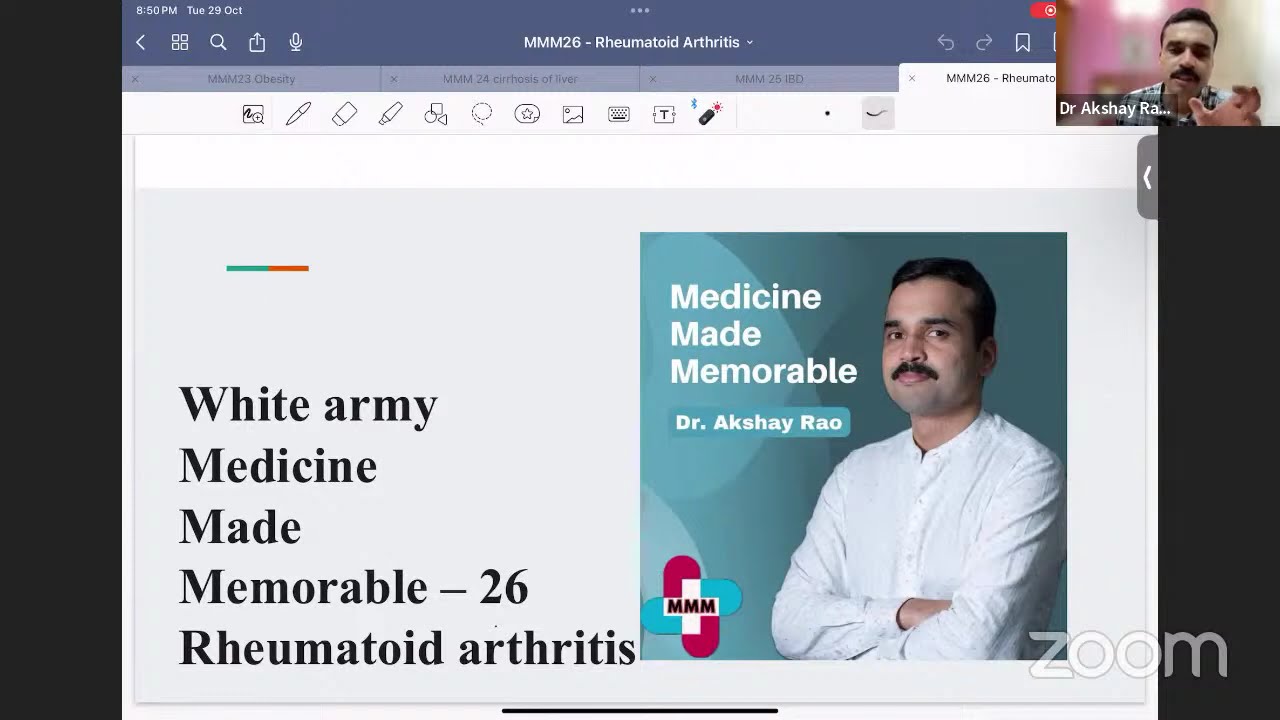
Rheumatoid Arthritis Diagnosis and Management | FFPAI Rheumatology Series
Added:good evening and welcome on behalf of ffpi for today's webinar on Rheumatology series webinar number two today we will talk on the subject rheumatoid arthritis when to uh diagnose investigate and manage the rheumatoid arthritis and for that we have a very good speaker Dr abishek pail as usual in our whole series of raty and I invite Dr madhusudan Omari to introduce him but before that let me tell that we ffpi are also starting our new web series on lifestyle disease course and it will start from 13th of November just uh one day before the world Diabetes Day in this lifestyle disease course we will cover diabetes hypertension obesity uh complications of diabetes and hypertension and lot many things and we have total seven uh sessions and what one session will be of one and a half hour but there will be 20 minutes talk by one speaker only and I request all of you to register for it also now I request Dr madhusudhan to give brief introduction of abishek and then Dr Abhishek will start the talk uh good afternoon my dear friends uh it's my pleasure and privilege to introduce Dr abishek pel he is head of Department of Rheumatology and Immunology at manipal hospital bangaluru Nama bangaluru after completing his mbbs from Kims hubber he went to Delhi for MD medicine and then specialized in Rheumatology DNB from indraprasta Apollo Delhi with gold medal and he was also awarded gold medals in mbbs he is a DNB Rheumatology teacher also he has 18 index Publications in National and international journals he has also contributed in various textbooks as an expert author his special areas of Interest are msk USG he holds PG diploma msk USG from Spain he is also doing extensive work in reproductive immunology and spondo arthritis it's really going to be a very interesting session and we'll be happy to learn a few things from you Dr abishek pael please take over thank you thanks a lot for that kind introduction sir well Nama is really drowned today in floods so I'll uh hope uh that my present would be different and uh I'll just share my screen now yeah so uh rheumatoid arthritis well it's a prototypical arthritis I'm sure uh I mean most of uh you would have come across uh rheumatoid arthritis and the patients being managed however uh today I'll try to read some basic points before reaching the diagnosis of romatoid arthritis uh so I hope to uh make this very interactive it's going to be slightly longer session than what we had on gout because uh there are plenty of things to cover so without much uh further uh you know wasting time I'll begin my presentation I hope my screen is visible and moving um we'll talk a brief about approach to any uh joint region pain I said Artis will re it as joint reason p and we'll I'll understand uh the landscape of treatment in rheumatoid through uh the prism of its pathogenesis so without pathogenesis we'll not be able to understand any disease particular in uh Auto you know prototypical autoimmune disease such as rheumatoid so we start with our presentations so it's a chronic serious prevalent disease the Western literature puts a figure of about 1% of the population suffers from rheumatoid uh in India we have about 4% % so about four in thousand people do suffer from rheumatoid arthritis in India and we all know how chronic debilitating this diseases and previous literature also caused you know about a decade reduction in expectancy of rheumatoid uh with rheumatoid arthritis compared to general population I'm not sure how much that is relevant with current Therapeutics but that is the figure that we currently remember that it also is associated with sign ific mortality and definitely a consider economic burden now when we deal with romatic diseases uh first thing as a rumatologist that we worry about is uh whether it's an inflammatory disease that we are deal or an you know medical non influ whenever a patient walks with any uh so we among the inflammatory arthri various such as G we covered previous session we have rumor various connective tissue disorders including vasculitis and myositis whereas well we are well aware of the non-inflammatory pain syndromes that includes uh soft tissue rheumatism osteoarthritis fibromyalgia and henceforth and so on and so forth so this is the first distinction that we have to clinically make and U although it seems very easy when we read the definitions of this inflammatory versus non-inflammatory pain where the textbooks categorically describe inflammatory pain being 30 minutes of more of early morning stiffness with swelling but in comes to practical uh whenever you have a patient presenting with foot pain with some swelling uh even now I I find it sometimes challenging to differentiate these two particularly now U with various other Crystal arthropathies and uh Ser negative osteoarthritis also uh which are inflammatory in nature so it becomes very difficult sometimes even uh very uh you know experienced planation and but there are thumb rules which we always follow in our diagnosis what we particularly as rid rumatologist will always be keep looking at through history phys examination or uh lab reports whatever we order we always look at the pattern of involvement so that is something which is very crucial to us uh based on the pattern we arrive at a differential so pattern meaning whether it is unilateral whether it is single joint involvement or multiple joint four or more joint which is poly articular whether it is region pain that patient is complaining or is complaining pain all over which is more typical of a fibromyalgia uh then we arrive at a set of differentials and then we do a physical examination then guided investigations and treatment and this always proceeds this pattern for every single patient that we see I mean there is no other way we cannot just find a patient with pain and Ana positivity and then mosis and start treating it never happens uh we always try to recognize the particular pattern and then at according this particular um uh flow diagram I picked up from you B and beautifully you know highlights first thing in any patient that presents with pain what as a rumatologist we ask ask whether it's a regional pain whether it's generalized pain whether it is bone pain whether it's articul pain so all these things are important for us once we narrow down on articular pain we look at whether it is uh you know degenerative or whether it is inflammatory nature there are this is the single most important step uh before we proceed for any further evaluation uh that thereafter we look at the pattern recognition for uh most importantly we uh whenever there's a joint region pain we look at two things whether the pain is emanating from articular structure or a articular structure there are several which are helpful for for example within the knee joint if it is a periarticular pain generally patient himself will point to that could be a small btis so many of times see that what we think osteoarthritis is the main reason for pain joint space reduction but we look and examine closely we might encounter a patient having pain due to infreta veritis ancer and bastis which is next to the Joint uh so in these patients joint directed any kind of treatment whether you give your glucosamine salt or ant articular injections then unlikely to be of any benefit uh there are few golden thumb rules first of all if it is an articular involvement generally you have a diffuse swelling the patients will complain of pain along the joint line so they will complain of pain and tenderness along the joint line and the fullness is generally all around the joint so this is a very simple clinical cues which we can pick up to see if it is articular versus periarticular also in case of articular pains uh whenever you move the joint the patient is in pain whether it is active or passive movements whereas if it is uh Peri articular pain generally only the active moments are painful not the passive for example uh if a patient comes to with shoulder region pain so you want to see whether it is due to articular involvement or non-articular involvement you lift his shoulder up like this and if the patient complains of pain even when you are moving it that's more likely to be an articular problem whereas suppose if there is a supraspinatus calcinosis which is a very common reason for pain in the shoulder region so supraspinatus tendon calcification reing to pain then what happens is the pain is evident only when patient tries himself to move the uh you know uh joint as opposed to you so passive movements will be painless so this is one very beautiful way to diagnose um you know whether it's the articular or per articular pain syndromes for most patients and after we make an articular pain suppose then I conclude that an articul then I have to differentiate whether it is a adhesive capsulitis or it is shoulder joint arthritis shoulder joint arthritis shoulder joint arthritis so these are the two things we need to uh differentiate whether it's Adu capsulitis or shoulder further based on physical examination and lab parameters so again reiterating what I'm saying because this is I feel is the single most important step uh whenever you are diagnosing any patient with any romatic disease uh any joint disease so you have to distinguish whether it's articular versus nonarticular if it is an articular you have to differentiate whether it's an arthritis or arthralgia generally we call it as arthritis when there's a joint pain which is associated with swelling and or limitation of movements so only arthralgia is the term used when there is no swelling or no limitation of range of motion only jointing very common particularly when you're dealing with SLA shuns or fibromyalgia you will have only arthralgia there is no arthritis so once you diagnose that it is an arthritis then you have to differentiate whether it is inflammatory versus non-inflammatory and number of things can help in that u u you know typically an inflammatory arthritis definitely has significant morning stiffness uh it vers on rest that's the most important Point suppose if a a person comes to have wrist joint and multiple joint pain and swelling how do you differentiate it is inflammatory or non-inflammatory if the patient is complaining of pain while actively working it's more likely to be a mechanical problem so for example osteoarthritis ver when the patients are climbing up and down and leaves when the patient are resting whereas if the rest you know um worsens the pain and uh you know rest worsens the pain whereas movement improves then it's more likely to be inflammatory whenever in doubt we put an ultrasound probe also it's like an stethoscope now for most of the rumatologist and we can appreciate this small amount of inflammation in the joints this confirms that it's an arthritis so it's a very simple bedside tool that we are using in most of our patient so rheumatoid arthritis we know that it is an inflammatory arthritis but after diagnosing someone with inflammatory arthritis still we have to you know uh further classify him according to these headings the number of joints involved that is single joint is mono 2 to four is oligoarthritis and more than five we use the term polyarthritis we have to differentiate based on time duration as acute versus chronic less than six weeks generally acute to acute more than 6 weeks we call it as months you know chronic arthritis and whether it's additive migratory persistent and predominantly proximal or distal for example a dip prominent arthritis is very commonly osteoarthritis or ptic arthritis distal interial joint when it is involved whereas romatoid typically involves the metaco joint so and then we look at the back pain because of spal arthritis and with or without systemic manifestation an arthritis which is chronic most of the times that is more than few months two to three months which is persistent which is additive which is symmetric which is distal plus proximal is likely to be rheumatoid this is the definition of rheumatoid arthritis chronic persistent symmetric adictive inflammatory arthritis is most likely to be rheuma so the importance of this uh if someone one presents with only right knee arthritis and borderline positivity for rheti and nccp no matter not even borderline even if the RF and nccp are strongly positive single joint arthritis is generally not rheumatoid arthritis it can offer in about 5 to 10% of the patient you can get monoarthritis and another 5 to 10% you can get what is called palindromic rat artism where the symptoms are intermittent but typically this is the typical description of uh rheumatoid arthritis and now this uh single joint arthritis you always need to aspirate and S for analyses no matter how strong the romatoid are ant CCP are positive so that is what we will come to so when you have a polyarthritis also there are a number of differentials rheumatoid is the most common arthritis which typically present like this which is chronic symmetric additive inflammatory but several connective tissue disease as sh paraneoplastic arthritis Crystal arthropathies viral arthritis can all present like inflammatory polyarthritis that are more than four or more joints in generally symmetry now next question is use of labs we generally Del heavily on these factors CBC lfd creatinine es because that helps us to R out many things for example someone with inflammatory arthritis very low hemoglobin you should always be alerted to the possibility of a paron plastic arthritis look at stool examination someone who has uh very high Sr very normal negative CRP with inflammatory po look for connective tissue disease so all these things are very important for a rumatologist someone who has inflammatory polyarthritis very severe and has leucopenia then it is not rheumatoid arthritis you have to look for connective tissue diseases so all these minimalistic minimal things in the basic parameters these are the most important investigations for us before even going to specific serology that is Rhea acpa and in appropriate patients we also look at cancer screening through LDH uric acid protein electrophoresis and other cancer appropriate measures so this is the case that I want to highlight this is a 56- year female who presented with inflammatory arthritis she did have inflammatory arthritis it was not just arthus documented about three Solen joints this was back in 21 um uh and she was treated as Z negative RM with one year with methotraxate and some loo steroids and very poor suboptimal response and if anybody can make out what's wrong with this patient you can see the macro gloss here the swollen tongue that she had almost filled up her uh tongue and you can see the teeth indentation marks on her tongue so we suspected that the inflammatory arthritis is mer par protein Elevate related and I ordered this protein electroforesis and it showed an M BAND of uh 63 gam per deciliter and she definitely had uh monoclonal gammopathy related arthritis so this is what I want to evaluate be always careful of the mimicus someone who is uh female is in 40 to 50 symmetric inflammatory additive f strong titer rheti Factor positivity you can confidently diagnose and treat RTI but otherwise be always mindful of these various other uh things and for us diagnosis of or approach to any inflammatory arthritis is never only about rheumatoid or or other things we give a lot more importance to these basic parameters like CBC lft this patient had an ESR of 132 so this further uh you know uh alerted me towards possibility of this uh monoclone gammopathy should always be very careful about uh these diagnosis they can come up to anybody at any point of time so case directed approach is the key uh always recognize clinical patterns as I told just see whether it is joint region pain muscle pain where the patient is having pain and even if it is fibrom Malia the pain experience is absolutely real you can always look for my facial to bonds uh and always look at uh uh which uh uh if it is joint region pain whether it's inflammatory non-inflammatory periarticular articular always be mindful of that if in doubt don't come to diagnosis see I almost never label my patients as Z negative ra I always call it as Z negative arthritis because I believe that a significant portion of so-called significant AR may turn out to be sarid or viral related or some other Crystal arthropathies on further followup you can treat them as rheumatoid but uh use this label I always in the habit of using Ser negative arthritis for this patient and keeping my ears open for any new development I never forget the M because I just highlighted there are several such examples TV presenting with arthritis and um I mean the list is endless but be always mindful of the such as malignancy infections these are two things which you should never forget in any patient with arthritis and we have collected about 50 patients of uh TB presented with arthritis and we will uh publish that series but uh I mean we have such an enormous uh you know dep I mean and uh you know number of patients that we are very careful about these patients we are about 62 patients with various romatic diseases as the presentation by malignancies so we need to be always mindful of this so I as I told you uh for us uh the invest lab evaluations not start from rheumatoid F or Esa but start from simple CBC for example someone with anemia and low plat count and uh reduced uh WBC count always think of connective tissue disease a rheumatoid patient generally unless it's so sever that is causing felties which I have seen only two in my lifetime so you we generally should not have low platelet or WBC it should always alert to possibility of ctd virus or other malignancies in the patient a very s thrombocytosis or leucocytosis on more than seven to eight LS be vary of vasculitis such as anav vasculitis they also can present with uh arthritis as the initial manifestations look at inflammatory markers but remember that in about 50% of patients uh with very active rheumatoid also can have normal inflammatory markers uh when you have a normal CRP in an patient with inflammatory arthritis elevated yes think of connective tissue disase such as SLE very high CRP falling ESR think of hlh this will uh this is a very rare manifestation of as as I think to walking into the patients because most of these patients are sick but this is something which we need to remember and also we need to understand apart from joint activity there are several factors which influence ESR for example it is increased in female with increasing age it increases anemia obesity renal disease all of this can Elevate ESR whereas it is reduced with hemoglobinopathies heart failure or hyp fibrinogen due to any reason so always remember these factors while incorporating inflammat markers to decide on the disease activity this I highlighted through my case how uh important is liver function test how altered AG ratio monitoring uh renal function test are important uh just to rule out any other differentials because typically rheumatoid should not involve the kidney and should not cause anyal dysfunction but if you have a raised creatinine with inflammatory arthritis think of ctd or vasculitis also it is important before initiating the drunks um muscle enzymes uh urine routine so all these things are very important uh before we head to the uh all important immunological parameters such as ratte Factor now ratte factor is a antibody it's generally in 70 80% of the cases IGM antibody it's an IGM antibody abouts the human imunoglobulin gene now this is measured by latex agglutination neom matala we always prefer nephalism because they're more sensitive and they give you a quantitative value which is very important uh this one important point I want you to take home that values more than three times generally have a uh greater significance that is why when you see a rheumatoid arthritis classification criteria of 2010 it uses uh two points for rheumatoid Factor one is when the value is less than three times the upper limit of normal and more than three times upper limit of normal so when it's less than three is given one and when it's more than three is given three so that that's true for RF or antic CCP so heated positivity of these are generally associated with actual rid whereas low positive you know uh rheumatoid Factor may be found in several other condition because any kind of chronic antigenic stimulation it's a simple IGM antibody against the uh human mon IG so any chronic antigenic stimulation can result in rheumatoid Factor positivity uh and it is present in 80 to 90% patients with rheumatoid arthritis and I personally believe I'm very hesitant to label anybody as rheumatoid arthritis if their rheumatoid factor is negative I just keep it as Z negative arthritis and very importantly it can be positive in 1 to 15% of normal healthy individual depending upon age so someone who is in 30 to 40 about 1 to 2 % will be normal people will be rheumatoid Factor but it increases to as high as 15% above 75 years of age so some 75 year old routine knee pains and check rheti Factor it may be positive uh it may be positive because it is positive in 15% of normal adults also senior citizens so don't label them as roati arthritis and initiative on disas modifying treatment then it can be positive in any condition which is a chronic ingenic stimulation such as infections malignancies or vasculitis and uh I strongly recommend it to be ordered only when history and examination is suggested what happens is when you um order a patient with just diffus myopa pains all over the body rheuma Factor It generally ends up leading to more conus you know confusion and patient frustration rather than being helpful diagnostically so this is a classical case as you can see the same name on return so this was a young girl about 35 years old who came to me in op and see had a heal check and unfortunately I don't know why now heal checks also include rtip Factor it should never be there and it came strong positive I told about more than three times uh upper limit of normal um and came strong positive and they used latex agation as I told you latex agation generally is not very preferred method nowadays you need to lot of felles if the Regent itself is defective and she had nothing actually she just done a heal check because she had some muscle pains for last two to three months no joint Reon related pains and then she was shown to us for rheumatoid arthritis treatment uh but I I knew that I examined her there were no Solen no tender joints and um inflammatory markers were normal so I just order asked her to do it from another lab and this is the report and as you can see the method used also makes a difference uh so I mean whenever in doubt never just believe in RTI Factor always think of everything in totality anti CCP is slightly more specific for rheumatoid we can say that specificity is more than 90% compared to uh rheumatoid factor and again here also more than three times is more significant suppose if the lab cut off is five and you get a 6.5 and DCP don't think that it is rheumatoid generally particularly antip B bodies whenever they are present in patients with rheumatoid they're always present in high Titus ratti fat sometimes can be present in low Titus but the way the mechanism of this generation of these anti CPS they are generated by termin differentiated B cells against the modulated uh modified antigens in the body they're always present whenever they're present significantly in high titis so and never use them for correlation with disease activity I see a lot of patients carrying multiple reports of rheti arthritis rheti factor as say so they have one at Baseline at 81 then they do it after three months again they come down to value of 76 and suddenly when it goes back to 95 they are again worried um it's never whether it's rato factor or ancp never we use these molecules for uh disease measurement or monitoring disease these are only for diagnosis and never for treatment so a typical diagnosis of rheti for me involves a generally a 30 to 40 year female female U presenting with inflammatory polyarthritis it can occur in males also it is present with the ratio of 3 is to1 or 4 is to one in males females to males but it can present in both sexes inflammatory polyarthritis of more than 6 to 8 feets typically involving small joints of hand and feet so these are the first joints to be generally involved in RTI you can have large joint R also but it predominantly a small joint and on examination palpation I'm getting a definite sinovitis of the joints it's almost almost sure that and no other systemic features no connective tissue um features like fever weight loss rashes uh dry eyes dry mouth and when I pick uh pick up sinovitis on physical examination that is when I start thinking about rheuma arthritis and that's when I order first thing is routine things like CBC lft creatinin and all of them should be generally normal with elevated inflammatory markers then I order RF and antic generally I order RTI Factor anti because of cost constraints that gener don't address first and if it comes back positive and particularly in strong rtis then we confirm the rheumatoid arthritis and then start the treatment so it always should follow this sequences event where we first recognize the pattern where we ask the typical history of early morning stiffness pain swelling particularly involving small joints examination showing inflammation that is swelling in the joints then doing routine test and Ruma factor and then we come you know discuss the treatment option with the patient so it always follow this same protocol for me uh it is never jumping from pains to RTI Factor now we talked uh in detail about roati manage you know diagnosis I just wanted to bring uh in this senses that roati arthritis manage you know diagnosis is always a constellation of clinical and laugh features never laugh features alone now what happens in ratti why do do they get the inflammation so it's a very simple cartoon from Lancet I picked it up and it just shows what happens in RTI so we know that rheumatoid is genetically predisposed there are more than 100 genes identified I'm sure there more than thousand it unidentified many of these genes are involved in the pathogenesis of rheumatoid because they are involved in immune cell functions such as hladr ptpn interferon genes or il2 gen what happens is that there are some small modification in a group of patients we predisposes them to rheumatoid and there are several environmental factors such as viral smoking and some even po pollution uh that causes some infection particular periodontis that causes some modification further in the genome and alteration of your protein so estation carbonation citation the word anti-ccp means anti- citrated antibod it's nothing but a modified protein in your joint against which your immune system gets activated uh so these modified antigens in the body then gets picked up by the immune cells particularly dendritic cells and then they process it and present it to the you know t- cells these t- cells differentiate and activate the B cells and which brings about various cyto kindes and immune cells into the joint milu and starts destroying the joint so sorry sorry sorry for the interruption in some form yeah so so um okay so then um um this altered celf basically rheumatoid is nothing but a disease in which your immune system uh recognizes and attacks your modified antigens in the joints so that is the very simplest explanation that one can give rheumatoid all this complicated picture can be simplified into this particular fight that the antigen in the joints get altered why they get altered because of the smoking uh and uh viral infections in a genetically predisposed antigen individual and these antigens are picked up by the macrofiles and then through a series of uh activation measures they activate the T cells and then which activate the B cells and then redu relating resulting in the generation of cyto kindes and antibodies which carry out the destructive process that occurs in rheumatoid so same cartoon I'm stressing this again and again because that's where our treatment are targeted for example there is a citation of set cell protein that occurs due to smoking period antis or some alter got microb uh this leads to activation of dendritic cells T cells P cells and then they together cause the joint damage so there are um you know hundreds of cells which are involved and thousands of cyto kindes that are involved in the pathogenesis of rheumatoid which incl such as dritic cells helper D cells B cells macrophases neutrophils osteop and each and every one of them have been tried uh to be targeted rheumatoid so we can either use targeted therapies like orima which depletes the B cell we we can use the cyy blocker for example we can block the dnf through our adala or anti cyto therapies we can also block the neutrophil migrations uh and all of them have been therapeutically utilized and uh that's how we generally end up treating rheumatoid now when rheumatoid is being treated I think not a very long ago only about 50 years ago so uh there was a pyramidal approach to rheumatoid so rheumatoid was like a death sentence until steroids were recognized in the early 1950s so it was B even after that for a long time the treatment was based on you know initially a patient developed with rheumatoid and what you do is you do educate them regarding the disease tell them that it is all due to bad luck and there's nothing can be done you can just exercise use as required nids then those who failed then used to use hydroxy chloroquin cold salts and then and everything stops then start using motate at microl concentration 5 mgram per week and then upate it so this was the pyramidal approach to treatment of romatoid which went on for a very long term and that invariably resulted in this kind of hands that is why when you take one 1986 criteria of romatoid you see all of these things are involved like joint erosions on xray are used in diagnosis rheumatoid nodules are used in diagnosis of romatoid but if you wait for a romatoid nodule to develop joint erosions to uh you know develop then you invariably end up with these kind of hands and this is what the most feared picture among the general public I think whenever you Google rot this kind of picture that you get and that happened because of this pyramidic pyramidal approach then came early uh you know 2096 97 we came across number of interesting TS like Cobra finra or Deora which showed that early aggressive combined treatment with three or more disease modifying right from the get go resulting in a significant reduction in joint damage radiographic progression compared to using only one drug so this was a completely uh reduced section of joint scores or joint damage compared to you know when you use methotraxate Plus sulfus cine plus hyd steroids very early on in the treatment compared to using only sulfazine so this is Cobra and such other Trails where Tora CA we come across these briefly mention of this let many of us to you know not as many of our uh you know uh rumatologist all over the world at that point to you know say this to leave the pyramid to Egyptians we will completely invert the uh you know p and what we will do is we will do early aggressive treatment so this is what we generally follow these are not not the words of the journal this is my world so now we don't go like this we start treatment very early very aggressively and we treat to Target that's the most important concept about rheumatoid arthritis treatment treat to Target that's when we can end up with hands like this in many of the patients so whenever we treat rheumatoid it's not just about reduction of esrp we targeted remission uh improving the quality of life alleviating pain improving the function putting patient back into his normal function and inhibit any kind of chin so all of these are uh important outcomes of pneumati not just clinical but also rad graphical and functional outcome so all these are the treatment Target as a clinician so this is a beautiful picture uh you know from analys of romatic disease that I picked up early and aggressive treatment definitely limits progression so this is a concept suppose uh you know at what time you can intervene suppose if you can intervene at this point when rheumatoid is there you still bring down the inflammation but the damage May persist damage will not go back so when the patient even at 3 four 5 years of not taking treatment comes to you there's nothing like burnt out Huma that's one thing I keep hearing and I mean literally uh something which boils the blood out of me because there's nothing like a burnt out rheti rheumatiod arthritis can be treated at any point you can always bring down the inflammation and it's important to reduce this inflammation not only from joint protection but also erased inflammation is a very great r factor for cardiovascular diseases and also increased risk of malignancy so you still need to control the inflammation but the functional restoration may not occur if you miss that critical pill so I would say this is something like about 3 to 6 months when you intervene very early you can completely change not only the inflammation inflammation can also hit bring down but also you can you know significantly improve the functions of the patient so this is the value of early and effective treatment of rheumatoid so this is the theoretical course of rheumatoid it has this natural course if you intervene even late you can still uh reduce the progression of rheumatoid but what happens is when you treat early you really cut down on the progression part of it you really cut down on the uh joint damage point and now what we concentrate is early not only early but early aggressive treatment of rheumatoid there one disease where early aggressive treatment has showed significant benefit as opposed to uh you know uh treating late so treat to take it I call this as 2T2 it's treat to Target and time to Target so all of this is improve you know important and when we try treat Target that remission is the most important thing only in those patients where we believe that uh trying to attain remission expose patient to significant toxicities we go for uh you know low disease activity as the target so generally these are the adopted these are simple calculators like Ci and D28 less than 2.6 or CI 2.8 these are online calculator which we can easily use to calculate it depends upon generally tender joint Sol and joh patient Global assessment and uh inflammatory parameters to calculate this so this is the general treatment protocol we follow we generally all across the guidelines with UCR UL or even practice no contradiction we always start at methot Trix set and generally 15 to 25 mg per week not low do and we try to achieve Improvement at 3 months and remission at 6 months and if it is not meant then we either go for triple Demar or add a synthetic Dems uh like tasn or biological DeMar and same applies again with within 3 months there should be a good Improvement and six months it should be in remission otherwise we change so we highlighted not only time to Target but also treat to Target but also time to Target is crucial for treating rheumatoid this is the various disease modifying agents that we use for rheumatoid arthritis treatment it includes conventional demons we call them as methoxide leom sulfazine etq also in some special population we can use trus or cyclosporin then we have the targeted synthetic Demas like tasn or barettin and Biologicals among which various other things exist so conventional Dems methotraxate leflunomide sulfazine hydroxychloroquine typically Target uh multiple Pathways they're not very specific to a particular cyto and they typically Target the adaptive immunity so T and bells are the general treatment Target for r arthit and other conventional demarks and they typically Target micras C cell b cell and others and this is a very interesting trial Tora trial this is what I mentioned conducted in 2004 I always mention this with great uh uh you know uh fondness because this was an in investigator initiated trial where that at that point they thought that why should we you know uh not I intervene very ugly in ratti because I showed you that picture that's where it matters so this immune system also matures over time I mean this uh development of T Cell P cell interactions takes time so when you hit it hard within that period early period Then you de prevent the formation of that panis in the joints tertiary lymphoid organs and thus you have much more improved outcome that is shown by this beautiful trial where they they used a routine trial and then intensive phase trials and they can see the disease activity SC crashing down with intensive phase where the patients were seen every week now it's not practically possible for us to see patients every week but when you use intensive use of disease modifying agents like methot alas hydroxy loo steroids intensive pH in early rheumatoid you achieved acr70 response of 71% not even Biologicals are to will be able to achieve this kind of um remission rat so that's how uh much of a difference you can make if you fail off your patient every weekly and inject every Sol and Joint so this is a beautiful trial which shows that tight control in rheumatoid Artis significantly improves the clinical disease activity and also improves the long-term outcome however all saying all that there are several unmet needs particularly uh there are number of patients who do not do at uh uh significant portion of patients do not achieve remission with conventional Demars and because of their G intolerance or this is often a poor compliance and they also take some time they generally take about two to three months to have the full effect of these drugs like sulfazine methotraxate andq so then we go back to our original pathophysiology where we see that environmental triggered in a genetically determined host led to protein modification antigen presentation Dell Bell interaction all of them we can intervene definitely one thing we can do I tell this to all my patients whoever inflammatory arthritis just by you know cation of tobacco usage there can be about 30 to 40% Improvement in your joint symptoms then we have various inhibitor now we have in uh the light grains are one which are under trial like py Inhibitors pepti DM inhibitor tolerogenic dritic cells where antigen presentation are being targeted this is the first hit and then T Cell Activation inhibitor Jack Inhibitors acept already into the market and now we also have Rima deeing the B cells and BT can SP tyos is inhibitor under trial then a joint homing can be inhibited by V taxim and dnf blockers by blocking the cyto and then they further uh you know can inhibit the joint hypoplasia osteop function pathogenesis and other parameters so you can see that practically all of the pathogenic pathway and rheuma can be intercepted and that is where Biologicals come in Biologicals are large proteins if someone ask what's the difference between a biological and an aspirin or molecule like drug basically Biologicals are large proteins which have uh nothing but imunoglobulin chains and they act very missile like on the antigenic targets now there are various nomenclatures for these things I don't want too much in depth but Zab means they generally have some mind component in them Zuma means humanized antibodies like tosis adab are completely human whereas seps like an receptor constructs uh these uh Biologicals act by either neutralization for example anti tnf will go and block the tnf which is involved in this pathogenesis of uh you know uh rheumatoid arthritis they can go and attract the affector cells like NK cells and attack the cells on which these antigens are present causing cell mediated toxicity they block the signaling through cyto kindes and various other measures so they expect exert a very Target specific effect for example il6 can block The il6 receptors to using tosis or tnf in the circulation can be blocked by so they're very specific in their uh Target and one key difference compared to Conventional demands they are predominantly Target the neutr dritic cells and microfil so they mainly Target the indate immunity now uh why they are so successful one might ask that there are thousands of cyto so what if one tnf is gone why should rheuma progressions should h because technically il1 and other cyto should take up that job but when you see the Ty typical pathogenesis of romatoid everything is interl so macras activating fiberblast fiberblast activating macres so everything is inter l so blocking any of these cyto can result in significantly improved outcome and this is a cartoon depicting the same now I would not take too much time but there are four drugs available to us inflexa gol B for dnf inhibition all of them have much higher responses rate 60 to 70% acr20 response compared to Conventional dmars uh useful as monotherapy or addon but remember to screen particularly for viral infection back like HIV HB ancv or TB con MTO and just Imaging before starting any of these drugs they can cause infections uh roughly you can assume that about two to three times higher risk of infection compared to Conventional Demar uh they can cause infusion reactions rarely autoimmune disorders this was a great concern that was uh previously thought whether they increase their scuff lymphoma but several large serieses have shown that there is no increased risk of lymphoma uh in patients with Biologicals compared to uh the rheumatoid patients who are not on Biologicals however rheumatoid itself has a about two times higher risk of lymphoma and much higher risk for various malignancies because as I told you Lum lumati is a disease in which T cells and D cells proliferate at lot so whenever they proliferate at a lot they also can go underg go mutations and form lymphoma and you should be very careful in a ratti patient who develop any kind of spinali lymphadenopathy fever think always of lymphoma and try to rule it out Spen omegal is very good marker that you should be aware of uh I won't talk much about this trial too much but I want to mention that the il6 blocking strategies are particularly very helpful in rheti and these there are very few trials where you compare two Biologicals pitted against one and another but there are uh IL six inators like U act tosa been U or mon or adua trials sorry um adua for and you act early for tosa and saruma which are all il6 Inhibitors showing a superior epicac compared to uh tnf blockers so generally this is my first line go to drug when it comes to rheumatoid however guidelines placed all of them on equal footing and uh tosis which is available to us has slightly lower risk of tuberculosis compared to uh tnf Inhibitors uh but saying that even Biologicals there are several unmet needs particularly people are very fearful of injections there are some patients who lose efficacy with Biologicals or a period of time because of development of anti-drug antibodies these are large protein so you can have antibodies against these molecules blocking their efficacy so that's where uh you know some uh thought why can't we block the signaling by this biological so all these Biologicals Act through multiple intracellular signaling pathway to exert their Effect one key such pathway Jack pathway and that is where Mo most of the recent research in ratti has been concentrated on that if you can block this Jack pathway can block several cyto kindes actions for example il6 which uh can be blocked by tosa uh which is a blocker for receptor but what other strategy we can do is we can block the signaling of this uh intracell signaling so for intracellular signaling you need not use biological we can use small molecules these can diffuse through the membrane go and attach and block this Jack pathway and that is where our Tas nip and baret nip comes in these are non- selective jackar pathway Inhibitors then there are moderately selective like filot and highly selective blockers such as Destin and and all this B several cyto kindes as you can see in your picture and which are not only involved in immune pathological path but eopo troopin so they're involved also in hematological signaling so that is why you get a lot of anemia thrombocytopenia you block lot of interferons so you get increased risk of viral infections in these patients so this is a diomatic representation which shows how Jack start inas Max basically as I told all these molecules act by by when a cyto binds to its receptor it leads to dimerization of the receptor activation of this protein mu is called Jack phosphorilation and further something called phosphorilation of stat and that stat goes into the Gene and resulting in increased production of various inflammatory cyto Kines like il1 dnf and others so what we can do is Jack startat Inhibitors like tasb it will go and block this signaling so the Tas can go and block this molecule and that's how you can block signaling through cocon it's a very simple concept and we have trials backing the same you have a Trials of the stas for example oral tested across all indications in methot na patients in patients who failed methotraxate or other conventional Demar or patients who TR even Biologicals or failed tnf receptor block and they have shown significantly improved outcome compared to the PLO so this shows how the trials have been conducted now but one problem for me is with respect to tasas they as I told you they block too many things they block interferon which is very important for viral defense and that's res in heras Jer infection remember there are two reported cases of JC virus infection with tasn this is like a death sentence so thus we need to be born in mind that these patients um have a very high risk of viral infections compared to biological and TB uh is not uncommon with Tas snip that's a misconception that I'm keep saying that Tas snip can be started straight without TV screening no it has almost equal risk of TB as Biologicals it also can cause GI perforation 1.29 per thousand patient years and malignancy slightly increased compared to um uh you know uh Biologicals and one important thing about aasn is it has a higher risk of cardiovascular events particularly at higher dosages and that's why USF has approved a issued a black box one morning and that we also see I mean we are very hesitant to start a f name in someone who is more than 70 years or who have underly thromboembolic disease we generally try to sway away from Tas so they are effective across um spectrum of scenarios in rheti at least at very best non inferior at very worst it is I should say non- inferior to biological Demar as far as um rheumatoid is concerned rapid onset within two weeks they start acting no risk of immunogenicity but they inhibit too many things risk of viral infections and thrombo emotic disorders particularly those who have a higher cardiovascular risk be very careful in using tasim uh the last part of my thing is about muscular skeletal ultrasound this is something very close to my heart this is something which revolutionize the way we think about inflammatory arthritis it can tell you within the inflammatory arthritis whether the pathology is saying in the joint it is very articular for this patient for example it was a tend grer tantric enthesitis what was t as hip joint arthritis it then detect uh gout double counter sign it can detect inflammation as you can see in the hip joint here um and you can do procedures aspirations as and when whatever we like for example this lady had this ankle joint swelling what we thought as ankle joint arthritis when I put a probe there there was a swelling and the swelling was was around the tendon this was a ovial diffusion I just under ultrasound guidance put a needle aspirated s for analysis confirmed that it is non-infective and then escalated the treatment this was a rheumatoid arthritis itself you can see the how the fluid I'm able to aspirate from the ovium of the patient by using the uh you know uh ultrasound guidance this is something which ultrasound offers and U you can do us guided interventions for example in this patient uh with ankle joint arthritis uh I can uh you know under the Imaging guidance I can advance my needle and go into the joint and delivering the medication right at the point of uh inflammation so you can see the needle and injecting the steroid medication joint injections are particularly very powerful mode of treatment in rheumatoid they have absolutely minimal side effects I have not seen single case of infection uh in our setup with joint injection uh when chosen appropriately they're highly effective for the joint that is injected so USG guided intervention USG guide for diagnosis is something which is uh I routinely use and recommend a lot in any inflammatory arthritis now there are investigational therapies for rheumatoid also we talk about uh how we can tolerize the immune system tolerogenic dendritic cells now there are B specific antibodies where instead of just targeting for example tnf alone we can Target with same antibod tnf 6 both which increases the efficacy and Target specific in rheumatoid all these are you know investigational treatment I think with all these things coming up in future the future looks bright for rid already it is much much improved today I can confidently choose that rheumatoid arthritis hand uh who has been identif if IED and treated early in their course do not you cannot make out routine examination whether the patient has rheumatoid or not it's as good as that complete remission is possible in many patients and also we need to remember that when we are treating we have to choose appropriately the drugs there is always uh a role for both the gentlemen I'm sure all of us aware who are these people romatoid also there is a role for conventional disease modifying agent and there is a place for tacet biological kinds of medications only thing is we should know when to use when we can't you know push this guy when you want to defend your life and we can't push this guy into the mix whenever you have uh a rapid aggressive control of rtis required so you have to choose according to your patient so this is my take-home message be aware of mimickers infections drug malignance always think of infections and malignancy any patient of rato any patient of any inflammatory arthritis that I do even now every single patient without getting uh tired test and imaging according to clinical uh context is absolutely no arthritis panel you there are I mean there is nothing like a rheumatoid anti ccpn Myositis and it pick up every patient with arthritis not possible in fact many times that creates more confusion rather than any uh you know designable solution uh joint aspiration is absolutely crucial as I told you that lady I she was rheti F positive all and all but only one ankle join osal swelling I was never comfortable I just aspirate and ultrasound make make sure that it's not infection then proceeded to treatment don't commit to diagnosis unless all the typical features are present um and RF can be b in a significant portion particularly in elderly so just rheumatoid Factor positivity is neither sufficient nor enough you know uh conclusive to start treatment and and not neither necessary for diagnosis so the goal of treatment is treat to Target and timely targeting of uh timely achievement of the target is also important when you treat rheuma um no rheuma treatment fits all it has to be individually ized knowledge of those signaling Pathways that I mentioned dtic cell TB cells will also help in identifying the right kind of treatment for example when I have very early into the treatment I might choose a interrupts T Cell MC interaction very late into the disease of I might choose tnf inhibitor or uh il6 inhibitor inid because the cyto are already there the THC emits action has already occurred so that you you know which stage of the disease also we can Target a treatment better uh phological and small FC shifted the treatment parad INR they absolutely welcome change but be very careful when you use them use after appropriate screening and in right kind of patients and there are several investigation therapies which are underway which I'm sure will bring Much Greater Hope to patients with so with that conclude my presentation I exactly took one hour uh I'll stop my presentation so I'm sorry thank you Dr abishek for an excellent presentation yeah yeah sorry I couldn't join in the beginning yeah yeah yeah um very good afternoon uh there is a one question on the chat box why nocturnal pain is high in ra uh nocturnal pain as I told any inflammatory arthritis tends to be more during periods of inactivity because of the cyto accumulation in the joint so that is why uh you get a more amount of night pains in inflammatory arthritis that is true uh bone pain is something which is seen in rheumatoid because of the osteoclast Activation so osteoclast also get activated and they causes bone erosion that causes nighttime bone pain uh however sever night pains only in the bone region is generally not ratti you should think of malignancies and paraproteins Joint region pains in the night uh or early morning is typical of rtip or whenever uh you have accumulation of the uh cells in the covian okay my question is a person with already ra ra positive treated very early and maybe aggressively under emission remission for your not on any medication is such a person more prone to develop other autoimmune problems connective issue connective tissue disorders uh rheuma uh itself can be associated with other autoimune disease because whatever we say these classical Auto disas like rheumatoid SLE sh including hypothyroidism for example have similar genetic red disposition you will hear the same ptpn 22 stat 4 uh or interferon regulatory factor or U uh uh you know cyto kindes involved in the pathogenesis of these conditions uh so you can have a higher risk of other autoimmune disease for example multiple sclerosis there is a three to four times higher risk in the first Del relatives of rheumatoid of multiple theosis and but as such it's not due to the disease process but it is due to the underlying genetic predisposition I do not see any more question so my question is uh what is the role of steroids in initial stage of rheumatoid arthritis when there is acute pain yeah very relevant question sir I think uh we do initiate uh I I particularly typically like to use about 5 to 10 mg of pricone and taper it over a period of one one and a half months because the initial disease modifying agents like methotraxate hydroxy chlorop as I told take time to have their action so I do use but I quickly taper it off I don't continue it beyond the point the disease modifying effect of steroids in early ratti is highly debatable there are several studies quoting for it and against but I use mainly for pain and Joint inflammation control not for disease modification however the Cobra trial I mentioned initially very early on 196 she told that when you use 60 mg of pricone and taper it over few months or period of two to three months you are significantly going to bring down the radiologic progression of roati but we never use that kind of dose because we have more effective options in terms of targeted medicines or Biologicals currently so I rather use it as a bridge before the main uh medicines take effect and also uh joint injection joint steroid injections are very safe very effective for the injected joint so I make a very uh copious amount of use I would say uh I use it very frequently in my patient joint ultrasound G direct joint injection of steroids is highly highly safe and highly effective and apart from Dart um do you think these ra patient required calcium as well as sometimes iron to and physiotherapy role of physiotherapy yes sir physiotherapy surely all kind of exercises particularly muscle strengthening exercises are known to slow the disease progression in romoti regarding calcium supplementation unless you are putting them on long-term steroids it is not required in fact now we have studies where calcium supplementation routine is associated with higher cardiovascular risk and there's already a twofold higher cardiovascular risk in rheumatoid so I generally stay away from calcium supplementation in rheumatoid uh I uh vitamin D also once a month I use that's it nothing more than that uh calcium through diet is always go calcium through tablets nowadays it's not con perceived as safe as it was previously now suppose patient is in remission stage and uh patient is not taking any any demard so uh what do you think this type of patient remain in remission for how long period for two years four years yeah that is not very common in romoti sir very common in there may be some overlap other diseases overlap sh with RTI Factor positivity can go into typical remissions like that we see we do see about 10 to 15% of patients with romatoid all Al go into drug free remission for several years but that number is that much one in 10 or so you can free remain drug free but it is not a very easy to achieve Target for example I showed you the biological you know a trial called U act early uh only 22% patients treated with uh tsila that is a biological which I believe is one of the great uh very effective medicines for rheumatoid uh um uh only 22% remain drug free for six uh week six months or more so that number is very small uh but patient uh what we practically see is we keep reducing the drugs whenever the patients are in remission and if you do a slow rediction say you come from methotraxate 20 to 15 mg stay there for 6 months and then start reducing it slowly then the chances of them for prolong mission is much higher rather than shift the doses too much similarly what do you say about are negative Rod arthritis is there entity it is an entity but I always like to call them as Z negative arthritis and treat them like with the similar demands methot alazine I generally don't use hcq in them because I believe a large portion of them are SP peripheral manifestation of spa arthritis Crystal arthritis or sarcoidosis stic arthritis with sasis in all of them with txid works so I treat them similarly but for me I keep the label of ser negative inflammat arthritis I a portion of them are truly Ser negative AR I mean those particularly deforming arthritis one characteristic point of rheti is typically involves the wrist and elbow joint so whenever you have a elbow flexion deformity or elbow ctis it it is almost always rheumo unless otherwise proved so if the patient has typical elbow joint sinovitis I do label and risk joint restriction I do label them as Z negative ra otherwise I prefer the term Z negative Artis but treat them and follow see for rumatologist it's very simple you treat what you see and what you feel uh without relying without worrying too much about other things like rheumatoid anti CCP Ana H B27 for us all these are more of a clutter in mind for us more emphasis is always on joint presentation examination finding routine findings like CBC lft creat these always matter a lot more when we are managing the patient rather than the serologies of C positivity SSA positivity these immunological tests are simply endless and I mean you don't know where we are heading if you keep ordering all of these things similarly spine and hip joints are not the common affected even we can say it is not affected in rheumatoid arthritis right cervical spine is affected sir lumbar spine is not much commonly affected but cervical spine is affected particularly when roati is very aggressive and long-standing hip joint is affected sir hip joint is affected but you are right Whenever there is a prominent hip joint involvement and no other joint which are involved I would first think of other differentials I would definitely try to do the coval joint if there's only single hip joint involvement and rheumatoid Factor anti positivity I'll always try to do at least aspiration if not possible arthoscopic biopsy of that join rule out differential no matter how strong the RF and nccp are positive and as you are doing muscular skeletal sonography that is for uh the fluid examination or for what purpose generally I use it for joint injection purpose sir joint injection purpose I targeted very specific very minimal discomfort and very effective uh but in rare cases suppose um where I find some diagnostic difficulty some Mass near The Joint which I need to evaluate or uh some odd feature the patients with rheumatoid developing some you know diff you know deformities I want to evaluate the tendance and all rather than relying on some someone else I do it myself to get a quick picture of what is happening uh we can also used for picking up subclinical arthritis but that is time consuming unfortunately in my practice I'm not able to bring it into Clinic because of the lack of time but if you can spend about 15 20 minutes for a patient it's also an excellent modality to pick up subclinical inflammation which clinical you can't pick up any intraarticular injection apart from steroids any other injections you are giving yes sir I do give PRP injection for tendinopathies and uh we also use dextrose for this carpel tanel entrapment so instead of steroids we use also high high concentration dextrose to release those adition uh so that is called Prolotherapy so these are the things I use I generally do not use honic acid I don't believe it in much is there any question Dr pry on YouTube no h no there is no questions any more questions on YouTube that's it okay so we are very much thankful uh you can thanks sir thank you sir thank you so much thank you thank you very much Dr abishek thank you Rahul and last but not the least thank you audience we are all here because of you thank you for making it a grand succcess a lot of appreciations for your talk uh for your last talk I've been receiving in the group sir from Bangalore especially sure sure thank you very much sir thank you thank you ma'am thank you thank you Rahul you can end the meeting thank you
Up Next

Sleep Quality Science: The Impact of Sleep Deprivation on Health
@OneCommune
42.8K views•2022-09-06

Graphic Medicine: Comics for Collaborative Healthcare Communication
@nationalpatientadvocate
189 views•2023-12-04

Neuroanatomy: Central and Peripheral Nervous System Divisions Explained
@AKLECTURES
136.2K views•2014-09-20
Stages of Labor and Vaginal Birth | Childbirth Animation
@nucleusmedicalmedia
52.1M views•2017-08-18
Related Study Plans & Knowledge Roadmaps
Structured learning paths in Medicine