









![[1-30] Modelo Mat. Admisión 2022 Prueba de Transición.](https://i.ytimg.com/vi/Ku6VqgBvl-I/maxresdefault.jpg)















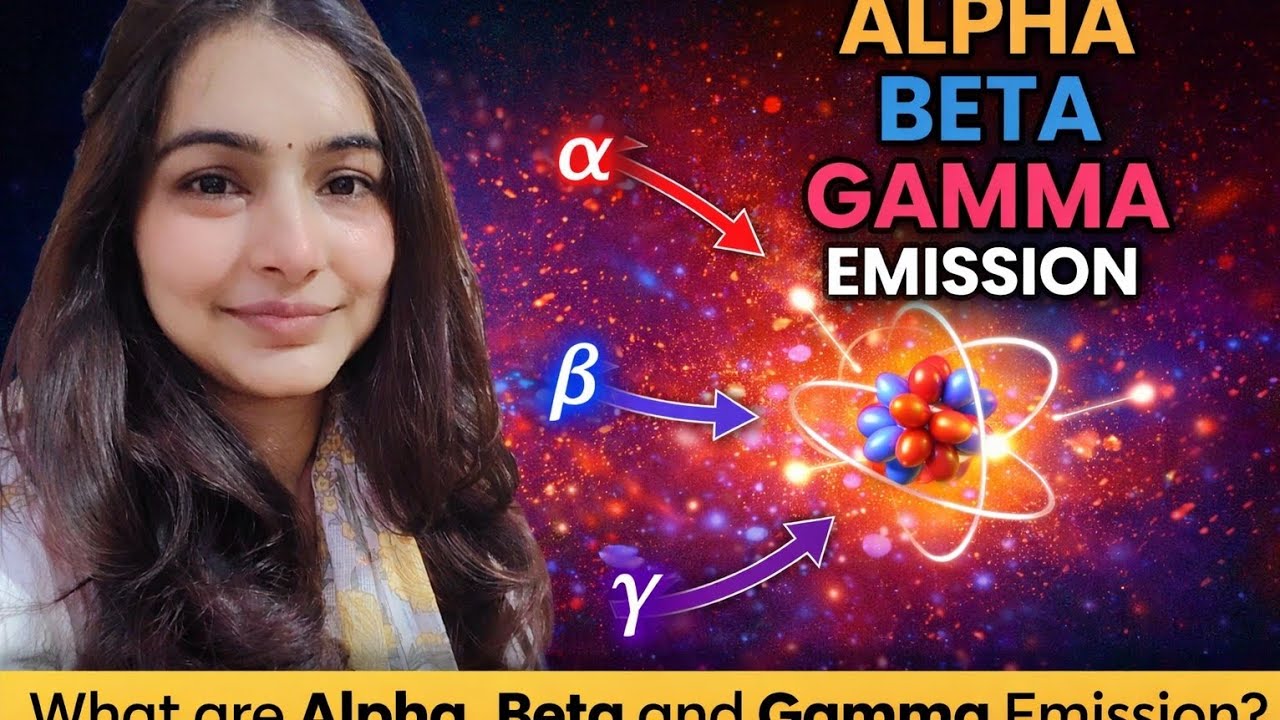
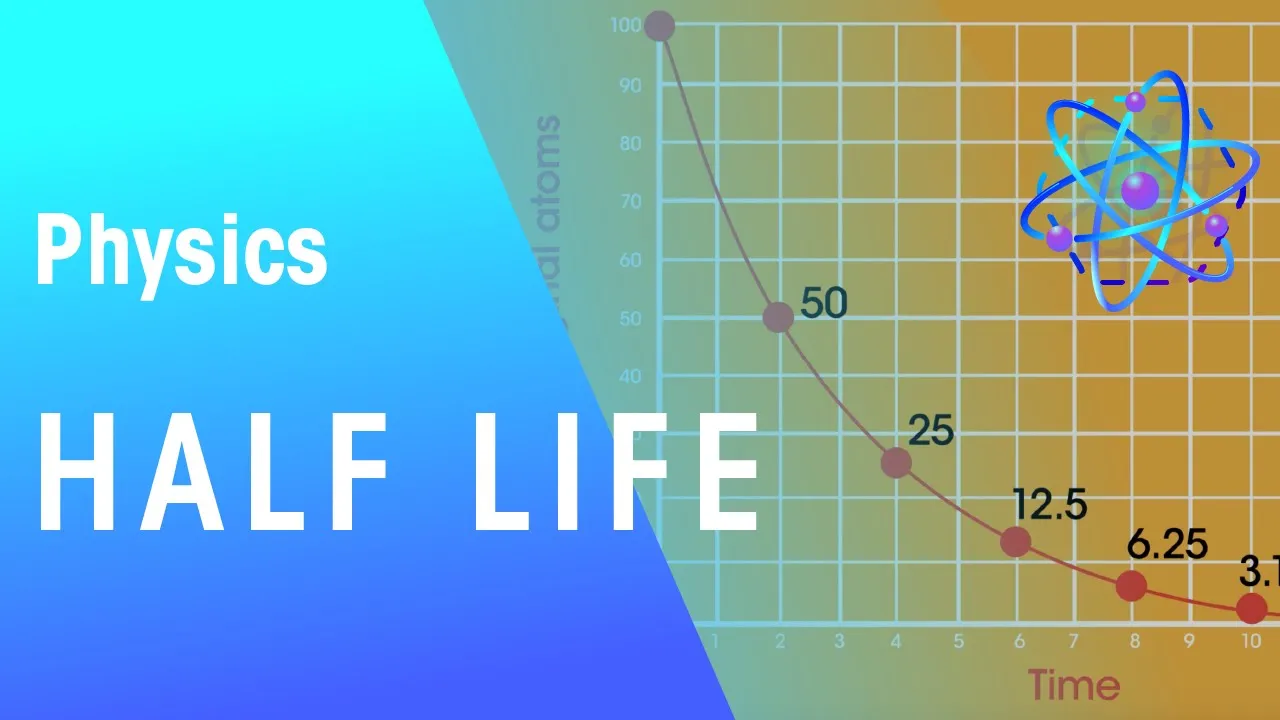
Radioactivity is the spontaneous decay of atomic nuclei emitting alpha, beta, and gamma rays. The key formula for calculating radioactive decay is NT/N0 = (1/2)^(T/Tf), where NT is the number of atoms remaining, N0 is the initial number of atoms, T is the elapsed time, and Tf is the half-life (time for half the atoms to decay). This formula allows solving various radioactivity problems by substituting known values and solving for the unknown variable.
Radioactivity Calculations | JAMB Physics Guide
Added:Basic atomic structure, including understanding atomic number, mass number, and the composition of the nucleus (protons and neutrons).
The fundamental concept of radioactivity and the characteristics of alpha, beta, and gamma emissions.
Qualitative understanding of radioactive half-life and decay processes.
Basic algebraic skills, including working with fractions, exponents, and simple logarithmic relationships.
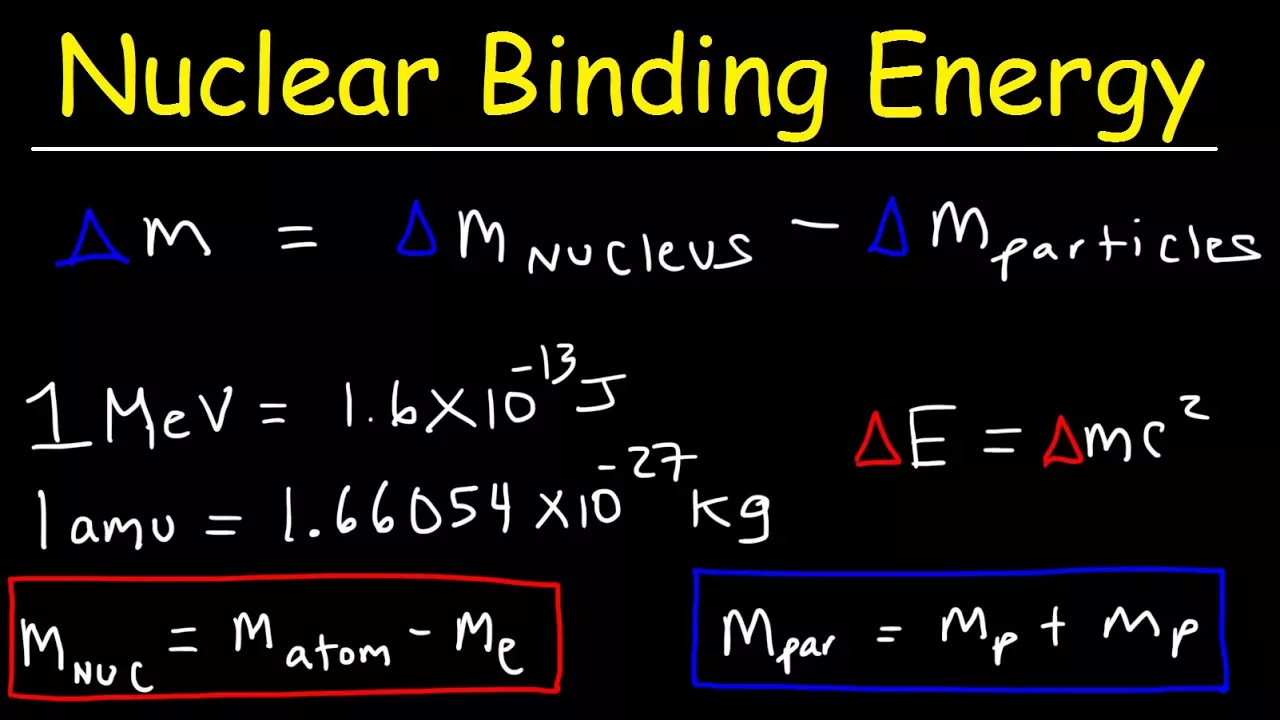
Calculations involving mass defect, nuclear binding energy, and Einstein's mass-energy equivalence equation (E=mc^2).
The mechanisms and calculations associated with nuclear fission and nuclear fusion reactions.
Real-world applications of radioisotopes, such as radiocarbon dating, medical imaging, and cancer radiotherapy.
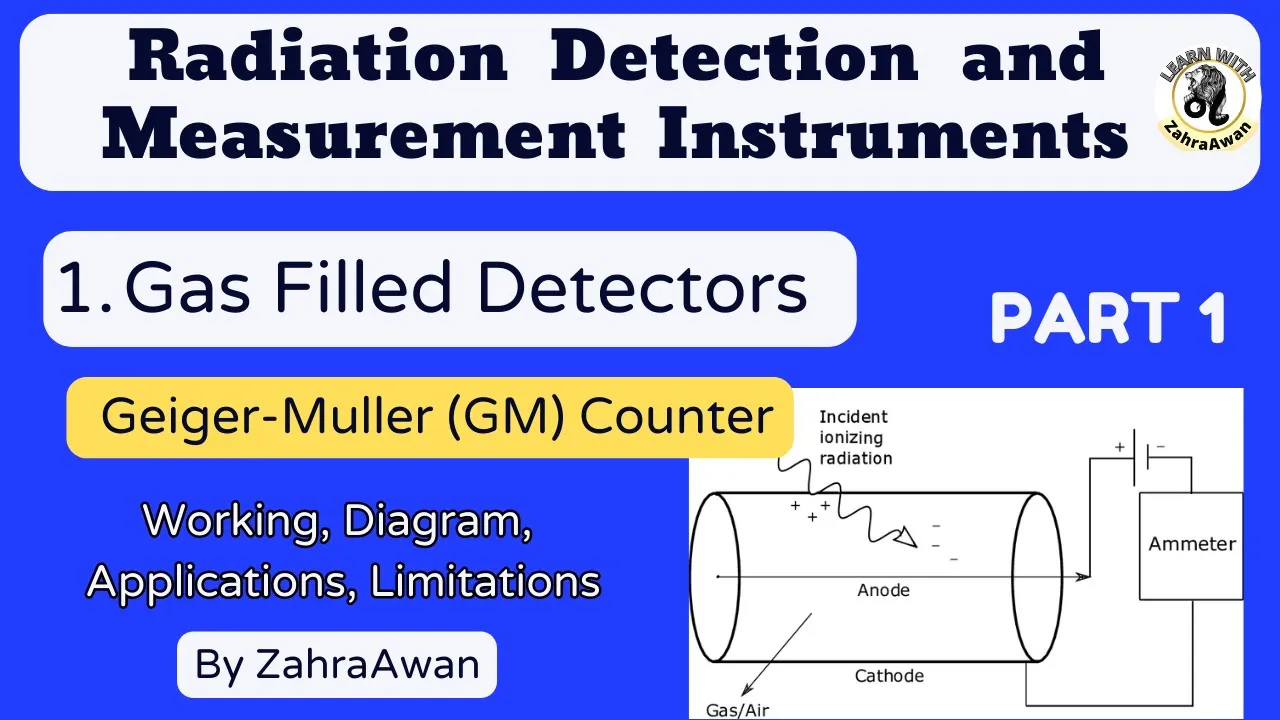
Principles of radiation detection instruments (e.g., Geiger-Müller counters) and radiation safety standards.
483 views43likes9:02Original Release: 2025-03-31
Good day everyone. It's Tito Gox here again. Welcome to another class. If you are new to this channel, do well to subscribe. Do well to like, comment, and share this video. So in today's class, we're going to talk about radioactivity in physics, radioactivity in physics. So and this class is majorly focusing on the calculation aspect of radioactivity.
So how are you going to tackle calculation questions on radioactivity?
So that is what this class is all about.
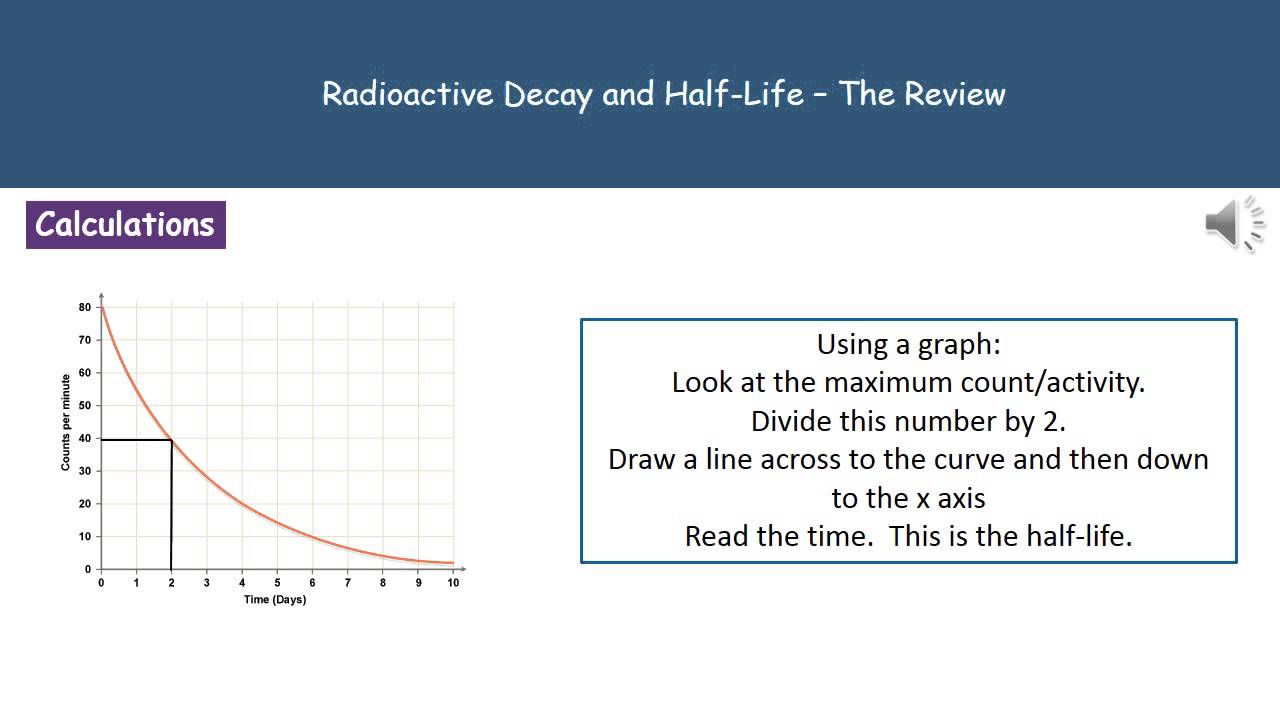
Don't forget that radioactivity is the spontaneous decay or disintegration of the nucleus of the atom of an element during which it emits alpha, beta and gamma rays or a combination of any of all the three and energy. So that is the definition of radioactivity and another thing you need to know the definition before we get started with the calculation part is half life. Half life. So what is half life? Half life of a reactive element is the time taken for half of the atoms initially present in the element to decay. So half life of a radioactive element is the time taken for half of the atoms present in the element to decay. So because we're going to be using the concept of half life in the calculation aspect. So that's the reason why you must understand the definition. So for the summary of radioactivity calculation, I'm only going to give one formula and with that formula, you'll be able to solve any calculation question on radioactivity.
So this is the formula we're going to be using to solve questions under radioactivity. And the formula is as simple as this. NT / N is equal to 1 /2 power T / T. And this is the definition of the parameters. N0 is the initial number of atoms at the beginning of the radioactive process. So the initial number of atom at the beginning. NT that's the number of atoms remaining.
Note this word number of atoms remaining. It is not the number of atoms that decay. It is the number of atoms that remain after the radioactive process. Then t is the time taken for the decay. Then t stands for the half life. So with this formula I'm going to show three or more examples on how to use this formula to solve radioactive questions. So this is a jam question on radioactivity. Let's solve this question using this formula. A substance with a half life that is the TF half life is 5 minutes has a count rate of 500 after 15 minutes. So this 500 is a count rate remaining after 15 minutes. That means that's the NT because NT is number of atoms remaining after a particular time.
So 500 remains after 15 minutes. NT will be 500. T will be 15 minutes. That's the time taken to have a remainder of 500. What is the count rate at time Z?
That is the N0. That's the initial number of atoms. Initial number of atoms. That's N0. That's the question.
So with this now you can make use of the formula and some people might be wondering why we are not converting this minutes to seconds under radioactivity you don't necessarily need conversion if the unit of both time are the same so you don't need to convert if they are in hours and hours you use it like that sometimes it can even be in years we are still going to do another example that the unit of the time will be years so you don't need to do conversion to seconds or anything just make sure they are the same and with that you can substitute directly to the formula and solve the question. So let's make use of the formula now. NT / N is equal to 1 / 2 T / TF. NT is 500. N is unknown. 1 / 2. T is 15. T is 5. So let's just solve the question.
500 / n is equal to 1 / 2 15 / 5 is 3 500 / n 1^ 3 that is 1 2^ 3 that is 8.
So to get n we cross multiply this we multiply this this we multiply this that is n is equal to 500 * 8 and n is equal to 4,000. So that is the correct answer to this question. So this is another question. A radioactive substance of initial mass. So initial mass that's the initial number of the atom that is 8 g has a half life. The T half is 10 days. That's the half life. How many days would it take 7 g of the substance to have disintegrated?
Please note this part. This kind of question can confuse you. How many days would it take 7 g to have disintegrated?
So what they trying to say is that NT is not seven. NT will be the amount of gram that will remain after 7 g has disintegrated. Please don't please don't mix this thing. Don't mix it up. NT stands for the number of atoms remaining. But in this case we are told that 7 g disintegrated. Disintegrated means it decayed decay. So if 7 g has disintegrated it will definitely remain 8 - 7. Don't forget that 8 g is the initial initial mass. So if 7 g disintegrated that means the number of gram remaining will be 1 g. Do you get this part? So nt is 1 g. It is not 7 g.
So is a tricky question. It is 1 g. How many days? That means we have to find the time the time taken for this 1 g to remain t is unknown. Then we are going to apply the formula. So nt / n = 1 / 2 t / t and let's put in the values one after the other one / 8 is equal to 1 / 2 t is unknown. Then t is 10. So from here we're going to apply the knowledge of indices. 1 / 8 is the same thing as saying 1 / 2 all to the power of 3. You get that? That is 1^ 3 we give 1. 2^ 3 will give you 8. 1 / 2^ 3 / 10. So from here you can equate the powers. Equate the powers. That is the base number are the same. You can equate t / 10 to be = 3 or 3 = to t / 10. It is still the same thing. Cross multiply t is 3 * 10. So t is 30 days.
So 30 days is the correct answer. Now this is another jam question on radioactivity. But before I proceed, do well to like this video, drop a comment and share this video so the video can reach more people out there. And if you new to this channel, do well to subscribe to this channel so as to get updated when a new tutorial video drop.
Thank you. A count rate of radioactive material is 800 count per minute. That is the initial. So n is 800 counts per minute. If the half life of the material t if that is 4 days what will the count rate be in 16 days that is after 16 days the time is 16 days what will nt what will it be so nt is unknown in this question let's apply this same formula nt / n is equal to 1 /2 t / t so what is NT unknown. N that is 800. N is 800 is equal to 1 /2 T that is 16 over TF 4.
NT / 800 is equal to 1 / 2 16 / 4 it is 4 to the^ of 4 1^ 4 that is 1 2^ 4 that is 16 nt / 800 is 1 / 16 so n will be 800 / 16 and that's going to give 50 pound per minute. Option C is correct. If you have any question on radioactivity, drop it in the comment section below. I'll make sure I attend to the question. Thank you very much.
See you in the next video.
Up Next

76:26
One Shot: Nuclear Physics & PYQs for JEE Mains | Class 12
@Vedantu_JEE_English
79.9K views•2021-02-13

12:53
21cm Hyperfine Transition in Neutral Hydrogen: Radio Astronomy Basics
@AaronRobertParsons
12.4K views•2011-10-13

32:32
NMR Spin Physics I: Zeeman Effect, Resonance Condition & Larmor Frequency
@nptel-indianinstituteofsci8064
2.3K views•2024-01-17

27:14
Entropy and the Second Law of Thermodynamics Explained
@veritasium
27.5M views•2023-07-01
Related Study Plans & Knowledge Roadmaps
Structured learning paths in Physics
physics
Nuclear Physics (Decay, Fission & Reactors)
01Atomic Structure and the Binding Force
02Radioactive Decay and Half-Life
03Nuclear Fission Mechanics and Chain Reactions
+ 2 more learning modules
12h5 modules
Explore Roadmap
physics
Soft Matter (Polymers, Colloids & Rheology)
01Foundations of Soft Matter & Thermal Forces
02Polymer Physics and Macromolecules
03Colloids, Surfactants, and Self-Assembly
+ 2 more learning modules
38h5 modules
Explore Roadmap
physics
Analytical Mechanics: Lagrangian & Hamiltonian
01Mathematical Foundations: Calculus of Variations
02From Newtonian Mechanics to Constraint Dynamics
03The Principle of Least Action & Lagrangian Mechanics
+ 3 more learning modules
28h6 modules
Explore Roadmap
physics
General Relativity (Spacetime & Cosmology)
01Foundations of Relativity: Special Relativity
02The Geometry of Spacetime: Equivalence Principle & Curvature
03Einstein's Field Equations: The Mathematics of Gravity
+ 2 more learning modules
55h5 modules
Explore Roadmap