





![PARTICLE PHYSICS Lesson 1 [AS Physics 9702]#gcse #exam #cambridge #physics#alevel #education](https://i.ytimg.com/vi/VpX4QAtZd5E/maxresdefault.jpg)

![Multi Messenger Astronomy - A New Era of Discovery – Part-1 – [Hindi] – Infinity Stream](https://i.ytimg.com/vi/Ivp_G8uE_P4/maxresdefault.jpg)







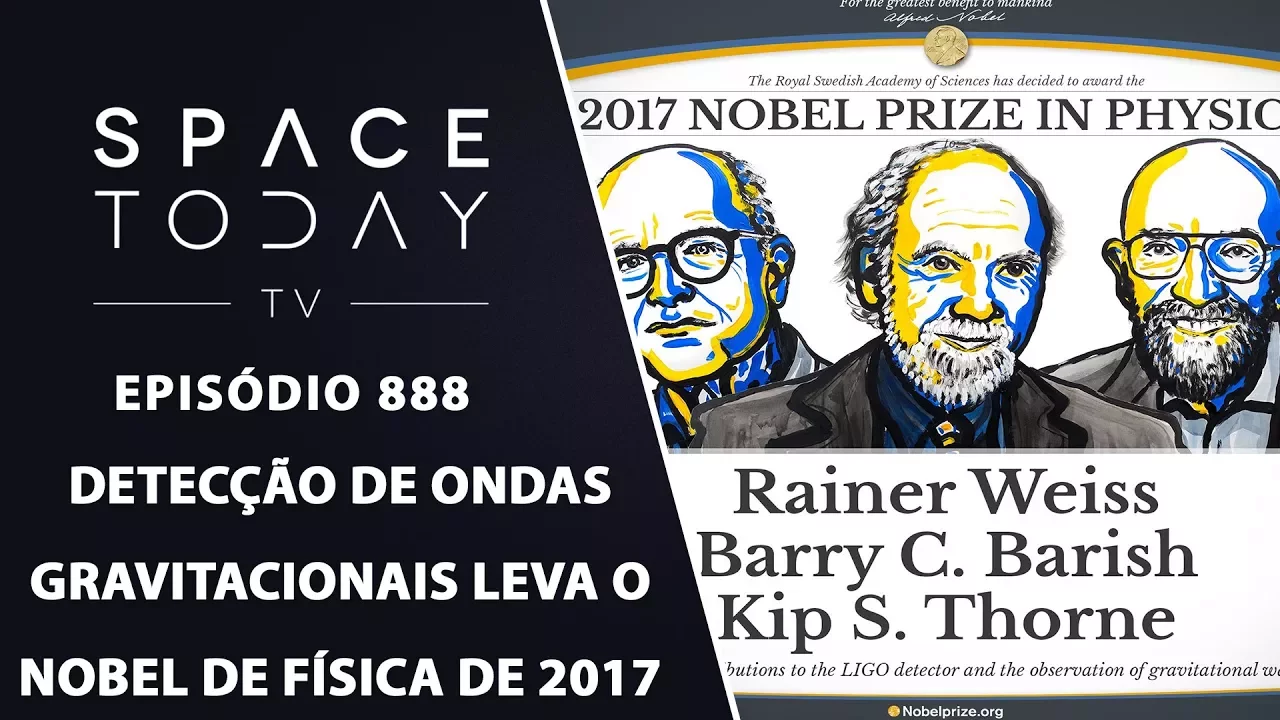
Detecting gravitational waves requires overcoming extraordinary technical challenges: measuring space-time distortions of just one part in 10^21 (equivalent to measuring the distance to Alpha Centauri with precision of a human hair), achieved through four-kilometer interferometer arms, one-megawatt lasers to minimize quantum shot noise, ultra-smooth mirrors suspended by hair-thin silica threads, and near-perfect vacuums at trillionths of atmospheric pressure, all while distinguishing genuine gravitational wave signals from environmental noise across two distant detector sites.
Gravitational Waves: The Impossible Detection Physics
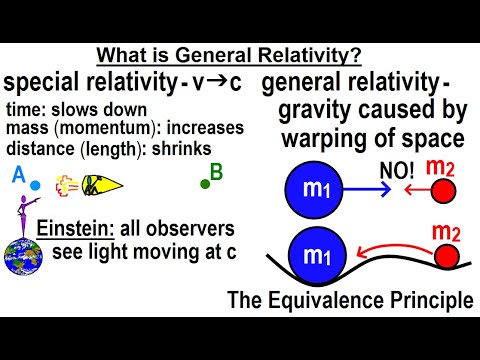
Added:Einstein's General Theory of Relativity, specifically the concept of gravity as the curvature of spacetime rather than a force.
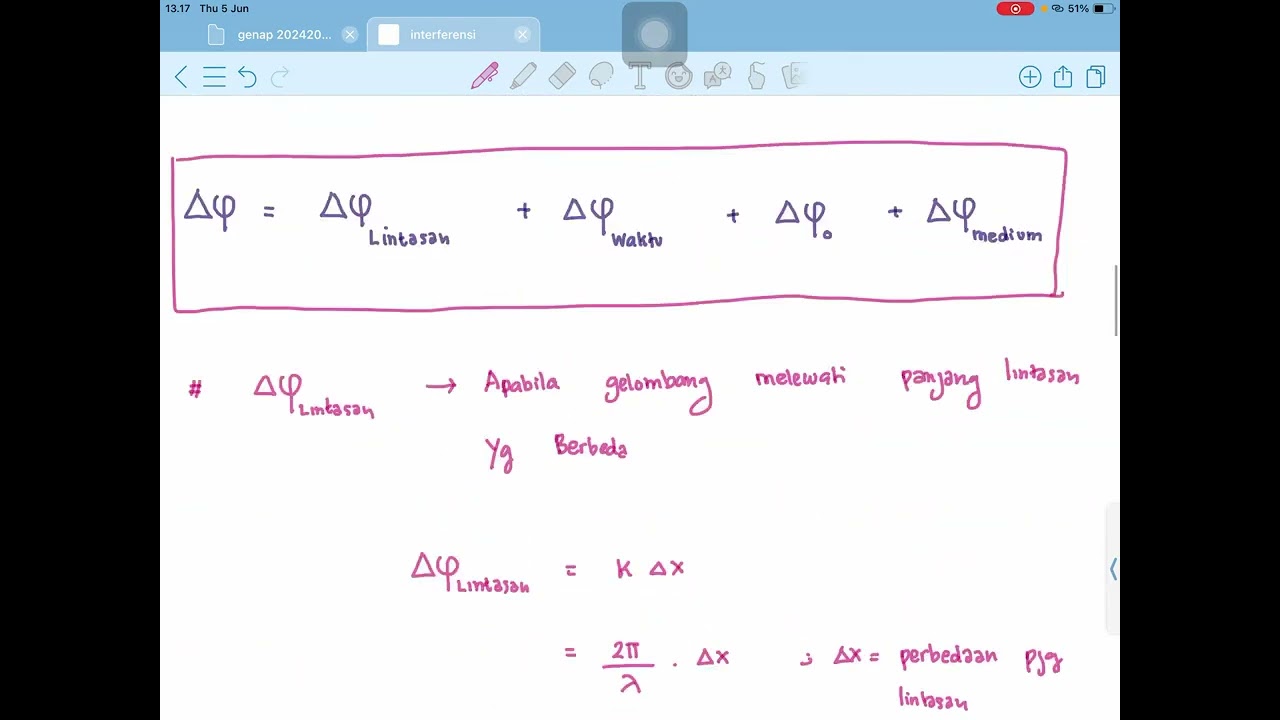
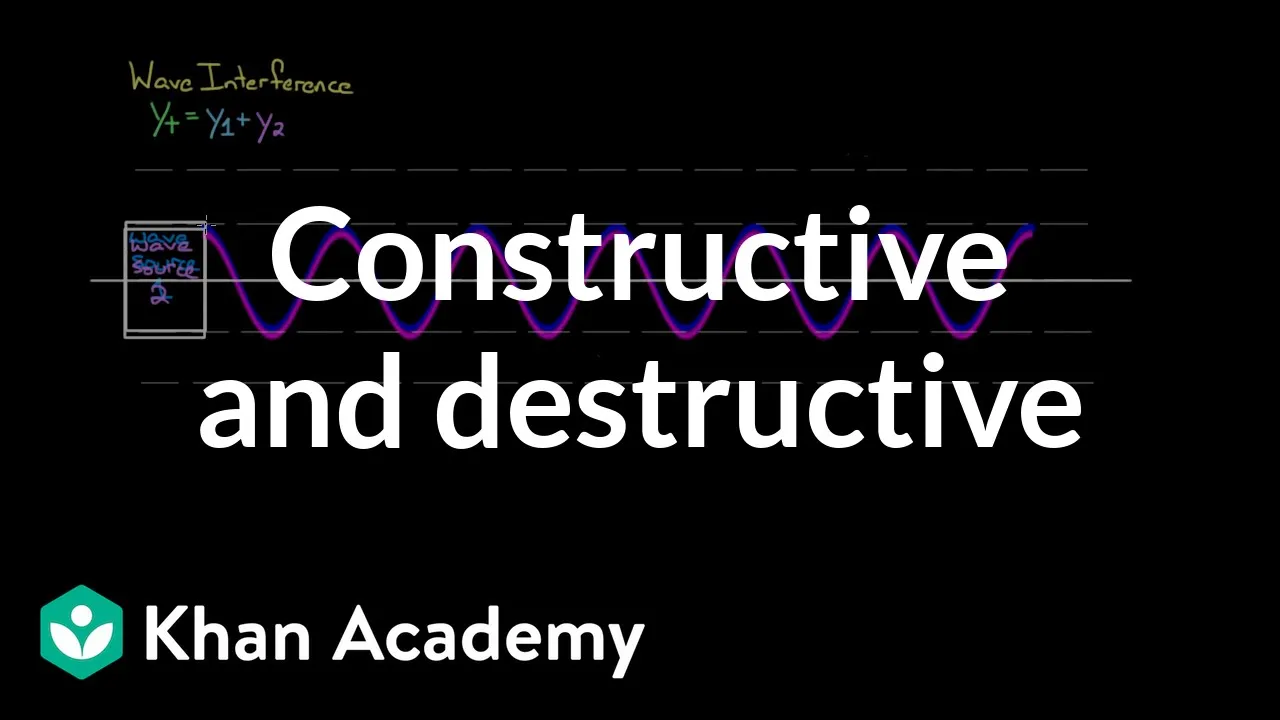
The basic principles of wave mechanics, including wave interference (constructive and destructive) and phase shifts.
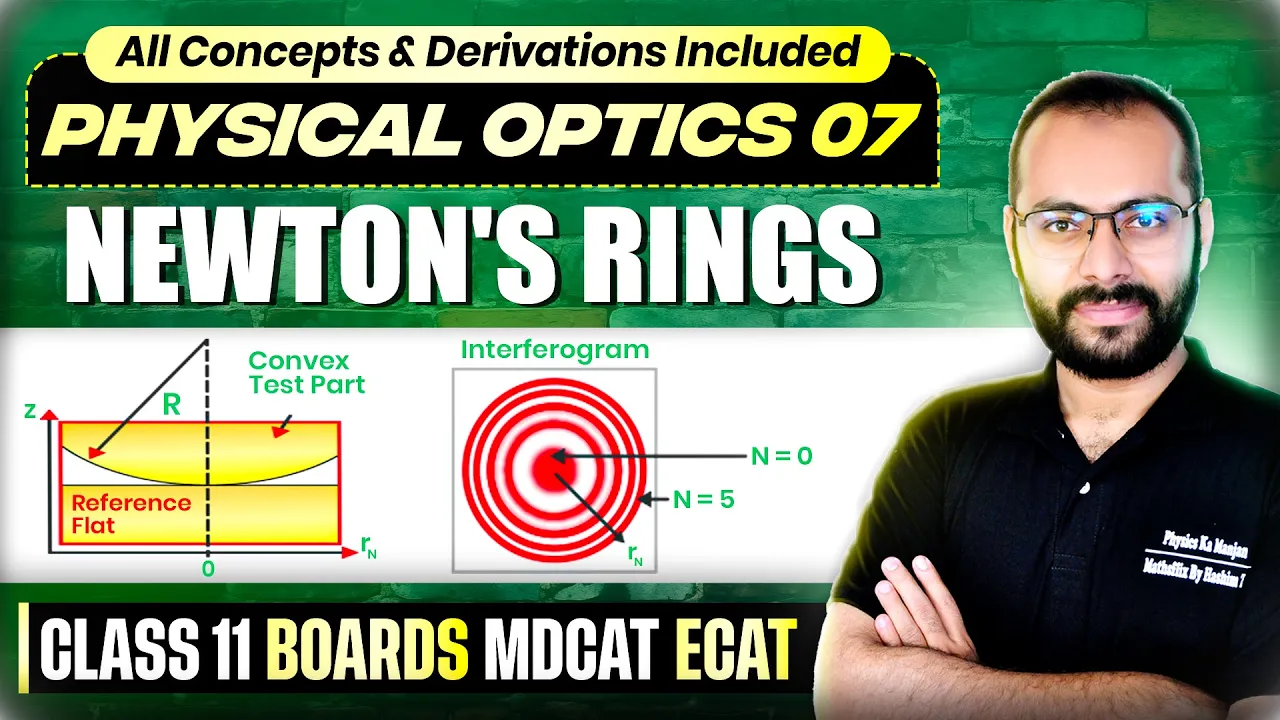
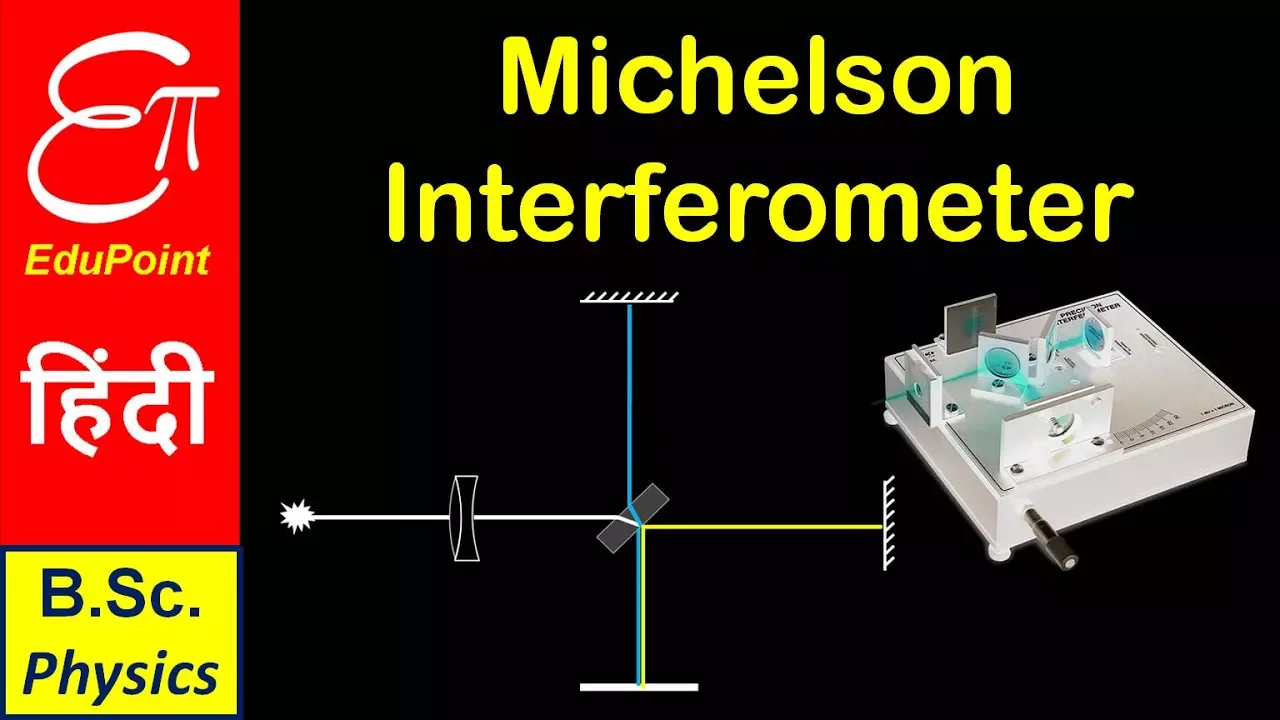
The operation of a Michelson Interferometer and how it uses beamsplitters and mirrors to measure optical path differences.
An understanding of physical scales, particularly the minuscule size of a proton (approximately 10^-15 meters) compared to atomic scales.
Multi-Messenger Astronomy: How combining gravitational wave data with electromagnetic data (light, X-rays, gamma rays) provides a complete picture of cosmic events.
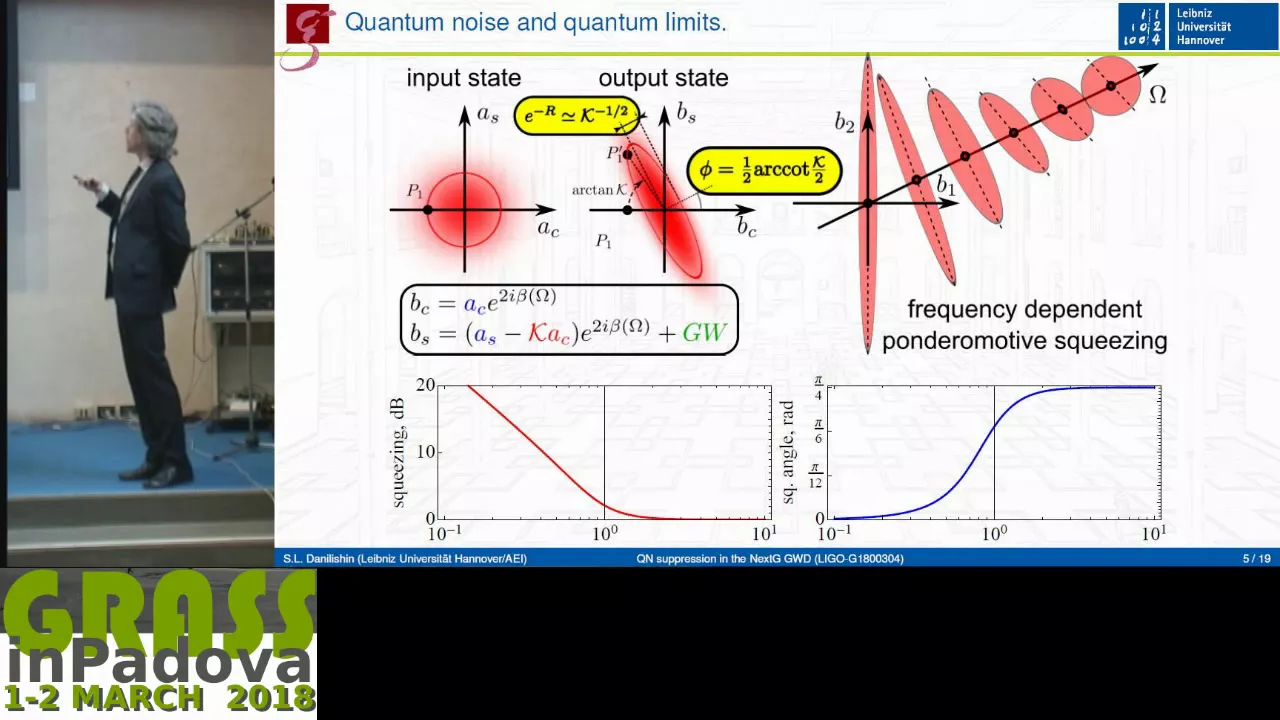
Quantum Non-Demolition and Squeezed Light: How advanced LIGO utilizes quantum optics to surpass the Standard Quantum Limit of measurement.
Next-Generation Detectors: The design and physics of space-based interferometers like LISA (Laser Interferometer Space Antenna) and future ground-based observatories like the Einstein Telescope.
Gravitational Wave Spectroscopy: Using the 'ringdown' phase of black hole mergers to test the limits of General Relativity and probe black hole thermodynamics.
7.8M views172.9Klikes9:07Original Release: 2017-01-05
1.3 billion years ago in a galaxy far, far away two black holes merged As they violently spiraled into each other They created traveling distortions in the fabric of space-time gravitational waves in the last tenth of a second the energy released in these waves was 50 times greater then the energy being released by everything else in the observable universe combined It's like an awe-inspiring kind of energy after spreading out through the universe at the speed of light for over a billion years the waves reached earth, where they stretched and squeezed space such that two light beams traveling in perpendicular pipes were put slightly out of step allowing humans to detect the existence of gravitational waves for the first time.
That's a simple enough story to tell but what I found out when I went to visit professor Rana Adhikari at Caltech is that it hides the absurdity of just what was required to make that detection.
There's a lot of things about gravitational waves which are absurd *Humming simulation of gravitational waves Is that.... is that it? [RA]: That's it, yeah.
The main problem with detecting gravitational waves is that they're tiny they stretched and squeezed space by just one part in 10 to the 21.
That's the equivalent of measuring the distance between here and Alpha Centauri and then trying to measure variations in that distance that are the width of a human hair.
To detect such tiny wiggles you have to measure over as large distance as possible, which is why the arms of the interferometers are four kilometers. And even with arms this long gravitational waves vary the length of the arms by at most 10 to the minus 18 meters so the detector has to be able to reliably measure distances just 1/10000 the width of a proton. It's the tiniest measurement ever made.
So how is it possible to measure that considering all the other sources of vibrations and noise in the environment, like earthquakes, traffic, and electrical storms.
Well for one thing the mirrors are the smoothest ever created.
They weigh 40 kilograms or 90 pounds and are suspended by silica threads just twice the thickness of a hair to isolate them from their environment and even then the only way to be certain not to be tricked by environmental noise was to build two detectors far apart from each other in reasonably quiet locations that allows you to distinguish between local noise which would appear only one side and gravitational waves which would pass through both sides almost simultaneously I'm in a building that contains a 1 to 100 scale of LIGO, the gravitational wave detector.
The next challenge is the laser.
Whoa, whoa.
That's a lot of stuff.
You need a laser that can provide one, and exactly one wavelength.
You can imagine, if your laser wavelength is changing and you're trying to use interference of light waves to make this measurement it's never going to work because it's something like trying to measure this distance but your ruler stick is constantly changing back and forth you can't tell how many inches this is.
All this equipment, at least three-quarters of it, all we're trying to do is make the laser more stable, and by the end of the day what we've achieved is something which has a stability of one part in 10 to the 20. What does that mean... That's a hundred billionth of a trillion.
That's kind of what we end up with.
The best lasers for this purpose have a wavelength of 1064 nanometers. That's infrared light. But this presents a problem.
How can you measure 10 to the minus 18 with 10 to the minus 6 wavelength of light?
Yes, I wish more people would ask this question.
It's great for this animation to show such a large shift in the wavelength but the reality is, it's only one trillionth of a wavelength that the arms are shifting in length.
It seems obvious that you can measure half a wavelength because that will cause the light to interfere with itself.
Yeah, but that's fully. That will go from completely dark to completely bright So are you looking at, like, slightly darker and slightly brighter?
Yeah and the limit here at how good we can measure this difference between dark and bright has to do with the, the fact that the light is discrete. It comes in discrete chunks which are called photons.
The variation in the number of photons hitting the mirrors at any instant due this quantum uncertainty is proportional to the square root of the total number of photons. What this means is the more photons you use, the smaller the uncertainty gets, that's a fraction of the total.
This is why the laser power in the arms is one megawatt.
That is enough energy to power a thousand homes, in a light beam.
And a megawatt, you know *snap* boom, they won't even rip your head off.
Just, vaporized be just a smoking stump.
Even with a perfect laser and one megawatt of power, anything the light hits would interfere with it, even the air, so all the air in the arms of the detectors had to be eliminated and it took 40 days to pump down to just a trillionth of atmospheric pressure and the tubes were heated up to the temperature of the oven to expel any residual gases.
They pumped out enough air to fill up two and a half million footballs, making it the second largest vacuum in the world after the Large Hadron Collider.
Now here's something most people don't think about which is that gravitational waves stretch space-time so light traveling through that space should be stretched as well.
If everything is stretching how do you know anything is stretching?
How do you know anything is stretching?
That's the conundrum.
It doesn't make any sense!
This whole thing is bogus shut it down!
I would send a laser beam down this tube and then wait for it to come back and then i would say "well nothing happened" because the space got stretched and the laser wavelength got stretched Its...It looks the same if you got it stretched or not stretched.
It doesn't make any sense well it's sort of a matter of timing is how it works.
So the amount of time it takes for light to go down this tube and come back is very short.
However the wave... the gravitational wave when it comes through its doing the slow thing like *low humming* this noise I made, which is low. Its this it's this slow stretching, its only a hundred times per second. And it's true when the wave comes through the light which is in there it actually does get stretched.
And... and then that part doesn't... doesn't do the measurement for us but um.. now that the space is stretched that laser light is like come and gone it's out of the picture. We're constantly shooting the laser back into the system so the new fresh light now goes through there and has to travel a bigger distance than the light before.
And so by looking at how this interference changes with time and keeping the laser wavelength from the laser itself fixed, we're able to do the measurement.
So what was needed to detect gravitational waves?
Well, a megawatt of laser power to minimize shot noise of exactly one wavelength because we're trying to measure just a trillionth of that wavelength, continually inserted to replace older light that's been stretched and squished, in the world's second-largest vacuum chamber at just a trillionth of atmospheric pressure, hitting the smoothest mirrors ever created, suspended by silica threads, at two distant sites to eliminate noise, with four kilometer long arms to increase the magnitude of gravitational waves to just a thousand of the width of a proton.
You know what we already do daily in here is what I would have said is impossible if you asked me about it 20 years ago.
One of the things that was most interesting for me to learn was what is limiting the sensitivity of the detectors today, and it turns out it is quantum mechanics and essentially you can think of it like a Heisenberg uncertainty principle, we've got two things and together their uncertainty has to be bigger than a certain value.
Luckily for us we are only trying to measure one thing here, we're not trying to measure two things at the same time.
All we want to know is how much more this arm get stretched from that arm and that's... that's the key point which people did not understand until recently.
The way to build these systems is such that they're extremely good in measuring one thing and that all of the uncertainty which comes from quantum mechanics is completely crammed into this other thing that we don't care about.
I feel like we're getting down to these levels of nature where it seems like nature doesn't want you to go any further.
But, through our ingenuity we're figuring out ways to engineer quantum noise, I think that's such a remarkable concept and I look forward to the results that it's going to bring.
I think the next logical step is to go from two signals to detecting all the black holes in the universe all the time.
It's not like an alien civilization level of technology it's just... we have to do a lot better than what we're doing now but it's I see it sort of within... within our grasp
Up Next
11:25
Gravitational Waves & Quantum Squeezing Explained
@PhilUpOnScience
162 views•2021-08-05

12:53
21cm Hyperfine Transition in Neutral Hydrogen: Radio Astronomy Basics
@AaronRobertParsons
12.4K views•2011-10-13
6:32
Schlieren Imaging: How to See Air Currents and Temperature Gradients
@veritasium
1.6M views•2017-06-15

27:14
Entropy and the Second Law of Thermodynamics Explained
@veritasium
27.5M views•2023-07-01
Related Study Plans & Knowledge Roadmaps
Structured learning paths in Physics
physics
Nuclear Physics (Decay, Fission & Reactors)
01Atomic Structure and the Binding Force
02Radioactive Decay and Half-Life
03Nuclear Fission Mechanics and Chain Reactions
+ 2 more learning modules
12h5 modules
Explore Roadmap
physics
Soft Matter (Polymers, Colloids & Rheology)
01Foundations of Soft Matter & Thermal Forces
02Polymer Physics and Macromolecules
03Colloids, Surfactants, and Self-Assembly
+ 2 more learning modules
38h5 modules
Explore Roadmap
physics
Analytical Mechanics: Lagrangian & Hamiltonian
01Mathematical Foundations: Calculus of Variations
02From Newtonian Mechanics to Constraint Dynamics
03The Principle of Least Action & Lagrangian Mechanics
+ 3 more learning modules
28h6 modules
Explore Roadmap
physics
General Relativity (Spacetime & Cosmology)
01Foundations of Relativity: Special Relativity
02The Geometry of Spacetime: Equivalence Principle & Curvature
03Einstein's Field Equations: The Mathematics of Gravity
+ 2 more learning modules
55h5 modules
Explore Roadmap