















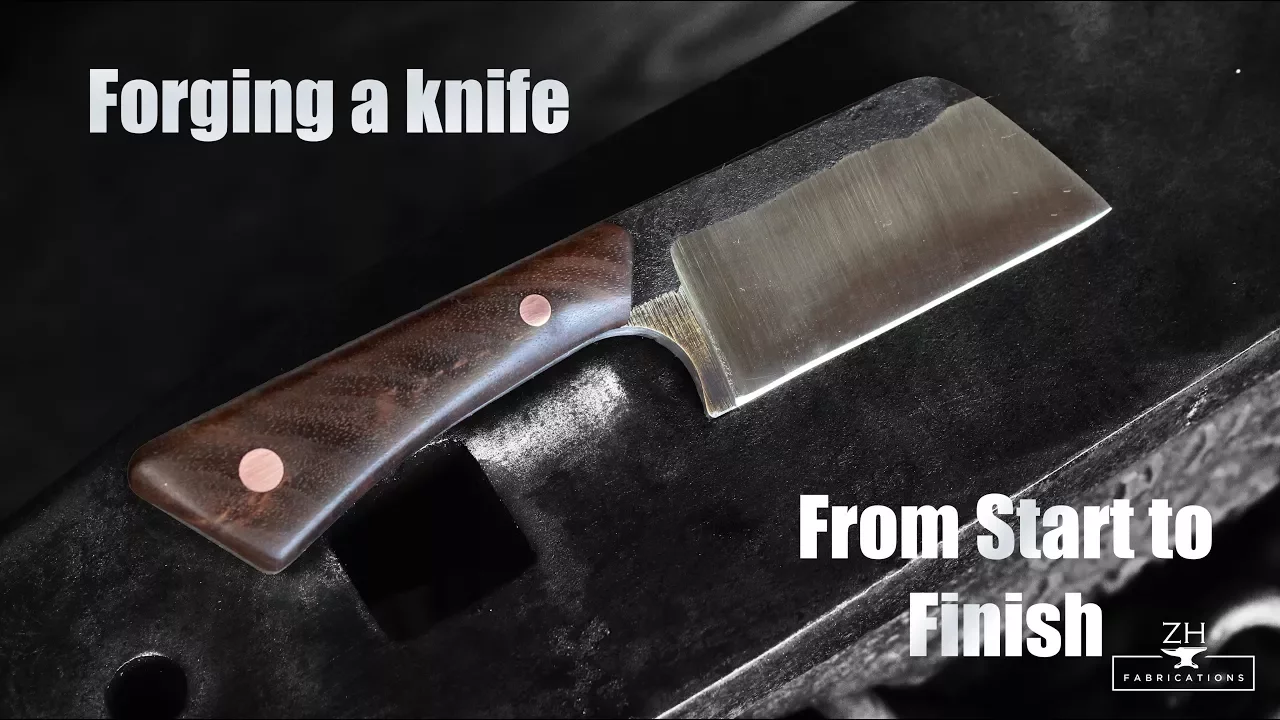






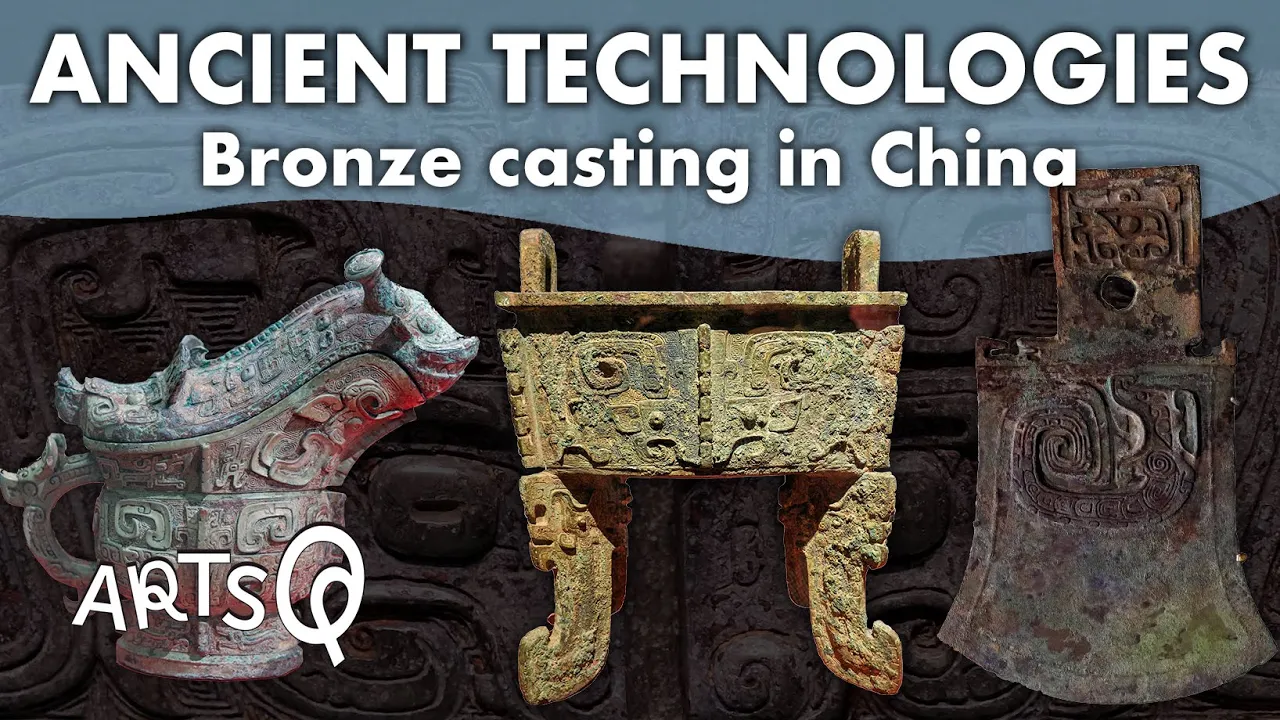


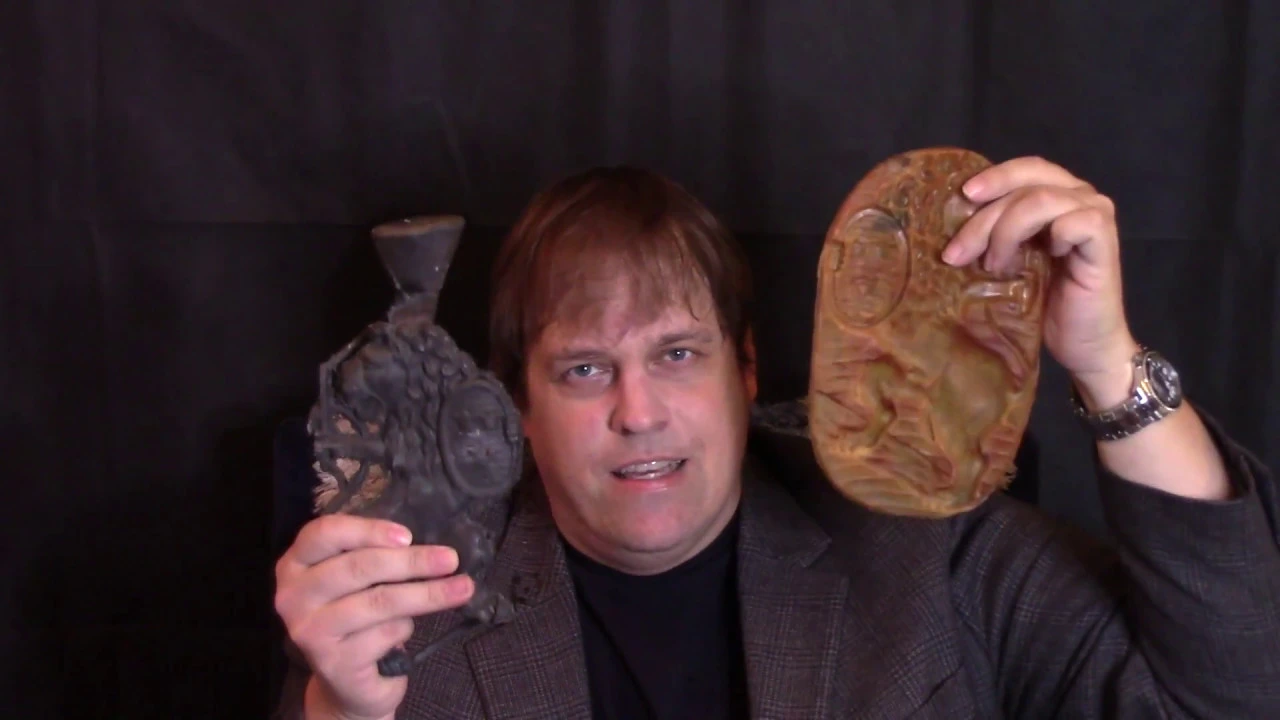

This video demonstrates how to create a natural draft kiln furnace using cob (clay, dirt, and straw) to achieve temperatures over 2,000°F for bronze casting, and explains that historical Bronze Age molds used unfired clay combined with crushed rock and mineral fragments as a thermally stable binding agent, which was applied to successfully cast a ceremonial dagger inspired by ancient Mesopotamian royal artifacts.
Casting a Bronze Dagger with Ancient Techniques | Lost-Wax & Natural Draft Kiln
Added:Basic metallurgy of bronze, specifically understanding that it is an alloy of copper and tin and recognizing how their ratio affects melting points and physical properties.
The fundamental concept of the lost-wax (cire perdue) casting process, including the steps of pattern creation, mold investment, burnout, and metal pouring.
Principles of thermodynamics and airflow in natural draft kilns, specifically how heat convection and the chimney effect generate high temperatures without mechanical blowers.
The historical context of the Bronze Age in Mesopotamia, including the societal role of metallurgy, ceremonial weaponry, and the trade networks required to acquire copper and tin.
Post-casting metalworking techniques such as cold-hammering, annealing, and grinding to harden edges and refine the geometry of a cast blade.
Advanced finishing arts, including chasing, engraving, and the chemical patination of bronze to achieve historically accurate surface colors and textures.
The methodology of experimental archaeology, focusing on how researchers scientifically reconstruct and test ancient pyrotechnological processes to validate historical hypotheses.
Comparative study of ancient casting traditions, contrasting Near Eastern lost-wax methods with the piece-mold casting techniques used in Shang Dynasty China.
390.4K views15.7Klikes14:28Original Release: 2019-11-28
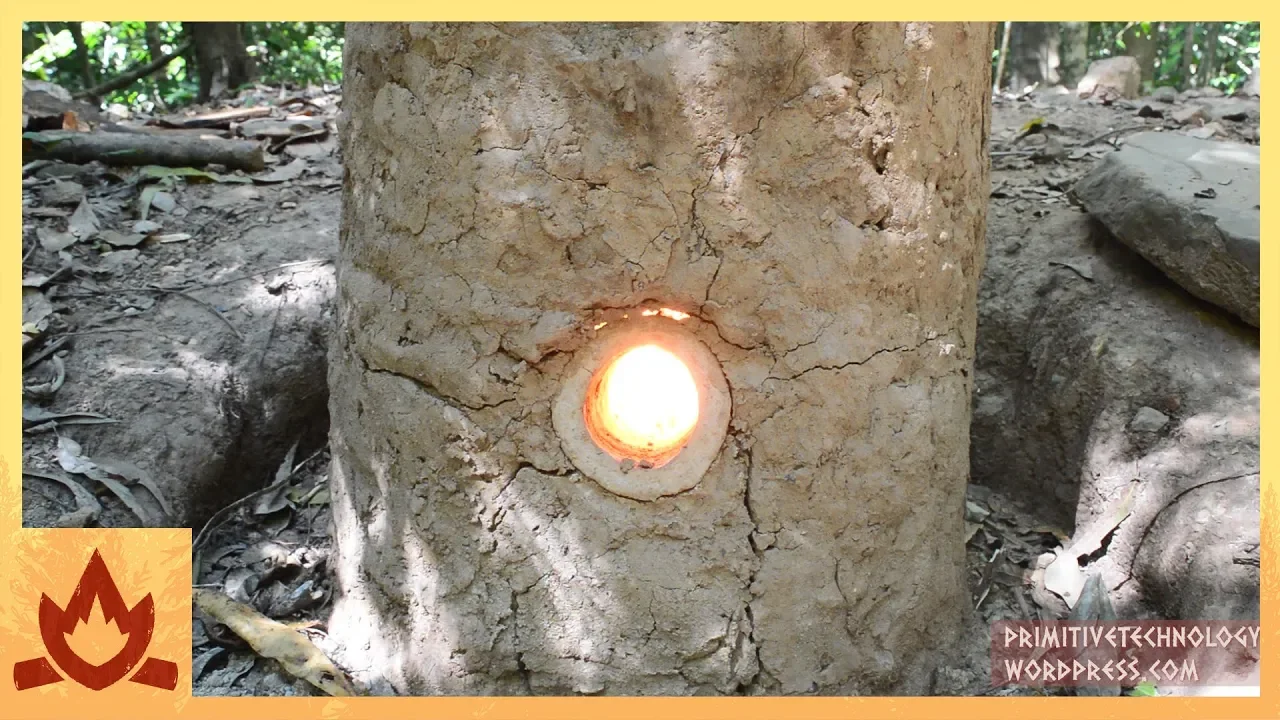
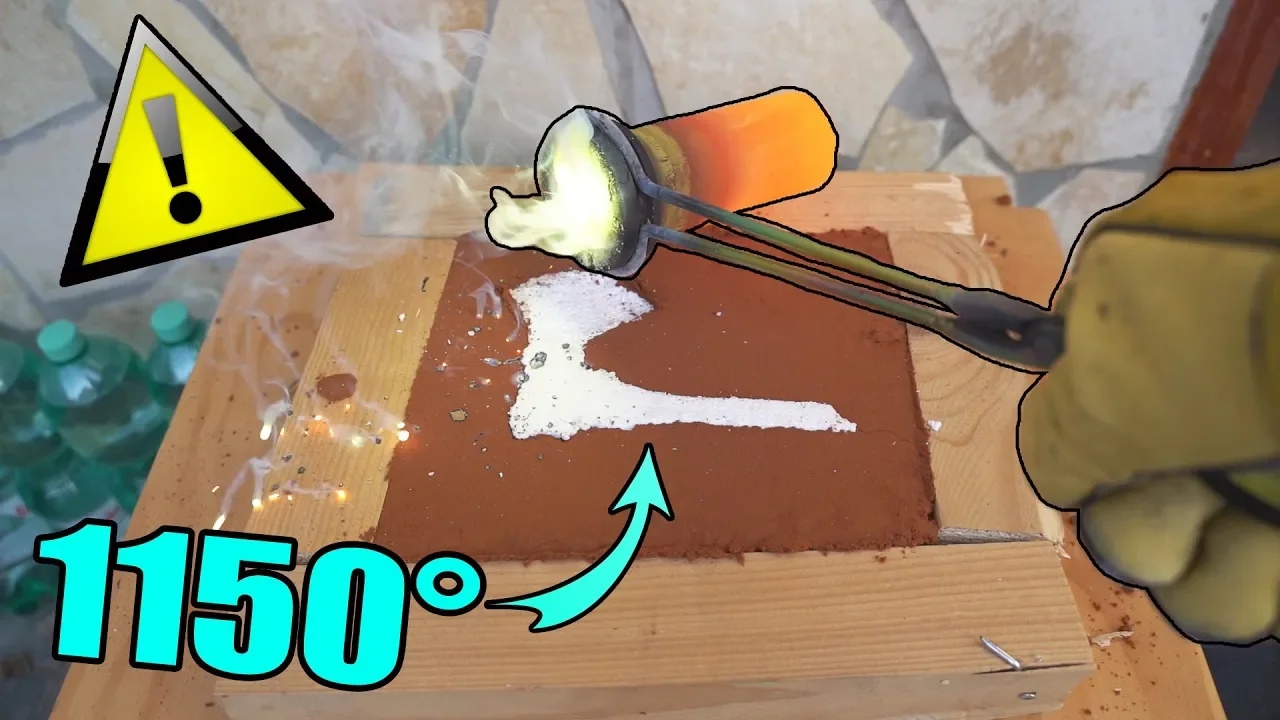
this video is sponsored by North Vee PN start protecting your internet experience today using code HTMI at Nord VPN comm / HTM e I've now just entered into the Bronze Age but the results have been a bit messy and unrefined so in this video I will be making some improvements both of the method of heating my metal and the casting materials and techniques try and yield some better and more refined results ultimately hoping to create a large blade worthy of a ruler of humanity's first civilization in my previous video I was able to break through into the Bronze Age of a smelting rock copper and tin ore via the use of charcoal and blow pipes to get a high enough temperature to smelt and cast metals into bronze however this process is not the most efficient and took a long time to heat up the small amount of metal I tried to cast the method also required a lot of blowpipe blowers this is likely a similar issue faced by early metal workers who went through a few evolutions a process to make better and better metalworking techniques so a few improvements could be made such as better insulation to contain the heat I used both dirt sod and stones in my previous attempts however a few techniques can be learned from other fields in my last video I made an oven for baking bread using material called cob that was able to withstand heat quite well and is made from clay dirt and straw a similar lesson can be learned from the area of ceramics pit fired pottery as we've been doing so far has been done for Millennia's but it was eventually replaced by at least 6000 BCE with the kiln the killed works similar to the oven and it insulates the area and allows higher temperatures to be reached the same concepts with a kiln could then be applied with metals another alternative to manually providing oxygen through blow pipes is to build a furnace that creates a natural draft or to utilize a natural breeze to provide airflow a draft furnace works through air convection bringing the action of hot air rising and cold air sinking a draft kiln is built with a high chimney and a low opening to feed the fire as the hot air rises out of the chimney it creates a negative pressure within the kiln pulling cool air in through the lower opening this creates a constant flow of air into the cools of the fire as oxygen is continuously pulled in so the need of multiple people on blow pipes this allows a fire to reach a higher overall temperature as well as the clay chamber having a much higher heat retention than an open fire or a bowl furnace later development that improve things even further was the invention of bellows but as we've just entered the Bronze Age we are still a good two thousand years away from that innovation so in the next step in improving my Bronze Age abilities I'll be applying what I learned making my oven to construct the natural draft furnace won't require as much extensive labor to get my bronze to a casting temperature and help facilitate casting of some larger objects like a large dagger first stop analyse help prepare extra green for our table that should help improve its heat resistance we're trying to make a draft killing crucibles that can withstand temperatures high enough to melt metal to help us do that we're going to crush up some of our previous clay that we fired into grog to add to our clay sand mixture so it's a little stronger that stuff's a lot powdery [Music] another item that can be used to improve the furnace is a two year a clay tube that acts as the opening for the inflow of air into the furnace allows a more focused air flow to be directed further inward to the center of the coals [Music] it [Music] [Music] now to mix up the clay sand grog and straw and start building the furnace due to the weather constraints of a quickly arriving Minnesota winter we decided to build the kiln and modular rings inside that we could later move into place when we're ready to fire it up this also helps with building up the height as the cob can only be built so high without laying a dry between layers [Music] [Music] thank you today sponsored Nord VPN today your voices have a hard time keeping your secrets and passwords are easy to get cracked use Nord VPN to protect your privacy in your data really useful when I'm travelling outside the country and I can access and I counts back here in America and they have super fast servers and over 61 countries it's really great that it can encrypt my data while online and I can browse the internet with my privacy protected it's really cool to know that my data is secure over Wi-Fi can't let anybody know how little money I have and I'm still a little shook up for the last time somebody tried to hack me using a virtual private network it's Northey pn comm / HTM a nord was recently in the news due to a security breach but no one user of information was exposed and they're making some major moves to even further improve their security go to north VPN comm HTM e to get a special holiday gift of 84 percent off a three year plan and use code HTML for four additional months the kiln ring set and drying the next challenge is the actual casting right now we are at around the year 4000 BCE and it's around this time that the earliest evidence of a method of casting called lost-wax appeared using a wax like beeswax the design of the desired object is carved from it and then covered in the mold material the wax is melted out and the bronze is poured in the big challenge right now is finding the right material to make the actual mold out of so far I've experimented with trying to use clay molds that have been left to dry for various links assuming it was the residual moisture in the clay I figured firing the clay would solve the issue and analyse made a test mold of a bell tested out on what were the result of that cast still had issues with voids forming in the cast for help finding the historical method used for the molds I reached out to my discord for help and was directed to some research that revealed the answer was right in front of me the whole time Cobb at least an explanation of what makes Cobb a good heat-resistant material research had found that historical molds from the Bronze Age used unfired clay continued large quantities of crushed rock and other mineral fragments as a binding agent for the more thermally stable inclusions so Cobb works well in high temperatures because the sand is thermally resistant unlike the clay which is only used to hold everything together this same material was found to be used both in moulds crucibles and the furnaces themselves to test this out we meet another lost wax mold of a bell with a cob mold and was finally able to pour a successful Bell cast to Bell so speaking of a bell this is your reminder to turn on notifications we put a lot of effort into all of our videos it really sucks to play to the algorithm and not all of them get viewed the best way to support us is to turn on notifications so you see all of our videos and watch them ring that bell so ring that bell and turn on notifications with this new knowledge ID Anneliese also make up a new batch of crucibles using the cob they'll hopefully be a little better than our last attempts [Music] now for the object I'm gonna cast with the new kill I should be able to melt a large amount of bronze and cast a larger object however we are still a few thousand years away from the invention of swords at this point the largest blades being made were daggers so let's make one with some significance to this era and you know the Neolithic Revolution a few millennia ago we are now entering into the era of cities kingdoms and the first empires well the most notable was the city of Earth here royal daggers were found in burial ruins oftentimes made a gold and covered with precious stones they were likely ceremonial displays of wealth and power however some of bronze have also been found so after some pretty rough initial casts and making functional tools let's see if I can make a blade worthy of a king [Music] now to assemble the kiln and fire it up guppy doughnuts all stacked up sealed up as perhaps as best we could [Music] full of charcoal and it's already quite hot at the bottom and if you look inside they're like orange red glowing heat took a reading a little bit ago is already over 2,000 degrees which is perfect for melting bronze it's not quite efficient enough for doing iron at this point at least a little bit advantage with the lake creating a little extra draft to suck out from the top and hopefully increase a little bit more air flow that makes a little bit more efficient I can definitely feel a little bit of a suction on the two-year not very strong but it's definitely there it's definitely working consider how hot it is down there so if you let this go for a bit more get up whole thing up to temperature then add in the crucible with the bronze [Music] [Music] [Music] [Music] all right so after a bunch of polishing here is the final result I don't know if this is up to a royal standard yet it's only my second day ger you can get better as you go yeah so it's nice to make something that's more ceremonial and spend a little bit of extra time polishing it off and making a really good cast so well these tools are pretty rough they have allowed us to make the tools necessary to make even better tools there's not much real point in making it look really pretty what you're just gonna beat the crap out of it so it's pretty easy to see that once you start building the foundations and start having tools to make other tools things get a lot more efficient you know they made the furnace we can reuse it over and over again now that I have tools I can get a little bit better the natural draft kiln we're pretty good didn't require any bellows or much effort once it got started but still took a while and it's still kind of slow especially with the crucible pretty quickly got up to temperature by getting the crucible and the metal inside of it to reach that temperature - took a while and unfortunately the crucible ended up cracking course they able to make it work so a lot of improvements that could be made so now that I've been able to scale up the bronze making ability to cast larger items I'm gonna be making a large batch of tools with the intent focus of woodworking one thing I have in mind is casting flasks that will make some more advanced sand casting and get some much better results I'll be our next video coming up and this including making the furnace itself took about 35 hours or 280 dollars at minimum wage check out our merch store we have Black Friday do you can check out and guild discount buy stuff produce goods sell it buy goods like a t-shirt lastly thank you to all of our supporters on patreon without you this won't be possible if you enjoy our content I want to see us keep going on to the Iron Age and beyond please consider supporting us any amount really helps otherwise thank you for watching and thanks for your support [Music] if you enjoyed this video be sure to subscribe and check out other content we have covering a wide variety of topics also if you enjoyed these series consider supporting us on patreon we are largely a fan funded channel and depend on the support of our viewers in order to keep our series going thanks for watching
Up Next

21:56
Casting a Bronze Guitar from 50 Pounds of Copper Wire: Metallurgy & Luthier Techniques
@BurlsArt
3.4M views•2024-06-07

12:54
Triumph of Orthodoxy Icon: Byzantine Art & History Explained
@BenCallan
2.1K views•2024-08-06
19:52
From Stone to Copper: Crafting Humanity's First Metal Tools
@htme
732.6K views•2019-08-31

1:42
Game of Thrones Opening Credits: A Cinematic Analysis
@gameofthrones
46.3M views•2011-04-18
Related Study Plans & Knowledge Roadmaps
Structured learning paths in General & Interdisciplinary Studies
general-studies
Elevator Engineering: History, Physics & Cities
01From Hoists to Safety Brakes: The Dawn of Vertical Lift
02Hydraulic vs. Traction: The Engineering Physics of Elevators
03Modern Speed, Safety, and Algorithms
+ 2 more learning modules
12h5 modules
Explore Roadmap
general-studies
Rubber: Material Science, History & Geopolitics
01Origins of Natural Rubber & Mesoamerican History
02The Chemistry of Natural Rubber & Vulcanization
03The Geopolitics of the Rubber Boom & Colonization
+ 2 more learning modules
12h5 modules
Explore Roadmap
general-studies
Containerization: Evolution, Logistics & Trade
01Ancient Trade & Bulk Cargo: Amphorae to Barrels
02The Industrial Revolution & Cardboard Packaging
03The Containerization Revolution: Malcom McLean
+ 2 more learning modules
12h5 modules
Explore Roadmap
general-studies
Textile Tech: Evolution, Labor & Global Impact
01Pre-Industrial Textiles: Handloom & Cottage Industry
02Mechanization: The Spinning Jenny to the Power Loom
03The Factory System & Global Labor Transformation
+ 2 more learning modules
10h5 modules
Explore Roadmap