






Following the 2000 Florida election, which revealed significant vulnerabilities in U.S. voting systems including punch card ballot ambiguities, partisan election administration, and poorly drafted election laws, efforts to reform the electoral process have largely failed to restore public confidence. Research indicates that voter trust in vote counting accuracy has actually declined since 2000, with significant racial disparities—Pew Research found only 63% of whites versus 30% of blacks confident their votes would be accurately counted in 2006. While the Help America Vote Act provided funding for new voting machines, reducing lost votes by approximately one million between 2000 and 2004, many jurisdictions continue to struggle with electronic voting machine reliability and security concerns. The fundamental challenge lies in balancing technological modernization with ensuring electoral integrity, while addressing persistent partisanship in election administration that undermines public trust in democratic processes.
Voting Integrity and Election Reform: Expert Hammer Forum
Added:good evening welcome to the Billy Wilder theater at the Hammer Museum I want to thank you all for coming out tonight during this presidential debate and for tonight's Hammer Forum counting votes and making votes count with California Secretary of State Deborah Bowen and loyal amount Professor Rick H moderated by Ian Masters Ian Masters is a BBC trained broadcast Journal who's covered National Security Affairs for over 25 years on public radio he's the host of background briefing and live from the Left Coast both of which are air on kpfk thank you yay Ian um on Sundays from 11:00 to 1 Ian's also produced documentaries for ABC News and Frontline and he's edited a number of films and documentaries including the secret life of plants and coas katsi yeah great films really great films uh he's been a senior fellow at UCLA Center for strategic and international Affairs and the UCLA Center for international relations and he was a consultant to the Center for National Security studies at Los Alamos laboratory in New Mexico so please join me in welcoming Ian [Applause] Masters thank you Claudia let's just begin with a brief unscientific poll and see who will be the next leader of the Free World um who'll be inheriting this Monumental and deepening mess for the next four years um hands up those who thought McCain won the debate oh my God hands up those who thought Obama won oh my God that's a landslide for Obama well I guess this is a blue State and I say a pretty blue crowd here all right in 2000 for the first time most Americans got a glimpse of how Rife with deficiencies and prone to gaming our electoral processes are and at the end of a month of haggling and uncertainty in Florida after one side out lawyered the other we saw an odd reversal of our constitution where presidents pick Supreme Court Justice justices in as much as five Supreme Court Justices picked the president since then efforts to reform the various election systems have been met with a lot of money and new technology but the results are unclear as a restive majority of Americans appear not to trust that their votes are properly counted and that their votes count the resulting bays and cynicism from Florida 2000 and Ohio 2004 up to 2008 less than a month away lingers and perhaps undermines our democracy as much if not more than the enduring shame that we have the lowest turnouts the most Byzantine impediments with a multiplicity of registration rules and deadlines uneven access caging random purging and a plethora of dirty tricks both major parties have perfected over the decades as one man's access has become another man's fraud rather than make it simpler as they do in Mexico with a tamper proof voter ID card that allows you to vote anywhere on Election Day our efforts at reform seem to complicate rather than clarify as political gamesmanship blocks real reform Democrats try to enfranchise and Empower their inherent majority while while Republicans attempt to disenfranchise as many potential Democratic voters they can while making sure every last one of their voters shows up and are counted one possible solution to this standoff that cuts across the liberal conservative divide lies in the national ID card that was mandated under the Patriot Act in the aftermath of 911 perhaps Advocates of Homeland Security can be assured who is a law-abiding citizen while civil Libertarians could trade off their qualms about a police state demand to show me your papers if a tamperproof national ID card once and for all removed all doubts that you are who you are on Election Day allowing you to vote anywhere in the country or world for that matter and not just on a Tuesday of course many you may many of you may disagree and besides I'm dreaming the state's not the feds control elections that was a precondition for the 13 colonies joining the union and of course many of the founding fathers thought that only educated men of property should be able to vote otherwise you'd end up with the people voting for a Sarah Palin I'm sorry um that just proves it's hard to be nonpartisan and that's in large part why voter reform in this country is an uphill battle let me introduce tonight's speakers who will each speak give a brief presid presentation and then we'll have a discussion to refine some of the points and then open up to you the audience for Q&A Professor Richard Hassen is the William H Hannon distinguished professor of law at lyola law school in Los Angeles a nationally recognized expert in election law and campaign Finance regulation he is the co-author of a leading case book on Election law and co-editor of the quarterly peer-reviewed publication election Law Journal he is the author of more than than three dozen articles on Election law issues Richard Hassen also writes the widely read election law blog his op-eds and commentaries have appeared in many Publications including the New York Times Washington Post Los Angeles Times and slate his election law book the Supreme Court and election law judging equality from Baker V car to Bush V Gore was published by New York University press in 2003 ladies and gentlemen Richard Hass hopefully the screen will come up at uh there we almost there we go oh thank you very much and uh you know uh every uh every four years I get uh a lot of press calls just around the time of the election and then I fade Back Into Obscurity as is what the that's the kind of the occupational hazard I have to say that uh I did an interview with uh Ian uh in 2004 and it was probably he was probably the most knowledgeable uh questioner that I had in all my time of doing this and so I'm very honored to be here today as well honored to be here with secretary Bowen who has uh changed uh some of the uh Direction uh that uh uh election Administration was going in the state and in this country so I think we're very fortunate to have her here today so uh I'm going to talk briefly about the question uh of whether or not uh our efforts to reform the uh system of administering our elections in this country over the last eight years has been a success or a failure so have things gotten better or worse uh since 2000 and it's a question that I ask but um because uh the um there's a lot of impetus to make change after what happened in 2000 everybody agreed that the system was broken and so I wanted I think now with coming up to our uh second presidential election after 2000 take a little stock of the situation so if we were trying to identify what the problems were with our elections in the last uh in the 2000 election I'd say they fall into three categories one category is voting technology so one thing we learned from those uh punch card ballots in Florida when they were being held up to figure out if that Chad was hanging or pregnant or dimpled or what it was was that uh the uh the technology with which we C our votes and the rules with which we figure out what counts is a valid vote uh the technology with eror prone and the rules were inconsistent even within jurisdictions and certainly across jurisdictions within a within a state the second thing that I think we saw was that elections were often being run by partisan officials uh you could think of kathern Harris on the Democratic on the Republican side and you can think of um Robert Butterworth who many Democrats may not remember but he was the Attorney General in Florida who started a Democrat who started issuing opinions about uh election law when that was not in his field a lot of partisanship going on in how uh the elections were being administered in Florida and elsewhere and the third thing that we saw and this came out as we went through the many lawsuits of 2000 is that our election laws were poorly drafted there were ambiguities there were questions uh and uh judges were called upon to resolve these questions under the most uh difficult circumstances where the election of the presidency hung in the balance and that uh the combination of unclear laws and um judges being put in this hot seat created situation where the legitimacy of both the electoral process and the courts was called into question so have things gotten better in the last uh eight years um well there are few ways to measure this one way to measure this would be to ask about voter confidence so are you confident that your vote will be accurately counted that's a question that was asked uh in a very reputable study out of the University of Michigan 1996 in 2000 2004 and it's great that we have 1996 as a baseline because before the whole Bush versus Gore controversy so if you look at this chart you could see around 10% of the people in 1996 thought that uh their the way their votes would be counted would be the very unfair or somewhat unfair then in 2000 you see this uh big uh uh Peak there and then by 2004 we see a pretty wide partisan divide so in 2004 2.9% of Republicans thought the system was very or somewhat unfair compared to 21.5% of Democrats that line in the middle uh represents everybody altogether including Independents so what explains this split why were Republicans more confident than Democrats well one reason is that Republicans won and Democrats lost and so if my guy won the system must have been fair but if my guy lost there must have been a problem and so here's a little chart that shows you there was a big dispute over the gubernatorial election uh in Washington state few years ago and they asked the same question about the process being unfair the in that state the Republican was ially declared the winner after two lawsuits going up to the state supreme court the Democrat was declared the winner and look uh 68% of Republicans thought this way the election was administered was very unfair compared to 27% of Democrats so part of this is uh a a a a question of who won and who lost but there's also something else going on and uh I think what's going on is that we've seen an increased uh partisanship in our electoral process in terms of the rhetoric that both the Democrats and Republicans use about voter suppression and about voter fraud and if here are some statistics this was a statistics uh issued by Pew in 2006 a month before the midterm elections and what you see is that 63% of whites were very confident their votes were going to be accurately counted compared to 30% of blacks 29% of blacks were not at all confident that their votes would be counter compared to 8% of whites and if you look comparing 2004 to 2006 almost a doubling of or more than a doubling of the uh number of a afcan Americans who were not at all confident that their votes would be accurately counted so if we're looking at whether or not the uh change from uh 2000 to today has been a success and we're using the measure of voter confidence these figures are very troubling to me it won't surprise me if we end up with uh a uh Democratic president here if you take these this survey the survey question this one here and you ask this question you're going to see a flip and you're going to see Republicans very concerned about voter fraud and about how uh foreign money has come into the election and how um false voter registrations have been put in and so uh we're in a process where there is not a lot of confidence in the system so if that's our measure I think we are uh in trouble you all remember this guy accounting the hanging chad uh another way of asking this is uh there's uh if things have gotten better or worse is to talk about voting technology and the Supreme Court in Bush versus Gore said after the current counting it's likely legislative bodies Nationwide will examine ways to improve the mechanisms and Machinery of voting and in fact Congress through the help America vote act put out a whole bunch of money for jurisdictions to adopt new voting machines and things did get marginally better from 200 2004 we had about a million fewer lost votes that is people who showed up at the polls uh on Election Day for president and apparently didn't cast a vote for president we had a million fewer of those in 2004 than in 2000 so in that sense it's been an improvement but we still have plenty of uh voting snap this is from the most recent uh uh Democratic Primary in Los Angeles for voting for president you may remember that those independent voters who didn't fill in the second bubble this is so-called double bubble trouble problem lots of uh um lack of clarity about ballot design and also a lot of lack of confidence in electronic voting machines and so a lot of those States like Florida that ran out and Georgia spent all those Hava funds on electronic voting machines they're now junking those voting machines because the public lacks confidence in them and so now we have a situation where in Palm Beach County they're rolling out their third set of voting machines in two elections in two presidential elections they're on their third system now and uh if you just heard last month they had an election for judge they lost about 3,500 ballots and they found more than they thought they lost and so uh it every every time you roll out a new voting system it's going to be a learning curve just like if somebody introduces a new computer system in your office it's going to be a learn curve it's just unfortunate to be rolling it out during a presidential election all right so uh another way of trying to measure whether or not their success is ask how legislatur have handled the problem and I would say unfortunately legislators have not done a good job handling the problem so you may remember when we had the recall uh in uh 2003 for governor in California do you remember that there were 135 candidates on the ballot the reason there were 135 candidates on the ballot was that um if you looked in the elections code which a big set of rules and you turn to the rules for um uh the uh who should be who can be nominated in the second stage of the recall it says uh the usual nomination rules shall apply so you turn to the usual nomination rules which in the 8,000 series of the elections code and the first rule 8,000 the very first rule says these rules shall not apply to recall elections okay and uh those rules were applied anyway because there were no other rules and those rules said anybody with 65 signatures and $3,000 can run for a governor so you think that after the um recall election the California legislature would have gone into fixed that hasn't been fixed no states have gotten rid of partisan election officials New Jersey in fact has moved the job to a more partisan area Congress created the US election assistance commission which you probably never heard of because it has no power and in fact it had a vacancy it was two Democrats and one Republican Republicans didn't even mind for a few months because the agency really had no power so uh in terms of legislative responses I think that's been a failure and as I mentioned we have this now this hyper partisanship about election Administration so go to Google news and do a search for quote voter fraud and you will see the kinds of stories that come up and you will see the kind of rhetoric that's out there it is unbelievable and uh part of this played out in the voter ID uh law debate so here's a statistic in of 10 bills introduced by Republicans and state legislatures to enact voter ID 95.3% of Republicans supported those 2.1% of Democrats supported them so we have this uh these competing narratives about what's going on with Democrats claiming there's a lot of voter suppression Republicans claiming there's a lot of voter fraud and this has made the system uh people more suspicious about the system and finally looking at the courts so uh one uh commentator said right after Bush versus Gore that the Court's new equal protection standard in Bush versus Gore May create a more robust constitutional EX mination of voting practices that is we'd make lemonades from lemons that bush versus Gore would be used in the courts to try and create Fair election Administration well that hasn't happened there was some litigation in the ninth circuit you may remember involving the recall there was litigation in the sixth circuit as well involving Punch Cards and what we saw which was I'd say one of the saddest things is that even the judges in a lot of these cases were dividing on party lines so for example when the Michigan Supreme Court upheld its voter ID law the five Republican judges voted to uphold it the two Democratic judges voted to strike it down and so even in the courts we're seeing more of this kind of partisanship and uh here's statistic on Election litigation in the courts so if you look at the period before 2000 we had about 96 cases a year nationally that number more than doubled two an average of 230 cases and you see the spikes in uh the election years uh and 2004 was the high water mark so far at 361 we'll see if this year Beats that record we've got litigation going on in Ohio we've got litigation going on in Michigan in Pennsylvania and so it's become part of what campaigns do is that they have election law as part of their political strategy and so let me just talk for a minute about two of the lawsuits in Ohio one of the lawsuits in Ohio was brought by Republicans trying to stop people there was a an overlap window you could register to vote within uh 35 days you could you could uh you could register to vote in up to 30 days before the election you could start casting an absentee ballot in 35 days before the election so it was a 5-day window where you could show up register to vote and vote at the same time and the Democrats wanted to bring a lot of people to the polls firsttime voters Republicans went to three different courts to try and block it and the courts ended up allowing that to take place another lawsuit in Ohio Senator McCain's uh um campaign sent out a bunch of absentee ballot forms one of the forms on that box was not required by Ohio law that form said um uh check this box that you an eligible citizen uh uh that you are a citizen eligible to vote uh secretary Bruner who's a Democrat uh who took over from Ken Blackwell whose name you may remember from 2004 secretary Bruner took the position that if that box wasn't checked even though that box wasn't required that those those absente ballots would not be counted although she said we could make some calls to see if those people are actually eligible to vote and she tried to give a backup system so what we're seeing I would say is more partisanship in how elections are administered and and you know unfortunately things are moving I think in many ways in the wrong direction um why uh first election laws become more of a political strategy every campaign has an election lawyer looking to use election law as a way to try and gain Advantage also because of all the changes in laws and change uh changes in voting technology and this partisanship more people are litigating right if you keep changing the machines and you keep changing the rules there's going to be more litigation and uh so let me just end with what what can we do about it uh one thing we could do is move to nonpartisan election Administration uh they use that in most other Advanced Democratic countries you could look at places like Australia and Canada uh we could have centralized election Administration as opposed to 14,000 electoral jurisdictions which is what we use to administer our elections and States could have election law audits where they go through their laws and try and figure out how to improve them um uh there are also things courts can do such as trying to encourage litigation early so it's not in the position of trying to decide the outcome of Elections uh or some have suggested even specialized election Law Courts I'm a little skeptical that that would overcome the problem but the best solution to all of this is to move towards a nonpartisan model and to uh uh and to try and create some more centralization but there's not the political will for this so uh uh in going back to the question I asked have things gotten better since 2000 my answer is no they've actually gotten worse and um I'm not very optimistic in the near future that things are going to get better and on that happy note I'll turn it back over to you thank you Richard California Secretary of State Deborah bone is a Pioneer in open government reform election integrity and personal privacy rights Deborah B became the sixth woman in California in history to be elected to a Statewide constitutional office where she was elected a sec when she was elected as Secretary of State in November 2006 as the state Chief elections officer secretary Bowen is responsible for overseeing state and federal elections a role that requires her to test and certify all voting equipment her goal is to ensure that voting machines certified for use in California elections are secure accurate reliable and accessible and every voter's ballot is Count exactly counted exactly as it was cast as Secretary of State Bowen is also charged with managing many business filings campaign finance and lobbying activity filings the state archives and other key government services an attorney B most recently served 18 years as a lawmaker in the State Assembly and the Senate she authored Landmark consumer protection laws to protect people from becoming uh victims of identity theft and Clos the digital divide by authoring the first in the world law that put all of California's legislative information online ladies and gentlemen Deborah bow [Applause] well thank you it is um great to be here tonight always interesting to listen to Rick Hassen um whose blog and uh I read an articles I read for a long time before I ever shared a stage with him um actually some of what he talked about is really where I want to key off from tonight he talked about the concern that people have about the legitimacy of Elections and legitimacy it really is the key to election administration because if you have a system in which people do not believe that the results are legitimate you do two things first you start to undermine the very uh participatory model that we rely on in a democracy that is characterized by self-governance and uh uh second you create a great deal of cynicism if people watch an Administration whether it be city council County Board of Supervisors State Legislature or the presidency in which uh people who they do not believe were legitimately elected take actions that they believe are counter to uh the interests of the population and certainly counter to what they think would have happened if a legitimate election had been held so it's really critical to move us back into a into that chart that Rick showed at the beginning where the majority of people regardless of their party affiliation believe that the election uh the elections are fair and legitimate um clearly one of the issues for uh this country since 2000 has been the voting system that we use and I'm going to talk a little about that but I don't want you to think that that's the only thing that we need to consider and I know you don't because we are also having discussions across the country about voter registration and voter roles and Ian reference that in his uh in his opening we're having a major discussion right now about the use of the social security number and driver's license databases under the help America vote act to validate uh voter registration uh Florida has just begun on September 8th I believe uh A system that requires an exact match between the driver's license and the voter registration and that is a huge problem for anybody whose name is Jonathan a but puts John on their voter registration form uh not to mention what happens in a state like California that has a lot of complicated surnames uh some ethnic surnames in which many of us don't know which is the surname and which is the middle name uh some in which both are commonly used as a surname with a space and then plain old anglosaxon names like McDonald that can have a space between the MC and the D or not uh or odow which can have an apostrophe or not and the computers are largely not smart enough to know that it's the same name and indeed they're not listed the same way in the telephone directory in many cases so the we're having that discussion with regard to voter registration right now uh it is cast in terms of voter fraud we need to know that everyone is who they say they are but the other side of that is that we know that uh computers only are as good as the data that goes in and that as long as the vast majority of data of voter registration cards are handwritten and or uh translated into digital format by human being we are going to have errors in the system um as well as people who just uh who women who have gone from a single name to a married name or a whole variety of other combinations so there's a lot more going on here than just the voting systems but that is the first one of the first things that I took on when I took office in January of 2007 and it was because it was so clear to me that people were really uncomfortable with the the uh Integrity of the voting systems that we were using and as a legislator I learned a lot from chairing the energy committee uh During the period when in which it turned out that uh energy providers were in fact manipulating the market uh there was a lot of discussion about how that was just the market forces at work but uh those of us who saw what was coming were very frustrated when we couldn't stop it and then we watched what happened with Hurricane Katrina where we did very little to deal with the prevention and as a result we're in a very difficult situation afterwards so from that I always take the lesson that it is better to do as much of your homework beforehand and prevent as many problems as you can than it is to have a problem and have to deal with it and I think there is no place that it is more true than in the field of Elections because the one thing we do know about the courts is that they almost never order a doover so almost without exception you have one and only one chance to get it exactly right indeed the more um the more National the larger the election field the less likely a court is to intervene in order a new election I have seen a number of uh new election orders at the city council level where there have been irregularities but what do you do if you have one state where there's an issue and the other 49 have voted uh it's an enormous challenge for the Judiciary to even begin to think about what kind of Remedy you would use um that doesn't uh have result in some different result than if everybody had voted on the same day so I think we just have to aim towards Perfection and it's a big challenge what I did when I took office was uh begin a a top to bottom review of California's voting systems and that was just what it sounded like a sounds like a complete expert review of all the software Hardware sour source code and documents of a voting system and it was conducted by independent teams of nationally respected experts UND undeen by a team from the University of California uh the people who investigated had backgrounds in computer security cryptography and information technology and they tested everything from usability for people with limited physical abilities to the security vulnerabilities that had the potential to allow viruses to be spread from a particular machine in one polling place to a much larger set of uh of potential elections no one at either the state or federal level had ever done this kind of an in-depth review before and indeed when the voluntary voting standards that had been the Hallmark of testing voting systems were written security really was not what they were written for there was no security testing in the national standards that we were using um and those standards were important although it is a uh a very critical footnote to realize that they they always have been voluntary and states can adopt them use their own system of testing or completely ignore them and we have states that do all of the above so um the transparency in this has been a critical part from my standpoint the only way you get away from the perspective that there is partisanship in election Administration is to make as many of the processes transparent as you possibly can my goal was to be the voters analyst basically to do the homework on behalf of Voters and to do the hard science or to at least review the hard science that was done under the under the uh agis of the University of California uh on behalf of the voters of the State of California we had a lot uh a lot at stake because we had invested many millions of dollars in voting equipment in California but to my way of thinking the it was more important to assure that what we were using was Secure and accurate than it was to Simply say well we've already paid for this so so we're going to continue using it and those are really lessons that we learned in some hard ways in our Aerospace program and that I think we all deal with all the time in our regular life we don't wait if there's a recall on a uh vehicle because the uh transmission could go into reverse we don't say well gee you know we've already manufactured this vehicle so we're going to wait until the useful life of it is over before we correct it we do a recall and we call it in and we fix it so I wanted to get ahead of that curve I wanted to get the questions of the Integrity of the equipment behind us and we put the experts to work and it was fascinating the first day I went into the testing lab I asked them where do you begin and they told me well the first thing we do is we read the instructions and if it says don't do something that's what we do so if the instructions say do not turn off the power while the machine is doing this particular process that's what we do and we're looking to to see if the machine will lose votes if it will be corrupted if it will be able to maintain its stability in that situation so that's the beginning and the the documentation is really important because the first thing you have to be able to do is follow the instructions for the use of whatever it is and have things turn out well if you follow the instructions but we also ask them to look at what people might do if they didn't necessarily read the entire manual and I have had a lot of push back from some people on this they said well all of our security procedures will make up for any shortcomings we have a a whole set of instructions and procedures uh that do that and I always wound up asking those people if they had their cell phones or blackberries set to time out if they left them lost them left them on a bus or something like that and if they had read the entire manual for their cell phone or Trio or Blackberry before they began using it uh anybody here read the whole manual before you started I I've don't think I've ever gotten a hand um from anybody we don't we take it for granted that we know how something works and then we take a shortcut uh by skipping that part of the manual and in fact some of the security flaws that we found came about because we hadn't looked at how something actually worked in process so for example we had Security Seals placed on uh voting machines on the places that where one might open the machine but our testers were able to open the machine from the other direction by using a Phillips screwdriver and removing two screws the Security Seals stayed intact on this side the machine was open that way without the hinge in place uh whoever it was that opened it would have complete access to it it could be closed again the two screws replaced the Security Seals intact no evidence that there had ever been tampering so we looked at things like that um we looked at uh builtin mechanisms that are in use for voting systems one of them is that they routinely have a key to operate them and that the key is the same for every single voting machine so that anybody who had access to one key could open any voting machine now you understand the reason for that in a state like California where we had 20 4,9 precincts in the last election if everyone in those 24,0 and9 precincts had a different key uh it is inevitable that when you tried to open the polls on Election Day you would have missing keys keys that didn't you'd have a host of things so but the result was one key opens everything and as it turned out it was a key that could also open a hotel mini bar or most file cabinets so so if you had a key that could do that you could also open most of the voting machines in use in this country so there was a lot for us to be concerned about and to get underway the review was done in a very short period of time because the legislature moved the presidential primary from June to February uh while we were in the early stages of the review and I as a result had a deadline of August 3rd 2007 to get the review you done and to make decisions um as I said we found a lot of security flaws some of it just a result of design the decision to use one key and the same key for practical reasons and reasons that are understandable um the fact that Security Seals were placed in a way that they didn't prevent opening of the machine from another Direction I had a lot of people tell me well you know as I mentioned our procedures will keep any of this from happening and they liken the voting system testing to giving a thief the keys to your car and then expecting uh that the car wouldn't be stolen but I looked that in my look at the situation I thought that many instances the thief wouldn't need the keys to the car there are lots of ways to steal a car without the keys you can Hotwire it uh you can counterfeit a key you can have somebody who simply made a mistake and left the car door unlock or worse yet uh hopped out of the car with the engine running to go into the 7-Eleven and found that someone take took advantage of that to Disappear With The Running vehicle so there are lots of things besides just the standard way of of doing things and that's why it was so important to ask what do people do if they're not following the instructions exactly because they're very complicated and people don't always read the manuals cover to cover and go through the instructions as Rick said the other challenge here is that in California we have 58 counties with 58 different ways of doing things a problem that P in comparison to the number of ways of doing things that we have across this country and that I think actually is one of our main challenges as we look to make our election system more understandable and more transparent and avoid the simple confusion that comes about when people see that in another state um anyone can vote in a Party primary but in your state only people who are registered in the party can or uh Monday we had 8,000 calls to our 800 number hotline that apparently came about because there were a number of TV shows where there was a crawl that said in many states today is the last day for voter registration the last day in California is October 20th but nonetheless people saw that and U to their credit called us to say what's the deadline in California uh but the result of that difference from state to state is often people have to do a lot of work to F to determine what the law is in their state and with with the 24,000 polling places in California and almost 100,000 poll workers in any given election um there are a lot of differences and potential differences from one cycle to another so my fir my response to reading the reviews in the top to bottom review was to strictly limit the types of voting machines that could be used in California and to impose new security restrictions and auditing conditions on all of the equipment that we used uh California was one of the one of only two states that historically have had any kind of manual audit of election results that's a check on whether the um either the mechanical equipment the lever machine or the computers are actually tallying properly uh a l much larger number of states does that now but nobody had really undertaken the work to say what's a statistically significant number how many precincts do you have to look at how do you have to do this in such a way that you can be certain without counting every single vote in every race that you have the right result so our hand check I thought was not sufficient and we're now doing um a much broader hand check particularly in races with that are within a half a percent where we now move automatically to a hand count of 5% of the ballots uh and we keep doing that until we're sure that we have the the right person elected um with regard to the voting machines particularly the touchscreen machines which were the most vulnerable I limited them to one per Precinct um for use for disabled voters I think we've done a terrible job in helping people who are disabled in this country cast their votes independently it is a very small Market basically the the uh Solutions are not going to be driven by the market because it's such a small Market but for some people it was the best solution we had at the time so um um that's what I did on August 3rd of last year I got um a lot of uh claims that there' be gloom and doom and we wouldn't know for days what the results were but 57 of 58 counties in California had election Night results at about the same time as they had in 2006 so it really didn't make much difference how the votes were counted uh there was very little change from the voters side a great deal more change from the preparation side and we continue to work towards an improved system I think the other failing we've had is that we haven't had a real fact-based way of gathering information about what the flaws were what happened and learning from mistakes either in other counties or in other states so that we can avoid those mistakes rather than have to make them ourselves and we don't have a system that enables that and in fact the proprietary nature of the software in the voting systems that we primarily use makes it much harder because you always run into this question about what can you say about what the problem is that doesn't violate the proprietary rights that the vendor has to their product and that's something that I think I we will see changing over time so looking ahead uh the ability to gather information to always try to improve election Administration to see what didn't work well what did we certainly had with the double bubble problem in Los Angeles a good illustration of the fact that people don't always read the instructions the voter booklet said Mark box five or six I looked at it and said anybody who knows how to fill in a touch fill in the bubble ballot is not even going to read that why would you read that if you already know how to fill in um an optical scan and indeed we had thousands of people in Los Angeles County who didn't we were lucky that election wasn't close but I don't REI like relying on luck and so we have just to be much more rigorous in the way that we do all of this there's a lot more to come um I think in trying to get our house in order um and a lot of other things that we can talk about and I hope that at some point we will get to the plight of our military and overseas voters I just have returned from uh Iraq and Afghanistan and just the transportation time alone is significant when it comes to having people vote we're basically telling voters there that they should mail their ballots by October 15th the rest of us don't even have to register until October 20th and we're asking them to have completed voting by October 20th so again something that we need to work on and as we go along we continue to work to try to make voting available to every eligible voter to have the roles be accurate not to take anyone off the roles because somebody body in the in the office made a mistake or the computer made a mistake uh and then to make sure that that we count every vote and that we have audited in a way that can assure everyone that the vote is right and that you all can go home and explain how this works to your grandmother who did not grow up with cryptography as one of the things that she understood how it worked if we don't understand it and we can't explain it it's not sufficiently transparent to use and determin who the next leader of the Free World will be so my standards are tough for this but I want all of you to be able to go back to arguing about candidates and issues uh and leave those who are the election monitors uh and are have been focused on the process uh to worry about about uh oversight we're never going to have a situation where oversight and questioning aren't required but I don't want the majority of people to have to spend time leading up to an election worrying about whether the system is going to properly report the vote thank you I look forward to the discussion and we'll try and keep the discussion brief because I know you you want lots of questions you have lots of questions um just just to T touch on uh your closing statement uh Rick Hassen the idea that um I mean what what in fact is your idea about how you can take partisanship out of the out of the electoral system I mean if if you empowered this the third parties since the two big guys have have proven themselves to be untrustworthy or their impulses are such that they can't be trusted if I mean if you gave it to the to I can't imagine uh nater mckenny and uh Bob bar running ctions but maybe it wouldn't be a bad idea but at a certain point they want to become a majority party too so how do you come up with a mechanism I mean other countries do it but explain it if you can yeah well part of the problem is pull the mic forward part of the problem is we have a uh a long history in this country of partisan election Administration so politically it may be very difficult to make the change but if you're asking me how we could if there was the political will how we could implement it here's a way we could Implement in California uh we could say that the uh Chief elections officer of the State uh will be appointed by the governor with a 75% approval of the legislature for a 10-year term and anybody that can make it through the California legislature with 75% approval is going to be somebody and this is a a large super majority so that Democrats and Republicans would have to agree and it would be very easy to block a controversial person and a long term would give some insulation and so what we would try and do is um focus on people whose Allegiance is to the Integrity of the political process and so there's not inherent conflict of interest where they have allegiance to uh a polit a particular political party it hasn't been as much of a problem in California as in other states but in a number of other states the secretaries of State have been the campaign chairs for that state for their political uh for their uh uh presidential candidate and uh in California both the um uh prior Secretary of State and this Secretary of State have have pledged not to do that but that's uh you know this is something that could be mandated by law I that's that's a one step I think there ought to be a law uh but uh but I think we we if you look at Canada and you look at Australia and I actually went over to Australia and met with their officials they have a you know you can call them bureaucrats but they have a professionalized system and they have long-term appointments of uh non-political appointees and in fact in Great Britain in order to be on uh some of their electoral commissions you have to have a history of non-engaging in partisan political activities you can be registered for with a party you don't have to have no political identity but you can't be someone who's active in party Affairs so that would be a way to to do it there there are various ways to do it but as I said the biggest problem is political will uh I think in getting it done and I think in states without an initiative system it's even harder because then it's hard to see why A legislature uh would want want to make a change and of course in Australia they you get fined if you don't vote well in theory you get fined if you don't vote well yeah I know but it does it I think it it creates about 90% uh uh regular attendance or frenchise um I spoke with Mina Perez who did the study at the Brennan Center on on voting purges throughout the country for most of the big States including most of the Swing States and it was alarming that the conclusion she came to was that there is AB there is no transparency about how these lists are purged that essentially faceless nameless bureaucrats sit at computer screens and toss names out and the person who shows up to vote his name was tossed out essentially is blindsided and has no recourse well Prov provisional voting is supposed to solve some of that problem and it in fact does um uh because be at least you have a mechanism by which you can uh cast the ballot provisionally and then argue that it should be counted but uh I'm seeing provisional voting used as a way for a voter uh who who I just was reading a story about a voter um retired veteran who had a military ID and a driver's license with his prior address on it and wasn't allowed to vote in a state with a voter ID law uh in those kinds of States typically you can cast a ballot provisionally but within five or 10 days you have to show up at the registrar's office with the proper identification and uh you know part of the problem is that because we don't have a national ID system it can take uh it can take a year just to get a birth certificate in some situations and not everyone has birth certificates there's still many people particularly the the senior generation who were born at home and they didn't give birth certificates for being born um in the in the back room in a Nebraska farmhouse so um but we saw in California the problem with lack of transparency we had under the prior Secretary of State an exact match requirement and in Los Angeles County one out of every four voters attempting to register was never placed on the voter roles because uh of a name issue a misspelling some of them probably were people who didn't match and uh shouldn't been placed on the roles but the Los Angeles County took the position that those names because they were not yet voters were not public record so there was no way for a researcher to get that list of people who had attempted to register and not been successful to be able to see who they are so uh it's not relevant in California now because that's not the way we do things but um that is a great example of the problem with not not only is are they not getting on the roles but we aren't going to have any public discussion of who they are so the the absentee numbers are going up all the time aren't they people seem to be because obviously you can't change this anti antique idea that you have to vote on a Tuesday that that that would require a a constitutional amendment with but so it seems like we you have a kind of creeping reform if you will with with uh absentees is there well there's a raging debate about that too I frequently run into people who believe that no one should be able to allow uh to vote absentee or now we call it vote by mail in California because absentee when we have 58% of the people voting by mail absentee is a fairly Antiquated term to apply to it but don't you have isn't the problem with it you you you've got to vote earlier than the last minute otherwise you can't make up your mind to the last minute well you can't you don't have to vote a lot earlier you if you our mail is typically one or two days I I tell people typically if you haven't mailed your ballot by the Friday before the Tuesday or certainly by the Saturday please don't mail it on Monday but our law allows you to drop it off at any polling place in your county on Election Day and many members of your household can deliver it for you so you can in fact decide we also have a law that allows you to wave your rights to privacy and facts in your ballot right but if you voted what what's what's the first date allowable well we're for military voters I mailed ballots we began mailing ballots on September 5th so but the Dynamics of the race in in September 5th they going to be different indeed there are there are people who are uh the standard ballots began to go out uh last week and there are people who already know and have turned their ballots around immediately the the people who are the most part and on both ends of the bell curve tend to be those people who vote immediately um there are other people who've learned the hard way that in a race that's fluid something can happen the day after you mail in your ballot that makes you change your mind and what we saw in February and June was people holding on to those absentee ballots or vote by mail ballots particularly in February where the field in the presidential primary was so fluid I'm sure we had people saying I don't want to mail this I'm not sure if my person is still going to be in the race by the time it arrives what Rick do you want questions you have have anything to say because well I was just going to say that uh back to the provisional ballots point because I think this is very important uh nationally so under this help America vote act uh everyone has the right to demand a provisional ballot if they show up at the polls and they are not uh listed and there's some kind of problem but the help America vote act does not mandate that the state count the ballot and so all it all it mandates is that the ballot be turned in and so one of my colleagues has called the provisional ballot the hanging chad of 2008 uh if you know uh we have another Florida type situation in a place like New Mexico or Colorado where they've had serious problems with election Administration in the last few elections and it came down to provisional ballots there there's a lot of disagreement you know I talked about having the rules being clear beforehand as to which ballots should count there's a lot of lack of clarity as to which ballots would count and so it's a nightmare waiting to happen and if it doesn't happen in the presidential race and I actually think the chances of it happening in the presidential race are very small because we'd have to have not a close percentage margin a close actual number of ballots margin and and the chance of that happen again are very small but it will happen in another race a race will be determined by provisional ballots and eventually we're going to have to have some standards some national standards as to what it takes to count a ballot but it's part of what I call this hyper federalized system where the rules are different everywhere and so uh this just a lot of potential for uh even well-intentioned people to have honest disagreements about which votes should count and you know that can spill over into some very serious problems after election day I I totally Concur and I think it goes beyond just where where are their standards but to to things like um in Georgia in a an absentee ballot is required to be notorized now imagine that you are stationed in Afghanistan and you finally get your ballot and you need to find a not uh now one of your commanding officers certain kinds of commanding officers can fill that function but if you're an overseas voter and we have many overseas voters uh civilians who are uh supporting troops in Iraq and Afghanistan as well as just people living abroad a notary is not not easy to come by and yet the Secretary of State there despite having failed to get a bill through her legislature to remove that has said well but I don't think the federal government should step in with a standard requirement my view is the federal government should step in with a basic level of fairness and equal access to the ballot one person one vote demands that the rules be the same at a basic level in every state and I think eventually that case will be brought and will be successful but uh on the other hand the the Indiana law that was taken all the way to Supreme Court which was a very partisan law that stands doesn't it I mean that's the the uh law that requires a picture ID a government it's a very restricted restrictive law questions from the audience um we have microphones on both sides I believe and please wait till the microphone comes to you the lady with the blonde hair in the row you just passed I I I'm Sher Meyers and I am an organizer here in town with work the vote LA and we will be poll monitoring this election and my question has to do with the um it with the hackability of the machines I still have many friends and Associates who are very concerned that the machines are still able to be hacked and they are we're trying to really look at what would be a measure that a citizen could do on election day that we could put in place to assure people that the votes at the precinct were the same as the votes at the end of the election day and perhaps you have a suggestion Okay do um a actually for large in large measure in California we're not using machines we are voting on paper ballots that are marked by the voter they can be counted by a machine and the concern then is about the tabulating or counting equipment and the reason that I have been such um have had such a bug about auditing is that is how we determine when we have to go back to the original records if you have the original records which they do now in Florida but you have a state law that prohibits a hand count you might as well not have the original records so um and Los Angeles has a a bit of an odd system because we use what is an old punch card system that has been adapted by the use of an ink Dober rather than a stylus and it it actually there's a good story about people reading instructions the first year they did that they got a lot of complaints from people who were getting vote by-mail ballot saying you forgot to boy you didn't score the ballot well I can't punch the hole out um you know people do what they're used to but if we if the the ideal situation would be to have a um scanner in the precinct to scan all of the ballots at the completion of the election day and to post those numbers publicly outside the precinct uh then if they don't match what happens when you take them to the central headquarters you know you have an issue we do something approaching that right now because a rough reconciliation has to be done how many people signed in how many people actually voted how many spoiled ballots how many provisional ballots are there uh we don't get what the count is but it's becomes very difficult to add say 2,000 or subtract 800 from the raw numbers because that will be picked up then if you do a random sampling and nobody knows in advance which precincts will be sampled and you hand count every single race in every ballot and it doesn't match the machine tally then under my new auditing rules you automatically automatically expand the hand count so that you pick up anything now I don't know that we're in statistically in the right place for the number yet this is a beginning effort uh that I've undertaken using statisticians accountants uh election officials and just members of the public but that's it's basically belt and suspenders um and all of it has to be done publicly so that anyone can observe any stage of it it's hard to see yes that um hi we I bring this question from myself and also from an admirer of your Cindy Asner She is totally concerned and I am and a lot of us are that that that stuff that's being done right now prior to the election all over this country are going to is going to steal votes from Barack Obama that the Republic rep an have have caged and suppressed the vote so much that that we're not going to be able to have a fair election and I'm wondering what advice you would give to Barack Obama and his um and his campaign team as to how he could take preventative measures now we understand that he is prepared on Election Day to go in but we think that a pound of you know ounce of prevention is worth a pound of cure in this case that he's not taking taking the steps he needs to take right now to prevent what could be a catastrophe and could you know wind up with a lot of uh I don't know if people are going to sit back quietly this time when they if they steal the election first I I have to say that um I I am not in the um it's not my job to give any campaign advice but I am concerned for the long-term good of this country about either party or any party uh or any person even if they're not party Affiliated doing anything that interferes with the Integrity of the election and the rights of eligible voters um in any respect uh also have to say that I can really only speak directly to what's happening in California and I certainly have had my hands full dealing with what's happening in California I do note and Rick maybe you can talk about this uh the litigation in Michigan over the potential for um caging involving people or other disenfranchisement involving people who've been had foreclosures and who Moved California law is more um we make it actually fairly hard to challenge a voter in the polling place um you we tend to uh you can do it but it's a very different process in California than it is in some other states we also don't have the history that some other states do and I refer to my uh my home state of Illinois where I cast my first vote um on a lever voting machine where the The Motto was vote early and often I don't want anybody voting often in California early is fine with me but I I really have to um I I cannot take on the responsibility for States other than California but do you want to talk about the Foreclosure issue yeah well let me just say more generally I um I actually am friends with both uh Obama and McCain's election lawyers and um they're both i i co-edit a a a journal and they're both on the board and both um very nice people when you talk to them one-on-one but uh they're pitbulls without lipstick they they are uh they are fighting aggressively and Michigan is a good example so in Michigan a uh the guy who was the um head of the mome County Republican party gave an interview to a uh left-leaning um online newspaper called the Michigan messenger where he uh allegedly said I don't want to be sued for defamation um as the uh Blog has been sued uh he allegedly said that they were going to use foreclosure list as a basis for challenging voters and uh he's now asked for retraction and he is suing the literally filed suit for for defamation um but Obama uh the Obama team came in and they filed a lawsuit trying to get an injunction barring the Michigan um uh the Michigan uh Republican party from using foreclosure lists as a basis for uh a challenge uh so you know I I I have no doubt that uh the Obama campaign just like the McCain campaign they're really on top of this I mean they're in fact I think they're overly on top of this uh and I think it actually adds to an atmosphere of distrust I'm not one I you know this is what I do all the time I'm not one who believes that there's a lot of illegal uh I don't think there's a lot of voter fraud going on and I don't think there's a lot of illegal voter suppression going on what I do think is going on is a lot of legal vote caging which may be done uh with bad intent and it may be done uh as an effort to uh kick more people likely to vote Democratic off the roles but it's being done legally and so the changes that need to be made are changes to the laws so it shouldn't be as it used to be in Ohio that you could just walk in with no evidence and challenge anyone at the polling place and hold up the line for two hours so the laws need to be changed and if the laws are change then uh that that will um you know help alleviate some of the problems part of the point there is that regardless of whether or not you're successful with that particular voter you've just held the lineup for two hours and that may be the point of some of this um not just about the particular voter it may be it also may be to roil up fears so that people think oh my vote's not going to count so why should I bother one of the reasons I did this review is to put some of those qu to set up proced procedures so that uh we wouldn't be getting those kinds of questions in California let say that there were um 30 it was a a threat for there to be 35,000 challenges in Ohio uh in 2004 and it went all the way to the Supreme Court the morning of the election which gave the green light to go ahead with these challenges and then no challenges materialized so a lot of this is trying to uh discourage people from showing up at the polls out of fear of long lines question on this side do um touch screens still exist across the country and if they do is there a means of uh the paper trailer auditing for them it's it's it uh the I think we've reached the we've already passed the plateau of the use of touch screens there was a point where they were I think approaching 40% of the of the use of Voters in this country and it's been declining in part because places like Florida have uh given up the machines but they're still in use in some states and in California there I believe there's still one in each Precinct that's being there can be some some precincts use the auto mark which is um not a touchcreen for disabled access and on the question of the voter verified paper traal it's a state-by-state issue and so it's there's no uh despite some efforts of um some members of Congress to try and mandate that there's no there's no mandated requirement for that fr here hi I work for you um I'm a Precinct coordinator and you work for the county I work well we all work but um as far as what I'm hearing I you know I try to make sure that is everybody can vote and everybody's able to vote provisionally if there's an issue I'm what I'm hearing is they're not being counted are they being counted is that in California um you know here here's an example we had somebody who voted many somebody's who voted saying uh came to the B polls to vote in the Republican primary and said I changed my registration I should be allowed to vote their name was on the list as a declined estate voter or American Independent Party voter and they said I changed my registration at the Department of Motor Vehicle what we require is in California is not proof that you changed your registration of the DMV um but your declaration that you made a good faith effort uh to register while you were changing your address and then you know so those ballots are in fact counted in California I think yeah I think I don't be confused about California versus the rest of the country the fact is that the rules are different in every state in California uh you have a much better chance of having your provision proval ballot counted if you're entitled to vote than in a lot of other places but but are are the provisional ballots counted regardless of the the percentage of you know who's winning and by what margin absolutely yeah one of the great myths that we have is that and I get this in the military all the time is that our ballots aren't don't count if there's already a winner but first this doesn't make any sense because we aren't just voting for a president we have a whole host of other races and while even when when there's a huge difference in that race um there may well be many races that are extremely close and some of which are not decided until after election day one of my early lessons in this as a legislator was in 1994 when um Susan Brooks won I think it was by six votes in the 36 congressional district on Election night flew to Washington DC was sworn in um and then when the count was completed Jane Harmon had won by I think it was 93 votes 89 or 93 votes and she flew to Washington and was sworn in and that's happened at the state level too U Patrick Johnston state senator from Stockton once won by eight votes using the provisional ballots and absentee ballots that were um came to the polling place on Election Day so all of those ballots are counted regardless of what we do or don't know or think we know because a lot of the races you actually can't tell because they they don't conf they don't uh they're not neatly within a Precinct boundary but nobody's going to follow up if for example um you know let's take the 2004 election Ohio for president um there were many problems with the Ohio the way the Ohio election was administered but the difference between the Kerry votes and the bush votes were about 104,000 votes and so the carry lawyers made the decision that uh uh there was uh the election was beyond the margin of litigation it was not going to help to fight over every single ballot so there were probably some provisional ballots that arguably should have been counted that weren't or the other way that shouldn't have been counted that were it's only when the spotlights on that these things are going to tend to matter for the outcome uh but uh a lot of you know people don't follow up to find out if their provisional ballot was I think that's true and it's one of the reasons that I've sponsored uh legislation for example that says if you if you send an absentee ballot and it's not counted your county has to tell you that and they have to tell why unfortunately the governor just vetoed that bill um not on the merits but saying that it wasn't important I'm going to be working with counties and encouraging them to do that I hate to see somebody whose ballots not counted uh because for their signature has changed um as they as they have aged which H can happen to anyone uh or for various other reasons so I think the same standard ought to eventually be applied to provisional ballots we need to tell people if their vote wasn't counted at all or was only partially counted which can also happen if you vote in the wrong Precinct um your provisional ballot will count in the races in which you were entitled to vote but you know if you voted in the wrong the wrong Precinct and you voted for some races that you where you didn't live in that District obviously we can't count that but people should know that your vote didn't count in these races because you didn't vote with the on the right ballot that's secretary bone there's there's an expectation that there'll be a sort of surprise or in terms of more of a sweep for Obama because there's this hidden factor of the youth vote that don't have cell phones that the polls just don't know and in 04 I worked for Rock the vote and we registered a whole bunch of of of a couple of million but they didn't necessarily vote now that I don't think we'll have that problem in 08 I think people who registered will vote but what I wanted to understand is with all of those people in front in front of supermarket to sign up energetic young people throughout the country I know you can only speak for California but give us a guess on whether if this is a kind of below the iceberg effect that that the youth votes going to come out big what percentage of them are going to be disappointed you think oh I ABS I can't even begin to yeah I mean is it how how I just wonder how how rickety our system is you know I I know from from the work of of some nonprofit organizations that the fastest growing group of uh voters registering and voting is voters under the age of 30 we know that statistically but in I the numbers that I'm seeing in California of voter registration cards and of phone calls are so enormous compared to what the people who work in the Secretary of State's office in elections have seen in the 20 or 25 years they've worked in the office that it's hard to know but and it's so different from state to state that um I don't know all I can do is look at what happened what has already happened in a state like Iowa where people said well the young people won't come to caucus and they did in Virginia I know that um the Democrats made a tremendous voter registration effort and something like 40% of the voters were under 25 which is pretty you know there are still there are some states that um make it very difficult for students for example to vote uh who are going to school elsewhere to vote by mail so there's also that factor I mean there they're really this vote varies greatly by State uh the result is some students have decided to re-register where they're going to school because they know they can vote in person there and that's a wild card because nobody knows how many people have done that and that's proven to be controversial um there were um the some Virginia County registers Virginia is one of these states that we expect uh is is at least now is close and uh some of some Virginia County registrars were sending out incorrect information for example that college students who vote in their Virginia college town could no longer be claimed as dependence on their parents income tax and uh so there's a lot of the a lot of that false information going around and if you go to the Brennan Center's website they actually have a guide for student voting that tries to walk through the different requirements and it basically depends upon where you are uh intending to live uh for the foreseeable future which we call domicile and that is typically something that a student can claim where he or she is going to college but there's been a lot of that uh controversy over that as well G went down in the front here hi Miss bone I'm proud to say I worked on your first campaign when you when running for more partisan office in Santa Monica uh I had a couple questions one is I know you have sort of a nonpartisan POS position but in terms of changing our uh election laws uh since California is often a place where we do experiments and I'm there's a couple things that don't make sense about election system one of course is just voting on Tuesdays uh besides mail and ballots it seems like we should Pioneer the idea of being able to vote on weekends or vote on more than one day and one of those would be a weekend day uh the other thing is the idea that I know they do in San Francisco or something about where the you vote for the first person you have a second choice instant runoff voting instant runoff voting where you know a third party actually has a chance right now they have no chance so those two reforms that can be sort of advocated you know for California because if California starts to adopt that um which I know neither the two main parties would like that idea at least the runoff provision well there's a there's a third one that I might start with which is that the governor just signed a bill that would if people approve it in the in the 2010 election create a public financing system for the Secretary of State's race in the year 2014 so people will have a chance to decide whether or not they want to see the Secretary of State's office um campaigns be publicly funded I I think that would go an enormous way towards helping uh alleviate partisanship and it's a trial for that one office um we do have some places that are using the instant runoff voting or single trip transferable vote I think the next logical place where we may see that in California is in special elections or runoffs where we typically spend a lot of money and get an extremely low turnout uh when we did the special election after uh congresswoman melender McDonald passed away we had I think an 11% turnout uh and that's a I think a place where there's going to be the greatest openness besides at the city and county level and there are uh some cities and a couple counties including Alama County that have already passed uh ordinances to go in that direction as far as voting days um the the challenge to moving the election to a weekend is that because we have uh faiths that celebrate their religious holidays on both Saturday and Sunday it's hard to choose either one without choosing both if you keep the polls open for more than one day you have a difficult problem of securing equipment and ballot overnight uh in 2409 polling places in the last election so uh and with 58% of our voters voting by mail it's not clear that that that's the best return on the investment nationally I actually think because of the problem of the religious holiday the religious days of observance I I'd rather see a holiday on Election Day but make it on a Tuesday or a Wednesday so that people don't decide well I'm just going to take a three-day weekend and never mind the whole voting thing I I'd ALS I'd also add that in a lot of States um and we have in parts of California there's early voting in person where you can show up and uh you know at voting centers and so this is a way so so you know a lot of votes are going to be cast before election day and I don't think people going to look back on the 2008 election and say boy turnout was really low because it was on Tuesday I expect we're have a very big turnout and people find other ways in Most states they can find other ways to vote if they can't make it on that Tuesday and in California the polls are open for 13 hours right right and any and anybody can vote by mail who wants to no excuse in fact you can be a permanent vote by mail voter and get your ballot in the mail automatically in every election so long as you continue to vote uh the other question and I'm done is I know this the general conspiracy which you guys have sort of like addressed I want to know if this is I think the general audience would like to know this is the main reason that Democrats in particular haven't challenged elections for like a lot of African-Americans complain in Florida in 2000 is because it it was bad they were doing the caging but but it was legal and that's why they didn't pursue it or is there some overriding political reason I as actually asked this question in our last forum and they thought that both parties sort of had an investment in the way things were done now so that local States didn't really want to rock the boat or are you're saying that they legal what they did to to prevent people from voting actually was legal I'm not sure what specifically referring to in Florida I mean there were a bunch of different problems but uh you know I think that a lot of people were caught off guard in terms of what happened in Florida and the litigation was moving very quickly remember we went uh it was I think 36 Days from election day until the Supreme Court decided Bush versus Gore and there was litigation on multiple fronts and people were gathering facts I I was thinking about what Bush versus Gore that whole period would have been like if we had blogs and people could get their information out there much more quickly and things might have been different but I I think a big part of it was lack of information as to exactly what was happening and even today there's still disputes about the facts of what happened in various counties and in Florida I think we we're getting we're getting to the towards the end here this lady in the front here further down there you go I have one question and why do we not get receipts when we vote that drives me crazy we can go to an ATM machine um deposit our money we get a receipt why do we not get a receipt when we vote because that it seems to me that that would be the perfect system a receipt that says that says how you voted exactly I'll tell you exactly why because then people would sell it for $20 and we see it with if you want to talk about the kind of vot voter fraud that we actually have in this country it's with absentee ballots where you can verify how someone's voted what caused the decline in vote buying in this country is a secret ballot because you can't verify a transaction if you can walk around and say look I voted for um Smith for uh for dog catcher well you know then people could pay you for it that's that's the answer now I'd heard though that because because the states control it and I don't know the extent of this maybe it's anecdotal but that a lot of wealthy Republicans in the northern states who have the snowbirds that have summer homes in Florida Arizona and New Mexico all of which are swing States uh sometimes vote absentee at home and then vote in person is there any impediment to that I mean well breaking federal law if you were doing it for president so that's probably an impediment there there have been studies you know part of the problem is that people have common names and so a lot of the studies that find double voting uh are in fact either an error uh in how the vote was recorded or two people with the same name but there have been some circumstances there was also people voting in Kansas City Kansas and Kansas City Missouri they would go back and forth and uh you know so there are some prosecutions for it um there's a lot more of that going on then there is of impersonation fraud where I you know fill out a a sign as I'm Ian Masters and I vote your vote because I'd be afraid to go to the polling place and say I'm you I could be turned in but there are some people who double vote and uh we don't have a national interoperable data base that will tell you that somebody voted in uh New York and Florida and if we had that then that would stop if ever we had a national voter ID card right uh we would you know my proposal U has and it's a proposal that's United Democrats and Republicans it's United them against it uh is uh that we should have a national voter ID card put out by the federal government which has your thumb print on it and so if you lose your card you still have your thumb you can vote you have your thumb print move the signature and I think eventually we'll will move towards a system that a number of states have uh where when you get your driver's license you've just proved that you're a citizen in California because that's how you get your driver's license that you go on to the uh voter roles at that point if we started doing that next year in 10 or 20 years we would have a fairly small number of people who would have to register in front of Costco or Target um we always will have people who mooved from other states who didn't get their first driver's license here who don't have a driver's license we have a large number of people who don't need a driver's license because they take the bus and you don't need a driver's license to take the bus and we have to be we all tend to think that everybody else is like us and they have credit cards and driver's licenses and photo IDs I always hear people say well you need a photo ID to fly we have lots of people who've never in their lives get gotten on an airplane and who are um eligible voters and registered voters and whose rights should be respected as well as those of us who do fly um but nonetheless having that number be smaller in the universe of people who are not um registered and where we follow the basic data principle of enter data once and then take it where you need it so that you don't have errors in entry which you're going to have registering 16 million people um I think we we can work then in a much more concentrated Fashion on reaching people who don't have a driver's license um my resources instead of going out to try to get 16 23 million people registered could be focused on the 10% who aren't already in the system in some mechanism let's just where's the microphone let's make this the last call this young voter down here in the front so um I have a question for you Deborah I came across a um Memo from your office that said that we can't engage in um El electioneering and basically that means that I can't as a voter wear a button a hat or a shirt that um advocates for my candidate and my question is how does that how does that not violate my first amendment and Richard do you have any opinions on that yeah actually the electioneering law is intended to keep people from being feeling pressured in the polling place and of just as an example on the other side there was a polling place um last year in another County where uh someone filed a complaint because the it was in someone's garage and they had a car parked right outside the garage that had a prolife bumper sticker on it and there was a complaint about that being electioneering and the person moved his car so you're dealing with the other side of it um there's actually a Court ruling that says that the minor impediment because it's only within 100 feet of the polling place so you can wear your button up to within 100 feet of the polling place or your hat or your T-shirt but while you're in the polling place we want it to be free from any potential coercion or people's feeling that their neighbors or whatever it is so um I think there's law that um for those of you who heard the term strict scrutiny it means the Supreme Court gives its toughest look at something and usually when something is judged under strict scrutiny it fails well in this case this case was called buron versus Freeman Supreme Court said yeah you have a First Amendment right to express yourself and especially about political speech but the right to keep the polling place free from people feeling coerced in to vote in a particular way is so important that the state can create a reasonable boundary and that's what those laws are about and the laws are different in each state as to whether or not wearing a a hat or a shirt or a button with a candidate's name on it would constitute election earing and So Different At the same at the same time I want to say that you know I don't expect that we're going to have Registries in California who tell people you can't vote what's going to happen as has happened for many years as people are going to be asked to remove the button or the Hat uh turn the shirt inside out some counties getting paper smocks for because people may come to the polling place particularly if they're firsttime voters they may not know um and when you think about it you know you really don't want an army of people coming in with a you know Yes on Prop seven no on Prop eight whatever it is so um we'll try to make to to use some kind of reason and handle it in a way that gives everyone the right to vote but still preserves that zone that is free from from um political messages well I'd like to thank Professor Rick Hassen and Secretary of State Deborah Bowen now I want to remind you though that next uh what is week from Thursday October the 16th we're going to have a panel here uh with Bob bear the former CA officer who George Clooney played in the movie serrian uh he's he's going to be talking about the possibility of a war with Iran and the head of the the largest Iranian American group is also going to be there so if any of you are concerned about a third George W bush War come along and get uh depressed and scared may I just add that anybody who had a question for me that didn't get answered um you can find me at sos.ca.gov um we are getting an enormous number of emailed questions this year which I think is a good thing because it means that we have a lot of of interest and people who want to make sure that they successfully negotiate the system so if you don't get an answer in two minutes it doesn't mean we've forgotten about you it's just we're we're really maxing out but please um don't hesitate and or if there's an issue that concerns you something that you've seen that we haven't talked about I'm not able to solve any problems that I don't know about and the way I know about problems is somebody emails me calls me writes me a letter faxes me we take faxes we take um regular mail and I really ask you if you see something that doesn't look right or doesn't seem right please don't just go home and Grumble um email it put it on a piece of paper call let me know I've had a number of in I actually had uh somebody who messaged me on Facebook about a registration irregularity that was happening on happening on the Sac State conference uh CA uh campus we sent an invest instigator and found that the person who was doing the petition Gathering work there had an outstanding warrant for his arrest on another initiative uh signature Gathering related measure and so we were able to arrest uh someone who had previously was alleged to have conducted initiative signature Gathering fraud never would have known that the person was there if somebody hadn't said this doesn't look right to me and I'm going to check it out so you can be um part of our process at preserves in the Integrity by reporting what you see well thank you all for coming and thank you both guests here [Applause] [Music]
Up Next

Ekiti Election Voters Reject Vote Buying, Exercise Franchise
@ChannelsTelevision
30.4K views•2022-06-18
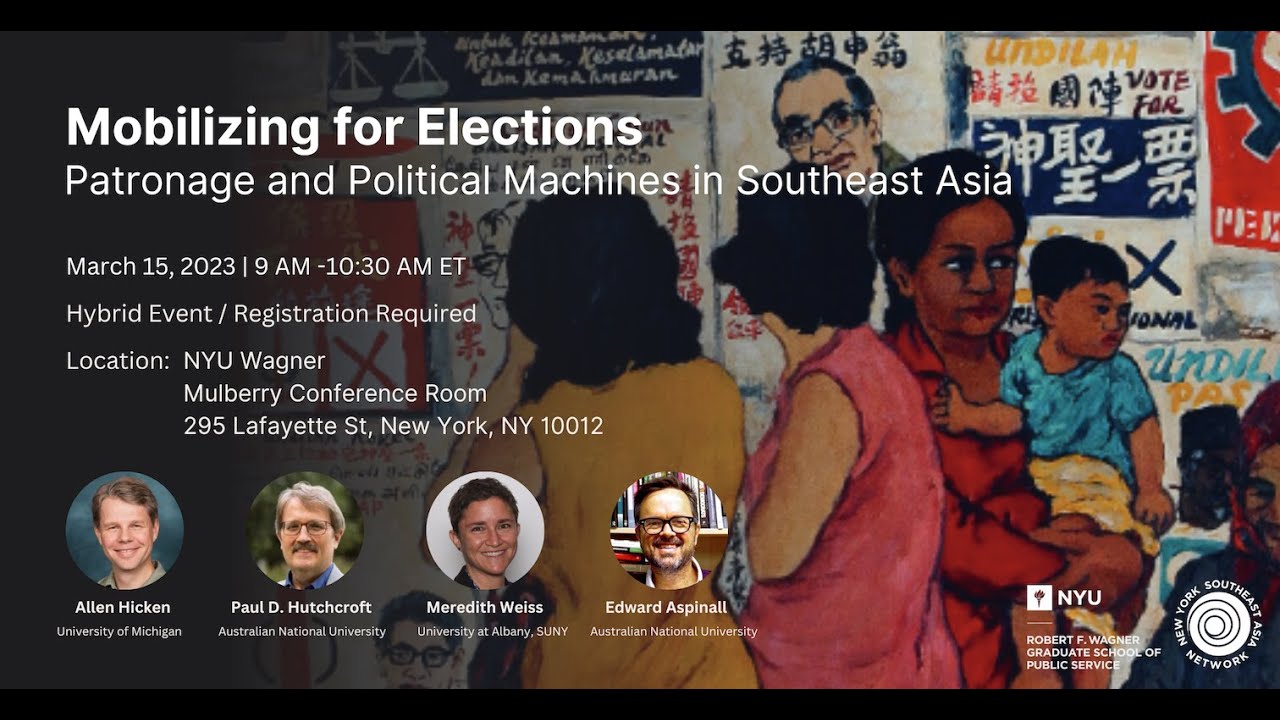
Patronage and Political Machines in Southeast Asian Elections
@NewYorkSoutheastAsiaNetwork
511 views•2023-04-05
Government Surveillance Methods: 10 Ways You May Be Watched
@BeAmazed
1.6M views•2017-04-09
Explaining the Saudi-Iranian Proxy Conflict in the Middle East
@Vox
18.2M views•2017-07-17
Related Study Plans & Knowledge Roadmaps
Structured learning paths in Political Science