








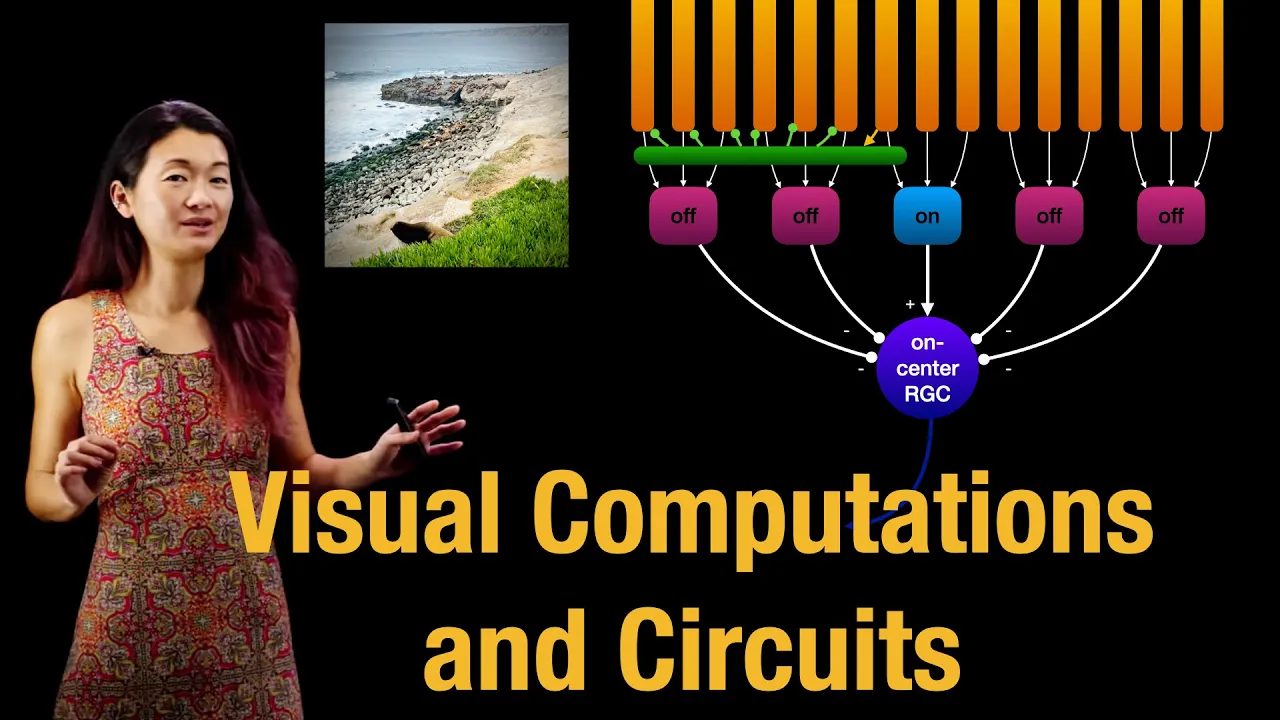









Horizontal cells in the retina create inhibitory connections between adjacent photoreceptors, establishing a center-surround receptive field pattern in retinal ganglion cells where the central region excites the cell while the surrounding area inhibits it, enabling contrast detection in vision.
Horizontal Cells and Retinal Ganglion Receptive Fields (Vision Series Part 3)
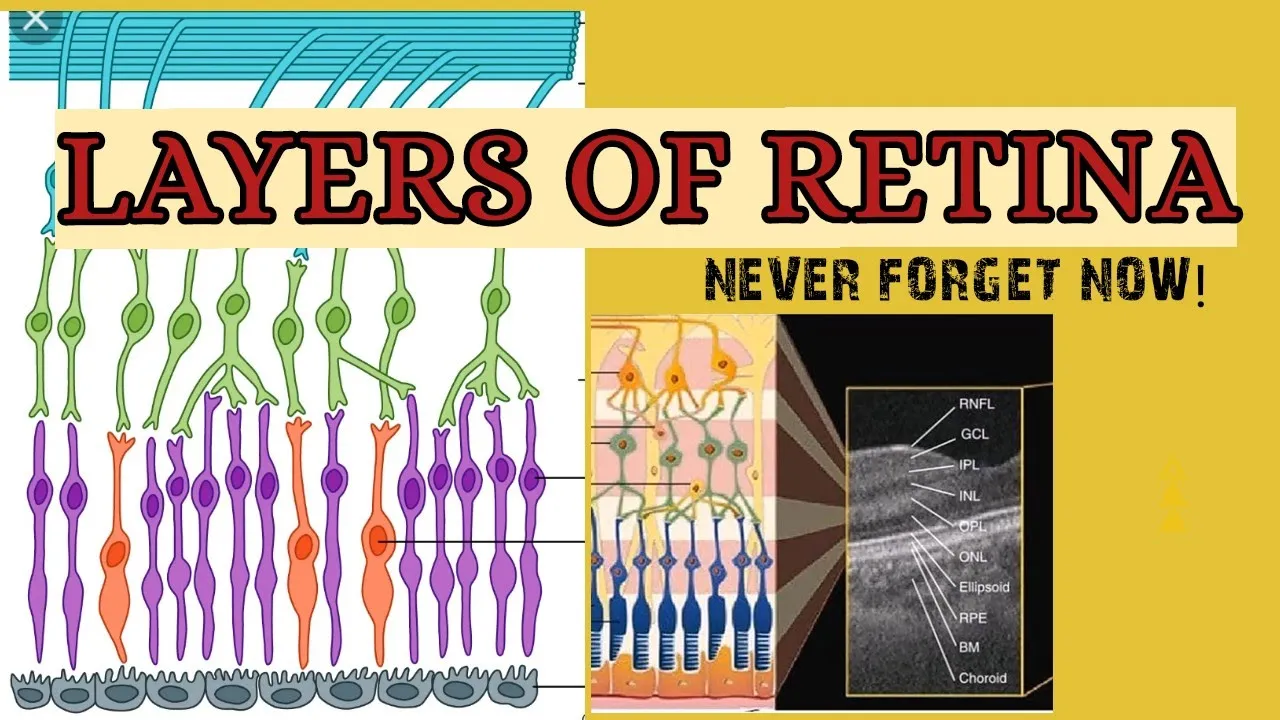
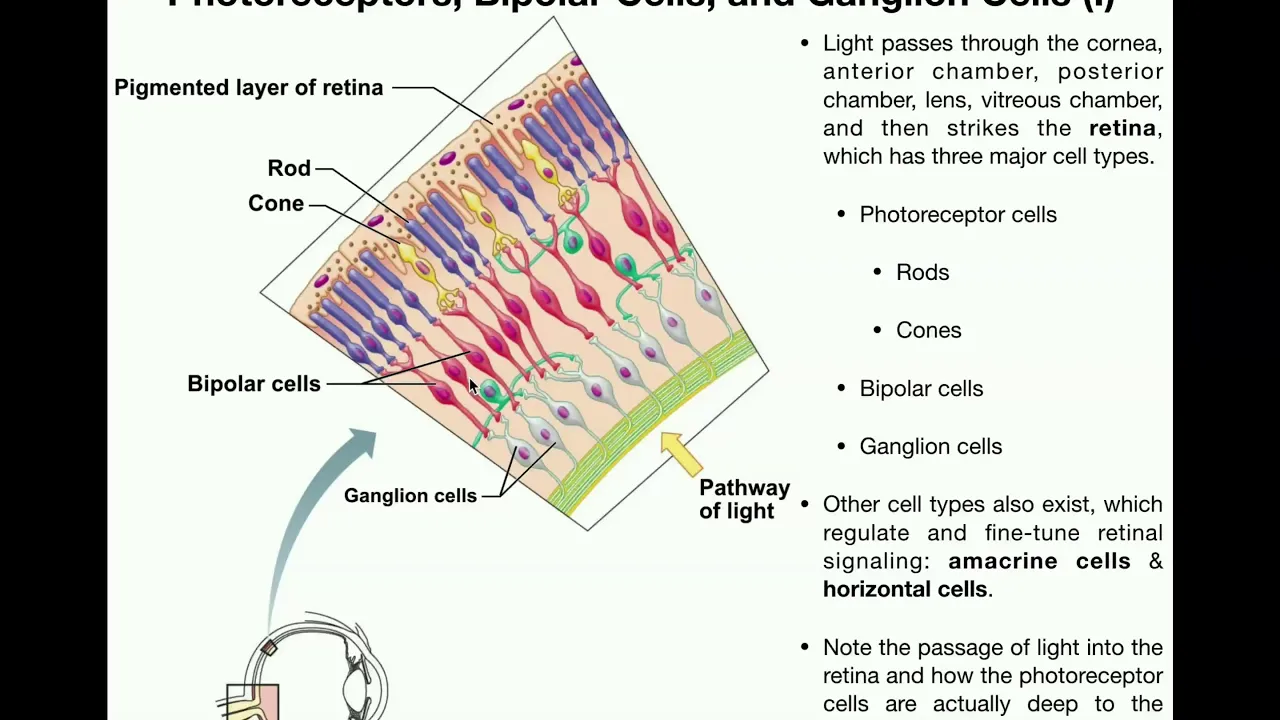
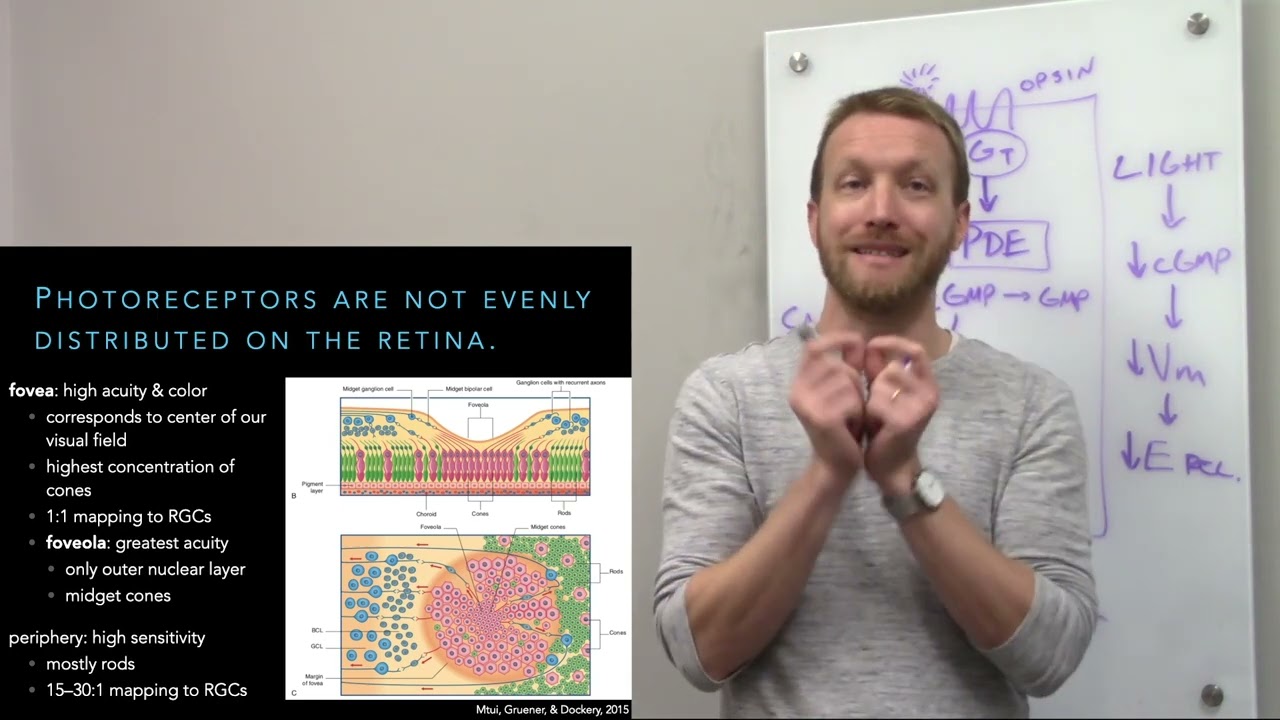
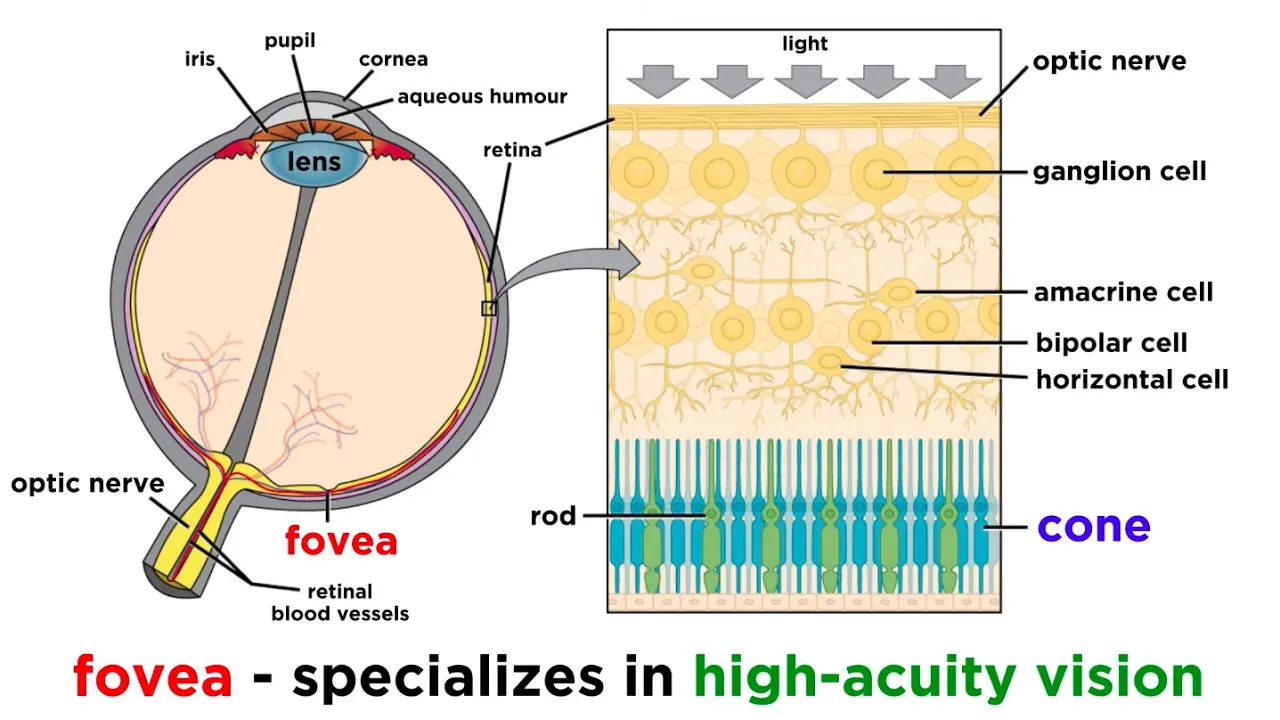
Added:Basic anatomy of the retina, specifically the layered organization of photoreceptors, bipolar cells, and retinal ganglion cells.
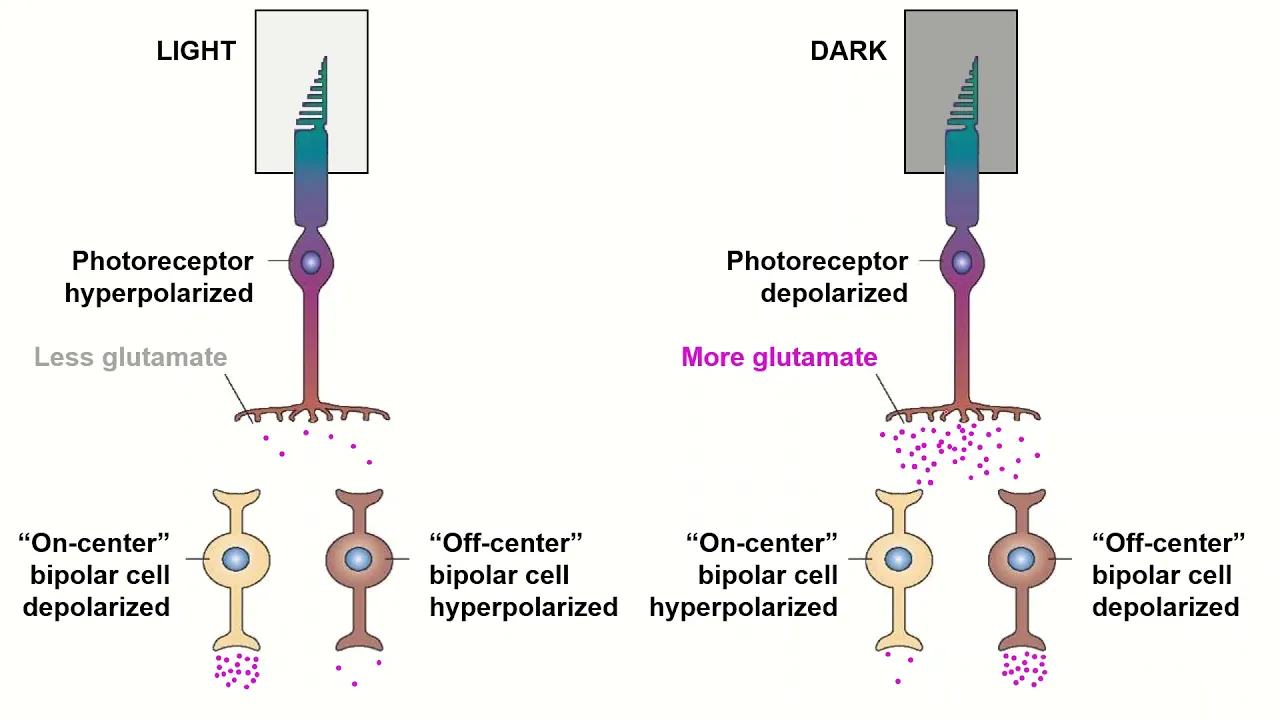
The mechanism of phototransduction, including how photoreceptors hyperpolarize in response to light and reduce their glutamate release.
The functional difference between ON-center and OFF-center bipolar cells, and their respective glutamate receptor types (mGluR6 vs. AMPA/Kainate).
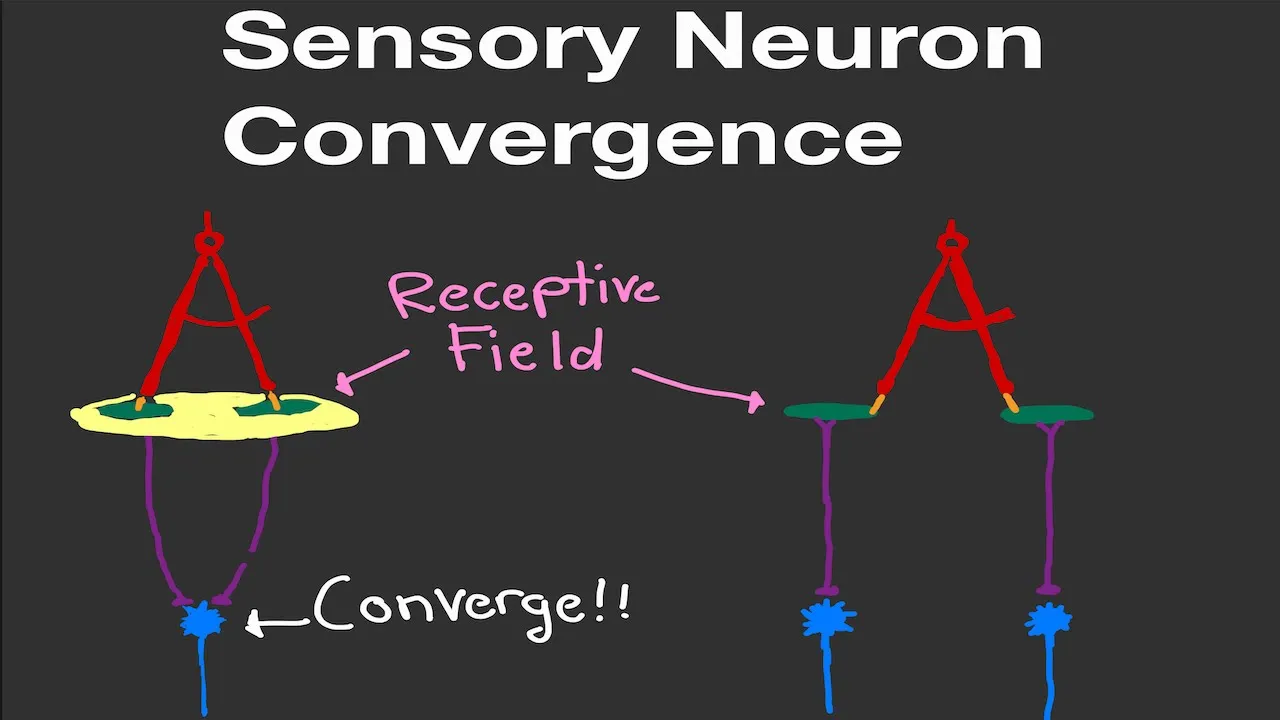
The general physiological definition of a sensory neuron's receptive field.
How center-surround antagonistic receptive fields underlie perceptual phenomena like lateral inhibition, Mach bands, and the Hermann grid illusion.
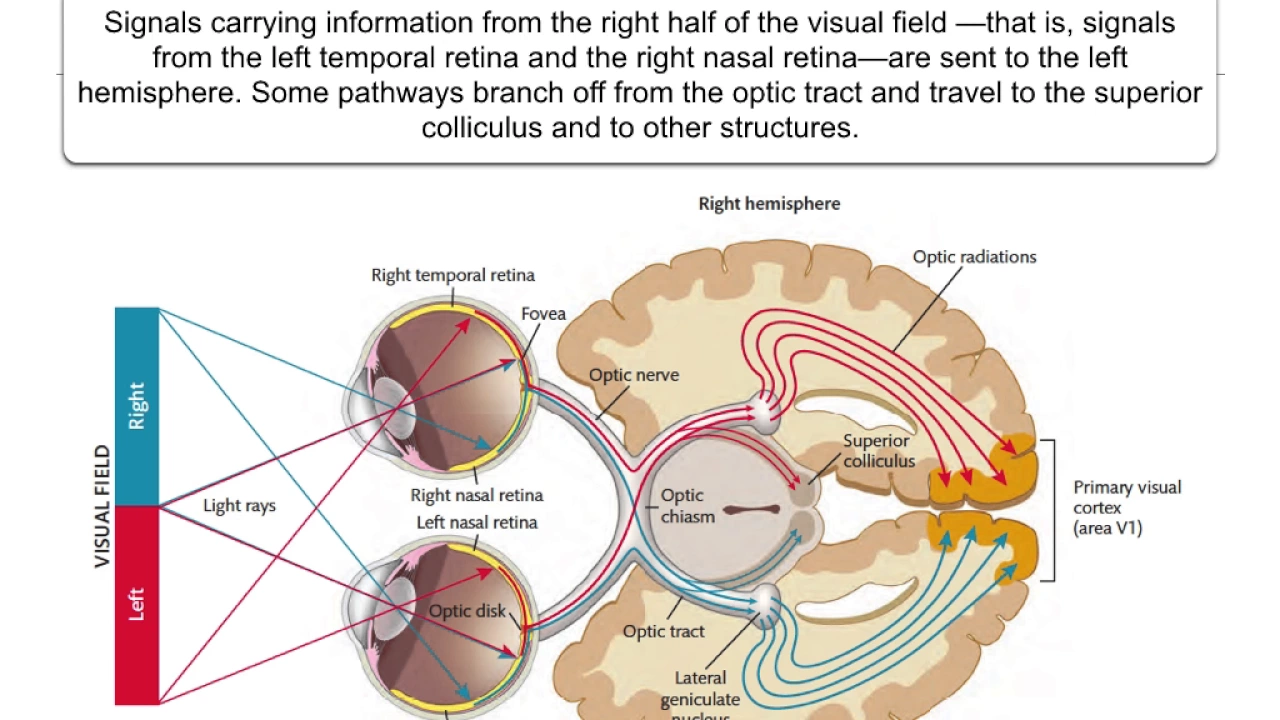
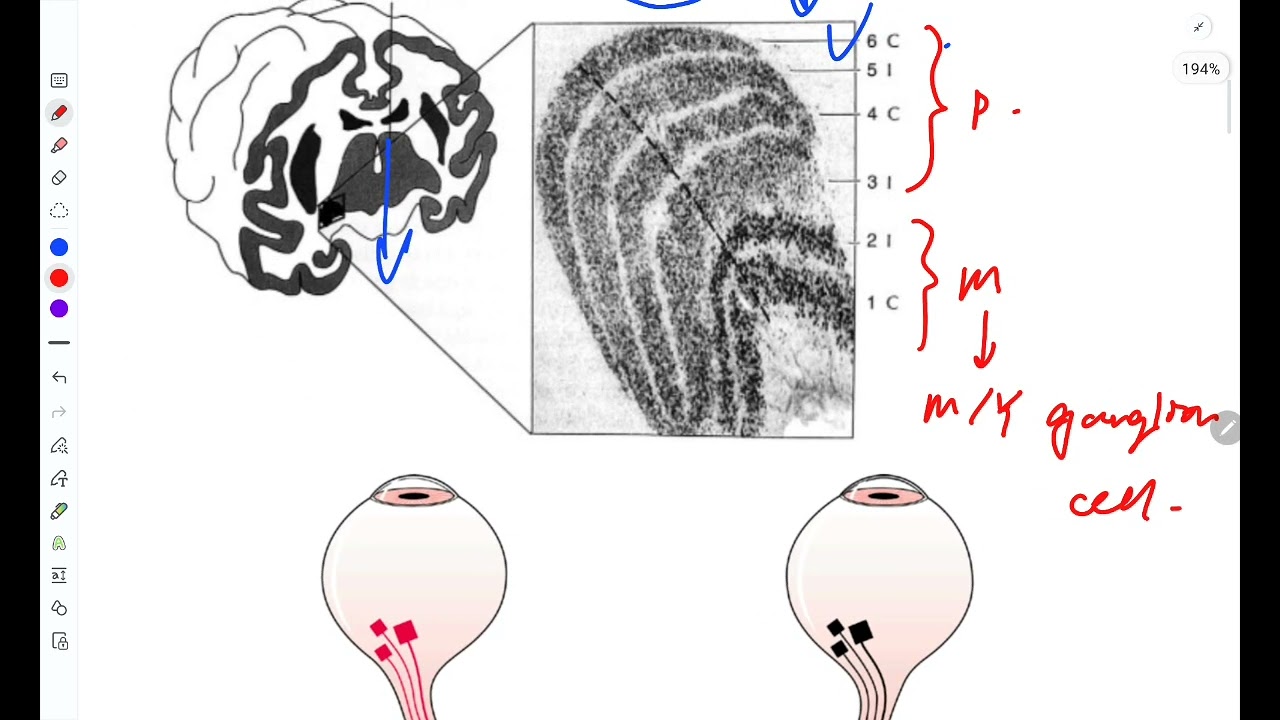
The projection of retinal ganglion cell axons through the optic nerve to the Lateral Geniculate Nucleus (LGN) of the thalamus.
How receptive fields of the LGN and primary visual cortex (V1) construct edge detection through the convergence of center-surround inputs (Hubel and Wiesel's classical models).
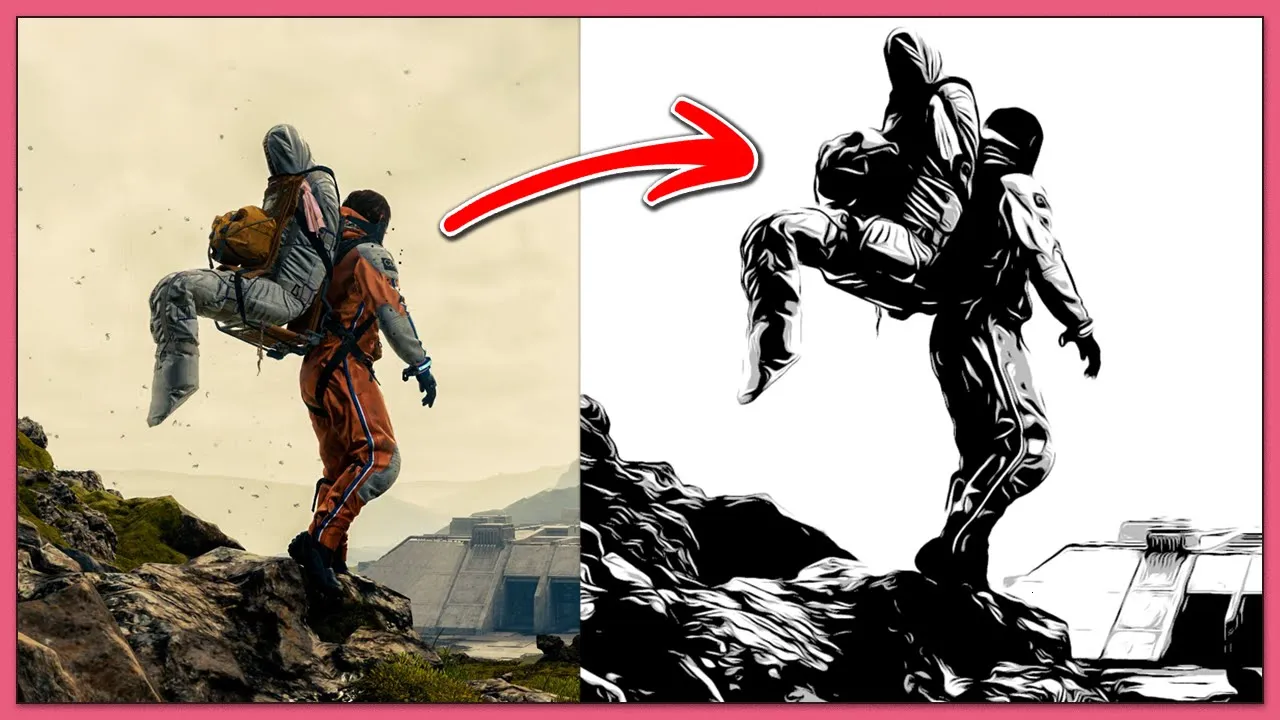
Application of center-surround mathematics, such as the Difference of Gaussians (DoG), in computer vision algorithms for image processing and edge detection.
81K views536likes7:06Original Release: 2011-08-01
in this video I'm going to talk about horizontal cells these are cells that are located within the retina first of all I'm going to draw out the circuitry and for this example I'm going to need two photo receptors so these are two cones now attached to a cone are two bipolar cells but for the purposes of this demonstration I'm only going to show one bipolar cell this is one of the on bipolar cells if you don't know what that means have a look at the video before this in this series now attached to a bipolar cell are these retinal Gangland cells and their processes form the optic nerve now in this demonstration I've also shown a second cone over here which is going going to be attached to the first cone via a horizontal cell which is the topic of this video let's look at the situation when this photo receptor is in the dark so I'll start off by writing out my rules again so remember that cells release neurotransmitter when depolarized and two that light hyperpolarizes photo receptors so let's apply these rules to this photo receptor if light hyperpolarizes photoreceptors then it follows that dark depolarizes photo receptors this means the cell gets more positive and that's what happens here and according to rule one cells release neurotransmitter when depolarized and this cell releases glutamate now glutamate is excitatory to horizontal cells and that gives us rule number three which is that photo receptors depolarize horizontal cells so if I draw out the voltage for this cell it's going to be depolarized and then according to rule number one this cell must then release neurotransmitter which it does here but this neurotransmitter is a neurotransmitter called Gaba that's G A and this is an inhibitory neurotransmitter which gives us rule number four which is that horizontal cells hyperpolarize photo receptors so let's see what happens to the photo receptor when gabber is released on it so let's look at the voltage over time when Gaba is released from the horizontal cell the cell is hyperpolarized like so but furthermore when light hits the photo receptor so the one to the left is in dark and the one on the right is in light then it will depolarize further which is rule number two so this cell is extra hyperpolarized so according to rule number one cells release neurotransmitter when depolarized this cell is hyperpolarized so it releases no neurotransmitter now an on bipolar cell will then become depolarized if no neurotransmitter is released so according to rule number one it will release its own neurotransmitter and if you're not following this have a look at the video previous to this one in the series so now the retinol gangan cell will be excited by the bipolar cell neurotransmitter and it will become depolarized so what this means is that if light hits the photo receptor associated with this gangion cell it will depolarize or turn this gangan cell on and if the photo receptors surrounding our primary photo receptor are in the dark it will turn this gangan cell on even more or depolarize it even more so we call these off because we prefer them to be in the dark or think about it as having the lights off and we call this Arrangement Center surround so this is a case for this gangan cell but it'll be different in different gangan cells and I don't have the time to go through each permutation here but see if you can figure it out for yourself just following these four rules
Up Next

75:14
Neuroscience of Vision: The Visual Pathway Explained
@Dr.ChrisThompson
3.6K views•2020-09-01
21:55
Deciphering Neural Circuits Controlling Anorexia in Mice | Richard Palmiter
@AllenInstitute
2.3K views•2011-10-10

4:10
Vagus Nerve (CN X): Anatomy, Nuclei & Functions Explained
@Alilamedicalmedia
305.2K views•2022-10-31

13:03
How Exercise Benefits Your Brain: Science Explained
@TED
11.4M views•2018-03-21
Related Study Plans & Knowledge Roadmaps
Structured learning paths in Neuroscience
neuroscience
Appetite Regulation: Brain Circuits & Hormones
01Foundations of Endocrinology and Brain Anatomy
02Introduction to Energy Homeostasis
03Peripheral Signals: Leptin, Ghrelin, and Insulin
+ 2 more learning modules
14h5 modules
Explore Roadmap
neuroscience
Neuroeconomics: Value, Risk & Brain Mechanisms
01Foundations of Neuroscience and Brain Anatomy
02Introduction to Neuroeconomics and Subjective Value
03Dopaminergic Prediction Errors & Reinforcement Learning
+ 3 more learning modules
18h6 modules
Explore Roadmap
neuroscience
Spatial Navigation: Cells, Grids & Brain Maps
01Foundations of Brain Anatomy and Memory
02Place Cells and Head-Direction Cells
03Grid Cells: The Brain's Coordinate System
+ 2 more learning modules
12h5 modules
Explore Roadmap
neuroscience
BCIs: Neural Decoding & Prosthetic Control
01Neuroscience Foundations: How the Brain Signals Intent
02Signal Acquisition: Recording the Brain's Activity
03Neural Decoding: Translating Brain Waves into Data
+ 2 more learning modules
25h5 modules
Explore Roadmap