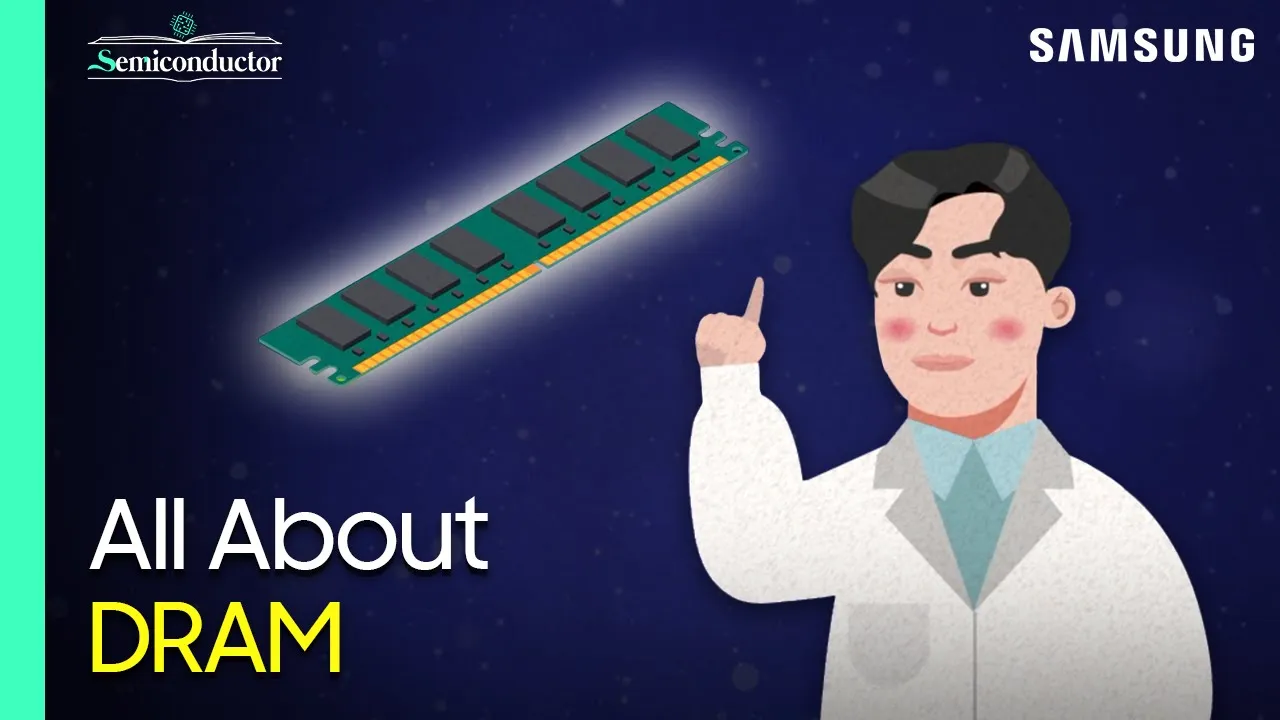














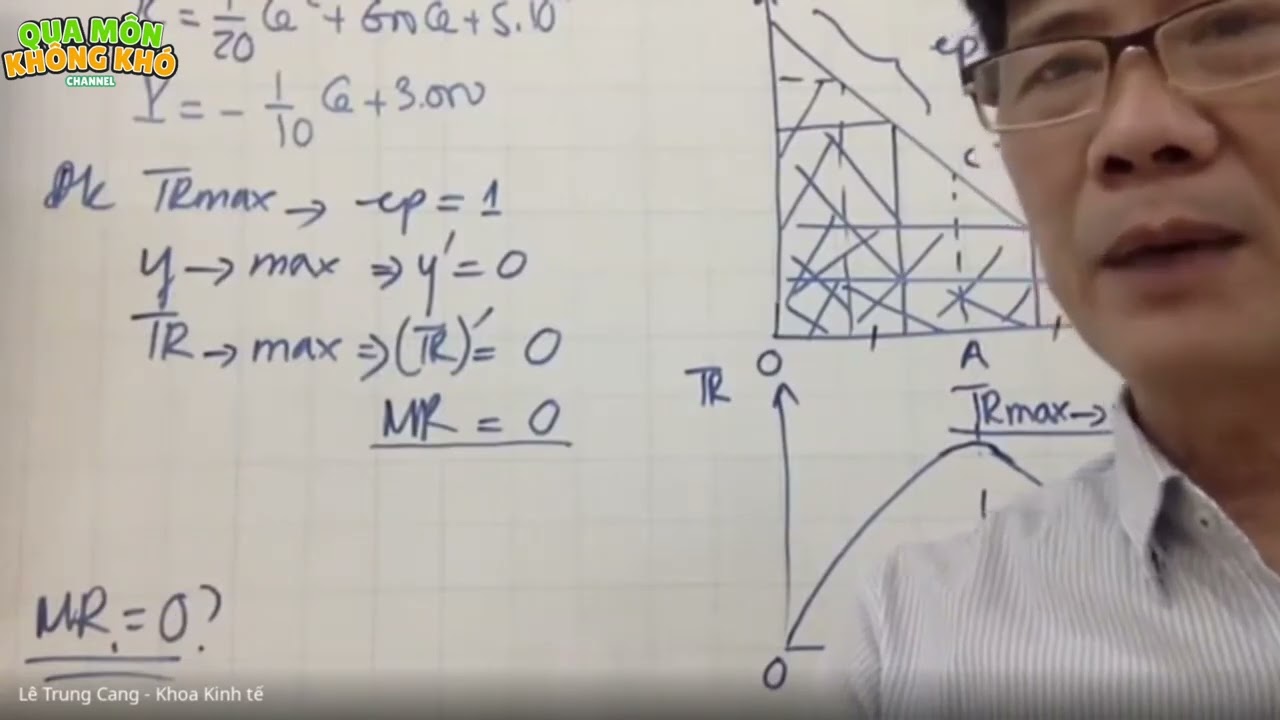
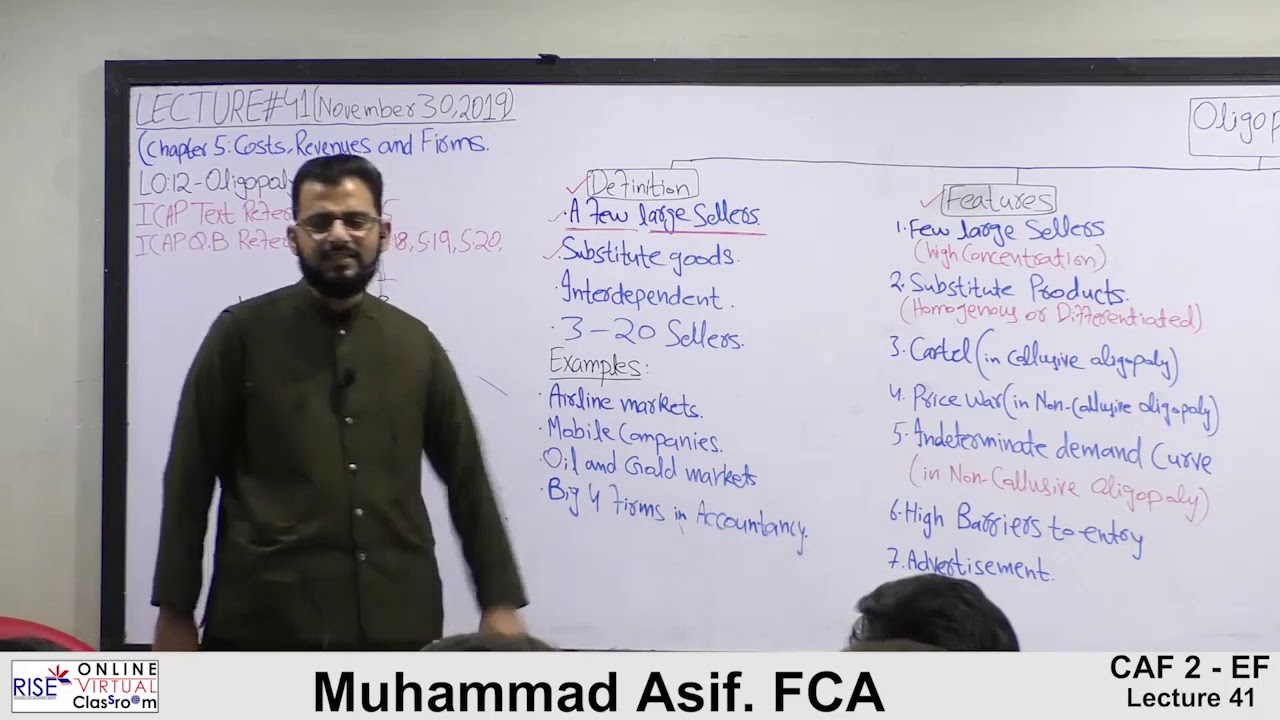
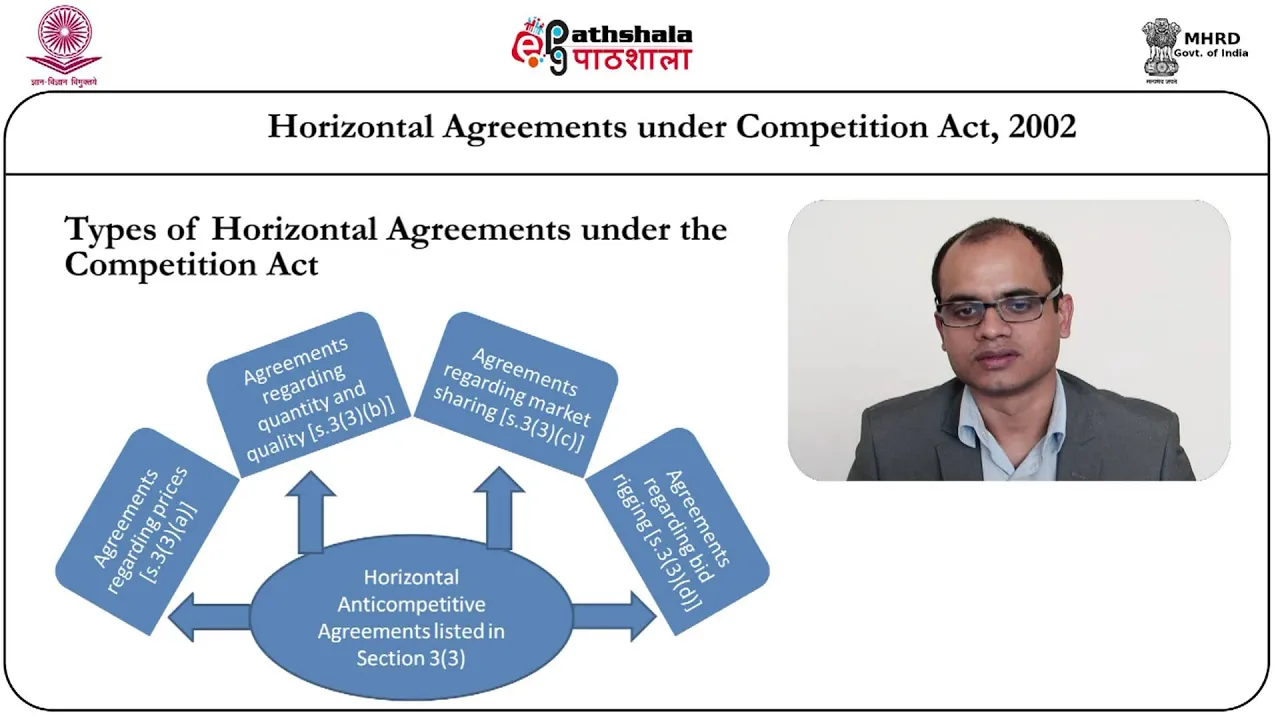












The DRAM cartel began in spring 1998 when SK Hynix proposed all manufacturers temporarily shut down production to stabilize prices. The proposal stated 'if the plan is to work, all DRAM makers must play fairly for the overall good of our industry.' Manufacturers began sharing prices, with SK Hynix and Toshiba exchanging OEM prices in April 1998, followed by Micron and Samsung discussing price floors on 64-megabit DRAM. Internal documents revealed psychological barriers to initiating price increases: 'nobody doesn't seem to want to initiate the price increase since they don't want to be criticized by their customers about their first move.' To overcome this, manufacturers developed price leadership strategies where one company would lead while others followed. When SK Hynix's operating profit fell from $513 billion in 1999 to $2 billion in 2000, other members saw opportunities to weaken competitors. Samsung initially defied guidelines, continuing to push for market share. In November 2001, after SK Hynix received a $7 billion bailout, Samsung rejoined. Once control was restored, manufacturers rigged Compact's online auction, driving 128-megabit chip prices from $1 to $4.40—a nearly 5x increase in eight months.
DRAM Cartel: History of Memory Price-Fixing Collusion Unveiled
Added:You couldn't finish off Heinx and now you guys don't have the courage to increase contract pricing. All in all, I'm not too impressed. So, if you don't mind, we will. Let's talk by phone. Tell me where and when and I'll look into it.
Give Lynn a raise. He has single-handedly raised the DRAM price throughout the US and the world. A rogue player can keep the DRAM business on thin ice. End quote. This is what the memory makers said when organizing competing manufacturers to intentionally and artificially constrict output to maintain elevated prices for consumers.
And thus they initiated what the DOJ eventually declared was quote one of the largest cartels ever discovered end quote.
Good afternoon. The detection and prosecution of criminal cartel offenses is the highest priority of the antirust division. We are committed to bringing to justice the international cartels that victimize American consumers and businesses.
Today, we are announcing a significant enforcement action in the division's fight against illegal cartels.
Samsung Electronics Company, a a Korean manufacturer of dynamic random access memory products or DRAMM products, and its US subsidiary, Samsung Semiconductor have agreed to plead guilty and to pay a $300 million fine for participating in an illegal price fixing cartel in the DRM market. There's no organic reason for prices to increase, wrote Alpa.
Micron said, quote, although there is some increase in demand, it's modest compared to the capacity throttling. End quote. In the cartel's first year from 1998 to 1999, Hyundai, Samsung, and Micron increased their collective share from 40% to 61%, signifying the first time the big three held majority power.
They used this position to screw consumers and elevate prices, increasing their profit margins.
>> Samsung and its co-conspirators fix the price of DRAM used in computers.
DRAM is the most commonly used semiconductor memory product and accounts for billions of dollars in US sales.
Samsung is the third semiconductor manufacturer to agree to plead guilty to fixing DRAM prices. Previously, Heinik Semiconductor plead guilty and paid uh and and was fined $185 million.
Infinian Technologies also plead guilty and was fined $160 million for their roles in the same price fixing conspiracy.
>> At least 15 manufacturers, basically the entire DRAM industry, participated in the price fixing conspiracy. Over 117 employees from the five largest manufacturers alone were involved.
several of whom remained employed after the cartel's discovery or were even promoted to powerful positions post cartel collapse. Although some ended up in jail, the Memory Maker cartel exchanged prices weekly, synchronized supply reductions at the same time as Highix was set to receive a $7 billion bailout to salvage its failing business, resulting in a bout of deja vu and anti-dumping tariffs. The cartel enforced coordinated price floors, rigged online auctions, artificially inflated prices, and then lied about why prices were inflated by pointing at falsified demand. They explicitly attempted to conceal conversations and even formed factions within the cartel to kill off weaker cartel members. Then it all came crashing down. Today we are charging that Samsung conspired with Heinex, Infinion, and other unnamed co-conspirators to fix the price of DRAM sold to certain computer and server manufacturers.
>> And if there's one thing history has taught us, it's that it repeats for the DRM industry. Despite happening over 20 years ago, the cartel's circular actions and collaborative competition to damage consumers has a lot of parallels to today. By conspiring to drive up the price of DRAM, Samsung and its co-conspirators forced consumers to pay more for these products. In fact, during certain periods of the conspiracy, Dell and Apple publicly announced that due to the increase in DRAM prices, they were forced to raise the price of their PC computer products to consumers.
Other computer manufacturers dealt with the increased prices by reducing the amount of DRAM products in their computers.
One manufacturer announced that the increase in DRAM prices caused it to offer computers for sale at the same price as previous models, but with less memory.
This case demonstrates the need for vigorous antirust enforcement in high technology markets, which is one of the most important sectors of the American economy.
>> That sounds vaguely familiar.
In this video, we'll look at the memory manufacturers of exotic locations for a history lesson coming from Taiwan, South Korea, Japan, and the most exotic of them all, Boise. All to understand the DRAM price fixing cartel that seems to pop up once a decade in a deep dive history of it. With this video, we're launching our brand new Wireframe V2 mouse mat, and we're sponsoring ourselves with it via store.gamersac.net.
This brand new Wireframe V2 mat features a wireframe city that Andrew on the team made in Blender, including roadways made of cables, tunnels made of water cooling tubes going to reservoir towers, a giant tower cooler heat sink as a central skyscraper, cooling fans looking like something you'd find on top of a surreptitious definitely legal XAI data center, and sticks of RAM serving as a bridge. Because, let's be honest, RAM costs about as much as our infrastructure, and the production of it is planned just as poorly. The wireframe mat has fine attention to detail, including the AMD CPU in the top left with wireframe outlines of two CCDs and an IO die. For the border, we use a custom selected blue stitching, plus a custom blue rubber underside that has proven difficult to get to our vibrance requirements over the years, but we've done it again with this one. And this video took well past 100 hours to put together just on the research and writing side alone. We're actually approaching 200 hours on it. So, we need your help to help fund this one and the next one. Head over to store.garwaxis.net to grab one of our brand new wireframe V2 mouse mats today and help fund the next of these videos. Thanks for your support. Back to the program. Memory today is dominated by three manufacturers. US-based Micron and South Korea based Samsung and SKHEX. Although China based manufacturer CXMT is making big gains right now as we detailed in our rise of Chinese memory documentary found on the channel. The dominance of the big three is, we think, largely thanks to their collusion decades ago that knocked out smaller competition.
The memory industry has existed for decades now. It wasn't always comprised of the enormous, highly automated fabrication plants consisting of machines worth billions of dollars per fab. In fact, some of the oldest memory was literally woven by hand. We even have a block of old core memory on our studio wall.
It was called rope memory.
>> You actually had to send the program to a factory and women in the factory would literally weave the software into this core rope memory.
>> The rope is made up of rings and wires.
And if the wire goes through the core, it represents a one. And around the core, it represents a zero.
It was extremely slow.
One program could take several months to weave, and if there was an error, it was a nightmare to correct.
What you just saw is a clip of the handwaving process of a giant piece of memory used in the Apollo missions.
Handwaving memory was a complicated process. But as time went on, a process that already seemed complicated. Using tooids of ferites to store literal bits of data became even more complicated.
Memory today requires facilities worth sometimes tens of billions of dollars to manufacture. The land area is enormous.
Ceiling mounted carrier pods whisk silicon wafers from point to point, helping move them from one multi-million dollar machine to another, minimizing machine downtime to maximize output and profit. But it wasn't always so complicated. A fabrication plant popped up in Boise, Idaho from Micron in 1980, preceding its IPO in 1984 at a share price of $14 versus $412 today.
Samsung developed 64 kilobit DRAM in 1983. Broke ground in Kihungu, Korea.
Moved to 256 kilabit DRAM by 1984 with its first fabrication line open.
rocketed to 1 megabit in 1986, quadrupled to 4 megabit by 1988, and set in motion what it is today. What would eventually become known as SKHX built its Fab 2A in 1984 and ran its pilot production line of 16K SRAMM. By 1985, the future SKHEX group had begun shipping 16K SRAMM and mass-producing 256K DRAM. Memory iterated quickly, eventually developing something else alongside technology.
greed and eventually a criminal operation. US-based Micron claimed in 1986 that Japanese manufacturers were dumping 64K DRAM or exporting 64K end channel metal oxide semiconductors at predatory pricing. Shortly after, Micron decided it was actually the South Korean companies who were dumping. Quote, "The US government ruled in favor of the Boise Company last week on its complaint that South Koreans were selling their chips in the United States at unfairly low prices," wrote the Lewiston Morning Tribune in 1993. Later, Micron argued that actually it was Taiwan dumping.
Quote, "Prices for chips began plummeting in September 1995 and have remained low ever since." End quote.
Wrote a follow-up piece. It seems that according to Micron, anyone who wasn't Micron wasn't playing fair. Then Taiwan got in on the action, claiming Micron was actually the one dumping. Quote, "Taiwan's Ministry of Finance is investigating dumping charges brought by the Taiwan Semiconductor Industry Association against US chip giant Micron Technology." End quote. They wrote in 1999 next to an advertisement for a case of 48 tins of mac and cheese for 12 bucks. Inflation hits hard. According to the memory makers, everybody dumps.
Normally, that's on the consumers. But in those first two decades, it was on each other.
The manufacturers were well on their way to a corruption scandal even back in 1983. But unlike today's cooperative competition, at least the constantly alleged dumping of underpriced chips during the prior 30 years benefited consumers. As described in the DRAM antitrust litigation's expert report of Roger G. null. One skinex email reported that Samsung quote pulled a sneaky by not raising its price to Dell. End quote.
>> Are we going sneaky beaky like >> no?
>> An email from competitor Infinion states, quote, I talked to deer from Samsung. Samsung will proceed to take market share and making life difficult for all weaker competitors. End quote.
An internal micron. Email read quote. I also think now is the time to do everything in our power to make it very difficult for Heinox to get that so badly needed cash. End quote. And when Micron and Samsung couldn't drive out smaller competition, the manufacturers just reunited to raise prices again with the report writing that a Micron VP quote assisted by Infinion and Highix put forth a major effort to end the price war. End quote. An email thread between Infinion and Samsung sales executives from that month read, "Infinion, you couldn't finish off Heinx and now you guys don't have the courage to increase contract pricing. All in all, I'm not too impressed. So, if you don't mind, we will." Samsung, let's talk by phone. Let me know where and when, and I will look into it." End quote. The same day, an employee from yet another memory manufacturer, Alpa, reported that Samsung intended to raise prices to Dell, signaling its return to the cartel. This sounds familiar in contemporary media.
>> My business, all of our businesses, this infighting's costing money. I'm willing to move forward. Let the past be by guns.
>> And it worked. During a successful period, one conversation from Alpa read, quote, "Give Lynn a raise. He has single-handedly raised the DRAM price throughout the US and the world."
Another quote, "Give a little credit to the boys in Soul, too." End quote.
Cluding against consumers to artificially raise prices isn't a bad end to January for the memory makers.
>> 45 50 60,000. It's >> going to be a good summer.
>> In fact, the collusion was so normalized that one manufacturer even bragged about the price fixing to Taipei Times, publicly stating, quote, "We're trying to encourage a price of $3 US. That's the consensus." end quote. With the Taipei Times reporting in its 2002 article that 128 megabit DRAM spot prices had nearly doubled in recent months, doubling some weak uplift by standards of today's 4 to 5x increase.
Mosul Vitalic Incorporated's president said, quote, "You don't need to have a meeting. You just need to have a phone call. Everybody knows each other. We just said try not to sell below $3." End quote. Another quote from the same article cites an asset management firm.
quote, "The likelihood of an OPEC style cartel in this business is limited." End quote. It's always reassuring to have your business compared to OPEC, which hasn't ever had controversies. Of course. Did you hear what I said? Don't buy anything. Don't get anything.
Nothing big. Did you hear what I said?
What's the matter with you? What are you getting excited for?
>> What am I getting excited about? Because you're going to get us all [ __ ] pinched. That's why. What are you, stupid? What's the matter with you?
>> I apologize. What's the matter with you?
>> Sorry. What the [ __ ] is the matter with you?
>> The DOJ's investigation commenced the following month, now June of 2002. But this was going to be an uphill battle for Washington. These are seasoned, secretive collaborators who know how to keep a low profile. Convicting SKH High wouldn't be easy. It's not like the company would just openly admit to breaking and remaking the rules. When the world sets limits, we break and remake the rules. Uh, >> okay. But it's not like they'd admit that they break the rules twice in one marketing video or state that they're rule breakers.
>> This is why we continue to break the rules by challenging the status quo and taking risks. We create a culture of innovation. We are rule breakers. We do technology. SKH.
>> Moving on. Fine. But convicting the other firms wouldn't prove easy, or it wouldn't have. Up until Micron applied for the DOJ's corporate leniency policy, turns out the Micron US government corruption isn't a new thing, and it actually goes way back. The DOJ granted Micron amnesty for ratting out its partners like a snitch before a federal grand jury ruled against them. The DOJ fined Samsung, SKH Highix, Infinidian, and Alpa a collective $731 million for price fixing between 1998 and 2002.
Writing, quote, "The $731 million in criminal fines is the second highest total obtained by the Department of Justice in a criminal antitrust investigation into a specific industry.
There were approximately $7.7 billion in DRAM sales in the United States alone in 2004." End quote. The ruling referenced the Sherman Antirust Act passed in 1890 stating the maximum penalty of three years in prison and a $350,000 fine for the individuals convicted. Six Samson staff, four Heinneck staff, one Alpa executive, and four Infinion staff were sentenced to a range of 4 to 14 months, some with leniency, and one Micron staffer was sentenced to house arrest.
In the DOJ's final DRAM investigation press release that we could find publicly archived, it stated, quote, "A third defendant charged in the October 2006 indictment, a Korean national and the vice president of sales and marketing for Samsung's memory division remains at large." End quote. We dug into this further and found absolutely zero additional information on the VP or any legal resolutions, but we wouldn't be surprised if the VP still works at Samsung under a different name. And so the original cooperative DRM empire fell.
But with the fall of the old order, there arose a new one. Besides, it's easier to keep a secret among three companies rather than 15. The foundation was set for Samsung, SKHEX, and Micron's current market dominance, achieving the secondary objective of killing smaller competitors. Luckily for them, rebuilding wouldn't be an issue because several participants remained employed.
In fact, Infinion's involved VP has since been promoted to an executive vice president and still works at the company as we write this. Samsung's associate director of marketing stayed until 2025 and became a corporate executive vice president. SK Heinix's SVP remained until 2025 as SVP. Micron's employees connected in some way to the falsified demand and price fixing scheme likewise gained promotions from sales to global accounts, global accounts to senior director. The EVP remained sales lead became an executive vice president as well. While not everyone on this list was convicted for price fixing conspiracy like Gary Swanson whose case ended in a mistrial, all of these individuals were alleged to have facilitated the price fixing in some fashion. But the DOJ could argue that people were held to account. For example, Samsung's son Woo Lee was sentenced to 7 to 8 months and fined $250,000.
A penalty that Samsung rewarded Lee for handsomely, namely by promoting him from his former senior sales manager position to CEO and president of Samsung Europe.
That's got to be some good ROI on a4 million fine. At that point, it's really more of an investment. These companies just needed to thin the herd. This chart represents the active big three at any point in time from 1994 until 2022.
Since 94, the largest three manufacturers collective market share has increased from 35% when three represented a seemingly fair one-third of the market to 95% in 2022. Back in the '90s, NEC, Samsung, Toshiba, and Hitachi had first mover advantage that deteriorated by 1999, giving away to Hyundai, later Heinix, Samsung, and Micron, collectively making up 61% of the DRM market. The big surge arrived moving into 1999, the same time the price fixing scandal really began to take off and just never ended. Despite what's marketed as punishment by the DOJ for the powerful companies, the fine is simply the cost of doing business. And for the executives, 7 months of prison was just time they could spend training to become, in one case, CEO. By 2022, the three largest companies accounted for 95% of the DRM market share. And each of the three happens to be survivors from the price fixing scandal.
Once again, proof that fines for the rich are just convenience fees to fasttrack success. To understand how the manufacturers got to 95%, we need to start from the inception of the DRAM industry, accented with a backdrop of manufacturers illegally dumping chips below cost and pushes for market share, the first cartel allegations, the US Japan trade war, and major consolidations. We'll start from the beginning.
One industry that was experiencing unprecedented growth during the 1950s was the vacuum tube business. Computers gobbled up vacuum tubes as fast as the manufacturers could turn them out. But the vacuum tube boom was about to come to an abrupt end. Thanks to a tiny electronic component that some have called the most important invention of the 20th century, the transistor.
>> Comments on project Apollo, the United States manned expedition to the moon.
I'm Bill Stout. An estimated $30 billion will be required to complete this controversial program before 1970. She also demonstrated further that Russian technology was equal, if not superior, to that of the United States.
direction is on God, John Glenn.
>> Roger. The clock is operating. We're underway.
>> Before DRAM, computers relied on magnetic core memory, which had two types: fite and metallic ribbon.
Modern data processing systems like these use thousands of magnetic cores.
These cores are small, rugged, and they consume less power than most of the other devices that are used in these systems.
You'll also find magnetic cores in automatic equipment employed for communication, fire control, cryptography, and high-speed computation.
What are magnetic cores?
They are tiny rings of nickel alloy or other magnetic materials.
They have replaced vacuum tubes for many important functions in data processing systems.
>> In 1962, the United States Army and Department of Defense published this 29minute part of a multi-part series explaining the properties of magnetic core memory.
>> Why do we use binary?
Because a bit can be represented by any bstable device and a magnetic core is a bstable device. The birectional magnetism made core memory possible. But ultimately this type of memory was too labor intensive to manufacture and had too many limitations. It was a stepping stone to something greater.
>> In 1967 while working on the development of field effect transistors, Dinard discovered a new kind of random access memory called dynamic or DRAM. It was a breakthrough that would in a few short years revolutionize the computer industry. We found that if we reduced all of the dimensions of this device simultaneously in all three dimensions that these much smaller transistors would really work. They would switch on and off cleanly just like the just like the bigger versions. And then we discovered there were several important advantages besides being much denser and therefore you know they should be very low cost that they would they would also operate faster in in directly in proportion to how small they became.
Dinard presented his scaling concept at the international electronic devices meeting along with goals of reducing the gate insulators of the MOSS transistors to 200 angstroms. In writing, he recalls the audience laughing mostly of the belief that sub 1,000 angstrom or 100 nanmters was impossible. Throughout the 70s, as DRAM replaced magnetic memory, Dinard and his colleagues at IBM continued looking for ways to make computers smaller, denser, and cheaper.
Despite being met with laughs at the conference, not everyone was so quick to dismiss the idea.
California State University and colleges soon will be equipped with a new instructional timesharing mini computer, a digital PDP 1145 running the Rristus E operating system. Notice the device over there with the blinking lights and all the colored switches. That's the central processor unit. That device has all the memory and is the unit that actually does your programs. You cannot have enormous arrays to be inverted in real time, at least not in memory. If you do want to have very large arrays, you'll want to check out the virtual array facility, which allows you to have virtually unlimited memory, but it's kept out on disc. And needless to say, it's very slow. In 1968, Intel was founded as NM Electronics, and it was the first major adopter, successfully launching its 1 kilobit or 1K DRM chip in 1970. The original 1K DRAM of the 70s doubled in size about every 18 months to arrive at today's 16 megbit chips. The advantage of dynamic RAM was its lowcost and large size. By 1972, Intel claims its 1K DRAM had become the bestselling semiconductor memory in the world. The apparent demand for memory attracted other US manufacturers like Texas Instruments, Most, Motorola, and even AMD. By 1975, United States firms comprised at least 88% of the 4K memory market as published by the Institute of Electrical Electronics Engineers or ILE E. Meanwhile, the DRAM industry also attracted its first foreign competitors.
This is Tokyo.
With a population of over 10 million, this is the world's largest, most densely crowded, most rapidly growing city. It is the capital of Japan. Year after year, the Japanese have been able to put more than a quarter of their national income into new investment, into new plants, creating new jobs, new products.
Not only have the Japanese learned to produce highly advanced type goods, but equally important, they have proved their ability to sell on fiercely competitive world markets, successfully competing with the most highly developed nations. Heavy industry was in ruins at the end of the Second World War. Now completely rebuilt, new factories, new equipment, new technology have helped Japan underell and outproduce other countries which often suffer from antiquated plants and methods. Japanese firms quietly entered the DRAM industry but lagged behind the US manufacturers head start. As reported by MIT, to close the technological gap, Fujitsu, Hitachi, Mitsubishi, NEC, and Toshiba formed the VLSI, Technology Research Association, a nationally funded R&D group that specialized in manufacturing. The MIT research paper explains, quote, for this purpose, approximately 70 billion yen or 288 million US was spent over the four years beginning in fiscal 1976. And that's the currency conversion for the time, not adjusted for today. By 1979, a study prepared for Congress's Joint Economic Committee noted Japan had captured 40% already of the 16K market.
There's a lot of Japan in the United States. Certainly quite a bit of it here in San Francisco. Lots of Japanese products, of course, too. But one Japanese export which has not been very successful here has been the Japanese computer. Why? What have been the problems? We'll find out the answers to these questions as we take a look at Japanese computers on this edition of the Computer Chronicles.
Among the new portables, Fujitsu showed a 16-bit machine with a 25 line by 80 column screen. It comes with 128K of random access memory expandable to 448K.
In 1981, Micron claimed it produced the first 64K DRAM, but by 1982, the New York Times reported that quote the Japanese companies hold about 70% of the market, according to DataQuest Incorporated. End quote. But yields were a problem. The New York Times noted, quote, Texas Instruments first tried to produce the 64K chips at its plant in Lach, Texas. According to industry executives and others, the rejection rate at the Lach plant was too high.
Consequently, much of Texas Instruments's production of 64K chips was transferred to Miho, where the results have been marketkedly improved.
And so Japan took over the 80s led by Hitachi, NEC, and Toshiba for 64K, 256K, and 1 megabit DRAM.
>> The Japanese have certainly come a long way in the last decade. Uh 10 years ago, they were not a significant factor in the integrated circuit business. And today, we could consider them a very worthy competitor, especially in the memory area.
uh the Japanese I think it's well known that they have excellent manufacturing capability and they also have excellent capital formation which gives them a significant competitive edge over our industry in the United States. uh the response at least from adv advanced micro devices and I believe it's characteristic of the industry is to be very innovative in the products that we build so that uh we expect that the new products that we introduce will allow us to maintain profitability in our industry.
>> The New York Times revealed that Texas Instruments had to close plants after its $516 million operating profit in 1984 fell to negative61 million in the following year. Intel ended DRAM production, turning towards microprocessors instead. Intel's 1985 post wrote, quote, "With 256K DRAMs now selling at less than $3, it seems unlikely that we would attain an acceptable level of profitability in higher density products." End quote.
Intel wrote to employees in 85 that quote, "DRAM represented less than 5% of Intel's business this year." End quote.
As for another US company, Boise based Micron was busy accusing the Japanese manufacturers of dumping 64k DRAM or selling chips below what it would cost the manufacturer to make them in pushes for market share. In other words, Micron couldn't compete on price and so it filled petitions to bring government level oversight instead, just like we've seen with CXMT. According to the New York Times archive of a 1985 newspaper article, trade specialists claimed the Japanese firms lowered prices between 30 to 35 cents per chip despite costing between 60 and 75 cents to produce. A few months later, US companies Intel and AMD accused Japanese suppliers of dumping EPROMs or erasable programmable readonly memory chips. In addition to the other claims, Intel CEO Andy Grove reportedly sent a fiddle to Richard Darman of the Reagan administration, suggesting he was quote fiddling while the industry burned end quote via the LA Times. Now, January 1986, the US Commerce Department determined there was a quote reasonable indication that an industry in the United States is materially injured or threatened with material injury by reason of imports from Japan of dynamic random access memory semiconductors. having a memory capacity of 256 kilobits and above. End quote. And tariffs discussion began.
History repeats. In response, President Reagan announced the 1986 semiconductor trade agreement in which Japan agreed to limit its semiconductor exports, primarily DRAM, and shared 20% of Japan's market with foreign producers.
Of course, anybody could guess what happened next. Japan suddenly limiting production caused a severe supply shortage resulting in memory chips doubling and tripling in prices according to the New York Times right after Intel exit DRAM due to unprofitability. So Intel's actions for 40 years have signaled the bottom. SGI the graphics maker commented at the time quote the exact opposite of what they intended is happening. The profits the Japanese are making on the shortage are tremendous and I'm sure they're plowing it right back into research. End quote.
So it seems that then as now the government stepped into something halfcocked and had the opposite impact to the objective. By 1986, Texas Instruments and Micron were the only American suppliers left and Western media claimed Japanese producers acted as a cartel to drive remaining firms out. After the US claimed Japan failed to open its home market, President Reagan imposed 100% tariffs on $300 million worth of Japanese goods, increasing the cost to bring goods into the US in the form of attacks on American companies importing them.
>> As perhaps you've heard last week, I placed new duties on some Japanese products in response to Japan's inability to enforce their trade agreement with us on electronic devices called semiconductors. Interestingly, Reagan acknowledged that tariffs are damaging to Americans, something we've seen over the past year.
>> Now, imposing such tariffs or trade barriers and restrictions of any kind are steps that I am loathed to take. And in a moment, I'll mention the sound economic reasons for this, that over the long run, such trade barriers hurt every American worker and consumer.
>> And Reagan defended his reasoning with this.
>> But the Japanese semiconductors were a special case. We had clear evidence that Japanese companies were engaging in unfair trade practices. But you know, in imposing these tariffs, we were just trying to deal with a particular problem, not begin a trade war. So next week, I'll be giving Prime Minister Nakasoni this same message. We want to continue to work cooperatively on trade problems and want very much to lift these trade restrictions as soon as evidence permits. We want to do this because we feel both Japan and the United States have an obligation to promote the prosperity and economic development that only free trade can bring.
>> As perhaps an interesting counterpoint to the past year's chaotic tariffs actions, Reagan overall seemed reluctant to keep these in place.
>> Indeed, throughout the world, there's a growing realization that the way to prosperity for all nations is rejecting protectionist legislation and promoting fair and free competition. Now, there are sound historical reasons for this.
For those of us who lived through the Great Depression, the memory of the suffering it caused is deep and searing.
And today, many economic analysts and historians argue that high tariff legislation passed back in that period called the Smoot Holly tariff greatly deepened the depression and prevented economic recovery. You see, at first when someone says, "Let's impose tariffs on foreign imports," it looks like they're doing the patriotic thing by protecting American products and jobs.
And sometimes for a short while, it works. But only for a short time. What eventually occurs is first homegrown industries start relying on government protection in the form of high tariffs.
They stop competing and stop making the innovative management and technological changes they need to succeed in world markets. And then while all this is going on, something even worse occurs.
High tariffs inevitably lead to retaliation by foreign countries and the triggering of fierce trade wars. The result is more and more tariffs, higher and higher trade barriers, and less and less competition. So soon, because of the prices made artificially high by tariffs that subsidize inefficiency and poor management, people stop buying.
Then the worst happens. Markets shrink and collapse. Businesses and industries shut down and millions of people lose their jobs. Japan wasn't the only country with a competitive memory industry, though. South Korean suppliers joined the race next. An MIT research paper claims Samsung LG at the time Lucky Gold Star and SKH Heinix at the time Hyundai quote invested 1.2 billion dollars to enter the DRAM industry in 1984 to 1985 end quote. Stories of the time also bear resemblance to today.
Quote shortage of memory chips hurting video game makers end quote. Read a headline from LA Times on May 26th, 1988. Quote, Nintendo of America has thinned out its game library. Sega of America has delayed introduction of some new video games, noting companies nervously watching a seemingly unlikely barometer, the availability of key computer memory chips. End quote. The publication noted SRAMM shortages as impacting game makers, but also noted DRAM shortages impacting the computer industry. With shortages as the backdrop and Korean companies on the rise, Japan's lost decade began to dawn.
On the 29th of December 1989, the Nikki, Japan's primary stock index, closed at a record high of 38,915.
After accounting for inflation, it would never again reach this level. At this time, Japan was quickly becoming the preeeminent economic force in the world.
Its highly innovative companies were churning out world-class technology.
Investors were doubling or even tripling their money every other year. And all of this was creating some of the highest incomes anywhere on the planet. But even during these good times, there were problems bubbling away under the surface. How many works recap of Japan's last decade talks about the economics all deeply integrated with the trade war Reagan said he wanted to avoid. Now 1995, the New York Times citing DataQuest reported that the semiconductor market grew by 40% largely driven by PC demand amidst the post hawknamed.com era. The article noted, quote, "Asian suppliers outside of Japan showed the strongest growth last year, increasing the revenue to $18.7 billion in '95 from $9.8 billion in 94" end quote, representing around a 90% year-over-year increase for South Korean manufacturers. Then in 1996 and under President Bill Clinton, after decades of trade conflicts, the US and Japan reached a mutual agreement to support the global semiconductor trade.
>> Frankly, I'm elated that we got a semiconductor agreement. That is a very, very big issue and very important for us because of the enormous comeback American industries had in that area.
>> Clinton also had a hand in reaching automotive manufacturing agreements with Japan in the same year. The explosive growth of9s economy led to technological innovations that built the early gaming industry as well. Many of our viewers might fondly remember the '9s and early 2000s through at least 2003 as a golden era of the internet and gaming before companies figured out how to minmax it all.
This week on the Computer Chronicles, new generation PCs. It's time to rethink what a personal computer should be. Is the old typewriter metaphor a thing of the past? Today, we'll look at several innovative approaches to the PC of the future. We'll show you transphone, part telephone, part PC, plus a sneak preview of the new lowcost internet computer from Oracle. Now, there's this strange green monster over here from Alienware.
Is this just like cool style, Gordon? If you want this to be >> Well, I think for the Alienware and also for the Falcon PE gamers are hardcore PC people. They want they want people to know that they have pride in their ride.
They don't want a Ford Taurus beige box.
They want, you know, a Dodge Viper.
>> It's got to stand out.
>> It's got to stand out. You bring that to a party, a land party, which a lot of game people do, and people are going to give you some love.
>> Well said, Gordon. This booming time for electronics also stimulated fraudulent activity in the industry. Still 1996, the FTC prosecuted Synchronous Soft Corp, the company behind the widely memed downloadable RAM, also known as soft RAM, charged for software misrepresentation. You might not download RAM, but Soft RAM claimed it could double it. This scam came at a time of a supply squeeze for memory and elevated prices, opening the door for opportunity. DRAM became a marketing point in a September 1996 PC magazine article. We have a Micron advertisement boasts quote now you get twice the memory in selected systems and quote highlighting 16 megabyte and 64 megabyte solutions. Now 1997 the US international trade commission determined quote that there is a reasonable indication that an industry in the United States is materially injured by reason of imports from the Republic of Korea and Taiwan of static random access memory. End quote.
In 1998, 12 NEC employees were arrested for overcharging the Japan Defense Agency on equipment contracts and illegally reducing the refund paid to the agency's central procurement office.
The write-up notes the quote collapse of the bubble economy end quote. The industry also underwent an extreme consolidation of manufacturers around this time.
>> A small computer chip is causing Texas Instruments to offer a voluntary retirement plan to 5,300 workers nationwide. The culprit DRAMs a memory chip that's being sold by more and more companies.
>> They are interchangeable in most systems. They are very much a uh driven by a supply and demand situation and that's why we've seen the the kinds of price decreases over the last year.
>> A 17% drop in thirdarter earnings is causing the company to offer early retirement. It's leaving many employees with a tough choice to make. From 1996 to 2003, we started to see the results of what would eventually become known as the price fixing scheme. Motorola, Matsushita, IBM, Oki, Fujitsu, and several other smaller firms abandoned the market. Texas Instruments discontinued its joint venture with Hitachi and formed Twinar. Micron acquired Toshiba's US operation and Texas Instruments memory business.
Seaman spun out its semiconductor business to Infinion. Hyundai acquired LG Semicon before restructuring to Hinx.
Hitachi and NEC spun out their DRAM business and formed Alpa. Mitsubishi transferred its semiconductor business to Renaissance, a joint venture with Hitachi. This amounted to a 40% reduction in DRAM manufacturers worldwide as noted in the DRAM antirust litigation's third amended federal complaint. Now, April 2002, with the grand jury investigation into price fixing to begin in June the same year, Michael Dell reportedly accused the DRM suppliers of quote cartel-like behavior end quote. And the Wall Street Journal's 2004 retrospective article on the events notes that Dell's comments triggered federal attention, noting a quote, sharp acrosstheboard spike in memory prices, reversing a two-year decline. End quote.
The following month, Taiwanese manufacturer Mosul Vitalik told the Taipei Times what we said earlier.
Quote, "We're trying to encourage a price of $3. That's the consensus. You don't need to have a meeting. You just need to have a phone call. Everybody knows each other. We just said try not to sell below $3." End quote. One month later, the DOJ began its investigation on the DRAM industry, bringing us to the price fixing cartel period from 1998 to 2002.
We'll start with the players. The biggest memory purchasers were PC OEMs like Dell, Apple, IBM, Gateway, Compact, and so on. Naturally, they purchased a DRAM from the largest manufacturers, namely Samsung, Highinx, Micron, and Infinion, whom the court documents note, quote, controlled roughly 70% of the market, end quote. The additional 30% was composed of at least 10 other cartel co-conspirators whom the DOJ apparently didn't consider big enough fish to fry.
Although to be fair, neither did Samsung, SKHEX, nor Micron in the long run. Micron was the only manufacturer directly selling to consumers back when Micron still sold to consumers. That is ads of the time mentioned that quote buying direct is crucial end quote offering a 100% guarantee of compatibility alongside a promise of lower prices. According to the filings, the suppliers typically sent OEMs an initial price proposal, either bi-weekly or monthly. These provided a baseline for the negotiations that occur in person, on the phone, or over email.
Before the cartel, the OEMs were the ones who held the negotiating power. The New York Attorney General's office wrote, quote, "Until approximately 1998, when the conspiracy began, density adjusted prices for DRM generally declined over time. An important reason for this was that while DAM are complex and costly to manufacture, the chips do not differ significantly regardless of who manufactures them. As a consequence, DRM chips tend to be substitutable one for another, what economists call a commodity product. End quote. And they also wrote, quote, "As DRM technology improved, manufacturers of computers and other electronic devices were able to cut the cost and improve the quality of their own products, effectively passing these improvements in DRAM price and performance along to consumers." End quote. And of course, we can't have good things for consumers. All of this is true to today. Memory is not significantly different between brands, and it is a commodity. OEMs quote could and did threaten to shift business away from a particular DRAM manufacturer that it believed was pricing too aggressively end quote. Also noted by the state of New York, the manufacturer sought to reverse this dynamic in 1998 and take the power away from the OEMs. It achieved this through constant communication amongst competitors. In other words, the competitors colluded rather than competing, enabling artificially elevated margins and higher prices for their customers. The first level of discussion was among the account managers of any given OEM. For example, SKH's IBM sales manager would talk to the IBM sales managers at Micron, Samsung, and so on before any of them submitted their price proposals.
This occurred for every major OEM. The second type of communication occurred in the seauite where the lieutenants discussed longerterm supply and pricing objectives before authorizing their soldiers to enforce them. The conspiracy began in spring of 1998 after an SKHEX VP submitted that all manufacturers temporarily shut down production to stabilize prices. The proposal read, quote, "If the plan is to work, all DRM makers must play fairly for the overall good of our industry. A rogue player can keep the DRM business on thin ice." End quote. Drama makers collaboratively chose not to expand production and in fact stopped it in order to maintain high prices. The manufacturers began sharing prices shortly thereafter. The earliest price exchange we found dates back to 1998 in April when SKHEX and Toshiba shared average OEM prices with each other. Micron and Samsung joined the conspiracy next discussing plans to place a price floor on 64 megabit DRAM that same month. By September they were all joining in. Infinion, Fujitsu, Hitachi, LG, Mitsubishi, NEC, Oki, and Texas Instruments had all exchanged pricing information with more members joining in the years to come. Once united, the manufacturers's attention turned toward initiating price increases. An internal SKHENX document translated to English explained, quote, "Most suppliers consent to the fundamental idea that price might have to be increased because the price difference is too big from the spot price and assert that they will increase the price when exchanging information among competitors. However, nobody doesn't seem to want to initiate the price increase since they don't want to be criticized by their customers about their first move." End quote. Similarly, SKH Heinix's IBM account manager told his superiors, quote, "I talked to IBM about the potential that we might want to raise prices to the $38 level. This was received poorly. IBM told me we would be alone and they would be forced to cut our share." IBM does not expect their biggest and favorite supplier to lead the price up." End quote. The superior again at SKHix then spoke to a Samsung director before responding.
quote, "Before you submit our final price, as you suggested for the first part of April, please have a lastminute conversation with Samsung." They are saying that they will go with $38. If you can have Samsung lead the charge, you will follow Samsung's leadership."
End quote. With Heinex allowing Samsung to initiate the price increases, other manufacturers were able to claim that they were simply following the leader to hide behind them, a common market tactic. After enacting the first raises, the manufacturers committed to each other about future prices, too. thus beginning the cycle. And it'd be a hard one to break since even one detractor could be a risk for them all. Even the employees responsible for spot market sales engaged in the fraud. OEMs don't purchase from the spot market, but they could use lower spot prices as a negotiation tool for contract prices, so manufacturers artificially inflated those as well. Meanwhile, a year into the collusion, the US and Japan announced their mutual cooperation in antirust investigations. I'm very pleased that we have reached agreement under which Japan will take steps to deregulate and open its medical device, pharmaceutical, telecommunications, housing, and energy sectors, as well as agreements to enhance antirust cooperation between our countries and make it easier for foreign companies to invest in Japan.
>> Then SKHEX's operating profit suddenly sank. He fell from $513 billion of operating profit in 1999 to1.2 $2 billion in 2000 as described in the expert report of Roger Null. This precipitous drop allowed the first cracks in the foundation to show. Like the mob, other cartel members saw the fall of a boss as an opportunity to drive the company out of business in early 2001. Court documents read, quote, "One purpose of the price cuts was to kill." End quote. In March, a report from Micron stated, quote, I also think now is the time to do everything in our power to make it very difficult for Heinox to get that so badly needed cash.
This potentially weakens their position in the eyes of potential Heinx investors or bank bailout efforts. End quote. In June, an Infinion document regarding communication with Samsung claimed, quote, I talked with our friend Makoviaak at Samsung. They want to kill Heinox and take their market share.
They're ready to fight to drive prices down intentionally. The next months might be horrible. End quote. Another email from SKH Highix read, quote, I had dinner with Samsung marketing guy yesterday. The guy clearly said that Samsung would kill Infinion with 256 MD RAM. This means that Samsung will play 256 megabit DRAM without price guideline. End quote. Greed was starting to get the best of these companies.
Throughout this sub period, the larger players overs supplied the market at prices that weaker firms couldn't compete with. Frustrated with Samsung, Micron VP Mike Sadler sought to end the newly beginning price war in mid 2001.
He met with all manufacturers lieutenants seeking mutual supply reductions to stabilize prices. Samsung held out, ignoring the cartel's price guidelines as it continued pushing for market share. Ironically, Samsung's 2002 annual report claimed, quote, "To be the best in a dynamic, challenging, hyperco competitive global landscape demands nothing less than an act of sheer will to be willing to step ahead of the pack and blaze a new trail." End quote. An alpa document reported Samsung refraining, saying, quote, "A reliable source from Taiwan told them that there would be an unwritten understanding among all global DRM producers except Samsung to cut production by 20% starting November." End quote. An Infinine report confirmed, quote, I talked to deer Makoviaak from Samsung.
Samsung will proceed to take market share and make life difficult for all weaker competitors. End quote. Infinion executives urged Samsung to end the price war, asking, quote, can't you guys finish this off? End quote. To which a Samsung executive responded, quote, Unfortunately, we cannot stop this, but we are trying to show investors that there is no chance for Heinix to survive and them to return their money. That's all I can say in an email with a lot of exclamation points end quote. One Alpa employee commented that the price changes quote are pretty much unrelated to true market forces. There is no organic reason for prices to increase i.e. demand increases. This is purely supply control end quote. Then Samsung finally agreed to rejoin the fold in November only after SKHEX was saved by a 7 billion bailout from multiple statebacked banks. An email thread between Infinion and Samsung sales executives from that month read, "Infinion, quote, you couldn't finish off Heinix and now you guys don't have the courage to increase contract pricing. All in all, I'm not too impressed. So, if you don't mind, we will." Samsung quote, "Let's talk by phone. Tell me where and when, and I will look into it." End quote. The same day, an Alpa employee reported that Samsung intended to raise prices for Dell. By the end of November, the cartel's control was restored, and they used that control immediately. The manufacturers successfully rigged Compact's online auction, quote, by not submitting bids or by submitting intentionally high prices, end quote, thus driving up DRAM prices. Lyola Consumer Law Review citing the Dow Jones International News reported that 128 megbit chip prices increased from around $1 in March to around $4.40 by the end of 2001. nearly a 5x increase in about eight months, similar to today.
An internal al-Qaeda message chain from January 2002 read, quote, "Give Lynn a raise. He has single-handedly raised the DRM price throughout the US and the world. Give a little credit to the boys in Soul, too." End quote. A Samsung executive affirmed that the dramatic rate of price increases was key to the manufacturer's advantage, saying the DRAM customers, quote, clearly never expected the supply base would stick together to bring the price up so quickly. End quote. Meanwhile, the Capos directed their employees to not quote exact prices as competitors and to quote, "Please never make statement in email that you spoke with competition.
Lawyers love these babies." End quote.
As reported by the Chicago Tribune and KIVITV, manufacturers also lied about what was affecting prices during the collusion. In September 1999, a Samsung VP told Electronic News that the supply shortage was due to quote PCs entering the market at extraordinary numbers. End quote. It wasn't. But that's what they told the media. And that's what the media reported to the public. Surely we've learned our lessons of artificial demand and that wouldn't happen again.
In December 2001, Micron CEO said he had quote no idea and quote why DRAM prices suddenly increased before citing seasonal impacts on demand, blaming the Japanese manufacturers for cutting production and pointing to Heinix temporarily closing one of their fabs.
In April 2002, SKHENX claimed that increased demand was the reason behind its increased revenue. Unfortunately for the manufacturers, the cartel's actions would soon come to light.
In June 2002, the DOJ began investigating the DRAM industry. Micron quickly announced its cooperation in exchange for immunity, benefiting from its status as a US company, something it continues to benefit from today. Within days, Samsung, SKHEX, and Infinine had all received subpoenas thanks to their former cartel collaborator now turned snitch. The $300 million criminal fine that Samsung has agreed to pay is the second largest fine in the history of the antirust division. Samsung and its co-conspirators fix the price of DRAM used in computers.
>> Can you characterize how overt the conspiracy was when you mentioned some meetings and some telephone conversations?
>> Uh well the the conspiracy was relatively sophisticated. I think it was one that was not easy for customers to see. Uh the there were telephone conversations. Once we got into it, as I indicated, we we do have uh uh company emails that tended to document or confirm some of these conversations.
Um but from the outside, it's not immediately clear how obvious it would have been. Over the course of the next 5 years, the US DOJ found Samsung, SKH Highix, Infinine, and Alpa guilty of price fixing between 1998 and 2002, finding them a collective 3/4 of a billion dollars. At least 117 employees were involved and 15 of 18 charged individuals were convicted. In his expert testimony, Roger G. Null explained how collusion is more likely to succeed if the sellers consist of quote a large enough share of the market. The industry is quote sufficiently concentrated end quote with high entry barriers, products or substitutes and quote if sellers have no means for directly sharing the excess profits from a particular sale. The sellers must expect that their collusion will cover a large enough number of separate transactions so that each will obtain a large enough share of sales at supercompetitive prices to make continuing collusive behavior more profitable than using the information to undercut the prices of competitors in order to capture a much larger market share. End quote. And finally, quote, in some cases, the institutional environment that the industry operates in, including government regulatory and trade policies, can facilitate collusion. End quote. Naturally, he found all of those factors present between 98 and 2002. Not only do all of those factors remain true today, but the industry is more consolidated.
Manufacturers make up a larger market share, and the barriers to entry have risen significantly. The cartel aftermath consisted of several lengthy legal proceedings. Additionally, while Micron had amnesty from the DOJ's prosecution, it wasn't protected from the class action lawsuits that ensue for the next decade or so. The class of direct DRAM purchasers, meaning those who purchased modules directly from the manufacturers excluding government entities, reached a $46 million settlement in 2006, according to Hagen's Burman law firm. By today's standards of inflation, that'd be around $780 million. In 2010, a $173 million settlement was approved for 33 states and private plaintiffs. At this point, we're getting into a major ramping period for GN's hardware coverage. And by 2014, we reported on a $310 million settlement granted for the class of indirect RAM purchasers. This was for anyone who purchased a product with DRAM inside of it. At the time 12 years ago, I wrote, quote, "The $310 million has been split between Samsung at 113 million, Micron at 66.77, Highix at 50 million, and the rest trailing. It's estimated that consumers will see about twothirds of the total settlement. End quote.
>> You may be eligible for a cut of a settlement reached with a computer chip company. People can now file claims in a $310 million settlement with major manufacturers of DRAM computer chips.
Companies face claims of price fixing.
Anyone who bought a computer printer, video game console, or other electronic device between 1998 and 2002 can file a claim for up to $1,000. We have a link to the claim form on our website abc7news.com under see it on TV.
>> Other countries followed with their own investigations. The EU reached a€ 331 million euro settlement in 2010 and Brazil imposed fines up to 7 million Brazilian realale on manufacturers in 2016. After the DRAM investigation, the DOJ launched a subsequent probe into SRAMM, eventually leading to another class action settlement of over $25 million in 2010 and two separate $33 million and $6 million settlements from Samsung and Cypress in 2011. The filings alleged similar violations to the DRM litigation, but the manufacturers denied any wrongdoing as a standard part of a settlement agreement. In some of these situations, it took over 10 years for anyone to see a dime returned from the wrongdoing. Proof again that if the proceeds of the crime are greater than the fine, it's not punishment. It's just the cost of doing business. The FTC Bureau of Competition also pursued legal action against Rambus, who concealed owning patents that it convinced Jed members to incorporate into industrywide standards. In the critical technology arena, in February of 2007, the commission issued a final opinion and order finding that technology developer Rambus Inc. had unlawfully monopolized the markets for four computer memory technologies that had been incorporated into industry standards for DRAM chips.
And we required RAM to license its SD RAM and DDR SD RAM technologies according to maximum allowable royalty rates. This is the commission's first litigated case in the standard setting area and we believe the first time in 22 years that the commission has heard a monopolization case in administrative litigation.
>> And now we get to basically the modern era. As for the extreme consolidation the industry has undergone since this chart again shows the three largest manufacturers collective market share from 94 to 2022 at any given point in time. In 1994, the three largest were Samsung, NEC, and Hitashi, who held 35% market share together. 2 years into the cartel, the three manufacturers mutual share jumped to 72%, a feat not achieved again until 2010. Between 2002 and 2012, Micron, Heinex, Alpa, and Infinion, eventually Kim all battled for second and third place. Samsung was the only manufacturer with greater than 25% market share up until Kimando's insolveny in 2009 and Micron's 100% acquisition of Alpa in 2012 granted SKX and Micron the achievement in 2013 and 2014. Kimando went on to have its technology patents acquired by Chinese manufacturer CXMT which now holds around 5% of the market. We talked about those patents and what they enabled for CXMT in our documentary titled The Rise of Chinese Memory on the channel. Since then, the big 3's collective market share hasn't dipped below 91% in an absurd consolidation of power. The scheme worked. This table shows some of the remnants of everything. In 2014, the DOJ's assistant attorney general for the antitrust division, Bill Bar, expressed disbelief that quote corporate cultures of compliance end quote regarding senior managers who quote refused to accept responsibility for their crimes end quote. He continued on to say, quote, "If any company continues to employ such individuals in positions of substantial authority or in positions where they can continue to engage directly or indirectly in collusive conduct, or in positions where they supervise the company's compliance and remediation programs, or in positions where they supervise individuals who would be witnesses against them, we will have serious doubts about the company's commitment to implementing a new compliance program or invigorating an existing one." End quote. Yes, strong words, but serious doubts unfortunately don't actually do anything and aren't a legal action. So, this means nothing.
Several price fixing participants remained in their high-ranking positions long after the cartel's discovery. So, while bar may be seriously doubting them, there is no actual consequence for them being there. Paul Palonsky, a frequent price exchanger and the same guy who is asked to quote bring all available competitive information information on the first pass pricing Japanese micron seaman's Korean with you when you are coming to Korea end quote worked at SKH heinex until last year in an SKH blog post titled Paul Palonsky the long-term partner to skinex America end quote the company asks him what it's been like being with the company for nearly 30 years to which he responds when I started The culture of the company was almost like that of a startup as the memory space was really starting to take off. Over the years, our technology and corporate structure have grown significantly, but not to the detriment of the company culture. End quote. It's funny you'd think someone who has such a big achievement as being part of literally one of the largest DOJ busts in history would lay claim to that, but they forgot to mention it.
It's actually almost romantic how he reminisces about the racketeering era.
But we're reassured that SKH Highix's growth hasn't affected its culture, which I mean really, if you read into that means that they would do the same thing again today. There have also been several unsuccessful lawsuits alleging collusion in more recent years. Maybe the companies have gotten better at hiding it or getting out from under it, though. According to Reuters, in 2017, China's National Development and Reform Commission or NDRC began a new investigation on price fixing and the DRAM industry. The following year, the Financial Times reported that Wu Jango, China's anti- monopoly bureau lead, claimed, quote, "The anti- monopoly investigation into these three companies has made important progress. It has yielded massive evidence." End quote. In 2018, Hagens Burman filed a new lawsuit against the DRM manufacturers after winning its previous one, alleging they'd conspired to artificially inflate prices from June 2016 to February 2018, citing simultaneous changes in supply and pricing behavior. price and supply signaling through public statements and supply discipline against the manufacturer's self-interest among other factors. South Korea Samsung Electronics and SKH Heinix are facing a legal fight in the United States as an American law firm Hagen's Burman has filed a suit against them for price fixing. The US law firm filed a suit at the US District Court for the Northern District of California alleging that Samsung Highix and Micron have conspired to artificially limit the supply of DRAM chips to keep prices high. Local experts refute those allegations. They insist there was not price fixing and the cost was determined by supply and demand. The complaint also claimed that the manufacturer's conduct changed after Samsung entered into a memorandum of understanding with the NRDC, resulting in Samsung agreeing to increase supply.
The case was ultimately denied due to lack of evidence. In 2021, the law firm submitted an updated complaint, even citing one of our own at GN previous RAM price reports that we put together in 2018. Patrick, named in this one in the footnotes, who actually for that report worked with me to build software to scrape prices so we could catalog them.
Although, unfortunately for the law firm, the 9th Circuit Court of Appeals ultimately reaffirmed the dismissal in 2022. Finally, we reached our final decade of coverage, 2017 through 2025.
Corruption in the DRAM industry has picked up significantly in the last decade, largely fueled by the ongoing trade war between the US and China, which Micron has found itself a party to. and by AI demand driving abuse of the public's taxpayer dollars to be redirected to DRAM companies for private use. The public doesn't get that money back in the form of affordable consumer products, but the mega corporations certainly benefit. Meanwhile, government legislation gives Micron billions of dollars in tax breaks on things like property taxes in states that are notoriously difficult to buy homes in for normal people. While Micron benefits from tax breaks and government relief, it funnels money straight into the Trump administration via donations. The difference is that this time, much of the corruption is between the government and the AI companies, not necessarily between the multiple memory companies, but there's still some of that, too.
We'll get to that. In 2018, the US Department of Justice indicted China's Fuji Jin Hua, Taiwan's UMC, and three individuals, charging them with conspiracy to commit economic espionage, among other charges, and stating >> in 2015, China committed publicly that it would not target American companies for economic gain. Obviously, that commitment has not been met. Just ask GE Aviation or Treble of Sunnyvale, California. So today I am announcing another economic espionage case against Chinese interest. And before I do that, I want to remind everyone that defendants in this case, as in every case, are innocent until proven guilty.
So, I am announcing that a grand jury in San Francisco has returned an indictment alleging economic espionage on the part of a Chinese state-owned governmentowned company, a Taiwan company, and three Taiwan individuals for an alleged scheme to steal trade secrets from Micron, an Idaho based semiconductor company.
Micron is worth uh an estimated $100 billion. It controls about 20 to 25% of the dynamic random access memory industry, a technology not possessed by the Chinese until very recently. The following month, the judiciary, FBI, and Homeland Security officials testified on the alleged Chinese espionage and discussed China's made in China 2025 objectives, saying, >> "I think it's important to note that when it comes to China's activities here, there are times they will abide by our law. There were times they will bend the law or operate in gray areas, and there are times they will break the law.
The bottom line is they they will do anything they can to achieve their aims.
>> And just to cut in here, but it is some extreme next level hubris to expect other nations to abide by our own laws just like we don't abide by theirs.
China isn't unique here in trying to do anything to get ahead. In fact, this entire video is about different nations doing anything to get ahead. Then in late 2022, the United States imposed export controls to quote restrict the PRC's ability to obtain advanced computing chips, develop and maintain supercomputers, and manufacture advanced semiconductors, end quote, sparking a chain of retaliation efforts. In May 2023, the BBC reported the Cyerspace Administration of China banned Micron products from critical information infrastructure. It quotes the administration saying, quote, "The review found that Micron's products have serious network security risks which pose significant risks to China's critical information infrastructure supply chain affecting China's national security." End quote. The White House press secretary at the time responded with this.
>> The recent announcement by the PRC regarding Micron we believe are not based uh not based in fact. And so the Department of Commerce is engaged directly with the PRC to detail our views on this. Uh we are we're certainly troubled by the action and the recent raids and targeting of uh American uh American firms, American companies. Uh these actions are inconsistent with the PRC's assertions that it is uh opening its markets and committed to a transparent regulatory uh framework. Uh so those conversations are certainly of our views are certainly being communicated uh to the PRC via the Department of Commerce. and Micron CEO explained >> about 25% of uh Micron's business um revenue comes from China markets and about half of that revenue is at risk given the CAC decision. Chuck Schumer without his attack glasses prepared in position commented on the situation as well.
>> We think China was being um very nasty about this to Micron. The White House also reportedly asked Samsung and SKH Highix to quote hold back from boosting sales to China if Micron is banned from selling as a result of the investigation end quote according to the Financial Times. So there's still price fixing and collusion, but this time the White House is involved. Then in August 2025, mirroring Reagan's 100% tariffs from 1987, we get this. will be putting a tariff on of approximately 100% on chips and semiconductors.
But if you're building in the United States of America, there's no charge.
>> In September, the US Commerce Department took Samsung and SKH Highex off the quote validated enduser authorizations list for the PRC end quote barring either company from receiving advanced equipment in China, further restricting its access to technology. The following month, Reuters reported that China implemented a second round of export bans on additional rare earth elements as well as related products, equipment, and technology. This continued back and forth, but mostly outside of the memory industry. We've covered this in our tariff series of documentaries and our black market GPUs documentary that gets into export controls. For more information on China's increasing technological independence and its ongoing trade conflict with the US, we'd invite you to check out our recent deep dive on the rise of two promising Chinese DRM and NAND newcomers, CXMT and YMTC. It gets into the geopolitical games between them as well. Of course, the memory companies abandoned the consumers to fuel AI data centers, the peak thieves of intellectual property actually, and they're fueling them with memory. It's rich then that the memory makers constantly complain of intellectual property theft. And it'd be easier to feel bad for them if they weren't enabling theft from literally everybody on the planet in order to advance the goals of about six companies at the cost of [ __ ] everybody. But just to put it on the timeline, Digit Times reported that a former Samsung manager was sentenced to 7 years in a South Korean prison in 2024 for allegedly leaking Samsung's 18 nanometer process to China's rising statebacked CXM. Also in 2024, the register claimed that an SKHENX engineer received 18 months in a South Korean prison after she stole 4,000 pages of technical documents in pursuit of a new role at Huawei. And most recently on December 26th, Reuters reported that 10 individuals were indicted in South Korea for allegedly leaking 10 nanometer process technology to CXMT, most significant due to its application in HBM. But at this stage, we're hitting 2025 and 2026, and this is getting into our contemporary coverage. We'll link our deep dives on government memory maker and government AI company corruption below if you want to learn more. So going back to the start of the cartel in 1999 SK Heinox stated quote one of the advantage of being a big three is to have the controlling power over the price and we need to exercise this. One of our concern is that it is against the antirust law to set up a certain cartel price. Andy suggests to encourage Samsung as the initiator. Why not if they accept? We need to have a communication channel open among the big three or four. Each management should share their concern about pricing while not violating the law. End quote. And today we think they've achieved that. We believe the big three learned to cooperate within legal guidelines built on relationships formed and experience gained during the cartel. Maybe they shared prison cells for four months.
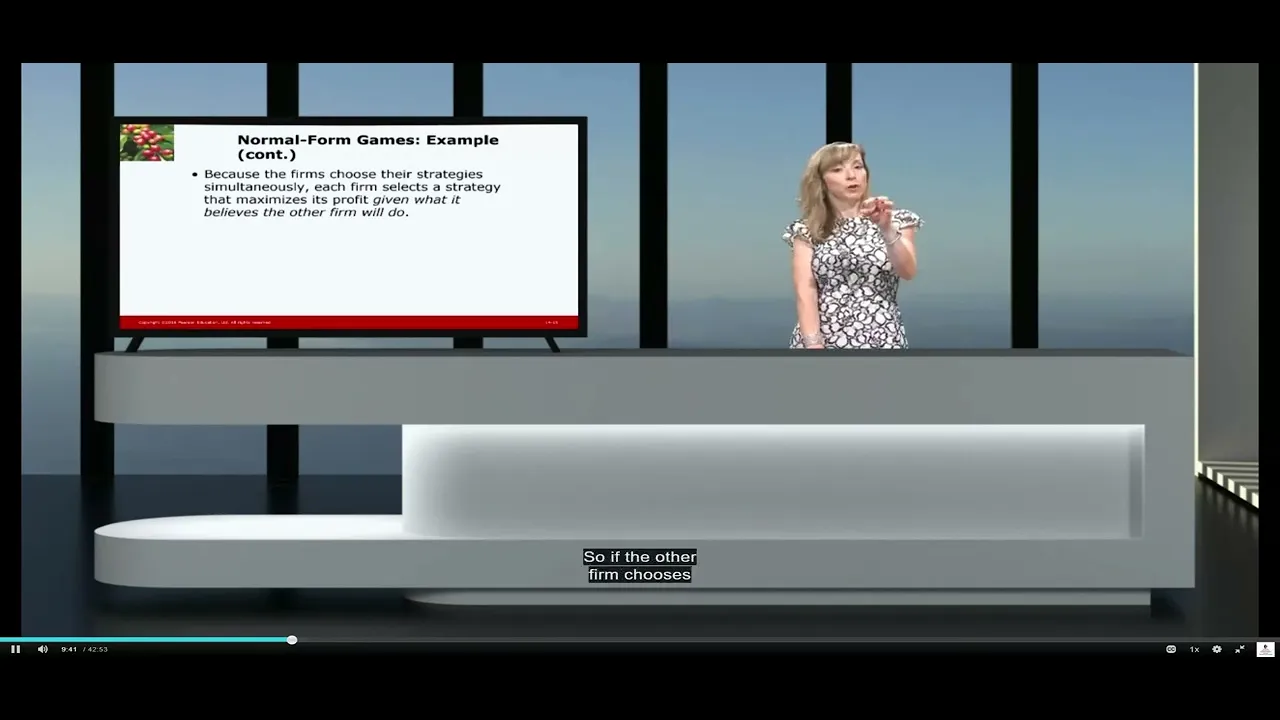
Soyon Lee describes the manufacturer's dynamic well in his analysis of the DRAM industry in which he applies the concepts of game theory. There are two players in this comparison. Each has the choice to either escalate or back down or in this case expand or maintain capacity. If one manufacturer expands capacity while the other maintains, the supplier who expands will gain higher profits and market share. If both expand, however, the result is an overupp which drives prices down ultimately harming both players. In the final scenario, both players can choose to maintain capacity, resulting in moderate payoffs to each. The same payoff matrix also applies to R&D investment. This is all further supported and tied together by the continuous stream of manufacturers extremely similar public statements. It really does feel like it's the cartel emails except now in earnings reports.
As it relates to the DRM industry, maintaining capacity is typically translated into profit prioritization, cost competitiveness, investment efficiency, or financial discipline in the earnings reports in the executive buzzwords. In fourth quarter 22, SKH announced plans to reduce capex by 50% year-over-year. Micron said it reduce by more than 30% year-over-year, and Samsung claimed it quote concentrate on boosting investment efficiency to ensure stable growth end quote. Sure sounds like the same thing. In fourth quarter 23 earning statements, Micron said, quote, "It took several prudent and timely actions to reduce our capex and supply." End quote. SKH said quote maintain prudent spending, focusing on profitability and investment efficiency end quote. And Samsung claimed its portfolio was quote focused on profitability end quote. In fourth quarter 24 earnings reports, Highinx announced year 25 capex for infrastructure to quote increase meaningfully due to new fab construction end quote and that it was quote maintaining the profitability first commitment end quote. Micron stated, quote, "We expect fiscal 2025 capex to be meaningfully higher end quote due to fab construction." And quote, "Micron will continue to exercise supply and capex discipline and focus on improving profitability, including walking away from less profitable business." End quote. Possibly an early hint at it killing Crucial. We didn't catch on at the time. These companies appear to still be colluding with each other.
They're just doing it publicly. It's not a conspiracy. if you tell everybody what you're doing. That's just a plan. We don't have explicit evidence that the manufacturers are still engaged in the same type of price fixing collusion today. But our understanding is that most of the evidence we went over today pertaining to the discussions from 1998 to 2002 wouldn't have been discovered if the DOJ hadn't actively investigated the matter, including issuing subpoenas and undergoing the trials discovery period.
Something that to our knowledge hasn't been done since. And of course, it's not like the US antitrust agencies have any reason to turn a blind eye to this sort of behavior. Certainly, Micron is benefited by donating millions of dollars to the Trump administration. The DRM cartel, we think, is alive and well.
It's just that the communications aren't in the form of surreptitious phone calls. They're in the form of quarterly earnings reports. That's it for this documentary on the DRAM cartel. If you liked this, check out our rise of Chinese memory documentary, our special report on the police and private company raids of an individual who owned development kits for gaming consoles, our AIGPU black market documentary where we got on the ground in Asia to investigate or any of the other deep dive reports on our channel. These are fully funded by our audience. We need your support to make these happen. Head over to store.gamersex.net today and check out what we have. The latest for this video is our brand new wireframe mousemat V2, which features a design that Andrew put together on the team, showing a highly detailed, almost cityscape like set of wireframe computer components, including tower coolers and water cooling reservoirs that represent a city skyline and cables that represent roadways. Head over to store.gamersex.net to grab that and support us directly. Thanks for watching. Subscribe for more. We'll see you all next
Up Next

Museums and Stolen Artifacts: Colonial Looting in World Museums
@LastWeekTonight
12M views•2022-10-03

Triumph of Orthodoxy Icon: Byzantine Art & History Explained
@BenCallan
2.1K views•2024-08-06

FastAPI vs Flask vs Django: Choosing the Right Python Web Framework
@TechWithTim
302.5K views•2024-05-26

Game of Thrones Opening Credits: A Cinematic Analysis
@gameofthrones
46.3M views•2011-04-18
Related Study Plans & Knowledge Roadmaps
Structured learning paths in General & Interdisciplinary Studies