![Anatomy and Physiology of the Large Intestine [Colon]](https://i.ytimg.com/vi_webp/F4W2DLIKXww/maxresdefault.webp)




![INTRODUÇÃO À MICROBIOLOGIA [ Atualizado 2024 ]](https://i.ytimg.com/vi/QQ1nEiQnw-s/maxresdefault.jpg)



















The gut microbiome significantly influences metabolic health and disease progression, with research demonstrating that germfree mice have less body fat than conventional mice, and that individuals with type 2 diabetes show altered microbiota characterized by reduced butyrate-producing bacteria; specific bacterial metabolites like indolepropionate can causally contribute to impaired glucose tolerance and increased cardiovascular risk, suggesting that targeting the microbiome through next-generation probiotics or metabolite inhibition may offer new therapeutic approaches for metabolic diseases.
Gut Microbiome & Health: Inaugural Lecture Insights
Added:Basic human anatomy and digestive system physiology, specifically the environment of the large intestine.
Fundamentals of microbiology, including the distinction between pathogenic and symbiotic microorganisms.
Core concepts of cardiometabolic health, such as insulin resistance, lipid metabolism, and cardiovascular disease pathology.
An understanding of the immune system's role in maintaining mucosal barriers and tolerating commensal bacteria.
Clinical applications of Fecal Microbiota Transplantation (FMT) and regulatory hurdles in modern medicine.
The Gut-Brain Axis: Mechanisms through which gut metabolites influence neurological function and mental health.
Advanced therapeutics involving next-generation probiotics (such as Akkermansia muciniphila) and the role of postbiotics.
Metagenomic sequencing technologies (16S rRNA vs. Shotgun Sequencing) used to map and analyze individual microbiomes for personalized nutrition.
278 views3likes39:58Original Release: 2025-11-25
For the next uh uh 45 minutes or so, I would like you to join me on a journey in time and space to look at the microbiome and how it may affect us in especially our physiology and metabolism.
I usually like to start with this cartoon that one of our co-workers Anah Halena has made because I like to view the microbiome as a big family.
We have some species that have a close relationship. Maybe they are brothers and sisters and others are cousins or second cousins. Just like in the microbiome, we have some strains that are very closely related whereas others from other genuses gener are are quite distant. That said, it means that not necessarily two siblings have very close similar functions or interest. It's you can have a similar function or interest or sim similar job as one of your cousins. The same is going on in the microbiome that some species that are closely related may have very different functions whereas some same function may be inherited by or developed by a a more relative species.
So let's start this journey in time and move back some 3,000 years ago.
These are uh from an old Chinese uh book of medicine where they described some couple thousand years ago the yellow soup. What it meant was what if you had gastroenterteritis or gastrointestinal infections it could be cured by a yellow soup cons composed by by feces from a healthy individual. This was then refined. you took the feces from a child and then in the 400 uh a ad they start to use actually ferment this feces to make it more efficacious.
So almost 1500 years ago you use the microbiome to cure diseases.
The next concept is the old Greek. This is hypocratus.
He was a invent he he is uh he got at least his name to be the the inventor or shaping modern medicine and in one of his uh works is attributed with the words let food be thy medicine. So I think it's very appropriate for being at the food institute to have yellow soup and then hypoc hypocris food be thy medicine because we know that the microbiome is very much affected by by the food we eat and this is a combination I will come back to during this lecture.
Let us fast forward uh a millennia or so into the 1600s because neither the old Greeks or the old Chinese they didn't know what they were doing. They just knew that they took feces and it would actually cure a disease or you could have food to to to cure a disease or prevent a disease. But they didn't know the active components.
It was not until Anton invented the modern microscope in the 1600s and used that to study not only cells from uh from plants and from animals but also to look what he had in his oral cavity.
This is a picture of what he saw in his oral cavity. He also looked in his thesis and could for the first time depict bacteria but he called them animal cules and he could see that some of them had motility others were large others were cocky and some was sparrow sheets in the in in their shape.
He could also then show that when you had an episode of diarrhea the composition changed. So he was the first person to really illustrate a disbiotic microbiome.
If we move another 200 years forward in pace in in in time, we have Ilia Metikov who went out on the countryside in Bulgaria. Why he saw that some of the peasants there that seem to live a long and healthy life and they were eating a lot of yogurt and in yogurt he know that you had lactobacilli. So he came up with the the terminology probiotics for life from that observation. He later on went on to get a a Nobel prize for his uh role in invent in studying imu im imunology and immunity.
So he was father of fagostosis.
About the same time Louis pastor who is then known for his pastization were discussing that he thought that life is not possible without any microbes.
It turned out that he was wrong because he spurred scientists like the German Nutental to start thinking about developing germfree mice. Mice that have never or grey animals. He actually works with guinea pigs. Animals that never were exposed to any microbes. Nuttal had some problems technologically but his work was followed up by James Reneers who was a young student. He was 19 years when he went to the dean of Notre Dame University. Can you imagine a 19-year-old person coming to the DNFDU saying, "I need a lot of money because I want to build the first uh environment for germfree animals. I have no prior experience, but I'm pretty sure I can do it." So, he got resources to do this.
And eight years later, he managed to to produce the first germfree rats and keep them over generations. This was highlighted in a Milwaukee Chronicle in 1936.
And it's quite amazing. But all at that time they asked the same question as we do today. Whether humanity would be better off or worse out worse off without any wicked little bugs to contend with.
And this started the golden ages of the first golden ages of of start studying the normal gut microbiota. It lasted up until around 1980. But then you have compared and contrasted almost all forms of germfree mice or germfree rats with rats and mice with a normal microbiota.
So you know that the villi was different, the immune system were different, the appetite was different etc. Uh but there was not much more to explore until we had a next leap of technology.
This was the event of using uh knockout mice, genetic manipulation of bacteria to study mechanisms. It was a I think above anything else probably the the democratization of sequencing for example. So you don't have to culture the bacteria in the gut but you can sequence them to see what are the bacteria in a given person. And this allowed then to start to compare and contrast different patients and controls and see that the microbiota differed between many different diseases.
And finally, I think it also spurred the the the public that that studying the microbiota could have a big impact on our life on our daily lives.
So I I've been fortunate to to catch this second wave or second hype of the microbiome research and the main characters of our research are on this scanning electron microraph where we have colored the bacteria in orange. We have the mouse colon mucosa in in in in gray where you see the microvilli. We have stained the mucus that we produce to to protect our our our cells and also to provide a niche for bacteria in green. And then we have some food particles in purple. So these are the main actors of today's talk.
And we like to say that we're studying the gut microbiota. Some call it gut flora. I prefer microbiota because we're not studying flowers. But it's a little bit we usually study a fecal microbiota sample and talking about uh gut microbiota when you're actually studying the fecal microbiota. I know I will I will interchange this today but just to give you an example on why I think this is a bit misleading for me it's a little bit like starting the earth from space and although you know that Antarctica and Sahara are very two different habitats we we sort of we can't clump them together we should probably start to study more the small intestinal microbiota and maybe the upper colonic microbiota etc it's technically technologically challenging but I think that's something we can do together in the future.
Because if we compare again with ecosystems, what we see along the length of the gut, we start in the stomach.
It's like a desert. There's not many bacteria that can thrive there. That's one exception that helcoactive pylori.
That's why we have this palm tree there.
Then when we enter the small intestine, the dudinum, I think that's like a tundra because the bacteria there are exposed to all the digestive juices coming from the pancreas, the bile from from the from the gallbladder and you know you can have bile soap that to clean clothes. So this bile is very toxic to most bacteria. So it's a very harsh environment that's a low biomass.
And when we come down to the Scandinavian pine forest in the elium, that's when we start to see the biomass with some 100 million bacteria per per gram content.
But for me, I think it's the colon is probably the most interesting space.
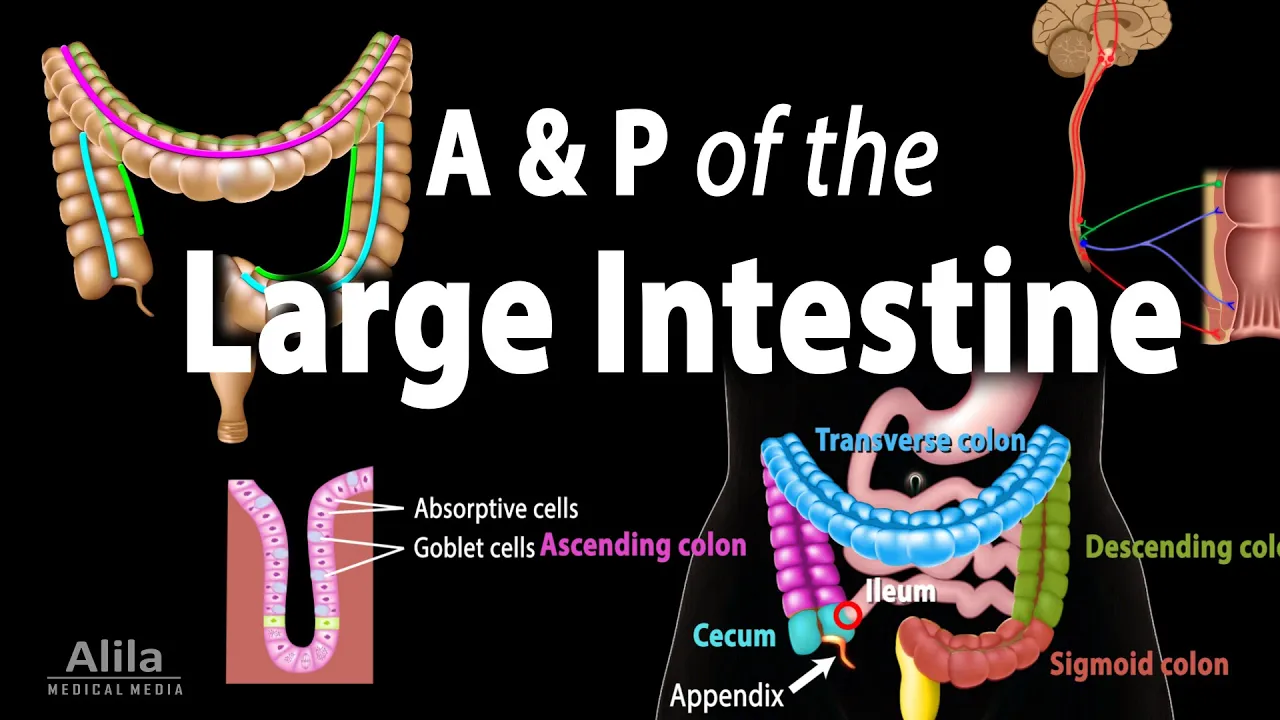
It's a really where you have the bulk of the bacteria. To me, it's where we have the diversity and most of the metabolic reactions going on. So, I like to look at the colon as as a very lush rainforest.
So if we then take the step back and say people are starting the fecal microbiota we claim to that to be the gut microbiota.
You can find basically any disease you can think of. If you Google that disease and microbiota you will find a paper describing that difference between this disease and controls um when you look at the microbes but these are just associations.
So I think we have to to come over that and start to study whether that's a causality and I will come back to that in the end why I think this is uh critical and in our work we've been most mainly focused on the card metabolic diseases such as obesity for example which has increased dramatically over the past uh couple of decades. we see a living in an obesity epidemic and in the wake of that obesity ep epidemic we see increase in type two diabetes.
This is a map that shows the prevalence of type two diabetes or diabetes actually but most of it is type two diabetes.
So you can see that in some of the countries here in the Middle East o almost 20% of the population has already diabetes today and this is projected to be increasing even more and especially in low and middle inome countries and unfortunately individuals living in this uh in these countries will probably not afford or have access to the modern uh treatments.
So maybe by understanding if the microbes can affect this disease progression, can we find ways of either prevent or potentially also help in treatment of of individuals in in uh for for these cardio metabolic diseases.
So one way of moving beyond um associations, it's to uh use germfree mice. Germice of course different from mice are different from humans. I'm fully aware of that. But it's one way to to to at least start start to understand if the microbes can affect a given process.
So what we tend to do is we use these plastic bubbles where we have the mice and it's almost like a space station.
In that environment, there's no bacteria. So in order to keep it germfree, we have to import sterile foods and water and supplies through a port in the back. Just like when you get stuff into a space station, then we can handle the mice through these gloves. We can feed them different kind of food and we can colonize them with different kind of bacteria or fecal samples for that matter to see if a given bacteria or a fecal sample can confer a disease.
when uh I started working on this some 20 years ago that was not not so much known. So we wanted to see is there a difference between amount of body fat in a germfree mouse and a conventional raised mouse. So as a postto with together with Jeffrey Gordon, we took germfree mice and we took normal mice and we put them into a DEXA machine that can estimate the amount of body fat. And what we saw was that the germfree mice in absence of any bacteria although they ate 30% more had less body fat.
If we then took and killed these mice, took the bacteria, entered it into these germ for mice and analyzed those mice two weeks later, they had normalized the amount of body fat.
So when we wrote that paper, I wanted to make it that the germ for mice was were normal and the colonized mice were having more body fat. In hindsight, I think we should have probably done it opposite that the normal mice are normal and the ger mice are malnourished instead.
And what the microbes are doing when you feed them this regular chow diet, it's mainly consists of different fibers. So the bacteria will ferment that fiber and provide energy to the mice and that's so they have more body fat.
And this is sort of the situation we human have been having up to like maybe 70 years ago. there was a shortage of food. So having microbes helping digesting and giving us energy was probably something evolutionary beneficial. So in the 1980s it was estimated that about 10% of the energy of an individual living in the UK had this energy coming from uh from microbial fermentation.
And even if something has been evolutionary beneficial uh a couple of maybe 100 years ago if you change that environment it may actually be detrimental. So if you then compare and contrast instead mice that are germfree and colonized and give them a western style diet. This is a diet that mimics what you get at McDonald's or another burger burger joint, right? Uh so 40% of the uh energy comes from sugar, 40% comes from saturated fats and 20% from protein. We can then see that mice with bacteria gain weight. Gree mice do not gain weight to the same extent. This is uh they gain about 5% maybe and these guys gain about 20% in in 8 weeks.
So we don't know if this actually is true in humans but Henrik who's here and his group will examine that now I hope and figure that out to see whether what we see here if the energy extraction could be important.
But even if obesity is a first sign of chronometabolic uh unhealth moving target usually you start with increased obesity especially abdominal obesity that increase the risk for uh mult from for from metabolic syndrome to type two diabetes and also to cardiovascular disease and then later to diabetic complications.
So at least I think that maybe the the microbes can help with energy digestion.
But the most reason why we are getting obese is probably that we take too many calories.
But not all obesity are alike. Why do some individual develop diabetes sooner than others? Can the microbes be modulating the time on this or direction of this uh journey?
So why did we start? Well, we and many others started in the same same way. You compare and contrast a group of uh of healthy controls and a group of individuals uh patients with type two diabetes.
And if we move to 2010 when those studies were usually initiated, one of the hallmarks of microbiome research was that there's no chance of replicate someone else's findings. So it was a big thing when we actually got our paper here got accepted in nature because we could replicate what this Chinese Danish group have done. We found the same thing. So the argument for us to get our paper published in nature was that we could replicate another study which is quite quite unique and what we what both of these groups found was that in patients with type two diabetes we see fewer butrate producing bacteria.
Life was good. We moved on and then of course there's another paper showing that a lot of the studies at that time were confounded by metformin usage because if you study someone a patient suffering from a disease they usually have a treatment and that treatment can also affect the microbes.
In this case metformin is the most common first line uh treatment for diabetes and metformin per se can affect the microbes.
We had control for it in our study, but we were still requested by reviewers to to say, are you sure you're studying the disease and not the treatment?
So, we moved on and we teamed up with a a physician at at the Valve Laboratory uh to study treatment naive individuals.
These are individuals in the society that they may have diabetes, but they don't know it in that case. So, they have no treatment for it.
So, we build a cohort of some 2,000 individuals. uh eventually by screening the population and selecting those with pre-diabetes or diabetes and doing a lot of examination on them and together with uh Tony Vu who was a postto at the time and now a professor at Fidan University in China and Valentina Tamaroli who's our team leader in microbiome research.
We sequence the microbiota of individuals with either normal glucose tolerance test uh test or normal glucose tolerance. People with impaired glucose tolerance or people with type two diabetes or they had pre-diabetes based on both uh impaired fasting glucose and impaired glucose tolerance. And what we could see that none of them were on diabetes treatment. We saw that the healthy controls in this space of microbiomes were up here. And then you saw a gradual decline on the microbiome when you had patients with type two diabetes.
So what we had found in the first study was true. But we also started to think maybe we can do an analogy here because if you read Anacarena uh it's from Leo Toltoy it's opens up with that all happy families are alike and each unhappy family is unhappy in its own way.
What we think is that if we take a microbiomecentric view on this is that a healthy microbiome is rich in butrate producers and have a high diversity. So they look relatively the same. But when this microbiome starts to fall apart in di for example in diabetes they will have blooms in many different bacteria.
So it will hard to find a statistical significance for that.
So it seems to us that if you eat your fibers, if you eat a diverse diet, you will have a rich microbiome. You will probably protected that will probably help protecting against type two diabetes.
But this is still only associations.
So we do our trick with the gem free mice.
And what we do then is that we take individuals from that study that are have screen detected type two diabetes.
So they didn't know that they had diabetes when they came to us. But we h we diagnose them and we take an individual here and then we find a healthy control that has the same BMI, same sex and this has the same age and we do that for six different uh individuals in each group. We then colonize germfree mice and we make a cohort of then some 20 mice that have been colonized by microbiota from patients with diabetes or individuals living with with diabetes and another corresponding group with that have been colonized with normal gut microbiota from u from from controls and Luis Manos who's leading our germfree efforts uh have then been following these mice and she could see that we colonized them they gain weight the same way. When we monitor their glucose, it's similar. But when we monitor their insulin that controls the glucose, it's much higher in the mice that had uh who were colonized with microbiota from p from individuals with type two diabetes.
So I'm not a diabetist. There's others here that are, but very simplified. If you have a high insulin sensitivity, you need just a little bit of insulin. this blue line to control the glucose which is in the green line. What happens then is that you start to get insulin uh resistant. So you need more insulin to control the glucose. That's why the blue line is increasing. And then eventually you have a lot of insulin produced but it's not sufficient. So you have more glucose as well. And eventually the beta cells producing insulin dies and the glucose goes through the roof and that mouse or a human would die if they don't treat it.
So what Louise did, he called those mice that had uh uh let's see, had a normal uh glucose and normal insulin, she called them A. If they had normal glucose but high insulin, she called them B. If they had both high glucose and high insulin, they called it C. And if they had low insulin and high glucose, she called them D. And after the experiment, she then could see that the mice colonized with control microbiota, they were mainly in the A and the B group, whereas mice are colonized by the by the microbiota from type two diabetes individuals, they were mainly in the C and the D group. So we think that the microbiota can really at least contribute to the glucose regul regulation in mice in this case.
This is data that we haven't then followed up on but our colleague Max Nudorp uh who's also in this microbiome health initiative I will tell you a little bit more about later. Uh he did a quite fascinating experiment some over 10 years ago. He took individuals or uh with metabolic syndrome and he performed an insulin uh clamp on them.
And if you have if you are have a have a lean control, they have a very high insulin sensitivity. That's what's measured here. If you take a patient with metabolic syndrome, they have a low insulin sensitivity.
If you take the feces from a lean control, put it into this patient and measure the insulin sensitivity later, they it's improved. But if you instead take a patient with metabolic syndrome and give him or her their own feces, it's not improved.
So this suggests that the microbiota can also help um insulin sensitivity or improve insulin sensitivity in in humans.
Max rep repeated it here in another study. But what's a little bit depressing is that it only lasts for about six weeks. Then you have to make a second transplantation. And having a fecal transplantation is probably not the nicest uh to have nor it's you also have uh potential transfer of pathogens.
So you may get sick of it.
So what are the microbes that are seem to be protective? Well, we talked about butyrate producing bacteria and the the bacterium that stands out the most in our analysis is is a bacterium called fkala bacterium proniti. It's you can't read probably read it here but it's the top one here on on the list.
So instead of giving a fecal transplant, we would like to give individuals a capsule with a bacterium that we can control much better.
So Tavia Khan, who's a a scientist in the group, he's been really trying to build a a strain bank or bacterial bank uh based on what we find in a healthy individual's feces. So he takes feces, puts on a plate, then you get these colonies and each colony here stems from one bacteria that grows. The bacteria divides maybe every once every 20 minutes. So over a night the fast growing ecoli can become somewhere a bill a billion bacteria.
So in each dot here you have identical bacteria and by streaking them in several rounds you can improve the the purity.
So, Tanvir wanted to identify a sulfate reducing bacteria, a bacterium that can take care of sulfates in the gut and it's called the sulfa vibra piger. So, the the plate we cultivate on gets all black. But what tanir found was that in this mixture it was not only one bacteria it was actually a second bacteria actually this fala bacterium pronitzi.
So his idea was then that these two probably thrive together and he could test that by culturing them together.
So if you take fala bacterium proiti by itself it grows to a certain extent but it's increased by some 70% if you instead add its partner bacteria dulibri piger and it's really this crossfeeding they comp they have a compatible meta metabolism.
So on this specific medium uh which is basically on having glucose and uh and a little bit of lactate and and sulfate none of the bacteria can produce butyrate by themselves but together they can actually produce significant amount of butyrate.
So this is all good. Now we have actually found a bacterium that seems to be protective against type two diabetes.
We find a partner bacteria that make it grow better. But there's another problem is that these bacteria living in our gut, they don't tolerate oxygen. They are very anorobic.
And you may be able to see that on this slide here that on the left hand side we have the color bacterium pro what we culture in a in a tent deprived of oxygen. H but if we have exposed them for 20 minutes of oxygen the plates are completely pure.
So what Tanvir then did was that he developed a little gym to train and exercise these bacteria by by giving them a little oxygen at the time yet keeping them in good shape by giving them some both uh nutrients and uh control the redux balance by by electric current.
And for each subculture here he increased the oxygen a little bit. So eventually we have a bacterial strain that is fully trained and if you expose them for for ambient air for 20 minutes you have some growth not as good as anorobically but you have then developed this adapted strain.
So this then made it possible for us to do a clinical trial and I'm not an MD but we did it together with Matias Laurenson who who has done a lot of first in man trials and then Shinme who's a postto in the group and now an assistant professor in Nume University analyzed the data. So we had placebo, we had a low dose and then a high dose about 15 individuals in each group. And what we could see was that the high dose of of the product increase the levels of dulpha piger in the feces of these individuals but we couldn't see an increase in fala bacterium. And we think this is because u there's so much ficala bacterium in the healthy gut. So giving 10 million 10 billion extra doesn't make a difference.
So we're really excited about this and we would like to take this further and see if this product could be protective against cardioabolic diseases.
We are not only interested in who is there, we're also interested in what they are doing.
And one big difference between the microbiome and um our our other organs because we would like to view the microbiome as a organ by it on its own right maybe weighing half a kilo to a kilo similar size as the liver composed of different cells but in contrast to the liver the cells in the microbiome of the microbiota will change over life we're born sterile we have then get a climax of bacteria that approximately when we maybe 20 to 50 years then we start to lose a little bit of diversity as a population in the microbiota but we also change on a shorter time span this could be due to what we eat if we take any drugs of course antibiotics would have a bigger impact but even metformin as I mentioned or statins would have impact on the microbiota so you can change both the composition but also then giving substrates to these microbes that give rise to different molecules and metabolites that can actually function as hormones or affect distant tissues. So our proposal is that we actually are host to a endocrine organ within our intestine and of course these metabolites could either be beneficial or detrimental.
So what we've done now is together with uh Tony Vu is to estimate how many metabolites do we find in the plasma of individuals with type two diabetes and how big proportion of them are associated with type two diabetes are are produced by the microbiota regulated by the microbiota.
And what we did did find was that 500 metabolites were different between healthy controls and patients or individuals with type two diabetes and about a third of them were microbially modulated. So it's clear that the microbes can produce many different metabolites that can affect our health and we have put a lot of focus on a metabolite that we were happy to find in this analysis as well. It's called imidasol propinate and it's a metabolite that the bacteria can produce but we cannot produce because we are lacking those enzymes.
So the bacteria and we for that matter can take uro histadine which is amino acid metabolize it to urokonate but whereas we and the bacteria can metabolize it further to glutamate only bacteria can reduce this double bond to emos propinate. So it's a microbial specific metabolite that we know is associated with type two diabetes and we could validate that. So here is a study with some uh 2,000 people from a study called Metacardis and Trina sitting in the back there was very much involved in the Danish part of that study and it's not maybe super impressive but we see that we have more individuals with a type two diabetes or pre-diabetes have higher levels of amos propinate in general. But what we think is that if we look at the top quadrant here, this is where you see the main difference between those healthy and those with type two diabetes. We think that perhaps these individuals with type two diabetes here may have that their imunos propinetate may have a a contributing factor.
Once again, these are just association studies. So we want to move on and test the causality. So here we feed mice with a western style diet to make them more prone to cardio metabolic diseases. Half of them are treated with u imos propinate and half are not. We then perform a glucose tolerance test. So we challenge the mice with glucose and we take samples um from the tail and we monitor the glucose and we see uh that mice that were treated with immers propinate they have an impaired glucose tolerance compared to those that were not treated. This is work done by Hobby Agaval who's a postoc in the group.
But we also want to understand what are the mechanisms uh involved in this signaling pathways.
So what Araku who's now a professor at at postc in Korea found was that whereas insulin usually binds to the insulin receptor leading to signaling through the insulin receptor substrate uh and then to AKT phosphorilation.
What Ara found was that imropinate can activate a signaling pathway regulated by this map kinasis and which eventually leads to you have abnormal phosphorilation of insinence of the substrate that prevents the activation and rather targeted to degradation. So you can shut down this signaling pathway and this was so you say well this is important in in humans as well. So looking at samples from livers. So liver biopsis from patients without type two diabetes. So these are obese individuals that are in the clinic for for for berasic surgery. So we have obese individuals without type two diabetes and we have some with type two diabetes. And what we can find is that this p62 phosphoration is increased in individuals with diabetes. the S6K1 phospholation is increased and the insepar substrate is reduced. So we think that this is a pathway that is not only active in mice or cells but also in human livers.
So for us this is very exciting uh but can it affect how we live how long we live and the risk for different cardiovascular events?
So in work that we've done uh together with a Stan Hast group uh led by Anton Molinaro and Inan Nemet from from Cleveland we analyzed individuals at baseline then we divide them in four groups so the highest group as I spent 25% with the highest levels of imropinate the second highest group of imropinate uh and then then the the the low second lowest and the lowest so the quadral one are 540 patients with the lowest imos propinate and cordal 4 is with the highest level female superpinate.
Then they we follow something called mace. It's called major advanced cardiovascular events. It's a compos composite of stroke mol infarction or death by cardiovascular events.
And if you had the high levels of of milop propinate, you had a worse survival rate over three years of more higher risk of having a maze compared to those with lower levels of murinate.
And even if we moved further on and looked at survival overall, we saw a similar pattern that individuals with high levels of propinate had a much higher risk of dying than those with lowest levels of propinate. So we do believe that this is a metabolite that can act prognostic is associated with disease produced by the microbes and can confer disease when you when you treat mice.
So what this potentially opens up for is that maybe we should start to think about medicine in a different way. Can we start to instead of developing medicine to our body rather drug the bug? to make medicine to treat our microbes. In this case, we would aim to find a inhibitor like a drug that would target the the enzyme responsible for ukonet reductase to abrogate the production of meos propinate. So this is something we hope in the future to be able to to to deliver on.
So since I'm the one be between you and and the refreshments, I would like to summarize what we discussed. so far that the gut microbiota is for sure altered in many cardio metabolic diseases.
We know now that the that the microbiota is altered before overt disease onset.
So individuals with pre-diabetes for example have already an altered microbiota.
It's really characterized by a loss of bureate producing bacteria and we we if we take Max Nurup's data here that we know that the microbiota can modulate insulin sensitivity not only in mice but also in humans.
We think that the development of the next generation probiotics uh with of course a technological u advances such as oxygen tolerance is a potential view forward to to to target these diseases.
But also since the microbes can produce many different metabolites, some would be positive. we can add them directly.
But others may we need to find novel treatment modalities such as inhibiting the production of um uh of uh enzymes such as urinator ductis.
So now you may wonder what I'm what will I be doing here at DTU? Well, I have the pleasure and privilege to lead together with Tina Rast and with great support from uh the new team we're developing with Nora Otman as a the center coordinator and Anna Yaken Fcher as our administrator leading the microbiome health initiative which is a center sponsored by the Novonautics Foundation. So we hope that we can over the next uh four to six years really try to de demonstrate if the microbiome can causally be linked to codab diseases in humans.
And we also have partners here like Henrik and Trina and Tina who are are very much involved in this microbiome health initiative.
And of course I also like to thank the group in in Gothberg that contributed a lot to the work that I'm presenting here today. So with that, I would like to thank you so much for inviting me to DTU and to the National Food Institute and see maybe if there's any questions.
Thank you very much.
Up Next

10:20
Food Preservation Methods: 12 Techniques to Prevent Spoilage
@biologyexams4u
65.5K views•2019-09-11
50:12
Bacterial Communication: Quorum Sensing and Biofilm Formation Explained
@JHUAAP
12.6K views•2011-06-28

5:35
Enteric Nervous System Explained: The Gut's Brain | Neurobiology Lecture
@alumniu6029
438 views•2018-09-12

7:08
Bacteriophages: Earth's Deadliest Killers and Future Antibiotics
@kurzgesagt
34.6M views•2018-05-13
Related Study Plans & Knowledge Roadmaps
Structured learning paths in Biology
biology
RNAi: Biogenesis, RISC & Gene Silencing
01Molecular Biology Foundations: DNA to Protein
02Introduction to RNA Interference (RNAi)
03Molecular Biogenesis of miRNA and siRNA
+ 2 more learning modules
10h5 modules
Explore Roadmap
biology
Mycorrhizae: Signaling, Biophysics & Ecology
01Foundations of Mycorrhizal Symbiosis
02Molecular Signaling and Root Colonization
03Biophysics and Bioenergetics of Nutrient Exchange
+ 1 more learning modules
11h4 modules
Explore Roadmap
biology
Circadian Clocks: TTFL, SCN & Periphery
01Foundations of Molecular Biology & Gene Expression
02Introduction to Chronobiology and Actograms
03The Core TTFL: Molecular Architecture of the Clock
+ 3 more learning modules
14h6 modules
Explore Roadmap
biology
Population Genetics: Math, Drift & Selection
01Genetic & Probability Foundations
02The Hardy-Weinberg Principle and Baseline Models
03Mathematical Modeling of Natural Selection
+ 3 more learning modules
18h6 modules
Explore Roadmap