


![شرح [ ظاهرة كومتون ]/ فيزياء ٣ث ٢٠٢٦م/ الفصل الخامس / الدرس (٢)](https://i.ytimg.com/vi/edTjDC3A3a4/maxresdefault.jpg)





![양자역학 한 방 정리! [안될과학-긴급과학]](https://i.ytimg.com/vi/VYWryVDQWO0/sddefault.jpg)










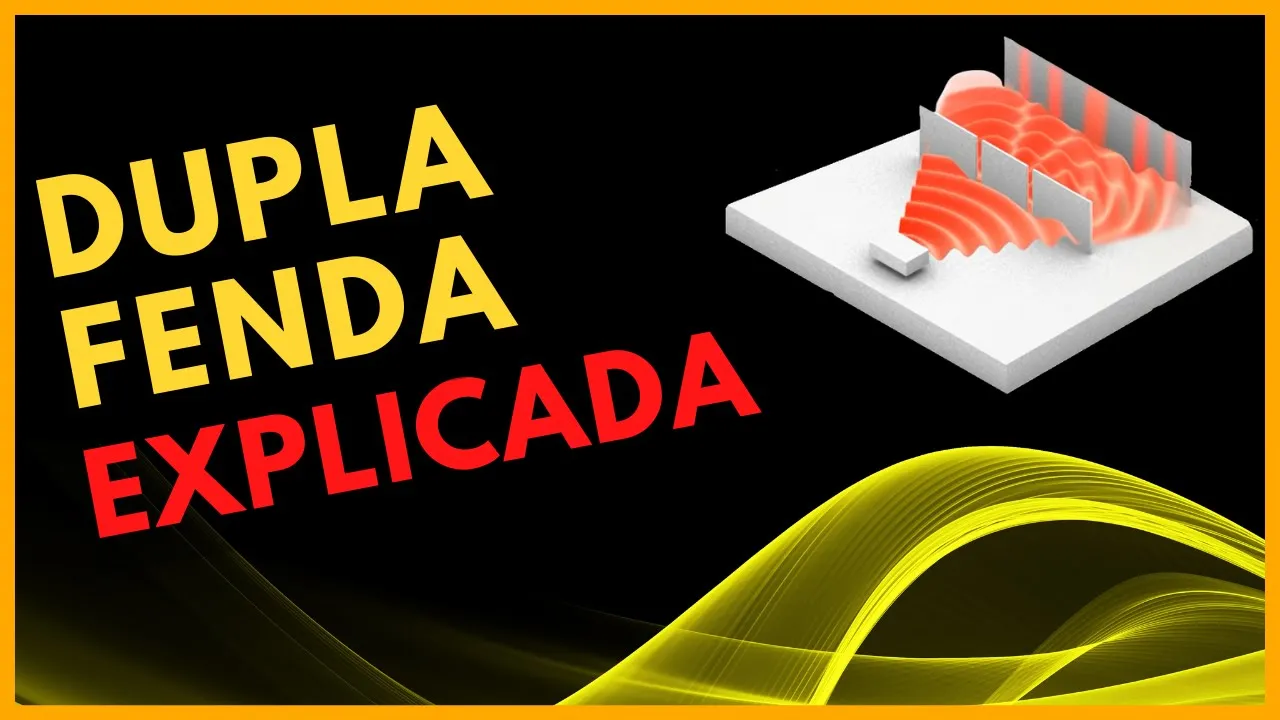
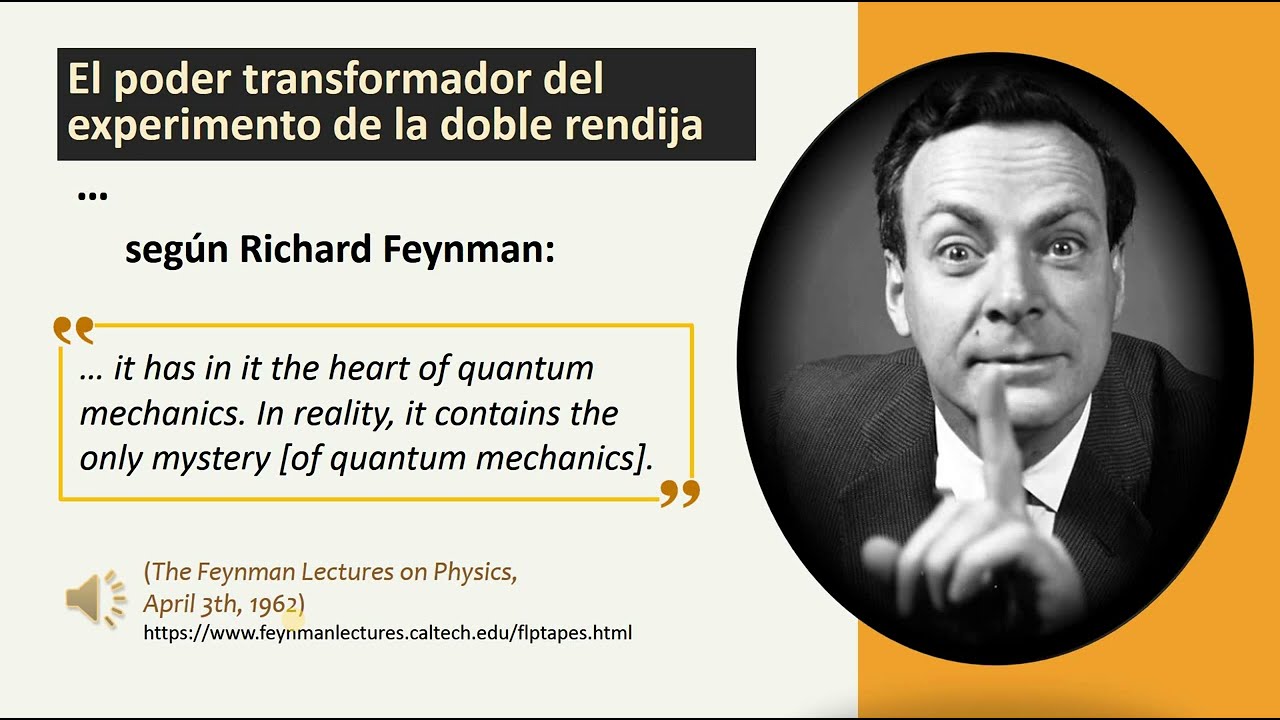
The Double Slit Experiment, originally designed by Thomas Young in the late 1600s to test whether light behaves as a particle or wave, revealed that light creates an interference pattern (proving wave behavior), but when photons are fired one at a time, they still produce this pattern because each photon passes through both slits simultaneously in a wave function of probabilities; however, when detectors are added to observe which slit the photon goes through, the wave function collapses and the interference pattern disappears, demonstrating that observation itself affects quantum behavior and revealing the fundamental principle of wave-particle duality in quantum mechanics.
Double Slit Experiment Explained: Quantum Physics & Wave-Particle Duality
Added:Classical wave mechanics, specifically the principles of diffraction, constructive interference, and destructive interference.
The fundamental differences between particles (matter) and waves (energy) in classical Newtonian physics.
Basic properties of light and subatomic particles, including photons and electrons.
The historical context of Thomas Young's original 1801 double-slit experiment demonstrating the wave nature of light.
The Copenhagen Interpretation of quantum mechanics and the philosophical debate surrounding the 'measurement problem'.
Heisenberg's Uncertainty Principle and how it limits what we can simultaneously know about a particle's position and momentum.
Schrödinger's wave equation and the concept of wave function collapse upon observation.
Quantum entanglement, non-locality, and the Einstein-Podolsky-Rosen (EPR) paradox.
Real-world applications of quantum mechanics, including quantum computing, quantum cryptography, and electron microscopy.
461K views16.9Klikes6:40Original Release: 2015-10-05
for today's video I want to do a little experiment follow the instructions in this video what it's going to do is it's going to show you how to shine a laser through two tiny little slits and then project what that does against the wall I really want you to try this because you should see with your own eyes the phenomena that has led to a series of discoveries that has challenged everything we know about light matter and reality itself super answer file MLP luig said can you do a video on the double slid experiment yes I can oh right here we go let's step in the way back machine to the late 1600s where it was pretty much settled science that light traveled as a particle there had been a lot of experiments to back this up and it even had the support of Sir Isaac Newton and he was not known to be wrong about things but then a physicist named Thomas Young created the double slit experiment and it consisted of a box through which light traveled through two very tiny slits and then a little eyehole where he could look in and see what that did when it projected to the other side of the Box the thinking was that if it traveled like a particle it would create two parallel lines on the other side of the Box because it was projecting through those lines just like bowling balls flying through pins at the end of a bowling lane that's not what happened what he saw instead was the same strange pattern of lines that you're seeing in this experiment young recognized what he was seeing right away it's an interference pattern you see when waves combine it creates what's called interference like if you take waves in water when they hit each other the Peaks will combine to create taller Peaks and the Peaks and troughs will cancel each other out which creates this pattern of higher Peaks and then Stillness and when that gets projected against the surface you get the weird double slit experiment pattern this only happens if light is traveling as a wave that's the only explanation for this the test was replicated in hundreds of different ways in the Years following this discovery and even Isaac newon himself had to concede that yes light can travel as a wave but other experiments show that traveling as a particle so what is it light are you a wave or a particle this particle wave Duality became known over time as well the particle wave Duality and it was a mystery that confounded science for the next 200 years by the 1920s the physics Community had much better instruments at their disposal and they decided to add another layer to the double slit experiment you'll see this over and over again experiments building on top of other experiments increasing in complexity and weirdness so the new twist in the experiment was basically asking the question that if the photons were behaving as waves and colliding with each other on the other side of the slit what would happen if you fired the photons through one at a time the guess is that you would get the particle pattern of two complimentary parallel lines after all how can you get a wave interference pattern when there's nothing to interfere with so they gave it a try into everyone's shock and amazement they still got the interference pattern but how how there is nothing for that Photon to be bumping into what could it possibly be colliding with to create this pattern the answer itself you see somehow this Photon was going through both slits at the same time and then colliding into itself on the other side of the barrier and this revealed a fundamental truth about quantum mechanics in a waveform state Quantum objects exist in a probability State meaning that at any given time it could go through the left slit or the right slit or hit the barrier while in a waveform state that photon is all three at once it is 33% in the left slit 33% in the right slit and 33% hitting the barrier actually that's incredibly simple math there are highly complex equations out there that calculate probability states with a high degree of accuracy but eventually the waveform has to go back down to a particle and that's called the waveform collapsing in the case of the double sled experiment that happens when it hits the back wall and this experiment has been replicated over and over and over again even with different particles like photons electrons protons even whole atoms and molecules so now we know that fundamental elements of matter can pop in and out of existence through probability States but that's where things just start getting weird because for the next evolution of the double slit experiment they wanted to see if they could measure the probability States as they went through the slits so they set up a little detector on one of the slits to see if they could measure it this was called the Which Way experiment the results shook scientific understanding to its core and remains unexplained to this very day because this time the pattern on the back of the wall displayed what you would expect with particles going through the slits two lines no interference no waves this means that the waveform collapsed before it went through the slit why because it was being observed this proved that the act of observing the particle caused the waveform to collapse how is this possible how can it know that it's being observed and what is the connection between the observation and the wave function that's causing it to collapse this experiment has been repeated countless times to the exact same results and we have no explanation for this but wait it gets weirder still John Aral wielder created a version of this experiment that he called delayed Choice which I had a cool name like archol it gets pretty complicated but the basic gist is that he puts a second barrier behind the first one and through beam Splitters and interferometers he makes it so that the second barrier could be one slit or two and he changes that while the photon is mid-flight and what he found was that by changing the structure of the second slit it Alters the behavior of the particle at the first slit in other words the particle was being altered by things that hadn't happened yet future events we're changing the present ow the hell oh son of a anyway when Thomas Young created the double slit experiment he had no idea the endless series of mysteries he was about to unleash on the world and he had no idea that these Mysteries would shape and confuse our very ideas of the nature of the universe and reality itself how does conscious observation change the nature of matter truth is we don't know but it brings up some fascinating ideas so now that I've melted your brain I want to hear what you think go ahead and talk it all up in the comments there are no wrong answers here thanks so much for watching and to MLP Luigi for asking an awesome question if you have a question you can hit me up in the comments or tweet me a question at @j Scot rder and we can get smarter together if you learned something in this video give me a thumbs up that lets Google show it to more people and if it's your first time here and you like it put a ring on it and hit subscribe I come back with stuff like this every single week the world's a fascinating place and I'm here to share that interestingness with you so you guys go out there have an eye opening week and I'll see you next time thanks for watching love you guys take care [Music]
Up Next

7:50
UV Catastrophe Explained: Blackbody Radiation & Quantum Physics
@stuartrobertson9862
7K views•2020-03-30

12:53
21cm Hyperfine Transition in Neutral Hydrogen: Radio Astronomy Basics
@AaronRobertParsons
12.4K views•2011-10-13

32:32
NMR Spin Physics I: Zeeman Effect, Resonance Condition & Larmor Frequency
@nptel-indianinstituteofsci8064
2.3K views•2024-01-17

27:14
Entropy and the Second Law of Thermodynamics Explained
@veritasium
27.5M views•2023-07-01
Related Study Plans & Knowledge Roadmaps
Structured learning paths in Physics
physics
Nuclear Physics (Decay, Fission & Reactors)
01Atomic Structure and the Binding Force
02Radioactive Decay and Half-Life
03Nuclear Fission Mechanics and Chain Reactions
+ 2 more learning modules
12h5 modules
Explore Roadmap
physics
Soft Matter (Polymers, Colloids & Rheology)
01Foundations of Soft Matter & Thermal Forces
02Polymer Physics and Macromolecules
03Colloids, Surfactants, and Self-Assembly
+ 2 more learning modules
38h5 modules
Explore Roadmap
physics
Analytical Mechanics: Lagrangian & Hamiltonian
01Mathematical Foundations: Calculus of Variations
02From Newtonian Mechanics to Constraint Dynamics
03The Principle of Least Action & Lagrangian Mechanics
+ 3 more learning modules
28h6 modules
Explore Roadmap
physics
General Relativity (Spacetime & Cosmology)
01Foundations of Relativity: Special Relativity
02The Geometry of Spacetime: Equivalence Principle & Curvature
03Einstein's Field Equations: The Mathematics of Gravity
+ 2 more learning modules
55h5 modules
Explore Roadmap