










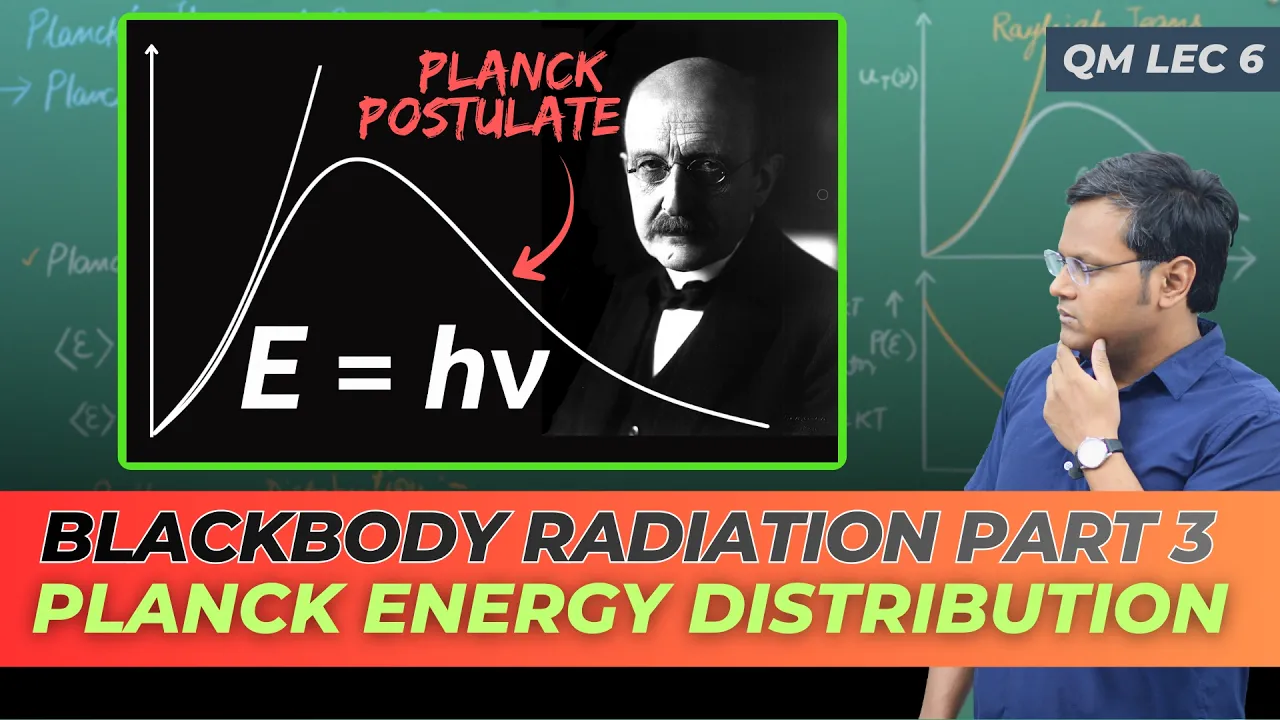
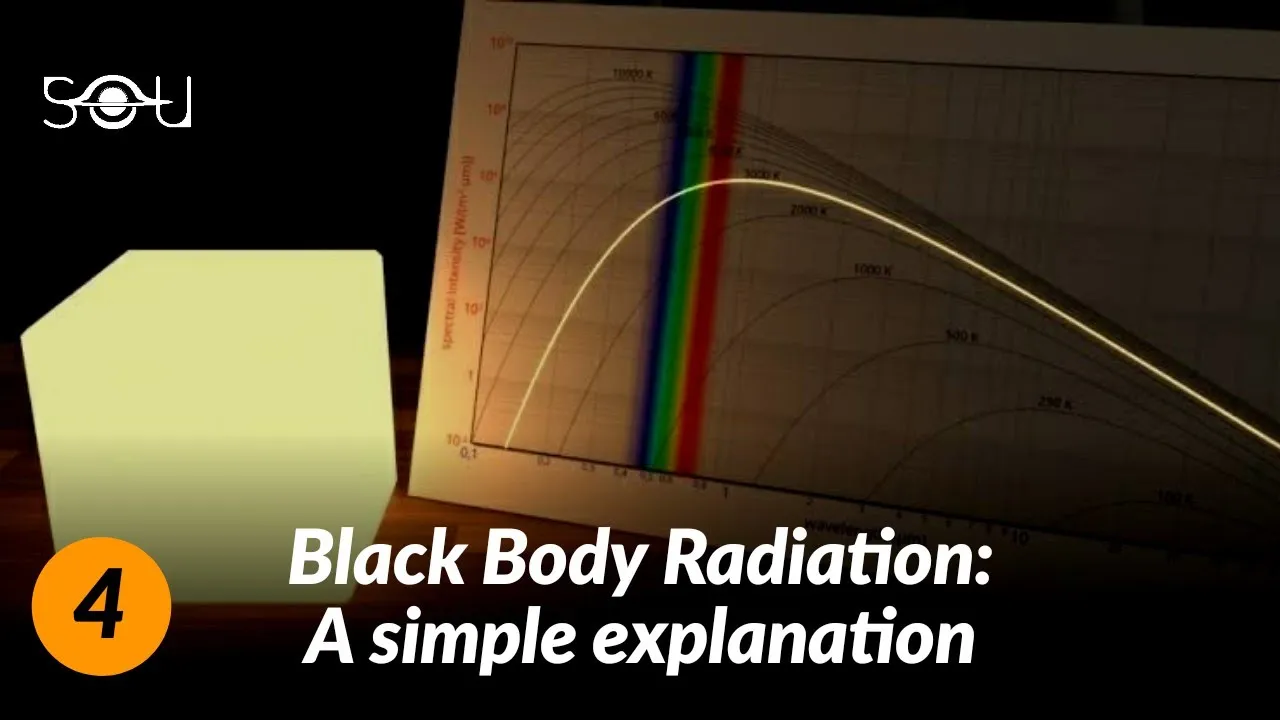












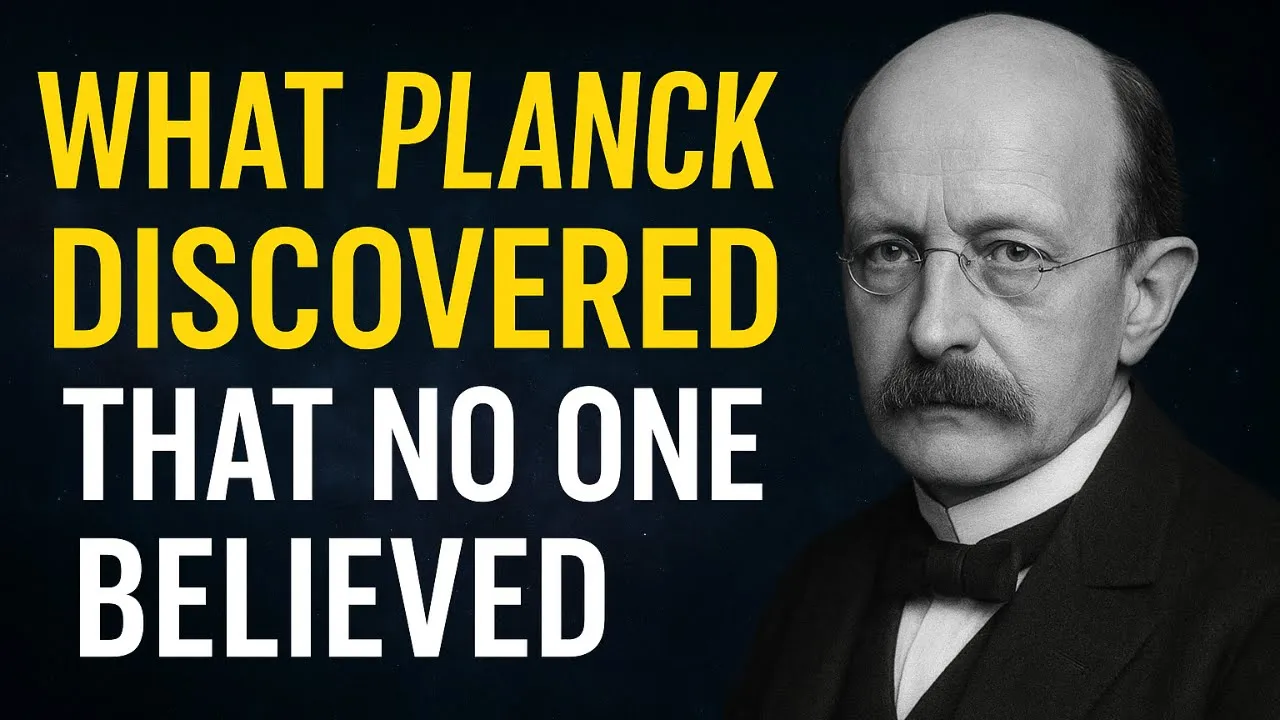
The UV Catastrophe was a major failure of classical physics in explaining blackbody radiation, where classical theory predicted infinite energy emission at high temperatures and short wavelengths (UV range), but experiments showed the radiation curve actually decreasing. This contradiction was resolved by Max Planck's revolutionary idea that energy is quantized in discrete packets (photons), rather than being continuous, which became the foundation of quantum physics.
UV Catastrophe Explained: Blackbody Radiation & Quantum Physics
Added:Classical electromagnetism and the wave theory of light, which views light as continuous electromagnetic waves.
Basic thermodynamics and thermal radiation, specifically how temperature relates to the emission of energy from hot objects.
The Equipartition Theorem of classical statistical mechanics, which governs how energy is distributed among different modes of a system.
The Rayleigh-Jeans Law, representing the classical prediction of blackbody radiation that mathematically leads to the ultraviolet catastrophe.
The Photoelectric Effect, where Albert Einstein applied Planck's quantum hypothesis to propose that light consists of discrete packets of energy (photons).
Wave-Particle Duality and the de Broglie hypothesis, which posits that particles of matter can also exhibit wave-like characteristics.
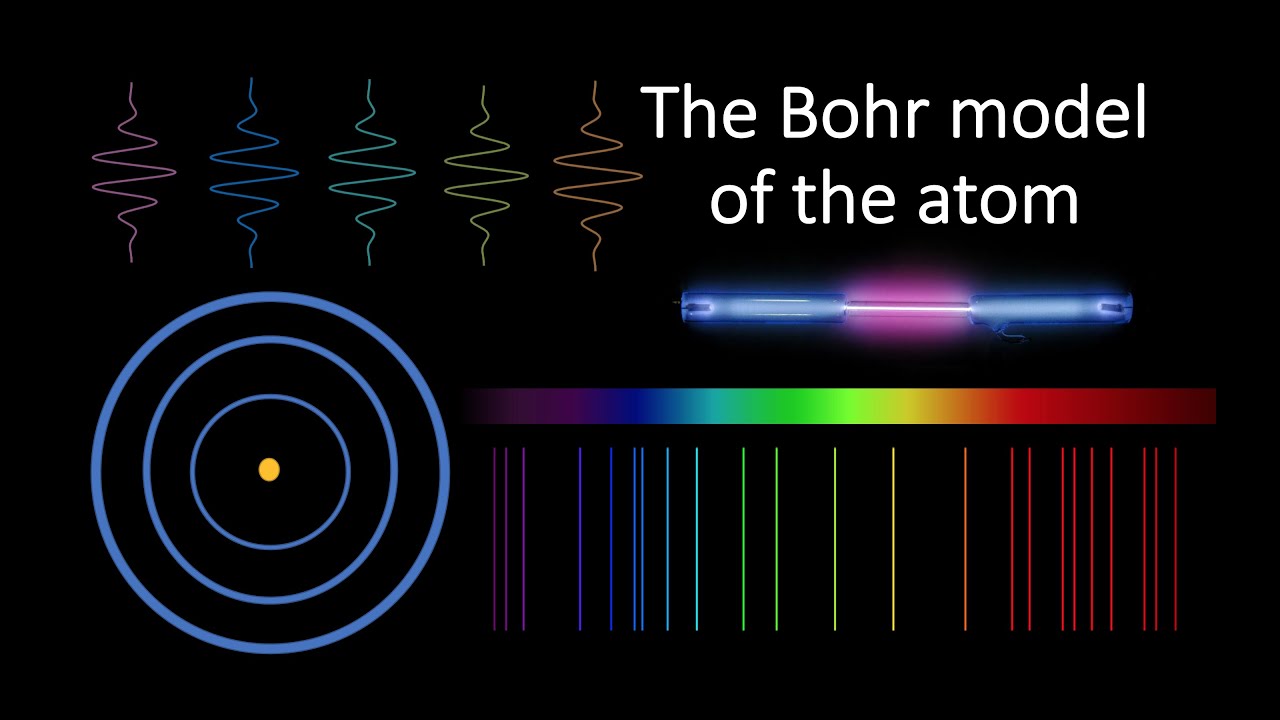
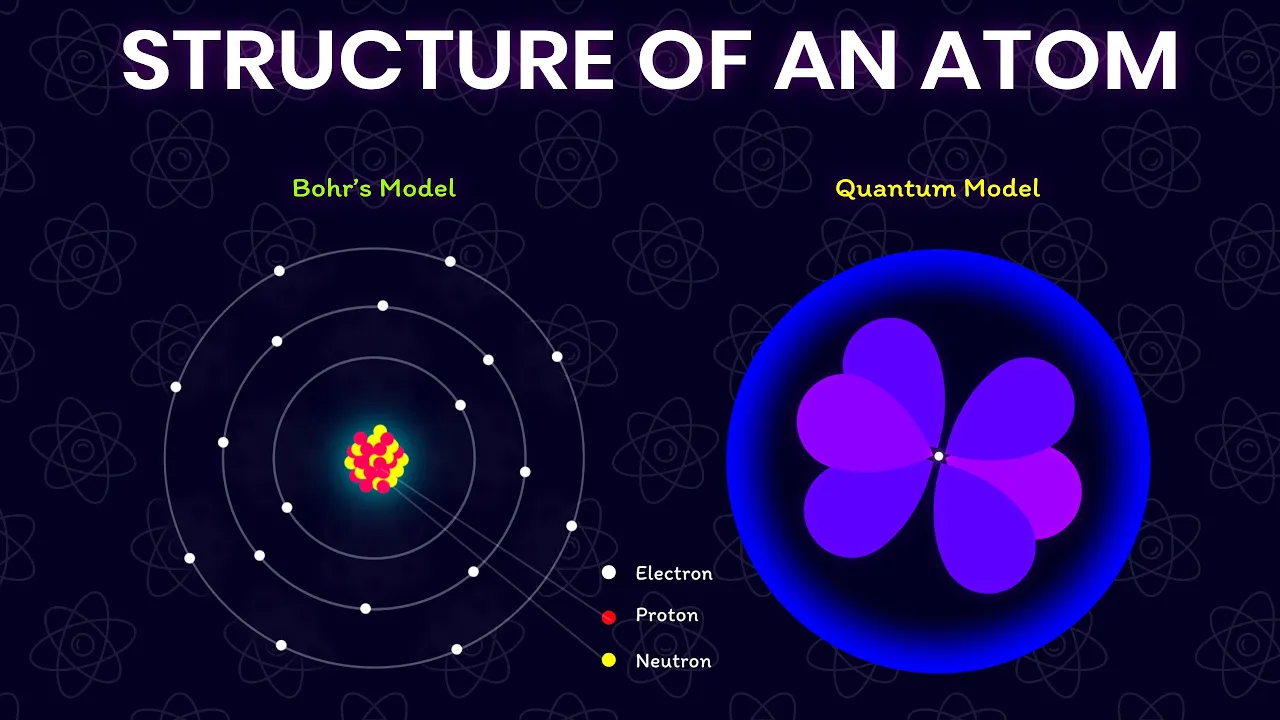
The Bohr Model of the Atom, which incorporates energy quantization to explain atomic stability and hydrogen emission spectra.
The development of formal Quantum Mechanics, including the Schrödinger wave equation and Heisenberg's Uncertainty Principle.
7K views283likes7:50Original Release: 2020-03-30
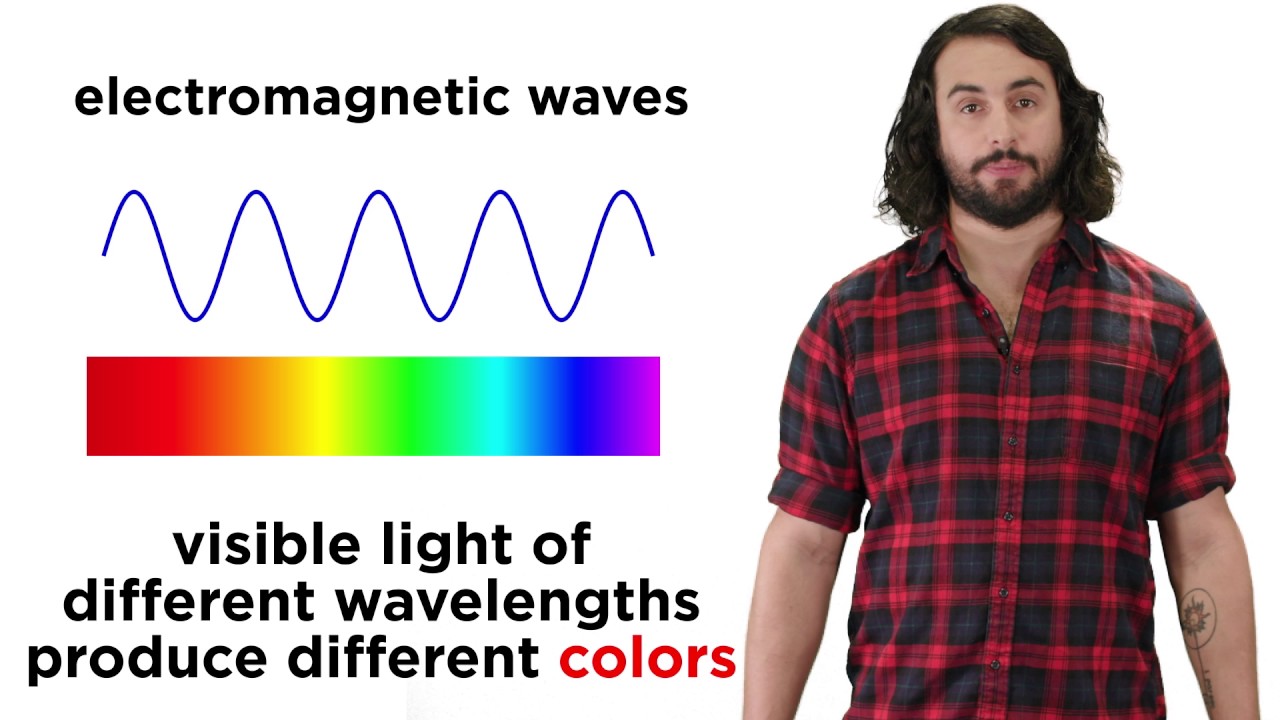
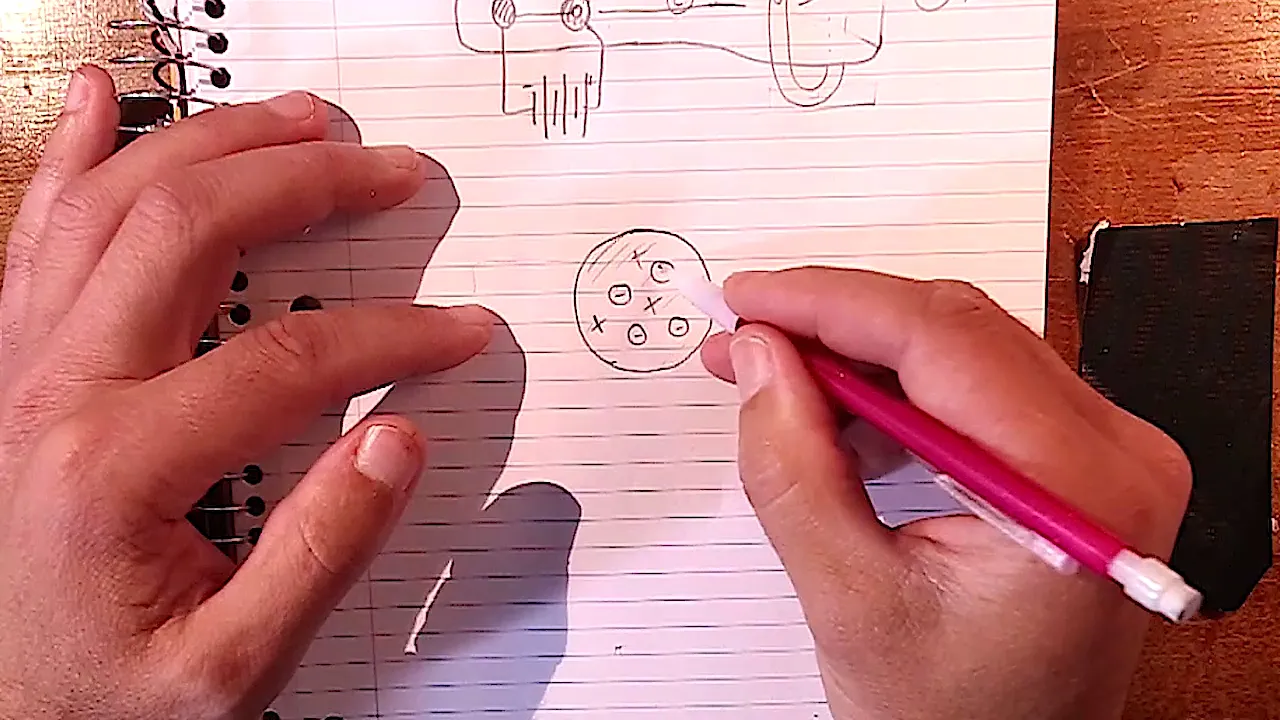
okay morning boys I'm not sure how this is going to work but I'm gonna do my best and we're going to go through a little bit of the you the catastrophe and try to explain it in terms of blackbody radiation and going from classical physics to modern physics and why we needed a change in mathematics to get this to work so with you big catastrophe they originally looked at atoms vibrating when they vibrate you get this continuous DM wave being pushed out which meant that the more if I braided the higher the energy electromagnetic wave so basically as you increase the temperature the more vibrations and you get a higher electromagnetic wave produced and that should have been infinite as you got higher and higher temperatures the wave should have gone higher and higher and got into the range of x-rays and gamma-rays but they were finding this was not happening so for example as you increase the temperature you should have got basically more and more energy out of the way so we might have had a visible light here UV x-rays Emma that is how classical physics would have explained how atoms release energy as they increase their temperature but this wasn't happening what they actually saw was at higher energies the curve started to come down and classical physics could not explain why this curve was coming down so there needed to be some new ideas coming and Max Planck started to get some pretty good ideas he still tried to use classical physics but he produced a new idea that there was actually chunks of energy coming out rather than a continuous way okay this is where something like the ball model explains it so well you remember all this stuff happened before the ball model was invented but we know now that electrons jumping energy shells is actually what is releasing the energy the electromagnetic energy and of course we know now that it's all quantized eg it has to go and stepwise form so I'm just going to go on to a little slide you can see there that because the classical theory didn't match the experimental data there had to be something else happening so at shorter wavelengths it predicted infinite energy but of course this wasn't happening it was dropping back so this contradiction they call it the ultraviolet catastrophe and I'm going to explain it using the Bohr model at low wavelength had agreed pretty much okay we know that electrons just dropping down energy shells in the inner energy shells probably release a little bit of the visible light maybe in the red range maybe some of the larger drops right I got in a blue light range and even some of the largest drops might have got into the ultraviolet the lower ultraviolet range but what happens if the electrons remember the electrons have you have to put energy in to get them up at energy level and then they drop back down and release energy what happens when the electron gets shot so far out it just basically disappears it can't drop back into the atom and so we weren't seeing that massive infinite energy being produced because the electron had gone outside the actual atom so that's why it agrees at lower energies but only very very little ultraviolet light was produced because the electrons were shot so far outside the atom they couldn't come back and that's basically what explains the curve coming back down very little of this energy was occurring because basically the electrons weren't coming back to the atom they were disappearing altogether these parts of the curve in the inner shells of the electrons the electrons were just ducking down one or two or three energy levels that occurred quite well the experimental data but it took Max Planck ok the idea that there must've been some sort of quantized factor what we now know as photons to actually work all this out now Max Planck was a pretty good sight as he worked all this out through experimentation but he tried to use classical physics to work it out and he couldn't get the numbers to agree so Max Planck was was fantastic and use experiments to work this out but he couldn't work out the mathematics it actually took Einsteins about 1905 to start to sort this issue out mathematically and of course this was the birth of quantum physics and and of course quantum physics is the standard now some great scientists grading and power Lee Heisenberg develop quantum physics explains everything but it did take Max Planck to put all that experimental data together for them to work so hopefully that will explain blackbody radiation a little bit better to you I'm gonna go on to photoelectric effect next so I'll post this video up and then hopefully at the end of the week we'll do a bit more on photoelectric effect and I'll do an experiment for you
Up Next
42:32
Modern Physics Part 1: History Up to the Bohr Model
@learnphysicsathome7433
157 views•2020-06-08

12:53
21cm Hyperfine Transition in Neutral Hydrogen: Radio Astronomy Basics
@AaronRobertParsons
12.4K views•2011-10-13

32:32
NMR Spin Physics I: Zeeman Effect, Resonance Condition & Larmor Frequency
@nptel-indianinstituteofsci8064
2.3K views•2024-01-17

27:14
Entropy and the Second Law of Thermodynamics Explained
@veritasium
27.5M views•2023-07-01
Related Study Plans & Knowledge Roadmaps
Structured learning paths in Physics
physics
Nuclear Physics (Decay, Fission & Reactors)
01Atomic Structure and the Binding Force
02Radioactive Decay and Half-Life
03Nuclear Fission Mechanics and Chain Reactions
+ 2 more learning modules
12h5 modules
Explore Roadmap
physics
Soft Matter (Polymers, Colloids & Rheology)
01Foundations of Soft Matter & Thermal Forces
02Polymer Physics and Macromolecules
03Colloids, Surfactants, and Self-Assembly
+ 2 more learning modules
38h5 modules
Explore Roadmap
physics
Analytical Mechanics: Lagrangian & Hamiltonian
01Mathematical Foundations: Calculus of Variations
02From Newtonian Mechanics to Constraint Dynamics
03The Principle of Least Action & Lagrangian Mechanics
+ 3 more learning modules
28h6 modules
Explore Roadmap
physics
General Relativity (Spacetime & Cosmology)
01Foundations of Relativity: Special Relativity
02The Geometry of Spacetime: Equivalence Principle & Curvature
03Einstein's Field Equations: The Mathematics of Gravity
+ 2 more learning modules
55h5 modules
Explore Roadmap