












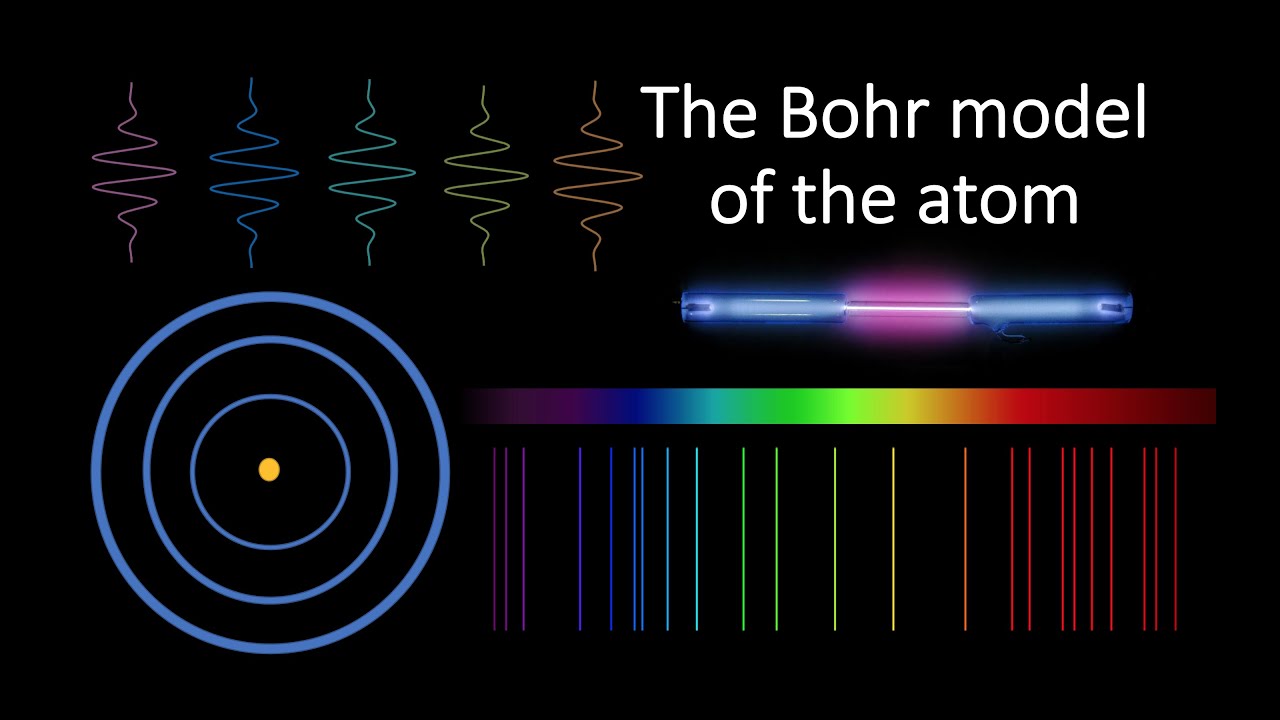
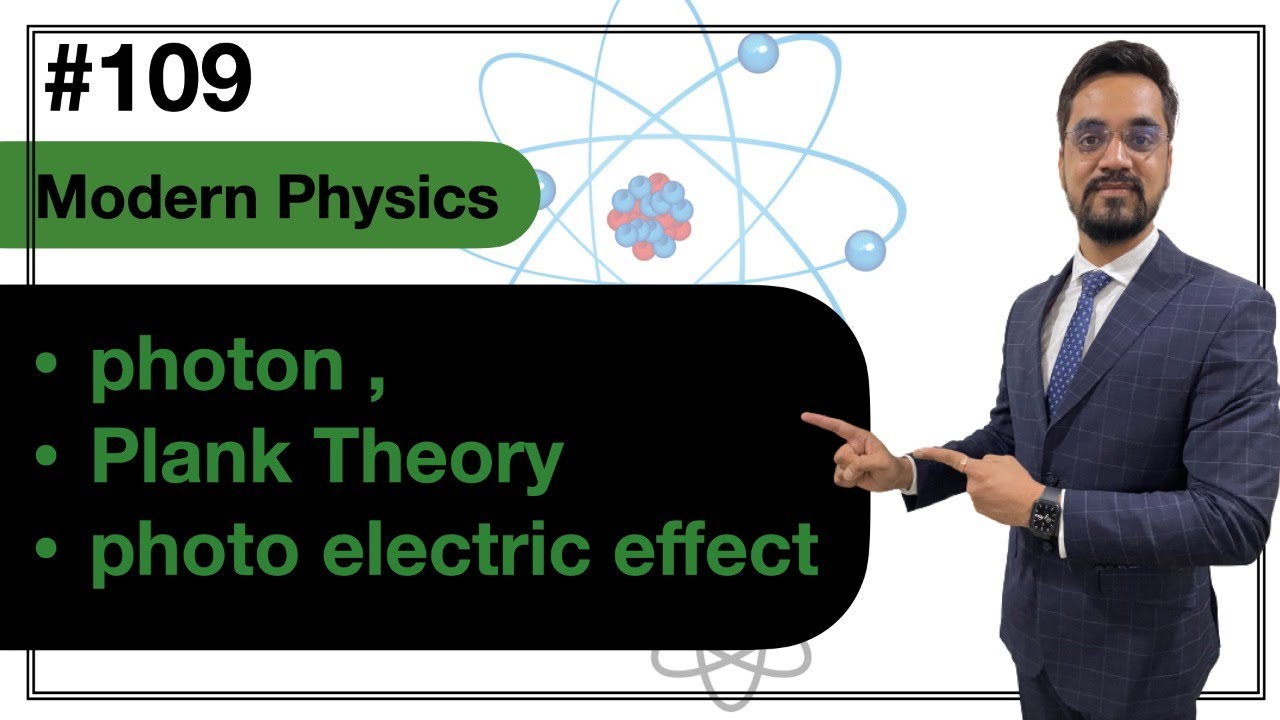








Planck's constant (6.63 × 10^-34 J·s) defines the fundamental scale where quantum mechanics governs reality, emerging from Max Planck's resolution of the ultraviolet catastrophe in black body radiation. Planck proposed that energy is quantized—particles can only vibrate with discrete energy levels that are integer multiples of a minimum energy (frequency × Planck's constant)—rather than taking any continuous value as classical physics assumed. This revolutionary idea, initially a mathematical trick to solve the black body problem, established that light itself is quantized into indivisible packets called photons, with each photon carrying energy equal to its frequency multiplied by Planck's constant. Einstein later used this principle to explain the photoelectric effect, earning his Nobel Prize and sparking the quantum revolution of the 1920s. The Planck constant appears in all quantum equations and defines the smallest meaningful distance (Planck length) where classical concepts of space and time lose meaning.
Planck's Constant and the Origin of Quantum Mechanics | PBS Space Time
Added:[Music] This episode is supported by The Great Courses Plus. The plank constant defines the size scale at which the familiar physics of our macroscopic reality gives way to the weirdness of the quantum world. You might not expect the quantum behavior of the microscopic to be observable on all scales of the universe, but it is. In fact, you can see the effect of this quantum behavior and even measure the plank constant just by observing the color of sunlight. Zeno's famous paradox tells us that it's impossible to overtake a tortoise. Run as fast as you like. By the time you reach the tortoise's initial position, it'll have moved forward. reach that second position, it'll have moved forward again. To overtake a tortoise, you need to travel to its previous position infinite times.
Each of those steps is shorter than the last, but there are still an infinite number of them. There are a few problems with this paradox, but one is that it assumes that space is infinitely divisible. This is not true. As your distance to the tortoise becomes unthinkably small, there arises a quantum uncertainty in your location.
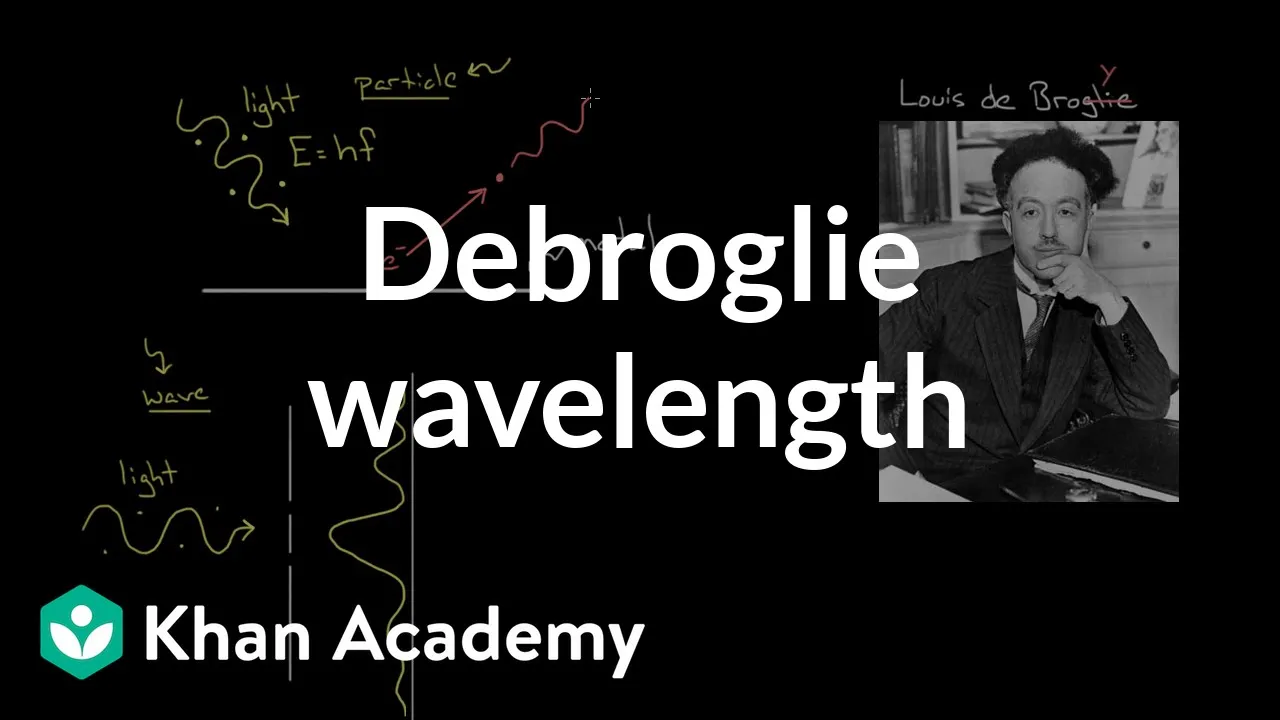
Get close enough to it and this quantum blurriness means it's impossible to say whether your location is really behind or in front of the tortoise. We talked about this recently when we discussed the de Bruy wavelength. This and more formally the Heisenberg uncertainty principle describes the smallest distance for which an object's location can be meaningfully defined. The tiny plank constant at 6.63x 10us 34 JW seconds sets the scale of this quantum blurriness. So it also sort of defines a pixel scale to reality. In many ways it defines the divisibility of the quantum world. In fact, the plank constant appears in essentially all equations that describe quantum phenomena. The Heisenberg uncertainty principle and the de bruy wavelength, but also the Schrodinger equation, the energy levels of electron orbits, and importantly the relationship between the energy and frequency of a photon. It also sets the size of the plank length which is hypothetically the length below which the concept of length loses meaning. It may define the scale of quantum reality but the influence of the plank constant can be seen even on our scale. For example, along with the sun's temperature, it sets the color of sunlight. If the plank constant were 25% smaller, the sun would be violet. all else being equal. In fact, the mystery of why hot things glow the color that they do led us to discover the quantum universe in the first place. Science fact. Everything in the universe glows with the light of its own internal heat.
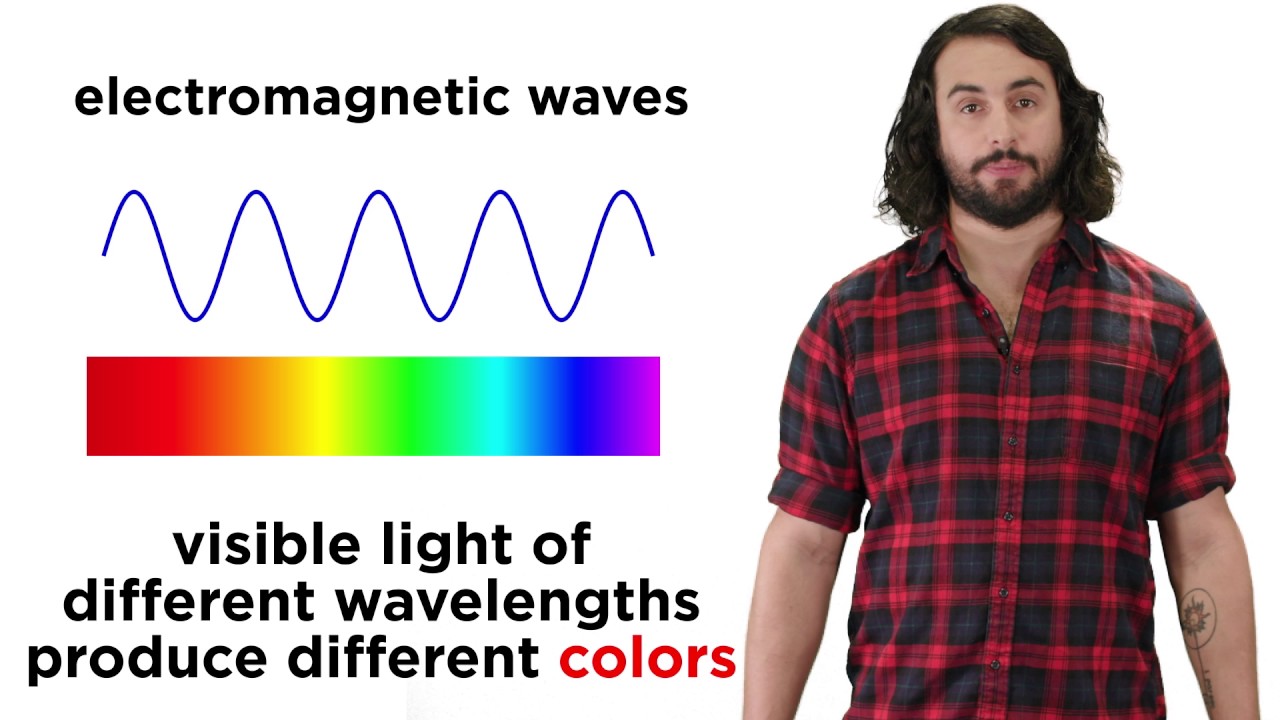
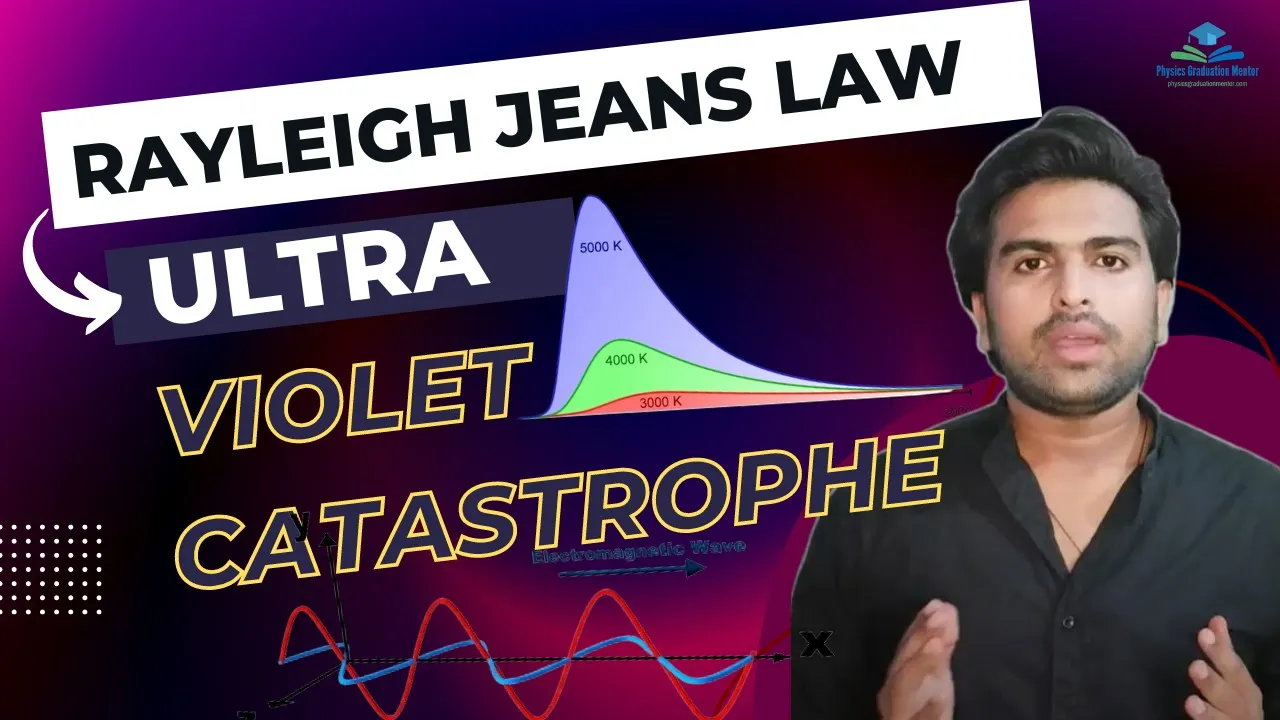
Heat is just the energy in the random motion of particles comprising an object. Accelerated charges produce electromagnetic radiation light. And so an object made of jiggling charged particles like electrons and protons glows. The hotter an object is, the faster its particles jiggle. And so the average frequency of the resulting particles of light of photons increases with temperature. This average frequency defines the color that we see. The sun is yellow because its 6,000 Kelvin surface produces more photons in the greeny yellow part of the electromagnetic spectrum than anywhere else. The blue super giant star Ryel is 12,000 Kelvin and so it pumps out lots of high frequency blue light and even more ultraviolet. Your temperature is around 310 Kelvin. So your heat glow is mostly in low frequency infrared photons. It was Sir Isaac Newton who first analyzed this heat glow in the 1660s when he used a prism to split sunlight into its component colors. But he didn't realize that the relative brightnesses of those colors held the key to the quantum world. By the late 1800s, the distribution of brightnesses with frequency produced by hot objects had been mapped in careful experiments that blacked out anything but the glow of heat. The resulting black body spectrum looks like a lopsided bell curve.
However, the deep physics behind this shape remained a mystery. The key to unlocking the mystery lay in finding a mathematical description for the black body spectrum. At the beginning of the 20th century, a couple more Brits, Lordley and Sir James Jeans, attack the problem with a relatively new idea called the equipartition theorem. It states that an object's heat energy will end up jiggling all of its particles in all the ways that they can be jiggled.
In physics speak, at equilibrium, energy is evenly spread between all possible energy states. This simple idea allowed our good Englishman to figure out the frequencies of the photons produced by all of this thermal motion. The resulting jeans law described the black body spectrum perfectly for low frequency infrared light. But for higher frequencies like visible and ultraviolet, it predicted brightnesses that were way too high. Worse, it predicted that the intensity should eventually approach infinity as frequency increased. It paints the crazy picture of a universe full of infinite extreme energy gamma radiation. This appears not to be the case. This was called the ultraviolet catastrophe. It was catastrophic because it meant that something was fundamentally wrong with the classical physics that went into the genes law. The problem turned out to be that in classical physics everything can be infinitely divided. There's no smallest anything. The genes calculation allows particles to vibrate with any amount of energy all the way down to infinite decimally tiny wiggles. When they tried to mathematically distribute heat energy to equip partition it across possible energy states, way too much energy got packed into the countless very tiny energy states at high frequencies.
Mathematically, genes were chasing Zeno's tortoise infinitely dividing the smallest remaining energy states and so never ever finding an end to them.
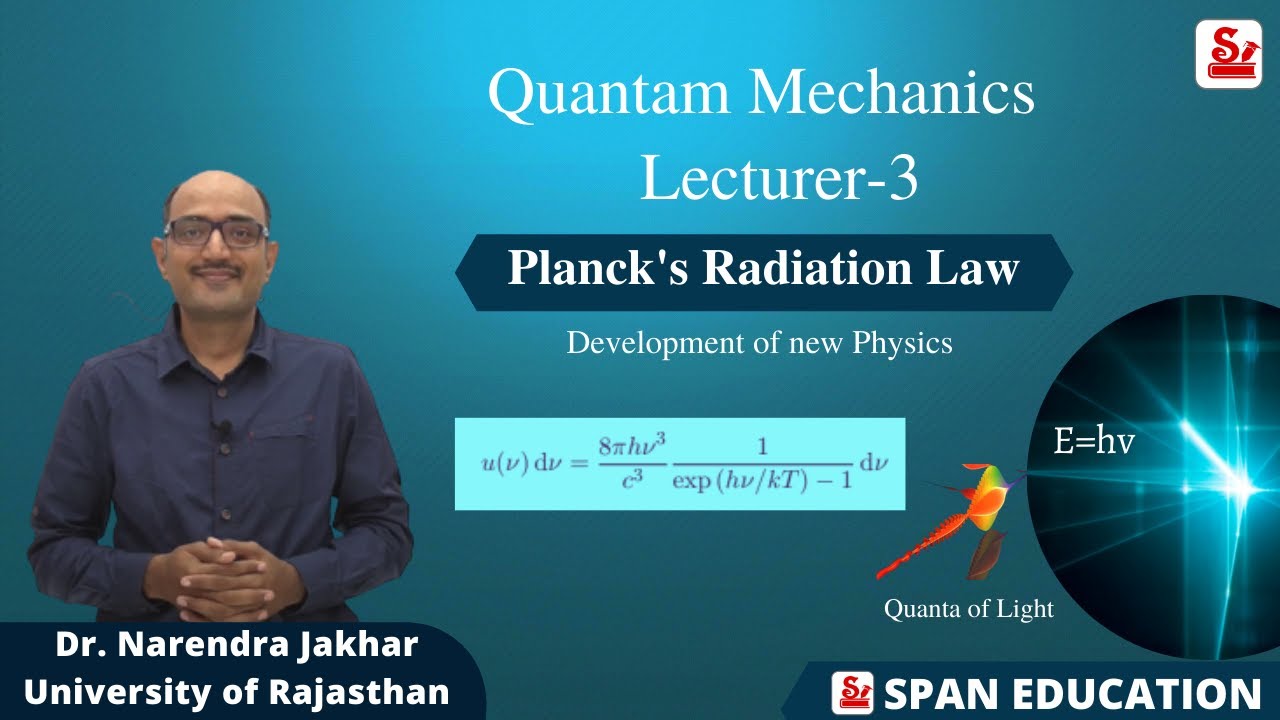
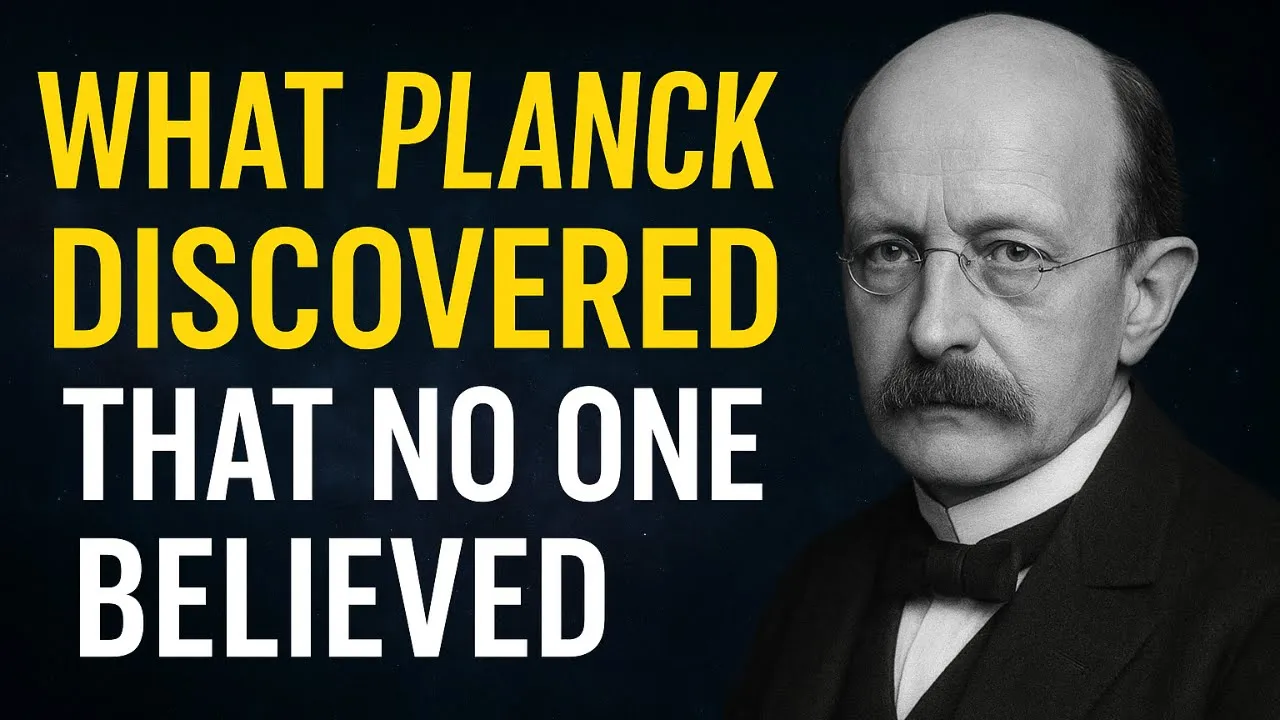
German physicist Max Carl Ernst Ludwig plank resolved the catastrophe almost by accident while searching for a new mathematical approach to deriving the black body spectrum. He needed some sort of math trick to count those supposedly infinite energy states in what he described as a moment of desperation. He tried something pretty silly. He decided that those particles could only vibrate with energies that were a multiple of some minimum energy. He quantized the energy states. He set this minimum energy to be the frequency of a particle's vibration times a very very small number, a number that had yet to be measured. That number became the plank constant. It was a move similar to smooshing your hands on the keyboard when your computer freezes.
But it worked. It allowed Plank to equipartition energy in a way that solved the ultraviolet catastrophe. Why?
Because it limited how much energy those high frequency vibrations could hold.
Planck's new equation described the shape of the black body spectrum exactly across all frequencies of light. It became Planck's law. Now, Max Plank didn't originally think that these quantized energy levels were real. It was supposed to be a math trick. He expected his new constant to turn out to be zero, which would mean no interval between energy states, no quantization, no minimum energy. In that case, the plank constant would have canceled out in the final equation. But it didn't. The plank constant is firmly entrenched in the plank black body law.
Energy quantization is real. Now the actual value of the plank constant still had to be measured. But given a mathematical form for the black body spectrum, it was possible to do this just by varying the constant until the plank law matched the observed spectrum.
But once you know the plank law and an object's temperature, you can calculate the plank constant just by finding the brightest part of an object's heat glow.
For example, by observing the color of the sun. As usual, it took Albert Einstein to fully understand the physics behind Planck's strange quantized vibrations. Einstein realized that it's actually light that is quantized. Those little vibrating particles do have quantized energies, but it's because they can only gain or lose energy by absorbing or emitting one particle of light at a time. And that light comes in indivisible energy packets. Planck's discovery was the clue Einstein needed to hypothesize the existence of the photon part wave part particle carrying a quantum of energy equal to the now familiar frequency of the wave times the plank constant. Einstein proved this through the photoelectric effect. It got him the 1921 Nobel Prize in physics shortly following plank's Nobel of 1918.
These discoveries sparked a frenzy of sciencing that led to the quantum revolution of the 1920s. And that little number that Maxplank came up with in his moment of desperation, the plank constant, remains at the heart of all things quantum. But not just quantum. By defining the shape of the black body spectrum, the plank constant can be read in the color of the sun and the stars in the brightness of the different colors of the rainbow. And combined with a small handful of other fundamental constants, it governs the behavior of everything in this spaceime. Thanks to The Great Courses Plus for sponsoring this episode. The Great Courses Plus is a service that allows you to learn about a range of topics from Ivy League professors and educators from other schools around the world. Go to the greatcoursesplus.com/spacetime and get access to a library of different video lectures about science, math, history, literature, or even how to cook, play chess, become a photographer. New subjects, lectures, and professors are added every month. With The Great Courses Plus, you can watch as many different lectures as you want, anytime, anywhere, without any tests or exams.
Help support spaceime and start your 1 month trial by going to the greatcoursesplus.com/spacetime.
Last week we talked about gravitational lensing and you guys asked all the good questions. Okay, a lot of you wanted to know why it is that the Einstein cross is a cross rather than a full ring. So if your light source, your lens, and your telescope are all perfectly lined up, and your lens is perfectly circular around the line connecting the three, the optical axis, then the light source will be stretched out into a circle. We call that an Einstein ring. In that case, all of the paths around the lens are equally good and so light from the source can travel all of them. But perfect alignment is almost impossible for something as small as a quazar. The quazar is always slightly offset from the optical axis. Also, the lens mass distribution is never perfectly circularly symmetric around this axis.
It's elongated in one direction or another. The result is that only a few paths around the lens get deflected directly back to us. If the alignment is still pretty close, then you see four images. In fact, there's really five four magnified images and one heavily demagnified image in the center that we can't see. On the other hand, if the light source is large, for example, an entire galaxy, then it's easier for at least part of the galaxy to be located directly on the optical axis. then you'll see an Einstein ring. There are some cases where you see four individual quazar images connected by an Einstein ring. That Einstein ring is actually the galaxy that hosts the quazar. Gary Palmer would like to know how we can really be confident measuring the mass of a gravitational lens given we don't really know the composition of that lens. Well, it's true that for a given lens, there could be a range of different configurations of matter that produce the same distribution of light seen in the lens. So, image positions and brightnesses. But if you know the distance to the light source and the distance to the lens both from red shift, then you can explore an enormous range of possible lens mass distributions with computer simulations.
So you end up with a set of virtual lenses that can reasonably produce the observations. That set will span a range of masses, but that range is usually pretty small. So we end up with a best mass and error bars defined by that range. Prasad Deshmuk and a few others asked, is the cosmic microwave background radiation gravitationally lensed? Actually, yeah. The CNB is affected by weak lensing. So all of its blobs are very slightly distorted. This can change the power spectrum. So the distribution of the sizes of its blobs, which is really important for measuring cosmological parameters. It can also potentially introduce B mode polarizations. That's exactly the same type of swirliness that primordial gravitational waves should produce. So yeah, we're going to need to correct for lensing in the CMBB. Ed Egamont wonders if gravitational waves are also subject to gravitational lensing. Well, yeah.
Gravitational waves are ripples in the fabric of spaceime, so they have to go where the spacetime goes. Dylan T tells us that he met his wife by suggesting that they spacetime and chill. I'm glad we could help you guys get entangled.
[Music]
Up Next
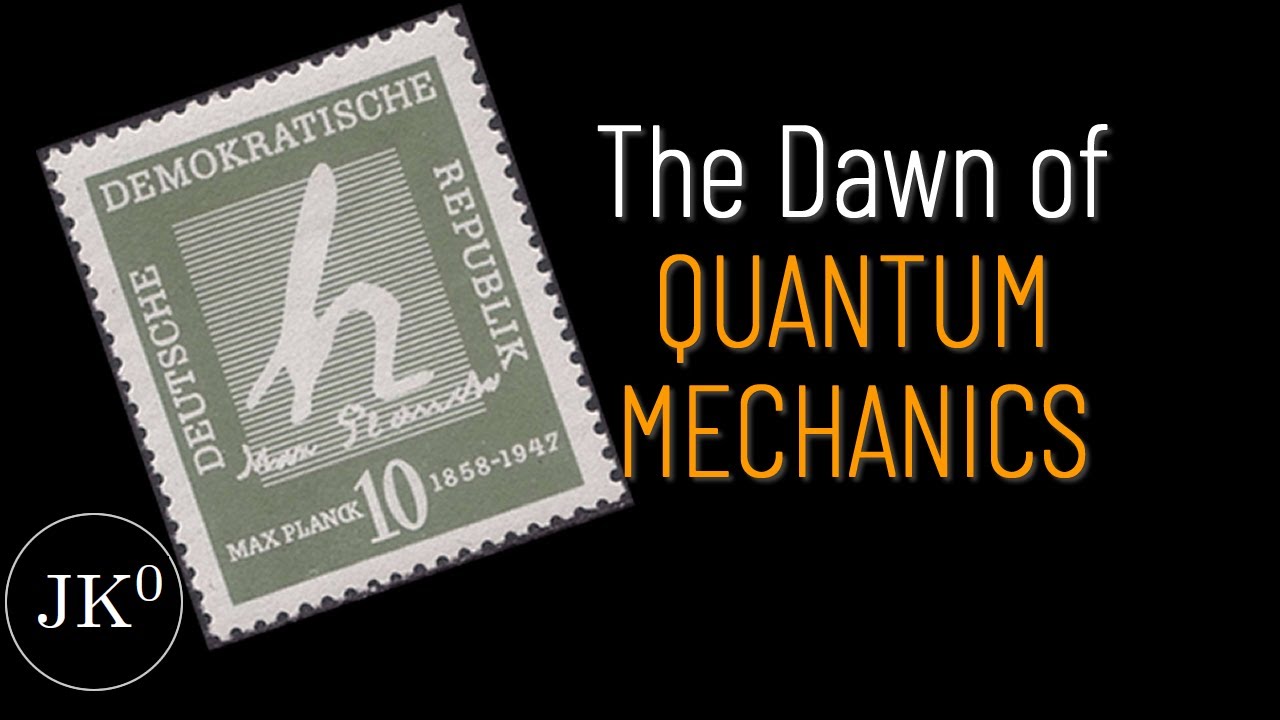
Planck's Quantum Revolution: The Math Trick That Changed Physics
@jkzero
376.4K views•2024-02-04

21cm Hyperfine Transition in Neutral Hydrogen: Radio Astronomy Basics
@AaronRobertParsons
12.4K views•2011-10-13
Understanding Geodesics and Curvature in Spacetime: Clarifying Parallel Transport
@pbsspacetime
341.3K views•2015-07-08

Entropy and the Second Law of Thermodynamics Explained
@veritasium
27.5M views•2023-07-01
Related Study Plans & Knowledge Roadmaps
Structured learning paths in Physics