










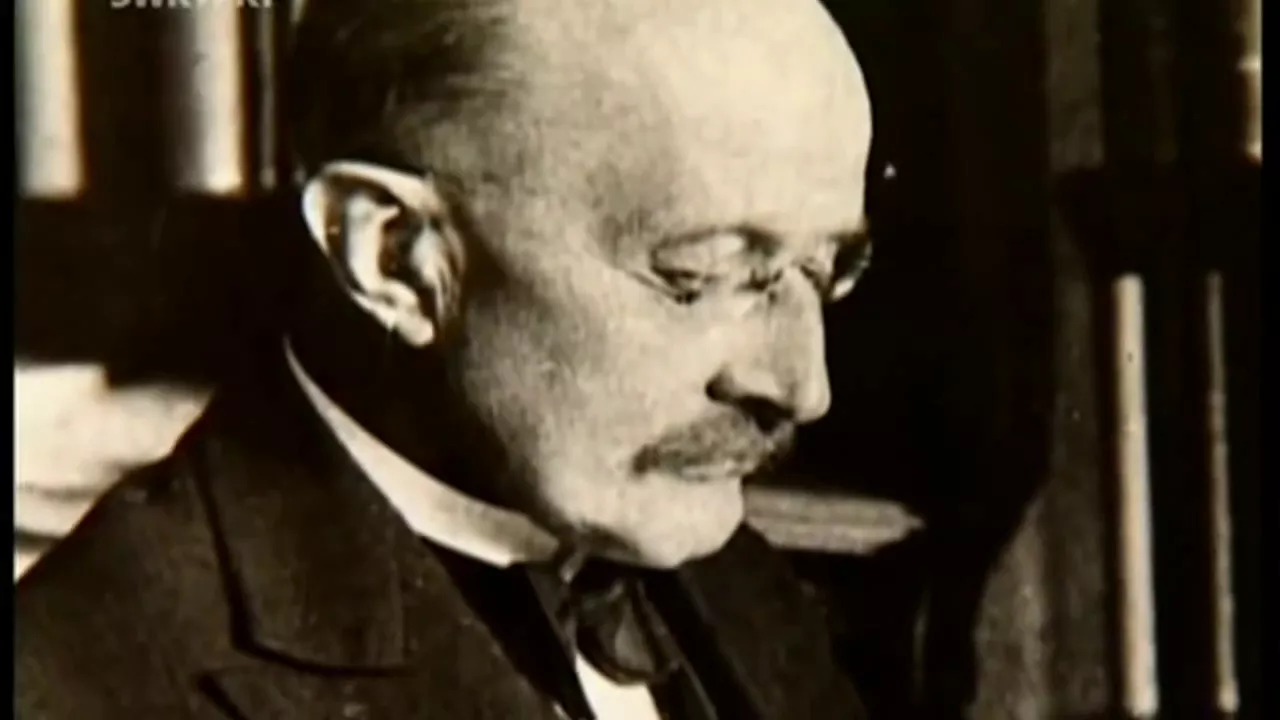









Max Planck revolutionized physics by introducing energy quantization as a mathematical trick to solve the blackbody radiation problem, discovering that energy comes in discrete packets (quanta) rather than being continuous, which led to the birth of quantum mechanics; he initially used this approach purely as a phenomenological tool to derive his famous formula without fully understanding its physical meaning, later realizing that energy must be quantized in integer multiples of hν to explain the observed spectrum.
Planck's Quantum Revolution: The Math Trick That Changed Physics
Added:Classical Electromagnetic Theory: Understanding light as continuous waves and how classical physics describes electromagnetic radiation.
Thermodynamics and Blackbody Basics: The study of heat, thermal equilibrium, and how an idealized perfect absorber/emitter (a blackbody) behaves.
The Ultraviolet Catastrophe: The conceptual crisis in late 19th-century physics where classical theories predicted infinite energy emission at high frequencies.
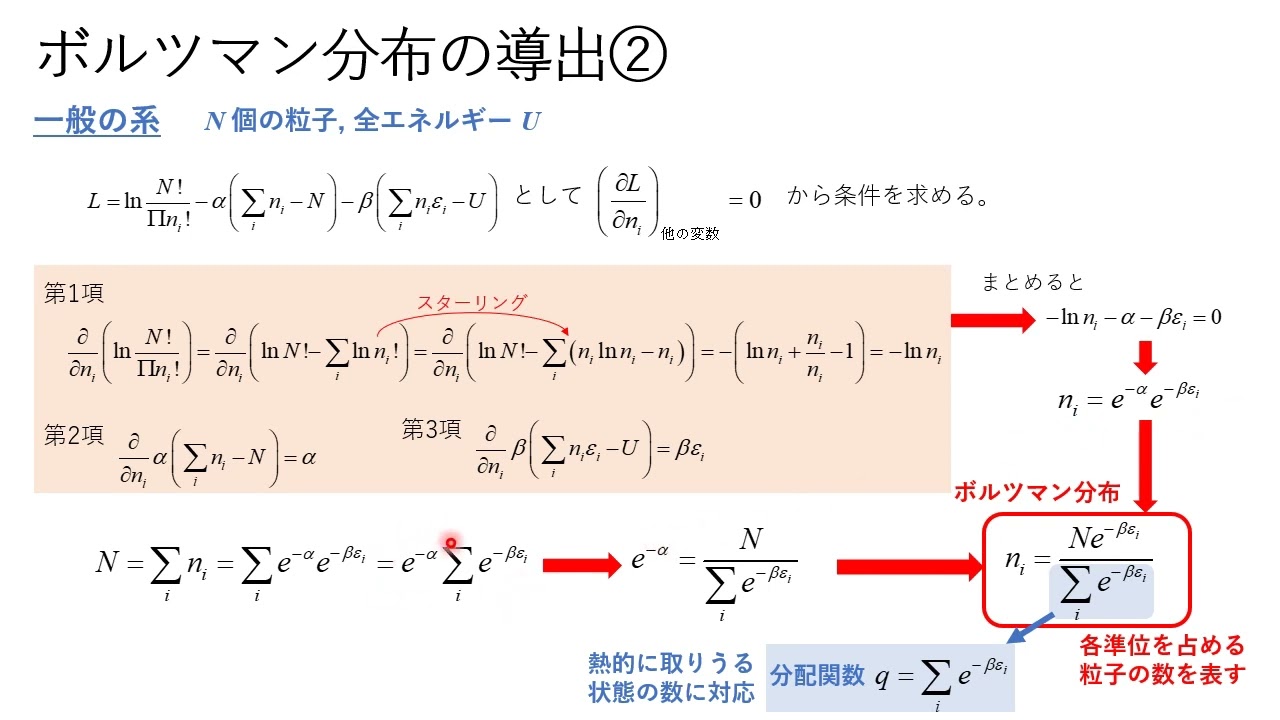
Statistical Mechanics and the Boltzmann Distribution: The mathematical foundation of how energy is distributed among particles in thermal equilibrium.
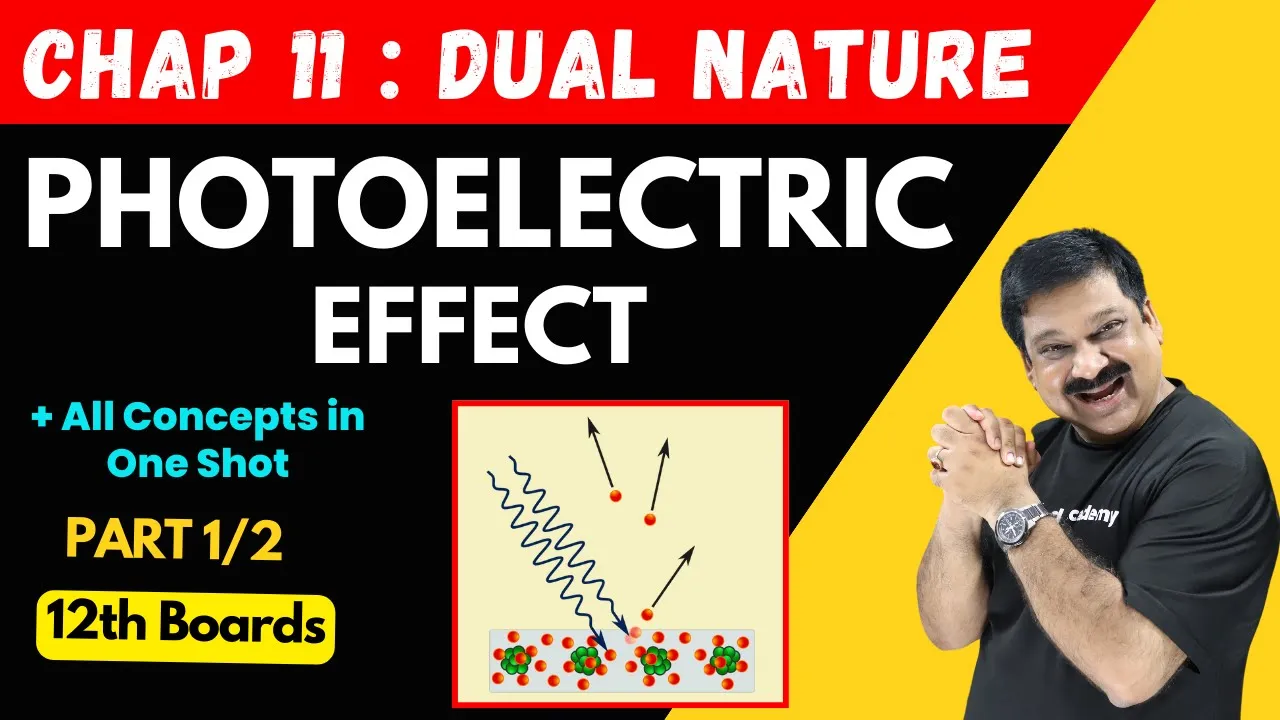
Einstein's Photoelectric Effect: How the concept of energy quantization was physically validated by treating light as discrete packets of energy (photons).
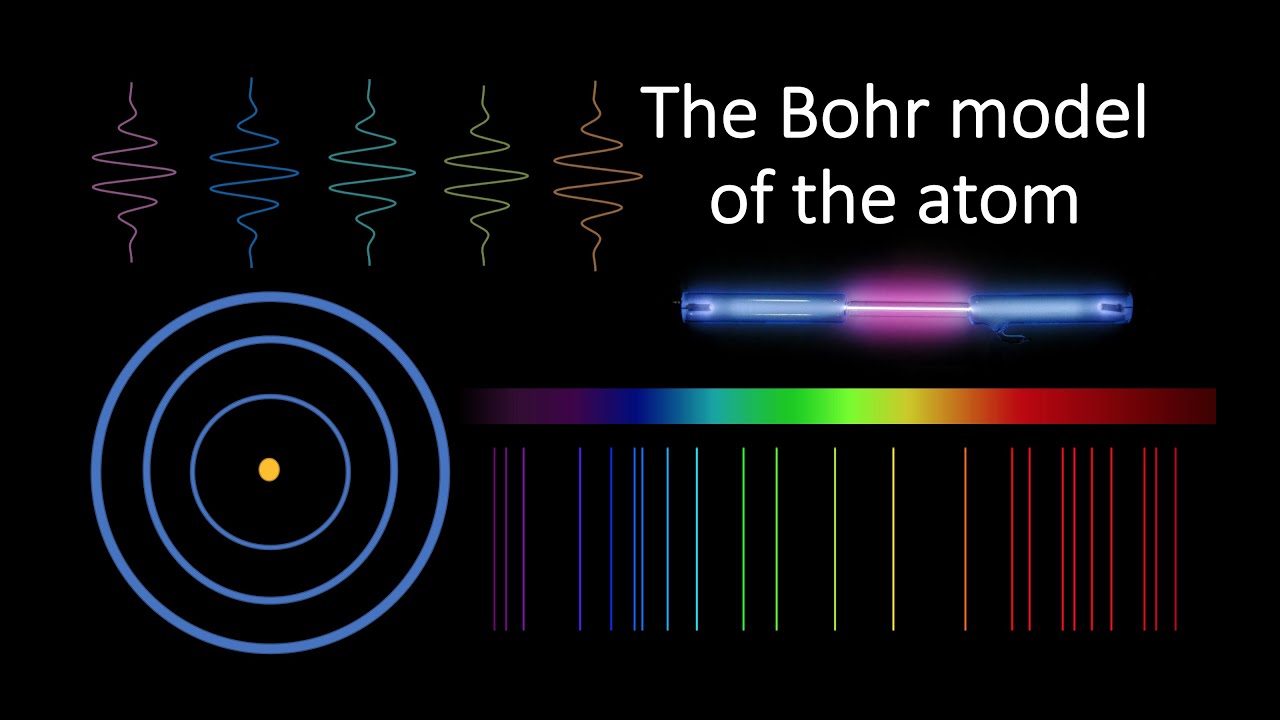
The Bohr Model of the Atom: The application of quantization to atomic structure, explaining why electrons occupy discrete energy levels rather than spiraling into the nucleus.
Wave-Particle Duality: The broader implications of quantum theory, showing that both matter and radiation share wave and particle characteristics.
The Development of Modern Quantum Mechanics: Introduction to the Schrodinger Equation, Heisenberg's Uncertainty Principle, and wave function probability.
376.4K views13.3Klikes24:20Original Release: 2024-02-04
in this video I want to show you how the study of hot objects broke classical physics and the only way to fix this mess was by using a math trick that led to a revolution in physics called quantum mechanics you may know the story already but here I want to show you the mathematical shortcuts the wild desperate guesses and how the idea that energy comes in discrete amounts solves the problem one of the great marvels of 20th century physics PHS is quantum mechanics a revolutionary understanding of nature at the scale of atoms and molecules that today enables the inner workings of every single electronic device like the one in front of you right now most videos and textbooks explain that everything is started when Max blank had the weird but brilliant idea that energy comes in a small packages called quanta which he used to solve a mystery about light and heat but it turns out that blank first solved the problem using a guess and later he worked backwards to find a physical interpretation to his conjecture using a math trick this is the less told story of the dawn of quantum mechanics if you have ever taken a course on quantum mechanics or read a popular physics book on the topic you might have encountered terms like black body radiation the ultraviolet catastrophe and how this led to the development of quantum mechanics in case you haven't here is a recap during the late part of the 19th century physics chemistry and Engineering were changing the world steam power was literally the engine of the Industrial Revolution more efficient machines and artificial lights required a better understanding of heat gases electricity and light a basic problem was the radiation emitted by hot objects it was a well-known fact hit an object and it will glow but scientists didn't know the details they didn't have a mathematical description and a physical explanation for this common phenomenon the lack of a clear understanding of such a basic observation was a scientific embarrassment imagine a metal box at a well- defined temperature with a little hole for the radiation to escape physicist decomposed the light coming from these hold objects and measured how much of each color was produced in other words they measured the intensity of light as a function of its frequency the data looked something like this with no light emitted close to zero a bump in the middle and a decrease at high frequencies this curve is called the black body Spectrum the challenge was to find a mathematical expression that could explain this data from physical principles one of the most renowned physicist in the study of heat electricity and light was Gustaf kof in 1860 he formally defined the black body and from experimental observations established that the unknown curve describing the energy density of this spectrum should be a universal function of the frequency of light new and the temperature T and challenged the physics Community to find the mathematical form of this curve and its physical meaning experiments show that when the temperature of the object was increased the curve grew very fast and the peak shifted to higher frequency in 1879 Joseph Stefan in Vienna noticed that the area under the curve was was proportional to the temperature to the fourth power where the constant Sigma can be determined from data 5 years later in 1884 his most famous student ludvic boltzman used thermodynamics to derive Stefan relation which became known as the Stefan boltzman law this is in fact the relation that I used in a previous video to explain the double flash observed in nuclear explosions make sure to check that video later if you haven't after a few years and also using in thermodynamics Pham Vin in Germany was able to derive a powerful relationship between the peak of the black body spectrum and the temperature he found that the ratio was a constant in other words the frequency at the peak was proportional to the temperature this relation became known as V's displacement law these two laws allow determining the temperature of any object by simply measuring its spectrum and finding the area under the curve or the fre frequency at which the peak of the spectrum occurs from a noen to our sun and distant stars but the mystery of the unknown Universal function persisted after three years and using these two laws Vin used boltzman statistical mechanics to produced the first successful formula describing the black body Spectrum where A and B are constants to be determined by experiments this formula works really well at high frequencies but it fails to describe the data at low frequency but in 1896 and the following four years this was the best description of the black body radiation because measurements at low frequencies were challenging and quite unreliable in 900 in the UK Lord Riley with some later contribution by James jeans proposed a different formula that worked extremely well at low frequencies but it failed completely in the mid and high range this new formula incorrectly predicts an ever increasing growth for high frequencies that was later called the ultraviolet catastrophe by Paul arest but this name was invented a decade later so I find it irrelevant for this story L Riley applied the statistical mechanics invented by boltzman and the electromagnetic theory of Maxwell it was clear that this relation was just an approximation of the still unknown Universal formula but at least now we had the two limits all that was needed was a good way to patch them in the middle this is the point where most versions of the story introduced Max plank as a person who was able to find a formula to interpolate between Vince and Riley jein limits by introducing energy quantization but the truth is quite different although it's clear that he used the results from Vin there is no evidence that plank ever knew about L Riley's formula so let's see what plank actually did Max blank was a student of Gustaf kirov the physicist that defined the black body and challenged the physics Community to find the universal function Plank's expertise was thermodynamics like most of the theories of the time and like many he was not a big fan of boltzman's statistical mechanics boltzman's ideas work for explaining many results in thermodynamics and the whole idea of matter as an immense number of atoms and molecules following statistical rules had been fully embraced by chemist but it took a while before physicists considered the idea of tiny invisible particles seriously The Mystery of the universal function describing the black body radiation was a Hot Topic and plank took on the challenge proposed by his Dr fata from a pure thermodynamic point of view for plank one of the key Concepts in physics was entropy usually described as the degree of disorder of a physical system following this approach plank described the problem as a collection of charged particles in the material that he called herion electromagnetic oscillators and used Maxell equation to characterize their thermal equilibrium with the radiation one of his initial findings in a series of papers published between 1887 and 1899 was that the energy density could be decomposed as the product of two factors one describing the number of states for the oscillators and the other given by their internal energy so the universal function had to have this form where C is a speed of light in this way the internal energy of a system described by V law depends on two constants the overall factor a and the term in the exponential B using published data from experiments by Auto lumer and earn spring chime plank found the constant a to have this value this is what today we call plank constant and denoted by H comparing this with the modern value of H shows that plank value over a century ago was very precise but this is a consequence of the incredibly precise experiments so the credit here goes to the fantas classic measurements of lumer and print time I believe that one point that is not emphasized enough in videos and textbooks is the vast and crucial work by experimentalists developing new and sophisticated ovens and Cavities for radiation measurements new techniques and sensors as well as clever methods to detect very weak radiation and put the technology to the Limit some of the heroes of this story are uto lumer Ern sprim HR rubben and Ferdinand k BB no theoretical development would have been possible without the precise measurements to validate and refute all the proposed ideas up to this point plank had not solved the problem of finding the universal function but this decomposition allows a clear connection between the energy density the internal energy and the entropy plank claimed that the entropy of his herzan oscillators was given by this expression he provided physical motivations for this formula but without a ma matical proof but it's not hard to find that this entropy was designed to produce Vin law from Plank's DEC composition of the universal function for Vin law the corresponding internal energy is a new times exponential Factor inverting this expression and solving for one / the temperature we find that 1 / T goes like the logarithm of U Now using the fundamental thermodynamic relation between temperature entropy and internal energy we get an ordinary differential equation for S as a function of the internal energy U integrating this and using the appropriate boundary conditions produces exactly the entropy reported by plank in other words what plank found was the entropy to model his oscillators that leads to Vin law what he did next was completely new he defined a quantity 1 / R given by the second derivative of the entropy with respect to the internal energy which is equivalent to the derivative of the inverse temperature this shows that R is proportional to the internal energy after exploring the problem for years plank understood that this linear dependence on the internal energy was the reason that Vince law was so successful at high frequencies in May of 1899 plank published his derivation of the successful Vin law based on his entropy relation but some new experiments at low frequencies show evidence of problems with vin formula by early 1900 lumer and pring shim had improved their measurements and found that Vince law appears to fail at low frequencies by this time HRI Rubens had developed a new technique to intensify weak light signals using his new methods and pushing their measurements beyond the visible light to lower frequencies all the way to the infrared rubben and curbal confirm that at these low frequencies Vin's LW completely fails in addition to this remarkable result they also found that the energy density becomes proportional to the temperature consistent with the recent Riley jeans formula in the infrared rubben and curbal not only confirmed the failure of beingin low at low frequencies but they also tested many existing proposals for the universal function against their precise measurements and all failed to provide a simple feat to the new data and if Vin's law fails so does Plank's entropy relation the the 7th of October of 1900 a social event brought rubben and his wife to Plank's house by the way you might have seen an apparatus for demonstrating acoustic standing waves in a tube with gas and Flames called the Ruben tube Yep this is the same Ruben he invented this demonstration in 1905 during this Sunday tea at Plank's house Ruben told him about his new results the failure of Vin laww meant that the ENT relation was incorrect this should have been bad news for plank but the other finding was crucial Ruben told him that their data indicated that for infrared light the internal energy becomes proportional to the temperature and as I will show you in a minute this gave plank away to quickly fix his entropy relation before I continue a big thanks to the viewers that have directly contributed to the channel on coffee and with super thanks on YouTube you guys rock if you find the content of this and other videos of value please consider supporting the channel on coffee the link is in the description below another way you can always help this channel to grow is by liking commenting sharing and subscribing Ruben share that kbam would present their findings in the next meeting of the Berlin physical Society in less than two weeks with this new crucial information PL could barely wait for his guests to leave the house to attempt to modify his centropy formula before the meeting on October 19th as soon as Ruben and his wife left blank knew that he had a long night ahead assuming that for low frequencies the internal energy is proportional to the temperature leads to Riley jeans formula but plank proposed it only as a limit to match the recent experiments the boltman constant there is just to convert the units of temperature into units of energy following his previous procedure he started from his quantity R he wrote t as a function of U to write the inverse of the temperature and then calculate the derivative with respect to the internal energy to find that now R depends quadratically on the internal energy instead of linearly as in the case to derive Vince law here blank had the idea of using the sum of his old linear relation and this new quadratic term his Hope was that at high frequencies the linear term would dominate in the entropy relation leading to Vince law and at low frequencies the quadratic term would be dominant leading to a linear function on the temperature making it consistent with a new measurements of rubben and curl bomb adding these two terms and working backwards we get an ordinary differential equation for the temperature rearranging terms and integrating over U produces this logarithmic dependence and finally solving for the internal energy in terms of the temperature we find this relation using this internal energy plank obtained in the middle of the night his proposal for the so badly desired Universal function his formula rep use all the known results at low frequencies the exponential in the denominator can be expanded as a tailor series the ones cancel each other out and we end up with an energy density proportional to the temperature just like Riley jeans formula and the new results described by rubben that afternoon at high frequencies the exponential in the denominator is much larger than one and the approximation reduces to Vince law also the identification of Vince law in this limit requires cating the constant B in the exponential with bolman constant K and Plank's constant H found earlier pling this back in the last relation we find the final form of Plank's law this formula is sometimes written in terms of wavelength instead of frequency Plank's law also reproduced the two important laws described earlier integrating over all frequencies applying some usual tricks of change of variables and rearranging terms what we get is a constant times the temperature to the fourth power this is a Stefan bman law and now plan gives us a way to write the Stefan bolman constant in terms of speed of light bolman constant and planks constant similarly if we search for the maximum of the distribution by setting the derivative with respect to the frequency to zero after some manipulation we get a transcendental equation in the recent video about the neutr diffusion equation I show you how to visual visualize this type of equation what you do is you plot the left hand side and the right hand side and you look for the point where they cross but here let me show you how to find the exact Solution on a few lines of code after importing a simple solver and defining the equation we find that the solution is 2.82 and a simple graph confirms the result and with this we find that the frequency at which the maximum occurs is a constant times the temperature this is exactly Vince displacement law described earlier early the next morning plank gave his formula to rubben excited with the new proposal Ruben and cbom spent the day reanalyzing their data against the new formula to include it in their article in the words of plank the very next morning I received a visit from my colleague rubben he came to tell me that after the conclusion of the meeting he had that very night checked my formula against the results of his measurements and found a satisfactory accordance at every point on October 19th at the meeting of the Berlin physical Society kurl bound presented their new results and plank unveiled his formula in their paper rubben and kurl bound evaluated several proposals for the universal function they concluded that Plank's formula was the simplest that correctly agrees with their data plank formula describes our experiments for all temperatures plank formula was celebrated but the obvious follow-up question was what is its physical meaning it was great having a formula that worked but that was just half of the challenge proposed by kirov 40 years earlier blank did not try to provide an explanation he just wanted to find the correct formula in fact he called his result a consequence of lack intuition one could rightfully ask why does the r quantity stop at the quadratic term why not a cubic term or any other higher power in his own words so long as he had merely the standing of a law disclosed by lack intuition it could not be expected to possess more than a formal significance for this reason on the very day when I formulated this law I began to devote myself to the task of investing it with a true physical meaning plank tried many methods to derive his new formula of the entropy but thermodynamics and electromagnetic Theory were not enough as usual he stayed away from bolman's statistical mechanics and probabilistic calculations but in the end this Quest led me to study the interrelation of entropy and probability in other words to pursue the line of thought inaugurated by bolman this is how plank describ this period after a few weeks of the most strenuous work of My Life The Darkness lifted and unexpected Vista began to appear he went deeper into the methods of atheistical mechanics and learned learn about the math trick that bolman used to count the number of states in a gas of molecules in his groundbreaking paper of 1877 he supposed that the energy is not continuous but discrete so the total energy is an integer multiple of some value Epsilon this Epsilon is a fixed energy that later can be taken to zero to recover The Continuous limit blank borrowed this trick from bolman and wrote the energy of his oscillators in terms of a amount Epsilon and found that he could calculate the entropy of his Herz and oscillators this is expression that he found the following was just the known steps write the inverse temperature as a derivative of the entropy with respect to the internal energy and then solve for you I leave the calculation of the derivative as an exercise here most terms will cancel each other and will lead to this expression now solving for you we find an expression that looks identical to Plank's internal energy if we make the identification Epsilon equals H new and here comes the most important point this is a part where plank should have taken the limit Epsilon to zero but he didn't he had finally found a way to physically justify his formula without taking the limit of Epsilon going to zero the price he had to pay was adopting a discretization of the energy for his oscillators he had to choose between giving up classical physics or keep looking for ways to modify the way the entropy is treated but plank believed that the loss of thermodynamics should not be altered in his autobiography he wrote what I did can be described as simply an act of desperation by then I had been wrestling unsuccessfully for six years with the problem and I knew that the problem was of fundamental importance to physics a theoretical interpretation therefore had to be found at any cost no matter how high it was clear to me that classical physics could offer no solution this approach was open to me by maintaining the two laws of thermodynamics the two laws it seems to me must be upheld under all circumstances for the rest I was ready to sacrifice every one of my previous convictions about physical law on December 14 1900 almost two months after he unveiled his formula for the black body Spectrum plank presented his final result at the next meeting of the Berlin physical Society he did not realize the consequences of his energy discretization for him this was just a mathematical formalism to obtain his phenomenological formula but some of the great physicists of the time were worried there is a famous picture of the Sol Conference in 1927 showing one of the greatest collections of scientific intellect many well-known scientists can be recognized Einstein Lawrence Madame cury Neils bore and Irvin Shing several names there have appeared in other videos or will appear soon like ber Heisenberg and Paul arest the student of bolman who also coined the term ultraviolet catastrophe to describe the mess of the black body radiation that plank Sal I hope to share more stories in future videos in which many more of the scientists in this picture play a fundamental role but this famous picture is from the fifth solve conference the first one was organized by Lawrence in 1911 and got together a collection of mustach dudes with the topic the theory of radiation and quanta Madame curri was there as well as many other important names of the time like Ernest rord Willam Vin James jeans our hero Henrich Rubens Arnold sommerfield the great teacher of Heisenberg POI HB and Rudolph piles Henry poer and Albert Einstein Max plank can be seen at the back next to his now famous radiation formula plank didn't know it at the time he presented his work in 1800 but the real prize for maintaining the loss of thermodynamics was the birth of a new physical Theory quantum mechanics up to this point the discretization of energy was just a math trick but he set the stage for others to take the next conceptual leap for
Up Next

43:02
Wave Particle Duality & de Broglie Waves | Quantum Physics Guide
@PhysicsExplainedVideos
551K views•2020-08-11

4:32
How Tuned Mass Dampers Stop Structures from Shaking
@MinutePhysics
573K views•2018-08-28

32:32
NMR Spin Physics I: Zeeman Effect, Resonance Condition & Larmor Frequency
@nptel-indianinstituteofsci8064
2.3K views•2024-01-17

33:44
The Blue LED: A Decade-Long Scientific Challenge Explained
@veritasium
46.5M views•2024-02-08
Related Study Plans & Knowledge Roadmaps
Structured learning paths in Physics
physics
Medical Physics: Imaging, MRI & Radiotherapy
01Foundations of Radiation and Matter Interaction
02X-Ray Imaging and Computed Tomography (CT)
03Magnetic Resonance Imaging (MRI) Physics
+ 3 more learning modules
15h6 modules
Explore Roadmap
physics
Nuclear Physics (Decay, Fission & Reactors)
01Atomic Structure and the Binding Force
02Radioactive Decay and Half-Life
03Nuclear Fission Mechanics and Chain Reactions
+ 2 more learning modules
12h5 modules
Explore Roadmap
physics
Soft Matter (Polymers, Colloids & Rheology)
01Foundations of Soft Matter & Thermal Forces
02Polymer Physics and Macromolecules
03Colloids, Surfactants, and Self-Assembly
+ 2 more learning modules
38h5 modules
Explore Roadmap
physics
Analytical Mechanics: Lagrangian & Hamiltonian
01Mathematical Foundations: Calculus of Variations
02From Newtonian Mechanics to Constraint Dynamics
03The Principle of Least Action & Lagrangian Mechanics
+ 3 more learning modules
28h6 modules
Explore Roadmap