



















![量子力學導論 - Lec05 - [CH2] 波動力學 (三):海森堡不確定性關係與期望值 Wave Mechanics(III): Heisenberg’s Uncertainty...](https://i.ytimg.com/vi/pap5FDODFpM/maxresdefault.jpg)








Modern physics evolved from ancient Greek ideas of indivisible atoms through Dalton's atomic theory, Thomson's plum pudding model, and Rutherford's planetary model, ultimately leading to Bohr's quantum mechanical model where electrons exist in discrete energy levels and emit or absorb photons when transitioning between levels, explaining phenomena like blackbody radiation and the photoelectric effect through Planck's quantization of energy (E=hf).
Modern Physics Part 1: History Up to the Bohr Model
Added:Basic concepts of classical electromagnetism, specifically Coulomb's Law of electrostatic attraction and repulsion.
Classical mechanics principles, including centripetal force, angular momentum, and the conservation of energy.
Fundamental properties of light, including wave properties like wavelength, frequency, and the concept of the electromagnetic spectrum.
An introductory understanding of Dalton's atomic theory and basic chemical concepts of elements and compounds.
De Broglie's hypothesis of wave-particle duality, which explains Bohr's quantized orbits as standing matter waves.
The Heisenberg Uncertainty Principle, which challenges the concept of defined planetary electron orbits.
The Schrödinger Wave Equation and the transition from 1D circular orbits to 3D probabilistic atomic orbitals.
The limitations of the Bohr model in predicting the spectra of multi-electron atoms, paving the way for modern quantum mechanics.
157 views9likes42:32Original Release: 2020-06-08
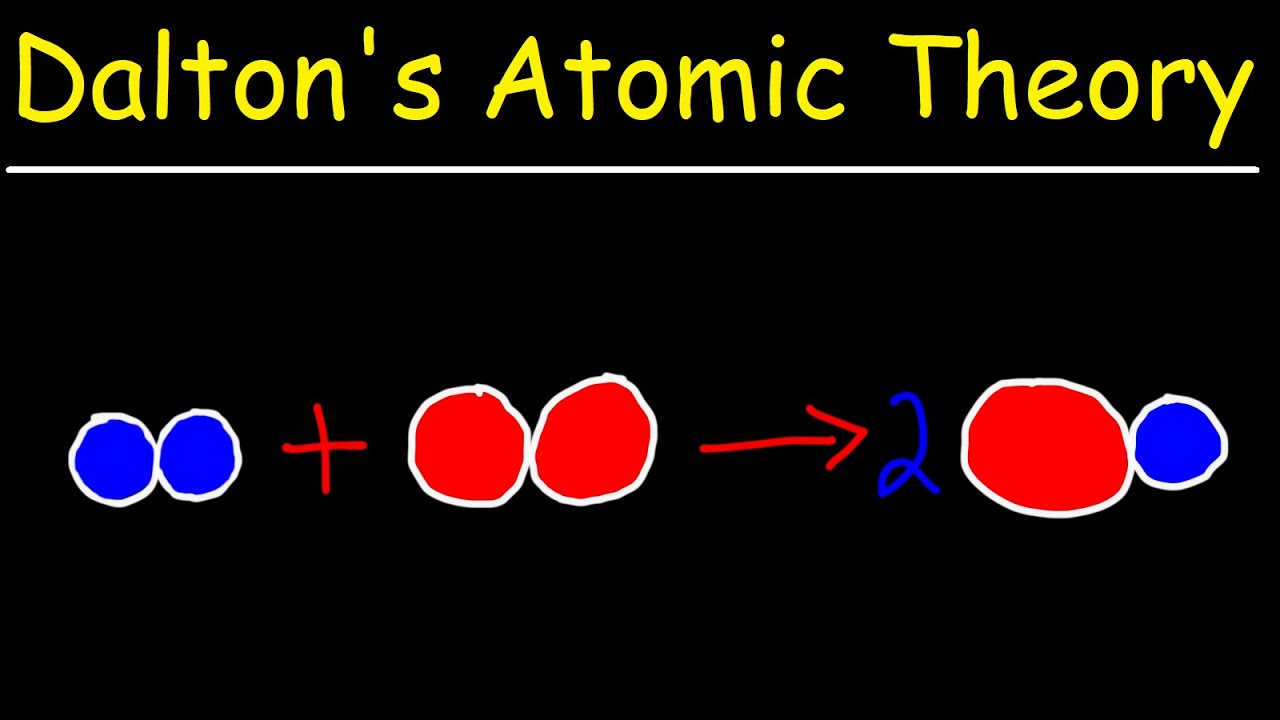
modern physics as always if you enjoy this content give us a like and subscribe so the first part part one of the modern physics unit I am going to basically tell the story of how we get up to the Bohr model of the atom but in the Regents curriculum a lot of what I'm gonna cover here is the backstory and it doesn't get tested now I encourage you to follow along with this but if you really are only concerned with your grade part two is where most of the questions are centered so modern physics really starts with the Greeks and what they were wondering was what stuff is made of in other words what are things objects stuff everyday stuff that we have in our world if we chop it up what's the base level of what it's composed of so the Greeks had this word and the word is a Tomos and a Tomos ah in Greek is not and Tomos is cut so the Greek idea of automa is that something can be cut it's indivisible so what they did was that they had no experiments to back up this idea they said that if you take an object like let's say a piece of metal and you cut that piece of metal in half and then you cut that in half and you continue to do that you'll eventually get to these little particles that can't be cut and these little particles are called atoms so it wasn't until the early 1800s that a guy came along called John Dalton and John Dalton was a chemist and what he did was he developed he developed a method for determining atomic weights so what this meant was that he could take elements and figure out the weight of each one so what he said was that matter or stuff is made up of little spheres and that these spheres are indivisible so you'd have a little chunk and that little chunk would be hydrogen and that's it you can't chop it up anymore and helium the next element up would just be larger it weighs more and lithium and so on so that the whole periodic table would be made up of these little individual spheres as the size goes up so does the mass so nothing really happens with Dalton's theory nobody advances this theory until JJ Thompson comes up in 1897 and does this experiment that has a new explanation for what atoms might be so what he does is he takes a voltage power supply and hooks it up to a metal plate and a second metal plate that is has a little tiny hole in it so he puts both of these inside of vacuum tube so this is just a glass tube and all of the air is pumped out so there's nothing in here except these two metal plates and then he turns the voltage on so we know from the electricity unit that that side is negative and this side is positive so what he ends up observing is this beam comes out and this beam goes all the way along and this was actually the invention of the first television and there's a little coating here where he could see where it hit but with the lights off you can actually see this beam so he didn't know what this beam was but you have a negatively charged plate here and a pause we charge plate so it seems that something negative is leaving this plate and being attracted to this positive plate so the first thing that he did was he took a metal plate on both the bottom and the top and he made the top negative and the bottom positive and what he noticed was that the beam bent so the beam went down like that so what does that tell us well it tells us that this beam must be negative but he wasn't a hundred percent sure so the next thing that he did was he put a magnet around it and whether depending on the orientation of the magnet he took a horseshoe magnet like this so that that came up and then it's going up on the other side and he had the south and the north poles and he noticed that when the beam came through it ended up diverting and curving now everybody knew at that time that if you moved an electric charge that that would end up producing a magnetic field so it made sense that this this beam would curve if it was made up of negative charges so he comes up with this idea and says that this beam must be the flow of little tiny electrical charges so this is the discovery of the electron these little tiny negative particles but here's the problem what are they because now we have these little negative things so we have the atom which is supposedly this indivisible sphere so what he says is that maybe what these atoms are made up of are the little electrons that he discovered embedded inside this material that is positive so there's this positive junk like that the electrons are embedded in so you could think of this sort of like a chocolate chip cookie now he used plum-pudding because in England that was a type of food they would have at Holiday times and they would take plums actually currants type of raisin and put those inside this pudding so he was saying that the gooey parts was positive and the little negatives which are the electrons were bedded embedded inside of this so this becomes the plum pudding model now why is this a big deal it's a big deal because it's the first time since the Greeks and Dalton that somebody advanced the idea of what the smallest things are made out of so now the idea of a neutral small chunk is made up of little negative and positive bits so after the discovery of the electron and this plum pudding model there's a guy named Rutherford who does this experiment which ends up advancing the theory of the atom even further so he's got some lead here and inside the lead he's got a piece of radium which at the time was known to be radioactive and was known to eject positive particles so he's got this positive stream of particles and what he does is he makes a little hole and piece of lead so they can concentrate this beam and then he sends this beam through and this is gold foil if you remember from chemistry that's a you so what he expects is that this beam of these heavy positive particles are just gonna go cruising through and then here he puts a ring and this ring has photo photo paper like a type of paper that when it gets exposed to this beam it ends up leaving a mark so he actually had this extend all the way around all the way around like that but for my drawing I'm just drawing part of it so you can see it so he expects these positive particles to go cruising through and hit the other side but what happens is most of them go through but every once in a while one of them gets curved it's like one out of a few thousand or something like that so if they get curved some of them actually bounced back and hit the photo paper back here so that's super crazy because we're thinking that this atom is made up of this plum pudding with the electrons spread out so we would think that these positive particles should be able to just pass straight through as they have with other materials but now some of them are bouncing back so we can see here that we have our nucleus in the center and these are the alpha particles the positively charged particles that are traveling through the gold foil and most of them you can see just go straight through but the ones that get close to the nucleus get deflected in other words they're sort of bouncing or being pushed around so if we look at this here is the planetary model the little purple dots represent the alpha particles and the little yellow dots represent the nucleus and we can put some more in here and you can see that that we're still getting this deflection which tells us two things the nucleus is very dense and it is positively charged so what does that tell us well he concludes that there must be a small dense positive nucleus so he's saying that now instead of having this positive gunk all spread out that there must be a positively charged particle that is in the center or at least a combination of them and then instead of having the electrons sprinkled about he says maybe it's like the Sun and the electrons are orbiting around this nucleus just like planets around the so this ends up becoming known as the planetary model and this is an advancement so we start out with the Greeks with just a small sphere and that's what Dalton talked about then we get this plum pudding model of little things embedded and then we get this planetary model which is closer to what we already know now which just growing up or going through middle school you learned about this model but we're gonna find out it's a little more complex than that so if we take a very cold black object it will not emit any light now when we say light we're talking about all electromagnetic waves so ultraviolet infrared gamma the works so by a very cold black object we could think of the coils inside of an oven those coils are going to be enclosed they're going to be black they're not emitting any Heat so therefore this object is called a blackbody so this is going to be the idea of blackbody radiation and the theory of black body radiation says that when you take an object and you start to heat it up it will start to produce light in higher and higher frequencies so just think about your own body your own body is hot it gives off infrared radiation so you can't see the heat it's not red it's not in the visible spectrum but if you hold your hand near your ear for example you can actually feel the heat being reflected back but as the temperature of the object goes up the higher the frequency of the emitted waves so we know that when we have a light bulb if we just turn on the light bulb a little tiny bit not enough to light up the light bulb the filament you won't be able to see anything coming out of yeah that will be a black body but it is emitting some waves low-frequency waves that's infrared and if you touch the bulb it's warm but if you start to heat up the filament and put more voltage through it it will continue to get hot but it will also start to glow red so at this point the filament will be red but if we continue to heat it up we'll start to get higher and higher frequency waves so now we're getting red and infrared and orange so now it will start to glow orange and as we start to add more we eventually get yellow green orange red infrared this combination will give us yellow and then finally if we get it to emit all of the different frequencies red orange yellow green blue violet and infra red we can't see the infra red but what's the combination of ROYGBIV that's white and that's why when we say something is white-hot it's emitting all of the different frequencies of the visible spectrum what happens if we continue to heat it then we will get even ultraviolet which is a black light and at a high enough frequency this actually starts to become dangerous here we can see the object acting as a blackbody as the temperature goes up it heats to red and 2 orange yellow and eventually to white as the frequency goes up so we know that these black bodies are black they absorb all the frequencies when they're cold but what happens if we start to heat them up now a star like the Sun acts as a perfect black body because when it's cold we would not see anything we would have no Sun it would just be black but because the Sun is very hot it ends up producing all of the different frequencies of light and if you graph all of the different frequencies you get a curve that looks like this so most of what we get this is the curve of what it would look like about 5,000 Kelvin so from the visible spectrum that's what we get the most of and that's why our eyes evolved to be able to see in the visible spectrum but then as we move further along here to larger wavelengths we get less and here's the tricky bit it starts to decrease on the other side now why is that the tricky bit the tricky bit is because there was a model that graphed intensity as a different graph than what the experiment came out to and this was equal to a constant which I'll just put in times K times the temperature divided by lambda to the fourth power now you don't need to know this formula but the idea is this is that if you graph it it matches the graph that we observe from the Sun from a blackbody radiator but then it just continues to go up and up and up saying that as the wavelength gets smaller and smaller smaller that the intensity would just go up to infinity and the experimental data did not show this so here's our blackbody spectrum and if you look over here we can change the temperature so we're down at very low temperatures and this graph gives us the wavelength and the intensity and as we start to increase the temperature you can see that we start to produce light actually all the electromagnetic spectrum but at first we end up getting that red that we would expect and as we turn up the temperatures and get closer and closer to temperatures around the Sun then we get this graph that continues to increase as we go to higher and higher frequencies these are lower and lower wavelengths so higher frequencies but then there's this weird drop-off and this is the part that Max Planck stepped in and a solvent so what happened was this guy came along and his name was max plank and he tried to resolve this this was actually called the ultraviolet catastrophe because in the ultraviolet part of the spectrum the formula didn't work and what he did was he came up with a new formula and that formula matched this graph so for max planck to be able to derive this formula he comes up with this new idea and the new idea is based off of how atoms are producing this energy now we know that when it's cold it's a black object of blackbody it's absorbing all the frequencies and when it gets hot it starts to emit them but how is it emitting them he says that the energy is being emitted in discrete amounts now what does that mean discrete amounts it just means in bits or chunks so you can have a little bit or you can have double that bit or triple that bit each of these chunks don't have any value that's in between here and if you look at his formula energy of the photon we're gonna learn about this with Einstein and the photoelectric effect is equal to n HF so what this n was was a whole number so he said you could have this energy of Planck's constant times the frequency but that it had to be in a whole number ratio so you could have one of this or two times this or three times this but you couldn't have 2.6 you couldn't have 3.7 it's kind of like money you can only have a penny or two pennies or three pennies you can't have 3.2 pennies the smallest amount is a whole number so this number he derives he comes up with is called Planck's constant and we'll come back to this when we practice this formula put the numbers in and F is obviously the frequency so another way to visualize this whole thing is that energy was originally thought of more like a ramp so if you're a person you can walk up the ramp and you could stand anywhere on this ramp and that's the way energy was thought of what Planck was saying is that energy is more like a staircase so you can stand on the ground you could stand on this stair you could stand on this stair but you can't stand levitating in between those so the energy that you can have has to be equal to this multiple of 1 2 3 4 as a multiple of the number of steps that you can't stand on part of a step so Planck comes up with this new crazy formula and it's a mathematical formula that's really nice because it matches the curve so he can throw the wavelength in there and a bunch of constants and he matches the curve this is based off of this idea of quanta it's a quantity it's a fixed amount that is a you can think of it as a whole number of a small bit and this bit idea is called quantized to energy but the problem is he makes this crazy mathematical formula but he still doesn't understand why this formula is working even though it does match the data so here's what the problem is he's still trying to understand classical mechanics and classical mechanics says that the energy that this light has or any electromagnetic wave is based on the brightness now if you remember from the waves unit that's amplitude so when we said we looked at this value from the equilibrium that was the amplitude that was the energy of the wave but all of a sudden something different is happening now in modern physics we're seeing that at that energy is actually proportional to the frequency so we have this disagreement between these two ideas and it was Albert Einstein who resolved this problem by explaining the photoelectric effect an experiment that I'll explain next so the photoelectric effect works like this we have two metal plates connected with wires to a power supply so all this is is a little metal plate there's a negative charge pushing on this so we know that this is negative and on this side we know that this plate is positive and if you do this in a darkroom nothing happens you don't get any reading in the ammeter but what they tried doing was first putting low-frequency light shining this low-frequency light onto this metal plate now they first tried let's say red okay so they put red on there and nothing happens so what they expect to have happen is if they turn up the amplitude if they make the light brighter it'll have more energy and knock the electrons off and they'll start to flow and we'll get a reading in an ammeter in the ammeter but it didn't happen when this got brighter no electrons came off at all but then they found so we have dim red light doing nothing bright red light doing nothing then they tried blue light so now they try low frequency or a high frequency blue light at a low amplitude so not much it's not very bright but it's a higher frequency light and they notice that some electrons start to come off but not many so they get a current flow down here but then when they turn up the amplitude more electrons start to flow across so the brighter blue light is now knocking off lots of electrons so let's the expectation that brighter light greater amplitude would make more electrons flow but the observation was that low frequency light did nothing even when it was at a high amplitude however high frequency light made the electrons flow but if there wasn't much of it not much was flowing but brighter light at a high frequency meant lots of electrons were flowing so it was Albert Einstein who was able to explain what was happening and this is what he won the Nobel Prize for so what he said was that there were these things called photons their wave packets and each every time you turn on the light if you have red light you have this packet and it's got low frequency so therefore it has low energy so now he's saying that the energy just like Planck is too low to knock off an electron even if we put lots of them it doesn't help anything because there's not enough energy to knock the electrons off but then he says if we get the photons to have a high enough frequency then they can knock them off so let's say we have very dim blue light very dim blue light would be not a lot of photons if we shoot one photon across that's going to make one electron go off if we make the the light brighter that just means there's more of these photons which means more electrons can be knocked off so light is acting not as a wave but it's acting as a particle that has a particular wavelength or frequency and these wave packets are known as photons so now we have even another experiment so hang in there because all of this stuff comes together and ends up painting a picture of the modern atom so the way the Compton effect works is we have an electron this is an experiment that was done we have an electron that just sitting still and it gets hit by a high-frequency Photon so we could say let's say this is blue light so we have a blue photon this photon is einstein's idea of a wave packet and when the photon hits the electron the electron moves off so we see this electron end up in a new location and the photon goes glancing off and now you can have a detector here that detects the color and the color is lower frequency so maybe it came in as blue and it went out as red so what does that tell us it says that this electron picked up energy it picked up momentum so all of a sudden this electron gained MV and it gained ke well where did it get that energy from well it must have come from the photon so where's the lost energy the lost energy is in the fact that this has a lower frequency so now Compton showed us that this photon has less momentum less kinetic energy and here it had higher in other words photons have momentum and energy so we can look at it as a conservation law here is our first photon that's cruising along we can say that the energy of that photon then turns into the kinetic energy of the electron and the lost energy is the energy of the photon after the collision and the same thing is true of the momentum of the photon the momentum of the photon initial is our total momentum the electron gains momentum and the momentum of the photon after the collision decreases so we haven't learned this formula yet but what Compton did was he said from Einstein equals MC squared and we'll get into the details of that formula later and we know that from playing a equals HF that we could take one of these C's C's the speed of light and over here and say that V the see of the of the incoming photon or sorry yeah of the incoming photon is V and that gives us a formula of HF over C and we know that MV is momentum so now we have a formula for the momentum of a photon so what are photons acting like well these little wave packets are let are acting as particles and that's important we'll see in a minute and so what we're saying is as frequency goes up then the momentum of this photon also goes up so all of these experiments started to bring up a fundamental question which is light which remember we're talking about all electromagnetic waves is light a particle or is it a wave because we have a lot of experiments that show light acting as a wave remember polarization in the waves unit light acts as a wave and we could filter out that wave if light was a particle and we had a filter like this it wouldn't get filtered out all the little particles could just make it through so we know that lights behaving like a wave and diffraction interference when two waves hit each other they make a bigger wave or they cancel out to make a smaller wave that shows light behaving like a wave and finally Maxwell's theory that was the theory that showed us that light is an oscillating electric field and magnetic field so there's some strong evidence that light is behaving like a wave in the particle theory Isaac Newton came up with the corpuscular theory which he just said that light was made of particles but he had no reason for it so there's no evidence for this however Einstein with the photoelectric effect showed photons knocking electrons off so they weren't passing through like you would expect a wave they were hitting it like a particle and same thing with Compton Compton had these photons hitting electrons and making them move just like a particle not passing through them so how is this possible how could you have these different experiments but we know that light has to be one or the other well Bohr came up with the theory of complementarity and I feel like the best way that I can explain this is with a little diagram that looks like this imagine that we have a box and in this box we don't know what's inside we can't look down through the top of the box but we do have two little windows that we can look in and in the one window we open it we see ears and we see whiskers and we see what looks to be the top part of a rabbit but then in the bottom part we open a little door and we can see the the scales of a snake and the skin of a snake so what is in the box well it's kind of like this we have our wave theory where we're doing experiments where we say oh we have all these experiments it must be a wave because it's behaving like a wave and then we have no it must be a particle because we have experiments like this well it's like the one group is saying it's a rabbit and the other says it's a snake well it's not it can't it has to be this combination of exhibiting both behaviors at the same time so maybe it's not a snake or a rabbit maybe it's a snapIt and that's the idea that niels bohr came up with and this was the idea of complementarity and what he said was that we could have experiments that show us one characteristic of a phenomenon and another experiment that shows us a different characteristics of this phenomenon but that both are correct both are giving us a picture of this thing that we don't really have a full idea of what it is we can only understand as much as our experiments show us so let's bring it back to the models of the atom so we said that Rutherford this was the best model we've gone over so far it's the planetary model where we have this is acting like the Sun this is a planet and it's orbiting but there's a problem with this because remember that anything that's in orbit is changing direction and if it's changing direction it is accelerating and if you remember from the from the electricity unit that accelerating charges emit light ok or an electromagnetic wave so here's a problem atoms aren't just constantly emitting light we don't have everything in our homes just doesn't glow and not to mention if it was emitting light it would be losing energy and it would end up eventually spiraling into the nucleus so you wouldn't be able to have matter so it's a good model but it's got problems so Bohr came along with an explanation for this and this is the Bohr model and what he said is maybe the electrons aren't orbiting maybe they're hanging out in different levels so they're in these of you learning chemistry the idea of shells so they're sort of hanging out in these different positions from the nucleus and what he said is that the electrons can jump they can jump between levels so they can jump down a level or they could jump up a level but just like the quantization idea they can't go half way they can't go two-thirds of the way they have to go either from one level to another now they could jump two levels or they could jump three levels but they have to go level to level and the reason they have to go to level to level is because the energy has to be a fixed amount so we'll get into how you can solve those problems soon but let's look at this when they jump down this is super super important when they jump down they emit a photon so you can think of it as losing energy as it jumps down but if it loses energy it must conserve energy so you must get something for that loss of energy so what does it do it kicks off a photon the bigger the jump the more energy lost the higher the frequency the photon and then also they can jump up but to jump up they must absorb a photon so this has to absorb a photon of a particular frequency and if it does it will jump up a level so to understand Bohr we need to understand Max Planck because remember that Max Planck ended up getting this formula for this curve for the blackbody radiation but it was based off of this idea of e equals H F and if you remember we said n HF with specific whole numbers so if we have an electron electrons can only exist at certain energy levels they cannot exist halfway in between so that the electron either has to absorb a photon to go up or emit a photon to go down but otherwise it's just going to sit in it's level and the formula for this if you remember is e equals H F which is on the reference table and that's equal to HC over lambda and on the reference table it says 'if oton and now we know why that is because that's the energy of that wave packet that Einstein explained now the problem with this is we have a little tricky bit we have to know the unit for this is joules or electron volts so joules are for big things and because we're dealing with small things they came up with a new unit called the electron volt and the electron volt is one evey and that's equal to 1.6 times 10 to the minus 19 joules now you have to be very careful here electron volt it sounds like voltage this is a unit of energy that's very very important so what is an electron volt it's the energy needed to move an electron through a potential difference of one volt that's all it is okay just for for this unit just remember electron volt is a unit of energy so let's do a quick little problem how many EVs are there in five joules so we can just do this as a conversion we can say the energy we have is five joules and then we can multiply that by one Evy is one point six times 10 to the minus 19 joules so we put multiply the five divided by this and you end up with three point one two five times ten to the minus nineteen what electron volts that is the energy so let's put some numbers in and actually do some real problems that you might get on a test so question says how much energy does a green photon of frequency five point eight times ten to the 14 Perce have in joules and v's so the way we're going to do that is with e equals H F and we know that H is six point six three times 10 to the minus 34 joule-seconds and you don't have to memorize that number it is on the reference table as Planck's constant and we're gonna multiply that by the frequency which is five point eight times ten to the 14th Hertz and that number comes out to three point eight five times ten to the minus 19 joules so the next question was to do it in Eevee's so in EVs that's basically just a conversion so that's going to be the energy is equal to three point eight five times ten to the minus 19 joules oops Jules and we know that one evie is 1.6 times 10 to the minus 19 joules multiplying dividing that gives us an answer of 2.4 EVs and you can see why Eevee is a very convenient unit because it gives us numbers that we can get our heads around a little bit easier so now let's do this problem in Reverse and this is a very common question to get asked it says what color is a wave of energy 4.77 times 10 to the minus 19 joules so basically we're going to do this in Reverse so this time we're given the energy and we're going to put in Planck's constant for H and we're going to solve for F the frequency so that's going to come out as 7.2 times 10 to the 14th Hertz and we can look that up on our chart so for light we said seven point two times 10 to the 14th so that's going to put us right in here seven point two so the answer is violet light but pay attention because if they had given us a question like that and the number did not fall in this range let's say the number came out higher than this well what's higher than violet the answer would be ultraviolet and if it didn't fall in this range and it came out below this number that would be infrared so you do e equals H F to get the frequency you can look up the color but if it's above violet its ultra and if it's below red its infra we're gonna go much more into how to solve bore problems in the next video but the last thing you need to know about is this relationship of e equals H F and what it would look like as a so we know that the change in Y over change in X is the slope so let's divide frequency over to the other side so that we have this now we have our change in Y over change in X that's equal to slope so what's the slope the slope of this line is Planck's constant so if they asked you to solve for that you should end up getting six point six three times ten to the minus 34 joule-seconds
Up Next
58:55
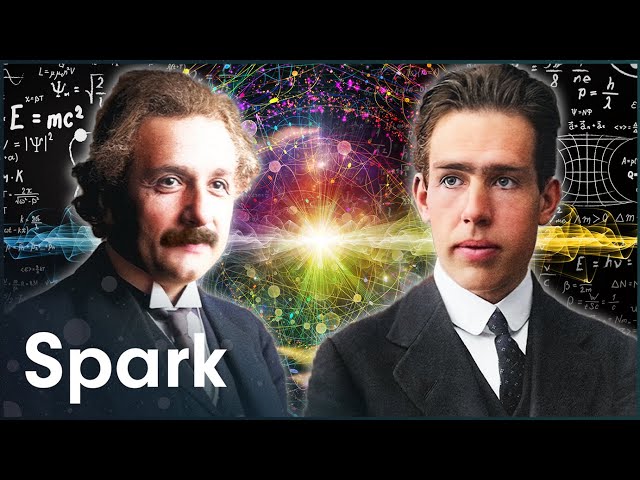
Quantum Physics Explained: Einstein vs Bohr Debate
@SparkDocs
9.7M views•2018-03-20

12:53
21cm Hyperfine Transition in Neutral Hydrogen: Radio Astronomy Basics
@AaronRobertParsons
12.4K views•2011-10-13

32:32
NMR Spin Physics I: Zeeman Effect, Resonance Condition & Larmor Frequency
@nptel-indianinstituteofsci8064
2.3K views•2024-01-17

27:14
Entropy and the Second Law of Thermodynamics Explained
@veritasium
27.5M views•2023-07-01
Related Study Plans & Knowledge Roadmaps
Structured learning paths in Physics
physics
Nuclear Physics (Decay, Fission & Reactors)
01Atomic Structure and the Binding Force
02Radioactive Decay and Half-Life
03Nuclear Fission Mechanics and Chain Reactions
+ 2 more learning modules
12h5 modules
Explore Roadmap
physics
Soft Matter (Polymers, Colloids & Rheology)
01Foundations of Soft Matter & Thermal Forces
02Polymer Physics and Macromolecules
03Colloids, Surfactants, and Self-Assembly
+ 2 more learning modules
38h5 modules
Explore Roadmap
physics
Analytical Mechanics: Lagrangian & Hamiltonian
01Mathematical Foundations: Calculus of Variations
02From Newtonian Mechanics to Constraint Dynamics
03The Principle of Least Action & Lagrangian Mechanics
+ 3 more learning modules
28h6 modules
Explore Roadmap
physics
General Relativity (Spacetime & Cosmology)
01Foundations of Relativity: Special Relativity
02The Geometry of Spacetime: Equivalence Principle & Curvature
03Einstein's Field Equations: The Mathematics of Gravity
+ 2 more learning modules
55h5 modules
Explore Roadmap