

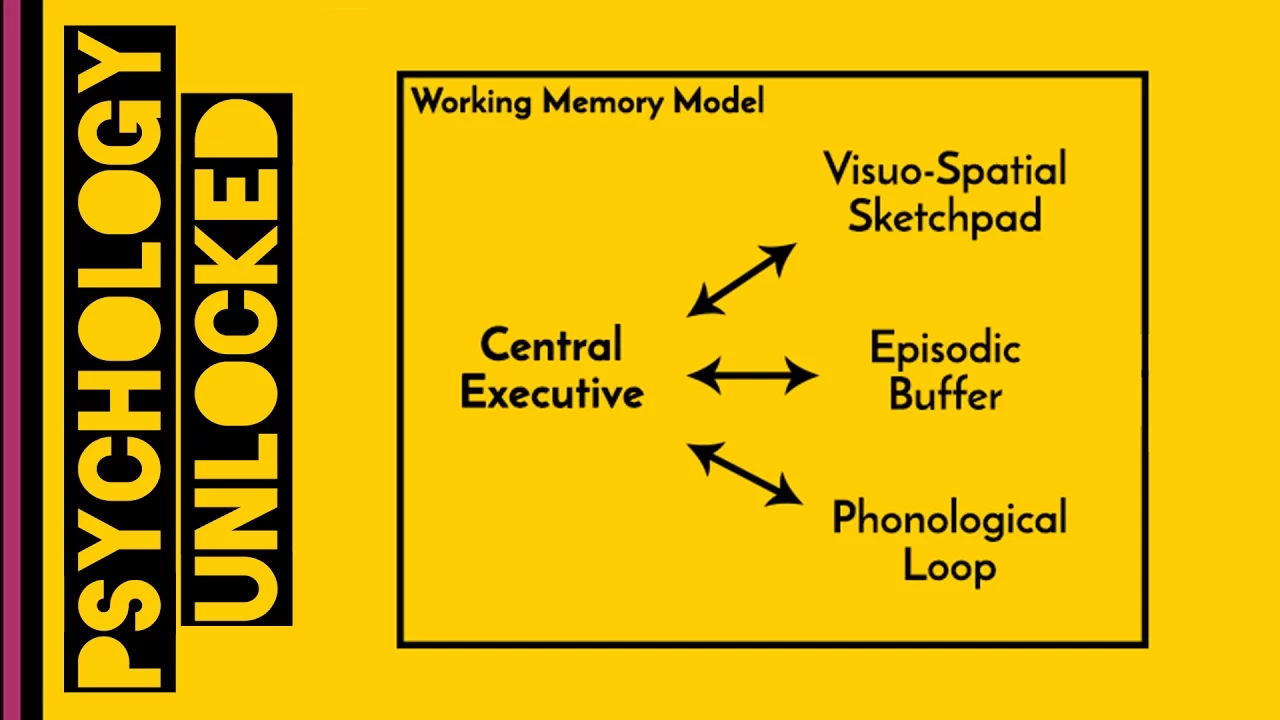
















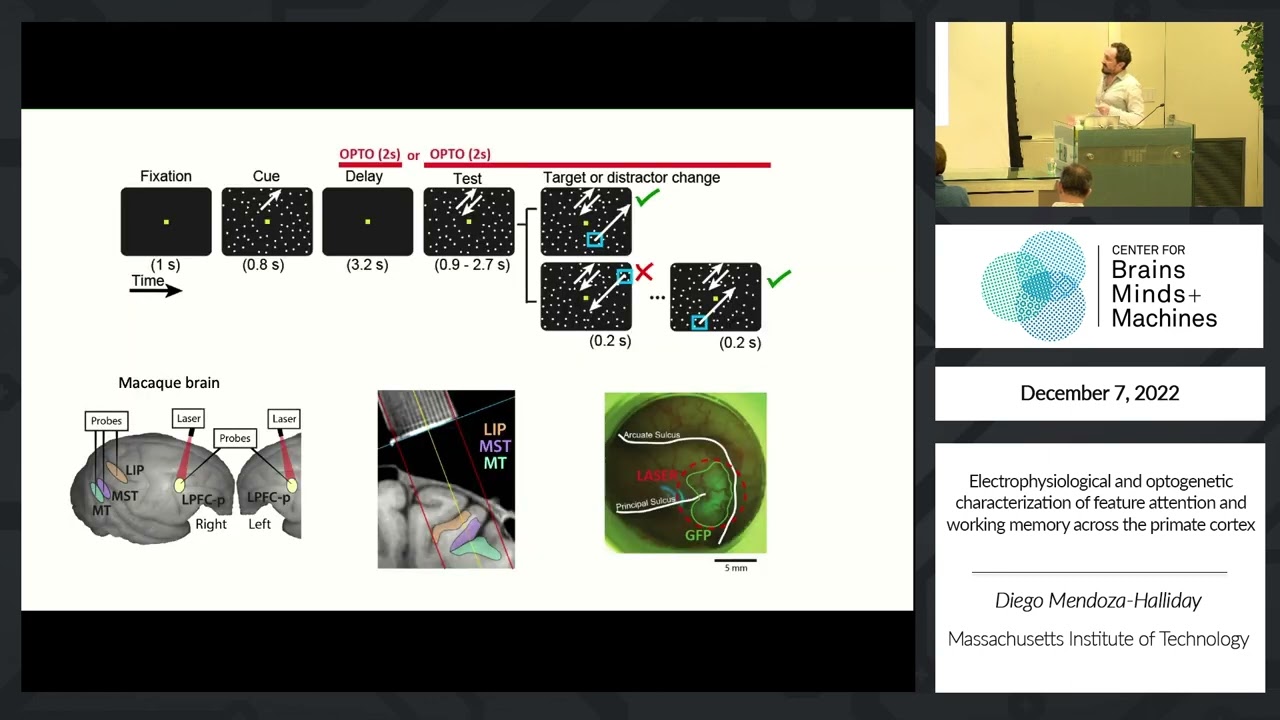
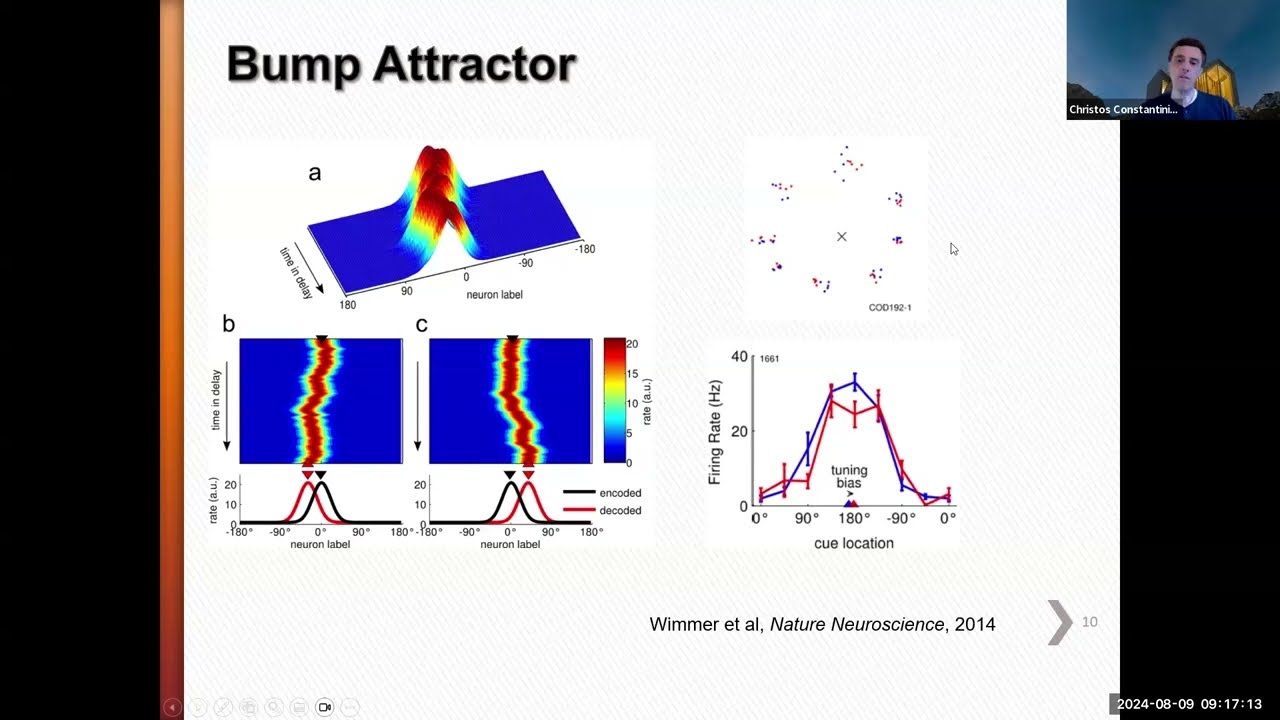
Working memory encoding occurs in association areas of the brain (such as the prefrontal cortex) through persistent neural firing maintained by recurrent network dynamics, rather than being stored in early sensory areas; this is supported by research using virtual reality tasks, optogenetic manipulation, and multi-electrode recordings showing that neurons in the medial temporal lobe and prefrontal cortex encode contextual and episodic information through coordinated sequential firing patterns, with NMDA receptors playing a crucial role in maintaining these memory representations.
How Working Memory Works: Brain Circuits & Reverse Engineering | Dr. Julio Martinez-Trujillo
Added:The cognitive psychological definition of working memory, including its distinction from short-term and long-term memory systems.
Basic neurobiology, specifically how neurons communicate via action potentials and synapses to form functional brain circuits.
The fundamental role of the Prefrontal Cortex (PFC) in executive function, attention, and sensory information integration.
The basic computational concept of Recurrent Neural Networks (RNNs) and how feedback loops allow systems to maintain state over time.
The development of Brain-Computer Interfaces (BCIs) that decode cognitive states and intention from population-level neural activity.
Neuromorphic computing paradigms that design hardware architectures based on biological working memory and recurrent neural circuits.
Clinical applications in computational psychiatry, exploring how microcircuit disruptions lead to working memory deficits in schizophrenia and ADHD.
The scientific debate surrounding working memory mechanisms, specifically comparing persistent activity models with activity-silent (synaptic) working memory.
117 views0likes1:18:25Original Release: 2023-04-01
thank you [Music] thank you okay good morning good morning [Music] good morning good morning okay so I have a pleasure to introduce you today for the Wallace seminar Martinez and I would just give you a quick overview how I know and who is um so Julio graduated from the College of Medicine in Havana in 1991.
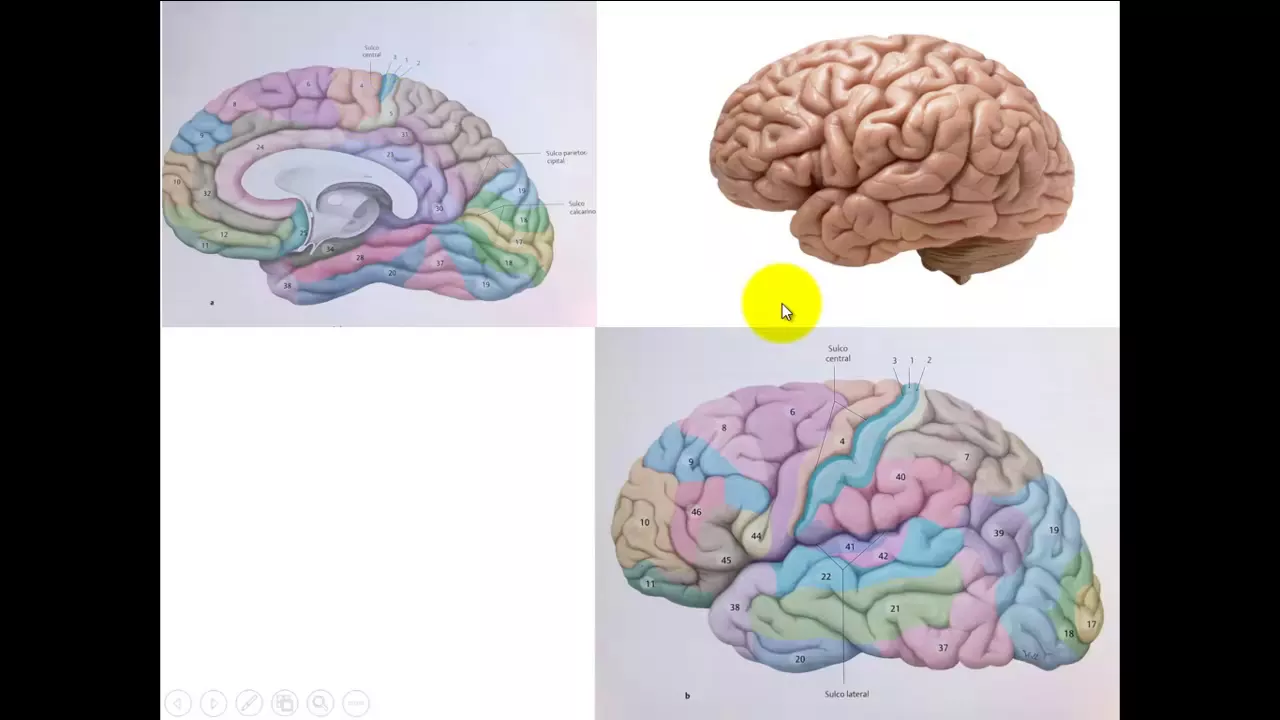
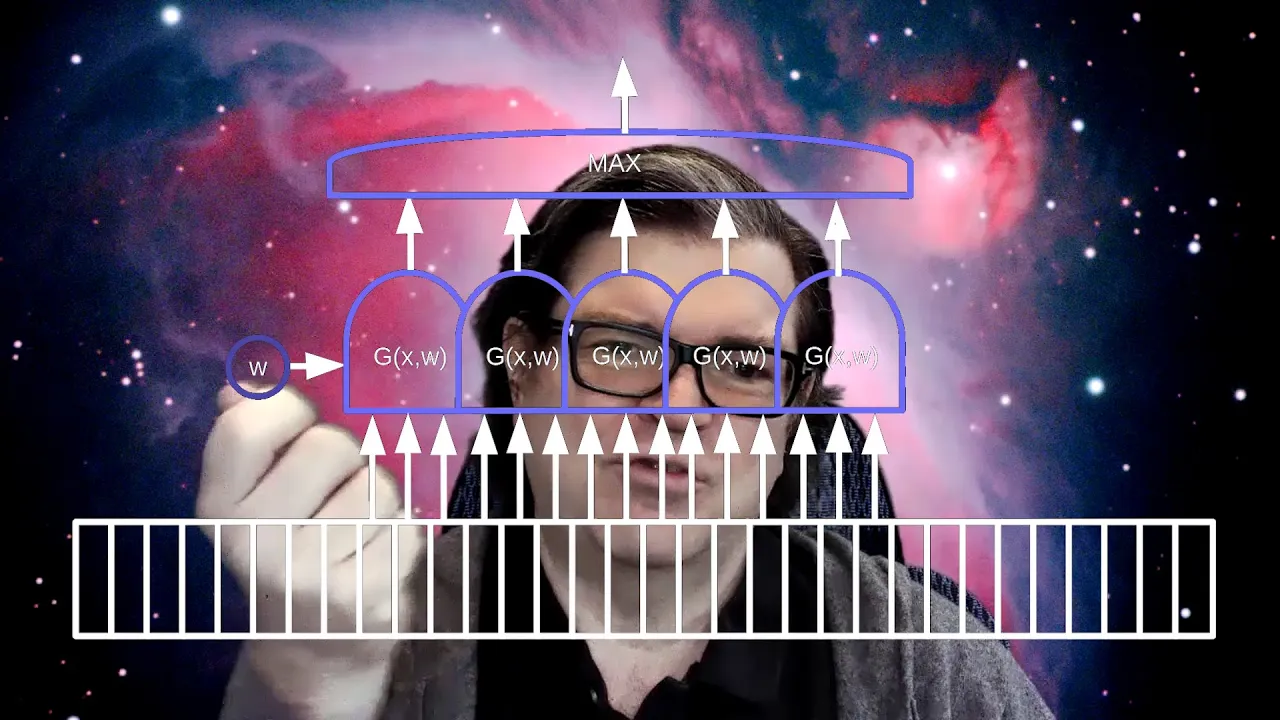
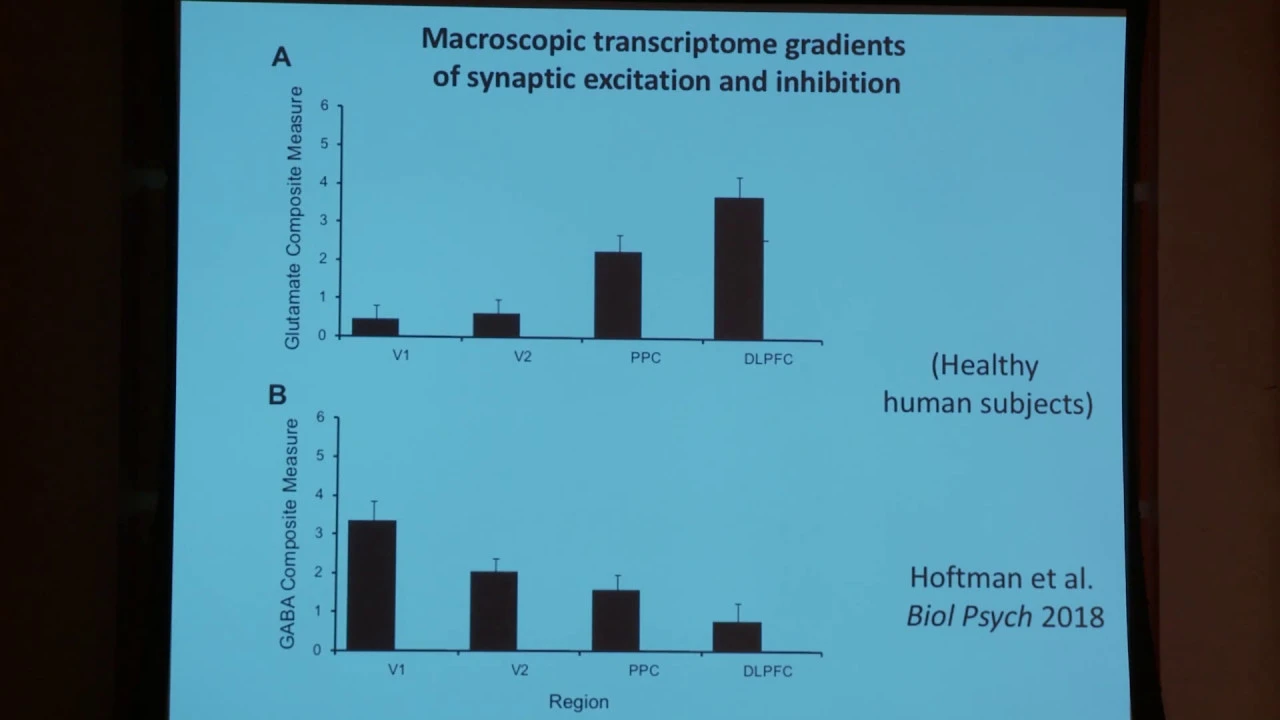
gradually as a one of the few uh in in about a period of time one of the few like but I received the award of the Carlo hotel he then did the residency medicine and was motivated to do Cardiology second residence a theology but then he has a period of training in clinical nerve physiology and another Resident which I was the instructor at that time and then I had the opportunity to teach him so actually it was in my class wasn't 20 students on electrical property of physiological teach of biological tissue and he was also the top on the top of the class so I invited him to do some research in neural network so at that time was you know the second revolution publish history so I was very motivated and I have like talking of a student that were working with me so he's my impression is that he then changed from the Cardiology area to nearest and I just after the that of course finished I didn't have any more chance to interact he moved to Germany and then had a PhD um with the drawings and after he finished the PHD moved to George University to do to have the postdoctoral failure to be a positive and after that you know indeed this two period he has a very important contribution to understand how the visual system works in Prime and particular psychat movement monitoring performance monitoring in crime because of that that important contribution he was appointed a professor in Michael University and after being promoted very important contribution in the area then we receive a very tentative Comfort at Western University and he's a professor now Western University working in the area of Neuroscience so the to give you an idea what who you're doing that you will see now do you probably remember in 2014 there was a Nobel prize for the navigation brand navigation system right and that is based on this at least selling Arena cortex and places and borders selling the hippocampus and this professor on the monsters received in our website so Julius contribution in this video in the last 10 years have been understanding if this same system works in private mammalian it says that apparently this is not the case so Amalia's user visual system brawlings are not tuna they don't have a good video they use the sensory and they navigating a two-dimensional space very well limited like a maze with humans May transition from place to places and they have a three-dimensional visual system for guys so will you have discovered directionality cells new cells different to those that are placed cells and apparently they prime it into the human gives it completely different system so probably I have the prediction that probably we have seen a web confusion a website so it's a pleasure to have Julio here and I I invite you to join me to work [Applause] actually it was so that's one thing I have to say and thank you so much for that though actually career the second thing that I want to say is that he's going to be this place so like 20 years ago my father's been just close by I mean these plates was relatively small yeah but he was going but now he's still rolling and I think that um we're just a bunch of people um uh from many of our friends from many things and we're just grouped by a common interest request for knowledge for understanding biology understanding our resource better and I think that PC is very important to me okay um I try to put together and talk that is interesting football engineering prospective perspective uh maybe I'm gonna go into different topics um and I try to try to do my best to convey uh so um let's start with the concept of reverse engineering sorry for engineering sometimes called black engineering is a process in this systems are reconstructed to strike design information from them often reverse engineering involves reconstructing individual components of larger systems I mean many of the people here are Engineers so what you do this is the forward engineering you specify the features of the system then you design an employment and then you have a new system of color so that's basically what Engineers do I love to work for engineers because you guys are problem solvers so uh and as we have a lot of those problems when you're a nurse so and uh reverse Engineers is you have an existing system actually you understand uh the transformation how the system works sometimes you have to decompose the system is apart and then you range and hear the systems right here you copy the product but you have enough knowledge that you can modify the product and actually do that that's what the engineering perspective was when you're a scientists don't consider is that we have been reverse engineering brands for centuries that's exactly what has happened but uh although many of us don't consider because you don't have an engineering degree exactly but this is basically what has been now many of us ask why reverse engineering the brain why not the doctor brain structure and function from first principles but no they're also plastic section optimization let's do modeling so I think uh there is a little bit of bad news in this respect the bad news is that the brain is biological design so uh biological design is a broker thinker the natural selection so on that work with a handful of materials and mutations that can happen during a reproductive cycle of lifetime so you have limited materials to build your system and you have limited mutations that you can have because of DNA how uh so it is full of law company I just give you an example they're recognized completely backwards so actually you absorb light in this side of the retina and you have the light has to go all the way through together in this time and no engineer is going to engineer a system like that you probably could decodore receptor just right away so that you can sense the light and you don't have to go through all these slides patterns and things like that and the reason is because the way that tends we are against the battle I mean you get my content so the same thing would be giraffeine there like the same thing with many things that you have so you really have to reconstruct the system to understand it and not assume that by modeling a lot of classical optimization so this is one of the first bioengineers that I would say oh neuroscientist um many many years ago actually he discovered that the tissue that they apprising and uh 1906 um the the dishes called the brain is composed of individuals here so and each nervous element is absolutely and these are drawings of house but he was looking at the microscope approach he wanted to be an artist and he has done several paintings out there so by by the way there is a super interesting information that I love to have because sometimes I mentioned that to my Cuba friends I said oh yeah of course I was in 1875 as he got malaria so they sent him back to Spain and he said oh no because he wasn't killer he doesn't have nothing to do wrong with the other but what I know was that when Kyle was actually there he was taking water from the swamps in the province of kanawei and the officer actually complained that he was just spending too much time taking those orders and looking under their microscopes that he wasn't doing a good thing but good that he did it because actually his real passion for science he wanted to war or engineers so now there is a a little bit of a bad news that we need to think that not all brains are alike so here is the brains of different species like this review from everyone also so Susanna is showing here a different rank of different species that she does is take the weight of the brain in grams and then count the number of neurons in each branch and I just gonna want to bring something to your attention the capybara which is South American running has a 76 Grand range and then my cat monkey who is a primate has 87 Grand Spring I look at the overwhelming difference between the number of appearance between these two species one has like 1600 millions and the other one has 6300 million so a lot of brands are like there is something that by you is talking about brain you want to understand all brains that's exactly what I'm trying to say if you look at the neurons divided by weight the ratio here for the capybara is 21 for the macaque multi-73 the only thing that makes sense here is to compare brains that are about the same size because they're volumetric loss that has to do with so if you ask the human the number is 57 which is lower than the mechanical monkey but you can't do that because everyone brain is much larger in volume so what I want to say is that all brains are particularly so I'm going to talk about memories today and these are memories from my lab so I'd like to tell you it was as a sushi restaurant in London Ontario actually this was in Chicago at a Cuban restaurant that was during a surgery that was in an event that we have that's uh two of my training center and John actually uh working on a historical project that we have like a university uh Secret Santa so I have all of these in my brain I would say the brain make those memories on my point is that I don't want to uh I have to ensure that I don't get through but at Toys R Us but my motto here is my memory Sarah that's what we are so actually how do we form those two friends and that's where I want to talk today so there are three a category of memories according to how long the memory lab uh it could be dividing into sensory memory the manual fast invasions which is about in 200 milliseconds so the stimulus is here and then it goes away and you can keep it for 20 seconds around uh the short-term memory where it goes until several seconds it's so I tell my the phone number now you can dial the phone number uh because you remember that and the long-term memory which is classical memory days here's the whole lifetime so they started three memory type of memory I'm going to talk about short-term memory I loved her memory so a short-term memory is the ability to remember information for period of second it is the game too long to remember you show you you load things in short-term memory and then you actually uh could restore anything without the memory and there is this famous model from psychology the actual Financial Chief remodel in which there is the sense to restore we should realize sensory memory then information could go to short-term store then it shorter memory and that information can go to long-term memory or it could be lost because if you're going to remember everything you could know all the phone numbers of your friends and all this if that doesn't happen so you're only getting too long to remember things that are important psychologists I was at UCSD so I said you guys you love boxes isolated problem and now we can actually look at the individual components of course the brain is the weight of boxes everyone knows that but that uh is a good thing um so we're going to talk about short-term memory and I'm going to refer to it as working memory working memory is a type of short-term memory which you uh that you have not only storage of information on maintaining the information but you could manipulate the information that you can think about okay okay you imagine yourself in a pool in Miami Beach or you could imagine yourself in a pool in Mexico and probably that's some sort of manipulation of information now this is very important solution studies for a dissociation between short-term and long-term memory systems so somehow apparently in situation study for example in 1936 Jacob sends deletion and protocol of three species of primates and what he finds is that it was a short-term in redefence but the long-term numbers were expected so basically the memory that happens years ago in general acquired knowledge of something like a month ago that was experienced the most inferior part of the brain by the way this part of the brain appears de novo in in primates in uh start we start with prosenians and then start growing in in you know in other families that humans they have 30 30 of the brain of humanity so uh there was another very important Discovery in 1957 when uh age everyone knows a check when you remove the hypocatus bilateral which is right here it's used in your temporal lobe all the way down these patients didn't have a problem with short-term memory but they had a problem with long-term memory so Brenda Milner that was the one who did that studies who did the study she described that he would just come to the room introduce yourself to hm and then it goes away and then after that like you know five ten minutes come by and say hey how are you doing oh yeah who are you introduce the game because the guy just he could have formed a new memory like the movie Memento or something like that that was the whole idea um so on a a friend or colleague of mine Joaquin Foster because the land that is now in L.A super uh interesting person he did a study where he he found a neural correlate of the mechanics of short-term memory so long-term memory all of them probably do neural networks we know that these things that you throw away my interest is that this is actually where long-term members are we believe that there is four and the strength of those weight matrices is in a neural network so short-term memory is a little bit different you don't want the story this way because once you store them in those ways and you modify the waves then it's so long to remember so what foods are they they trained about key uh to do a something that we're calling a Wisconsin General Tess apparatus which is very similar to the Wisconsin test that we apply to patients and Daniel was in this setup and then you have two Wells and then you show the food is in one of them and then you occlude both of them and then you lower the screen so the neighborhood doesn't see so where you put it but now when you lower the screen you have to remember where it is it's short term right then after a few seconds you go off with this the response pair and then what goes right away if the animal has solution in the from the cortex okay you go 50 50 so it's really uh doesn't know what to do um and then he recorded from the library frontal cortex which is area 46 if you close your Anatomy is now it's just located in the two side part of the brain and then what he found was that there were neurons representing where it was so neurons were reacting what it was on the right where it's biking along when it was on the right and someone that was on the left and they were silent when it was on the left it was at the war on the right so you have mirror selected for right location remember location and left in the production sustainable in the absence of sensory input when the screen is down right um uh it's what you call persistent fire and that is where we thought that the memories are stored there's storing this persistent firing now when persistent fire extinguishes the memories gone by the way working experiment wasn't a stack play with the Wisconsin parado was a modified version but you get the point so I'm using this for didactic purposes because I don't want to go into so that was in 1971 and from there came the work of Public Safety uh one of my Idols University uh and I think that she was an extraordinary Visionary in human places and she confirmed all of this and she went further with models and a lot of things now when they're from where I came actually like a couple of decades ago um people start finding that if you have a working memory test for example remember one of these patterns that was from a particle so he actually found that uh there was a small activity uh including the contents of working memory in the back part of the brain in sensory area but working neurophysiology didn't really find that what you know because it was a big contradiction but it's the whole brain encoding those working memory those sustainable Community potent or he's just a referral cortex of where it is so that's where we started our our the part of this working memory research and we say well you know what we're going to put electrodes in different parts of the brain because uh I'm recording spy connectivity was what booster described from this inspiring activity we're trying to decode the context report whatever we're gonna see what happens and then what we did the expression was um we chose a model I wasn't like a monkey one of the things that we know is that the macaque monkey actually we know quite a bit about the biology of this animal we know that information goes into the different Pathways for example and is keeping the retina and lgn so when information goes into the cortex into V1 information will get it split into two different Pathways so the pathway the dorsal pathway has information about positioning speed of objects uh which of this party and the Ventra Parkway pathway has positioned about what it's called the where and what pathway so faces colors orientations and once the information if you compose and information then convert somewhere in different now the question is where are on the visual Pathways is working memory encoded is everywhere it's just a distributed system what is a system that it depends on that this is a very clear question uh what we did is we designed first and pass for that I'm just gonna if you complain the subject here if you click save the point there and I'll be showing you this Arrow right and now I say well remember which one was the arrow and now I'm going to show you the different arrows there and then you have to press the button when you find the same one that matches the one that I chose before the one that I showed before was the sample and then they are the tests and when they test that matches the sample code would you say but so then I know that you remember for this short time period you remember what was in a lesson short-term memory that this is kind of the layout of the shortcom memory test in this case this was a random pattern it's kind of incredible with this uh the red arrow uh shows you the object and then here we have the delay period that is where you have to remember what that was and during that you have the best periods in which you just press one turn when the thing comes out that was similar but it was in fact recording uh you go with an electrode very close to the neuron and then you you Drive the electrode there and then you record the responses of Errors uh that so there is a lot of electronic going into that but uh that's what you guys are good at so and then you can look at the number of actions of the pencils per time unit and you will detect whether there is persistent firing or not whether the context of working memory are represented in these migrant products and then when we did that and we're recording one area here in the back part of the brain that is called area T you should processes motion so they have cells that receive inputs from there every one so and then they process motion the cells are reacted to motion features and our patterns were emotional unfortunately the right to the left or shut down so that's helpful I want you to do that during the sample presentation you see that this specific cell responds more to motion to the right than uh to motion down and then to right or left so it's a tuning curve that usually described by gaussian function but what you see is that there is definitely a tuning here so if you are listening to this cell when you're showing the pattern you can tell what kind of patterns you're showing that's right not to One Step but if you are but but if you look at a group of cells that they have these selectivities you can say it's actually what I'm showing on the screen I used to play that game This is highly High recording and I say I'm going to tell which uh what I'm precisely there and then Steph I was telling us okay my supervisor um and I said okay can we solve yeah when I hear the cells firing the sensory is sample period no problem when you go into the memory period the cell will assignment you say well Celsius you're definitely not encoding these working memory representations so that was that that the first population but if you go into area MSD and lack of proposal cortex that are allocating more anterior in the brain that are integrated information from many systems as you see here in the memory period you see a cyclic that the cells are actually encoding the direction of the sample so we can extract information about what the animal has in mind during that time this is a closer that you don't get to mind reading I wish that we could do that with many things especially BMI things that that's exactly what you do but what we found is that their information is not in early sensory area so what the fmri signal is picking up in my hypothesis is probably some feedback signal that is actually getting a lot of the potentials uh I think that's my thing so this is just accelerating this now what are the mechanics of persistent firing in single neurons sometimes you're going to reverse in the journey or the brain you have to keep going I mean that wasn't possible yeah it would publish some of my expectations that wasn't the goal there was actually two to understand this and we have a couple of ideas why a cell will just keep firing I mean why would the self keep Fire And even if the sensor input is not there there is no input into the system I know you have to sell fire so we thought well maybe it's just a capacitor the cells towards energy so you got the input coming in then you assort the energy and then you discharge as a capacitor and the length of your memory is going to be the length of the discharge so it's the top of your capacitor right so that's what we thought I would call it capacitor like single cells uh that could be pretty much what happens if you're going to use public input here what this is the input that this is a cell firing that it goes and that will be this slow is basically the power the activation of the cell but could also be would also be that you have recurrent Network Dynamics because itself circulator is I call passing the ball this has passed the ball to the other and possible to the other possible together and then we deliver current Network Dynamic and that's how percent of fire industry so it's very simple what we did we we used a technique called genetics and many of you may be the familiar with optogenetics what you do is you use viral vectors and then you load bar vectors with promoters and genetic material to express ion channels and these higher channels are just basically channels that if you apply light to it with the right wavelength they could open in the membrane and they could do exactly the same thing that with sodium channels so so you depolarize the membrane or you depolarizing membrane and you hit the threshold for cellular equation of sodium and potassium you get an action potential basically by expressing these proteins in the in the in the womb of the cell you can use light and then you get actual potential uh well there is a couple of elements it's not that uh simple you have a promoter a promoter is a piece of DNA that has a specificity or cell types for example actually use promoters to impress meioxin only an excitatory nerves not only a meeting not only in the public areas so that should promote it the option uh um he's basically he could have different type the channel could be excitatorial inhibitory the child could actually make the cell to depolarize some fire action potential or it could hyperpolarize itself for example by a chloride bonds or hydrogen pumps and I actually can uh just keep in mind this is just generics right so depending on the sequence that you insert into the Genome of the cell the expression of this channel is going to be and then the cell Machinery just in charge of the whole thing and then express it goes and express it into the membrane and now you have the cell full of little things on the membrane that you can actually uh excuse me if I am saying something that is Trivial but I don't know so I think I hope that it's not getting boring so the fluorescent Market is something that we use when when after that we can corroborate if it was expression of development it's just a tool that we used actually to assess anyway this is the structure of the virus that we use uh there was an aav most of the viruses that we use at aov we used to use lenti and then we have a promoter that is called Pi one that also sometimes expressed pretty much in the in the brain and uh and then we have an option that is called Channel routing human Channel eruption in this case this uh this is one of the things that we loading the virus in the brakes just for technicality so suppose that diseases itself and what happened is that when you transfect those cells with that when you're infected with the virus and the virus and the uh getting incorporated into the Machinery whether RNA or DNA in the genome uh you have translation of the protein and because mammals Express transferred you know unique transcribing mode for this but mammals endocularly expressed that insects take drugs you're doing that into esophagus you probably have to imply that okay but um uh and then you have the propane expressed in the membrane and this protein is ready to go okay while it is ready to go they say that we express Channel pronouncing and shall overlapsing when you actually apply blue light it means that this is going to get open and when it gets open less positive charge to go inside the cell for example and then you can do polarize the cell there is another one called hydroduction that you can do exactly the opposite you have negative charges when the option open uh going into the cell and different hyperchlorite itself so you make firing to more difficult so you can kill firing because basically you're getting yourself out by the way these are different wavelengths because the options are sensitive to wear blind this is for example uh blue line for channel adopting and yellow light for housing bouncing so it depends what you what what your balls are you want to silence and you want or you want the website one of the things that someone told me is like you know everyone could hurt the brain I could damage the brain I could actually get uh uh deficits but not everyone can actually encounter function which is one of the most difficult things so I think the options allows you to do both of them so that's a very good tool so what we did we use uh in the macaque we use the option that is called a natural monopolis haloproduction which is an inhibitory option for this experiment we developed a device with optic fiber electrodes all that kind of things that is for you and then we inject them in this area of the brain but it's exactly where it's working for surf on the persistent part represent the working um to make the long story short our idea was that um that sustained activity this is a capacitor lifestyle and now we shut the cells down when the capacity is discharging what I do is accelerate the slope of the capacitor and the cell goes away if it is actually a persistent firing if I silence part of the circuit the circuit is going to keep going this is basically um a little big cartoon of the experiments it's already obscene the obscene is expressed in the cell the RCT and now we can do that open the channel and we can um so in this case when you have this positive charges going out the cell instead of going in so you hyper provides this up and then the idea was that we're going to kill these uh capacitors up right because we just uh make the slope so um on the other hand if it is actually a recurrent Network and we silence part of the network right because these are cells that are going into a recurrent Loop and if we silence some of that what is going to happen is that it doesn't matter I still have others going right so activity is going to be restored that's the whole idea behind that and we have an experiment we have to work in memory tasks it's kind of irrelevant it's this very bread and butter of the modulated response test where you show something they're going to speak saving you show a stimulus then you have the delayed period demo has to remember what the stimulus was and when the fixation Point goes up it makes it it's a cut toward the allocation or the symbols when we do that and we record the activity to the preparer so what you see in red is the activity let's start with the control here on the right this is working memory or delay persistent activity where the animal is remembering let's say that location on the screen that we call it prepare and and this is from the analyze remember other locations for control so to make sure that this is what is happening and what you'll shine green light what happened is that we silence the neural activity the little dust that you hear they're called raster plugs and each one of three things that represent each one of the ropes represents the trial and each one of the of the of the lines represent an actual painting So when actually we shine the actual potentials here go up so we are successful we kill actually the neural but we didn't expect that they think the whole thing is going to go up again so basically what happened is that it just went off again as soon as the light goes off for that specific cell so we're shiny lighting also we're killing the activity in ourselves and then the the activity went on again this is a control to make sure that we're doing the right thing but the the storyline here is like this cell is connected to a recurrent Network and it doesn't matter if you stop me and if I kill the the slope of there I like to do my power this is going to go before because this is so basically when you have this referred network uh that we know that has a lot of connectivity and I think the capacitor solid hypothesis are some feeling that it is and as simple as it is and probably a good engineer solution to this problem uh it doesn't seem to be working very well okay so it's basically a referred Network Dynamics which makes things more difficult to study but yeah so I'm going to look at a short summary here and the working memory encoding occurs in association area we found that and the tools that we use is single sub recordings during Behavior so on Behavior so I'm going to highlight the tools in red because many Engineers are interested in tools so am I uh working memory encoding in welfare for example so it is basically we use of the kinetic what are the features found in the Association of America networks to exist why do you have a current networking Association area and those things don't exist in sensory area isn't that the brain kind of similar around well uh these are another piece of news that is uh if you look at for example um in a cortex of the mouse this is area V1 V1 and the brain and frontal area in this part this is how the cortex looks like if you do a section and you look at the number of cells so the cortex the photo is a little bit bigger than V1 but if you do that in lucky you get B1 is actually kind of a smaller the person's body has grown a lot of things so there is something there that is happening that it makes minds and uh or Brad it was not right that was from Jennifer Lopez in Boston and make it different but if you're gonna look at the neurons under the microscope the mirroring B1 in the mouse looks like this and it protocol it looks like it looks like kind of the same a little bit the same so the same side but if you look at it in a primer the neuros in the prefrontal quarter they have grown wide a bit they have like much more area much more volume much more than tracks much more accident than there is spreadable and with much more accents that much more than drag you also have more than three expires so they have more possibility of Records that's one thing that we know that happens some of these pre-truthal neurons are so Branch out and have so many ingredients points where all the shells in my contact that's one thing but then we ask the question what about intramurals how can we go into that Circle a little bit more in detail because the brain is not only excited to renewable I'll be a dream of an engineer ing Network and bugs and then you get the thing now there right well that's simple you have a bunch of 20 or 25 of your solar engineering they're in the cortex we need to take them into account they're not there for no reason right so um and we have this model for charging uh uh these are computational modeling is that NYU and I have learned quite a bit from it so basically charging has this model uh in which each one of these great things is at the level so what you have here is zero degree or 80 degrees at 360 degrees is the tuning where the memory the spatial memory is encoded so it just take it at that and these mirrors connect to each other's recurrent network if they're the same to they encode the same location in space under 80 degrees but there are three type of intramurals okay but about booming and these different type of frequential neurons which are neurons that use Baba as neurotransmitter so they inhibit other neurons but that's that's the this engineer is connecting a very particular way there is a specificity of connectivity for example that PP neuron receive inputs from the predominal cells and projects to other neurons directly and if the cell bodies actually of the general cells and to the other nerves that is a very interesting scenario because you can write them in positive what it does really inhibit other interneuron that is console so you have two interners can keep it in three-dimens house the PV and they calculated style typing inhibit the the one of these containers so it's inhibition of inhibition you have one more switch that you can you know uh um systems so and these are the synaptic connections because discover all the three coloring scenarios they can grab on but um and this facilitates predominal Cell Activation if I'm inhibiting an intern error and facilitative recurrency between ourselves so actually again the headphones right because I'm inhibiting the guy at least inhibiting the predominance so on our hypothesis was this was simple that if we have an increase of carburetor in neural activity you're going to have so uh and let's say that you increase the number of carbureting intramurals in this case where you're going to have more inhibition of the calculating cells and then you're going to have a favor input integration and recurring activity I can because it's clear so in this case we need a circulatory analysis so we actually when the animal gets at the end of their lifetimes or so on uh excelsioration an animal somewhere so we can actually say okay don't do it for whatever reason but during a reason sometimes same way that you do histologies in in humans right and then we can modify the number of intramural types by using antibodies to Target these different things so it's a very standard technique um and these rnsp bodies that we use in mtmst and lpfc same areas where we record in fronts and we're going to quantify which intranural type is predominant and what we found basically I'm plotting here only for about moving and already the company name is not here but these were our hypothesis what's that called Revenue are going to be more abundant in the prefrontal area in areas where you have the foreign red and if you look at here in the in in Mt you see less red so for some reason then you have more cooperating intramural data if you compute the ratio the vehicle revenue and what you see is starting to be decreasing the rational health so basically what happened is that you have another reason to favor records so it's looking like the brain doesn't look the same from the back to the front it doesn't look the same in sensory and Association which brings other sort of problems and here is the summary of this so uh what we have these larger neurons with more synaptic spines we've got Reckoning predominate in the frontal part of the brain notice actually only referral policies in other association areas too and that recurring Network allows you to have attract momentum state if you close your eyes you could imagine yourself I don't know going on a cruise or on a bike doing whatever it is but you don't have sensory input today drink right but in the back part of the brain those guys can do one check so he said reactive Network that has a fewer recurring uh uh activity in this case uh when the sensor input is on these cells are active the center input itself the cells are not active so it keeps you in check that's reality well imagination leave it to the front alone right so that's the whole idea um well we have a whole consortia so we're Fortune University doing uh this work and we have a database uh with the features in primates that you can go to these websites and look at the database which we are doing patch plan astrology we're exploring these three different areas histologically uh with my partner in crime Amy Arsenal and she's actually uh we are calling this project from your next more interesting topic to talk about now there is a problem that I've been postpone everything for a long time right that experiments that we do in the lab on the certain conditions are production examination I mean when are you sitting down in front of the computer screen oh that thing comes uh okay now I'm going to remember oh that thing comes again we don't do that you may want to remember where your car is in the parking lot you want to remember things like that so it's a very not probably of course we have to review we have reductions by Nature because to understand the complexes and you have to reduce it but when you train the parts of the complex system because you reduce it you may not have the same system right so that's that's the biggest problem so it bothering me that um that that was happening uh and the question was how do neurons and code work remember really when you are in uh doing the prostate task there is the standing issues first how do you emulate the contingencies for natural behavior in the lab is far how do you increase the number of Errors because you want the type of currency you have to increase in our parents that you report from that you measure from is there an ethereum problem how to increase the Precision of brain exploration because now I want to know not only in the prefrontable environment we never have 46 in Area 45 so I need to know the first thing that we did was to do virtual reality uh you know there's a lot of video game rankings we took on real engine at that time this is a picture of valet I couldn't find a picture of Miami uh for this I was a little bit hard to find that it didn't have things that I didn't want to have protection so la was also hard I call this one and then um there is a Hello uh for example I like this game so I mean it's kind of person of the game but he's killing aliens agency so you can change the world already you can't make decisions your Ventures is not the faster I'm making you to do now you have to do what I want to do so that I can get my data for the data that's not the case so um here it is one of the animals playing a video game which is basically you have to match this to the color of the of the of the environment of the walls and you go and then just die uh it's called a moisture sample task basically you have the blue and yellow can do and they can look at it pretty well so apparently they do here is the second thing that we solved we use the filter array which is a micro electrode array that you can implant explode in the brain is using the brain gate trials by the way and these Q direct allows you to record the third thing that we need is to develop a brain navigation protocols so one of my hobbies is neurosurgery brain navigation and that kind of thing so I love it love it and then we developed a protocol where we do a CD scan a MRI sequence and we align those sequences in data now we have a coordinate system in which we kind of plan triactures like a Resurgence do and then so uh at least trying to raise we can then implemented a via Precision robotic surgery so we have a rubber that allows us to do that is an injection of fires that will happen in a certain area so you don't and then we kind of replayed the things that we do and we can do segmentation of the structures we got a lot of things so actually and in this class that I'm going to try to go quickly over it because I I don't want to run over time um basically we designed an arena we could have nine different locations and you can ask an animal to remember one of the locations for example this is when I show a cube here then we don't let the animal navigate toward the cube toward the position the demo has to wake the queue now goes away and the animal has to wait and when I when we let the animal go they have to navigate to the position because is out to remember where the queue is we don't let the animal to do the Jersey they're pretty smart at the beginning and say oh well I'm going to keep trying but then he said oh I'm not going to track this guy up I can't go anywhere so I think so you have three periods you have to kill the delay on the response and now you have uh the performance of the animals so they did very well in all these tasks but we found something super interesting here we were expected for six Empire uh like there was a little bit of scientifically what we saw is that we aligned the cells by firing rate this is the delayed period these are many neurons that we're recording in an array we record hundreds of Errors at the time and this access is a mirror so neurons are fire in this fight and then suddenly we saw that when we organize itself like that is yeah I was like oh this is this is like a sequence so and then when we look at individual cells and we have plot trial number so it's different this is not selling this trial number 12 through Cloud three distance were firing at the same time during the Trap they were locked to time right during the trial or a space so basically you have sequences and populations now what we also found is that we have cells that we're actually signaling the beginning the end of the queue period when the kid goes away and the beginning of the delay period that is actually when the relator and we call that time boundary set that they have been describing the pepper local humans for every subsequence so these 10 boundary results uh the sequence and the activation sequence cells form something like it's just a good mix for every solid memory like what we thought here is that um we have to identify the neural correlation of the episodic water of badly if you are familiar with that but basically you have events that are separated by activation cells and events that I signaling In Time by by these uh activation to the hypocampus person that's always the same thing that they have computers not the same thing in the hypocampus you are playing long-term memories here you're playing short-term members the things that go away these activations go away so it's a different way so what we did is was like a system I think we actually construct vectors of time where they sell clients we're not doing fire break these vectors on time in a cycle of cell firing and then we put that in a multi-dimensional space so those vectors are neural one time to mirror one time from there are two types three of activation then you put those vectors in the multi-dimensional space and then you reduce the dimensionality and then you see that there is clusters according to the position that the element was remembered so you can do that on Superbike clustering and that's what you get and when you actually plot the the linear distance between the Clusters you get this normal in Matrix or centroid gas is funny uh things squares in the middle instead of doing nine different locations like in the diagonal I have the three score in the middle and what we realized that these are actually The Columns where the animal is like so the animal does is like okay I'm going to go to the central one now go to the left one I'm going to go to the right because that's how the three-dimensional structure of the how we would proceed through it the funny thing about that is if we do it with the Triad and we compute between triangularies in 3D space so you have to to get into the system and make sure that you have the right perspective uh you get exactly the same grouping of the triangle is distance between triaxris in this 3D space and then when you actually do a correlation between these two matrices especially correct trials you have to ice cream operations basically what that means is that the sequence is much dimension so we are explaining the behavioral things now we went farther and we say well we're going to leave ketamine ketamine is a pharmacological age and uh inhibitor nmdad receptors and when we do that then we'll get completely messed up by the way those kind of Mis injections they don't give you any stack notes you know fall into anesthesia the same doses that people are using the pressure treatment depression so patients are fine so you give calorie and it's something they go a little bit hard it doesn't go like uh so um we established this protocol with Academy this is one of the isomers of the academy which is commercially available and what we did that we saw that the performance everyone couldn't find the place that they remember anymore they were all over the place so we're just going around and then after half an hour an hour they came back and they could do the task again this is the performance and we have a sailing also there were injections Academy that they they if you give them a trick they will try to give you the leg so that you can inject them um that was a very challenging project but we did it when we did the same multi-dimensional technique for clustering what we saw is that pre-ketamine they were very nice clusters there for the remember location after Academy they just went all these organization clusters I think uh here is the test that they possibly reorganized again it was so that was actually pretty good um we're characterizing properties of neurons in there I I want to show you this uh just shortly and what we are doing is uh party clamping so we we call it slices against what animals get to the end of the lifetime because those slices and then we do patch plan but we were looking for cells that they were responding only for a certain interval because those cells can't wait to meet the sequences and I don't have to go into a recurrent medical routine maybe they in the properties of this outside of that and this is one example so that we found what you see here on top is the stimulus so if you push the cell we don't put an electrode you Intel the cell with an electrode and now you can actually pass the current into the stuff and you can pass a square pulses of that intensity and you have a hypochlorite system intensity for Quantum and this cell was going happily as long as you inject me a current I'm just vertical but if you go to this second cell it was like oh you're injection I'm going to answer I'm going to respond for 200 milliseconds and after that I'm done so this time this is so that we call it bursting cells it just responds transiently and then it just completely with that and this is a good cell to do sequences because it means that if I can time themselves with the activation I can rely two things connectivity and intrinsic properties so I'm not going to go into that because I want to get to a couple of things that I want to show um so the working memory per episode seems to be that relaxing sequences we call that Mass they seem to be dependent on nmdi receptors so we use Virtual Reality pharmacology so the nas are keeping up squeezinger my life isn't a very Sergeant experience I gotta switch the long-term memory do you know who this person many men and women because many hundreds um under local anesthesia with a cut patient conscious in those operations Institute procedure these are not experiments because [Music] there is recorded in the nerve cells of the human brain a complete record of the stream of consciousness all those things in which a man was a will in any moment of time but additions I'm just going to switch to the Department the resistor of the electrode touch the wire recorder or or a different film and he reveals the period of time experiencing it were quite unaware of while they're in the operating room you will hear them as either [Music] before I'm going to stop it here it looks like like a movie like I can show you the video later but what purple is doing is to stimulating the temporal lobe in this patient I will remember is fascinating it's funny because the nurse at some point is working professional and I love this video it's black and white looks like one of these old movies so um at that time at the Montreal Neurological Institute um a Brenda Miller she's also one of my uh Idols I interact with Brenda when I was making a lot [Music] of person so they had the Facebook Paris Molly song that were they produce the resection of the temporalism that's my translations along with their memory card you know paid today I mean in 2014 jono Keith got a Nobel Prize for actually um uh this copyright navigation system that was called the cognitive map which is the system of plain cells border cells in the hypo campus and then the monsters have the great cells in the in the in the Rhino cortex and the whole idea here was that what these areas are doing is forming a space is such a vital thing for Rob is what they do is memorize different locations and what this cells do is basically that but we didn't really it kind of didn't match very well to what uh Brenda was describing with episodic memories because it looks like the whole thing in the running was about space and the whole thing in the and uh and we know that it's not only about space in the world but that was surprising to us and then in the human also about episodic method what how do we test that we said well we're going to record from the hypo campus and nothing on primates and we're going to have the virtual reality tasks and in the virtual reality task we are going to design a paradigm that is just uh not only space dependent it's going to have another variable in the space and we're going to try to dissociate a space from memories or features for example I could remember things that known as an audio in the space like regular routines in time I'm going to show you how this product at least our navigation Paradise so that we can allocated and we have two different tasks for them we made a virtual maze which is that that's the mains and we had a uh in the same virtual Mains it does it was for 18 they just go around collecting things and we have the chance that it's Associated memory where we associate the animal depending on the color of the walls the animal have to choose one of these targets they're always the target I'm going to show you I'm just going to get it what you see selection potential firing so the headphone has a very low noise regime especially principle cells and so what I see and that's what we call um and the associative memory cards which is the animal goes now there are many more spikes in this tasks for reasons that we're looking into and now the walls change to still so you see these walls changing to still and at the end now there are going to be two color objects if the color of the wall is still he has to go to the green one so it has to know that but if the color of the wall is wood now you have different wood colors it's a contextual pass right uh he won't go to the green one he has to go to the orange one you got the phone right so depending on the context that's another one so when we do that and we plot the same cell in the two different contexts this cell actually has no spikes in the foreign that happens to be at that space But it's not a space really like what the cell is encoding it's the element the association of the context and the color so these cells our cells are a more General things than a specific memory well with imply cells basically I'm going to say well yeah Fine Place cells maybe the problem is that you'll have let's see where inputs because the animals are sitting on a chair right well now we change our wall we use water sets which are common uh you know more primates uh um ones that we can test them really moving so this is the brain of the arm Sac this is still a climate actually it's tiny it's kind of like since the product but it's still a very good model for the hypothesis and um what we did with barnabasas was to let them free and we built this system that wasn't able to work uh when we actually have device so we can have electrodes and we have wireless transmitters that get the signal from the electrodes and send it to our system and um and we have a M8 which is actually some compartment that we have in which we got all the sensors around so whether it is cameras or or uh or antenna where we can sense that kind of thing and now we can have the animals running around uh to make the long story short what we have is a bunch of signal relating to tracking the animal position because it's a rigid body you also can track where the animal is is the head is directed because the markets are right on top of that and you can also detect translations in space and you have all the neural signals and to make the long story short this is just an example of tracking this is an animal here uh this is enormous idea you see the markers here it goes back and then you look in this direction and to see how accurate can we track this is actually their representative reconstruction and you see that really the head is a point in Direction so we can have a really good idea of what so when we need that we found something super interesting that is so when animal moves partially uh what I'm showing here is the the head movement the body movement and the headphones for the brain and when you have the animal moving uh actually in in Dr molding the head doesn't move very much for example in time in primary and I have phobias I want to stabilize the retina when I move I go on a Bitcoin like that I'm going to be very busy right easy so what I do is I try to do that then I stop and I look around and I have observes and that's what they do right and they stop and they move their head very rarely they move the head and the body when they're moving the body they move there but if you do that in a round in green is the head of body movement the rats go like like that and I think that the what I think is that they're using the whisker system to actually to to in a radar light to change the environment and if you lock the whiskering to the oscillations of local Potentials in the brain India Etc very nice that are red we don't find this at average I was like so if you were to plot the head angular speed and the body angle or speed you see this big tail in the marble set and what you also see is that 80 of the of the of the head movement for is this uh here happens when an animal is generally especially so these are different strategies to to sense the environment and the reason is probably because the red doesn't have part sensing not release I mean the animals are not talking about dwellers maybe the capybara has it it's not a species it is no problem versus privacy it's just a matter of what is the ecological nature of that um we need a little bit of calculations here with the uh basically the list of that just like is that when we put amplitude of the movement of the head movement versus the big velocity how fast the movements go the right movement could be as big as their Movement by the thick velocities is small because environment that does four of these have movement for a company that's the way today is coming apart because um and in this case this is a representation what the rats is more of a rhythmic sensing with the whispering so that was the epoch this is an example this is is self-firing when the animal is at this position all over the main but anyone look at this part of the way you see a lot of spices they are always looking down it feels like a place up but if it's not really a place because you can play cell the cell should be firing any kind that the animal except these words right so in this situation most of this might happen when the animal is heading looking at this direction so um this is installing ca3 so I'm basically if you plot the number of action potentials as a function of position this is what you get and it looks like a plate stop right but if you were to plot the Gaze of the animal and paint the walls of the mice with the gas and with the number of the spikes literally pain that this is where you get a huge real feel so these cells are actually encoding the view of the other and that's how we do that I look at this door and this door and I was telling a model the other day if I ask you how many steps you have on your desk today to the the door of the you need to know because you don't have the parts anything and you need that you need to take your wall and you need to go there so you do need slay cells you know the great cells if you are nocturnal foreign so actually um I add a little five minute thing for the can I still take five minutes for that this is a conclusion that uh or oh I forgot that one it's like so that's how normal sets build cognitive maps by guessing here that's my view that's my view that's my view that's what we believe that this is starting from here [Music] and this is a predominal cell sorry the hypothetical superintendo when we divide into neurons on predominals and we look at the LSPs we wanted to know what happens exactly with the other feeds um do the animal have Theta like in products and when we found I make the long story short is that when the animal makes a head movement here it's time for a booklet you have a huge State oscillation in the Olympics so and I think that what they said excellation is equivalent to the data rhythm in the right at the Theta but the red element is running it is the red here it is locked because every time that you have the data phase resetting when you tell all the narrator the hypocampus okay shut up just lower the noise there is something coming in so that this information so and the proof for that is that when you look at Infinity they have the time of the cicada very strong activation it's almost like a tutorial and put the hypocampus into some normal thinking and that's how it works they come up [Music] it's a completely different thing so it's about steps on but I've got to talk about it so one of the things that that assistance he studies extremely challenged to The Domain their responses with neurons in a species uh during the chemical path um the brain is very inaccessible so the brain actually has it's like a jelly he's protected by this it's called three membrane if you damage it cold paralysis or sometimes just a tiny thing what you're doing in our surgery and the brain doesn't regenerate so there is no effective ways to repair the brain so far is you know there is a lot of Physio and things like that but there is no effective way and the other problem is that some diseases are you need to deal with so even if you do animal models can do so I can do an Alzheimer's rats or any mice right so now they're having several uh things over the last eight years and it is a revolution Environmental Research Human Genome sequences uh I'm sorry different techniques for service programming you also can't add in the genome which is Crystal cast for example and then you can put genes and delete genes there is also tissue engineering technologies that many people here might be interested where you can actually have culture which you can make our boss you've got my reducing so um so it is possible to make neurons for that on my Ada so what about if we use the same external my idea actually but we can use the same techniques that we're using system so it will store those Networks we can make of those stem cells in the right Network and they have synapses too they have to connect to each other so we kind of study basic processes Advantage it is a less complex system uh it is available to manipulations and replicates the features of mature circuits depending on how long you kind of Kingdom problems well we don't know how a stem cell uh may make the Assad adult nervous system circular solution and there are small networks learning type range so it's your question is about entire brains that's another preparation to do but I'll give you an example of how this could be very useful so red syndrome he said was made on the environmental disorder that affects female exclusively so it has epilepsy it has a different symptom seizures uh they suffer a regression development when they're one year old they start going back and it's kind of painful to see that and some of that they kind of work intellectual disability kick saying that and it's very hard because and it's cause we have kind of narrowed down the cost to me CPT Gene in the X chromosome that's what is usually girls that have and when you have a boy that has a decision right because the only X chromosome in in males coming past that and in the god you could have a heteroscience so you can have problems or whatever so um what you could do is you can take the skin of those patients right and you can revert the cells to ipses to to a stem cells um that was Nobel Prize yamanaka 2006 2007 um uh and now you can't revert that and now you can use protocols in which you induce actually neurons from there and if you put it on a dish they start connecting to the shopping so they start forming a net and this is a dream for any person that's in a neural network because now you have well you have the actual physical thing it's not just like symbolic representation you have the physical okay and now you could do push well with those cells you can do it for intrinsic properties but you can also put them on a plane with electrodes and then you can actually see type activity into play so we did that with some lines of the red signal with my colleagues a sick as internal so uh and what we found first the normal neurons are bigger and they have more than rice than the ones that you know cow the mecb2 so you completely abolish this scene there are still meters like this but you abolished there every city to um in that cell line penetration and when you're exploring intrinsic properties you see that for example the place what we call it the baseball card project trying to get funding from the Toronto Blue Jays I don't know if you guys are lucky with the Marley to learn how to love it when you explore those cells and you will start injecting quarrel into the normal the wild type as you and Jet current you see that there is an increasing fiber so this help behave almost like a linear foot oh but many of these stuff but if you look at the red syndrome cells they don't actually there are syndrome cells they produce they go high but then they run out of juice and they go they kind of responsibility and if you look at this is just to plot visually that that if you increase the intensity of the correct you see I mean their largest intensity of firing on this corner this is time this is intensity of the stimulation but in the red syndrome it doesn't happen have a hear somebody in so many space with like some kind of bypass filter tell us the first fight then we put them in an mea the microelectrobe array so the cells are floating here and when we do that actually we kind of observe them over time when the cell wire you see that the encephal activities start coming up and this is just an example of a recording of the MBA those are action potential for the individual channels and this is what happened it's amazing to me the cells they have one thing equals but what they do is that they fire these actual potentials and they go apart they go on fire and I think that what they're doing is the genetic program it's viral I think this is an intrinsic channel that is going like I want a pacemaker at this special development that's what I mean because where I'm going to get activities from there is no external input there is no Revenue there is no amount of Senses so that's what this does they're wired well to kind of extract from each channel the actual potentials has raster and then you can have a lot of cells that looks like that but this is the thing this is the wild type it's a leading part of the subject wild type goes short burst inside short burst when you look at the red syndrome it's almost like oh like a bird oh stop and the birds and we have more in this in this story right once I only want to say is that the phenotype is different so these guys are trying to wire but either they cannot make it because the synopsis are not functional the same way or there is another intrinsic program that was triggered there that we don't know um basically the conclusion here is that the mscpp mutual neurons have lowered thresholds and in networks they have a lower number of spikes so at least uh so there is a network phenotype that we can risk now we can we have a phenotype recipe and you may be able actually to help those patients we get there with Team therapies or whatever it is so just this is the conclusion we might have rain from genes to the networks so you have the DNA DNA the proteins that you make and you can make neurons by putting those channels in the membrane the neurons and this other you have excitable things so that you have a network of neurons that are diverse because you have different phenotype um but decrease something that I have been observing and this is the Quest for me it's just a message to the community I don't know how much attention can I get but basically from the interaction of the thousands of genes the reasoning and I mean an intricate molecular Pathways in this so is what we call molecular Neuroscience or molecular biology but now when those things converge in single neurons you can have events like action potential when you have like postsynaptic potentials those are excitable instruments and ensuring the heart you can't help exactly the same thing um but now we have networks and the network is increasing complexity and now we have net percentage and we have connections and now we kind of study how these networks come in the problem is that we're standing we are finishing up with it with a with an hour where molecular scientists are on top of the hourglass and system neurosciences are at the bottom we cannot see through this narrow things and I do believe that the the ipsc derived cells are now it's 10 cells to write some uh cultures can feel a little bit we have to make this in a cylinder we cannot keep with this hourglass because we will never figure out the brain so it's just more visible that we're going to figure out the brain so we really have to go um a different level from behaviors to your cortical to your fmri or to your EET and then we have to go into the brain we do have similaration potentials networks I know we also have to go into the molecular Machinery because some power we have to make that as simple you can keep in uh um this is a some quotes from zip Tech Runner number five progress inside depends on new techniques new discoveries new ideas probably in that order so let's go Engineers it really comes change the landscape but they will understand this and for the students one of the things about credibility is not to be afraid of saying the wrong thing never be afraid of the world when I was learning German in Germany that was so every single thing I understand so I was never afraid but after six months I think I could speak German so never same thing percentage never be afraid of saying the protein so these are the guys who did the job so I have I can go over it then I mean they are very I don't have fantastic collaborators everywhere but my lab I'm fortunate to have them around again I could take some questions we may have a little bit behind the agenda so we have time for a few questions about the important text to a technology exaggerated ability to form memories into remember to autobiographical detail an overriding of the uh activity or is um I mean that's a really good question the short answer is I don't know exactly but I couldn't speculate my speculation is that these people have an extraordinary ability to perform but the human uh uh neuron seems to be definitely transmission is much more efficient not in management so somehow if you get an action potential here the ability to avoid for synaptic potential potential so in human and in the hypocatus be sufficient so it may be even in times so there are two things that I happen to the hyper is a very low noise system uh it's an online system I have I don't know if I have here maybe a slide that I wanted I showed that stuff here is like a wet cement the synaptic process is so many times by whatever recycling happen or or you know if the cyclic Defender receptor amplification that if you are to the hyper Capital circuit on your sensory input and experience kit you're going to leave for more and this Mark is calling memory trades now this memory trade has to be replaced so they have accomplished what for some reason this event is very well or uh the gates to the hypocampus for example is open that thing is going to get there and leave the memory trades no matter the rest of the cortex is a little bit the work of it's called the sculpture it's like making a stop you take a Sizzle and then you start and that's what consolidation happens I think that most of these probably in the amount of plasticity that some people have in the hypochemical capture that thing and it goes like that humans are also very good at one tracker I'm testing I didn't show that but I'm testing patients now when we do patients the same task that you give it to the monkeys you have to increase the complexity of the task because the patients are just like it's like you're looking at a Ferrari versus a bike you know I mean like it's not really a
Up Next
66:42
Cracking Neural Circuits: High-Res Physiology & Connectomics
@Labroots
236 views•2020-03-31
21:55
Deciphering Neural Circuits Controlling Anorexia in Mice | Richard Palmiter
@AllenInstitute
2.3K views•2011-10-10

4:10
Vagus Nerve (CN X): Anatomy, Nuclei & Functions Explained
@Alilamedicalmedia
305.2K views•2022-10-31
13:03
How Exercise Benefits Your Brain: Science Explained
@TED
11.4M views•2018-03-21
Related Study Plans & Knowledge Roadmaps
Structured learning paths in Neuroscience
neuroscience
Appetite Regulation: Brain Circuits & Hormones
01Foundations of Endocrinology and Brain Anatomy
02Introduction to Energy Homeostasis
03Peripheral Signals: Leptin, Ghrelin, and Insulin
+ 2 more learning modules
14h5 modules
Explore Roadmap
neuroscience
Neuroeconomics: Value, Risk & Brain Mechanisms
01Foundations of Neuroscience and Brain Anatomy
02Introduction to Neuroeconomics and Subjective Value
03Dopaminergic Prediction Errors & Reinforcement Learning
+ 3 more learning modules
18h6 modules
Explore Roadmap
neuroscience
Spatial Navigation: Cells, Grids & Brain Maps
01Foundations of Brain Anatomy and Memory
02Place Cells and Head-Direction Cells
03Grid Cells: The Brain's Coordinate System
+ 2 more learning modules
12h5 modules
Explore Roadmap
neuroscience
BCIs: Neural Decoding & Prosthetic Control
01Neuroscience Foundations: How the Brain Signals Intent
02Signal Acquisition: Recording the Brain's Activity
03Neural Decoding: Translating Brain Waves into Data
+ 2 more learning modules
25h5 modules
Explore Roadmap