












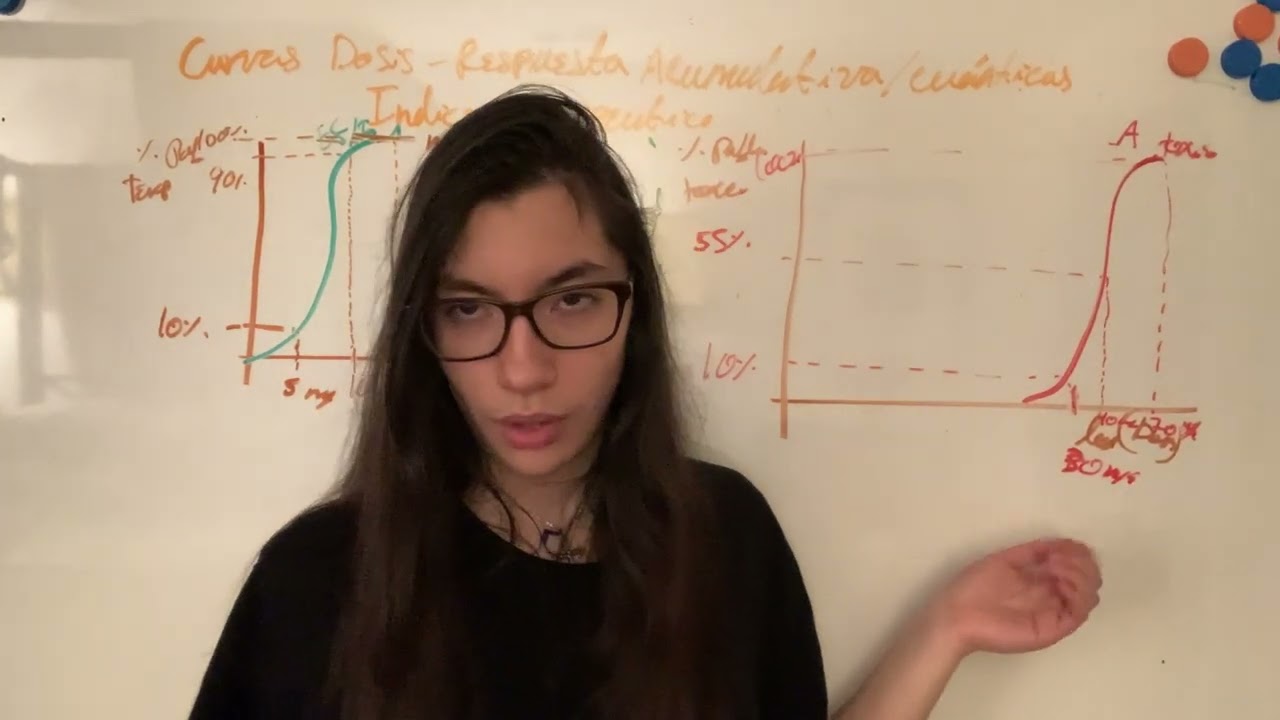
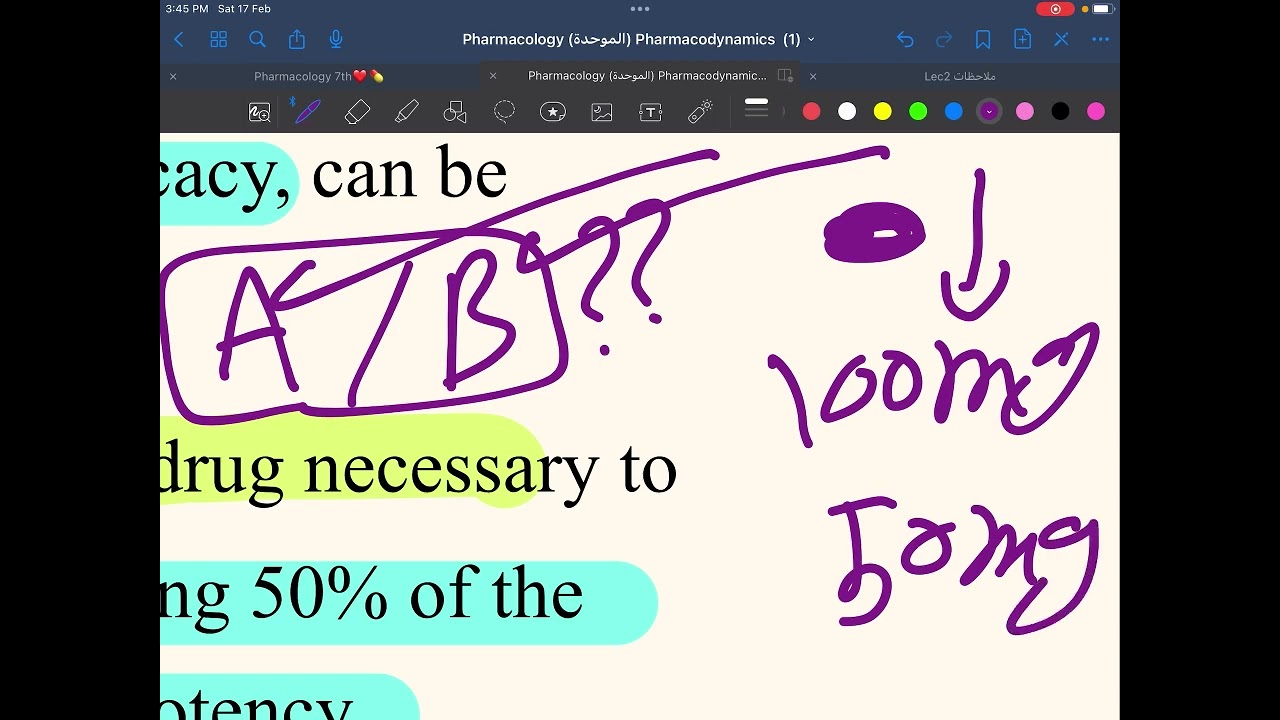


Drug-receptor interactions involve two key parameters: affinity (the strength of drug binding to receptors, measured by KD) and efficacy (the ability to activate receptors after binding). Agonists possess both affinity and efficacy to produce biological responses, while antagonists have affinity but zero efficacy. Concentration-response curves (CRCs) plot drug concentration against effect, revealing Emax (maximum response) and EC50 (concentration for 50% response). Potency relates to EC50—lower EC50 means higher potency. Antagonism includes competitive (reversible/surmountable) and non-competitive (irreversible/insurmountable) types, which can be distinguished by their effects on CRCs: competitive causes parallel rightward shifts without reducing Emax, while non-competitive reduces Emax regardless of agonist concentration.
Drug-Receptor Interactions: Affinity, Efficacy, and Antagonism
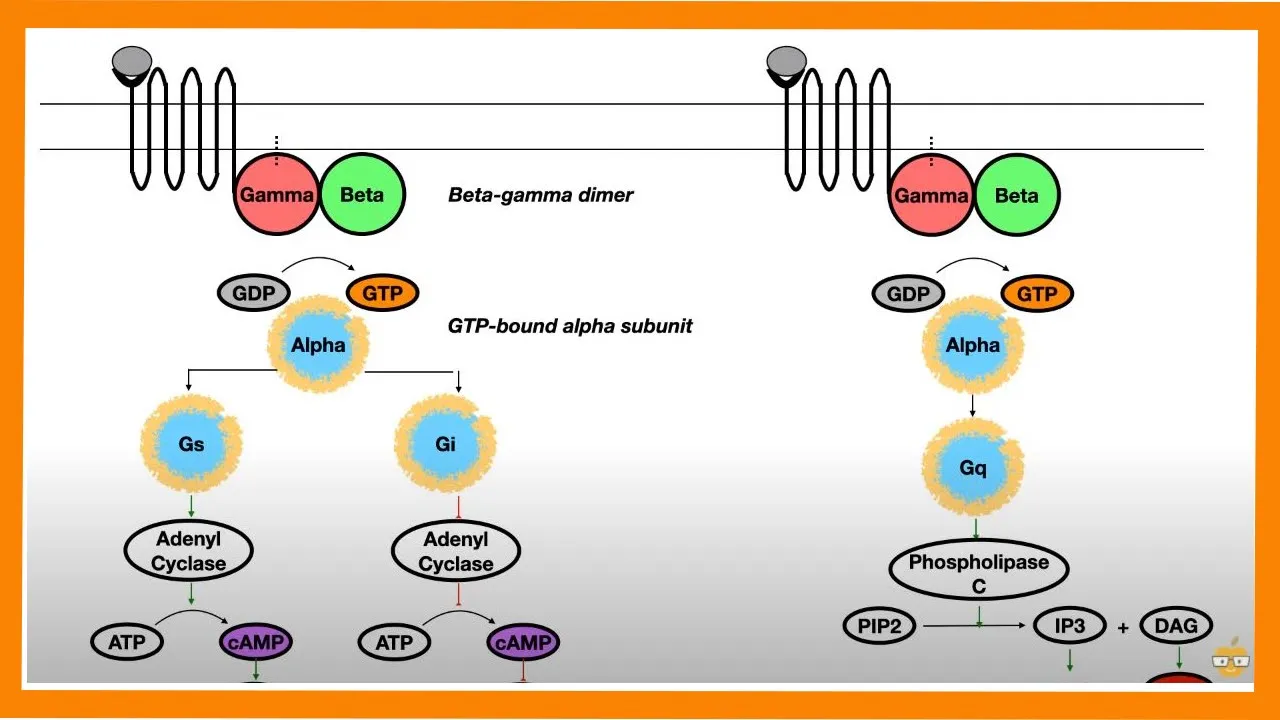
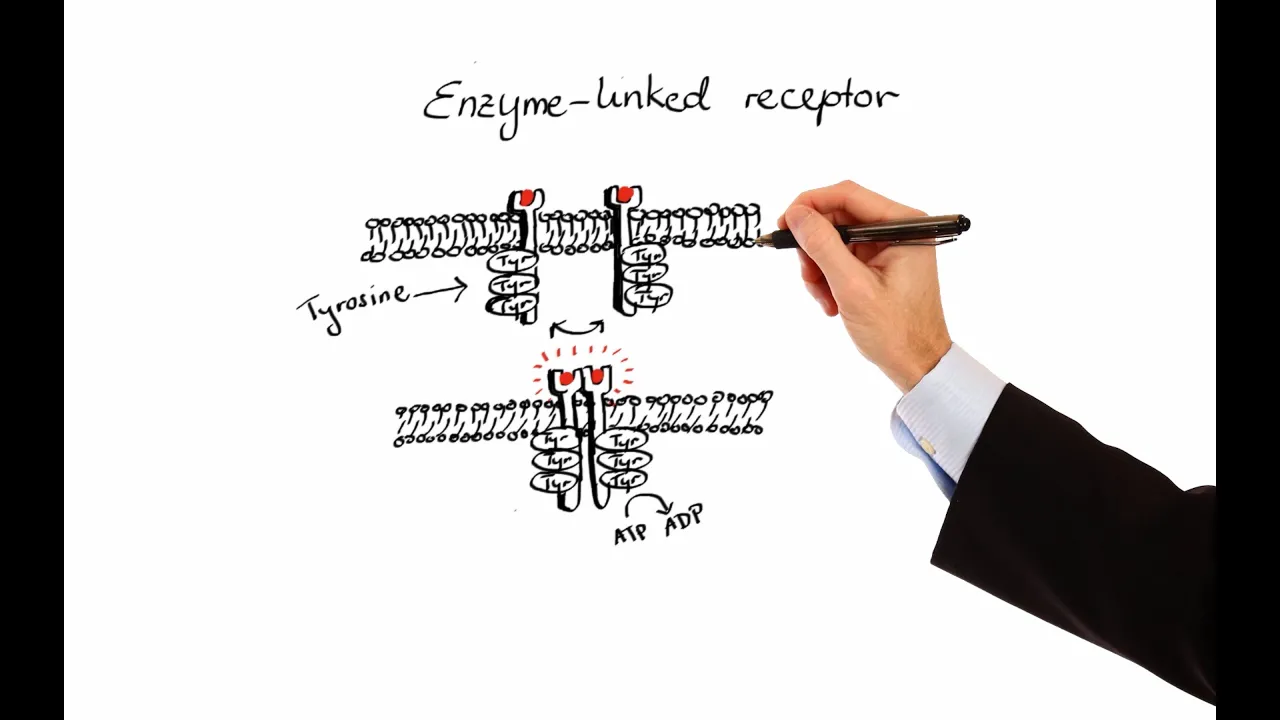
Added:foreign we're going to cover drug receptor interactions we'll explore important Concepts like drug binding affinity and efficacy concentration response curves and will also break down the role of Agonist drugs and dive into the different types of antagonism let's start this lecture by understanding the concept of drug receptor interaction if you've seen the previous lecture we covet how receptors are specialized proteins located on Cell surfaces or within cells are responsible for transmitting signals in the body when a drug interacts with a receptor it can either activate or inhibit The receptors function leading to various physiological responses there are four main types of receptor super families ligand-gated ion channels gpcrs kinase linked receptors and nuclear receptors think of receptors as Tiny locks on the surface of cells or within cells when a ligand such as a medication or a naturally occurring substance such as a neurotransmitter or a hormone comes into contact with the receptor it fits into the receptors lock like a key this interaction between the ligand and the receptor is usually all your different types of receptor proteins who have a particular 3D structure and they have multiple molecular domains when that comes together in three dimensions it creates some sort of pocket or binding site that will allow complementary ligands to bind we refer to these structures that are created as a receptor binding sites or the ligand binding sites so when the ligand binds to the receptor it triggers a series of events within a cell these events can include activating certain genes altering enzyme activity or regulating the release of other chemical Messengers the overall outcome depends on the type of receptor and the specific ligand that binds to it in most cases for a drug to have an effect it needs to interact with a particular molecular Target with that said what influences these drug receptor binding sites number one is a chemical structure okay so the chemical structure of a drug determines its ability to interact with the receptor it's going to be influenced by the 3D structure of the receptor which which will be influenced by the protein sequence whether or not the different amino acid residues are hydrophilic or hydrophobic the different intramolecular forces will all influence that binding site okay secondly molecular size and shape the size and shape of a drug molecule influences its ability to fit into the receptors binding site drugs that closely match the shape and size of the receptors binding site have a higher probability of binding we can also add the lipid solubility of a drug affects its ability to cross cell membranes and reach the target receptor lipophilic drugs have an easier time passing through lipid-rich cellular membranes okay improving their access to receptors and then pH and ionization so the ionization state of a drug is influenced by the pH of its environment ionized drugs have different binding properties than their non-ionized counterparts so let me interact with receptors differently based on their charge all right now when we talk about drugs we often need them to interact with specific Targets in the body to produce their effects however it's important to understand that just because a drug binds to a recep bomb doesn't automatically mean that the receptor will be activated there are two separate steps involved drug binding and receptor Activation so now let's subtract complexity and go through receptor binding the tendency of a drug to bind toe receptor is determined by its affinity for that receptor okay so Affinity refers to the tendency of a drug to bind to its receptor and the strength of the interactions we mentioned earlier that factors such as structural compatibility size shape charge and three-dimensional structure of the protein influence whether a drug can bind to the receptor the stronger the interaction between the drug and its binding site on the receptor the higher the Affinity okay so a drug with high Affinity has a greater tendency to bind to the receptor and will do so easily whereas a drug with lower Affinity won't bind to the recepta as effectively so the better the Affinity the more drug molecules will be bound to the receptor question is how do we measure this so to measure the Affinity between a drug and its receptor we use a parameter known as the equilibrium dissociation constant KD so this value quantifies the Affinity by representing the concentration of drug at which half of the receptors are occupied Okay so in simpler terms a lower KD indicates a high Affinity between the drug and the receptor so understanding the Affinity of a drug for its receptor is crucial in Pharmacology because it helps us predict how strongly a drug will bind to its Target and how effective it will be in producing the desired therapeutic effects so before we break down the dissociation constant let's first understand what drives The Binding of drugs to receptors this is really important the spotting process follows a principle called The Law of mass action which you may have come across before okay the law of mass action states that the rate of a reaction is proportional to the concentrations of the reactants involved so in other words changes in the concentration of any component in the reaction will affect the rate at which the reaction progresses and where equilibrium is reached to illustrate this let's consider the interaction between a drug okay d and a receptor ah when they bind together they form a drug receptor complex Dr this right here on one side you have the drug and receptor separate and Unbound okay and on the other side you have the drug receptor complex if the concentration of the drug is increased by adding more of it to the system the higher concentration of the drug drives the reaction towards the formation of more drug receptor complexes so essentially more drug molecules bind to receptors resulting in the formation of more drug receptor complexes okay and changes in the number of receptors can influence the reaction however in the field of pharmacology we typically focus on changes in the concentration of the drug rather than changes in the concentration of the recepta as receptor numbers usually remain relatively constant okay in biological systems now another important spec all of drug receptor interactions is that the formation of the drug receptor complex is reversible this means that while the drug can bind to the receptor and form the complex right here it can also dissociate from the receptor separating into the individual drug and receptor again this reversible nature applies to most drug receptor interactions although there are some exceptions that we'll discuss later now in most cases The Binding of drugs to recepta is reversible reaction meaning it can occur through Association or dissociation the rate constants K1 and K minus 1 describes the rate at which the drug and recepta Associate or bind together and dissertion separate okay so K1 represents the association rate constant so it determines the ability of the drug and receptor to bind while K1 represents the dissociation rate constant describing the rate at which the drug receptor complex separates all right as you may have studied before when the reaction reaches equilibrium the forward and backward rates are equal at this point the rate of drug receptor Association is the same as the rate of dissociation the equilibrium dissociation constant KD is a measure of affinity it's calculated as the ratio of the dissociation constant K minus 1 to the association constant K1 so KD indicates the tendency of a drug to dissociate or separate from its receptor now the value of KD increases when the dissociation constant K minus 1 is higher and the units of KD are in molar which are the same units used for concentration numerically the KD or equilibrium dissociation constant represents the amount of drug needed to occupy 50 of the receptor binding sites at equilibrium okay so this value provides us with valuable information about drug Affinity again Affinity refers to the Drug's tendency to bind to its receptor if a drug has a high KDE it means it has a high tendency to dissociate from the receptor Katie the association constant which means you will need a large quantity of the drug to occupy 50 of the receptor binding sites at equilibrium all right drugs with high KD values have low affinity for the receptor in other words there is an inverse relationship between KD and Affinity High KD indicates low Affinity okay on the other hand if a drug has a low KD it has a low dissociation constant implying that it tends to remain bound to the receptor once it binds it doesn't readily dissociate or separate from its receptor so drugs with low KD values require a lower concentration to occupy 50 of the receptor sites at equilibrium all right now if this is still slightly overwhelming then subtract complexity again let's say let's say you're at a potty and you notice that some people are attracted to each other and end up holding hands this attraction between individuals can be compared to Affinity in drug receptor interactions Affinity is like it's like the level of attraction between a drug and its receptor okay we said KD is the equilibrium dissociation consistent and it tells us the tendency of a drug to dissociate or separate from its receptor right now think of Katie as a measure of How likely a cop a couple is to let go of each other's hand at the party if the KD value is high it means that the couple has a higher tendency to separate or let go they're going to let go all right and if a drug has a high KD it indicates that it's a higher tendency to dissociate or separate from its reception okay on the other hand if the KD value is low it suggests that the couple is less likely to let go of each other's hand it will be will remain down so this is the same way as if a drug has a low KD it means that it has a lower tendency to dissociate from its receptor so the Affinity between a drug and its receptor can be compared to the attraction between people while the KD tells us about the tendency of the drug to dissociate or separate from the reception just like How likely a couple is to let go of each other's hand at a party all right so Katie helps us understand the concentration of a drug needed to achieve 50 receptor occupancy with low KD values requiring another lower drug concentration due to higher affinity all right that's Affinity let's now move on to efficacy so like we said before not every drug that binds to a receptor will activate a receptor drugs that bind and activate receptors are known as Agonist drugs so here we have an Agonist drug binding to its specific site on the receptor and because it's an Agonist it will activate the receptor which then initiates a signal transduction pathway within the cell to generate a functional response alright so an Agonist drug both binds to and activates a receptor and we also have drugs known as receptor antagonists these drugs combine to the receptor but they don't cause receptor activation they don't activate the receptor they can bind but they can't activate it an Agnes drug okay activates the receptor whereas an antagonist can still bind to the receptor without activating it and we're going to explore the effects of antagonist drugs later in this lecture so connect this so connecting this with affinity which is the term we use to describe the tendency of a drug whether agonists are antagonist to bind to receptor it's an important factor in drug receptor interactions the ability of a drug to produce a biological response once it's bound to its receptor is determined by its efficacy efficacy indicates How likely a drug is to produce a biological response after binding to the receptor in other words efficacy measures the drugs Effectiveness in producing the desired effect okay let's connect the concepts we've discussed so far by understanding that receptors can exist in different states yeah now there are various models to describe receptor States but let's begin with a simple model that considers receptors in either a resting state or an active state so right here we have our receptor the inert is off in a trusting State when the recepta is in this state a drug is not occupying it and it's also not signaling which means that no biological response is occurring let's introduce drug a our Agonist drug for the receptor when The Agonist drug and the receptor bind they form a complex called AR which stands for agnesreceptor complex this binding event triggers the receptor to transition into an activated state so for convenience here we'll use the notation R asterisk R star to represent the activated state of the receptor once the drug is bound to the receptor it's going to trigger a switch that turns the receptor into its active State leading to a cellular response now here's the thing the Affinity of The Agonist drug determines the occupation of the receptor or its capacity to bind to the receptor all right as we discussed earlier Affinity is measured by the KD equilibrium dissociation constant with an inverse relationship between KD and Affinity remember drugs with the high KD values have low Affinity while drugs with low KD values have a high affinity for the receptor the efficacy of an Agonist drug determines how effectively it can activate the receptor once it's spelled some agonists have high efficacy meaning they are highly efficient in activating the receptor whereas some agonists have low efficacy resulting in less protein activation of the receptor okay the key point is that Agonist drugs exhibit both Affinity which allows them to bind to the receptor and efficacy which enables them to activate the receptor once it's bound now looking at an antagonist drug let's call it drug B it can bind to the receptor but it doesn't activate it this means that drug b as an antagonist forms a drug receptor complex BR okay and this is influenced by the Affinity of drug B for its receptor so antagonist drugs will still have affinity for The receptors meaning they can still bind to them however antagonist drugs have zero efficacy as they are incapable of activating the receptor once bound okay so it's really important to note these two key pharmacological parameters here Affinity determines the Drug's ability to bind to the receptor while efficacy refers to the Drug's ability to activate the receptor after binding okay both receptor Agonist and antagonists exhibit Affinity but only Adventist drugs possess efficacy antagonist drugs lack efficacy preventing them from activating the receptor even when they are bound to it okay so receptors can exist in different states such as rusting and an activated State all right let's move on so we've covered affinity and efficacy and things that influence receptor binding and activation as well as what agonists and antagonists are okay so now let's go through the methods used to quantify and analyze drug receptor interactions looking at concentration response curves or crcs before we do that we need to First understand why are we doing this what's our purpose here because there's no point of me going through this but we're not actually understanding what our purpose here what's the big picture clcs are a fundamental tool for understanding these relationships the connection between a drug and its functional or biological effects all right the concentration response relationship is a fundamental Concept in Pharmacology and it plays an important role in understanding the effects of drugs okay and we're going to be focusing on Agonist drugs here let's break this down when we administer an Agnes drug the biological response initially increases proportionally with the amount of drug that is given so in other words as a drug concentration increases the effect becomes more pronounced all right the increase in drug concentration leads to more drug molecules binding to The receptors through the law of mass action okay as we covered earlier and since agonists have efficacy and can activate the receptor a higher number of occupied receptors means more receptors transition into their active configurations into their active state and what happens then is that there will be an increased activation of Downstream signaling Pathways and a greater biological effect Beauty initially as a drug concentration Rises the response increases correspondingly okay here's a thing though there is a limit to this relationship because as the drug concentration continues to increase and reaches the upper range here the response begins to Plateau this means that even if the drug concentration keeps Rising the response no longer increases further it plotters so we represent this relationship between drug concentration and biological effect using a concentration response curve CRC so on the x-axis here it represents the drug concentration okay crcs are usually presented in on a logarithmic scale this scale is important because pharmacology often deals with drugs that have a wide range of concentrations okay so the drug concentration is plotted on the x-axis progressing from left to right with increasing concentration of the Agnes strength the y-axis here represents the response to the drug which can be a generic term referring to various measured effects depending on the system that is being measured but for now we'll use the general term response the response increases as you move up the y-axis now importing our concentration response curve you end up with a sigmoidal graph that exhibits a clear bottom Plateau okay a region of growth here and a plateau at the Top This sigmoidal shape is commonly observed in most drug receptor interactions when crcs are analyzed in this manner so typically the linear portion of the curve lies between approximately 20 and 80 of the maximum response for therapeutically used drugs this linear region corresponds to the therapeutic range So within this region the desired therapeutic effect is observed all right and increasing the drug dose within the therapeutic range leads to a greater therapeutic response the therapeutic range is defined as the it's defined as a target range where the drug concentration is sufficient to produce the desired therapeutic effect without an increased risk of adverse effects okay however when drugs are used at high concentrations beyond their therapeutic range there is an increased risk of dose related adverse effects and for the area below the therapeutic range this is referred to as this sub-therapeutic area so this occurs when a drug is administered but not insufficient quantity to achieve the desired therapeutic effect okay for more crcs the linear range between telling a range between approximately 20 and 80 of the maximum response it corresponds to the therapeutic range okay now there are two essential parameters derived from crcs which are emacs and EC 50.
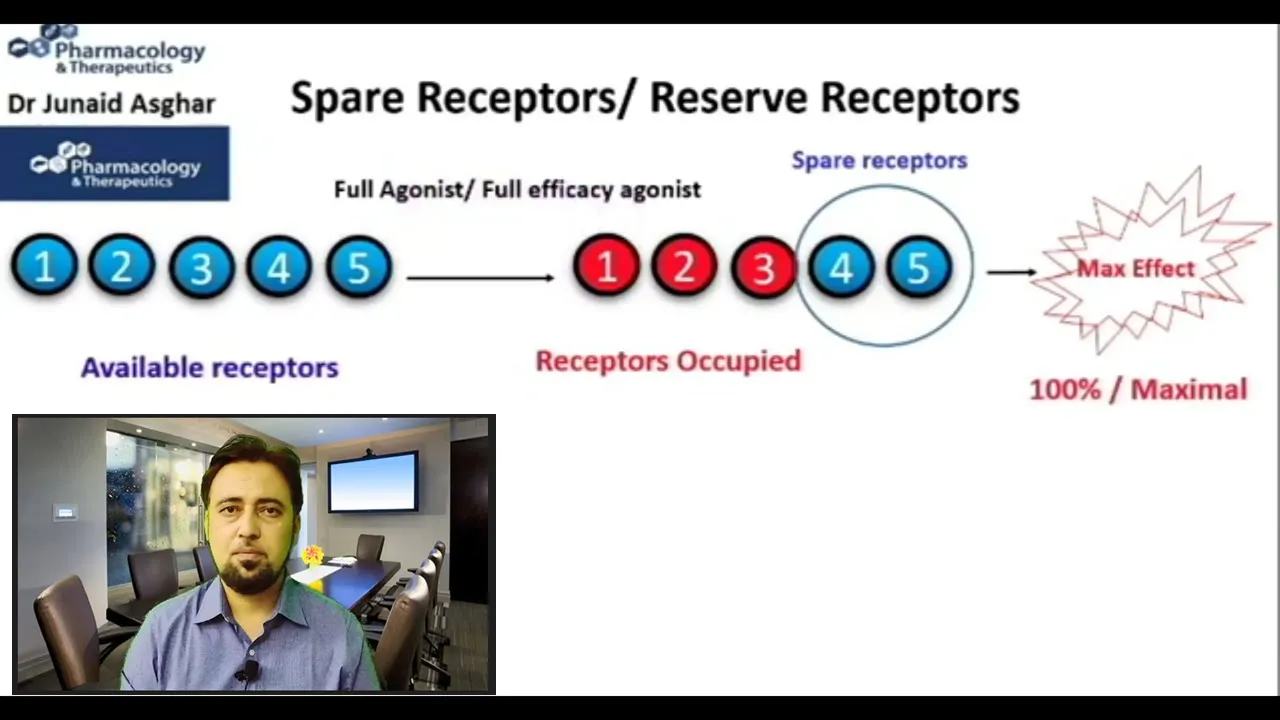
so these two parameters provide insights into drug receptor relationships and other pharmacological factors such as efficacy and potency emacs represents the maximum response achievable by the drug under specific conditions okay emacs is reached when the drug has elicited the highest response possible beyond this point if we were to add more of the drug it would not further increase the response okay e-max maximum response the top of the toe of the CRC indicates the e-max value again once a drug has hits its Emax or maximum response we're not going to produce a greater response if we add more drugs as a concentration of the Agnes increases with the x-axis progressing from left to right the response also increases until it reaches the e-max okay so again even if we were to add you know we were to increase the drug concentration by thousands of drug molecules it would not result in a higher maximum response because the tissue or system has already reached its maximum potential under those conditions that's emacs which is the top plateau of the CRC the other important parameter obtained from crcs is the ec50 which stands for the effective concentration of 50 percent the ec50 this right here refers to the drug concentration at which 50 percent of the maximum response to the drug is observed now it's important to understand that the ec50 pertains to concentration indicating where the graph sits on the horizontal axis okay in the graph okay the maximum responses is at 100 and the line that intersects with the curve of 50 of the maximum response determines the ec50 it indicates the concentration of the drug required to achieve 50 of the maximum response in this case the ec50 is right here approximately 10 to the power of negative 7 molar now another thing to note is that the ec50 does not equal 50 of the maximum response itself okay the ec50 is a concentration of the drug that produces 50 of the maximum response it represents a concentration value obtained from the x-axis of the graph not the percentage of the response itself okay all right let's introduce another Concept in Pharmacology which is potency the currency of a drug is measured by the ec50 value which represents the drug concentration that produces percent of the maximum response to that drive and it provides valuable information about drug activity and the amount of drug required to produce a specific effect if a drug has a high potency it means that a lower concentration of the drug is sufficient to achieve the desired effect whereas a drug with low potency requires a higher concentration to produce the same effect let's break this down let's say we have three Agonist drugs drug a b and c okay it's all depicted in the CRC these drugs have the same emacs reaching the same maximum response level the concentration at which the response is 50 of the maximum is marked across the curve okay in the middle this concentration is the ec50 for each drug in this example drug a has an ec50 of two truck B of 6 and Drug C has an ec50 of 30. the drug concentration that produces 50 of the maximum response is what determines these ec50 values so from this the ec50 value tells us about drug potency okay but what does this mean how does this actually tell us about potency the lower the ec50 value the higher the potency of the drop okay in other words a highly potent drug with a low ec50 requires a lower drug concentration to achieve the same response for example we have drug a here with an ec50 or two okay it requires a concentration of two more well drug B with a higher ec50 of 6 requires a concentration of 6 molar and Drug C with an even higher ec50 of 30 okay drugs with lower ec50 with lower ec50 values appears on the left side of the CRC and are considered more potent because they require fewer drug molecules or a lower concentration to produce the same effect okay so this is evident when examining the maximum response levels as well drug a reaches its maximum effect or and our maximum effect at a much lower concentration compared to drug b or drug C Drugs with low oil potency require a higher concentration of the drug to produce the same effect and they have a high ec50 and will appear on the right side of the CRC okay now if this is still quite overwhelming let's subtract complexity again okay this is how we're gonna do it imagine you have Three Chefs okay they're each preparing a dish using a different amount of special seasoning the EKG sign special okay the chefs represent different drugs and the amount of seasoning they use represents drug potency now our goal here is to achieve a flavorful dish that corresponds to the desired biological effect of the drug okay Chef a is a highly pardoned okay and uses only a tiny sprinkle of seasoning to make the dish beautiful to make it flavorful Chef B is less pertinent and requires a moderate amount of seasoning to achieve the same level of flavor finally we have Chef C it's the least potent and needs a large amount of seasoning to make the dish tasty let's now visualize plotting the quantity of seasoning each Chef used on the x-axis of a graph and the final flavor of the dish on the y-axis so this graph resembles a concentration response curve okay as you move from left to right on the graph the amount of seasoning increases for Chef a the Cup starts at a low seasoning amount rapidly increasing and then levels off at a high flavor point so this indicates that chef Chef Ace dish reaches its maximum flavor or response quickly within only a small amount of seasoning or concentration the ec50 value representing the concentration where the dish achieves 50 percent of its maximum flavor is at a very low point on the x-axis okay now looking at sharp B's curves here it starts with a higher amount of seasoning and it steadily increases in flavor okay and levels off at a slightly higher flavor Point compared to Chef a so the ec50 value for Chef B is higher than that for Chef a meaning a greater response a greater concentration of seasoning is needed to reach 50 of Maximum flavor finally we have Chef C Chef C's curve starts with a substantial amount of seasoning gradually increases inflavor and levels off at the highest flavor point the ec50 value for Chef C is at the highest among the Three Chefs indicating that a significantly larger concentration of seasoning is required to achieve 50 percent of the maximum flavor Gordon Ramsay is not impressed okay so in this analogy the potency of the chefs represents the potency of drugs and the seasoning amount correlates with drug concentration and the clcs demonstrate how different drugs in this case shafts require varying concentration to reach their maximum effect or maximum flavor with more potent drugs achieving the desired effect at lower concentrations just as Chef a requires less seasoning to make the dish beautiful okay so the concentration response curve provides us with valuable information about a Drug's Behavior including two important parameters we have ec50 and emacs okay the ec50 again indicates drug potency or the Emax represents drug efficacy and recall what effectacy means it refers to the ability of a drug to activate the receptor once it's bound now all Agonist drugs have efficacy meaning they can activate the respective receptors however not all Agnes drugs have the same efficacy and this is where we introduce the concept of subdivisions within Agnes okay let's slow down for a second so a full Agonist is a drug that can elicit the maximum response in a specific tissue the topical term okay also known as the Emax is the highest point on the concentration responseca so for example okay drug a in the graph is a full Agonist producing a maximal response of 100 percent full agonists have high efficacy and can usually achieve the maximum response without needing to occupy all the receptors some may only need to occupy a small percentage of receptors to reach the maximum response that's for agonists then we have a partial Agonist okay so a partial Agonist is also an Agnes drug but with lower efficacy it combined to and activate receptors but has a diminished ability to do so compared to full agonists in the graph here drug B and C are partial agonists as their Emax values are lower than 100 okay so you can see here a drug B achieves around 80 of the maximum response while drug C reaches approximately 30 okay so partial agonists can never produce as large a response as full Agnes regardless of the amount of drug added okay so they have limitations in activating receptors preventing them from reaching the same Emax as full agonists all right that's Agonist drugs let's now move on to antagonism and go through the different types okay let's remember the difference between Agnes and antagonist first so we said that Agnes possessed both affinity and efficacy they bind to and activate the receptor leading to a biological response on the other hand antagonist drugs work by reducing the action of another drug usually an Agonist so immerse Agnes are receptor antagonists which is what we'll focus on okay so it still has affinity for the receptor allowing it to bind to the receptor but it doesn't activate the receptor or trigger a response so it reduces the action of Agonist okay let's break this down further receptor antagonists can be further categorized into competitive antagonism and non-competitive antagonism let's start with competitive antagonism so right here we see The Agonist drug binding to its active orthosteric side on the receptor activating signaling mechanisms and producing a biological response side well the primary Agonist binds is known as The orthosteric Binding site in competitive antagonism both The Agonist drug and the antagonist drug bind to the same site on the receptor on the left here we have The Agonist truck and on the right the antagonist drug they're competing for binding to the same part of the receptor and due to structural limitations The Agonist and the competitive antagonists can't simultaneously bind to the receptor site so like imagine a crowded parking lot where there's only one available parking space the Agnes drug is like a car trying to park in the spot to activate a receptor however when antagonist drug is present he also wants to park in the same spot so just like two cars competing for the same parking space The Agonist and antagonist drugs are competing for the same binding site on the receptor okay but only one can occupy the spot at a time either allowing The Agonist to activate the receptor or blocking it from doing sure okay so this competition for The Binding site leads us to an important characteristics of competitive antagonists all right as we discussed earlier drug receptor binding kinetics follows the law of mass action where a higher concentration of drug increases the likelihood of forming drug receptor complexes in competitive antagonism increasing the concentration of the Agnes drug can out-compete the antagonist and restore receptor activation okay so if the Agnes drug is present in a thousand times higher concentration than the antagonist more Agonist molecules will bind the receptor compared to the antagonist okay so this ability to overcome antagonism by increasing Agnes concentration is referred to as surmountable response surmountable means that The Agonist effect can be overcome with a sufficient concentration of an Agonist drug all right you may also refer you may also hear this referred to as reversible antagonism okay so it's a mountable and reversible antagonism are terms used to describe this type of competitive antagonism and later on we'll explore how different types of antagonism can be distinguished using crcs all right so competitive antagonism is the most common type of antagonist for therapeutically used drugs however it's also important to be aware of other types of antagonism such as non-competitive antagonism in non-competitive antagonism there are different subtypes but the key feature is that both The Agonist and antagonist drugs can bind to the receptor simultaneously the receptor and antagonists can co-exist and bind to the receptor at the same time as we discussed before competitive antagonism can be overcome by increasing the concentration of The Agonist drug so with enough Agonist drug bound to The receptors the maximum response of the Agnes can still be restored this is why it's called surmountable antagonism competitive antagonism is surmountable now non-competitive antagonism is a type of insurmountable antagonism we said that in non-competitive antagonism the antagonists and Agnes drugs can both bind to the receptor simultaneously but a different binding side the antagonist doesn't directly compete with the Agnes for the same binding site on the receptor in non-competitive antagonism the antagonist impairs the function of the receptor or prevents the Agnes from producing the maximum it's a maximum effect regardless of the concentration of the Agnes this effect is not reversible okay by increasing the concentration of the agonists which is why it's considered insurmountable so even if you have very high concentrations of the Agnes drug the antagonists will always limit the maximum response so insurmountable antagonism occurs when the antagonist irreversibly Alters the target receptor or its binding site okay this irreversible alteration of the recipe can happen through it can happen through the formation of covalent bonds between the antagonists and the receptor so this permanent change in the receptor lasts for the lifetime of the receptor protein another scenario where insurmountable antagonism can occur is when The Agonist drug has an extremely high affinity for the receptor which means if the Agnes has a very high Affinity it remains tightly bound to the reception and doesn't dissociate easily as a result it can be considered effectively irreversible so insurmountable antagonism can happen either due to irreversible modification of the receptor or when The Agonist has exceptionally High receptor of Fini making it difficult for the antagonist to be displaced from the receptor all right okay we've covered a lot so far we have discussed receptor antagonism where an Agonist drug an antagonist drug interact at the same receptor now there's another type of antagonism and it's called physiological antagonism or functional antagonism in physiological antagonism two different drugs have effects that are functionally opposite reducing the effects of reducing the action of each other due to their inherent impact of biological function okay meaning they're not antagonizing each other all right they are reducing the action of The Other Drug in most cases uh physiological antagonism the drugs act through different receptor systems are signaling pathways to understand this concept better let's let's go through an example so we'll examine the effects of two different drugs on heart rate we have acetylcholine which is a neurotransmitter in the autonomic nervous system it decreases heart rate when it binds to its specific receptors and on the other hand we have adrenaline which is released in the adrenal gland during the fight-or-flight response okay and it increases heart rate by activating different receptors so the heart contains various receptors including muscarinic and adrenergic receptors I see I see choline activates muscarinic receptors specifically the M2 receptors leading to a decrease in heart rate so acetylcholine is an Agonist at the M2 receptors now adrenaline acts as an Agonist at beta-1 adrenergic receptors resulting in an increase in heart rate so in this example we can see acetylcholine and adrenaline demonstrating physiological or functional antagonism although both drugs are Agnes they're functional effects on the heart rate are opposite acetylcholine decreases heart rate while adrenaline hypotheadrenaline increases it so we refer to acetylcholine and adrenaline as displaying physiological antagonism in this scenario all right so those are the different types of antagonism let's now go through how we can analyze antagonism using crcs we're just going to look we're just going to be talking about receptor antagonists here okay we'll look at both competitive and insurmountable antagonisms and how they will affect the concentration response goes this is actually pretty cool so as we carbon in competitive antagonism the Agnes drug and the antagonist drug compete for binding at the same receptor site so they can't both bind simultaneously so factors like concentration determine which one will be bound to the receptor this is why competitive antagonism is referred to as surmountable or reversible antagonism if you have a high concentrations of The Agonist drug in the system you can out-compete the competitive antagonists and bind to The receptors this allows for enough activation of The receptors to achieve a maximum response in the cell tissue or system even in the presence of the competitive antagonist by increasing the concentration of the agonists you can overcome the effects of the competitive antagonist okay so this is a characteristic this is the characteristic feature of competitive antagonism and we can observe it by examining the effects of the competitive antagonists on The Agonist concentration response competitive antagonism causes a parallel rightward shift in the Agnes concentration response curve this means that the higher concentration of the agonists are needed to produce the same response in the presence of the competitive antagonists compared to when it's absent okay let's draw this out and look at competitive antagonism and its effects on the Agnes CRC let's start with curve number one here this curve represents the concentration response of an Agonist drug on the x-axis we have the log scale of the aggress concentration while the y-axis represents the linear scale of the response curve 1 shows that drug a is a full Agonist because it reaches the maximum response achieving 100 of the maximum effect okay the ec50 value of drug a which indicates the concentration at which 50 percent of the maximum responses obtained is represented by the point on the curve where the response is at 50 this right here at this point corresponds to the concentration of drug a that achieves 50 of the maximum response okay now let's focus on curves two and three which demonstrates the impact of increasing concentrations of competitive of a competitive antagonist on The Agonist drug so the purpose of Curves 2 and 3 is to show the effect of the agneus drug in the presence of a competitive antagonist as you can see here the competitive antagonist shifts The Agonist concentration response curve to the right curve 2 which represents a low concentration of the competitive antagonist is shifted slightly to the right compared to The Agonist alone curve 3 here curve 3 on the other hand depicts a high concentration of the competitive antagonists causing a further rightward shift okay so in the presence of the competitive antagonist The Agonist needs to be in higher concentrations to beat it and turn on enough receptors to get the full effect okay now there are two key observations to make here the first one is the presence of the competitive antagonist Alters the ec50 values of The Agonist drug it increases the ec50 meaning higher concentrations of the agonists are needed to achieve 50 of the maximum response alright the second thing is at high concentrations of the agonists okay located on the right side of the graph it's still possible to reach the full maximum response even in the presence of the competitive antagonist this parallel rightward shift is what we refer to as parallel shift in the Agnes CRC it indicates that the curve has been shifted to the right without affecting the maximum response pretty cool right so to summarize curve one represents The Agonist drug alone while curves 2 and 3 shows the response of the Agnes drug in the presence of increasing concentrations of the competitive antagonists okay the competitive antagonist causes a right word shift in the Agnes concentration response curve without altering the maximum response alright that's how a competitive reversible or surmountable antagonist affects the CRC in the presence of a competitive antagonist the CRC shifts to the right but the maximum response can still be achieved with a sufficient amount of the Agnes okay now let's explore the now the type of receptor antagonism we mentioned earlier the insurmountable antagonism which is sometimes referred to as irreversible antagonism the key distinction of insurmountable antagonism is that it reduces the maximum response of The Agonist drug unlike with surmountable antagonism you can't overcome the effects of an insurmountable antagonist okay you can't overcome it simply by increasing the concentration of the Agnes drug this is because most insurmountable antagonists permanently modify the receptor protein or the receptor binding site okay when a drug binds covalently to a binding side the site is changed in a way that can't be changed back no matter how many Agonist drugs molecules are present they can no longer bind to the change site because it's been modified it's been altered it can't fit in anymore all right so then how does this manifest on a CRC so let's examine this on the x-axis we have again we have the Agnes concentration and the red line here represents the response of the Agnes drug alone and then we have two Orange Lines these lines depict the effects of The Agonist drug in the presence of an insurmountable antagonist so here we can see that the presence of the insurmountable antagonist causes all as well like you know a right word shift similar to what we observed with competitive antagonism however more importantly we can observe a decrease in the maximum response in the case of insurmountable antagonism no matter how much Agonist drug is present when the insurmountable antagonist reaches sufficient concentrations it prevents the agonists from achieving the maximum response okay so these curves reach a maximum Plateau below the response obtained with The Agonist drug alone okay to summarize in insurmountable antagonism we see a rightward shift in the CSE similar to competitive antagonism however the distinguishing feature is the reduction in the maximum response regardless of the concentration of The Agonist drug and an insurmountable antagonist when present at sufficient levels the maximum response just can't be achieved okay no matter how much Agonist drugs we add into the system the maximum response just won't be achieved because of this distinguishing between reversible competitive antagonism and irreversible insurmountable antagonism can be challenging because look at this alert concentrations the effects of an insurmountable antagonist can initially resemble those of a competitive antagonist okay so in the graph shown here the red curve represents the response to the drop let's say it's I don't know histamine and the other three lines show how histamine reacts when an antagonist drug is present in increasingly higher amounts at a lower concentration of two nanomals of antagonists we can mistake this for acting as a competitive antagonist because it causes a rightward shift without affecting the maximum response however as the concentration of the antagonist increases with a higher concentration of the antagonist we can see a classic insurmountable antagonist response characterized by rightward shift and a reduction in the maximum response the shift occurs because the antagonist has irreversibly modified the receptor or receptor bunny sign the reason insurmountable antagonists can initially resemble competitive antagonists at low concentration is due to the presence of spare receptors or receptor reserves in tissues these spare receptors allow the Agnes to continue binding and eliciting a response even in the presence of low concentrations of the antagonists however as the antagonist concentration increases it eventually overwhelms these spare receptors leading to a clean and insurmountable antagonistic effect okay let's go through receptor reserves what are spare receptors so receptor reserves refers to the presence of additional receptors in a tissue or a system that are not required to elicit a maximum response okay so this concept is closely related to the idea of effexy which is the ability of a drug to activate the receptor once it's spam so full agonists which have high efficacy can produce a maximum response even even when only a fraction of The receptors are occupied okay so here we can see a cell with eight receptor molecules one two three four five six seven eight you get it in this example the maximum response in the tissue is achieved with only three out of eight receptors occupied this means now less than 100 receptor occupancy is needed for a maximum response the presence of spare receptors or receptor Reserve explains why insurmountable antagonists out low concentrations can sometimes resemble competitive antagonists on a CRC the spare receptors which are not required for a maximum response can continue to allow the agonists to at least to elicit a response even in the presence of lower concentrations of the antagonists however as the antagonist concentration increases it eventually overcomes the sphere receptors leading to the characteristic effects of insurmountable antagonism okay so to better understand this concept of spare receptors and how insurmountable antagonists affects the CRC let's go through an example so let's say we had a potent full Agnes drug with high efficacy in this case only one percent of the total receptors need to be bound by the Agnes to produce a maximum response in the tissue or cell or system so due to the full agonists High efficacy and irreversible or insurmountable antagonists could potentially occupy the remaining receptors without lowering the maximum response at low concentrations of the insurmountable antagonist it initially produces a parallel shift in the CRC this occurs because again the spare receptors or receptor Reserve can still allow enough Agnes binding to maintain the maximum response however as the concentration of the antagonist increases and more receptors become occupied by it our point is reached where over 99 of The receptors are occupied so at this stage the spare receptors are depleted okay and it becomes impossible to have enough Agonist bound to the remaining receptors to overcome the antagonist effect this is when the maximum response to the Agnes starts to decrease the presence of the insurmountable antagonist initially causes a shift in the CRC requiring higher concentrations of the agonists to overcome its actions but with higher concentrations of the antagonists there is a clear reduction in the maximum response okay the the irreversible antagonist has occupied enough receptors to prevent sufficient Agonist binding and activation now it's important to note that the one percent receptor occupancy mentioned in this example it's not a fixed value okay it's not a fixed value for every drug receptor interaction it simply serves as an illustration of the concept okay so the combination of spare receptors the lack of requirement for full receptor occupancy by some Agnes and the effects of insurmountable antagonists often make lower concentrations of insurmountable antagonists resemble competitive antagonism or antagonists so when this happens we need more information about the system so that we can draw accurate conclusions thank you for watching this video make sure you subscribe to EKG science so you don't miss a single lecture and remember subtract complexity and slow down to study the next lecture simply click the next video or you can view the entire playlist
Up Next
Drug Discovery & Development: A Step-by-Step Academic Guide
@Vidyamitra
7.7K views•2018-05-29

Graphic Medicine: Comics for Collaborative Healthcare Communication
@nationalpatientadvocate
189 views•2023-12-04

Neuroanatomy: Central and Peripheral Nervous System Divisions Explained
@AKLECTURES
136.2K views•2014-09-20
Stages of Labor and Vaginal Birth | Childbirth Animation
@nucleusmedicalmedia
52.1M views•2017-08-18
Related Study Plans & Knowledge Roadmaps
Structured learning paths in Medicine