













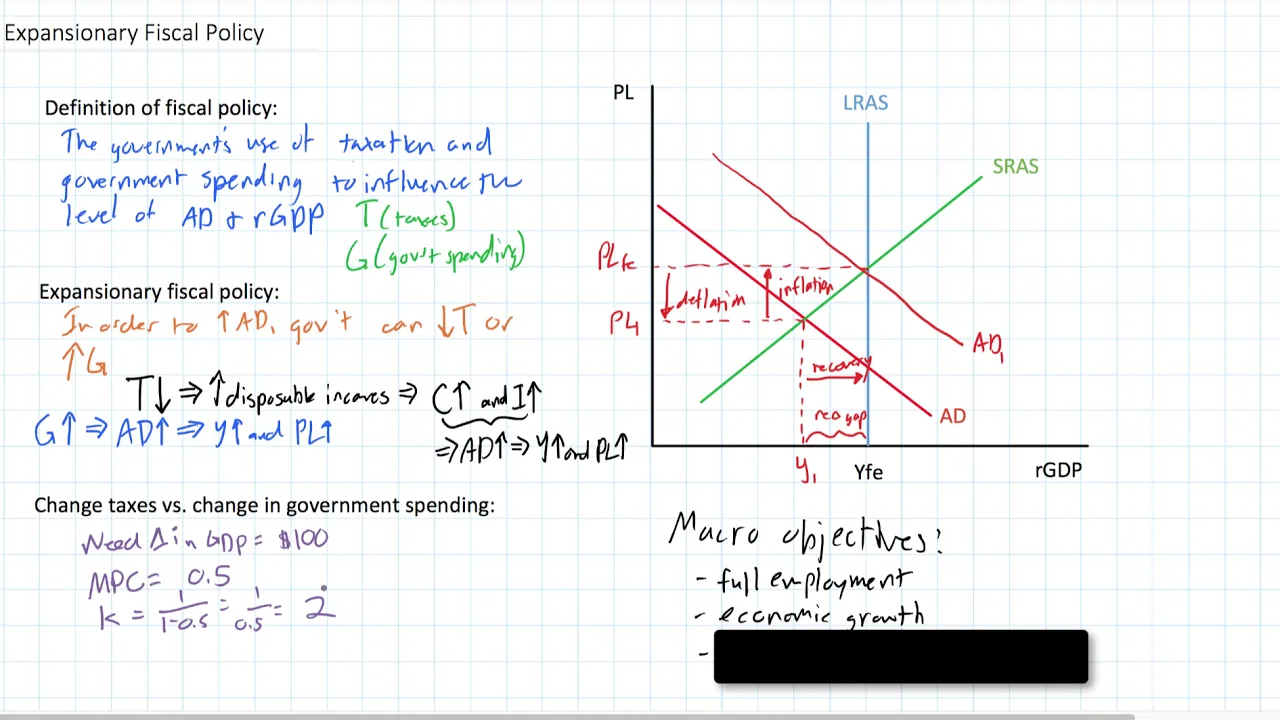








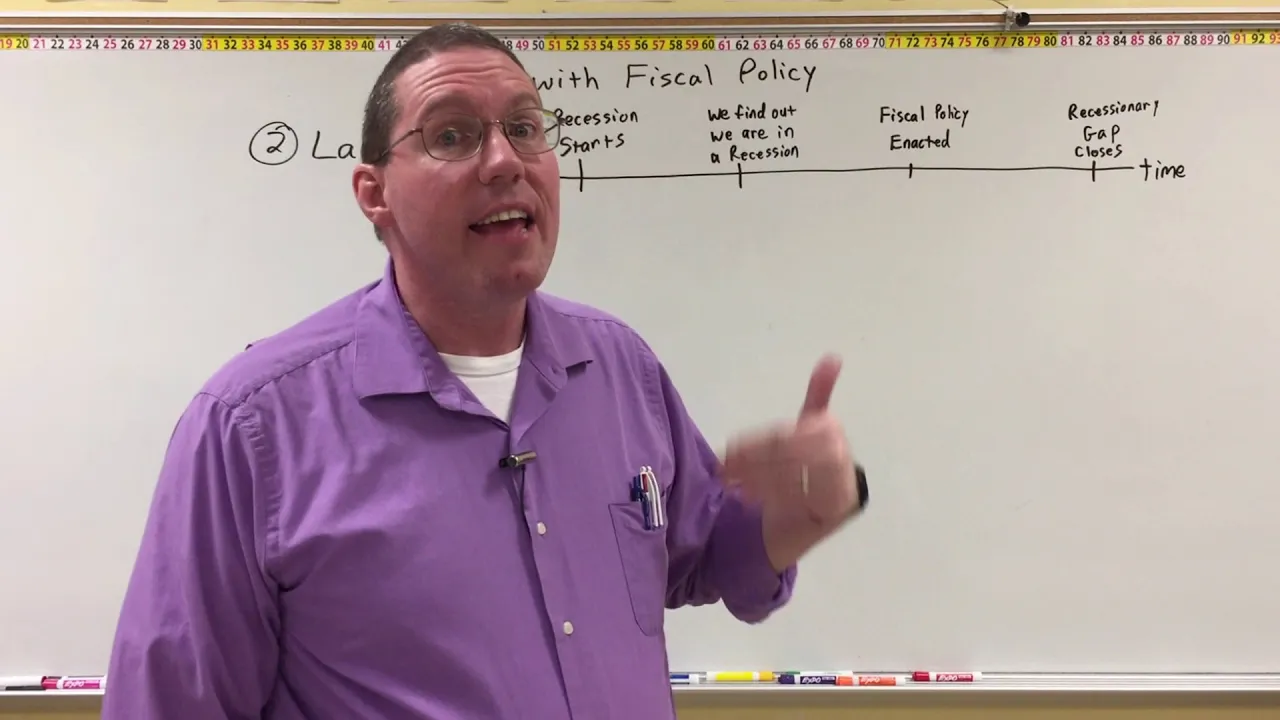

The tax multiplier effect in fiscal policy is less powerful than government spending because when taxes are cut, individuals save a portion of their additional income; thus, to close a recessionary gap of $40 billion with a marginal propensity to consume (MPC) of 0.5, the government must cut taxes by $40 billion (not $20 billion), since only half of the tax cut ($20 billion) is actually spent and then multiplied by the multiplier of 2 to reach the full $40 billion needed.
Tax Multiplier Explained: Fiscal Policy Practice | Macroeconomics
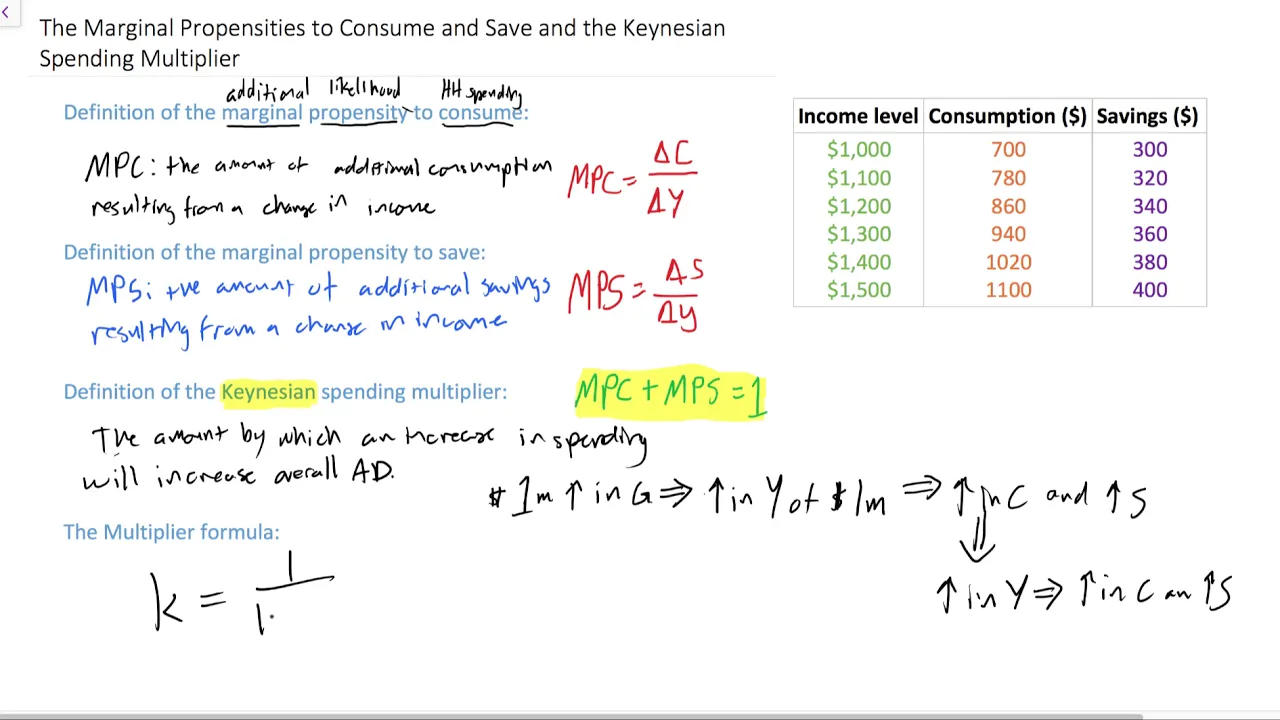
Added:Understanding the Marginal Propensity to Consume (MPC) and Marginal Propensity to Save (MPS), as they are the mathematical foundation of multipliers.
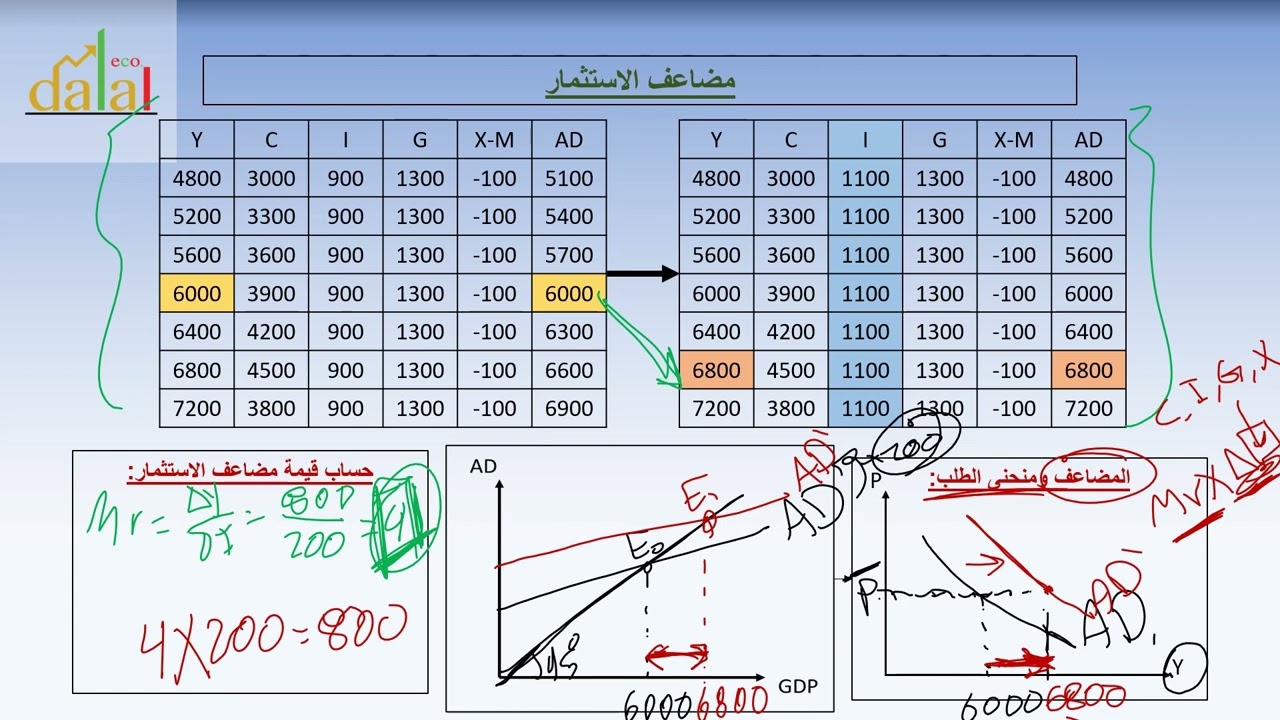
The concept of the Keynesian Government Spending Multiplier and how an initial injection of spending multiplies through the economy.
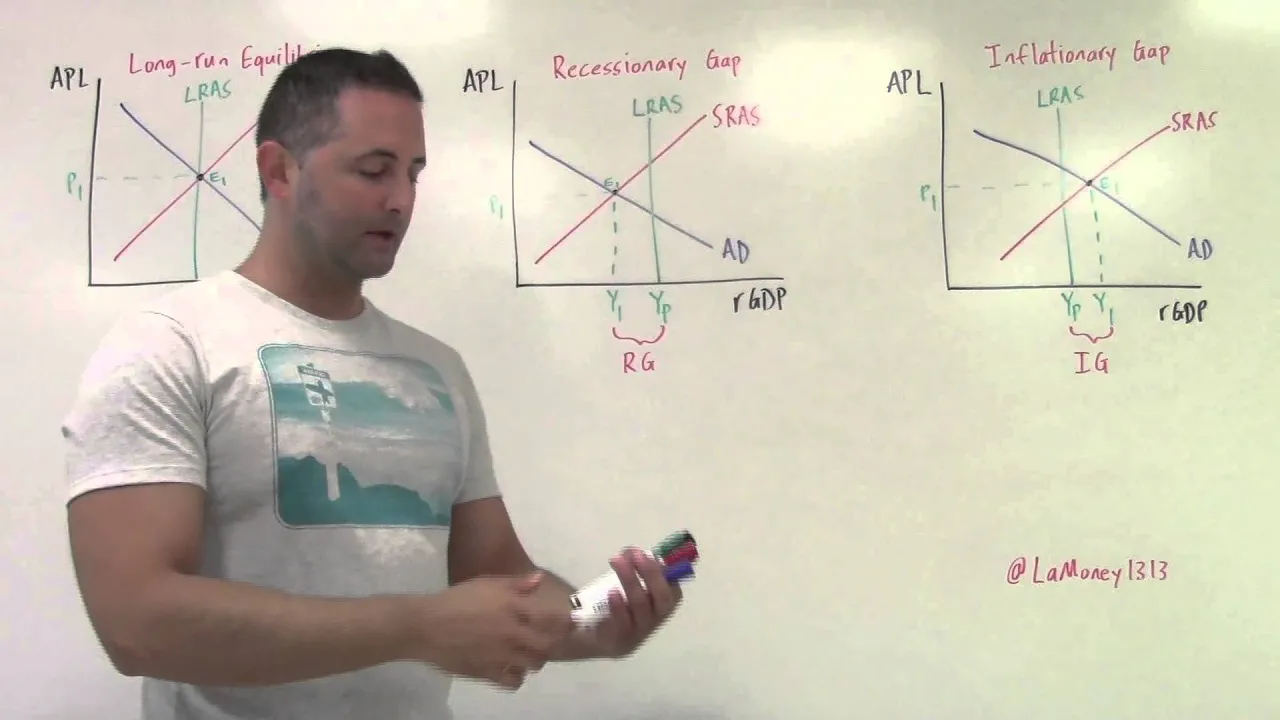
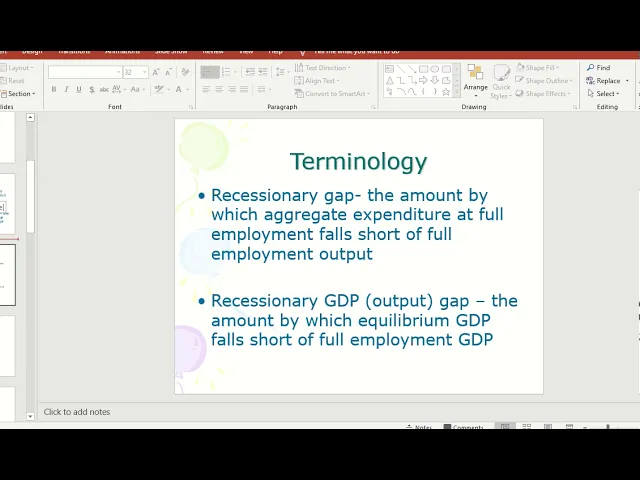
The Aggregate Demand and Aggregate Supply (AD-AS) model, specifically how to identify a recessionary gap on a graph.
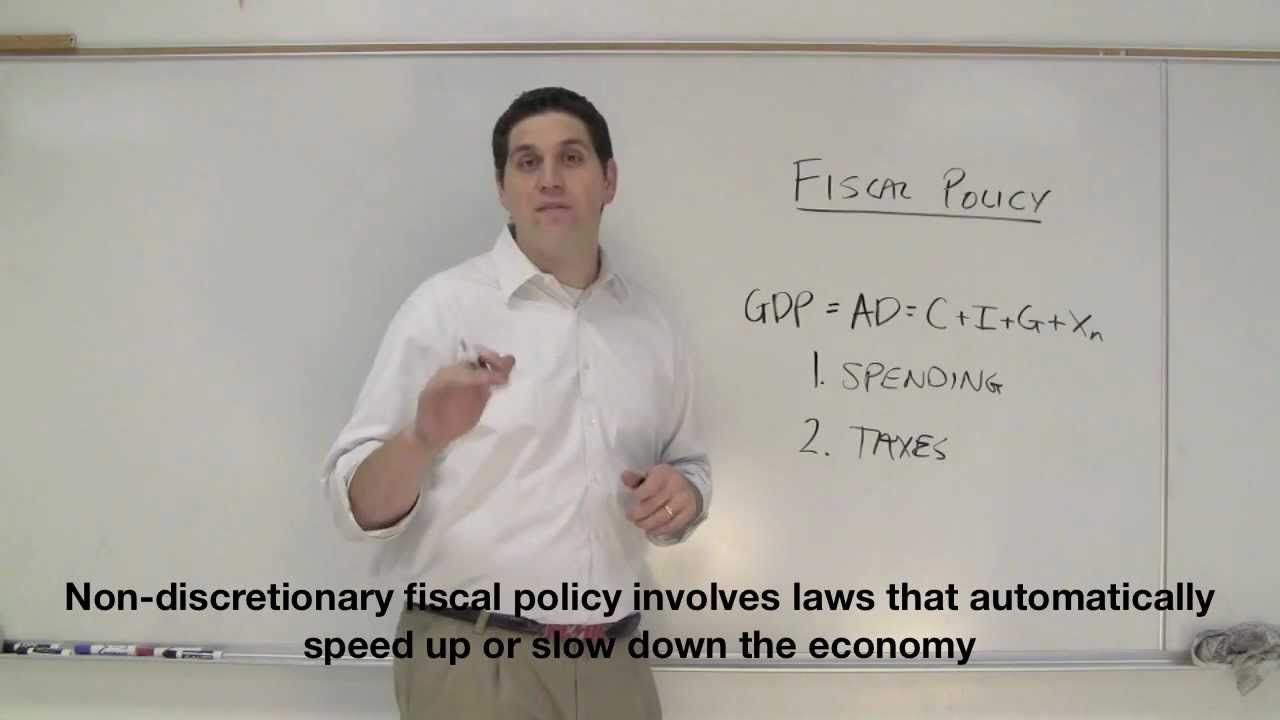
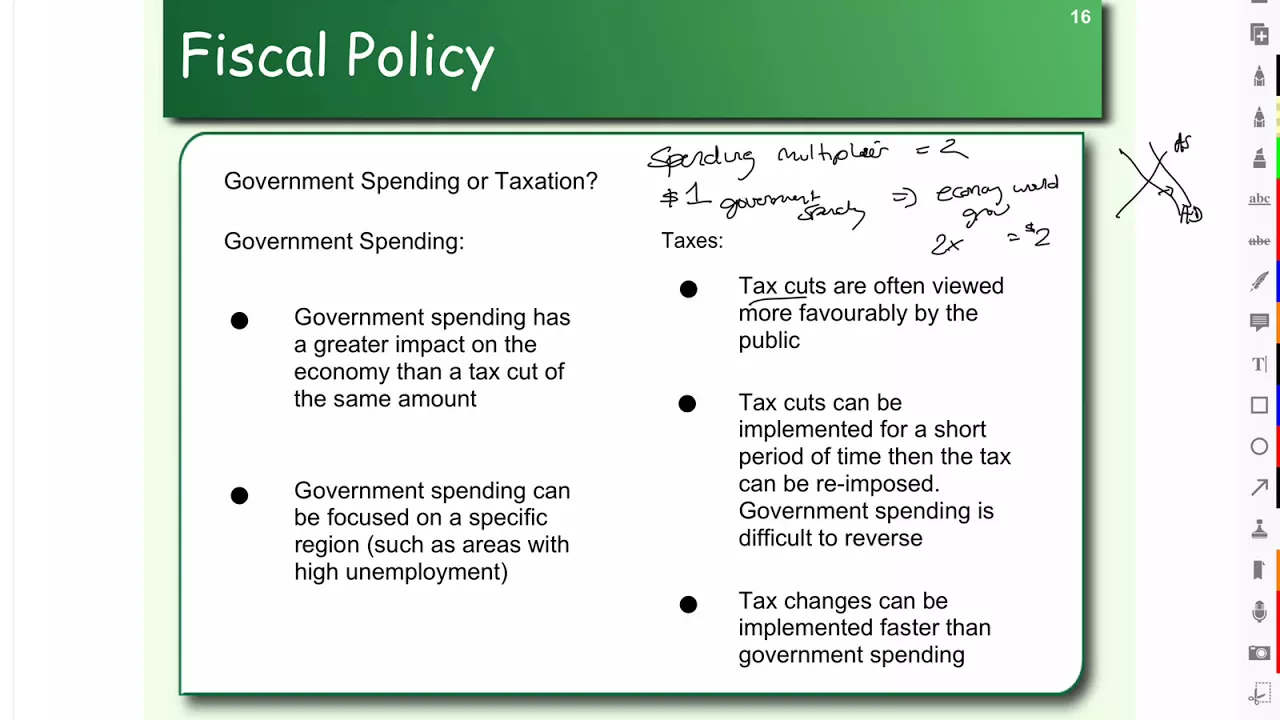
The basic definition of fiscal policy and the distinction between government spending (G) and taxation (T).
The Balanced Budget Multiplier, exploring the net economic effect when government spending and taxes are increased by the exact same amount.
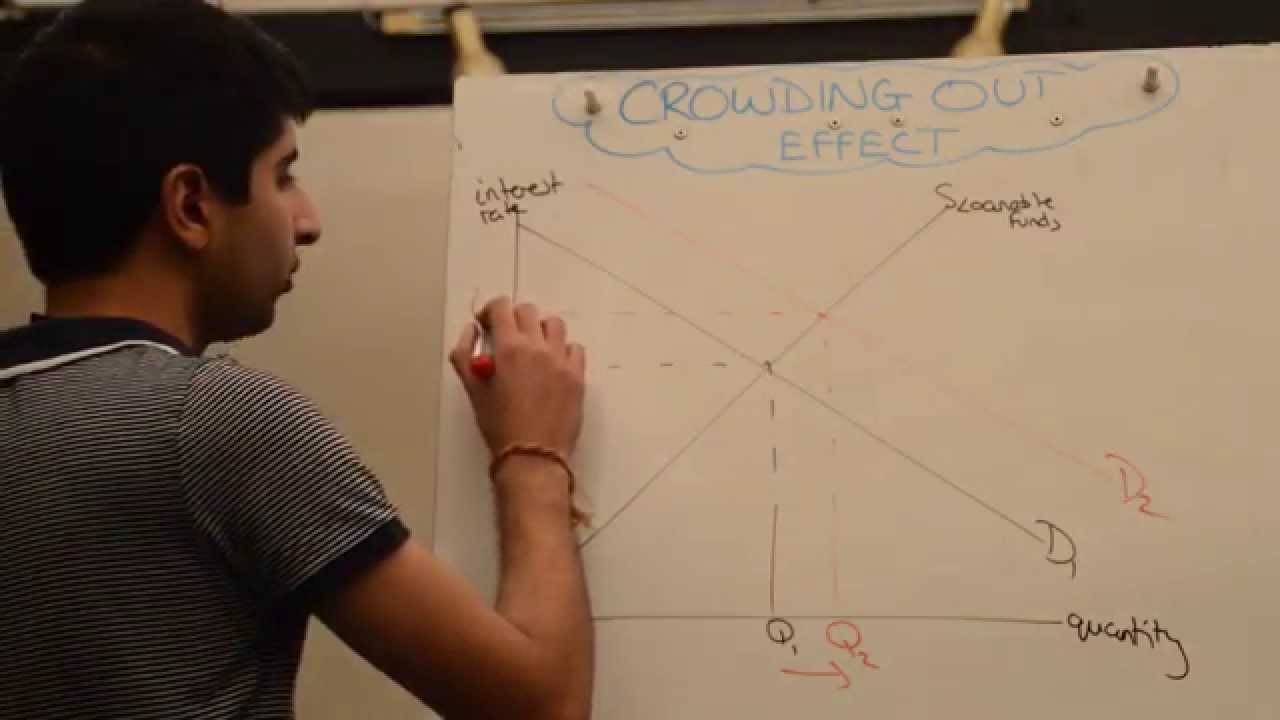
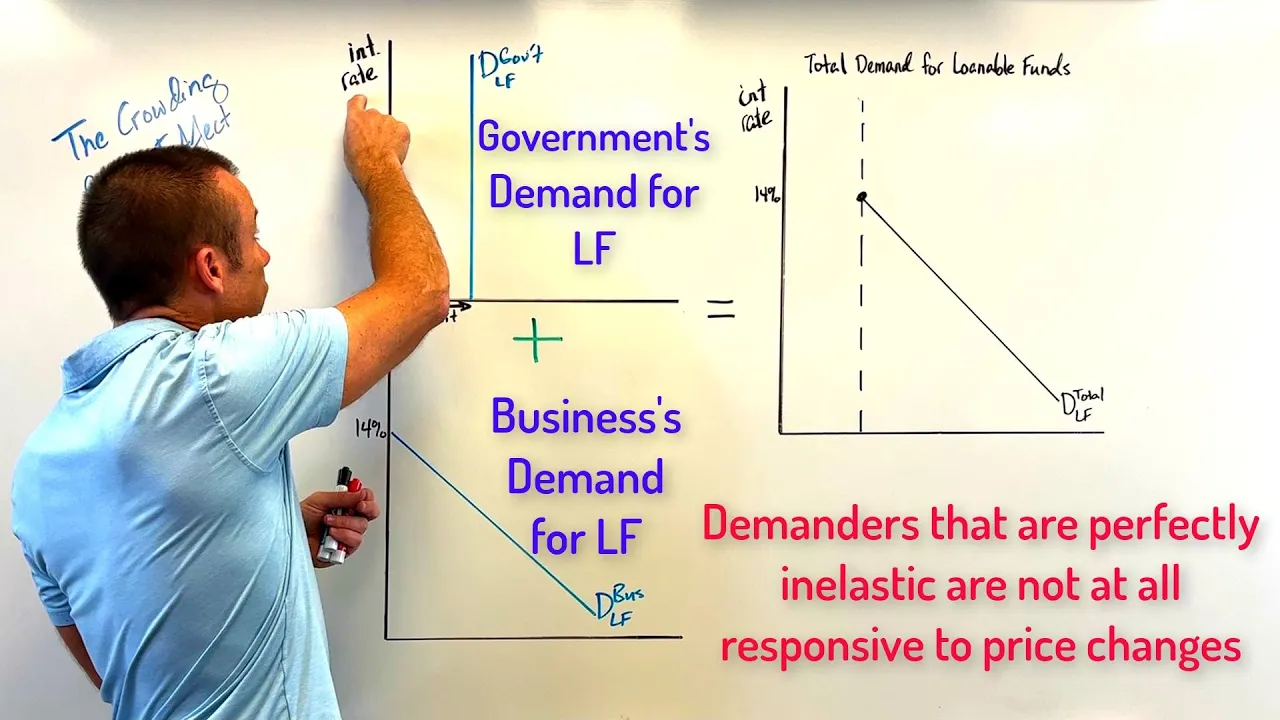
The Crowding Out Effect, analyzing how deficit spending financed by government borrowing can raise interest rates and offset fiscal stimulus.
Automatic Stabilizers versus Discretionary Fiscal Policy, looking at how progressive tax systems inherently stabilize the business cycle without active legislation.
The impact of time lags (recognition, administrative, and implementation lags) on the effectiveness of tax cuts during a recession.
325.8K views1.7Klikes3:21Original Release: 2012-02-07
[Music] hey how you doing Apon students this is Mr Clifford if you just watched the last video you know we used the spending multiplier to figure out how to close recessionary Gap right the Gap was a $40 billion Gap we showed you in the last video how you could increase government spending shifting AG to to close the gap and you practice calculating and using the multiplier now it's time for something tricky instead of using spending I want you to try taxes I want you to try cutting taxes to close the gap now I want you keep in mind that decreasing taxes has less of an effect than government spending because people save that first round of a tax cut right here's what we'll do the first one we'll do together then the second one you're doing on your own because this can get tricky so stick with me all right let's try this if the marginal prens to consume is 0.5 that means people consume half of additional income coming in and they save the other half including a tax cut so let's calculate first the multiplier it's 1 over5 which is 1 over 1/2 which is two the multiplier now last time we did this question the right answer was 20 right it was 20 billion so let's say we did it it's wrong but let's say we decided to cut taxes by 20 billion what would happen well now consumers would have $20 billion more in the pockets how much would they actually spend of that 20 billion they'd only spend half right they'd only consume half why because the marginal pensity to consume is 0.5 so when they actually spend then this actually becomes $10 billion actually spent in the economy 2 * 10 does not close the gap right it only gets us halfway there so the right answer is not 20 billion the right answer is actually 40 billion what I'm confused I don't get it the point is this if the government Cuts taxes by $40 billion people will save half that tax cut right they save 20 billion leaving over 20 billion to be used in the economy that gets multiplied times 20 that closes again right so the right answer here no doubt about it is 40 billion now if that makes sense let's switch it now let's say the marginal peny consume is8 so people only save2 of an increase in their income right how much should the government cut taxes all right good luck all right you got it let's find out first let's calculate the multiplier all right it's 1 over2 which is 1 over 1/5 so the multiplier is five right any amount of the tax cut the amount that people do not save is going to get multiplied Time 5 to close the gap the question is how much is the tax cut so the right answer here is going to be 10 billion 10 billion are you sure about that yeah it's 10 billion here's why when the government goes out and they provide a $10 billion tax cut right people are going to save right save some of it how much are they going to save they're going to save 2 billion right that 2 billion that's saved how much actually gets spent well the other8 which is 8 billion 8 billion gets spent multip time 5 closes the $40 billion Gap the right answer was 10 billion okay hopefully it makes sense to you till next time
Up Next
11:53
Fiscal Policy and Stimulus: Crash Course Economics Explained
@crashcourse
2.2M views•2015-09-16

5:07
Impact of Yuan in Indo-Russian Trade Amid Sanctions
@WION
261.9K views•2022-07-01

5:04
Consumer and Producer Surplus & Deadweight Loss Explained
@JacobAClifford
59K views•2022-05-08

113:18
The Age of Easy Money: Fed & Inflation | Full Documentary
@frontline
21.2M views•2023-03-15
Related Study Plans & Knowledge Roadmaps
Structured learning paths in Economics
economics
Sovereign Debt: Defaults, IMF & Restructuring
01Introduction to Sovereign Debt & Government Bonds
02Debt Sustainability & Credit Ratings
03Anatomy and History of Debt Crises
+ 2 more learning modules
12h5 modules
Explore Roadmap
economics
Market Design: Matching Theory & Gale-Shapley
01Introduction to Market Design and Price-Free Markets
02Two-Sided Matching & The Gale-Shapley Algorithm
03School Choice Systems and Mechanism Design
+ 2 more learning modules
10h5 modules
Explore Roadmap
economics
Impossible Trinity: Forex, Capital & Policy
01Introduction to Monetary Policy and Central Banking
02Exchange Rates and International Capital Flows
03The Mundell-Fleming Model
+ 2 more learning modules
8h5 modules
Explore Roadmap
economics
Healthcare Economics: Market Failures & Systems
01Introduction to Healthcare Markets and Market Failure
02Asymmetric Information and Adverse Selection
03Moral Hazard and Insurance Design
+ 2 more learning modules
12h5 modules
Explore Roadmap