















![Kirchhoff’s Law [ KCL& KVL]- Basic Electrical Energy & Network Analysis & Synthesis I Lec-4](https://i.ytimg.com/vi_webp/6xUnXwnlPzI/maxresdefault.webp)
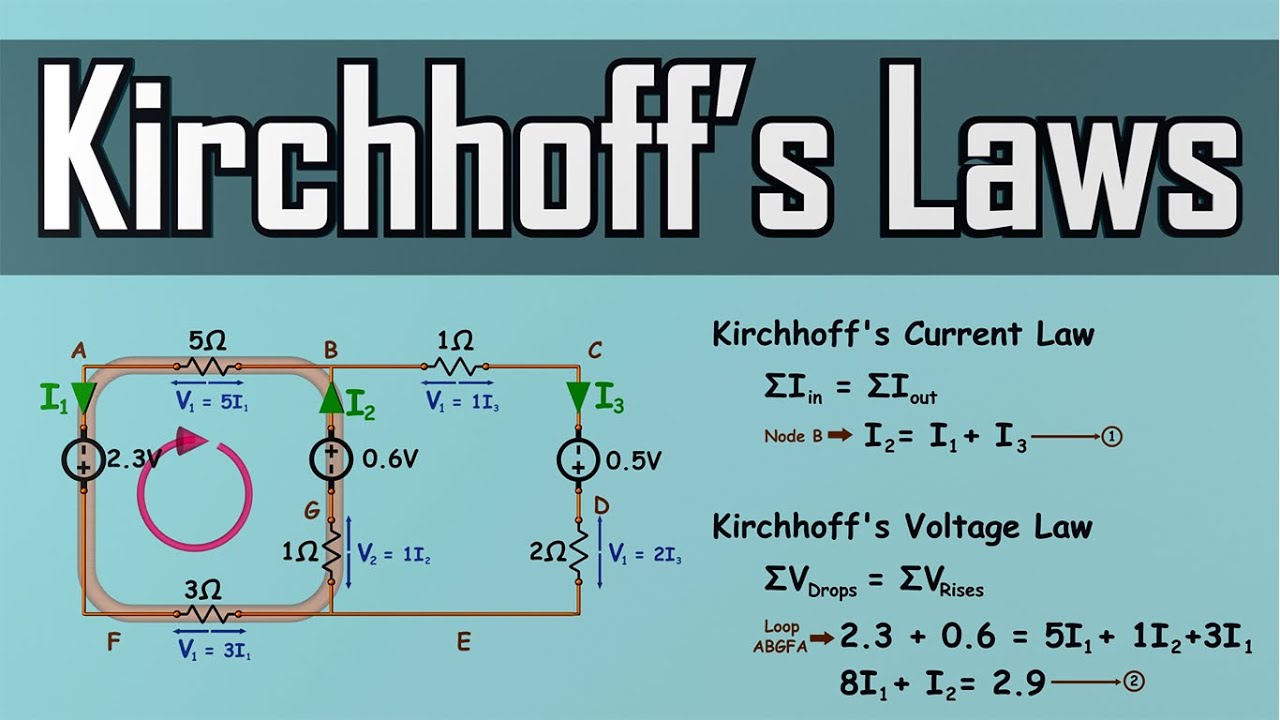



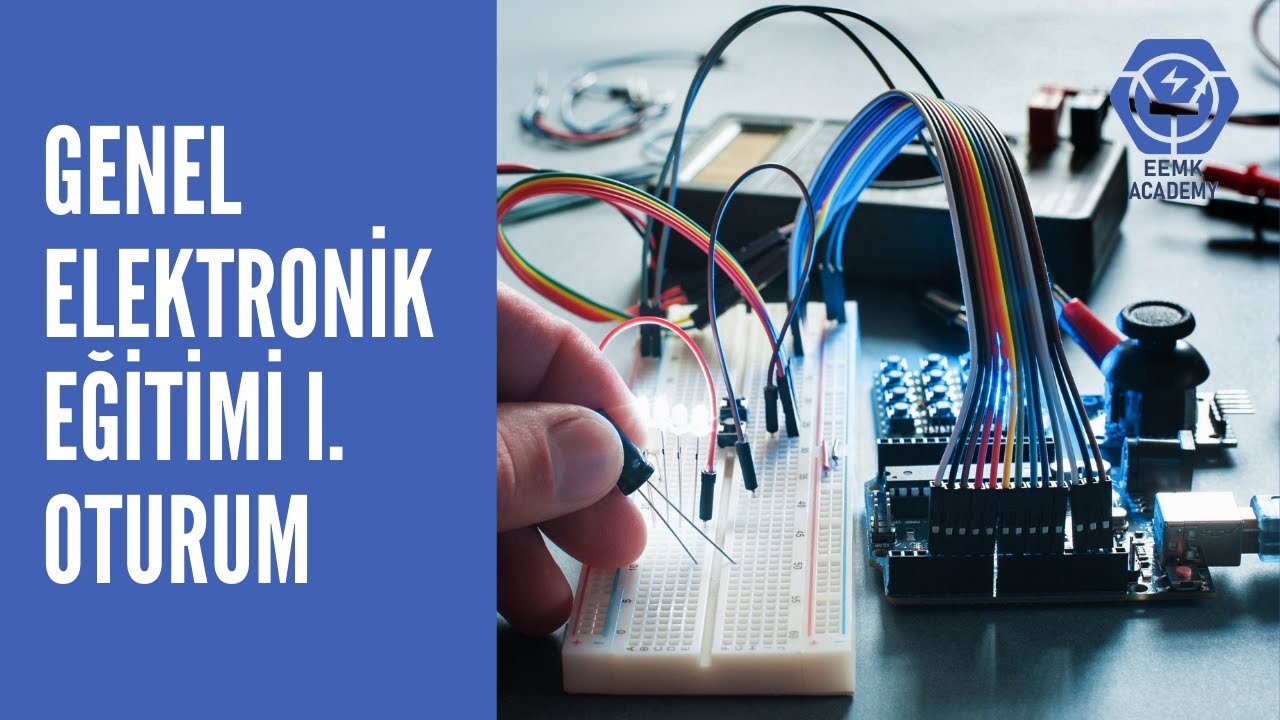

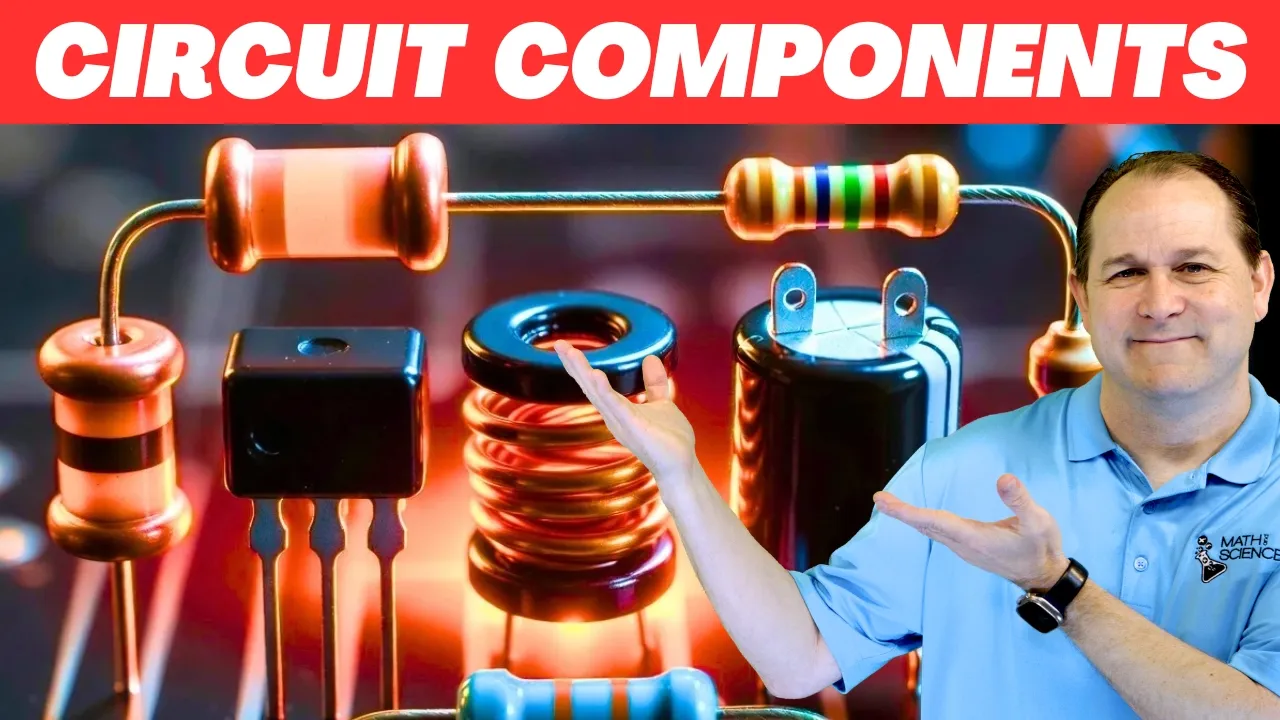
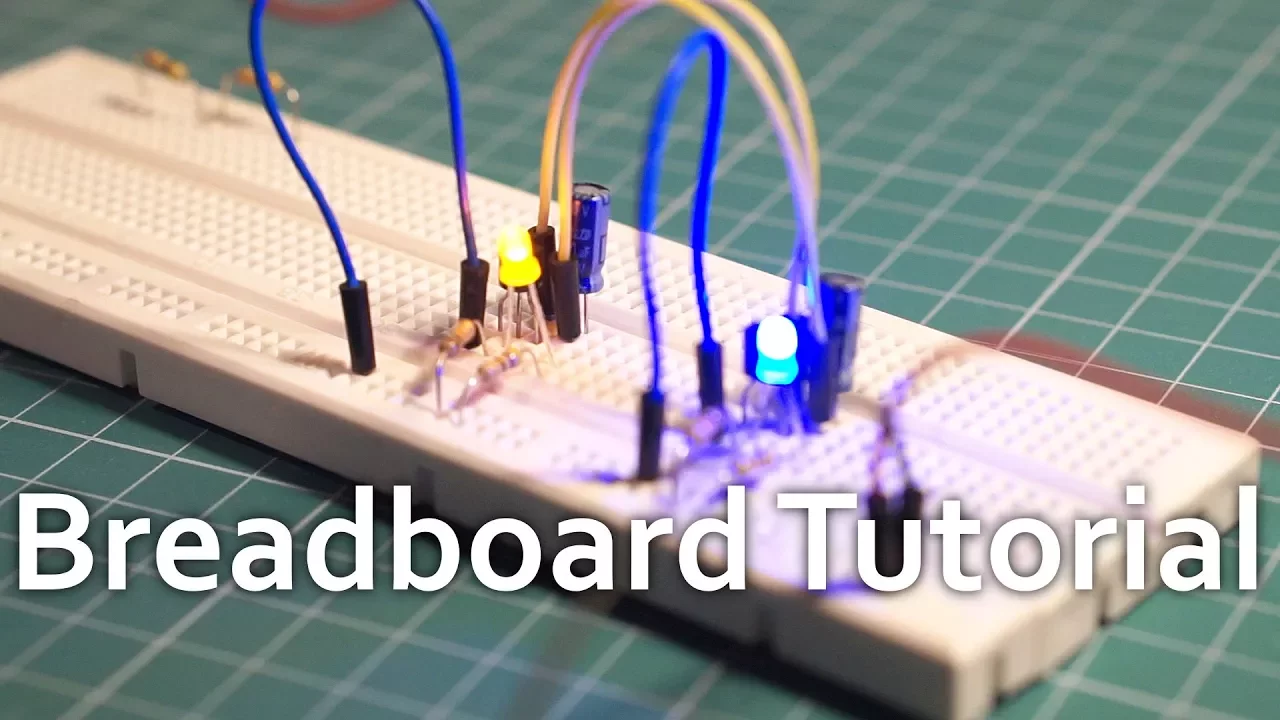


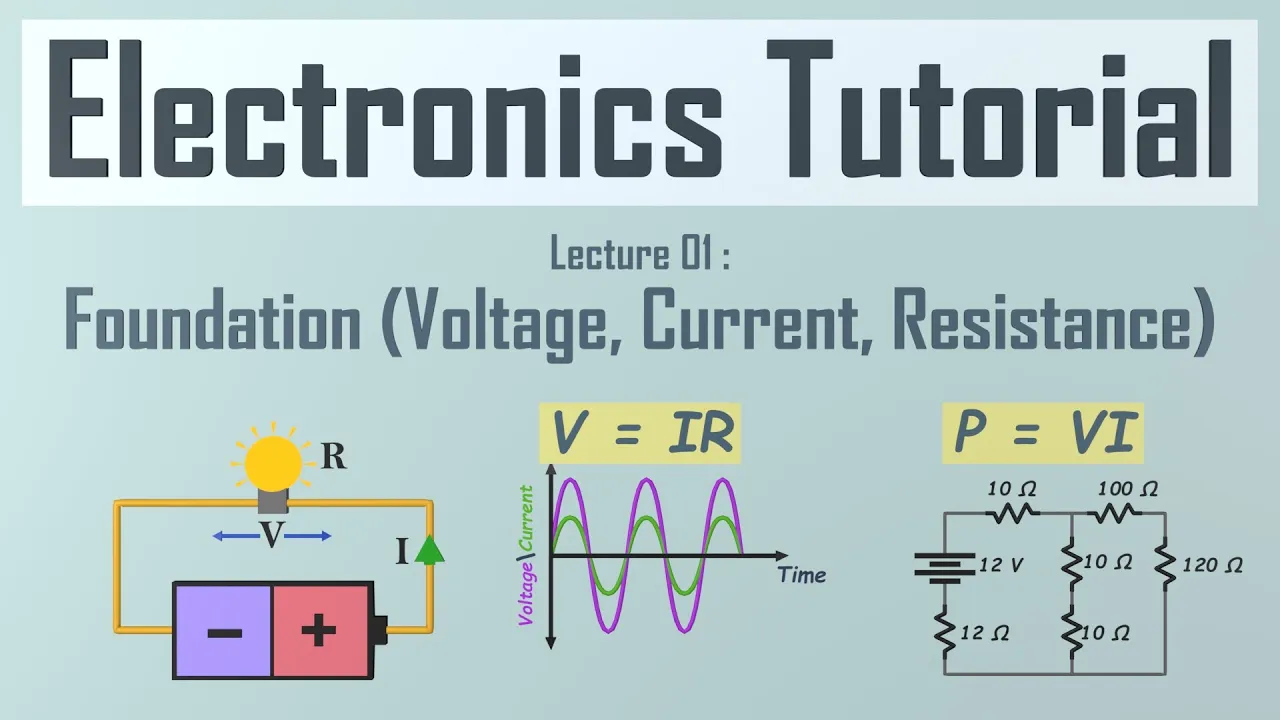
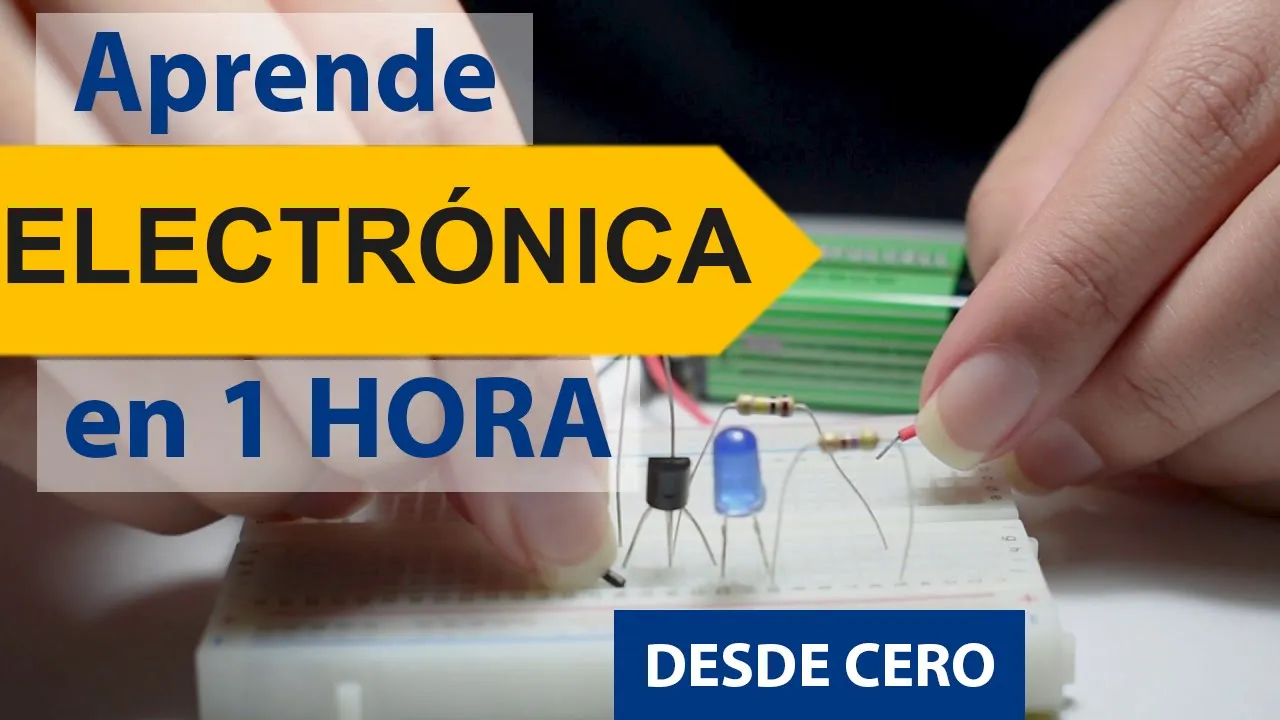
This video provides a comprehensive introduction to basic electronic circuits, explaining how components like resistors, LEDs, and diodes work together in series and parallel configurations. The presenter demonstrates breadboard prototyping techniques, explains Ohm's Law (V=IR) for calculating current and voltage, and covers semiconductor physics including how diodes and LEDs function as one-way valves that allow current to flow only in one direction. The video emphasizes that resistors limit current flow linearly, while LEDs have a specific voltage drop threshold (approximately 1.7V) before they begin conducting current, making them non-linear components that don't follow Ohm's Law.
Electronic Circuits Explained: Components & Ohm's Law
Added:Basic understanding of atomic structure, specifically the behavior of electrons and electric charge.
Fundamental algebraic skills to manipulate simple mathematical equations, such as solving for a single variable.
The qualitative difference between electrical conductors, which allow current to flow, and insulators, which resist it.
Basic scientific concepts of potential energy and flow, which serve as helpful analogies for voltage and current.
The study of parallel circuits and complex series-parallel combination networks.
Introduction to Kirchhoff's Voltage Law (KVL) and Kirchhoff's Current Law (KCL) for analyzing multi-loop circuits.
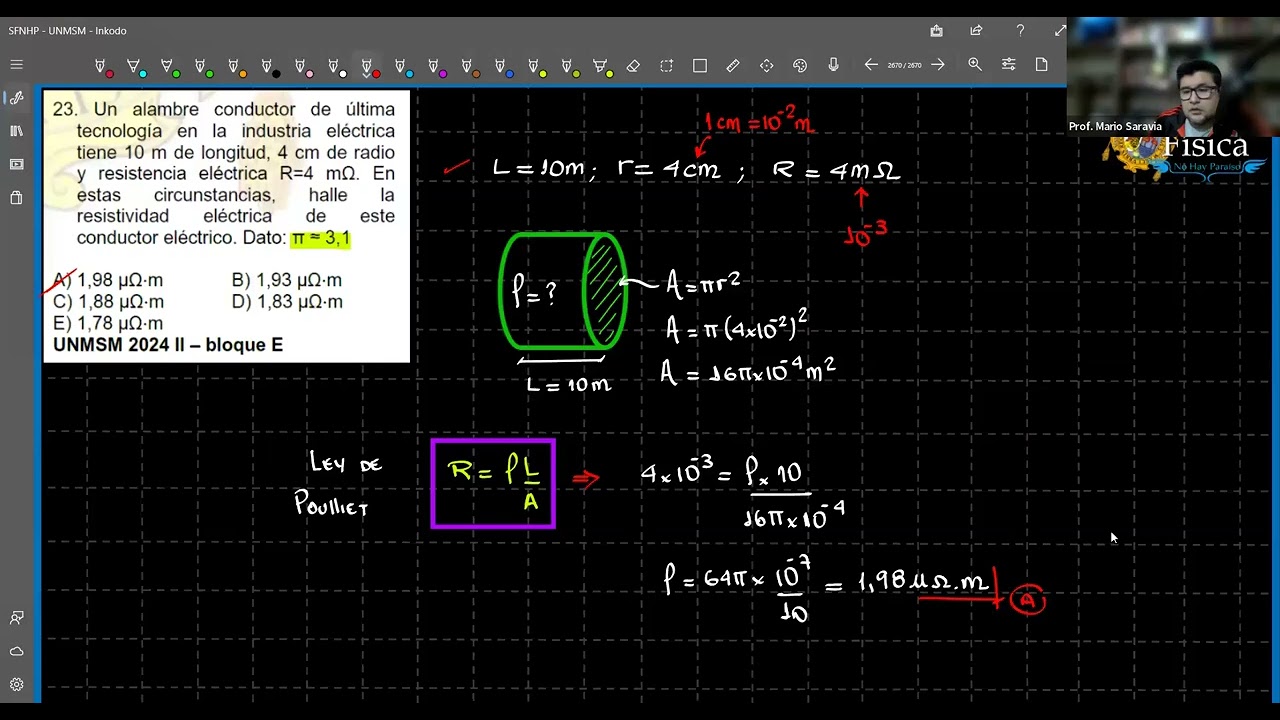
Understanding electrical power calculations (Watts) and the relationship between power, current, and voltage (Joule's Law).
The behavior and application of more advanced components, such as capacitors, inductors, diodes, and transistors.
Practical circuit prototyping techniques using breadboards, reading schematics, and troubleshooting with a digital multimeter.
128.2K views2.3Klikes1:08:34Original Release: 2019-04-07
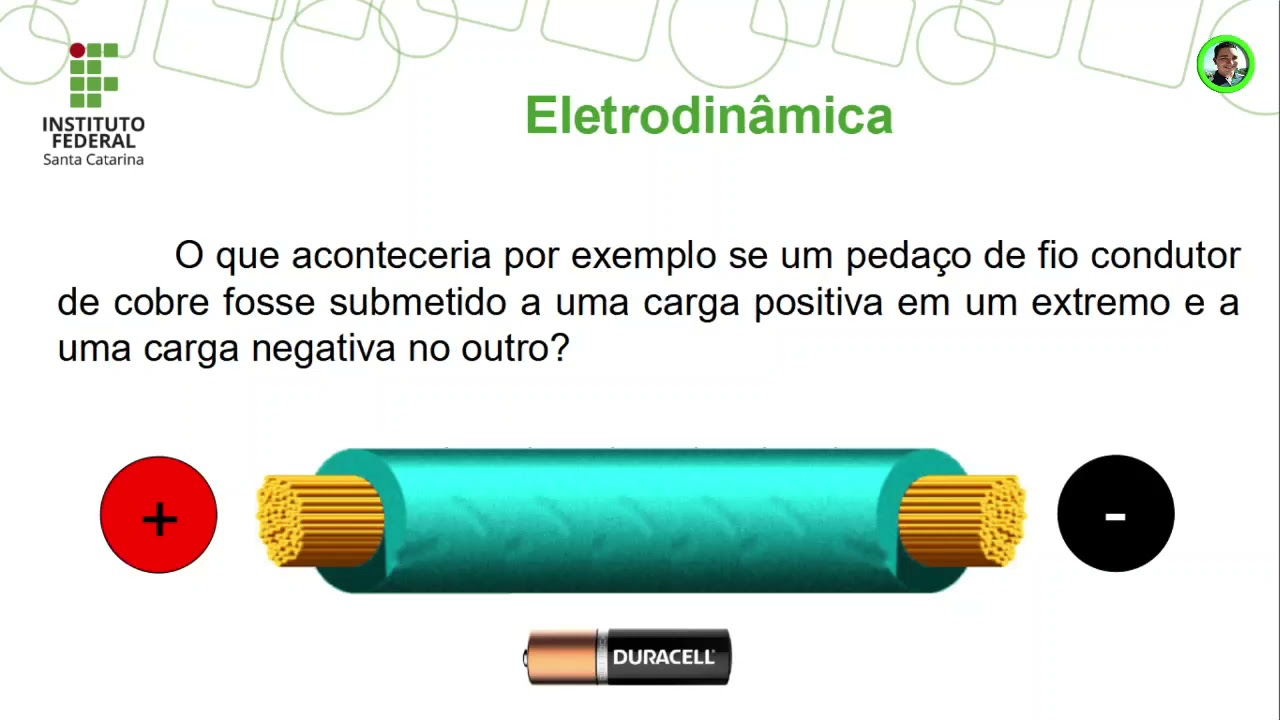
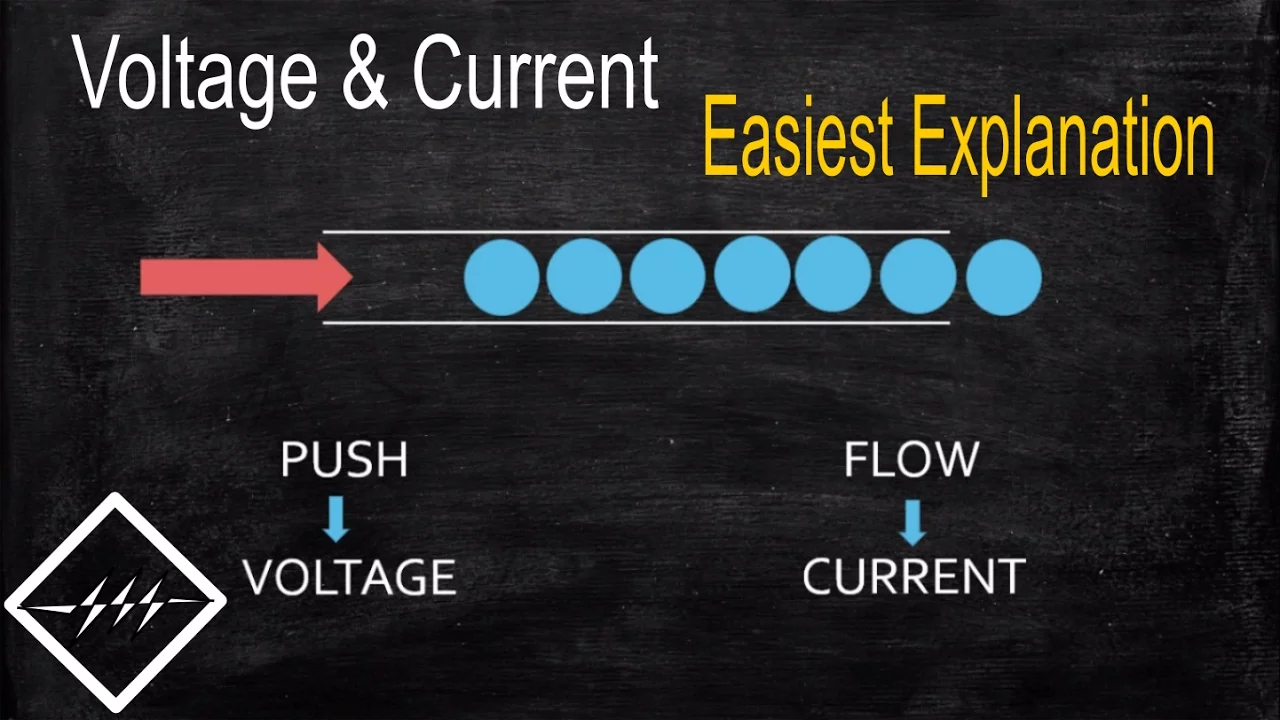
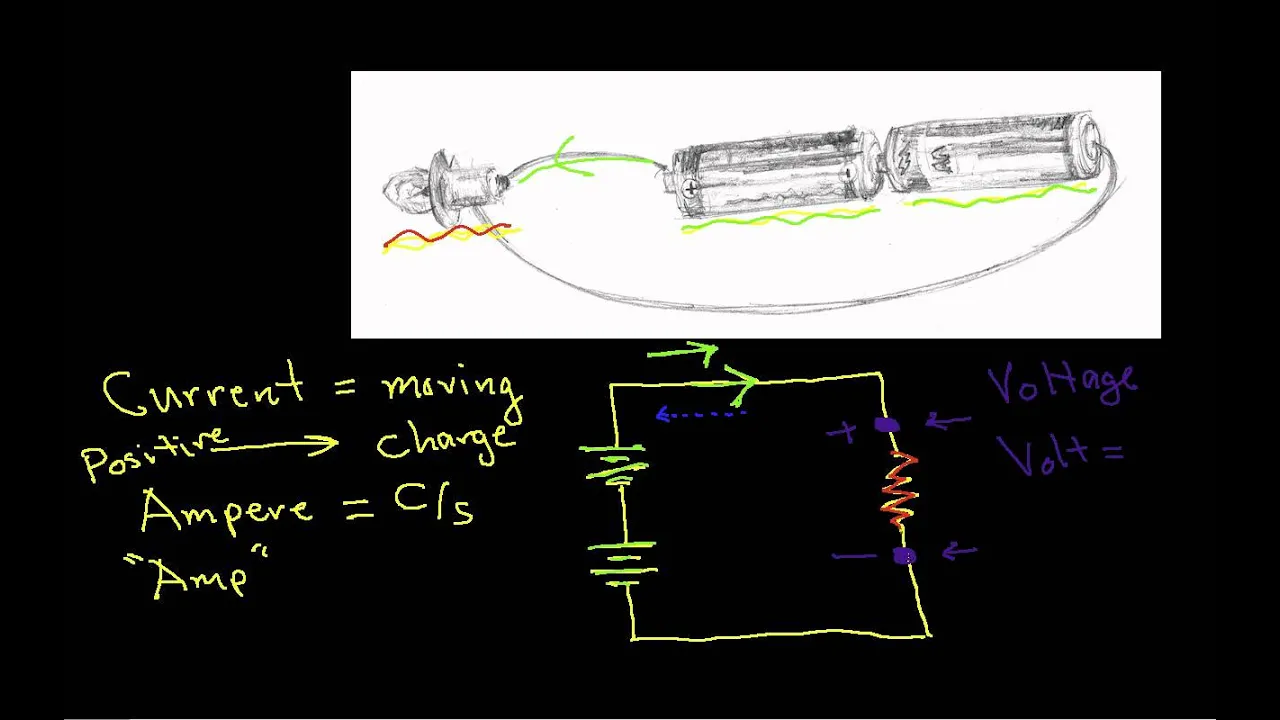
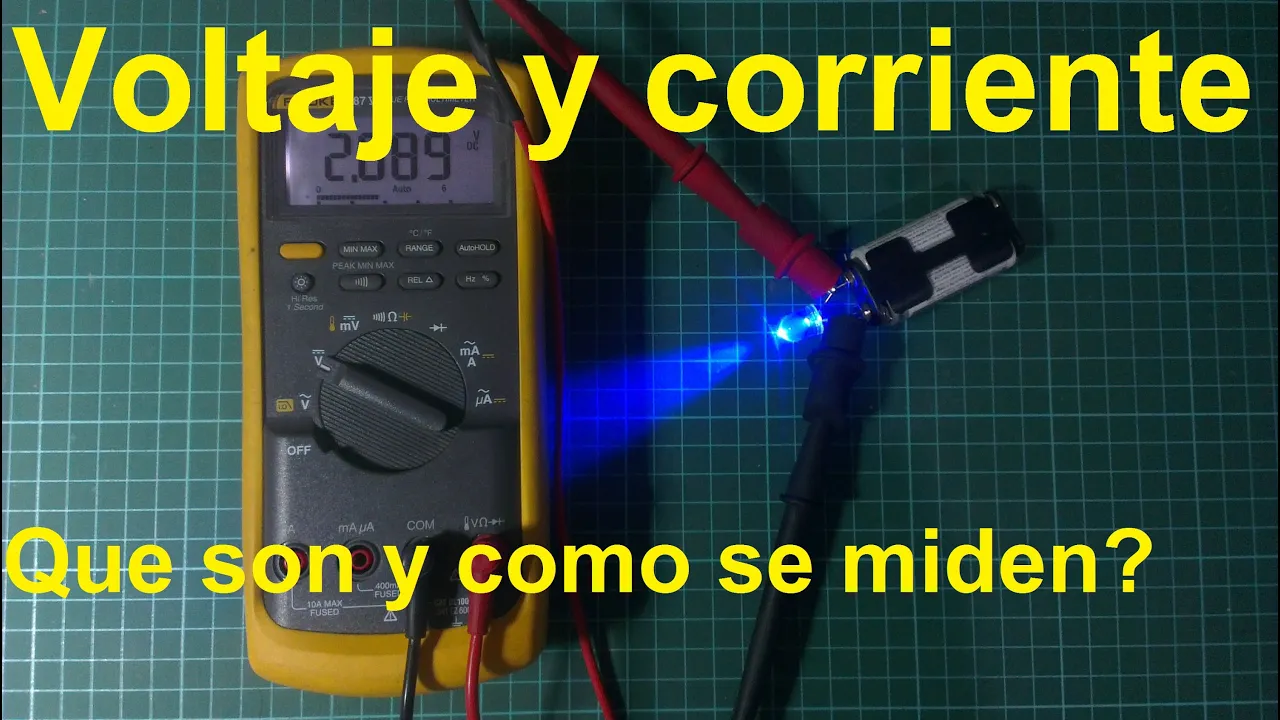
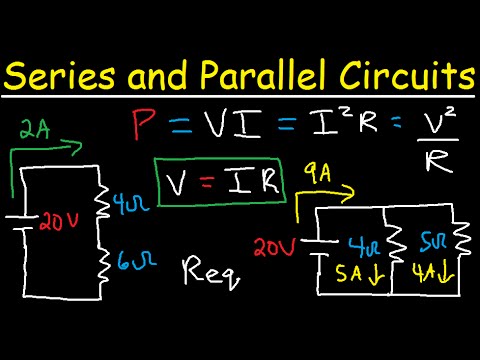
hey guys tonight we're gonna miss some simple electronics [Music] my goal simply is to make a little circuit with this breadboard right here to measure it with our multimeter at some point maybe make it fun and maybe draw a little circuit and have our elements measure the voltage going across them and the current going through them but essentially it's it's gonna be a simple series circuit as opposed to uh a parallel circuits but um so that right there would be a parallel circuit in which you have a fork in the circuit two branches come off the same node and then they recombine down here at the terminal but um I'm going to do that to show that there's a potential for inserting a lot more elements right there we're gonna get those out of our bag it's gonna be a in LED circuit all we're gonna do is just like hang out here just make some resistors some LEDs plugged into a power supply uh positive in a negative from this gentleman right here and let's have some fun with it if you guys know anything about electronics this is gonna be maybe boring to you but if you know nothing maybe you can learn some basic ideas in concepts in electronics so first off let's get our you needlenose pliers right here these are just useful because the breadboard I guess yeah I guess first I'll explain the breadboard briefly and why we use it it's for quick prototyping which just means that you're exploring ideas and instead of having a circuit I'm gonna solder plots it allows for a quick placement of parts onto a conductive layer so let's try to find a circuit board real quick I think I have one in here here we go okay right here you can see this is actually a fan remote the ceiling fan remote right here this is the led so in essence this okay it's a pretty useful because you can see how it breaks down something like a fan remote it is quite basic actually I used to think it was way more complicated than it is but all you have is a battery you hook up here and let's see so the battery powers the whole circuit the LED simply acts it doesn't do anything other than to act as an information indicator lets you know that when it lights up this thing has registered you are press of the button in these hopefully I can explain it right but this just means let's see so these things right here or where the buttons go and there's actually a thin layer of grease conductive grease meaning grease that allows current to pass through it and let's see when you press the button down you can see these things naturally by themselves and they are let's get it right there we go I guess that's good these are broken circuits right here all these little lines are green coded insulated wires so that when metal touches these it doesn't make contact with the actual metal underneath but right here the buttons press down and the liquid grease makes a contact it makes a connection B across these two so normally this in this part right here are not connected because you can see they're broken right there and as you press the button each one of these makes different parts of the circuit connect with other parts so that would be high low high medium low off or I think this was the light like control and this was off and these ones with the stripes with the bands on them they are resistors all they do is limit they it's kind of like putting in a stream it's like throwing some big boulders to kind of slow down the overall flow of water in that part of the river resistors simply the resistors really just add some sort of obstruction to the flow of current current always likes to flow in the the path of least resistance so if I had up if I took I'm wire and connecting it across what would likely happen is that the potential across our battery here is what is the driving force it's a a segregation of negative and positive charges which naturally we want to combine together but the battery itself is designed to not allow that so you have to connect you have to let them come together through an alternate route and that's why it's so useful because you connect to the terminals of the battery instead of flowing together through the battery they have to flow around the external connection so if you have a wire connecting here then it's not touched it doesn't do anything if it's if it's detached from this negative terminal but as soon as you touch it the current wants to start flowing and that's how you can light up LEDs but if you have a the current likes to take the path of least resistance so instead of flowing around here if you connect this bare wire with no resistors or capacitors or diodes the current is going to completely avoid this branch and go down this obstacle free branch and then you would quickly have a short out because the flow would have nothing obstructing it and it would quickly diminish all the positive charge they wouldn't as fast as they could flow through this wire they would try to reconnect with the negative charges and like leaves are very very likely this wire would overheat um in possibly that's what a short is start a fire it just heats up so much because you have so much movement of electrons through this wire so Bend very very briefly this the convention is what direction when we're talking about current what direction would current flow on paper women writing circuits we always say it flows from positive to negative that is the direction which in reality a positive charge which is [Music] I'm trying to make this simple in reality what's happening is electrons are negative charges that's just how we set it up and they are the opposite of the positive charge found in the nucleus around which they rotate or exist electrons always want to go towards the positive charge in general positive charges they repel the electric field negative charges attract they have a field pointing in their direction and so if you have a positive and negative charge they're both gonna be doing work to come together and so it's like you have two sides of the boat rowing in the same direction so so if it helps at all just think of it like that we're um these two always have an affinity for one another to be close and neutralize each other it's another way to consider it and current is considering the direction a positive test charge what hello so on this negative side here's where the electrons reside you mean you have a positive or lack of electrons here there's a field an electric force electro-motive force it's called UMF that's created between them it's actually written like it's actually written like this and those fancies um and the electrons want to go they want to move up immediately and there's no space in the wires either so it's not like a lone electron is being thrown down the hallway and it takes time for him to travel it's in fact the exact opposite and there is you could think of it as zero space zero space between any of the electrons so when one moves just an you know a nanometer in this direction if it is allowed to move that means all of them have to move and stronger the difference be two of charges between these then the more charges this force is able to move across the wire so it's the actual metal wires it's the actual atoms in the metal wire who lose electrons are the thing being moved and metal is a conductor which means it's properties allow for more easily and for the electrons to be more easily versus a piece of glass or plastic those are considered insulators and their their electrons are much harder to move for physical and chemical reasons so this breadboard is an easy way for us to prototype can come up with different combinations of diodes capacitors and circuit microchips resistors LEDs which are a special type of diode that has stands for light emitting diode just means that it has um a chemical compound inside here that that reacts in a way that gives off a specific wavelength of light and this right here interestingly enough is a specific allows a specific combination of signals I suppose to get processed through this microchip and so the microchip then knows which which wireless signal to give off to communicate to the respective fan it's supposed to control and that's essentially that but so if you I learned this growing up me and my brother luckily had two fans we were ballin and we had a fan in each of our separate rooms and I realize that I can open this up you can see that his remote looked like this and so if I changed mine like this it stopped controlling my fan and started controlling is how that was cool and this is this circuit is designed for exactly that you know that purpose to work to control the fan but instead of having to bust out the soldering gun and make all these solder x' which are obviously a struggle to undo you simply use this breadboard to make connections you have a little piece like this and it fits right in there so that's what we're gonna do I saw these little piece right here by the way are called jumpers to jump from area to area to make different connections this breadboard essentially looks like this okay so these going looks like it goes this way are the what are called the rails or the power rails I believe and they are all one connection so when I plug this red wire in right here the row that it's a part of if I plug in here every single one of these nodes here here here those are all connected so this green wire in this resistor right here are also I couldn't get the power that this one has if I connect it in likewise this last row right here is separate but all connected along itself so this red wire right here in this longer green wire is connected to that so that's how these two and then the same for these two right down here sorry it's a little bit sloppy and then these this these two areas you can break these up like that these are the work space essentially you get the power from your rails and positive-negative they're in each one of these realms right here these numbered rails right here one is all connected that's a single strip of metal and you can think of it two three four five those are five separate strips so all of these five holes right here in row 1 are all connected it doesn't matter where I connect it um and now they are each separate from every other row so here for instance with this circuit here I grab power from this rail and I connect it to this row and you can see the LED it goes through the resistor slows down a little bit and the current of the whole circuit is slowed down by the resistor but it's all moving so fast that we don't consider the current on the front to be moving faster than the current on the back end it's just all one speed if we don't have this elementalists fire each of these we call elements so if we don't have a short wire right there that's making it easy for the current to go through and skipping this if all we have is this one circuit so the current has to go through all these elements it doesn't matter what each of these are the current up here is gonna be the same everywhere along this series circuit so that's a series circuit and this is a parallel circuit right here here the current I splits up into i1 and i2 here if this was a smaller resistor than this it's less resistance so I one would be more current flow it would allow more current you could give less resistance to the current and so a more current would choose the path of least resistance in the flow through this node this branch and this one would still have some current as long as it made a connection but if this was bigger value of ohms let's say 10,000 bones and this was only 1,000 much less current would flow through this branch so the currents would not be equal in a parallel circuit but that's how the breadboards broken up so that goes down all the way down here and over here is another separate set of rows this side is not connected to this side in any way in with all these separate little connections we can jump wires from here you know from the rail to get power and then from here to here and then from me here all the way back to complete the circuit let's get our diode Sena and our little resistors power up our power supply there and try to make a simple LED circuit okay so a little solar panel which I never opened up maybe I'll try to use that Monday here I just wanted to show you my sweat off computer Ram RAM chip set those chips looks like this is for you can see it says I'm here maybe it says that on the back yeah there we go so each of these chips I think I think this was a 4 gigabyte chip so each of these is 500 megabytes and I think I think anyways you just open it up and slide him right in there that's what one of the perks of having a not having the MacBook but so far with myiasis I'm not too happy with it it's breaking down in so many different ways and the ability to add a ram - it wasn't didn't really balance out anyway so here's some diodes here's some more little microchips that I never used here's a generic LCD screen look how clean their looks so we're gonna leave that on there here's a couple more LEDs yeah in case we run it we got I always like having a clean workspace relatively here's the whole back of jumper cables little baby ones for our breadboard if we need them and this is a speaker obviously and if I really knew what I was doing I'd probably need some of these capacitors so I might but I don't know how to just this is gonna be a purely an impromptu assembling of a circuit and we're definitely gonna find out whether it works or not I want a hundred percent don't know ahead of time just put these over there we're gonna have our work space a little bit and okay let's turn on our power supply now so this just plugs in to an outlet you have two leads like this oh we're gonna do with these hookup let me just turn this on make sure these aren't touching and there we go so we can adjust the voltage and the current right there and leave that in the picture in here by plug positive here hook it up the negative I complete the circuit and there we go you can see the LED turns on and so what's happening here is we have three ball three point eight volts going down this whole rail right here swallowing the redline flowing from positive to negative yeah it doesn't go right there it goes through this resistor connects here and this is the anode just the side that attracts the positive charge remember this from positive the negative is the direction which a positive charge would flow but in theory it's the negative or electron electrons the negative charges that really flow it's just the weird convention that physicists decided to use after Benjamin Franklin coined that nomenclature we could see these two right here connect along this node so the cathode of the diode is connected to this wire which is then completing the circuit connect it to the negative power of rail which goes all the way back to here so in essence that's it um a diode is unique it's it's the technology that comes from the transistor which I don't know enough to be able to explain completely but my my my teacher said that a transistor was one of the most important inventions ever made because it allowed our current level of technology in fact one of these integrated circuits that have pointing to for instance this let's go right here and this right here is made to be physically soldered by hand it's yes it's really big in these leads transistors are so small that modern ones are able to control individual electrons individual atoms in their electrons this diode is one of the products of William Shockley discovering a weird property of semiconductor material remember I said before that all these are made up of different bits of conducting metal and all these wires of metal obviously these are metal current flowing very easily through metal it doesn't flow through plastic this whole thing right here semiconductors are a weird mixture of mostly silicon which is sand essentially melted down sand with precisely measured and added impurities so you have silicon a pure element with bits of impurities of other elements in it so for every thousand elements of silicon you have a one or two other elements in there and that weird that little mixture of different atoms with their own unique properties allows electricity to do a weird thing they're called semiconductors because they neither act completely like a conductor allowing electrons to flow freely easily through them when a voltage is applied but they also don't act like pure insulators in fact their properties change when you add different amounts of electricity or even than sometimes depending on how they are manufactured and designed and created yeah they react to heat in light even and that's how photos photo resistor has work so this diode interestingly if I keep this in frame you can still see the light you can see an increase as I increased the mole pinch to 10 12 14 20 and if I go down it also decreases would I do this when I increase the voltage ever so slightly let's do that current this thing it doesn't gradually turn on it actually properly turns on there we go and what's happening is that right at a certain voltage these I my conductor material creates a cascade effect where it acts like a insulator below a certain voltage which i think is about one point seven volts and then after that voltage is hit it is designed to all the sudden like a dam retracting allow flow of electrons so it acts like a Dan it stops a current from flowing that's why it's not lit all the way up into 1 point 7 volts and then soon as that let me turn this down let's see anyways as soon as that one point sevens hit the the properties of special properties of the silicon interacting with the impurities allows a sudden tipping point inflection point I guess that's a new buzzword I'm hearing around a lot it's a it's a point at which the properties shift and the new properties emerge and so it allows current flow and then the current interacts with some special chemicals and exists within this device and those chemicals react with the current to give off red light so anyways transistors are not exactly diodes but they are made from semiconductor material in transistors I've been editing a lot so I don't know whether I said it or not but my professor said that in a thousand years transistors will be the most important significant technological and venture achievement invention and that's because well we've been able great scientists and inventors have been able to stick literally billions of them on an integrated circuit this small so that's that's what our phones all modern small sleek-looking electronics they all are only able to be so small because we are able to have transistors fit on a single microchip so small that they're only nineteen twenty atoms thick and the answer really compelling that we've made them so small that they can move single atoms around in transistors act as either switches which are on or off and if you have billions of them you can create patterns with the on offs that can be manipulated in the form of binary functions I suppose to store data so you have strings of transistors and that can be probed to see whether they're on or off whether they allow current or whether they stop current like that on a row and by that by doing that we can have a map oh of memories in our computers and so if you got 16 of those in a row you have a hexadecimal value represented maybe by the number nine or the letter A if you have four of those sets of 16 in a row of on and off transistors then you have what's called a nibble in computer language lingo and eight of those instead of for another four together with the other for making eight you have 128 bits anyways that's called a word a word and modern computers so that's 128 transistors storing either 1 or 0 on or off values that's 128 bits of the memory right there and then we don't have millions or billions we have trillions of transistors making up memories in modern computers which is really really mind-blowing to think about so anyways um we're gonna briefly analyze this circuit you measure the current and voltage going through it alright so again we have five volts going through this right now that means that we have so that means we have a circuit that looks like this you know a resistor we have our diode and this resistor is we have a way of identifying what the resistors value is and I mean hopefully we can see it it's right here we have Hey brown black red brown black red and gold band around the resistor and the box that it comes in full a little beat up um allows you to identify it so Brown black and red let's hope Brown here's one black is zero and red actually doesn't represent the third pin it's the multiplier you just gonna have to know that I guess so X out that so it's one and zero and then red is times a hundred so that means a thousand ten times one hundred so that means that this resistor is 1000 ohms and then our diode here is um it's just a red LED I don't really know if there is any I guess I'd have to look it up to see the characteristics but um we know that this is limiting the current and there are some basic equations that you can use to figure out how much current is going across this and generally circuits as simple as this are very easy to analyze when they're in series again there's not a fork so it's that would be parallel there's no fork so it's a series and current it means that the current throughout the whole thing is going to be the same and occurring is just current in amps he appears you simply let's put this over here currently amps simply the amount of charges Q and I always get that wrong I think that you might be over here but whatever coulombs per unit time seconds so it's the amount of charge passing over a given area in a given time again like any simple system we can model it with a math equation in the law called Ohm's law whom the unit of resistance is named after it goes like this hmm right over here the metal bones is equal or is in relation to relation to the current times the resistance and I remember that is the Spanish word vir it doesn't really matter what it means I just remember learning that verb in Spanish but and you can mathematically manipulate this Kennels all right divide both sides by r and write that the current is the volts divided by the resistance so we know this value we just determined it by looking at the bands can we know there's five bolts being supplied so we can figure out the current by using this so that's just five divided by a thousand which equals five one thousandth so an easy way to remember this you know 5 1022 have the decimal place here 10 to the negative 3 sorry so 5 times 10 to the negative 3 which anybody going in a stem field science technology engineering and math is going to have to learn then 1 2 3 that's five five thousandth of an amp or 5.0 milliamps so that's that's the current that's going through here and um let's see now the current is always the same but one thing you learn when doing circuit analysis if you do is that um voltage is considered but it's like um almost like potential gravity where if you have a cliff in your you know 20 meters high up here if you have a little guy with a really long right arm I guess and he drops a ball that ball just going to pick up speed acceleration and by the time it hits the ocean there it'll be going really fast but once it does hit a ground you no longer have any potential energy gravitational potential energy and so we say that it started with 20 meters of gravitational potential energy and ends with 0 and we kind of look at circuits like that so we think of it as losing voltage and as it passes over obstacles that resist it and it ends up at zero volts so really we think of it like there's five volts here and there's the zero volts in there that's really just an analogy but it's a really useful one who are solving these circuits so let's see so if I put a big enough resistor right here essentially the bigger the resistance maybe if I make it one instead one thousand 1 million ohms and there I do have that it it takes a lot more voltage to push the current through this resistance and so there's a big voltage drop and that might be enough in other words to drop the voltage to not create the Cascade effect for the diode to change his property and allow the current to pass remember it needs at least greater than or equal to 1 point 7 volts to operate to be able to put out light if this diode didn't exist and you just have one resistor resisting the current from a 5 volt battery this would be the current right here but this LED is and it's a has its again unique properties a resistor really acts in a linear manner it resists and kind of defines what current will pass through if the voltage is kept constant in the resistor changes in value the current changes in a very linear very simple proportion to the resistance the larger the resistance a smaller the current a smaller resistance the larger the current if the voltage is kept constant but this led pretty much again I said unless it's greater or equal to 0.7 volts being supplied the LED acts like a infinite infinite ohm resistor it doesn't let current pass a larger the resistance the smaller current passes it's like you're tightening a hole through which current or water can flow to use that often used analogy but then once it hits that threshold the LED lets all nearly as much well that's a lot of current go through it's hypothetical resistance drops close to zero but let's let's measure this and find out whether that's true I think I read that there's like a 10 to 15 ohm resistance when the LED is on that's fine now let's uh of course like all realities the real world is not as perfect as our equations would have us believe but hopefully it's close let's measure indirectly using the bolts so we have I have to reconnect this real quick yeah there we go that's the beauty of working with LEDs at least you know when you made that circuit complete otherwise it's really frustrating all right so and five bolts we have a voltage drop of 2.0 five volts across here yes try and make some room in you all right so we have five volts going through it if I ever measure the Volt drop 2.05 across the resistor so we have 2.05 volts there across the led 2.92 then we can say that we met her the current going through here should be the same because that's how circuits work but so we know the volts the current going through here and we can figure out the resistance of this LED can we do here do the current remember equals V / R so we have two point five two point oh five volts / 1000 ohms equals so that's clearly 2.0 five milliamps and so that has to be the current going you through the whole thing so that means that this diode also has two point five milliamps so we got two point oh five milliamps we have a voltage across this I measure enough the two point nine see two point nine do something like that and then we have the resistance in ohms so if we manipulate this we're going to get three resistance equals to 0.92 2.0 5 times 10 to the 3 all right so that means that the resistance should be two point nine two divided by zero zero 205 and that equals 14 24 really 14:20 that does not seem likely but so when I looked up what LEDs properties are they instead of they're kind of like a resistor in the sense that resistor is defined by its resistance led's are typically defined by the voltage drop across them and then they lit however much current needs to go through in order to maintain that voltage and of course that's not perfect but if we this is at five and we measured it to be the voltage drop across at two point nine two now if we increase this notice the LED getting brighter - let's let's do increments we do seven point five no it's a 3.05 not a sickness can jump put the resistor is now a 4.3 which sir I wear with that compared to 2.05 like it once before that's twice as much and so we bring it up to like 10 ish no 10.1 hmm voltage across moved up a little bit three point one five and another drop across the resistor went up to seven volts was originally two then four now seven if we go crazy and pretty much try to blow this diode a light emitting diode let's go to 20 see what it is and it's only at 3.38 the resistor it's at 16.3 see if it's getting hot I don't feel like getting on so that's good hmm yes max you know let's see if we can blow this thing twenty eight point two volts I can see over here the diode is carrying three point five and I'm at the resistor would be up well it's the difference so it should be around 25 volts I would drop twenty four point six okay so what that tells us is that in the current going through this that's why it's getting brighter because there's more current going through it to account for the essentially the diode won't change its voltage drop this resist her definitely will he has a fairly constant resistance see 1028 let's just say 25 25 points divided by a thousand ohms yes like we figured out easy math 25 thousandths of an amp or the twenty five milliamps going through it and so that's what's gonna be going through this so it increased by about 12 12 times what it originally was but this diode I believe it it doesn't quite obey Ohm's law so we can't really find out what resistance it has due to that so anyways that's a no interesting thing is that but this has a constant resistance in this has a constant voltage drop voltage drop over it so I think you I guess we'll call that a lesson for today anything we learned how to hook up a simple a very very simple circuit and that was plugging your leads positive negative hooking your resistor up to it and then downstream from that and then hooking the connecting the the cathode end of the LED to the negative terminal right there so this was kind of fun slightly frustrating at one point but that's alright we did some math one figured it out we had some fun I got to bust out my old electronics equipment so I hope you guys liked it let me know what you thought I really do value your feedback it's really important to me it really helps me know what you guys are interested in and where I should take the channel so I'll see you next time guys till then please sleep well have a great night goodbye you you
Up Next

25:35
Fusion 360 Beginners Guide: Design & 3D Print a Maker Coin
@MakersMuse
271.9K views•2017-03-31

12:54
Triumph of Orthodoxy Icon: Byzantine Art & History Explained
@BenCallan
2.1K views•2024-08-06

9:49
FastAPI vs Flask vs Django: Choosing the Right Python Web Framework
@TechWithTim
302.5K views•2024-05-26

1:42
Game of Thrones Opening Credits: A Cinematic Analysis
@gameofthrones
46.3M views•2011-04-18
Related Study Plans & Knowledge Roadmaps
Structured learning paths in General & Interdisciplinary Studies
general-studies
Elevator Engineering: History, Physics & Cities
01From Hoists to Safety Brakes: The Dawn of Vertical Lift
02Hydraulic vs. Traction: The Engineering Physics of Elevators
03Modern Speed, Safety, and Algorithms
+ 2 more learning modules
12h5 modules
Explore Roadmap
general-studies
Rubber: Material Science, History & Geopolitics
01Origins of Natural Rubber & Mesoamerican History
02The Chemistry of Natural Rubber & Vulcanization
03The Geopolitics of the Rubber Boom & Colonization
+ 2 more learning modules
12h5 modules
Explore Roadmap
general-studies
Containerization: Evolution, Logistics & Trade
01Ancient Trade & Bulk Cargo: Amphorae to Barrels
02The Industrial Revolution & Cardboard Packaging
03The Containerization Revolution: Malcom McLean
+ 2 more learning modules
12h5 modules
Explore Roadmap
general-studies
Textile Tech: Evolution, Labor & Global Impact
01Pre-Industrial Textiles: Handloom & Cottage Industry
02Mechanization: The Spinning Jenny to the Power Loom
03The Factory System & Global Labor Transformation
+ 2 more learning modules
10h5 modules
Explore Roadmap