











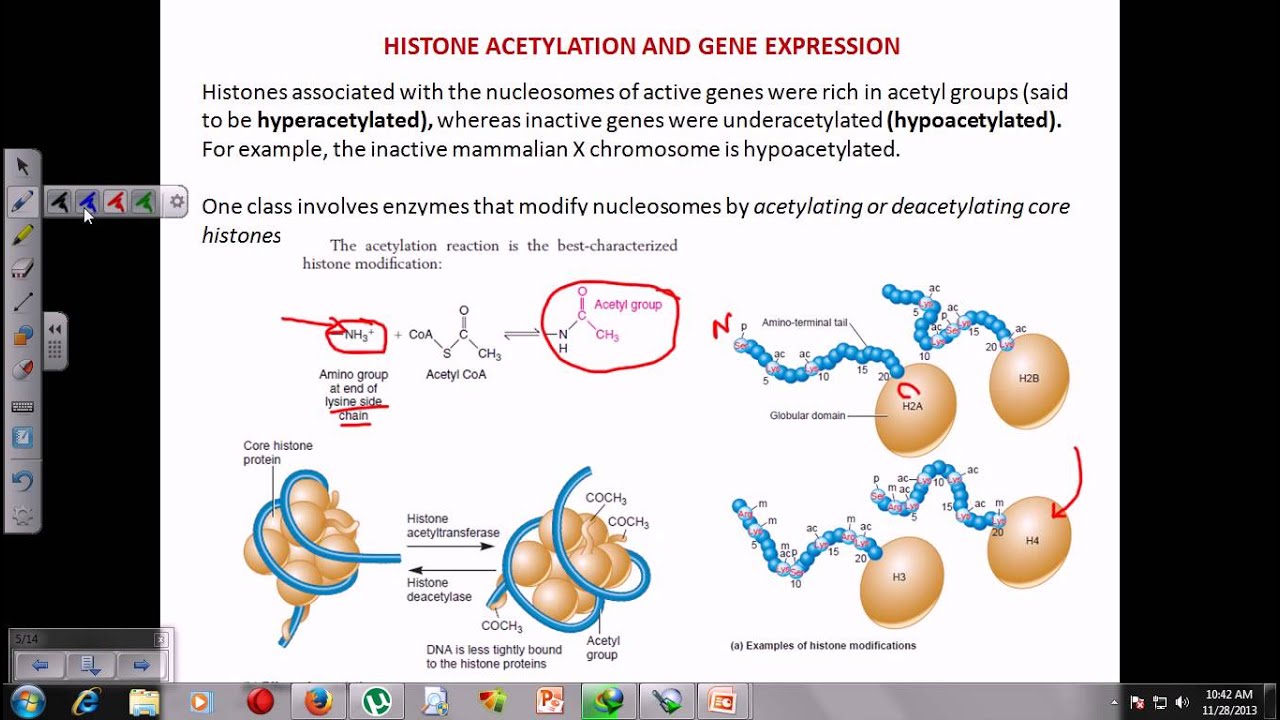
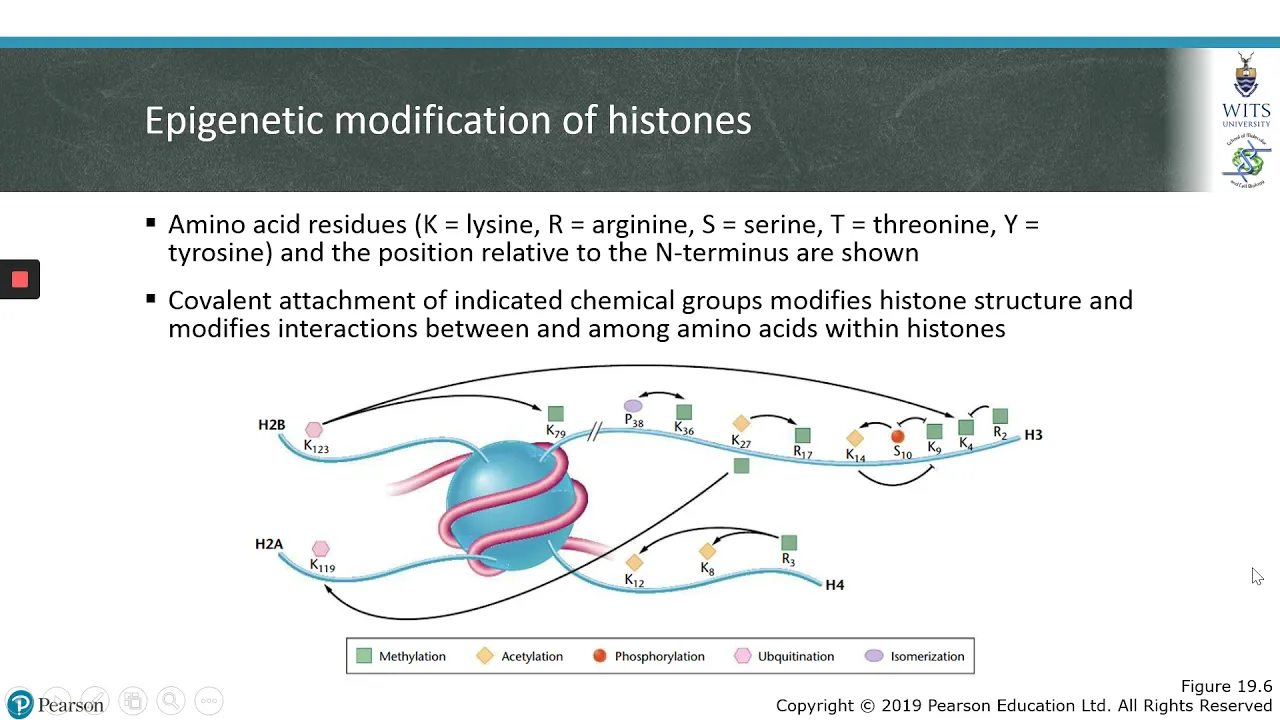




Histones are highly conserved basic proteins in eukaryotic nuclei that package DNA into nucleosomes through electrostatic interactions between their positively charged lysine and arginine residues and the negatively charged DNA backbone; these proteins undergo various post-translational modifications (acetylation, phosphorylation, methylation) at their N-terminal tails, which regulate chromatin accessibility and gene expression by either loosening (euchromatin, active transcription) or tightening (heterochromatin, transcriptional silencing) the DNA-histone interaction, with specific combinations of modifications forming a 'histone code' that is read by specialized proteins to control cellular processes.
Histones & Nucleosomes: Structure, Modification & Function
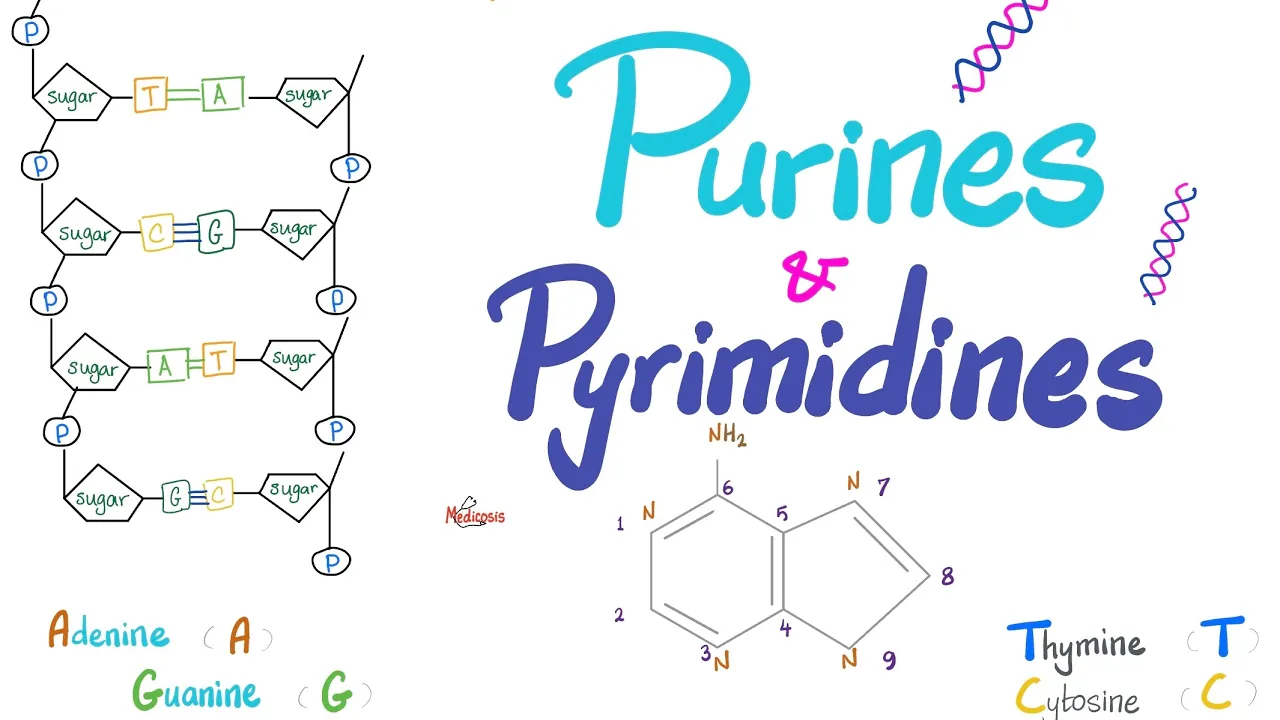
Added:The double-helix structure of DNA, including its negatively charged phosphate backbone which is crucial for histone binding.
Fundamental protein structure, specifically how amino acid side chains and charges influence protein-DNA interactions.
Basic eukaryotic cell biology, particularly the organization of the cell nucleus and the physical scale of the genome.
The central dogma of molecular biology, with a focus on how transcription factors and RNA polymerase access DNA to initiate transcription.
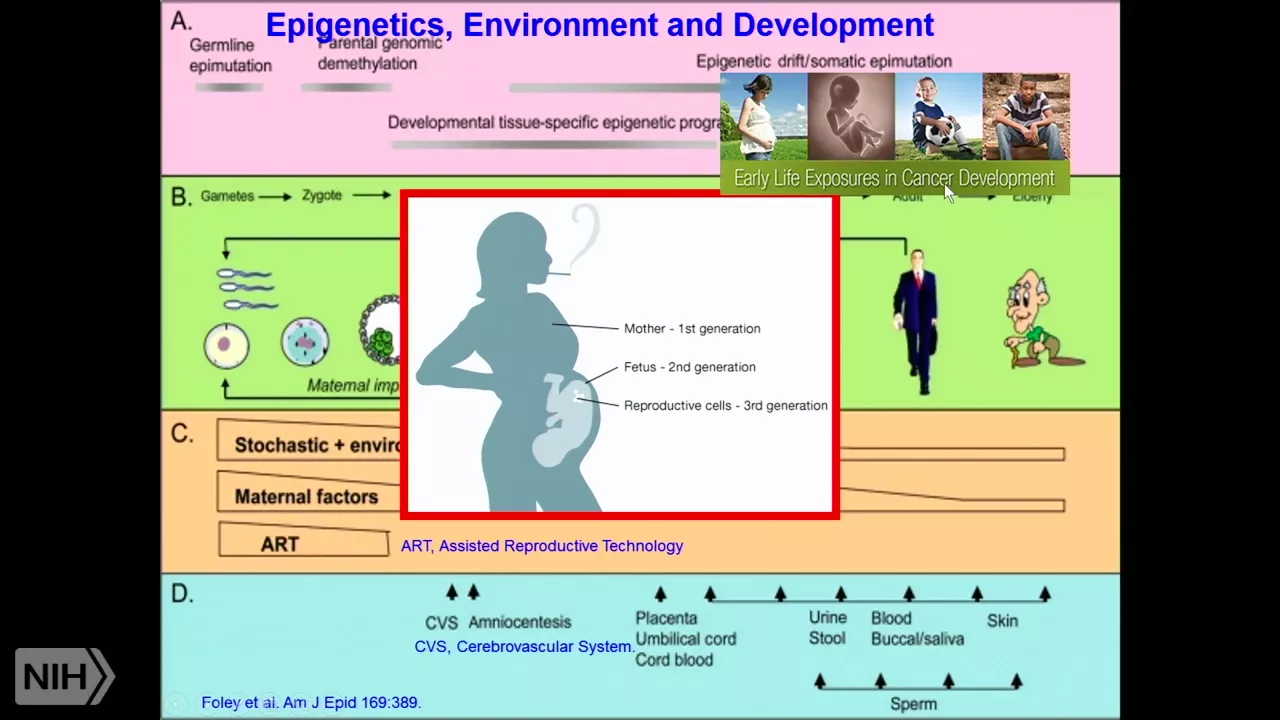
The 'histone code' hypothesis and the broader field of epigenetics, exploring how non-genetic factors regulate gene expression.
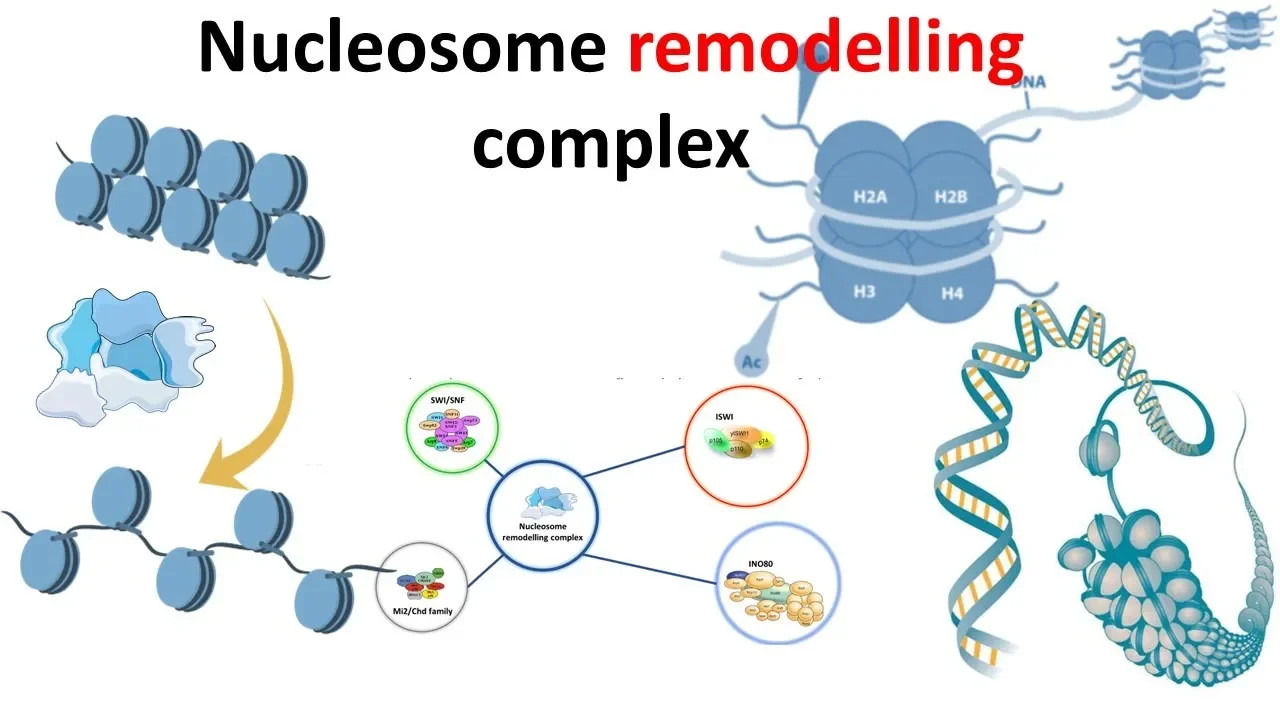
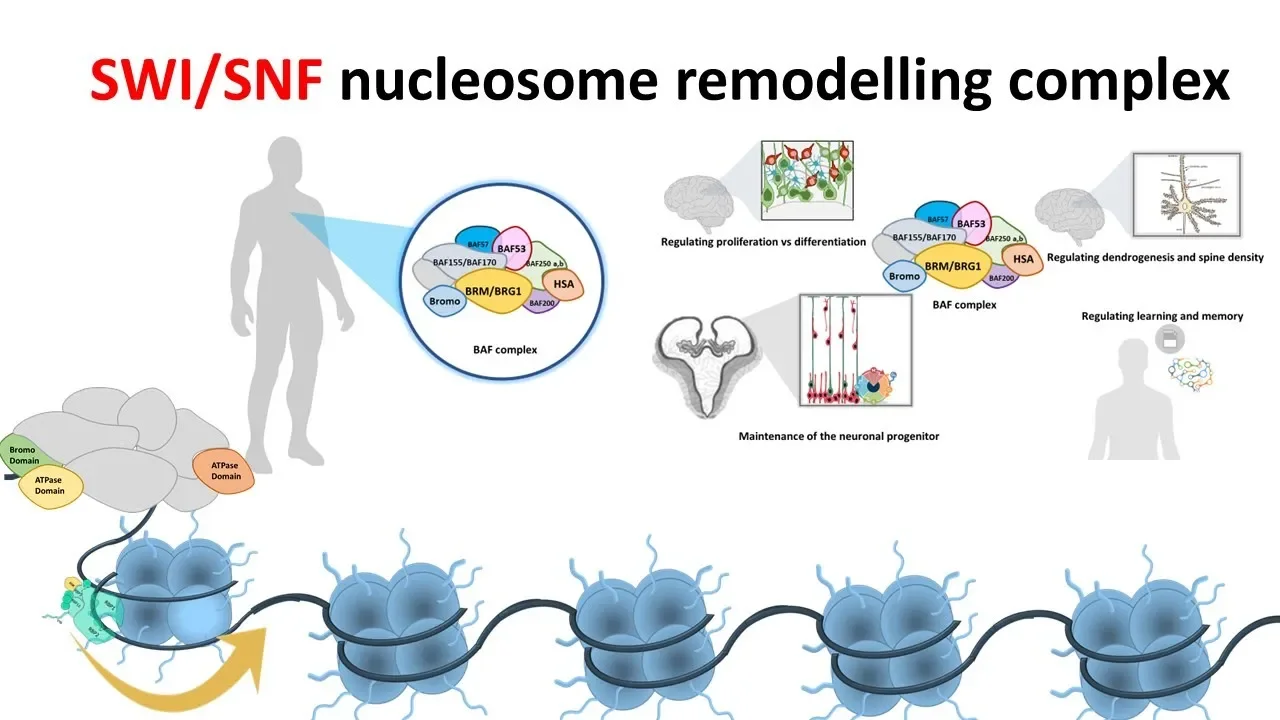
The function of ATP-dependent chromatin remodeling complexes (like SWI/SNF) in actively repositioning nucleosomes.
The structural and functional differences between transcriptionally active euchromatin and silenced heterochromatin.
Clinical applications of chromatin regulation, such as how histone deacetylase (HDAC) inhibitors are used as epigenetic cancer therapies.
54.2K views749likes6:33Original Release: 2022-12-17
in this video we'll talk about histones histones are highly basic proteins enriched in lysine and Arginine histones can be found in eukaryotic cell nucleus histone forms the nucleosome it interacts with the DNA to form functional unit of the chromatin known as the nucleosome histone has positive charges and the DNA backbone has negative charges due to phosphate group and they interact with each other via electrostatic interaction histone structure is highly conserved there are four basic type of histones h2a 2B H3 and H4 in all of these cases one common theme is the histone fold which is highly conserved across the histones and across different species now the difference lies in the tail length so the n-terminal histone tail is a site for several modifications and the tail length is variable between different different histones and this is an extensive site for different modifications like acetylation phosphorylation methylation ubiquity inhalation just to name a few but question is how these modifications take place so obviously there are some proteins or machineries which can give rise to these modifications and the second thing is what is the consequence of histone modification now let me tell you there are several histone modifications which can change the accessibility of Chromatin towards any other transcription Factor so it for example there are enzymes like histone acetyl transferase which can transfer acetyl group onto the n-terminal of histones but the question is what is the consequence now there is a phosphate backbone of DNA which is tightly wrapped around the histone due to the positive charge of the lysine or Arginine group now when in this particular region acetylation take place the positive charge gets masked that means the interaction becomes weaker and the DNA now would be Loosely wrapped around the histone core this would make the DNA accessible in this particular region from a context of transcription this makes sense because many other proteins transcription Factor now gain the access to the region of this DNA so overall accessibility can be increased by modifications like acetylation but acetylation is not the only modification that takes place in the histone there are many other modifications just to give you some idea that there are these acetylation can take place in different different residues for example H4 lysine 8 or 16 acetylation is associated with the start site of gene expression also there are many as other acetylation such as H4 lysine 5 or 12 acetylation marks the newly synthesized H4 so each acetylation in different regions has their own sense majorly acetylated histones are associated with euchromatin region a region of the chromatin which is highly active in terms of transcription whereas deacetylated histone residues are found in heterochromatin which is transcriptionally silent so acetylation of histones lead to a specific code in the chromatin which is read by specific barcode reader-like molecules these barcode reader-like molecules are basically specific proteins which can recognize acetylated histone so the question is who writes the code who reads the code and how I mean who can erase the code so the writer of the code was basically the hat or histone acetyl transfer is the Eraser of this code was histone de-acetylase and this code has a differential meaning now the level of complexity in the histone code is brought about by different type of histone modifications so if we think about euchromatin region there could be different modifications like acetylation and these acetylation can occur in different different residues along with acetylation you can also have methylation in euchromatin region but these methylations are brought the h3k4 dimethylation or h3k36 trimethylation there are phosphorylation which can also be associated with active euchromatin there are specific modifications in heterochromatic region several methylations like h3k27 methylation h3k9-dimethylation h3k9 trimethylations are associated with heterochromatic so overall there could be different different types of modifications in the histones and each of these histone modifications would be read as a combinatorial code now there are other histone variants but before that let me tell you that there is one important part which is known as Linker histone shown here in brown and it kind of work like a clip holding the DNA wrapped around the histone even tighter now there are different histone variants such as let's say histone variant h2a z h 3.3 or heterogromatin Associated variant like simp a or macro h2a some histone variants like gamma h2x is associated with double stranded DNA break so these are having this kind of histone variants have different meaning now as per summary we looked at the histones are highly conserved and they have lysine and Arginine residues which are site for several modifications like acetylation phosphorylation methylation Etc histones are found in all eukaryotes across the species and highly conserved the structure of histone is the structure of histone is conserved it contains that basic histone fold but in terminal tilts are aside for modifications now different histone variants can change the chromatin architecture thereby changing chromatin accessibility and overall it might have a role in changing the way of transcription you can get more notes and flashcards in my Facebook page or you can see more notes in my Instagram page the link is provided in the description you can support our Channel via super thanks you can pay via paytm PayPal or UPI you can follow our other channel nardmeric for exclusive medical related content See You in next video
Up Next

19:37
Transcription Factors: Promoter, Enhancer, Silencer, Insulator | Molecular Biology
@DoctorNajeeb
120K views•2018-04-09
50:12
Bacterial Communication: Quorum Sensing and Biofilm Formation Explained
@JHUAAP
12.6K views•2011-06-28
17:50
Neurulation and Neurogenesis: Neural Tube Formation Explained
@animatedbiologywitharpan
52.4K views•2023-10-18
7:08
Bacteriophages: Earth's Deadliest Killers and Future Antibiotics
@kurzgesagt
34.6M views•2018-05-13
Related Study Plans & Knowledge Roadmaps
Structured learning paths in Biology
biology
RNAi: Biogenesis, RISC & Gene Silencing
01Molecular Biology Foundations: DNA to Protein
02Introduction to RNA Interference (RNAi)
03Molecular Biogenesis of miRNA and siRNA
+ 2 more learning modules
10h5 modules
Explore Roadmap
biology
Mycorrhizae: Signaling, Biophysics & Ecology
01Foundations of Mycorrhizal Symbiosis
02Molecular Signaling and Root Colonization
03Biophysics and Bioenergetics of Nutrient Exchange
+ 1 more learning modules
11h4 modules
Explore Roadmap
biology
Circadian Clocks: TTFL, SCN & Periphery
01Foundations of Molecular Biology & Gene Expression
02Introduction to Chronobiology and Actograms
03The Core TTFL: Molecular Architecture of the Clock
+ 3 more learning modules
14h6 modules
Explore Roadmap
biology
Population Genetics: Math, Drift & Selection
01Genetic & Probability Foundations
02The Hardy-Weinberg Principle and Baseline Models
03Mathematical Modeling of Natural Selection
+ 3 more learning modules
18h6 modules
Explore Roadmap