







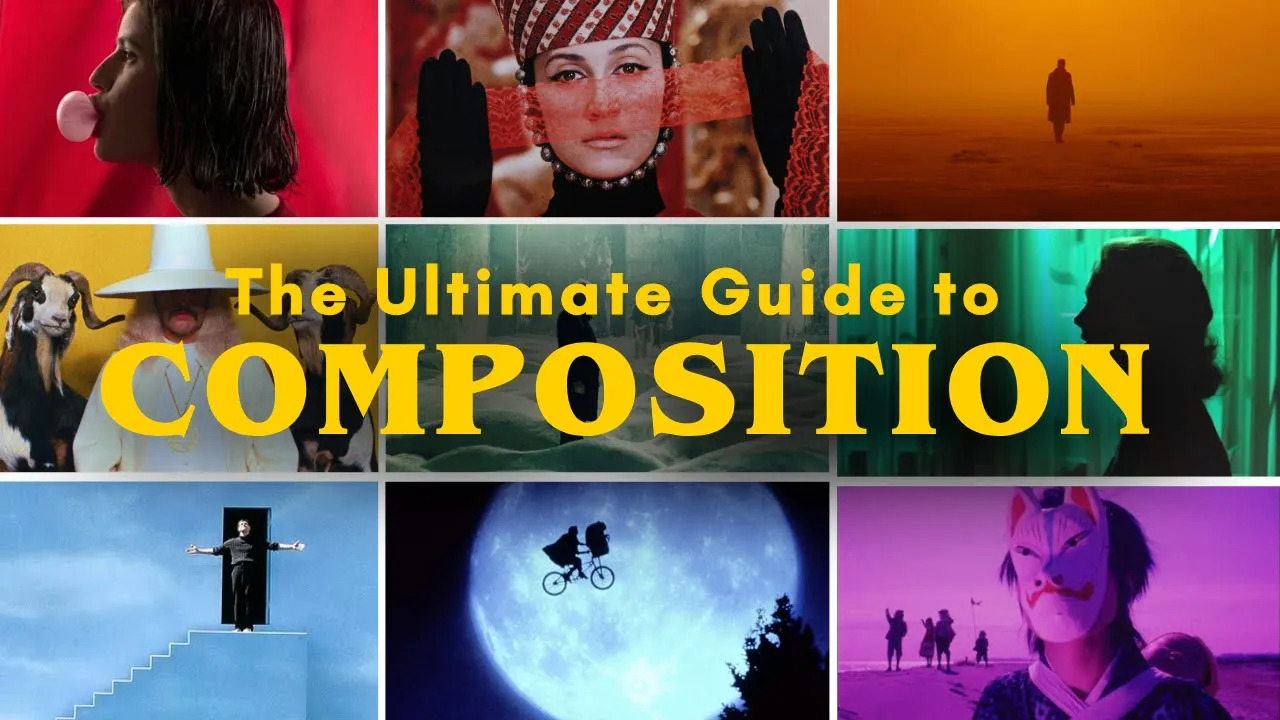





Filmmakers use geometric shapes to convey meaning and emotion, with rounded shapes (Bouba) symbolizing safety and softness while sharp, angular shapes (Kiki) symbolizing danger and threat, as demonstrated by the universal Bouba-Kiki effect where 98% of people across all cultures consistently associate rounded shapes with 'Bouba' and angular shapes with 'Kiki'; this principle extends to character design (evil characters have sharp features, lovable characters are round), framing techniques (rectangles show entrapment, circles suggest surveillance), and line arrangements (vertical/horizontal lines create visual jail cells), allowing directors to communicate complex emotions without dialogue.
Film Geometry: How Cinematographers Use Shapes to Direct Emotion
Added:Basic principles of film composition and framing, such as the rule of thirds, aspect ratios, and the boundary of the frame.
Fundamental elements of visual design, including how lines, shapes, and space naturally guide the human eye and evoke instinctual psychological reactions.
The concept of visual storytelling (semiotics), where non-verbal elements like lighting, props, and camera angles are used to convey narrative meaning.
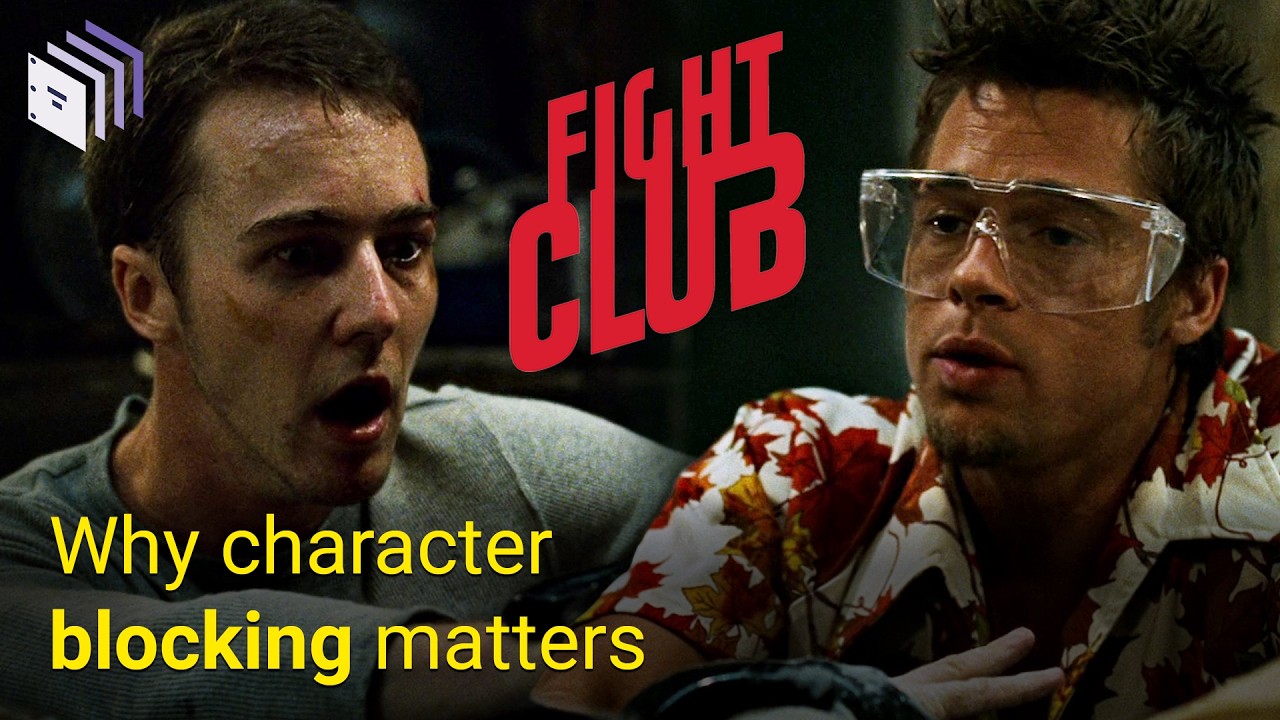
The study of advanced character blocking, analyzing how actors' physical placements and movements interact with geometric framing to establish power dynamics.
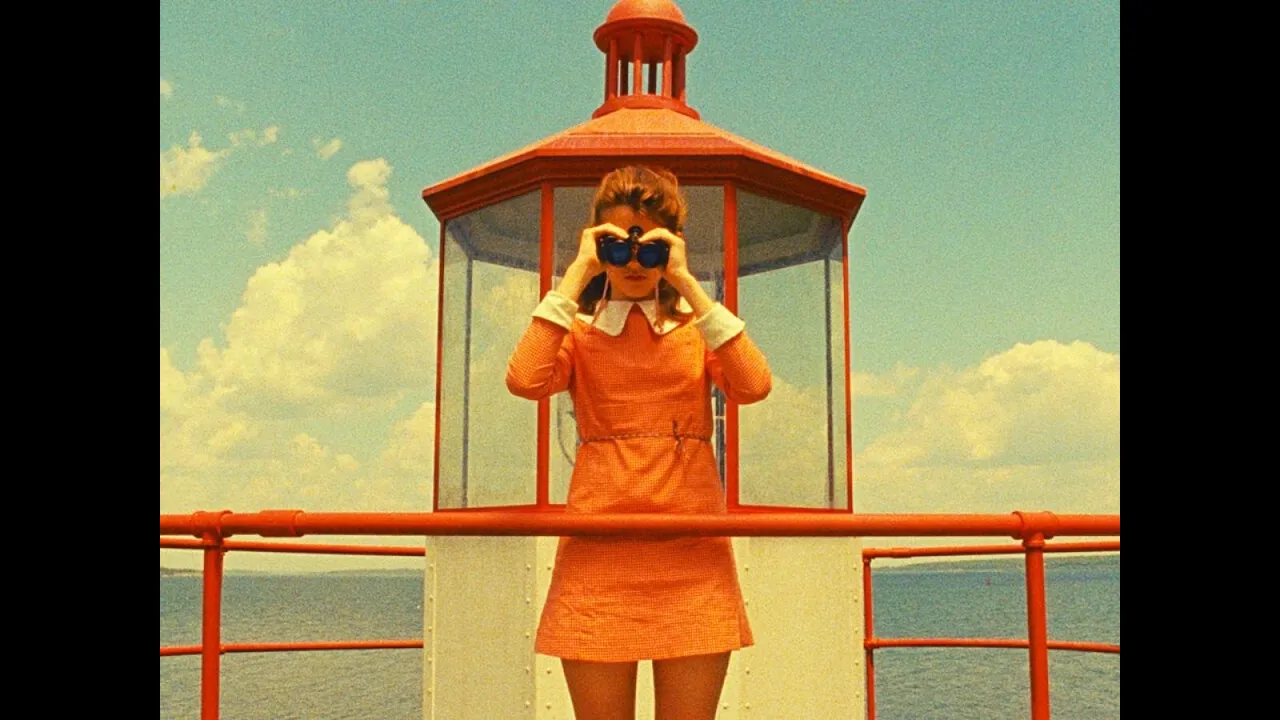
In-depth analysis of auteur styles famous for geometric precision, such as Stanley Kubrick's use of one-point perspective or Wes Anderson's strict symmetry.
The integration of lighting and shadow (chiaroscuro) to create dynamic geometric patterns and depth within a three-dimensional film space.
Practical application in storyboarding and pre-visualization, designing shot sequences that use evolving geometric motifs to mirror a character's psychological arc.
2.4M views58.7Klikes3:59Original Release: 2016-10-08
"Alright."
"Think Hard."
"What is it?"
"Circle."
"Close."
"But definitely wrong."
Let's say I showed you 2 shapes: Shape 1, and shape 2.
And then I ask you, which of these shapes matches the word "Bouba" and which matches the word "Kiki"?
For 98% of people, shape 1 is Kiki and shape 2 is Bouba.
And it doesn't matter if you're from America, India, or if you're 2 and a half years old.
This result is extremely consistent across all cultures and languages.
So, what does it mean?
I want to suggest that with this study, we can see how the brain gives abstract meaning to many different shapes in a consistent way.
And filmmakers use this phenomenon to tell their story.
The best place to see this idea has to be animation, where animators can make objects and characters from any shape they want.
Let's start with the basics: Circle, square, and triangle.
This may seem reductive, but these shapes say a lot more than you may think.
Evil characters are drawn like Kiki.
They have sharper features; pointy noses, ears, and long curly fingers.
And the lovable characters are designed like Bouba; soft and round.
Is it a coincidence that the fluffiest, and least threatening character in animation is named "Baloo"?
To me, this whole concept makes intuitive sense.
Our brains are designed to see sharp and pointy things as more threatening.
"It is too round on the top, it needs to be pointy."
"Round is not scary."
"Pointy is scary."
Notice how I can draw the nicest and most recognizable character in animation with 3 circles.
And notice how the devil is commonly represented as a collection of triangles.
But do it a little more subtly, and you're able to emit an emotional response to the viewer without them even noticing.
It happens during one of my favorite movie moments of all time, when we see the wicked villain transform from Kiki into a round, vulnerable Bouba.
You may think this only applies to animation, but is it a coincidence that Darth Vader's mask has this shape, and Lord Dark Helmet, the cartoonish and comedic parody of Darth Vader, has this shape?
One of the sharpest villains is Maleficent, and they even try to keep her pointy jawline and eyebrows in the live action remake.
Following these same principles, what does it mean when you call somebody a "square"?
It means they're boring, maybe they're old fashioned.
But a square can also symbolize something that is sturdy and firm.
Sound familiar?
Squares are rigid and slow to change.
If the world isn't how they want it to be, maybe they get a little angry.
"Right after YOU eat THIS!"
"AAAUUGGGHHHH!!!"
If you really want to think abstractly, the world of film exists inside a rectangular shape.
A lot of important geometry comes from framing.
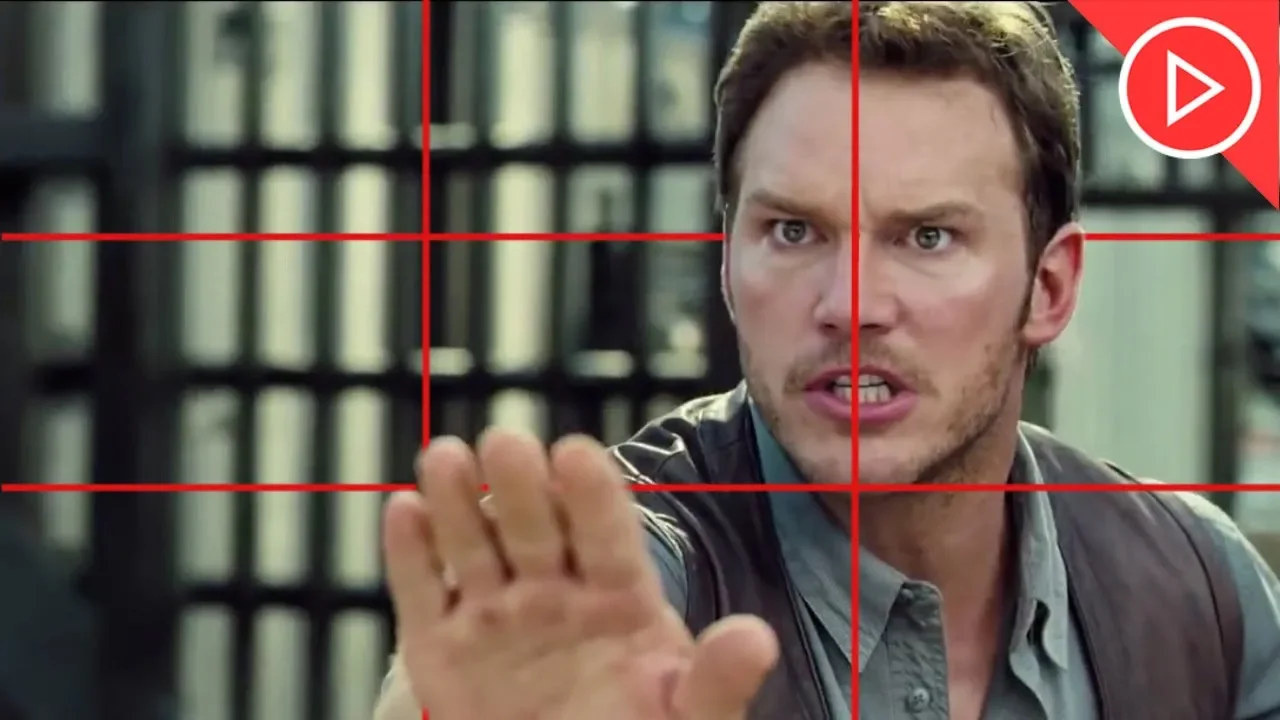
The most significant framing to look for is probably the frame within the frame.
This is used to show a character trapped in their current situation.
*Various car horns* Another less common, but equally important frame within a frame is the circle, which gives the geometric impression of surveillance and spying.
*Booming silence* To go a step deeper than the frame within the frame, you can use lines to create a visual jail cell in the frame.
Whether it's through blinds in an office or even a computer screen, a collection of vertical and horizontal lines can indicate a character is not only trapped, but held prisoner in their current lifestyle.
These shots use geometry as a means of visual storytelling.
"As far back as I can remember, I always wanted to be a gangster."
Without us even noticing it, framing is filled with lines.
Geometry is everywhere, and the same principles apply.
Triangles can emphasize power dynamics, linear framing can show physical separation, or straight lines can guide our eyesight.
So the next time you re watch your favorite movie, try analyzing the geometry of the framing and characters.
If you do that, then you're in good shape.
"What's this one?"
"It's a couple of wavy lines?..." "Sorry."
"This isn't your lucky day!"
Thanks for watching.
-- Subtitles by SmeagolPlaysGames -- I wanna thank Good Blood for giving me this idea in the first place with his amazing Crash Bandicoot video. I highly recommend it!
Up Next
5:48
Frame Within a Frame: Cinematography Composition Technique
@Director_Z
5.4K views•2024-03-01

23:14
Visual Analysis Essay: How to Analyze Graphic Novels in College Writing
@nataliepleimann5941
1K views•2020-10-14

6:21
Long Takes vs. Editing: Limits of Cinematic Storytelling
@NowYouSeeIt
873.1K views•2016-03-27

4:00
Evolution of Darth Vader: Anakin Skywalker's Animated Journey Across Star Wars Films
@TellItAnimated
13.4M views•2019-03-30
Related Study Plans & Knowledge Roadmaps
Structured learning paths in Film Analysis
film-analysis
Sensory Cinema: Foley, Haptic Sound & Texture
01Introduction to Film Sound and Foley Artistry
02Micro-Sounds, Textures, and Extreme Amplification
03Haptic Audition and Film Phenomenology
+ 1 more learning modules
12h4 modules
Explore Roadmap
film-analysis
Breaking the Fourth Wall: Mockumentary & Satire
01The Invisible Wall: Basics of Cinematic Illusion
02Looking at the Lens: Direct Address & Character Glances
03The Mockumentary: Satire, Realism, and Complicity
+ 2 more learning modules
12h5 modules
Explore Roadmap
film-analysis
Analyzing the Long Take: Cinema, Space & Ethics
01Foundations of Film Grammar: Montage vs. The Long Take
02Choreography and Mechanics of the Simulated One-Shot
03Phenomenology of Film: Real-Time Spatial Continuity
+ 1 more learning modules
14h4 modules
Explore Roadmap
film-analysis
Anachronistic Music: Period Drama & Subversion
01Foundations of Film Sound and the 'Needle Drop'
02Traditional Authenticity vs. Revisionist History
03The Rise of the Anachronistic Soundtrack
+ 2 more learning modules
12h5 modules
Explore Roadmap