



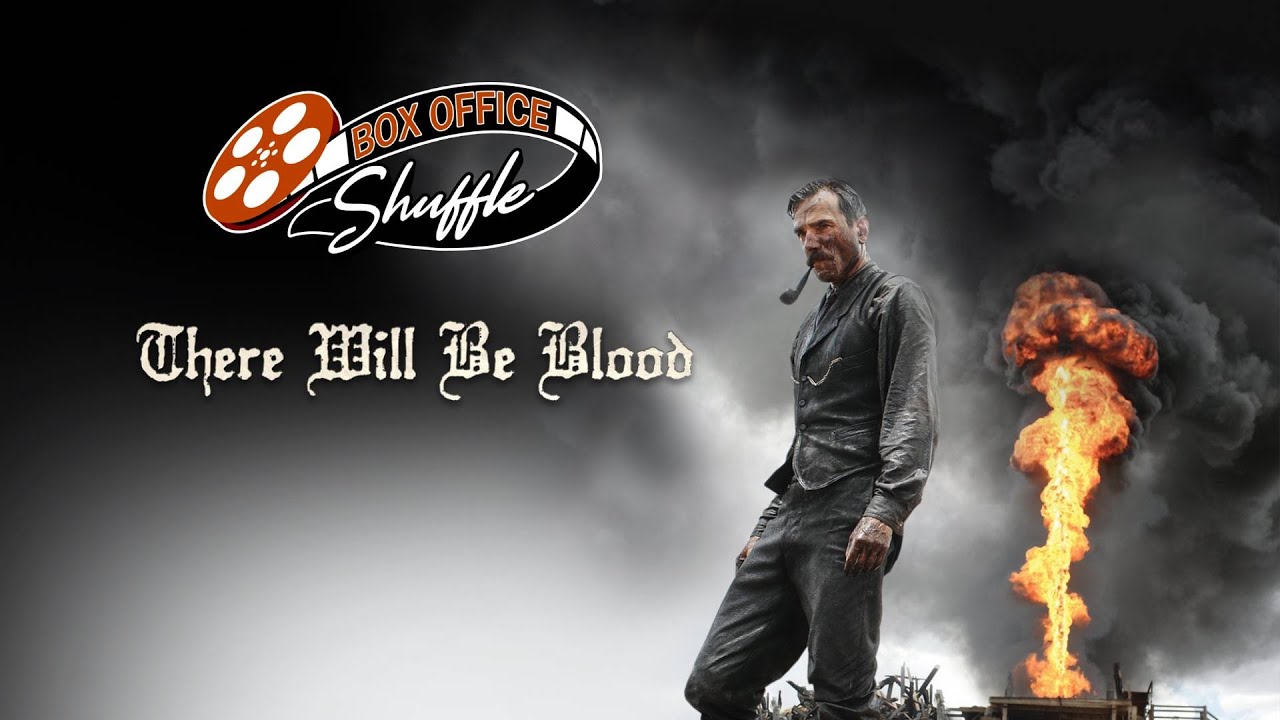













In film, vocal control—how characters speak, when they speak, and what they say—serves as a powerful indicator of power dynamics and character authority; characters who maintain vocal control (like John Wayne's confident, controlled delivery) project dominance and narrative mastery, while those who lose it (like Daniel Plainview's increasingly erratic speech in There Will Be Blood) reveal vulnerability and loss of agency, demonstrating that vocal authority reflects deeper psychological states and moral standing within a story.
Vocal Control in Film: Analyzing There Will Be Blood
Added:Basic Film Grammar and Mise-en-scène: Understanding how camera movement, framing, and composition are used to establish character relationships and power dynamics.
Fundamentals of Film Sound Design: Familiarity with the role of dialogue, voiceover, and auditory elements in cinematic storytelling.
Introduction to Characterization and Performance Theory: Knowing how actors use vocal variation (pitch, tone, pacing) and physical choices to build a complex persona.
Context of 'There Will Be Blood' (2007): A foundational understanding of the film's plot, main characters (specifically Daniel Plainview), and core themes of power and greed.
Prosody and Paralanguage in Film: Delving deeper into the linguistic study of vocal intonation, rhythm, and pauses as tools for psychological manipulation in cinema.
Sonic Blocking and Camera Synchronization: Analyzing how directors physically choreograph camera movements and actor positioning to mirror changes in vocal delivery.
Comparative Performance Analysis: Examining and comparing vocal control techniques in other landmark cinematic performances (e.g., Marlon Brando, Orson Welles).
Practical Application in Directing and Screenwriting: Applying principles of vocal dynamics to write subtext-heavy dialogue and direct actors to command presence on screen.
2.5M views51Klikes14:25Original Release: 2017-12-22
Let me give you an image.
It's a cliche, but it's an image.
- John Wayne. - Oh God!
Couldn't we start with someone easier?
Let me ask you a question: Has John Wayne ever been at a loss of words?
Seriously. Go watch your favorite John Wayne classic and pay attention to how he speaks. Over his 40-year career, regardless of his age, character or mood, he almost always talks with the same iconic masculine confidence and control. He always has the right thing to say in as few words as possible.
- I hope you die!
- That'll be the day.
Even when he's angry, he's not really angry. He never loses his cool.
He never stammers, screams, or even improvises.
- I haven't lost my temper in 40 years.
But, Pilgrim, you caused a lot of trouble this morning mighta have got somebody killed, and somebody outta belt you in the mouth!
Even at his worst, he doesn't lose that cool, John Wayne presence, and there's actually something amazing about that ability.
And I'm not saying this makes him a bad actor. Actually, many studio Hollywood actors had a limited vocal range. Whether Humphrey Bogart was a private investigator: - He actually did shoot Thursby and Jacoby, didn't he?
- a nightclub owner: - Where I'm going you can't follow. What I've got to do, you can't be any part of.
- or even an Irishman: - [Irish accent] I was hoping that maybe in the state of mind you were in, he wouldn't ride tonight.
He always had his trademark voice. It explains why some actors at that time are so easy to imitate. - You got any girlfriends with the same problem, bring 'em over. And John Wayne is no exception.
- And so he went, [John Wayne imitation] "To be, or not to be?"
[audience laughter] But John Wayne still seems to stand out. His complete control, his whole persona, has an almost mythic quality to it.
- So you're a man's only good for one oath at a time?
It's as if he's created a certain idea for masculine authority through his voice.
There's an idea of talking like John Wayne.
But post-classical method acting ushered in a wave of chameleon actors like Marlon Brando, Robert De Niro, and Meryl Streep- actors who morph to their voices and disappeared into their roles. Any attempt at imitating Daniel Day-Lewis would probably result in simply imitating one of his characters, not the actual actor, because he does them all so differently. The use of complex voice acting not only created more immersive performances, but actors and directors now use voice in more complicated ways to tell their story.
It's not always about what a character says, but how and when they say it. Voice shows a character's control of a scene or lack of control.
I want to use voice acting as a means for analyzing one of the most complicated characters in film: Daniel Plainview in There Will Be Blood.
And I think to understand Daniel Plainview, you have to first understand talking like John Wayne.
- [John Wayne imitation] Get off yer horse, and head into the saloon.
John Wayne's big break came in 1939 in Stagecoach, and his introduction starts his streak of vocal control.
- Hold it!
Right from the beginning, John Wayne has a mastery of voice. After a long montage of stagecoach riding, he's the one that can stop the entire narrative with a single command. And notice what else is going on in his introduction shot: - Hold it!
He immediately establishes himself as a master of his own movement through his flashy gun turn, the epic push-in of the camera toward his face and the mythical quality of the background, like he manifested out of the West.
Here we see confidence fearlessness and mastery and the whole film stops to accommodate him.
- Hey look, it's Ringo!
The remainder of the scene presents another interesting phenomenon in voice.
In 1939, editors were still tinkering with how to cut dialogue, and the camera would stay on a character most or all the time they were talking. Except for John Wayne. In this scene, you'll notice he's the only character that talks while the camera focuses on other characters.
- Didn't expect to see you ridin' shotgun on this run, Marshall.
As he talks, it cuts to reactions, or he talks away from the camera as he approaches the stagecoach. Even in his first big movie, even as Ringo the kid, and even right at his character introduction, his voice could control the movement all on its own. He has an almost directorial influence on the story.
There's a distinct power to talking without being seen. In the same way that a narrator of a story has a God-like quality to them. If they talk while not in view, that means they're still controlling the scene even when they aren't there. In John Wayne's introductory scene, we see two methods of showing control: directing the narrative through voice and controlling the camera.
And he's not the only one to control this way.
- Why did you go to the police? Why didn't you go to me first?
We actually also hear Daniel Plainview before we see him speaking.
- I've traveled over half our state to be here tonight.
Like John Wayne, he shows narrative control in his character introduction. He establishes he's the only one qualified to drill, and when people try to interrupt his narrative, he ignores them.
- Well, what is your offer?
- We're, we're wasting time, yes. Please!
[frustrated chatter in background] - I do my own drilling.
His authority does get challenged when the crowd uproars, but he simply leaves. Changing the narrative to what he wants, refusing to not have total control.
- Too much confusion; thank you for your time.
- No no no no, there's no confusion!
- I wouldn't take the lease if you gave it to me as a gift.
He even controls the movement of the camera: It stops when he stops. It moves when he moves. After another Voice of God transition, we see him get a lease how he wants, shifting the conversation to be about family to win them over. Another way to show control in a movie is through controlling the voices of others. This can be as simple as regulating when people talk: - Do you mean to insinuate- - Sit down, mister.
Or regulating what they're allowed to say: [somber singing] - Put an "amen" to it!
[singing continues] - There's no more time for prayer. Amen!
We associate what people say with what they're thinking, what they believe in and what they want. If you control what someone can say, you control everything about them.
- Say my name.
In any scene, a character's voice can show control in these factors: how voice directs the narrative, how the voice controls the shot, and how characters control the voices of others. It's usually a combination of the three.
- Say "what" again! I dare you! I double-dare you, motherfucker!
In reality, everybody wishes they had the control of voice like John Wayne. Even when people disagree with him, he still drives the narrative and has complete mastery of the world around him. He may sometimes be a flawed hero, but the flaw is never in his voice, so he always has some level of control. In Red River he gets betrayed, but his voice makes it clear that he'll end up with what he wants.
- Every time you turn around, expect to see me.
- 'cause one time you'll turn around, and I'll be there.
But that's the problem with John Wayne's authority: it never gets questioned. Even when he loses, he still talks in that confident air, never completely losing his mastery of the world of the West.
What makes There Will Be Blood so well-written, is how carefully each scene tests power dynamics through voice. And Daniel Plainview's iconic presence does get challenged in inventive ways, to the point where the film seems to question whether or not a John Wayne-like vocal control is ever possible, or even desired. Daniel Plainview actually gets a pretty worthy opponent in the film. Eli Sunday is a gifted orator and he constantly questions Plainview's vocal authority.
- Offer to use thirty-seven hundred dollars- - What is it that brought you here, sir?
Take a seemingly benign conversation Plainview has with Eli Sunday: What appears to be Eli just making a simple request is actually a carefully coded fight for vocal control.
- Daniel, may I speak with you?
- Yes, come in.
Eli starts with some innocent chitchat which Plainview doesn't engage in.
- Spirits seem high.
Then, Eli chooses to seat himself without being offered. Here we see Eli taking initiative, contrasting his brothers politeness in an earlier scene: - Can I sit down?
- Please.
The scene becomes about vocal control when Eli asks to speak at the induction of the well.
- I will bless the well.
Actually he doesn't ask. He says he will, directing the speech as he wants it.
- Before you begin, you should introduce me.
Of course, Plainview corrects him, but Eli ignores his correction.
- We get it.
- You'll see me walk up, He even provides him a script.
- and then you could say: "The proud son of these hills, who tended his father's flock."
Plainview baits him, letting him pick the time: - Well, let's make it four o'clock then.
And then it cuts to the actual induction where Eli is supposed to speak, but Plainview directs it his way, pulling up the little girl and performing his own script.
He does it all on his own, ignoring Eli's request. The camera hovers on Eli as Plainview blesses the well, and his voice of God dominates the scene and Eli. He even manipulates Eli's words and makes them his own.
- Number one name for the merry Miss Sunday, here by my side. A proud daughter of these hills.
In a simple sequence, Plainview gives up the win, lets Eli's guard down, and gains back control, directing the moment how he wanted: controlling the camera and controlling Eli's words. But Eli shouldn't be underestimated as a character.
He speaks very well, and is the vocal leader of the town.
It's two directors pitted against each other. One directs the congregation, the other directs the oil well. The next vocal showdown between the two comes in Eli's territory, when Plainview has to get baptized.
Notice Eli already starts in control when we hear his voice before we see him speak.
- I truly wish everyone could be saved, don't you?
- [congregation responds] Yes.
He directs when the congregation speaks. Of course, Plainview resists, but Eli subjugates him. He has to respond as directed by Eli.
- What do you want me to say?
Eli forces him to say exactly what he wants and what he's insecure about.
- "I have abandoned my child!"
- [hissing] Say it, say it.. And in a complete reversal, Eli speaks as the voice of God throughout, while we focus on Plainview.
It's a total opposite to the last confrontation: Eli gives him the lines and he has to recite them, forcing Plainview to, for the first time, lose his vocal control.
- I've abandoned my child!
- I've abandoned my boy!
The next time they see each other is at the end of the movie. Even though Eli asks for help in this scene, he still starts off in control. The camera follows him and he asserts himself by making them drinks. When Plainview agrees to work with him, he says he'll do it on one condition.
- I'd like you to tell me that you are - and have been a false prophet, - and that God is a superstition.
And now Plainview is the director again.
- That is a superstition- - Why don't you stand up?
[throat clearing] - Put your glass down.
In theory, Plainview has bested him, but it doesn't really feel like a John Wayne kind of vocal control.
[unintelligible argument] - Don't say this to me- - I have broke you and I beat you.
It's a bastardized version, because at the end Plainview wins, but he's not in control.
[slurred yelling] He spirals completely out of control. Towards the end he foams from the mouth, stutters, screams and grunts.
He loses mastery of everything in this scene, even his walk. When we think of John Wayne's grace, it's also in his walk. Plainview stumbles around in complete erratic chaos.
- I am the Third Revelation!
He doesn't have control at all. Another relationship that showcases his lack of vocal control is with his adopted son, H.W.
At first they work together as partners, but when he becomes deaf they lose their ability to communicate.
- I can't hear my voice.
And in short, Plainview doesn't know what to do with him.
He's no longer an asset to the company, and Plainview sends him away. Years later H.W.
returns with his translator, and Plainview tries to control him vocally by forcing him to speak, becoming threatened when he considers H.W. a competitor.
- You speak instead of your little dog. Woof woof woof woof woof woof woof!
So again, he gets vocal control, but at what cost?
It's cruel and doesn't feel like mastery. In a lot of what he says, Daniel Plainview may have the vocal influence, but he's a conman. In one of his monologues, he elegantly talks about the schools he'll build, the wheat he'll grow, and the importance of family values.
But the visuals show only men and no schools, irrigation or farmland, just people preparing the drilling. His Voice of God Authority tricks us. Even though Plainview constantly talks about bringing wealth to the town, there are actually very few signs of him improving the town.
There's a sort of false sense of control when he talks. He vocally controls Eli but not himself.
He can't vocally control his son because he lost his hearing, but he tries anyway. And he can't control the work he does. He has to lie about the benefits of his drilling, and much of the dangers of work are out of his control.
We expect Plainview's monologue to be true because narrators are supposed to guide the story. One John Wayne movie that follows these principles of narration is Red River, which has a monologue that's almost identical to Plainview's. If you replace oil drilling with cattle: - Good beef for hungry people, beef to make 'em strong, make 'em grow.
The key difference though is that John Wayne's hyper-masculine advertisement of his cattle business is actually taken seriously, whereas There Will Be Blood codes Plainview as a fraud. John Wayne's movies seem to have some unrealistic ideals for heroes, whereas There Will Be Blood shows the more sinister sides of being in control.
And I know I said John Wayne always has vocal control, but even he loses it in some of his later movies: [unintelligible yelling] [gunfire] His chaotic shooting of buffalo sheds light on the darker side to his supposed mastery.
Regardless. many of his earlier films create an idea of a hyper-masculine male with complete control of what they say and how they say it. There's a certain fantasy to sounding like John Wayne.
- If you can't learn the easy way, you learn the hard way.
But movies like There Will Be Blood bring into question the validity of such a one-dimensional kind of control. Having such vocal authority actually doesn't end well. If someone really had as manly a dominion over their world, they wouldn't end up like a cool suave John Wayne riding into the sunset.
They'd probably become the erratic, miserable and lonely Daniel Plainview, because at the end of the day, the old western heroes aren't real. That level of mastery is not only unrealistic, but also dangerous. Think about it: Why couldn't Daniel Plainview have let Eli Sunday give that speech?
What difference does it make if he gave his little blessing? Daniel Plainview explains it himself: - I have a competition in me; I want no one else to succeed.
And maybe that hyper-masculine unfaltering thinking is no way to live, and no fantasy to strive towards.
- Never apologize, mister. It's a sign of weakness.
When studying voice, John Wayne makes for a great place to start. His way of speaking is hyperbolic and he represents the ability to vocally master a scene. His purist vocal power, however, feels unrealistic and dangerous. When studying more vocally complicated characters, one can use John Wayne's power as a starting point and see how a character succeeds in the John Wayne level of vocal control, and how they fail. Do they control the camera, do they control the narrative and do they control others, and also at what cost?
Thanks for watching. This video is brought to you by Skillshare.
Skillshare has thousands of coursees designed to help you learn a new skill. Whether you want to learn how to write or how to create video, they have some great options.
For example, if you want to start writing, take this course by author Emily Gould that'll get you on the right track. If you want to start creating videos, get good at it before investing in expensive equipment. Check out Matty Browns course on low-budget filmmaking.
I actually just signed up for their After Effects for beginners course, because I want to incorporate it into my YouTube videos. So far it's been super helpful. Premium Membership begins around $10 a month for unlimited access to learning, but the first 700 members who click the link in the description will get two months for free. These spots are going to go quickly, so make sure to be one of the first few!
Up Next

12:51
David Lynch and Alan Splet: Sound Design in Film Analysis
@willsyapchannel
350 views•2026-04-27
20:12
Unfriended (2014) Screenlife Horror Film Analysis and Review
@theboredcyborg
372 views•2019-08-20

6:21
Long Takes vs. Editing: Limits of Cinematic Storytelling
@NowYouSeeIt
873.1K views•2016-03-27

4:00
Evolution of Darth Vader: Anakin Skywalker's Animated Journey Across Star Wars Films
@TellItAnimated
13.4M views•2019-03-30
Related Study Plans & Knowledge Roadmaps
Structured learning paths in Film Analysis
film-analysis
Sensory Cinema: Foley, Haptic Sound & Texture
01Introduction to Film Sound and Foley Artistry
02Micro-Sounds, Textures, and Extreme Amplification
03Haptic Audition and Film Phenomenology
+ 1 more learning modules
12h4 modules
Explore Roadmap
film-analysis
Breaking the Fourth Wall: Mockumentary & Satire
01The Invisible Wall: Basics of Cinematic Illusion
02Looking at the Lens: Direct Address & Character Glances
03The Mockumentary: Satire, Realism, and Complicity
+ 2 more learning modules
12h5 modules
Explore Roadmap
film-analysis
Analyzing the Long Take: Cinema, Space & Ethics
01Foundations of Film Grammar: Montage vs. The Long Take
02Choreography and Mechanics of the Simulated One-Shot
03Phenomenology of Film: Real-Time Spatial Continuity
+ 1 more learning modules
14h4 modules
Explore Roadmap
film-analysis
Anachronistic Music: Period Drama & Subversion
01Foundations of Film Sound and the 'Needle Drop'
02Traditional Authenticity vs. Revisionist History
03The Rise of the Anachronistic Soundtrack
+ 2 more learning modules
12h5 modules
Explore Roadmap