


















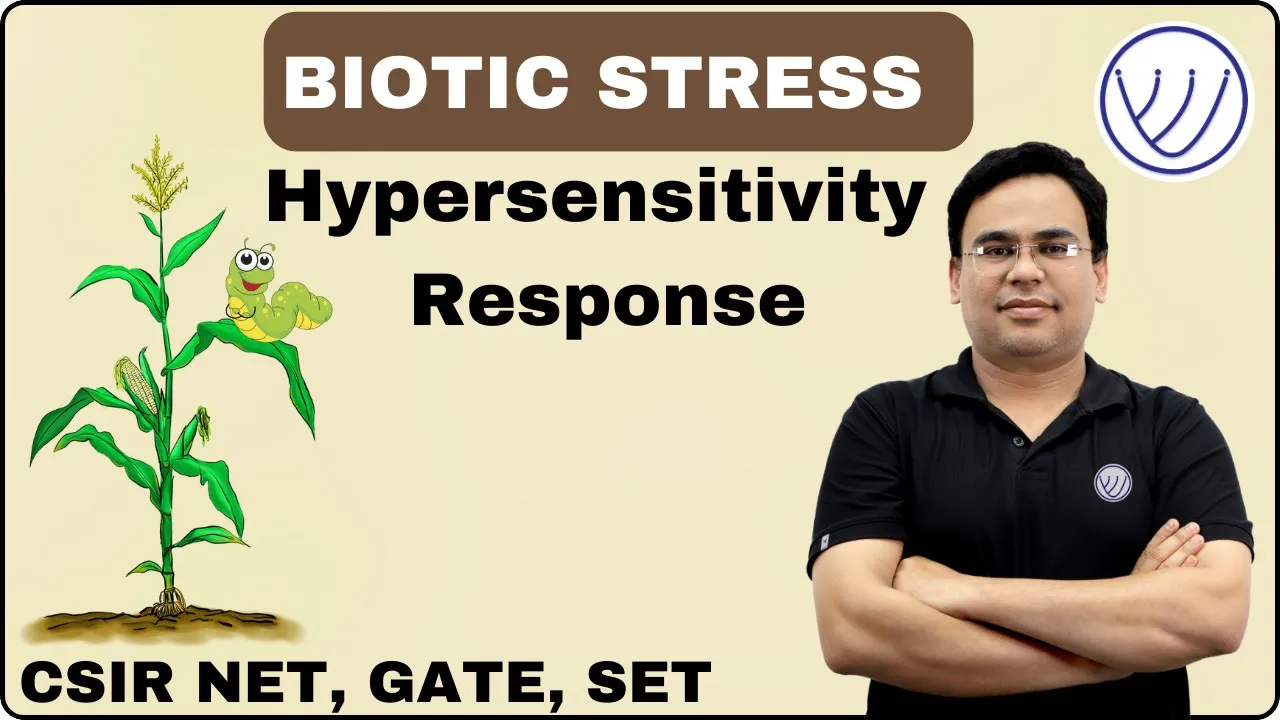


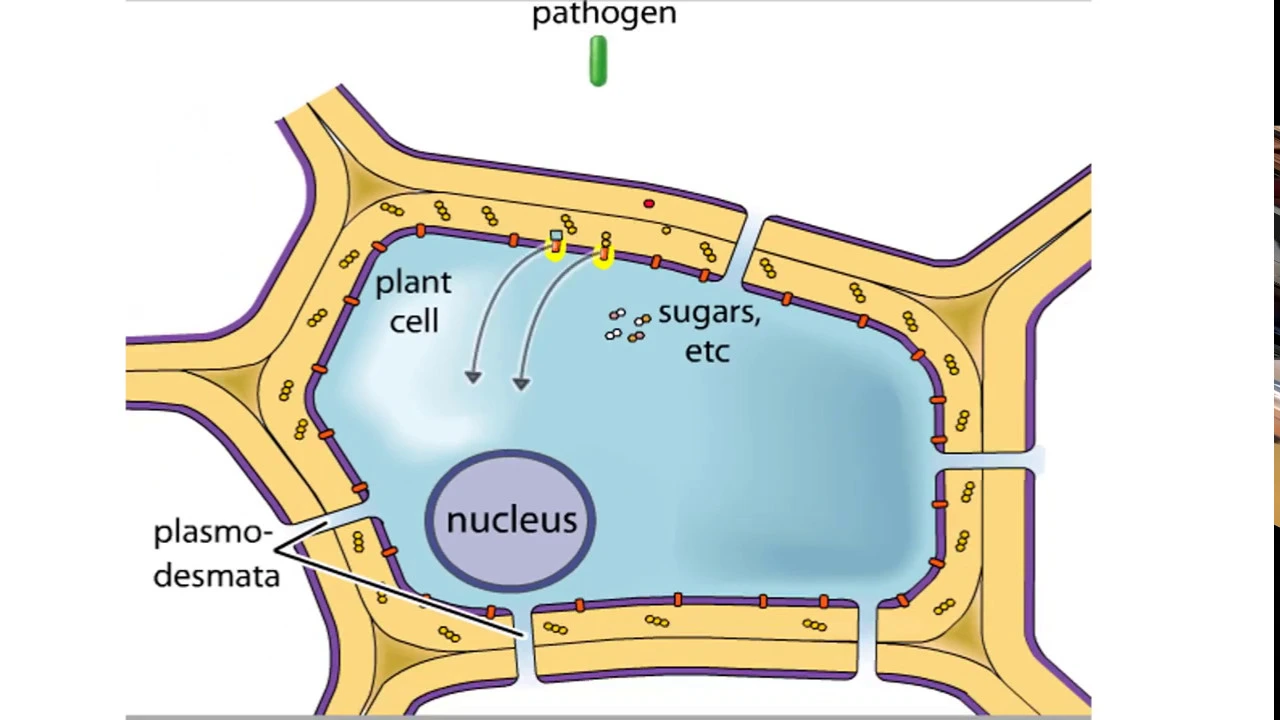







Plants employ active biochemical defence mechanisms post-infection, including phenolic compounds (benzene-ring containing substances that accumulate at infection sites), oxidative burst (generation of reactive oxygen species and nitric oxide causing hypersensitive cell death), callose synthesis and deposition (beta-1,3-glucan forming papillae to block pathogen spread), hydroxyproline-rich glycoproteins (HRGPs) that trigger lignin deposition, and phytoalexins (de novo synthesized protective compounds that alter pathogen plasma membranes and inhibit energy transfer). These mechanisms work together with structural and constitutive biochemical defences to confer resistance against phytopathogens.
Active Biochemical Defense Mechanisms in Plants | Phytopathology
Added:Basic plant cell anatomy and cell wall structure (cellulose, hemicellulose, and pectin composition).
The distinction between passive/constitutive physical barriers (like the cuticle) and active/induced plant defenses.
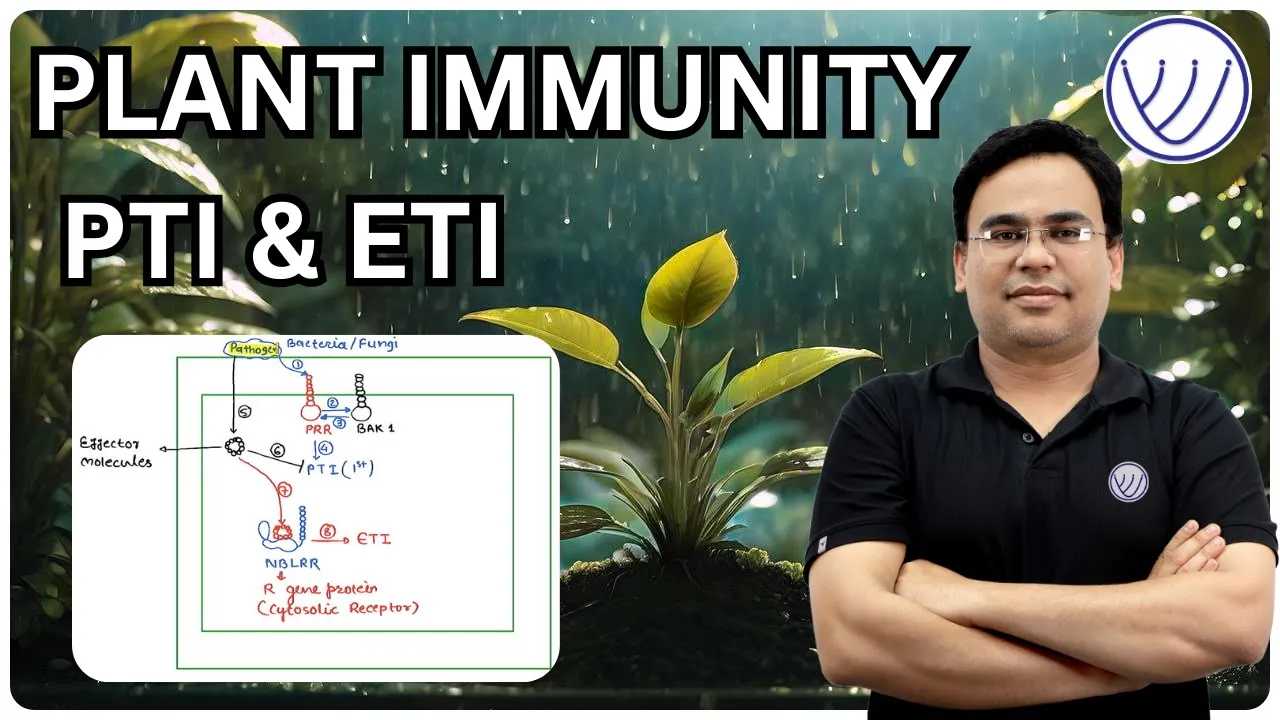
The concept of plant-pathogen recognition, specifically Pattern-Triggered Immunity (PTI) and Effector-Triggered Immunity (ETI).
Fundamentals of organic chemistry and biochemistry, particularly the classification of secondary metabolites.
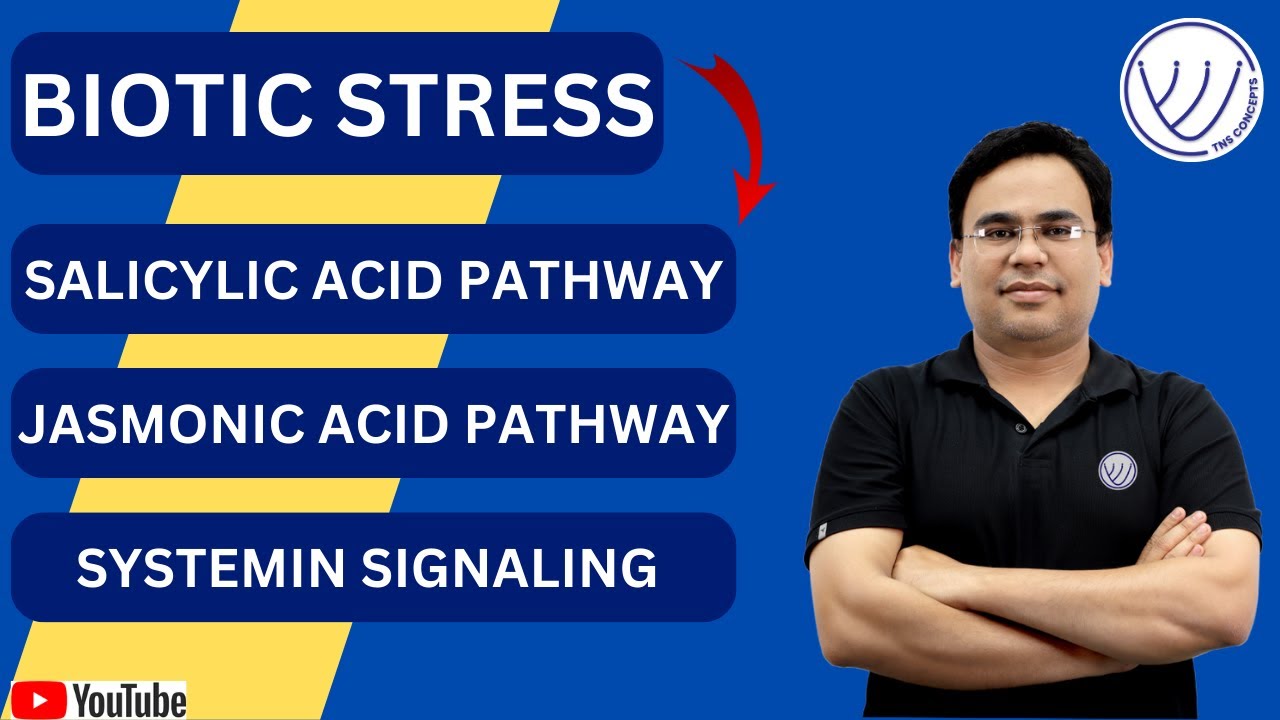
Signal transduction pathways (such as salicylic acid, jasmonic acid, and ethylene signaling) that coordinate these biochemical defenses.
Systemic Acquired Resistance (SAR) and Induced Systemic Resistance (ISR) as whole-plant immune responses.
Pathogen counter-defenses, including effector proteins and enzymes designed to degrade phytoalexins and PR proteins.
Agricultural biotechnology applications, such as breeding or genetically engineering crops with enhanced biochemical defense genes.
4K views104likes16:02Original Release: 2020-06-08
hello students welcome to the last video in the series on resistance mechanisms in plants we have studied about the structural and biochemical defense mechanisms and i told you that under each of these we have pre-existing or constitutive defense mechanisms and post infection or active defense mechanisms we have completed the structural defense mechanisms both pre-existing as well as post infection and we have already discussed about the pre-existing biochemical defense mechanisms under that we have inhibitors that are released by plant in its environment inhibitors that are present in the plant cells substances which are required for the growth of pathogen lacking in the particular plant and absence of common antigen in the host plant these were the pre-existing biochemical defense mechanisms so in today's class let us discuss about the post infection or active biochemical defense mechanisms these can be further divided into different types those are phenolic compounds oxidative burs and generation of nitric oxide synthesis and deposition of calories hydroxyproline rich glycoproteins or hrgps phytoelections and pr proteins let us deal with each one of these individually the first post infection biochemical defense mechanism is phenolic compounds now phenolic compounds are substances that contain one or more benzene rings with one or more hydroxyl groups and these are the main inhibitory substances that are synthesized in response to any infection or injury some phenolics are pre-existing in the plants but their synthesis or accumulation is accelerated post an infection or post an injury so what happens is as soon as the pathogen enters inside the plant or it establishes an infection either the pathogen will accelerate the synthesis adjacent to the area of infection or it will accelerate the flow of pre-existing phenolic compounds towards the infected tissue so either it will increase the production or it will not increase the amount it will just make sure that whatever phenolic is present in a particular plant will flow towards the infected tissue that is the effect of a pathogen or that is the effect of the injury or invasion or infection on the presence of phenolic compounds in the plant now one thing to remember here is that they are already pre-existing they are already present in the plant it's just that infection or injury is going to accelerate their synthesis or accelerate their accumulation in a injured area or near the infected area some of the examples of phenolic compounds that are present in a plant are chlorogenic acid caffeic acid ambalypheron ortho diphenol scopolatin isochromate these are some of the examples of phenolic compounds that are present in plants and the organisms which are known to induce the production of phenolic compounds are serato cystis fimbriata which affects sweet potato potato plants and carrots phytophthora intestines which infects sweet potato plants and potatoes again and tmb which is tobacco mosaic virus so these are examples of pathogens which induce the production of phenolic compounds such as these in their respective host plants the second post infection biochemical defense is oxidative burst and generation of nitric oxide now oxidative burst means the generation of reactive oxygen species or reactive oxygen intermediates these reactive oxygen intermediates include the superoxide anion hydrogen peroxide and the hydroxyl radical now these are substances or these are chemical entities that are pathogenic not only to the microorganism but as well as to the host plant so when there is combination of these reactive oxygen species along with nitric oxide that is no that causes hypersensitive death of the host cells so as soon as the host this understands that there has been injury or there has been an infection by a pathogen immediately there is generation of these reactive oxygen species and nitric oxide so there is oxidative burst and generation of nitric oxide the pooled effect or combined effect of which causes the death of the host cells and when there is death of the host cells that is an excellent defense mechanism especially against biotrophic pathogens so this is the second post infection defense mechanism biochemical defense mechanism that is oxidative species reactive oxygen species are being generated more that is known as oxidative burst and there is also generation of nitric oxide the third type of defense biochemical defense active defense is synthesis and deposition of calories now calories is a beta-13 linked glucan which is synthesized rapidly and deposited very quickly as papillae papillae are wall oppositions they are localized wall obstructions or oppositions that are synthesized or that are formed during an injury or an or infection by the pathogen so as soon as there is injury or infection by the pathogen the pathogen will attack or it will activate the beta 1 3 glucan synthesis enzyme and this enzyme will synthesize more of the beta 1 3 glucan named kalos as soon as there is more of callows being produced or deposited it will lead to these papillae which are the wall obstructions that check the spread of the pathogen so calorie synthesis and deposition is also a very common biochemical defense mechanism that is seen after infection by a pathogen the fourth type of defense mechanism are hydroxyprolin-rich glycoproteins which are also abbreviated as hrgps these are proteins that are normally present in a plant cell wall but when there is infection or when there is injury there is increased amount of hrgp being produced in the cell wall when there is increased amount of hrgp again that will lead to deposition of lignin in the form of papillae or like i told you in the previous slide it is an obstruction or it is a localized wall opposition which will check the spread of the pathogen so these are some of the organisms that are known to infer or they are known to produce the hrgps they stimulate their plant host plant to produce hrgb these are fusarium oxyspurum form a specialist lipopurasi or which infects the tomato plants or tmb that is tobacco mosaic virus and pseudomonas cylinder pathway facioli cola which affects the bean plants so in these cases they instigate or they make their host plant produce more of hr gps when there is more of hrgp it leads to deposition of lignin in the form of papillae or outgrowths or wall oppositions the fifth type of biochemical defense mechanism is phytoalexans now phyto stands for plant and alexin is a substance that is protective in nature or a protective substance these phytoelections are compounds that were first proposed by two scientists those are muller and bulger in 1940 when they were working on the late flight of potato caused by phytophthora intestines they suggested that there are some compounds that are released by the plants which are protective in nature that is why they are known as phytoelections now these are also phenolic compounds but they are different from the first group of phenolic compounds that we have studied because they are not pre-existing in the plant they do not already exist they are not constitutive they are only produced when or they are only synthesized when there is an injury or there is a physiological stimulus so phytoelections are phenolic compounds or in some cases they can even be non-phenolic compounds which are synthesized de novo from scratch during an injury or physiological stimulus and usually they are low molecular weight lipophilic compounds they are produced when there is an interaction between host metabolite that is the plant metabolite and a receptor on the pathogens membrane so when there is an interaction between the host and the pathogen then that leads to the production of a phytoelectin elicitor this phytoelection elicitor is like a stimulus or it is like a pre molecule to the actual phytoelectin the elicitor is generated usually by the pathogen in some cases it can also be produced by the host plant so when there is interaction between the host and pathogen it leads to formation of phytoelectin elicitor this elicitor will enter the host and stimulate the synthesis of the phytoelection this is how the phytoelections are being synthesized now these phytoelections have different modes of action usually they alter the plasma membrane of the pathogen and they have the ability to inhibit oxidative phosphorylation or electron transport chain when they inhibit the oxidative phosphorylation there is obstruction in the energy transfer of the organisms which leads to the reduced growth or inhibition of growth of the pathogen these are their modes of action alteration of the plasma membrane and inhibition of oxidative phosphorylation step in their energy transfer mechanism some of the organisms do have a method of detoxifying these phytoelections or they have a method to counter or to tolerate these phytoelections that is by chemical modification of the phytoalexin by d methylation or oxidation hydration these are some of the chemical modifications by which some pathogens are able to resist or they are able to detoxify the phytoelection molecules produced by the host plants so there are several phytoelections i have taken a few important ones let us just study the plant that is producing them and which is the organism that is involved in this the first phytoelection that i have taken as an example is a phytoelection that is produced by sweet potato roots so in the roots of sweet potato plant the zippo niamaron is produced when that particular plant comes in contact with or it is induced by infection by serato sisters fibriata and helicobacidium mompa these are organisms or pathogens which induce the sweet potato plants to produce the phytoalex in iphomia maroon the second example of phytoelectin that i have taken is bisecting is produced by pea plants in response to the infection by monolinia practicola and ascochyta pi c so these pathogens induce the p plant p pods to produce bicep the third phytoelection that i have taken as an example is phaseolin which is produced by the pods and leaves of bean plant in response to infection by monolinia practicola pseudomonas speciolicola and collector trichum so these pathogens induce the bean plant to produce phaseolin which is one of the phytoelections the fourth phytoelection example is rishitin which is produced by the tuber of potato plants in response to phytophthora intestines and infection by fusarium solani so these are some of the examples of phytoelections epomarone piscitan phaseolin and residue another example is gossip all which is produced by cotton plants it is found in the xylem vessel of the cotton plants in response to infection by verticillium halvoetrum and rhizopus nigricans the next example is cicerin which is produced by the gram plants in response to asco kaita rabi so ascochyta rabbi will induce the gram plants to produce the phytoalexan season and another example i have taken is isochromaryl which is produced as a phytoelectron by the roots of carrot plant in response to infection by serato cystis fimbriata fusarium oxysporum rhizopus stolonifer and helmettosporium carbon these organisms induce the carrot plant to produce the phytoelectron isochromal these are some examples there are some more like trifolizin or hysinol capsidiol camalex and carbine these are some other gas being these are some other examples of phytoelections that are produced by various other species of plants so till now we have studied the different active biochemical defense mechanisms we have done five till now first one was phenolic compounds which are normally present in the cell and they are only being synthesized more or accumulated more after an infection then we have studied about the oxidative burst and generation of nitric oxide synthesis and deposition of calories the fourth one was hrgps or hydroxyproline rich glycoproteins and fifth one was phytoalexis the last biochemical defense mechanism which is active is the pr proteins or pathogenesis regulated proteins now these are proteins which induce when they're they are being synthesized more or they start accumulating they induce a resistance in plants that is known as systemic acquired resistance or sar this systemic has acquired resistance is induced or it is being applied through the salicylic acid pathways salicylic acid pathway is the signaling mechanism which is making sure that the systemic acquired resistance is applied in the plants or it is being activated in the plants there is also another signaling mechanism that is the jasmonic acid pathway which induces induced systemic resistance or which results in induced systemic resistance abbreviated as isr so we have sar that is systemic acquired resistance and isr that is induced systemic resistance both of which are activated by different pathways but which provide resistance to the plants so we i have not dealt with pr proteins or any of those pathways in detail because it is more than the purview of this video but when we talk about the resistance mechanism in plants let me quickly brief you up there are structural and biochemical defense mechanisms and under structural we have pre-existing as well as active defense mechanisms under biochemical defense mechanisms as well we have both pre-existing as well as active defense mechanisms and all of these are involved in conferring resistance to the plant here are some questions plenary questions for you to understand your grasp of the concept these questions have been designed keeping all the four modules of resistance mechanism in plants that is mechanisms of structural defense and mechanisms of biochemical defense these will help you to check your understanding of the topic hope this video has been used useful for all of you thank you
Up Next
23:50
Systemic Acquired Resistance (SAR) In Plants | Mechanism And Signal
@pathologyforum2369
8K views•2020-05-14

50:12
Bacterial Communication: Quorum Sensing and Biofilm Formation Explained
@JHUAAP
12.6K views•2011-06-28

5:35
Enteric Nervous System Explained: The Gut's Brain | Neurobiology Lecture
@alumniu6029
438 views•2018-09-12

7:08
Bacteriophages: Earth's Deadliest Killers and Future Antibiotics
@kurzgesagt
34.6M views•2018-05-13
Related Study Plans & Knowledge Roadmaps
Structured learning paths in Biology
biology
RNAi: Biogenesis, RISC & Gene Silencing
01Molecular Biology Foundations: DNA to Protein
02Introduction to RNA Interference (RNAi)
03Molecular Biogenesis of miRNA and siRNA
+ 2 more learning modules
10h5 modules
Explore Roadmap
biology
Mycorrhizae: Signaling, Biophysics & Ecology
01Foundations of Mycorrhizal Symbiosis
02Molecular Signaling and Root Colonization
03Biophysics and Bioenergetics of Nutrient Exchange
+ 1 more learning modules
11h4 modules
Explore Roadmap
biology
Circadian Clocks: TTFL, SCN & Periphery
01Foundations of Molecular Biology & Gene Expression
02Introduction to Chronobiology and Actograms
03The Core TTFL: Molecular Architecture of the Clock
+ 3 more learning modules
14h6 modules
Explore Roadmap
biology
Population Genetics: Math, Drift & Selection
01Genetic & Probability Foundations
02The Hardy-Weinberg Principle and Baseline Models
03Mathematical Modeling of Natural Selection
+ 3 more learning modules
18h6 modules
Explore Roadmap