

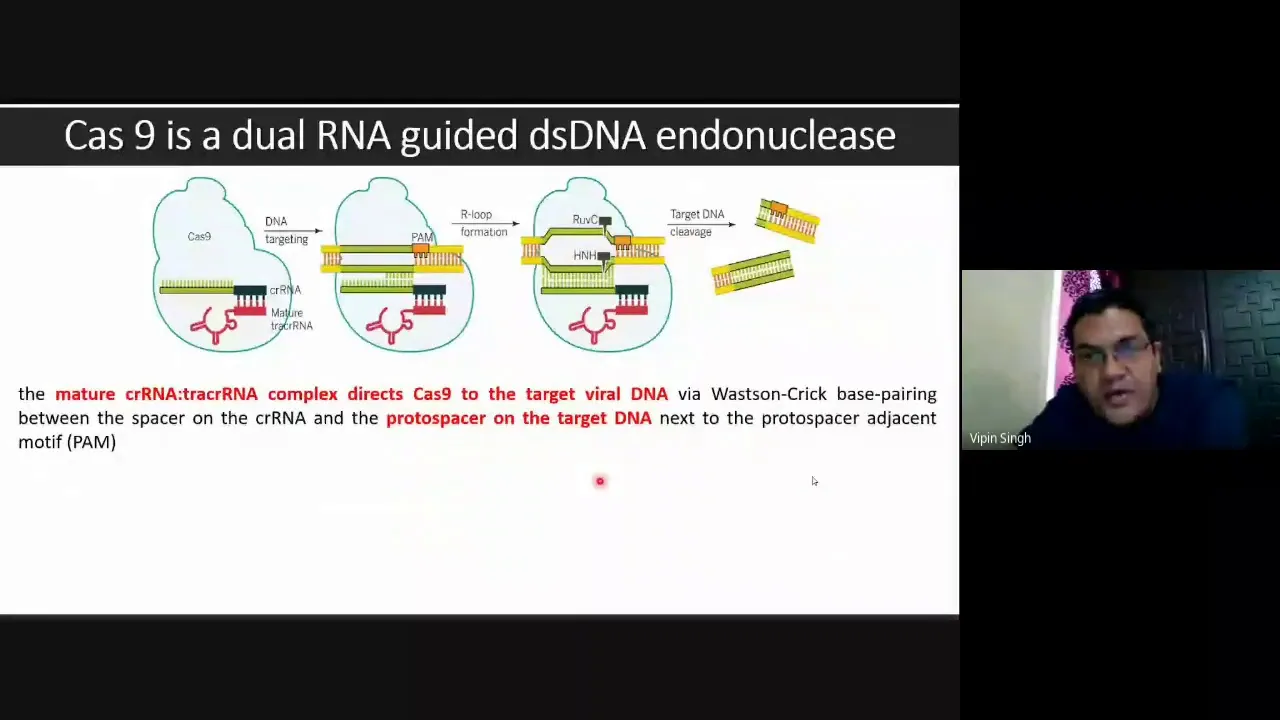

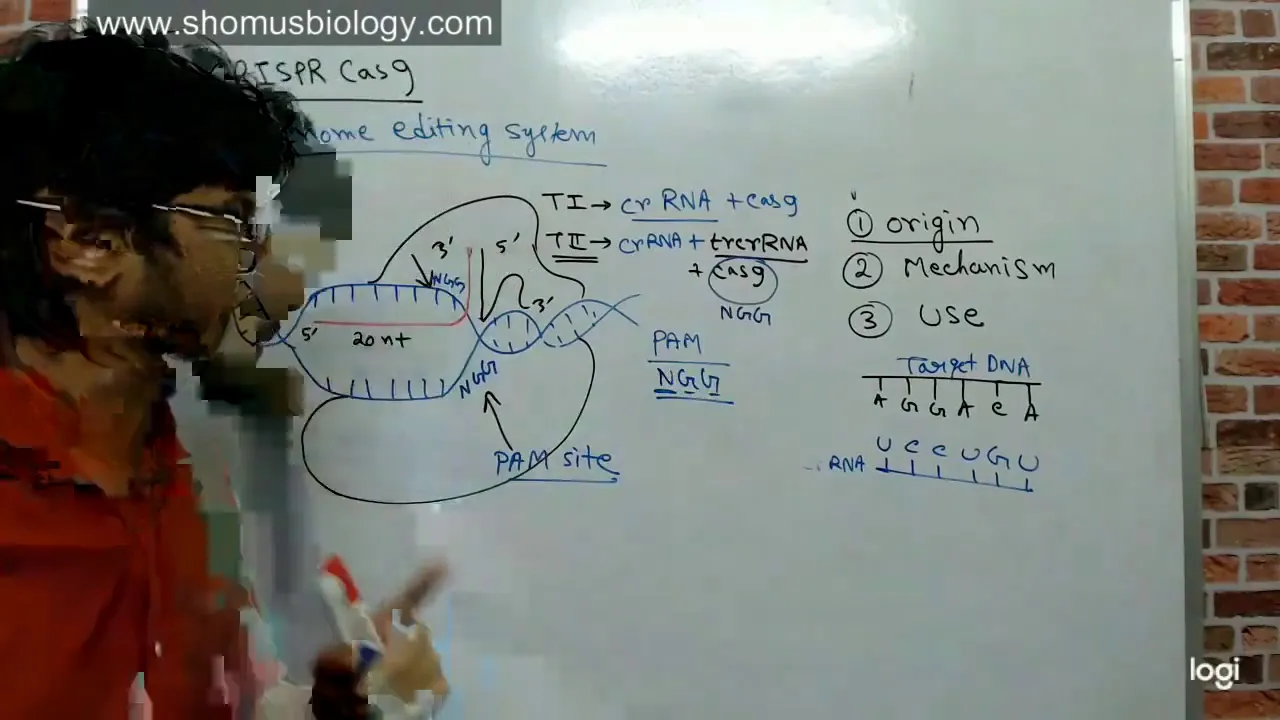









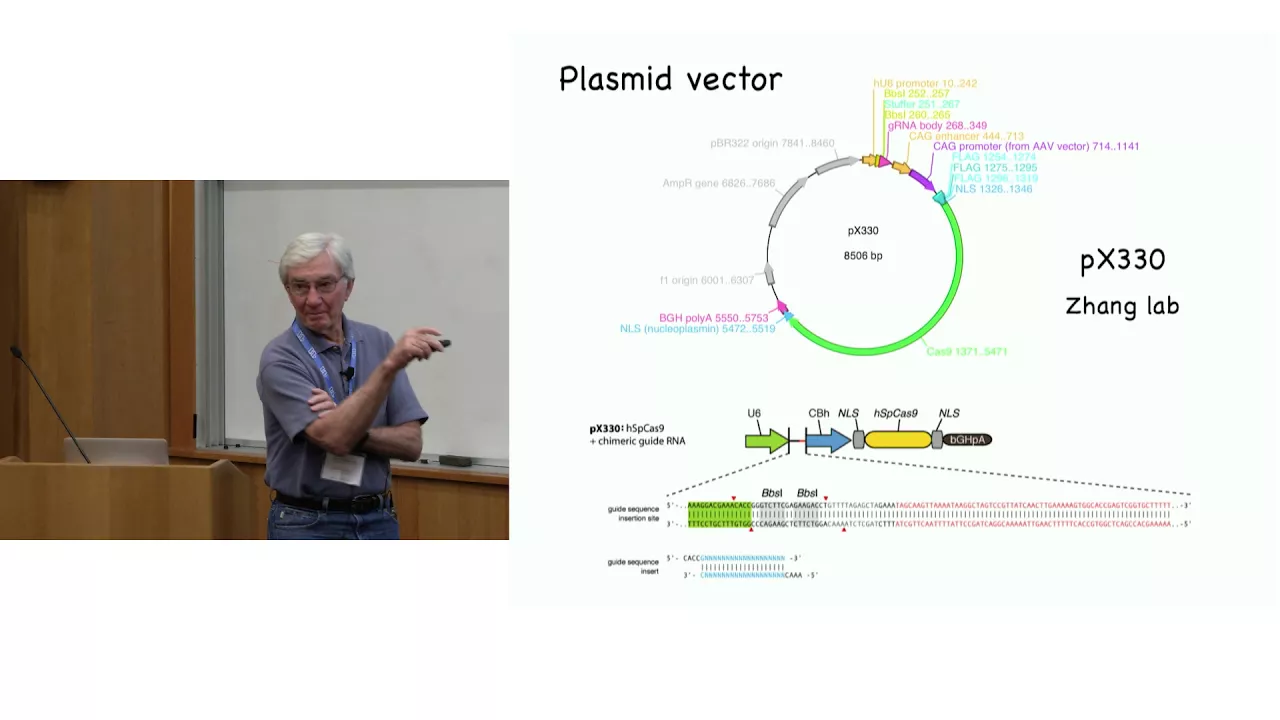





DNA repair pathways, particularly the competition between non-homologous end joining (NHEJ) and homology-directed repair (HDR), determine the outcome of CRISPR-Cas9 gene editing. The protein 53BP1 acts as a central regulator that suppresses HDR by inhibiting DNA end resection and BRCA1 recruitment. By developing a genetically encoded ubiquitin variant (I53) that specifically binds and inhibits 53BP1, researchers can shift the balance toward HDR, thereby improving the precision of gene editing reactions. This approach can be combined with other manipulations (such as RNF168 inhibition and CtIP activation) to potentially activate HDR in non-dividing cells, which is crucial for therapeutic applications.
Improving Gene Editing by Manipulating DNA Repair | Daniel Durocher
Added:Understanding the mechanics of CRISPR-Cas9, specifically how the Cas9 enzyme induces targeted double-strand breaks (DSBs) in genomic DNA.
Knowledge of the endogenous DNA double-strand break repair pathways, specifically the competition between error-prone Non-Homologous End Joining (NHEJ) and template-directed Homology-Directed Repair (HDR).
Familiarity with the biological role of 53BP1 as a key protein regulator that promotes NHEJ and actively suppresses HDR at DSB sites.
Basic concepts of protein engineering, particularly how scaffold proteins or ubiquitin variants (UbVs) can be designed to inhibit specific protein-protein interactions.
Exploring the translation of HDR-boosting technologies into clinical gene therapies for monogenic diseases that require precise gene correction rather than gene disruption.
Investigating the long-term safety, genomic stability, and potential off-target or oncogenic risks of temporarily disabling central DNA repair regulators like 53BP1.
Studying advanced delivery vehicles (such as lipid nanoparticles, virus-like particles, or ribonucleoprotein complexes) to transiently introduce engineered ubiquitin variants into target stem cells.
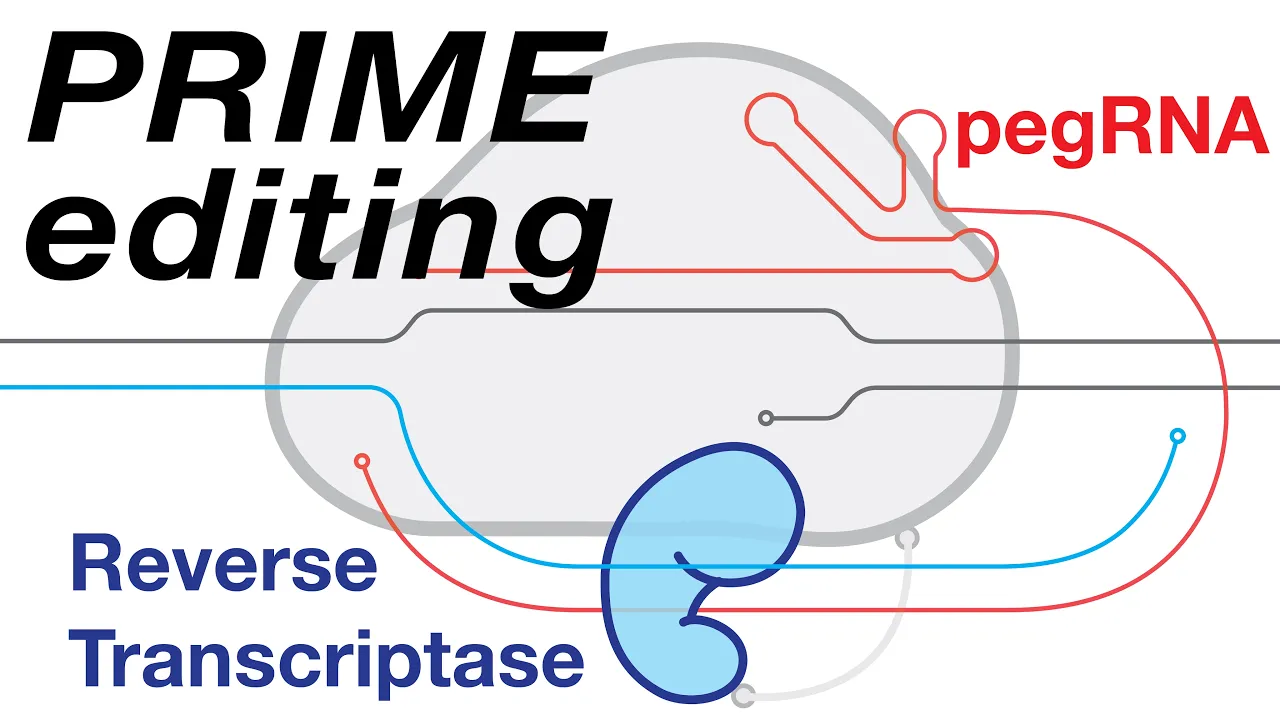
Comparing the efficacy, precision, and application limitations of HDR enhancement strategies with next-generation, double-strand break-free technologies like base editors and prime editors.
1.1K views6likes30:37Original Release: 2016-12-01
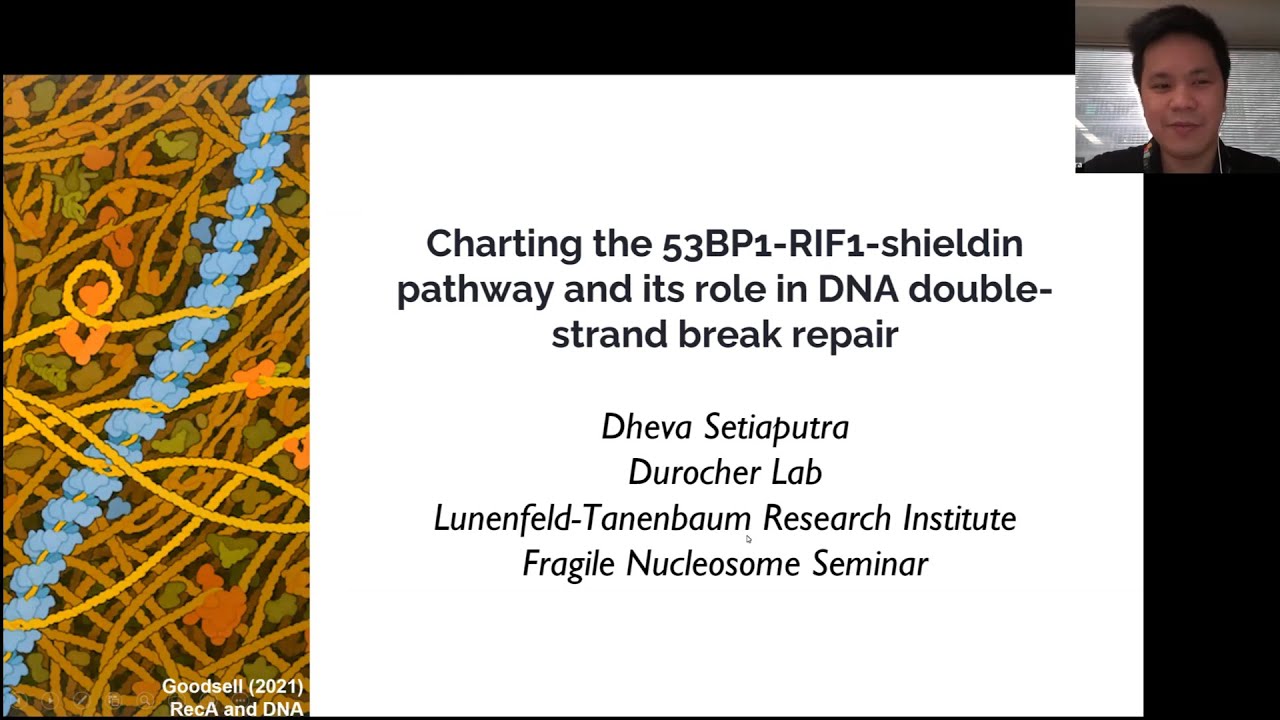
so the first speaker in this session is dandy Roche and he's a senior investigator at the lunin Feld Tannenbaum Research Institute and a professor in the department of molecular genetics here at the University of Toronto he holds a Canada Research Chair in DNA damage response so dr. duro she completed his undergraduate studies in biochemistry at the University of Montreal and he completed his PhD at McGill University in experimental medicine his postdoctoral training was undertaken in the laboratory of Steve Jackson at the University of Cambridge and in 2001 dr. Gero she returned to Canada taking up a position at the lunin Feld Research Institute dr. de rocha was awarded the 2016 Paul marks prize for cancer research and he was named one of Canada's top 40 under 40 by Caldwell partners so dr. drew Shay's interests research interest line understanding how cells maintain genome integrity with an emphasis on the detection and repair of double-stranded DNA break repairs and he's going to talk about that work this morning thank you very much Karen thank you all for coming also thank you all through the streaming magic to be listening to this first I want to thank Janet and the governing foundation for giving me this great honor to be here talking to you also I would thank the the awardees this year and and all the pioneers in the CRISPR field since my particular for making this technology possible I think there's not a single day my lab where we don't use this technology now or we use products of this technology it's been truly transformative also I think I'm the representative of the Toronto community which actually is a thriving gene editing community from basic prokaryotic CRISPR biology by Karen and Alan doing beautiful work to practitioners of CRISPR gene editing from screening Jason Moffat and Stefano J and also to people are trying to really translate the power of CRISPR cassadine to the lives of patients and ronique onus is one example so today what I'm gonna talk to you about is really our interest in this area which is really from a DNA repair standpoint how we can understand the any repair and maybe trying to make a difference into how these tools will be used in the future so so this is just to put everybody again on the same page this is the basics of CRISPR our cassadine editing it's our I can get this working I'm color blind so I don't see the laser and but I'll go this way so cache lines essentially it's a programmable nucleus and in its simplest embodiment it will trigger a DNA double strand break and you guys see the beginning of a DNA of a gene editing reaction I see the beginning of a DNA repair reaction so the fate of that double strand break actually is not very simple in most cases which is often forgotten in reviews is that actually the cellular machinery that repairs breaks is actually very good it will actually repair the break and reconstitute the wild-type sequence of the DNA but and and this goes true can go through a number of cycles but in certain cases the end joining reaction will be erroneous and that will lead to what we call an end down mutation a small frame ship for example okay and this is actually something we want to use in a number of applications in the lab when we want to do for example mutagenesis studies there's another way we can arnis the repair processes to do gene editing reaction is and that was mentioned by many people over the past few days is for example if we provide a donor DNA and then we use the capacity of the cells to do homology directed repair to precisely change the sequence surrounding the cut site and these two applications are being used at both in the lab and also applications are being developed in the clinic and and in agricultural applications so to think what I'm going to talk to you primarily about is about this donar templated based system which is often referred to as a mala G directed repair because it really is enabling the precise editing of genomes and this is really what we want to do in many cases are therapeutically okay so so there's a lot of interest in doing HDR based gene editing reactions however actually Jonathan let the same images of the baby in the cells there are some problems with our militia directed repair the first one is that actually in many K in most cases the end joining reactions so the simple realizations of the DNA will actually be much more frequent than a lodge directed repair so this is a major problem to use this technology so so there's a great interest both on the academic and the private sector to find ways to manipulate this reaction to essentially steer the products of the gene editing reactions towards precise genome editing and actually multiple things are being considered delivery systems for example AV mediated delivery seems to stimulate almost directed repair engineering of the guides and the cast nine proteins are they cut is also being considered but really I think our contribution that we can make to this field is really at the level of manipulating DNA repair so we can kind of push the reaction are towards these green arrows which is to flow towards the HDR products so before I can tell you how we do this I think I need to introduce you with some of the repair pathways I think there's a lot of confusions sometimes when we read reviews on the this subject so so these are I'm going to talk about the repair pathways that are relevant for gene editing so in the first case these are the enjoining pathway and they're actually multiple and joining pathways the canonical one in the more protein prominent one is called non-homologous end joining okay and and knowledges and joining is defined not by the sequencing that sequence that is produced by the engineering reaction but by the proteins that are used to do the engineering reactions okay so non-homologous end joining is by definition DNA ligase for and coup 17 kuwaiti dependent coup 70 co e TR n binding proteins that then set up the reaction to use DNA ligase for as a ligase that we like eight adds another thing that i feel often bad for nano Marquez and journey because it gets a very bad reputation it's actually most often error-free okay it's actually a very prominent repair system in our cells and uh in in the great majority of cases it's error free it's also promoted by a chromatin binding protein that will be very relevant for the rest of the talk which is called 53bp1 there are alternative and joining pathways that are dean alec DNA ligase for independent that are coup 70 and Kuwaiti independent they use a different set of ligases DNA ligase one in DNA is three in particular there are many sub pathways of alternative and joining that are only beginning to be understood and they often involved the poly adp-ribose polymerase are enzymes and specific DNA polymerase called polymerase data encoded by the gene called paul q by definition alternative and journey pathways are always error-prone okay and are often use in the in del formation that we see in CRISPR Kazmaier similar things happen in the HDR sides there are multiple repair pathways and sub pathways the canonical HR pathway is called gene conversion and in the gene editing reactions that will be the pathway that where we provide long DNA double stranded DNA donors it requires the processing of the DNA double strand break into single stranded DNA that process is called DNA n resection it requires the universal our protein called the recombinase or in mammalian cells called rad51 it requires the brca1 and 2 our tumor suppressors and actually it's inhibited by this chromatin binding factor called 53bp1 a number of gene editing applications actually uses sync short single stranded DNA donors SS OD ends as abbreviated and at this actually for us in the fields a very mysterious pathway of h-dr we actually don't know very little about it and there's actually a lot of interest in deciphering how this pathway is used in cells it's independent of rad51 perhaps question mark it's also may be independent of end processing although i think later in the talk I'll I'll mention something about this okay so because we're going to talk about HDR I want to introduce you about to the canonical HR pathway because this is where our studies began so as I told you when you have a break the break needs to be processed okay true this process called DNA n resection so that leads to single-stranded DNA which is necessary for the recombinase to buy in and search for Amala G okay so the first step after you get resection it's coated by a single strand DNA binding protein called RP a and this process R is stimulated by the brca1 tumor suppressor and and that then leads to the action of the brca2 tumor suppressor which loads the recombinase search for homology invade the duplex and then sets up essentially the HR reaction one very important feature of a canonical gene conversion bait based HDR is that it's error-free when it uses the sister chromatid in the cell okay for that reason the cell only uses it in the s and g2 phases of the cell cycle okay so that's a period of time when you have a sister chromatid okay so it's a highly regulated system and it's a temporarily regulated system by virtue of its cell cycle regulation and a very important protein regulates this pathway is 53bp1 because 53bp1 has the ability to suppress both the activity and the recruitment of brca1 at the site of the double strand break but also because it inhibits the process of DNA and resection which is the first step in gene conversion so I told you so that brings me to the second problem with HDR so first I told you that in delft formation often wins over homology dependent products but that brings to the other issue if you're thinking about HDR in the context of therapeutic gene editing is that most cells are relevant relevant are in our body are either dormant or have exited the cell cycle okay so that is actually poses a very important barrier to gene editing so there's also this idea that we'd like to explore can we actually manipulate these repair pathways to reactivate them in non-dividing cells okay so how we're gonna do this or I'm gonna start thinking about this so I told you that there's these two types of pathways that are promoted by 53bp1 and brca1 one thing what you need to know is that they compete for the substrate that is the double strand break okay and in fact they are mutually exclusive when you engage one you suppress the other okay when you engage in hej and you have 53bp1 recruited to the sites of damage it's gonna suppress the HR processes vice versa so our idea very simple idea to really manipulate the system would be to manipulate this very important permanent binding protein which is 53bp1 because 53bp1 lies at the center of the decision between HR and non-homologous end joining so what I'm gonna talk to you now show you some data on the development of a genetically encoded engineered ubiquitin okay which is a new bit invariant they actually we can use as a biologic to stimulate homology directed repair because this biologic can inhibit 53bp1 very potent lis okay so this actually this work we've submitted a preprint already embarked I've and the reagents are we be available at a gene for the community so this actually was a bit of a serendipitous search we actually for other reasons that would be too long to discuss here we wanted to identify an inhibitor 55 actually a ubiquitin variant that bound to 53bp1 actually we're interested in 51 many aspects of its recruitment sites of double strand breaks so we enlisted the help of a protein engineer here at the University of Toronto called Betsy do and his team wish I think I saw him and what dev has developed is the ability to use phage display to screen highly complex libraries of ubiquitin mutants okay and essentially we can use this these ubiquitin newtons as essentially protein a protein affinity reagents so what we did is that we took the portion of 53bp1 that binds that gets recruited to sites of the in double strand breaks it's this region called a tutor UDR tutor is actually a histone binding region wants to methylation and the UDR is actually also involve its nucleus on recognition and we subjected this fragment to phage display are using ubiquitin variant and these are the results of around eight or nine ubiquitin variants that des lab has identified and i they work on tour screen with and i think i don't know many fifteen or sixteen other proteins actually our canonical ubiquitin binding protein and then i can see we have actually selected a number of fate you become variant of pages that are exquisitely sensitive specific for 53bp1 that do not touch at all any of these other ubiquitin binding protein and we can look at these are mutations and actually we further characterize one of them which is the GC right ubiquitin variant in fact we did in collaboration with Frank Zakarian Lewan we did the crystal structure of ubiquitin variant bound to 53bp1 and we actually found two interesting things first of all is that it binds exactly in the pocket of the tudor domain that is necessary for 53bp1 a stone a methyl a stone recognition and also actually we can explain using just the crystal structure how the individual mutations contribute to the exquisite selectivity for 53bp1 so actually so another point i want to make is that this ubiquitin variant binds to 51 at relatively high affinity in the 200 nano molar range and this is actually a hundredfold higher affinity than 53bp1 binding to methylated histones residues okay so we already had some good indication that this actually might be a good inhibitor of 53bp1 function so actually can it in a bit 53bp1 in cells to do this are we simply we simply expressed it with a simple modification we remove the tail so it cannot be incorporated in the recruiting pool and we actually express these in cells and looked at the recruitment of 53v if you want to dean damaged sites and we do this by radiating cells with x-rays these x-rays create DNA double strand breaks randomly in the genome and then we can use the immunofluorescence studies to really localize the the accumulation of 53bp1 at the sites of dean double strand break and i think and also i want to say is that we have a variant of this ubiquitin variant that is unable to bind 53bp1 and we call that the DM newton as you can see here the expression of the core there's this ubiquitin variant which we called i 53:4 inhibitor of 53bp1 almost completely suppresses the recruitment of 53bp1 to sites of the in double strand breaks it doesn't touch other proteins that gets accumulated at sites of damage and that includes 53bp1 are brca1 and the version of this ubiquitin variant this version of I 50 tree deck and not bind 53bp1 is completely inactive in this situation in fact if we actually Express I 53 in cells and we pull down the cellular proteins and we analyze them what we find is that the only cellular factor that can bind to AI 53 and consistently over multiple experiments this isn't by mass spec in collaboration with Uncle Jack rod at the Loon felt is actually 53bp1 itself okay so we have very cell selective 53bp1 binding inhibitor that only binds to 50 BP one in cells so the important now the question is can we actually activate CRISPR caste 9 mediated gene targeting in this situation so we actually use an assay that was developed by Graham de l'air at Dalhousie and this assay essentially looking at tagging and endogenous locus this case is the laminae locus with a green fluorescent protein variant VM clover okay so these are the results here we get a certain frequency of gene targeting when we just put the double stranded DNA donor we have additional controls it's all pans out and what we see is that if we add the i50 tree either as a vector plasmid or as an added adeno-associated virus we get a two to threefold stimulation of gene targeting reactions and this is completely this effect is completely gone in the 53bp1 binding mutant this effect is on target actually this is I think is an important control because there's a number of tools that have been touted as increasing HDR frequency and very few of them have actually are monitored on target activity but in this case we have a gene edited a cell line where we've removed 53bp1 in the first place and what we see there are two things first of all the action of I 53 is completely dependent on the presence of 53bp1 okay and secondly we actually the action of I 53 very closely matches the effect of completely removing the 53bp1 gene telling us that our I 53 expression actually gives them the maximal effect that one would hope by animating feature if you want so that's for gene targeting but as are the reviewers of the first version of our manuscript told us is that this is all well and good but what really interests people is to see if you can activate HDR using single-stranded DNA all abou nucleotides to be honest I didn't really want to do this experiment because I could not see any good rationale for 53v if you want to suppress HDR by all egos it's thought to be a completely different pathway but we decided to do the experiment and we took advantage of very nice paper that from Jacob corn Berkeley that essentially established some rules to improve all ego mediated HDR and we use some of the assays that these ease developed so this ass is really simple we take a endogenous locus and what we do is we convert it we convert a site in the genome we mutate it to a restriction fragment restriction enzyme site so we can follow HDR using RFLP analysis we do that a number of low side and the results actually were very surprising to us and very clear is that if we look constituted constantly at multiple loci the actually the addition of the 53bp1 inhibitor will stimulate anywhere from on 1.5 to 3.5 fold the activity of HDR by all egos this is extremely surprising to me I think it really suggests that 53bp1 also plays a role in suppressing this type of reaction and and I think it has a - interesting inference so first of all is that HDR with all egos may require DNA and resection because a primary function of 53bp1 is to suppress and resection and secondly and I think that's been suggested by many other people is that HDR bah all goes maybe under strict cell cycle control as well because 53bp1 is involved in this process so to test actually we're starting to to kind of work on this and work from a rotation student that just rotates in the lab Julie Wang with the help of Natalie in the lab looked at the cell cycle dependence of this process we're using another assay was developed by Jacob corn where we look at the conversion of a blue fluorescent protein to a green fluorescent protein using all ego mediated HDR and what we see is that we get a certain frequency in the synchronously dividing population and when we actually arrest these cells specifically in g1 this frequency completely plummets okay this actually to us suggests that the infrastructure that is there to control the choice between and joining and homology directed repair is also at play with all ego mediated HDR so the first part of this Karen how am i doing few more minutes okay perfect so uh so what I told you so far is that we've developed this genetically encoded ubiquitin variant that embeds 53bp1 I think in in in one aspect show the versatility of the vehicle in scaffold to modulate protein activity in fact what I fifty-three targets is actually not a native ubiquitin binding site we would like to we hope this I 50 tree will be useful to many of you to stimulate gene editing reactions anybody that does a gene targeting experiment to introduce a tag you know you'll put the odds on your side if you're adding out 53 in the mix and we think actually it's it's giving us a little window to start examining how actually the repair process of HDR by olive oils is done during gene editing reactions so now I'm gonna talk to you more about a really big question okay is can we actually engineer modulate the DNA repair pathways to actually activate HDR in non-dividing cells this is a would be a wonderful thing to do and to do this we've decided to start thinking about the regulation of these pathways this is again shown you the assay that was developed by Graham de there and colleagues are using the laminae tagging and this is just to show you that gene targeting just like HDR by all it goes is completely suppressed in g1 arrested cells okay so this data is really examining a synchronously dividing population versus a g1 arrested cells and we can see that with many those I okay this is telling you there's a really profound control on the activation of this mechanic this repair pathways in g1 cell and I think there's been some issues with the conversion from Mac to Windows here but our studies and I'm not going to go into the details because really mechanistic it's a minutia but really detailed mechanisms we actually identified that the way HR is suppressed in g1 cells involve two main ways okay first of all you need to suppress the first step of the HR reaction which is the formation of single-stranded DNA and this is this is dependent on the presence of 53bp1 okay and it's also due to the fact that cyclin dependent kinase is our phosphorylating enzymes that activate DNA and resection such as xo1 MRN and the regulator of these enzymes TTIP the second thing is that we discovered that the recruitment of the recombinase loader that tumor suppressor brca2 is highly suppressed in g1 through a very complex mechanism that involves a reversible ubiquitination that involves a ubiquitin ligase are called called recap one okay so if you want to activate gene targeting in HR in g cells you need to do the following manipulations and I'm sure you're gonna show you an example first of all you need to get BR C 2 2 2 double strand break sites and you do this by first removing 53bp1 and then you need to remove the activity of this III ligase that's suppress the interaction of brca2 and brca1 the second thing you need to do is to promote unscheduled single-stranded DNA formation in g1 and you do this first by removing 53 if you want but another way to do this is by putting in a dominant active version of this key protein called CT IP which is required to initiate the end resection process so using this manipulation as I'll show you we're actually able to activate some levels of gene targeting in g1 cells okay this complicates slides and essentially what I'm going to show you is that if we do these 3 manipulations ok removing 53bp1 removing deal I guess and activating this CT IP protein which is involved in the end resection we can get activation of gene targeting but we need to do these three ok 2 is not sufficient ok and this essentially this is shown here and oh yes ok this is shown and in fact what is really encouraging to us is that one of the important step is to remove 53bp1 and actually we can substitute the genetic removal of 53bp1 with the addition of this 53bp1 inhibitor that we just described ok so we think we're actually on the way to developed a cocktail of of regions that may enable to activate gene targeting in non-dividing cells so what are the next steps first of all all the g1 experiments I showed you we're actually coming from cycling cells ok so that's very different than a cell that has exited the cell cycle that has differentiated so we need to start looking at this then we need to start developing more facile ways to address these other steps that we need to modify so one clear avenues to development actually there's already out there kiap one inhibitors that we can use in this cocktail then we need to think about the activation of resection and maybe there are ways to configure the cut by the cast nine to go away to get away from activating CT IP and actually another important big question is whether or not we need to do the same set of manipulation to activate HDR by all egos it actually might be simple simpler in that case so I'm gonna stop there and now knowledge the people who was done to work the first part of the work the collaboration with dev there was way there was also a number of the people from the cedar lab in my lab it was led at the beginning by Marilyn Kenny was now left and now it is led by Nathalie mlady very talented research associate in the lab the second part where the regulation of HR about cell cycle was really pioneered by Alex or twine now as a faculty position at McGill University and I want to acknowledge all the collaborators had trod this project in particular Bing Jia and Frank Zakarian Claude and the funders who helped me do this work so thank you very much for your attention you
Up Next
7:07
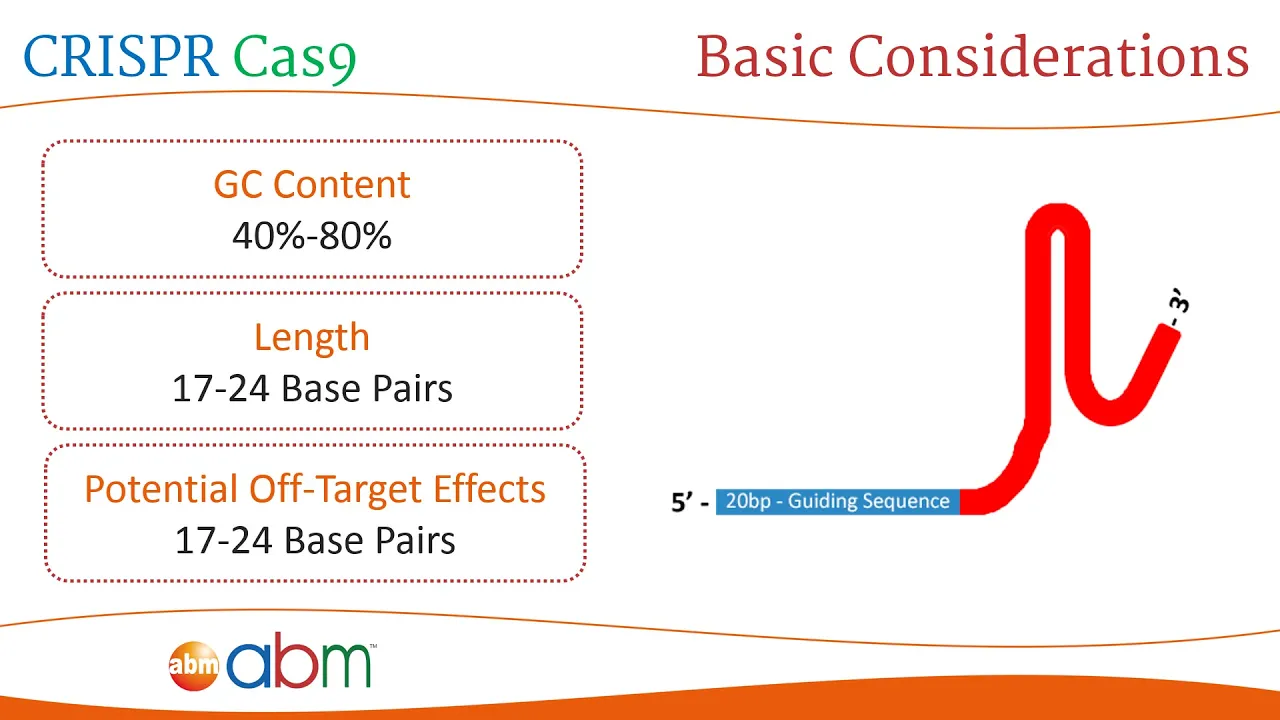
CRISPR Cas9 Guide RNA Design: Key Criteria & Tools
@abmgood
153.8K views•2015-03-03
14:12
Quantitative Real-Time PCR (qPCR): Principle, Method & Data Analysis
@animatedbiologywitharpan
129.2K views•2023-09-06
23:33
Microbial Degradation of Plastics: Biodegradation Pathways & Sustainability
@majeedhammad
2.9K views•2021-04-11
16:04
CRISPR and Genetic Engineering: How Gene Editing Works and Why It Matters
@kurzgesagt
30.5M views•2016-08-10
Related Study Plans & Knowledge Roadmaps
Structured learning paths in Biotechnology
biotechnology
AAV Production: Transfection, Prep & qPCR
01Introduction to Gene Therapy and AAV Biology
02Mammalian Cell Culture: Suspension HEK293 Cells
03Upstream Bioprocessing: Triple-Transfection Optimization
+ 2 more learning modules
18h5 modules
Explore Roadmap
biotechnology
Building Gut-on-a-Chip: PDMS, Cells & TEER
01Foundations of Microfluidics and Gut Anatomy
02Cleanroom Fabrication & PDMS Soft Lithography
03Epithelial Cell Culture and On-Chip Seeding
+ 2 more learning modules
26h5 modules
Explore Roadmap
biotechnology
Optimizing CFPS: E. coli Extract & Yield
01Fundamentals of Molecular Biology and Translation
02Introduction to Cell-Free Protein Synthesis (CFPS)
03Preparing E. coli Crude Lysate (The Extract)
+ 2 more learning modules
19h5 modules
Explore Roadmap
biotechnology
Haematococcus PBR: Design, Stress & Astaxanthin
01Biology and Life Cycle of Haematococcus pluvialis
02Bench-Scale Photobioreactor (PBR) Design and Engineering
03Culture Media Formulation and Inoculation
+ 2 more learning modules
15h5 modules
Explore Roadmap