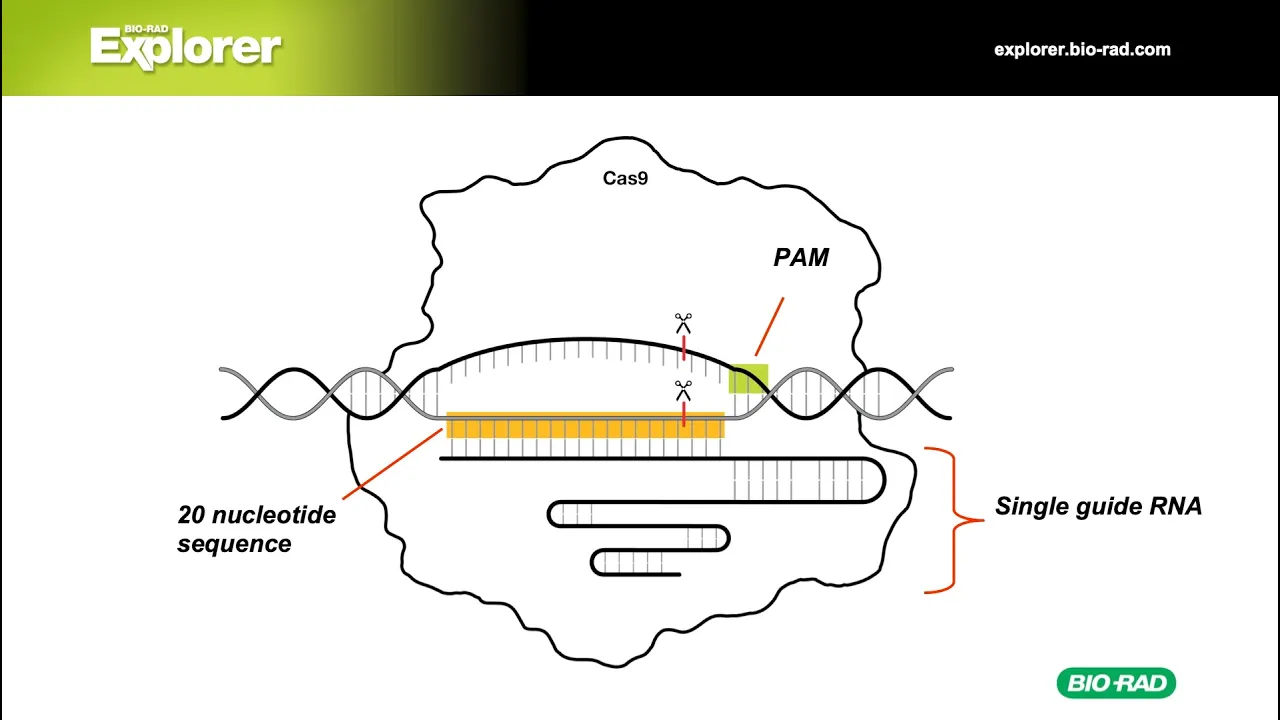



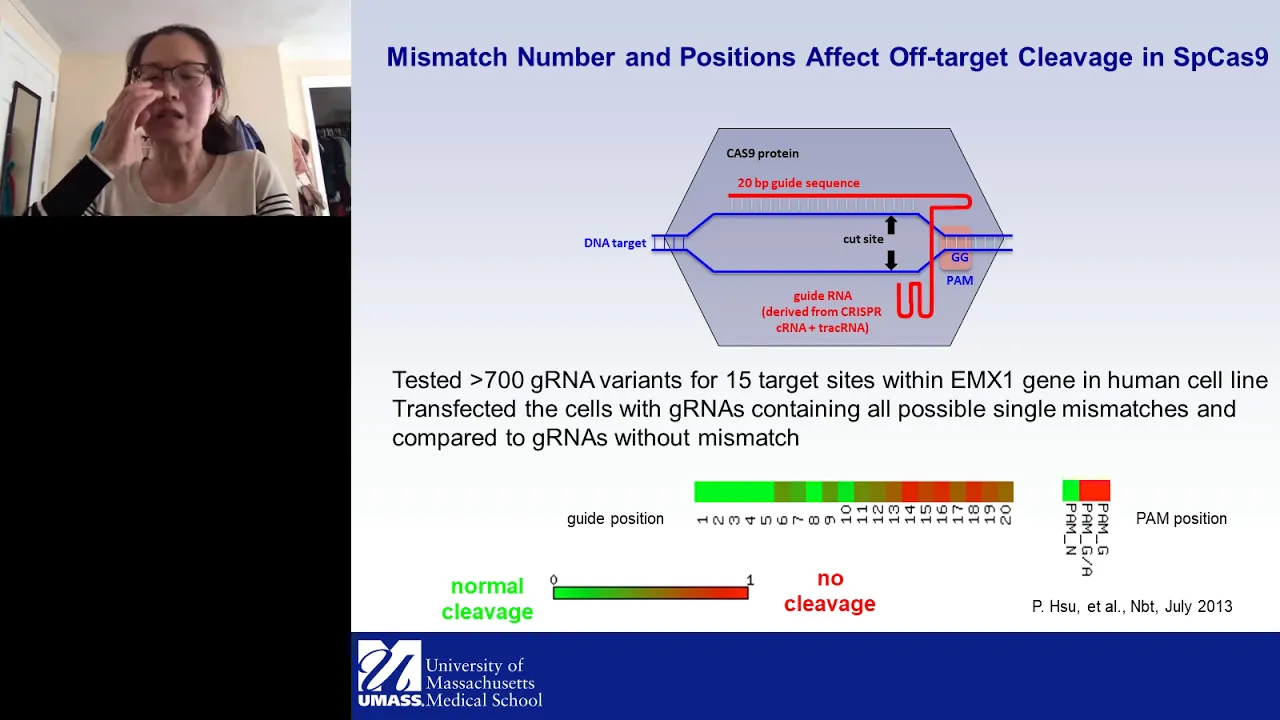

























The CRISPR Cas9 system uses a 20-base pair guide RNA (gRNA) to direct the Cas9 nuclease to specific genomic loci through complementary base pairing, with the targeting specificity determined by the 20-nucleotide sequence at the 5' end of the gRNA that must immediately precede a PAM sequence (5'-NGG for S. pyogenes Cas9); effective gRNA design requires optimizing three key parameters: GC content (typically 40-80%), length (17-24 base pairs, with shorter sequences reducing off-target effects), and minimizing potential off-target effects through careful consideration of mismatch tolerance, position, and concentration; online tools like Chop Chop Harvard simplify this process by analyzing genomic sequences and ranking potential gRNA candidates based on these criteria.
CRISPR Cas9 Guide RNA Design: Key Criteria & Tools
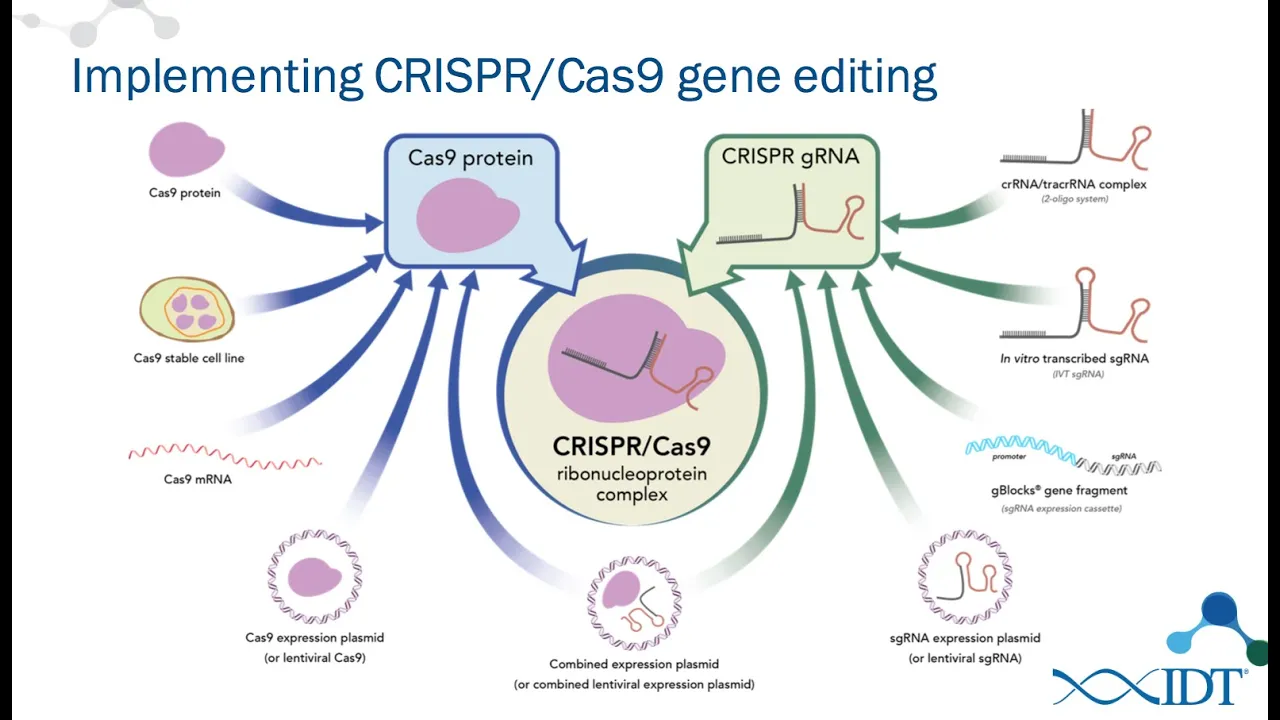
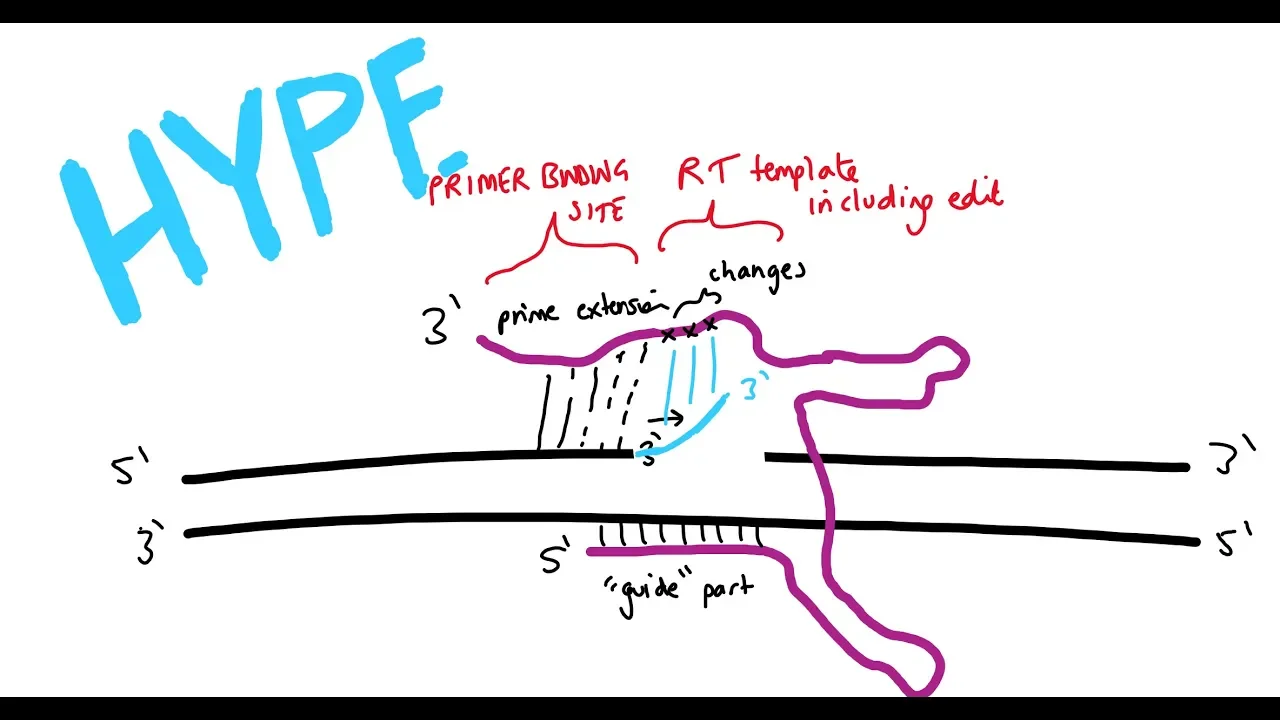
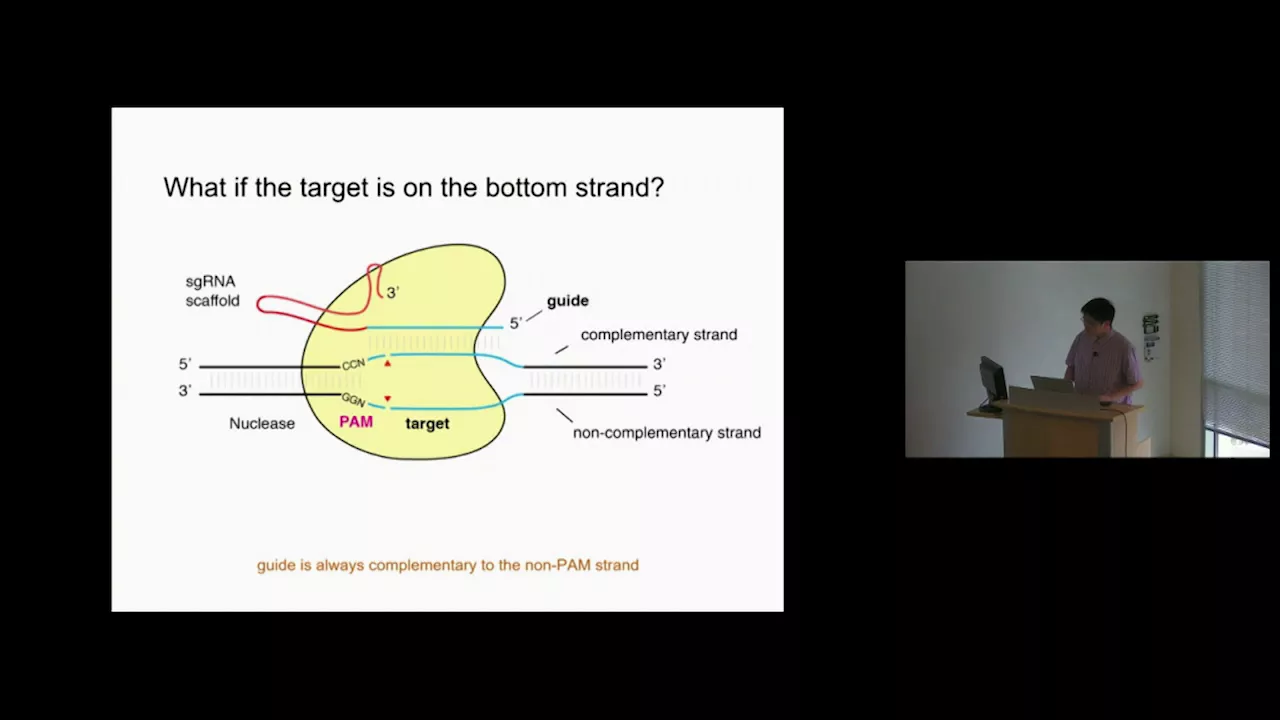
Added:The RNA-guided CRISPR Cas9 system has revolutionized genetic engineering by allowing targeted genomic modification through the simple design of a 20 base pair guiding sequence. This groundbreaking technology utilizes a short guide RNA (sgRNA) to direct the Cas9 nuclease to a specific genomic locus through complementary base pairing. The guide RNA or sgRNA is responsible for the specificity of the CRISPR Cas9 system, and many considerations need to be taken during its design process. In our previous videos we introduced the CRISPR Cas9 system briefly and presented the different tools and methods available for their expression in living systems; here we will go over the design criteria of the gRNA and introduce you to the online programs that simplify this procedure. We invite you to watch our previous videos first before continuing with this one. In bacteria and archaea, the CRISPR RNA (crRNA) and transactivating CRISPR RNA (tracrRNA) form a complex which acts as the homing device for directing the Cas9 nuclease to the invading foreign genetic materials. The tracrRNA’s scaffolding ability along with the specificity of the crRNA can be combined into a single synthetic gRNA, simplifying guiding of targeted gene alterations to only a one-component system all while maintaining equal or higher efficiency. The targeting specificity of the CRISPR Cas9 system is determined by the 20 nucleotide sequence at the 5’ end of the gRNA. For the S. pyogenes CRISPR Cas9 system, the desired target sequence must immediately precede a 5’-NGG protospacer adjacent motif (PAM). The gRNA base pairs to the complementary strand of the target sequence where the Cas9 nuclease mediates a double strand break around 3 nucleotides upstream of the PAM sequence. Note that the PAM sequence is not a part of the 20 base pair gRNA sequence, however, its presence in the genomic DNA is essential for CRISPR Cas9 genome editing.
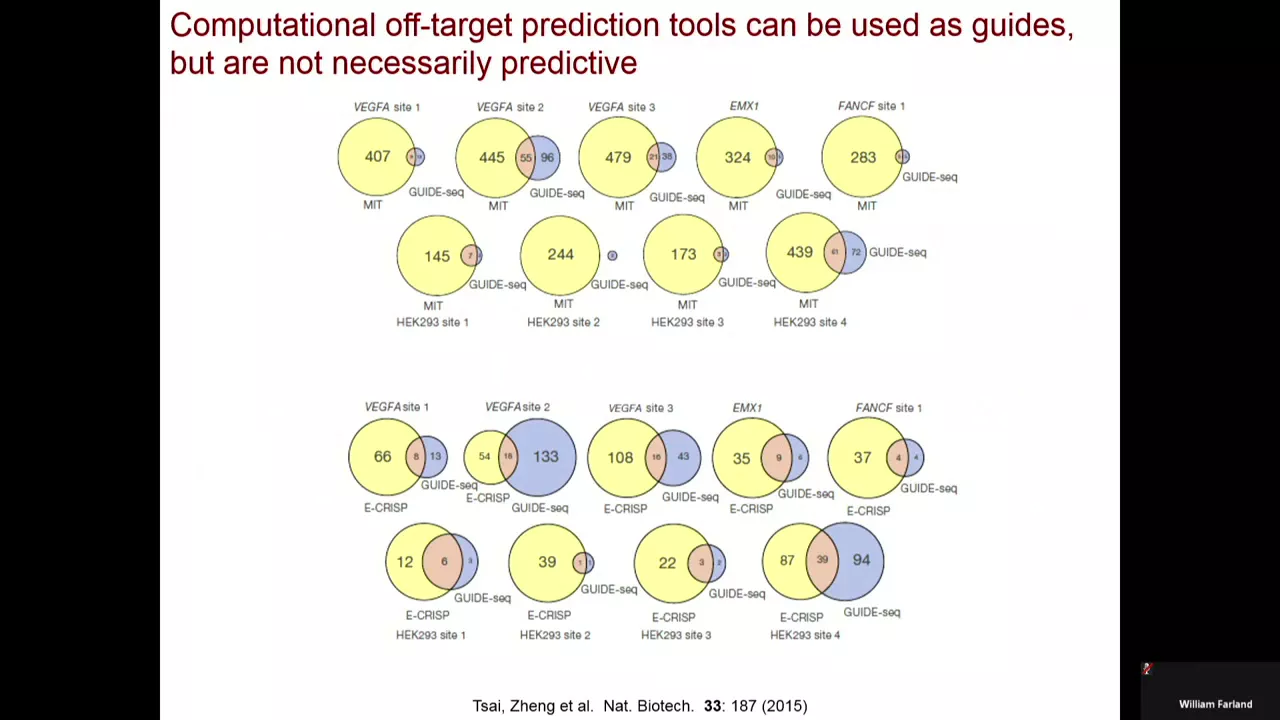
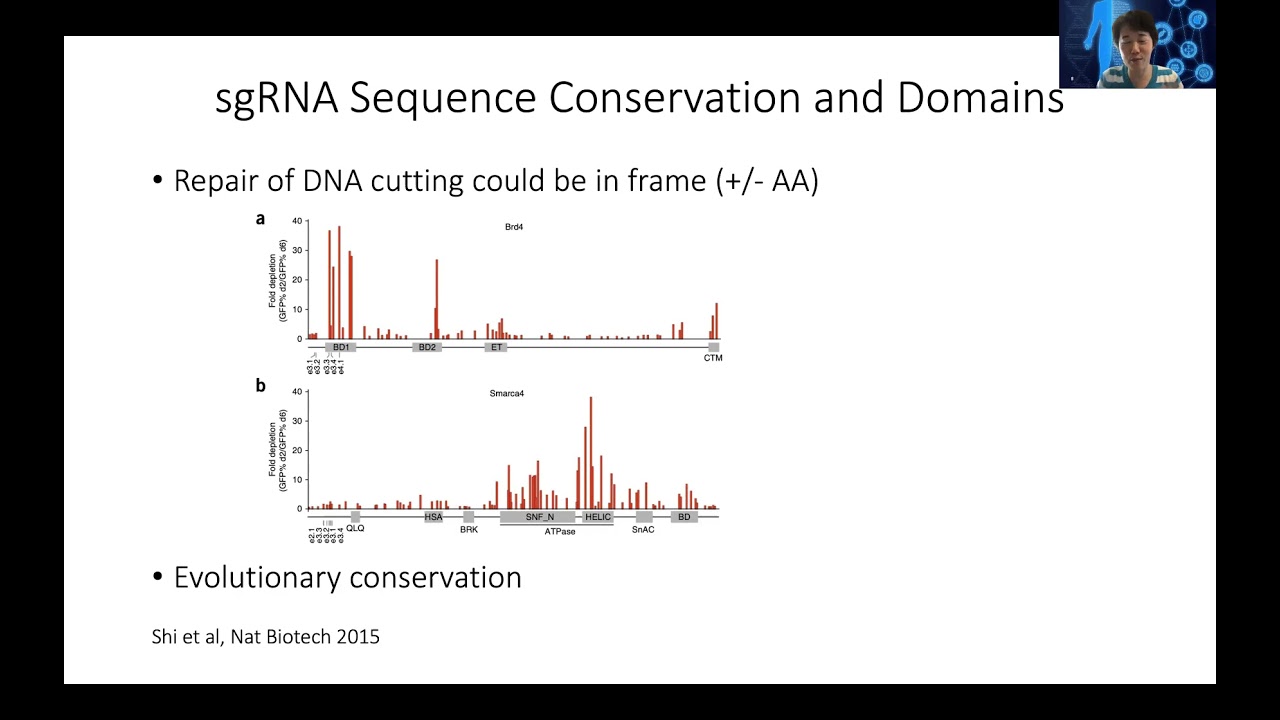
There are three points to consider when designing your gRNA which relate to the sequence of the 20 base pairs guiding sequence: 1) GC content: the typical range is between 40% - 80% GC content. A higher GC content stabilizes the RNA: DNA duplex while destabilizing off target hybridization; 2) Length: the length could be adjusted and range from 17-24 base pairs. A shorter sequence leads to minimized off target effects (17 base pairs is the lowest limit on the length of the guiding sequence, any sequence shorter than 17 has a statistical chance of targeting multiple genomic loci); and 3) Potential Off Target Effects: Mismatch tolerance between the gRNA and target site is what leads to off target effects of the CRISPR Cas9 system and in general they depend on 1) position of the mismatch; 2) number of mismatches in a given gRNA; 3) the sequence of the guide RNA; and 4) concentration of the gRNA and Cas9 transfected. For the purpose of creating a small InDel mutations through non-homologous end joining, there are many possible target sites across any protein. Targeting closer to the N’ terminus of a protein coding region is more desirable, because a frameshift is more likely to be deleterious if most of the protein has not yet been translated. Also, both the coding and non-coding strand of the genomic DNA can be targeted as they are both equally efficient at creating InDel mutations. If Homology Directed Repair is needed for genome editing, however, the choice of target site is far more constrained by the desired location of insertion. For more information about non-homologous end joining (NHEJ) and Homology Directed Repair, please see our introductory video on the CRISPR/Cas9 system. With the tips in designing sgRNA taken into consideration, from PAM sequences to target sites to GC content, we can now choose a sgRNA. Websites like Chop Chop Harvard provide an easy-to-use system in designing the sgRNA against any gene of interest. To utilize this technology, click on the link of chop chop Harvard in the description of this video. Select the species of interest from the drop down menu. Species-specific gene IDs, genomic coordinates or entire nucleotide sequences can be cut and pasted in for analysis. Click on the Find Target Sites! Button and wait for the analysis to be completed. Once the analysis is done, a graphic representation of the sequence will be provided, displaying the various potential sgRNAs shown in their respective positions by base pairs. Scrolling the mouse over these various sgRNA representations will show the website’s ranking with respect to the best sgRNA to use for that gene. Below will be a list of all possible sgRNAs and the breakdown of their rankings, based on genomic location, GC content, and Off-targets. To ensure maximum sgRNA efficiency, knowing the number of off-target effects is very important. For more information on each sgRNA candidate, one can click on each choice and view gRNA and the PAM sequence in their genomic context.
One can also view information on the off-targets, if any, as well as information on the various primers that will encompass the sgRNA target sequence and could be used for monitoring the genetic modification process. While Chop Chop Harvard is one method of designing sgRNA, there are many other websites such as the Broad Institute and BioTools that could also be utilized. To locate abm’s vast repertoire of sgRNA libraries, start by finding us at our homepage at www.abmgood.com. From there start by clicking on “CRIPSR/Cas9”. You will be taken to our CRISPR/Cas9 product page which features everything required for carrying out successful genome modification through the CRISPR Cas9 system. By clicking on Genome-wide sgRNA libraries, or alternatively scrolling to the bottom of the page you will find our sgRNA products sorted by gene names. Our sgRNAs are provided in different formats, including Lentiviral vectors, packaged lentiviruses, adenoviruses, and even AAVs - which will be added soon. After choosing the vector you’d like to use for sgRNA delivery, the search bar allows you to search by gene symbol or accession number, or you can use the alphabetical sorting to find your gene of interest. Once you’ve selected a gene, you can find all available sgRNA products relating to your selection will be displayed. From here you can order your sgRNA products. Please leave your questions and comments below and we will answer them as soon as possible. For more information please visit our website. Thank you for watching!
Up Next

How to Design PCR Primers: Expert Tips & Guidelines | Addgene Protocols
@addgene
356.1K views•2020-07-30

Quantitative Real-Time PCR (qPCR): Principle, Method & Data Analysis
@animatedbiologywitharpan
129.2K views•2023-09-06

Adeno-Associated Virus (AAV) Introduction & Gene Therapy Applications
@abmgood
116.7K views•2015-03-16

CRISPR and Genetic Engineering: How Gene Editing Works and Why It Matters
@kurzgesagt
30.5M views•2016-08-10
Related Study Plans & Knowledge Roadmaps
Structured learning paths in Biotechnology