



























This webinar covers the comprehensive workflow for designing, running, and optimizing viral gene delivery experiments, including selecting appropriate viral vectors (lentivirus, adenovirus, AAV, retrovirus, HSV, baculovirus) based on experimental goals such as stable vs. transient expression, cell type compatibility, and insert size; designing custom systems with appropriate promoters (CMV, EF1α, PGK), reporters (GFP, RFP), and expression types (overexpression, knockdown, CRISPR-Cas9); safely packaging viruses using multi-generational safety systems (first, second, third generation); calculating viral titers using qPCR-based methods; and optimizing MOI through systematic titration experiments to achieve efficient transduction while minimizing cytotoxicity.
Viral Vector Design, Packaging & Optimization Webinar
Added:Good morning everyone. Thank you for joining us today.
Today's topic will cover viral vectors.
For those of you who are new to our webinars, they are designed to provide constant and systematic training that will keep you well informed on our products and services. Following the webinar, we'll be sharing a copy of the PowerPoint slides as well as the recorded webinar itself. I would like to point out that if you're signed into a Google account, there's a chat box to the right of the screen where you can ask any questions you may have.
Uh please know that if you did not register for the webinar earlier, there's a registration link in the video description. This will ensure that you get a copy of the slides and answers to the questions posted in the chat if we're unable to answer all of them in the webinar.
Before we begin, I'd like to take a moment to introduce you to your speakers. Joining me today is my colleague Michael Vanfleet, the head of ABM's verology department. Michael has a degree in biology from Simon Frasier University and his expertise covers the generation of viral particles for crisper cast 9 gene editing systems and stable cell line development including immortalized cell lines. He also has experience working closely with researchers around the world in designing and optimizing their viral gene delivery products. Alongside him, you have myself, Bashi Bashi, a product development specialist with over five years of research experience in areas such as drug delivery, lipid biosynthesis, gene therapy, and others obtained over the course of my graduate degree at SFU. Our main goal is to work closely with clients and provide them with the support that ABM has become renowned for.
Before we begin with the core content of the webinar, I'd like to take a moment to talk about applied biological materials and just let you know what our goals are.
ABM was founded in 2004 and has been driven to catalyze scientific discoveries in the field of life science and drug development over the last 15 years. Headquartered in Vancouver, Canada, we are one of the fastest growing biotech companies in the region and since our inception, we have worked hard to become known as a reliable source for clients such as yourselves.
This hard work has allowed us to expand our facilities, beginning with a branch in Jan, China in 2013 and a new facility in Bellingham that will be opening later in 2019.
These expansions have put us in a better position to work with each and every one of you and provide the worldclass service you all deserve. With our team of passionate and trained scientists, ABM is dedicated to empowering researchers with the latest innovations for all their scientific needs.
Now before we discuss the technical details and aspects of viral vectors, I'd like to talk about some of the background of the main categories as well as offer some insight into the viral vector boom.
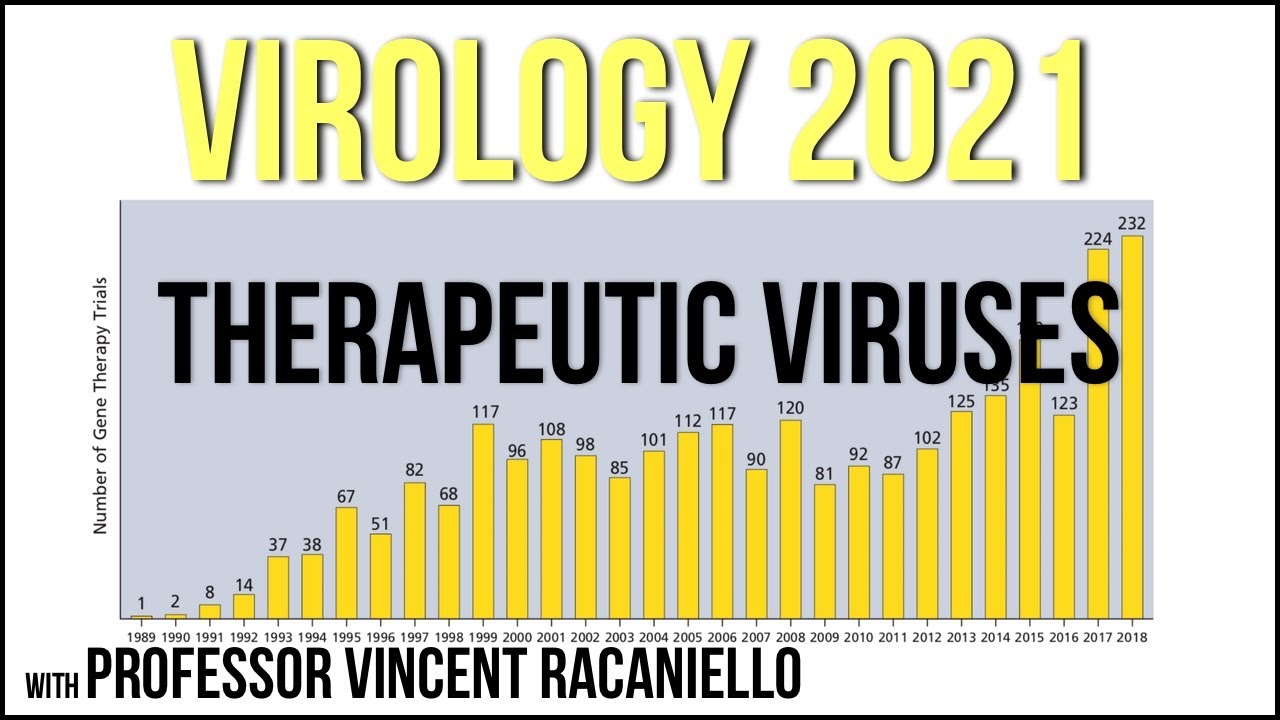
The use of viral vectors in research has been increasing dramatically due to the wide use of gene therapy as a means of treatment. In this image, we can see the wide variety of conditions that can be treated through gene therapy by using viral vectors, including numerous forms of cancer, cardiovascular disease, as well as infectious diseases.
Now, the first vector we'll discuss is the retrovirus, which was discovered independently in 1908 and 1911 by Ellerman and Bang and Roose respectively. Retroviruses were first discovered in chickens and at present they're currently being used to treat XL severe combined immuno deficiency a disorder in which the body produces a minimal amount of T- cells and NK cells.
The next studied vector was the adenovirus which was discovered in 1953 from adenoid tissue cell cultures which gave its name. It is interesting to note that the first developed gene therapy product was an adenoirus carrying the p-53 repressor gene. P-53 is frequently inactivated in about 50% of all human cancers. And so the restoration of normal function was a large step in demonstrating the power of viral vectors.
In 1965, the adeno associated virus was discovered almost accidentally. During the preparation of adeno viruses, Achinson, Hogan, and row discovered what appeared to be contaminants in their product, but was in fact a new category of vector. The AAV has been incredibly useful in disease treatment and is currently being used in over 117 clinical trials to date, including the treatment of cystic fibrosis and hemophilia.
Finally, the lentivirus is the newest category of viral vector we'll be discussing and was discovered in 1983.
The most wellstudied lentivirus at the moment is actually HIV 1 and2 and is currently being used in chimeriic antigen receptor T- cell therapies also known as CARTT therapies. This therapy is used as a technique to fight cancer and requires the use of TE-C cells that have been modified using lentiviruses.
With this brief background, I'd like to pass things over to Michael who will begin with a brief overview of the topics for today's talk. Just a quick reminder though that please to please post questions in the chat box as they come up during the course of the webinar.
Good morning everyone. As Bashie stated, my name is Michael Van Vleet and I'll be walking you through the viral vectors you can choose from and a few key traits you have to keep in mind when choosing the right vector for your applications.
So let's jump right into this. Um I'll give you an overview of what we will be discussing today.
So first I'll start with explaining the types of viral vectors available to you and their respective properties. Then move on to how to choose the optimal viral vector for your application.
Following this, we'll discuss how to design the right system for your specific needs, which includes promoters, reporters, and additional tags.
Then we'll discuss how to safely package your virus related to both safety precautions in the lab and in the viral vector constructs.
Then we will move on to how to optimize your viral infection where we will discuss calculating your viral titers and MOIs.
So we have many different viral vectors to choose from at ABM including lentivirus, adino virus, adinoassociated virus, retrovirus, herpes simplex virus or HSV and bulo virus. I will go over in brief the application in which to use each specific virus in the next few slides.
The first sorry the first and most popular viral vectors we produce here at ABM are lentiviral vectors used to generate lentiviruses.
Lentiviruses are best known for their stable integrating expression and are ideal primarily for experiments that require permanent changes in your desired cell line.
Also, if you cannot decide which viral type to use in your experiment between all of the mentioned viral vectors, lentiviral vectors and lentiviruses are the best to start testing with as they have a broad range of infectability in cell lines due to their ability to infect most dividing and non-dividing cells.
Next, we have adinoiral vectors which are ideal if you would like short-term expression because adinoiral vectors do not integrate into the genome. This is called transient expression.
Transient expression often is used for studying the effects of short-term expression of genes or gene products such as gene knockdown or silencing with inhibitory RNAs or protein production on a small scale.
Adinoiral vectors often boast high transduction efficiencies. So if you have for example a primary cell line that's hard to transduce, adena viral vectors might be your best bet.
Moving on to adino associated viral vectors. These are best used for invivo experiments because of their low immune response and pathogenicity in animal models. Our AEV vectors can be ordered with a variety of stereotype capsids which you can choose from depending on the model you wish to study. One stereotype might have a high transduction efficiency or another low depending on the model you are experimenting with. But we do have a table on our website to help you choose the right serotype for your needs shown here.
So here you can see various stereotypes and which tissues these capsids work best in. For example, if you're studying lung tissue, you'd want to choose either serotype AEV1 5 6 9 or DJDJ8.
Again, this table is available at our website www.abmgood.com abgood.com under the viral vectors tab and will be updated when more stereotypes become known.
Moving on to retroviral vectors. As you can see here, retroviral vectors are similar to lentiviral vectors except they cannot transduce non-ividing cells.
The main benefit of using retroviral vectors, however, is their transduction of immune cells. Recent publications pertaining to retrovirus has recently shown greater transduction of immune cells such as B cells or T- cells than lentiviral vectors.
If you are looking for stable expression of your gene of interest in an immune cell type, you may want to consider retroviral vectors.
Our HSV vectors are useful for delivery of large trans genes to the nucleus of mamalian cells. These are transient and therefore not integrating, but can replicate separately from the host cell genome. HSV vectors work especially well in neuronal cells and boast a very high viral packaging capacity, allowing for up to 150 KB inserts to be packaged in the same vector.
Bulo virus has been widely used around the world for protein production. Bular virus expression in insect cells allows for copious amounts of membrane or glyoprotein to reproduce at once which have recently been studied as therapeutic agents for cancer vaccines.
Now we will move on to how to choose the optimal viral vector for your specific needs.
There are a few important factors to think about here including your end goal. What are you trying to accomplish with obtaining a viral vector?
Are you looking for tons of protein expression? If so, bular virus would be your best option. Looking for stable integration of common cell lines?
Lentiviral vectors would be sufficient.
Stable expression of immune cell lines such as B cells or T- cells, retrovirus would be ideal.
Next, you need to determine your model.
Are you looking for a vector for dividing cells? non-dividing for a mouse model.
Then expression type. Do you want your gene of interest to be expressed for a small amount of time or do you need permanent long-term expression?
Size of insert. So what is the size of your gene of interest? Each of these vectors have packaging capacities when related to the corresponding viruses. So pay close attention to this. If you have a large insert size, so any insert greater than 8 kilobases, I would suggest using HSV or bular virus depending on your interest.
Last here is specific cell line. So which cells are you trying to infect?
Immune cells, I would use retrovirus.
Common cell lines such as MCF7 or HEP2 or 293T, I would recommend lentivirus.
Even with all of this information, if you are still unsure of which viral vector to choose, we have a viral vector selector tool on our website to help you determine your best viral vector choice for your application. So, let's go through an example of how to use this viral vector selector tool. Don't worry, I chose an easy one for you.
Let's say I want to express sirna in a cell line stably for long-term expression. I would simply choose from the list this tool provides, each choice having a follow-up question until your model has been narrowed enough for one viral vector. Then on the right, you can see what viral vector type we recommend for you to use in your experiment with a small definition of the virus and what it is typically used for, as well as products we offer.
The next topic we will be discussing is how to design the right system for your virus.
These pertain to additional attributes you can modify, add, remove into your viral vector to completely customize it for what you want.
The first consideration I will discuss is promoter type. We have many promoters to choose from when ordering a viral vector. As you can see from this chart, we have the most choice for our lentiviral and AAV vectors as they are our most popular vectors with the widest library available. When choosing the best promoter to use, you have to take into consideration what cell lines you are using. I'll give you a brief overview now of our most popular promoters and when you should use them.
So CMV is our most widely used promoter because of its strong gene expression in most cellular systems, but it lacks inactivity in human and mouse stem cells in the sense that it has the potential to get methylated by the host cell.
To solve this problem, when you are choosing your promoter, you can use EF1 alpha, which has high efficiency in stem cells and is also good for long-term cell cultures.
UBC is another promoter you can use for stable expression, although it has weaker expression than EF1 alpha. The PGK promoter has medium expression and has the highest efficiency in stem cells. This promoter sustains stable activity in long-term cultures of undifferiated stem cells.
Usually, when I receive a new cell in our lab that I don't know much about, nor is there much documented research on said cell line, I would have to figure out on my own which promoter would be best to use. In this case, ABM actually has a lentivirus promoter blast kit that does just that. It actually comes with samples of four GFP lentu viruses each with a different promoter to test on your cells to determine which promoter would be best for your application.
Similarly, on the right here you can see we have the same thing for AV vectors and viruses. Instead, this is a serotype blast kit which includes nine different stereotype AV viruses with GFP expression to determine which stereotype is right for your new cell line of choice.
The next consideration here is reporters and tags. Our main reporter for many viruses is of course the most popular GFP, but we also offer RFP and luciferase if you do not wish to use GFP.
You also have the option of HA tagged vectors for expression to be directly shown via western blotting. So you can determine if your cells have successfully been transfected or infected.
One thing to note about these reporters is that they will add size to your overall gene of interest. So, make sure your viral model you wish to choose can still accommodate these increased size.
Another factor to think about in your viral system is which expression type you would like. On the left of this chart, you will see various expression categories. You can choose from overexpression through OFS and mirna inhibitors. Or if you would like to silence a gene, this can be done through sirna, mirna or hrna.
You can also choose crisper cast 9 expression if you are looking to create a stable cell line with a specific gene knockout which is the hot topic in cell biology nowadays where the vector the vectors are designed in such a way that cast 9 and your strgna are in the same all-in-one vector.
You also do have the choice of long non-coding RNA or LNC RNA constructs and anti-sense RNA constructs if you wish.
So now with that behind us, let's move on to how to safely package your virus.
First off, all of our viruses require BSC level two to package as we are working with live tissue culture cells and viral particles. This is to a protect you from the samples and b protect the samples from you. Now, as for viral transfer to end users, you shouldn't worry at all as our viral vectors are replication incompetent, meaning they can only infect the cell line of choice but cannot replicate on their own.
We have made sure of this by splitting our packaging plasmas into multiple vectors to ensure no wild type virus can be produced. We have also removed some genes essential for wild type recominant viruses to be produced and have multiple generations of packaging that differ in the amount of genes incorporated. Each new generation having increased vector number and deletions of more viral genes.
So we can discuss this more in detail using lentivirus as an example. In an attempt to generate a safe system for laboratory use, the first generation recominant lentiviral system was developed. This system splits the viral genome into three separate plasmids.
So the first plasmid is a packaging plasmid. The packaging plasmid expresses HIV gag pole and regulatory and accessory proteins under the control of a CMV promoter. All of which are required for vir vector packaging.
The second one is an envelope plasmid encoding for the viral glyoprotein. The envelope plasmid expresses a viral glyoprotein such as VSVG to produce the vector particles with a receptor binding protein.
The third is a transfer vector genome construct. This encodes for proteins necessary for packaging, reverse transcription and integration of lentivirus but not for the expression of HIV proteins.
In order to avoid their transmission into vector particles and to reduce the production of replication competent lentiviruses in vector preparations, the packaging signal sigh or the LTRs are not included in the packaging and envelope plasmids.
Instead, LTR sigh as well as rev responsive element RRE are included in the transfer vector plasmid. In this way, the genomic components responsible for packaging the viral DNA are separated from the genomic components that activate them.
Thus, the packaging sequences will not be incorporated in the viral genome and the virus will not reproduce after it has infected the host cell.
However, despite these precautions, the first generation packaging system is no longer in use due to biosafety risks.
Now the most common antiviral packaging is done through what is called the second generation packaging system. In this system the genomic components encoding viral accessory proteins. So VIF, VPU, VPR and nef are removed.
These accessory proteins are important for HIV propagation in primary cells or in vivo but not essential for lentiviral vector functions.
The second generation recominant system therefore includes only four of the nine HIV genes gag pole rev and tat in the third generation self inactivating reccominant system the U3 region of the threep prime LTR is deleted originally each LTR contains three regions U3 R and U5 with the U3 component acting as the enhancer or promoter.
If U3 in the threep prime LTR is deleted, the same deletion would be copied and transferred to the fivep prime LTR promoter enhancer region.
This would result in transcriptional inactivation of potentially packageable viral genome in the transduced cell.
TAT and REV are absolutely essential for HIV1 replication because they regulate viral transcription and nuclear exports of the transcripts. Thus to significantly significantly increase safety, TAT is deleted from the packaging plasmid of the third generation recominant system.
TAT's function is instead realized by replacing the U3 promoter region of the fivep prime LTR in the transfer plasmid with other strong viral promoters such as RMV or RSV. Furthermore, REV is produced in yet another separate plasmid for additional safety.
Now we can move on to how to actually package your virus.
There are a few things to consider when attempting to package your viral vectors such as which cell line to use for lentivirus. It is suggested to use a cell line that is easy to transduce such as HEC 293Ts.
This cell line is also beneficial because it contains the SV40 large T antigen that allows for episomal replication of transfected plasmids containing the SV40 origin of replication common in lentiviral vectors. The next thing is your required tighter. As higher tighters usually take additional purification and concentration steps as well as more resources and time to generate, you have to pay close attention to which tighter you need for your specifications.
The third one is serotype for AEV vectors. Make sure you have selected a serotype best suited for the cell line you wish to infect the virus with, not the cell line you are packaging with.
Now, let's take you through an example with lentiviral packaging.
The first thing to focus on with lentiviral packaging is the quality and confluency of your cell line. It is best to try to transfect when your cell line has been freshly subcultured. So 25 to 48 hours pre-transfection would be ideal.
Make sure your cell line is at least 70 to 75% confluent before transfecting as too low of confluency will lead to not enough viral particles forming as well as some cells shearing off due to added stress for lentivirus transfection reagent or no serum in the cells.
Too high of a confluency will not allow the cells to replicate as you will have a limited space in the plate. Therefore, you are limiting the amount of viral particles that can be produced by each cell.
Next comes your transfection. So we consider this our day one.
The amount of vector packaging plasmid or serum free media to use for transfaction will be directly proportional to the tighter you require which again is proportional to the number of culture plates needed for that tighter.
For example, if you wish to produce 400 microL of a 10 to 7 tighter lentivirus, you can use this using for example 1 cm 1 15 cm plate of HET3 T cells, uh 35 micrograms of transfer plasmid, uh around the same amount of packaging plasmid, and about 15 mls of serum free media. Now, if you wanted to generate a 10 to six tighter lentivirus, you might only need to use a 10-cm plate and reduce the amount of packaging and transfer plasmids and serumfree media.
Day two, which is 24 hours after your transffection, you should change media using complete media on your transfected cells to make sure they are nice and healthy and happy to produce your ve v viral vector or virus for you. At this time, you should be able to see any fluorescents in the packaging cell line if your viral construct was designed to incorporate GFP or RFP.
Day three, which is 48 hours after transfection, you can do your first collection, collecting your virus containing supernant out of the plate and placing it in a sterile bottle or tube, which you will use later. Replace the media on your packaging cell line plate.
Now, if you only want to collect your lentivirus once, you can skip this step and leave the plate for another day.
That leads us to day four, which is 72 hours after transfaction.
This is when you do your second collection and discard your packaging cell line plate. It is no longer of use to you. If you wish to generate a high tighter, you will have to concentrate your virus at this point using centrifugation and resuspend in a smaller volume.
So now that you have actually packaged your virus before you try it on your experimental cells, here are some things you can consider. We call them the quality control steps here at ABM because if your cells are precious material, you want to make sure your virus is properly packaged before using them.
So a couple things to consider here. The first one is, is your virus sterile? You can easily check for bacterial and myopplasma or fungal contamination and does your virus have a transduction signal. If you had GFP and RFP or RFP in your cell line, uh you can check this.
These two steps can be checked simultaneously using a small amount of easily transducible cells such as 293Ts or MCF7s or HEPG2s as a QC cell line and infecting these cells with your virus and just waiting the appropriate amount of time. Usually it's around 72 hours.
Sorry. Does your virus meet your minimum tighter requirements?
You can test this via qPCR. We have a qPCR lentiviral titration kit, LV900, that we use to test all of our viruses after production to make sure they meet the minimum guaranteed tighter. We'll talk about this in a bit.
Our other viral production protocols have similar procedures as this where you first transfect the packaging cell line then you image to make sure the transfection was successful. Then after a certain amount of days to collect the virus the concent and concentrate purify the virus if you desire for high titers or for invivo experiments.
Now we will move on to how to optimize your viral infection. and how to determine the correct MOI and tighter of your virus.
So before calculating your MOI, you will first have to know how many viral particles you have in your generated virus. There are many ways to determine this such as GFP dilution plates or Eliza techniques.
But the easiest and fastest way you can determine this and the way we use is using a lentivirus titration kit such as our LV900 kit and running your samples through qPCR analysis. These kits usually include an RNA extraction step with viral license buffer reagent mix including primers and reagents for reverse transcription and two standards standard one and standard two.
To calculate your tighter, you can simply input your results into an online calculator to determine your viral titer. Or you can manually use these calculations we have displayed below if you are more comfortable with doing the calculations yourself.
Keep in mind that the calculator and equations will both give you a diluted viral license tighter due to the fact that you had to dilute your viral titer at least 10fold when using our kit. So you do this when you extract the RNA.
So now that you've calculated your tighter, you can finally calculate how much virus to add to attain your desired MOI.
Multiplicity of infection or MOI is the ratio of infectious agents to infection targets in many cases as the ratio of viral particles to target genes in a defined space such as a cell culture well.
As lentiviral infection as lentiviral infection ability of different cell types varies, different cell lines may require different MOIs for successful transduction and knockdown of the target gene.
Theoretically, a higher MOI will generate a higher number of transductions per cell, a higher number of trans gene integrations, and a higher expression.
For example, if you had 10 million viruses to 1 million cells, you'd have an MOI of 10 and an average probability of 10 viral particles infecting one cell. So, let's do a quick example calculation.
Let's say you'd like to achieve an MOI of 10. If your virus tighter is 1 * 10 6 IU per mill and you are delivering it to 1 * 10 5 cells, how much volume of virus do you need to project? Well, you can do the simple calculation shown on the right here to determine the volume of virus you require. So for this one here, you would need 1 mil of virus.
If you do not know the optimal range of your cell line, it is best to try a range of MOIs from 1 to 30 at least for lentivirus.
Here you will see an image of common cancer cell lines and their respective optimal MOIs. Remember for different viruses, these ranges differ.
After you have infected your cells, allow an appropriate amount of time lapse before evaluating the fluoresence.
For lendivy viruses and most other viruses, this is generally 48 to 72 hours post infection.
Next, record the fluoresence uh at the various MOIs to determine your percentage of transduced cells. Select the minimum MOI at which all the cells are expressing the trans gene. Having an MOI that is too high can result in wasted viral particles uh and your virus being too cytotoxic for your cells. So it is important to optimize your MOI before following through on your experiment after this webinar. If you are still hesitant to produce your own viruses, we can do all the work for you. We have a multitude of custom services for various aspects of viral vectors and viruses including system where you can completely customize your virus to how you want it. Insert type where you can choose between overexpression knockdown knockout crisper fusion vectors and more. Custom packaging we package low and high tighter viruses specified by you of course and can do custom aloquatting and viral suspension with custom medias if required.
We strive to work with you on what you specifically need for your experiment and cater to your needs. This is our strength. Our technical consultants will assist you with any and all questions you may have and guide you through the processes taken to receive the product you truly want. Our custom services really allow us to be the one-stop shop for all your biological needs.
So, now I'll hand this back to Bashy for some final comments. You can feel free to ask any questions now in the chat box shown as we will soon have our Q&A section of this webinar.
Thank you for that excellent talk, Michael. To wrap up the webinar, I'd like to reiterate why ABM is one of the key players in the viral vector market.
As Michael has shown, here at ABM, we offer six distinct categories of viral vectors. While our competitors such as Thermoffisher or Sirion Biotech only offer half of that, at ABM, we're always looking for new vectors so you can be certain that our collection will only grow in the coming years.
As a thanks for joining us during today's webinar, we'd like to offer you a promo code for 10% off on your Viral Vector products, which will be included in our follow-up email.
Now that we've gone over the background and workflow of a viral vector experiment, let's take a moment to examine some of the resources that we have available for you.
Firstly, make sure to check out the your emails or the description below to find links to all of our resources, including our viral vector selection tool, step-by-step protocols, our tighter calculator, knowledgebased articles, and many more.
Not only do we have a diverse selection of educational vector material, we also have an incredibly knowledgeable tech technical support team who can guide you through your experiments as well as a dedicated customer service team to ensure that you receive all your items in a timely manner.
If you have any questions about our materials or services, you can always reach out to us. In addition to this, we have a wide v a wide array of educational videos available for your viewing here on YouTube which you can see on our channel after the webinar.
Thank you for joining us during this session and I hope it was helpful for all of you. With that being said, let's now take a look at the chat box and go through the Q&A session.
[Music] All right. So, scrolling through this.
Looks like our first question here comes from Jenski.
And Jensky asks, "How do I decide what virus tighter to use? Is there a guideline for in vitro work or in vivo work?" Michael, what do you think about that?
Um, usually it'll depend on the application. So for invivo studies, usually the injection amount is a percentage of the animal body weight. So the higher the tighter, the more ideal.
So you would have to inject less into the animal for a smaller body weight.
For AEVs, this would translate to at least a 10 to 12 or 10 to 13 pfu per mill. For in vitro studies, you would have to do some preliminary studies on the MO use.
Wonderful answer, Michael Jensky. I hope that helps clarify things. Our next question comes from BD Home. BD Home is wondering if we can talk a little bit about what DNA integration is and how does it matter to to decide any viral vector and a little bit of clarification on what is tighter.
Michael, do you think you can take a look at that or do you have any in input?
So DNA integration is the insertion of foreign genetic material into the host genome.
For example, because the DNA integrates into the genome, lentivirus delivery leads to long-term expression. Something like AAV that doesn't integrate directly into the genome would lead to short-term expression.
Okay, great. And do you have a little bit of information on tighter? just what is uh tighter for his for their clarification.
Uh tighter is the amount of viral particles um per mill in your uh in your viral sample. Um it it's just per mill how the how concentrated your virus actually is.
Perfect. Bey home. I hope that helps clarify things. Uh we've got another question here from Ian O. How safe are recominant viruses? If we if he if they get them, do they need a special facility to handle them?
So all of our recominant viruses can be handled in a BS L2 facility.
Take lentivirus for example. Our lentivirus is replication incompetent.
The way we do this is by deleting the lentiviral genes necessary for packaging and replication.
The recominant virus only has limited genes that are necessary for transduction.
Great explanation, Ian. I hope that's helpful.
And looks like we've got one last question here from Ver.
Uh, do you have to ship viruses on dry ice or is blue ice okay? Because dry ice is a bit expensive as they say.
Yeah, it is. Um so unfortunately some viruses are prone to freeze thaw cycles.
Uh let's take lentivirus for example and we can lose up to between four or 10fold tighter in one freeze thaw cycle. So we can only ship viruses on dryest to avoid the freeze thaws. Lower tighter adena viruses is one exception and it can be shipped with ice packs. All viruses upon receipt shall be kept at aroundus 80° C for long-term storage.
That was a great answer. I hope that helps clarify things. Vera.
All right. So, just going through this, it looks like we've kind of covered everyone's questions. So, we'll give it a minute if anyone has any follow-up questions that they'd like clarification on.
And just a reminder that what we'll be doing is we'll be putting all of these questions together in a document and emailing them out along with a link to the recorded webinar. With that being said, I hope everyone's had a great time and has learned a lot about the importance of viral vectors. Please keep an eye on your emails in the upcoming weeks and you'll be getting an invite to our next webinar which I believe is going to be focusing on NGS.
So with that being said, thank you all for attending and have a great day.
Up Next

Automated CAR T Cell Manufacturing with CliniMACS Prodigy
@Miltenyi_Biotec
42.4K views•2019-02-04

Quantitative Real-Time PCR (qPCR): Principle, Method & Data Analysis
@animatedbiologywitharpan
129.2K views•2023-09-06
Adeno-Associated Virus (AAV) Introduction & Gene Therapy Applications
@abmgood
116.7K views•2015-03-16

CRISPR and Genetic Engineering: How Gene Editing Works and Why It Matters
@kurzgesagt
30.5M views•2016-08-10
Related Study Plans & Knowledge Roadmaps
Structured learning paths in Biotechnology