

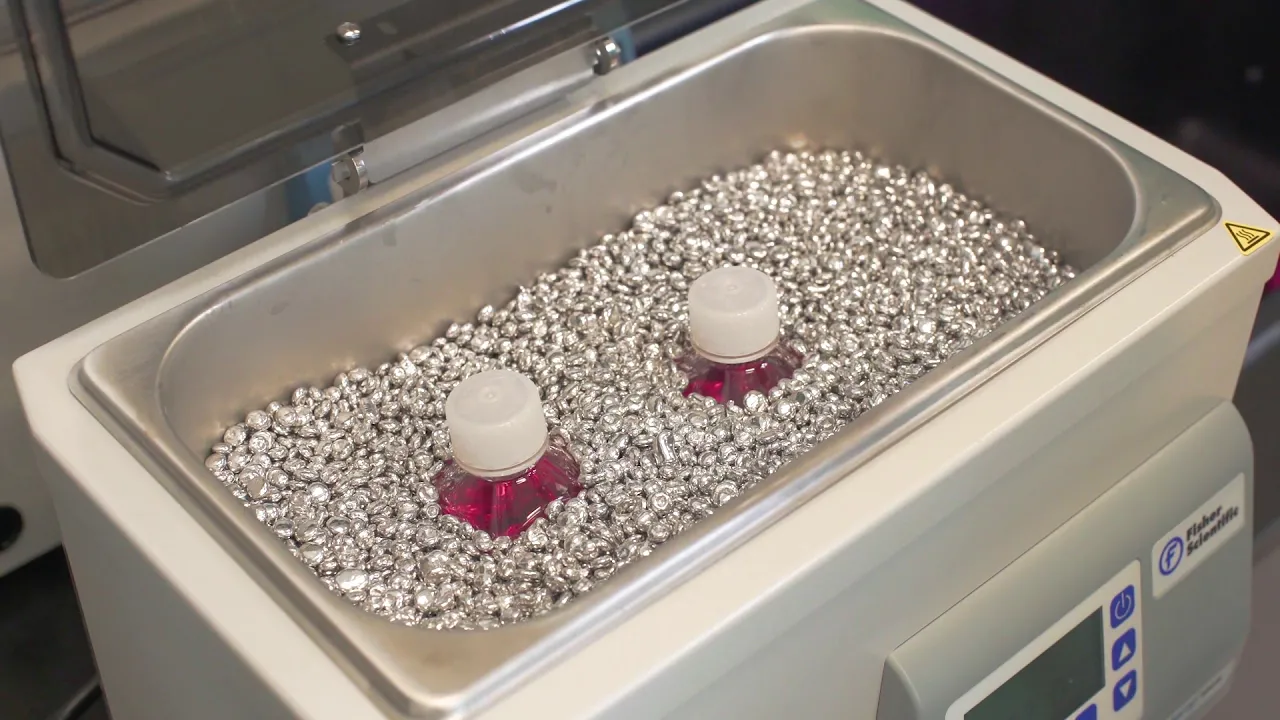

















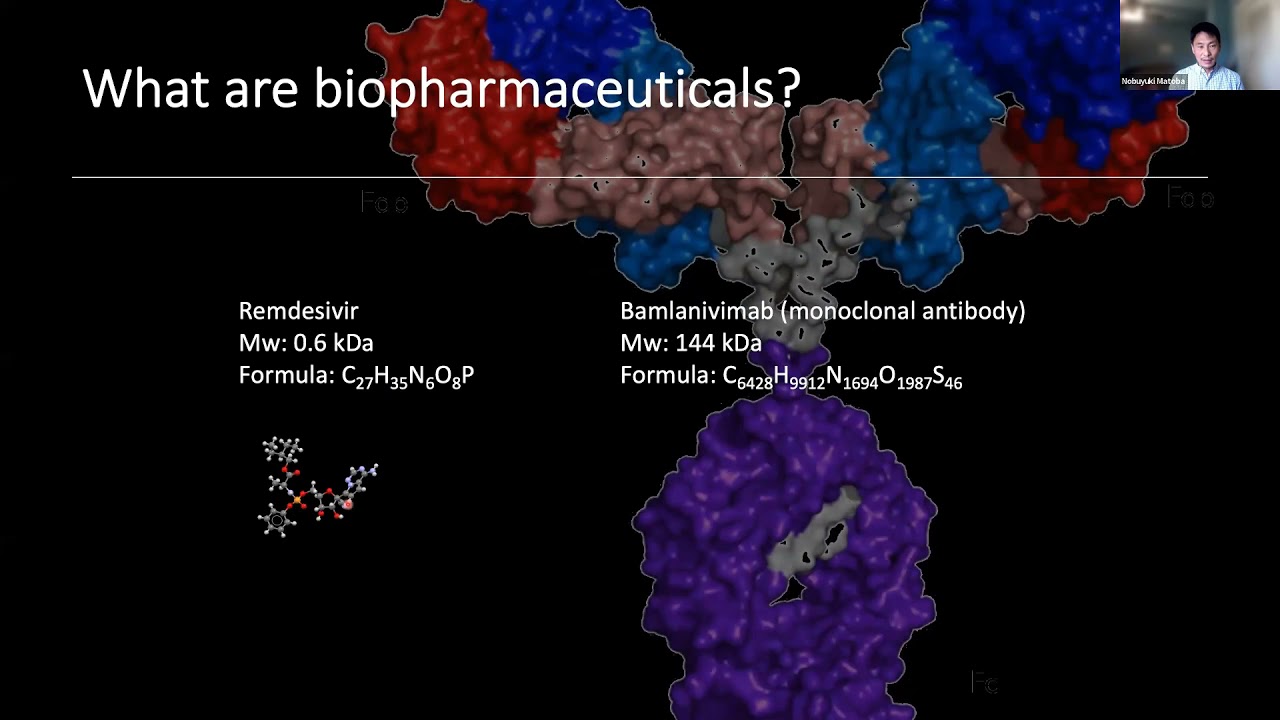
NISTCHO cells are a recombinant Chinese Hamster Ovary cell line developed by NIST that produces C-NISTmab, a non-originator version of an anti-RSV monoclonal antibody. These cells are available as research grade test material at zero cost, with NIST even covering shipping on dry ice. The cells grow at higher densities and produce higher titers than traditional CHO DP12 cell lines, making them ideal for biomanufacturing education. Students can learn upstream processing (cell culture in shake flasks and bioreactors) and downstream processing (protein A chromatography purification) using standardized SOPs and batch records. The cells can be cryopreserved at -80°C for several months and remain stable for over 100 cell doublings, making them suitable for both teaching and undergraduate research projects.
Teaching Biomanufacturing with NISTCHO Cells: A Practical Guide
Added:by the National Science Foundation through the at program we encourage and support ideas and Innovations you have for educating biote technicians and encourage you to consider applying for at funding please feel free to reach out to us before we begin I have a few housekeeping announcements this presentation is being recorded and the video will be posted on the innovate bio.org website by next Monday afternoon both of our presenters have noted that uh during the presentation there will be a brief pause for a short Q&A as well as the end end of the presentation and lastly additional information about future at project talks can be found on the innovate bya website which will we will put in the chat thank you so it is with great pleasure that I introduce our at top speakers Dr Margaret Bryan from Montgomery County Community College in Pennsylvania and Dr Lori cman from Montgomery College toown Maryland their presentation is C is titled NIS Joe Sals for teaching biom manufacturing and for undergraduate research welcome Maggie and Lori thank you Dion when everyone see the slides yes but it's your uh preview screen okay got it just uh switch that over oh just TR I'm going to stop sharing and pick the other screen just for one second better perfect thank you so much for the invitation everyone Maggie and I are going to tell you about n Cho cells which we hope you're going to adopt into your biomanufacturing uh programs your biotech programs and if you're interested in performing undergraduate research and this work was supported by Nimble and funds from the American Rescue plan so this slide is going to show you what we're going to cover today uh there's a lab based curriculum that's been developed to get niso cells into your biomanufacturing and biotechnology courses and your Workforce Development programs as you'll here we've got Sops batch records and some representative data that we're going to show to you using NIS Cho cells and uh which produce C nistmab and we'll tell you about some of the outcomes of our undergraduate research projects so I'll start with a brief introduction to nist the National Institute for standards and Technology uh this is a uh part of the US Department of commer Commerce it's a non-regulatory agency I like to call nist the people who bring you the correct time and the standard kilogram uh but they have standards and reference materials for many indust Ries most actually not biologics which is somewhere that they're fairly new to um these uh reference materials allow for industrywide calibration and comparison and shown here uh one of my favorites the nist standard cigarette which is not for smoking but for ignition testing and I'm not quite sure who's using the nist well blubber reference material but there it is um Reddit had a field day with that one and the standard peanut butter but we're going to tell you about NIS Cho cells and a little bit about nistmab and C nistmab so the NIS Cho cell Line This is a a fairly newly released recombinant cell line it became available a year ago in January and it produces uh a non originator version of an anti-rsv monoclonal antibody that we're going to call C nistmab and the little C stands for Cho The nist Cho cell line was developed by nist and produced by mpor Sigma and it's currently not available as a reference material which is coming soon but currently it's available as something called a research grade test material and I'll say more about in that in just a moment nistmab is a uh very well studied monoclonal antibody reference materal material that was produced um against the RSV protein F the epitope is shown here and nist Cho cells um produce as I said what we're going to call C nistmab and um there's a lot written about nistmab but we're expecting a publication soon on nist Cho that will include the details of strain construction next slide please but you can get your niso R GTM cells right now so the research grade reference material designation is for the community to uh work with the material and collaborate with nist letting them know if the material is suitable for purpose and the idea here is uh typically they're going to ask people to perform research and do other things with the cells and then once a year one of the requirements of using the r GTM is an annual report to nist this year it was due on March first and uh nist has told me verbally to encourage colleges to use NIS Cho in teaching so we have a slightly different um I don't think they expecting us to do lots and lots of research but fit for purpose is still going to mean did the cells arrive okay did they recover Did they perform and if we're using them in teaching nist would like to know about that so I'm going to encourage you to get your nist show Sals now next slide please and Sandy if you would put the first um link into the chat so this link will take you to a little bit of information about the nist show R GTM uh from there is a link to the nist store you would have to create a um a login but one of the benefits of the r GTM is the cost is zero at this moment in time nist will even pay for the shipping to send the cells to you and they will arrive on dry ice but as you'll hear uh in just a few minutes we have evidence that the cells could be stored at minus 80 degrees for several months so if you don't have liquid nitrogen storage and you're not able to immediately thaw the cells um I'm going to tell you tentatively I think that's going to be fine but what we're going to encourage you to do is get the cells um expand them make your own bank and then store them so that you can teach with them and the cost of the re of the reference material is not out yet because it hasn't been released yet but if it's like the nist MB the cost will probably be about $1,000 per vial that is a recovery cost through nist but the NIS show was made under essentially under GMP conditions so it's going to probably cost more than zero next slide please so once you receive your NIS Cho cells and this is where you put the second link in please Sandy um there is a manufacturer recommended uh protocol to thaw and to grow the cells now the link that Sand's about to put in is a 33 page manual for chosen cells this is the uh the host cell that was uh turned into nist show but we're going to release uh our own version of protocols and one of the reasons is because you don't need all the information in the longer handbook and in particular you do not need glutamine in your media so the recommended media is going to be Excel Cho fusion and uh that's for maintenance or what uh we're going to call expansion of the cells an Excel Cho fed batch media plus a supplement um and glucose for production and we'll call that production media most of the time now we have some evidence and we've heard from others that NIS Cho cells will grow in any other media that you could use to grow Cho cells so if you don't use this media again not a promise but I have a feeling it will work just fine um we're uh going to share uh not today but online we're going to share thaw and Recovery Sops uh sample growth data instructions for making your own bank and also and you'll hear about this today biomanufacturing Sops and batch records so our suggestion is that you should get your niso R GTM while they're still available thaw and recover them expand them Bank them for your own use and then start to use them when you're teach ing biomanufacturing or bioproduction now I'll turn it over to Maggie thanks Lori um so MC3 we adopted the nro cell line this semester actually for teaching biom manufacturing course we had been using the cell line since August you know developing the directive documents with our student interns Sops and batch records Etc so we replacing a sell line we had been using since 2016 and that was a chp2 cell line and we chose that to develop the curriculum with because it was available from the atcc so anybody using the nbc2 curriculum could also have access to the cells however atcc stopped providing uh this cell line so it was really Serendip that nist released the nist CH sell line early last year and then Lori and I came together to to conduct this project um so uh n CH Sals as Lori said are derived from the ch platform um they grow at much higher densities and demonstrate much higher tighters than the Cho dp12 cells we're actually very very happy with a cell line and I encourage you to switch over if if you have that capability um they're they're great to work with uh we've been um developing upstream and downstream uh processing you know the directive documents um for the curriculum over the last several months uh We've grown the cells in tea flasks and various sizes of shake flas for production and also uh a one liter culture in a bioreactor so that's what I'm going to talk about next basically what we've been doing in the biom manufacturing course and how you can adopt n Cho in your your biom manufacturing and and biotechnology you can even use it in your intro to biotechnology course as well um at this point we don't have a functional assd such as an Eliza uh but we are working with with other groups to to um develop that and we're also also working to um have a a better assay for for Tighter and we're we're doing sort of analytical protein chomatography on the hlc to get a better tighter measurements as as our approach there's other approaches to do that as well but they require more sophisticated instrumentation and we already work with our hlc so that's the direction we'll take um so when you start to grow the cell so this is a a 30 mil uh culture and in 100 Mil flask um you're seeing here uh and this experiment done by one of the interns was a comparison of how the cells behave in the two types of media so the EXL Cho Fusion media that we call expansion medium um and then the production medium with the added uh feed so the feed actually you purchase separately and they recommend you add it at between five and and 10% and the reason we changed the name of the the media to use it was because if we doing a straight bat strategy as our Upstream processing we don't want really the word fed batch in there when we're not adding additional feed so we call it production media um we developed two Sops here as you can see for initial resuscitation and and culture of the niso cells uh those will be available to you and also uh culturing Shake FL culturing in shakes flasks and subculturing um for monol antibody production and on the right you see a couple of of growth curves again in in blue there is the the cells growing in the expansion medium which typically typically give us a maximum cell density of about 6 million cells per Mill um and with the production medium and the added feed uh in day Zero we we see a much higher cell density of about 14 million cells and we also see uh higher uh titer as well so you can see the viability is great throughout until the the run out of um glucose and then you see that that decline so very reliable cells this is very reproducible very easy to grow with um and then we scaled up to 100 Mil culture so this is a an experiment done in duplicate with 100 Ms uh culture in this case in production medium without the extra feet uh cells were seeded or the culture was seed at 3 * 10 to 5 cells per mil um maximum density reach was 1.4 * 10 7 and our tighter estimate is about half a gram per liter or.55 migs per Mill um right now we're determining Tighter by uh actually purifying the map from the clarified media after harvest um and then um measuring with uh measuring the concentration of the pure U monoc antibody after protein a chromatography using an anod drop with the IGG function um to get uh a concentration there's a question in the chat from Leia how often did you add the feed and was your 5% by volume 5% is by volume um in this case the experiment I showed you in the last slide we added it only once right at the beginning so we we're actually working and we've done several sort of a Fed batch strategies where we're adding it in day three 579 and so on and we can take it all the way up to day 14 um uh we're still working out the the actually I'm getting some reproducibility with that but for right now uh in that experiment the feed was just added at the beginning and it's 5% volume per volume so um you could uh do your whole experiment small scale and what we like to say is low Tech you know you can introduce this in your biom manufacturing course without going to a bioreactor you could scale Up and Shake flat so this is uh a Str y here where you can thaw your nistro cells um resuscitate grow them in a 30 mil Shake flas maybe scale up to 100 or we have um data for 200 Ms and then harvest in a benchtop centrifuge followed by point2 Micron filtration and then you have your clarified media which you can then um purify the MB using uh capture chromatography with protein a resin in in a gravity um approach and then have your students generate at the chromatogram so that's something we did with the CH dp12 cells as well and then they can assess the um the Purity with SDS phage so that's this is very accessible to to most people that they have CO2 incubators uh you know they don't have to have sophisticated um instrumentation to to take this approach and adopt the cells to make monoclonal antibody um uh here we see one of those gravity columns uh 1 mil resin with in this case five Ms of of media clarified media um and here's the SOP of this sort of a lowtech purification of um uh cenus map using gravity protein a um on the right you see a representative uh uh SDS page run under reducing conditions and um they expected um map fragments the heavy chain and the light chain can be seen here so this is the pre-ol material and since it's a chemically defined uh serum free media there's not a whole lot of other proteins really there that you can see the the heavy and light chain are well represented even in the unpure media and then after uh purification you can see illusion fractions three and four here with the purified heavy light chain and again we have a a fairly pure preparation here already maybe in the 90% Purity so again this is the the low Tech approach uh very easy to adopt um and use in your course in our biom manufacturing course we do go from the 100 Mil culture all the way through to the Biore reactor so what you see here uh is kind of a flowchart of our Upstream processing and downstream processing and again this is following our sop and our batch records um which I'll show you in just a second so again the 100 Mil culture is inoculated uh with two uh vials of Frozen cells from our our working cell bank and um the the students then monitor the culture for about six or seven days uh monitor I mean they they take a sample aseptically from the culture and they measure optical density 650 nanm pH cell density cell viability and glucose and lactate level so they get experience U measuring those parameters um they grow the cells to approximately late log phase which is between five and six million cells per Mill and then scale up to the bioreactor with a seeding density of 4 * 5 uh four * 10 5 cells per Mill in production media so now we really want the cells to produce so we move to that richer medium uh in this case it's a straight batch approach so we're not feeding along the way um and um but we do increase the Tighter by switching to the production medium the production medium costs about twice as much as the the expansion medium but it's nice to start in expansion medium because it really gives them sort of that real world feel of your expans ing the cells and the seed reactors before you get to your production Reactor with all the goodies so the cells will really perform for you um so uh the bioreactor is sampled and um pH and do values are recorded in the batch record because these are process controlled with probes in the bioreactor and then all the other parameters mentioned above are also tested for and and captured it results captured um after the bioreactor run um we take that to about usually about 5 million cells per Mill we get as a maximum density in the bioreactor and we can talk about why that's lower than the shake flask in a second um we take it out to day eight or nine where the cells have reached Plateau or early decline phase and then Harvest by centrifugation basically uh you know taking the the made taking the culture putting it into cuge bottles and collect in the media which we then clarify by point to micro filtration um the next step is very optional because the tighter are are sufficient with this cell line you can go directly from the bioct to clarified media right onto the protein a column and you you'll still get a really decent Peak as you'll see in a moment of M when you purify it um I at this point introduce uh tangential flow filtration just to give the students experience with tff and we have a bench toop unit and helps them understand that's an important part of UF alteration dition in in The Bu manufacturing process and then we're on to protein uh chromatography on the active pure system in our case um and then with optional um additional polishing chromatography with with ion exchange and then assessing the M Purity using SCS page so that's basically the upstream and downstream we just went through with our students this semester and what you're going to see next is the data that they they produced um in the course um so again this is representative data um we've run these experiments now especially the 100 Mil uh culture experiments many times so this is definitely um reproducible um again what you're seeing here and the parameters I mentioned earlier that we test for um we see our our growth curve here in blue and taking the cells to late log because we we want them to be in in in good shape for proceeding the bio Rector and then very consistent viability uh over the seven days um and then here we're looking at glucose usage um through the growth curve and the decline in glucose here which is to be expected um optical density which measures turbidity of the culture as you can see mimics almost perfectly the the growth curve and here you're seeing um pH measurements um so this is by taking a sample and and measuring with a pH meter and a micro probe um to get our pH uh you see a dip here but it stays within sort of the physiological range um here are the Sops for there's an sop for the entire Upstream process which includes the 100 Mil and also the the one liter bioreactor culture and then the full um batch record that the students are completing as they go so this is a paper batch record at this point and they're completing it as they go and introducing all the the the test data day by day so it's about a 3-e process for the Upstream processing um and then they move on to the bio reactor and these are two students from the the the course here um we have an appon uh traditional bio Reactor with a glass vessel and um it's a 3 lit vessel we do a one liter culture in there um and again this is in production medium and a straight batch strategy where we're we're inoculating and letting the cells grow through the growth curve and then harvesting um I mentioned already the seeding density and um we went through several ations of these bioreactor runs in the fall um just really trying to get something is very reproducible and and these are the parameters that we are working with now and we've done three runs with these parameters and it has been very reproducible um we're at 40% dissolved oxygen 150 RPM agitation pH 7.1 and the addition of antifoam as needed and in this case half a m in a total of 10 ms of media are added usually about day three and day four and perhaps again on on day seven um so that was something we had to to Really spend a lot of time working that antifoam issue out um and again here are the two directive documents Maggie can you um repeat the brand for the bioreactor yes appon thanks so here are the data for for the bioreactor Run um and what you can expect um under those conditions and um we see here our growth curve um going through exponential and then plateauing here and here we can see the effects of actual foaming we where we added our second dose of antifoam here and then we we got the cells to um you know uptick a little bit um uh very good viability um and then again optical density as we go through we took it to um as the cells approach decline phase in day nine before we harvested we've also harvested in day 10 and we actually get a higher TI if we we Harvest on day 10 here because it was part of the class work we harvested in Day N cuz that worked out best for the schedule um and then we see glucose glucose usage here as we go through the glow growth curve and as well and here you see our dissolved oxygen um process controlled around um about 40% um and part of the reason we we we do get foing is because these cells grow very well they grow to much higher densities than we're used to and um uh we operate on clean air rather than pure oxygen so the the system has to really pump in quite a bit of air to get meet the oxygen demands of of the cells so then we have to deal with the foaming issue uh as that arises um but of course antias is commonly added to bioreactors in in in commercial scale manufacturing too so it's very real world um so those are the results and and consistent results we've had with these uh with this approach and these parameters and this was a generated by the students this semester um after the bio Rector run we then um Harvest as I mentioned um and then this is a student using our benchtop um uh tff unit for Ultra foration cassette there um it has a th to Kil adult and cut off the filter within um and then the SOP that goes along along with the Harvest and and end of run um then on as I mentioned to proteinate chromatography and um uh our sop for purifying cenus map and here you see a representative chromatogram so in this case we took 5 Ms of medium directly from the bioreactor so this gives us some idea of the tighter not concentrated um and um applied it to the column and you see here our flowr Peak and then with the addition of our buffer B here which is a low PH citrate buffer we see our illusion of our map so um the protein is just a wonderful resin it works great every time uh and we see our Maps pretty much there in just a 1 mil fraction um and um just to wrap up this is this part up is um these are the Sops that we develop for for using for the Nal culture and resuscitation of Nal cells um then Shake flas culture and a 30 mil culture and subculture um and also the growth of the the cells and you'll see some evidence of that in a moment in the t75 where you can even in 1 t75 get detectable monoclonal antibody with gravity chromatography um and um then the the entire sop for the Upstream process is the batch culture sop and then the batch record and then Downstream processing end of run purification um with gravity flow and also with uh ACTA the ACTA system and the batch record um so we'll be um in in the next week or so um adding these Sops to the nbc2 site at biom manufacturing. org the link I have there right now is is the curriculum we have for the CH dp2s obviously we will be adding um and recommending the switch over to the N Chell line and the all of these uh Sops and directive documents as well as uh material lists as well will be added to the the site um so in addition to creating directive documents for for um others to use n chos eles in their bi manufacturing training we also as part of this project I wanted to use NIS chells in undergraduate research project so both um Lori and I had students last semester and this semester work on many aspects of the sales and I'm going to hand it back over to laori now to to tell us what happened at at Montgomery College um but before I do that if anyone has a question at this moment please feel free to unmute and ask or put it in the chat I'll share that we did not use niso in our biomanufacturing course this semester we' hoped to um and we have ongoing single use closed system five liter bioreactor work but we have been unsuccessful in getting a good run so but we have been successful uh with some undergraduate research so you uh I promise you you are going to love NIS chos cells we hope that you're going to adopt them for your teaching but you're also going to be able to adopt them if you're performing undergraduate research uh Maggie if you would change the slide so you'll find that we took very different approaches at montgomary College in Maryland we have a scientific research course and over three sessions I had 22 students some of who took this the course multiple times and um what they we're working on was uh growing the cells looking at different seeding densities I'm going to show you some cryopreservation data and a lot of what they did uh also was looking at the MC3 produced Sops and beta testing them and um we found it in our hands very easy to adapt these Sops to our equipment so again I'm going to tell you that I think you will be able to do the same and if you go yeah go ahead sorry I went to interrupt with a couple questions before you go on Lori sorry it's all right one is one is from lanaa and then from and then Leah I'll you can ask yours so lanaa is wondering if industry is interested in the chos cell line so the reason that these nist show was produced was for industry and By Request of Industry after the nist MB was released which was either 2016 or 2017 I'm pretty sure um industry said oh this is great we love it could you please give us the cell line that made ncho and the answer is no that was a proprietary cell line by what was at that time metam and they said nope you're you're never going to see that cell line would you please make us a cell line then and nist responded they made an ns0 cell line which was the original producer cell but industry said uh we'd rather have Cho and then the development of n show started and I saw Brad in the audience if there's anything you'd like to add Brad please feel free um and so again first they did the release as the research grade test material um when they release the the the RM the the reference material um now I'm not sure about this but I believe the r GTM will go away which is part of why we're encouraging people to get it now while it doesn't cost anything uh did that address the question I I yeah um before you asked yours Leah um I I'm going to give you one from Crystal auger who just wants to confirm that the cell lines are available for Career and Technical High School biotech programs so what I was told by Nest is that um is that anyone can request the cells um there are some conditions to the cells and for example they're not going to ship to your house but uh I I don't honestly know about a high school but feel free to like put a little information into your request and I'm pretty sure the um the email is nist Cho nist.gov uh which I'll stick in the chat in a second oops okay and then Leah yeah I was wondering about the extinction coefficient that you used for um your Nano drop measurements um it was uh for IGG so we used just like a generic like yeah just a generic exactly just you know from the at this point we say it's an estimate for the titter because something yeah exactly so just the what's kind of programmed in to that um I think the def is 15 I don't remember something like that okay um there is one published for the nistmab and I was just trying to find it very quickly and I can't but C nistmab is certainly not going to be the precisely the same thing as the nist MB but um once we once we get a little more under our belt we'll probably switch to using that as it although we haven't investigated that at all okay also um has anyone in this group yet tried using an LC method for tighter I actually just talked to cat this morning because I think we're going to try to set up a cre with n to like do a deeper dive on some of this work just to make the information more widely available both to researchers and also to to industry but um I think Brad who's here has been working on um maybe even the porous method um Brad I know you were embarking on that at one point for tighter we'll start working on it probably in the next month or so um but um hi Brad um okay that's fine I just I was just curious because we're maybe Leah interested in starting totally from scratch but we did have a shake flass run where we did feeds with all the same Medias Maggie is what you did except that we fed every other day about two 2% and we same cell densities but we haven't measured tighter yet I'm still waiting because we don't have a method up and going yeah feel like buy and packing robocom so and this is perfect for teaching right what we have you know we don't have the sophisticated LC um instrumentation but this is great for teaching for them purifying the m and and and doing the concentration and then understanding that is an estimate but it gives us something to hold on to it gives us something to compare Le can you share your interest in the NIS Cho cells can I share mine yeah why are you why what you what do you do with them well right now I'm just growing them so you I'm working for Waters and Waters is interested in process analytical technology of course they want to build IP but they want it specifically for Upstream cell culture so right now what we're doing at the M lab is working with the N CH and the cist m to get a process up and going the idea is that you know we would do process development including some basic process characterization possibly for multiple processes and various platform Medias that are available but what Waters would want to do then is you know like spent media analysis and AAA and peptide mapping and stuff on their instruments partially to support collaborations with other industry Partners but also just for their own education and this this is what we have this is really the only cell line we have to work with right now um so we're just going to focus on it because me personally I think there's a huge value add it's a huge value add to the community to focus on this one you know Waters say no interest in developing proprietary cell ions and molecules so that's not our business so if we just work on this you know we could get a lot of really useful information including the potential of developing um you know a a chemically defined open- Source media recipe for this celline right which would be awesome you w have to pay for all these commercial Medias so that's what we're doing thanks um we have one more question before sorry for the interruptions um uh Donna Baron is asking about the hplc method I believe that and Donna is this the one that you're talking about that Maggie's been using no yeah the for the tighter determination that you guys were just talking maybe I I missed something I just um you know we have hplc here we have uplc here at hbcc and we'd like to incorporate that into our biomanufacturing um course and not just determining um aggregate content but for that tighter method to do you know in process sort of testing um so if anybody has a a a tighter method for for you you know using the hplc I'd like to um if they would be willing to share that I would be really interested in it so Donna we're we're developing that method um and that's something we talked about at the hackathon as well and we had really good um industry input so have a really nice um sort of a white paper I can share with you on how you do that um and as I mentioned we're still in the early stages of of of doing that as a as a more accurate method for for tighter determination but I will share that paper with you that's the best I can do it this time thanks Maggie you're welcome okay back to you Lori thanks next slide please so these are the students who performed undergraduate research at Montgomery College and as you can see there's a bunch of them Ryan has an asterisk next to him because uh he converted to a part-time student worker and in the next slide we had some faculty and staff assisting as well and Anan um was HED as a part-time laboratory specialist he performed uh some of his own work and he also helped out a great deal with the students next slide so one thing the students got was tons of experience uh counting cells we uh performed manual and automated cell counting and I'm not going to show data on uh looking at seating densities so almost everything we did when we grew the cells we did growth curve and uh check for viability and density but um I can summarize well a couple of things one is first of all it's undergraduate so time points were not always strictly 24 hours um and in particular we weren't really trying to optimize so we wanted the cells to grow but although we tried an awful lot of things we did not do it as systematically as one might hope um what we did find in general though with seeding concentration is uh thinking in terms of somebody who's teaching you can seed NIS chos to get yourself a culture in three days or four or five or six or seven no problem the cells are really flexible um they seem to understand that we have teaching schedules and weekends and holidays and so I think you're going to be very pleased with that next slide please we tried growing the cells uh a bunch of different ways so we grew them in the um the the expansion media we grew them in the FED Batcher production media we added feed we added twice as much feed five or 10% we added uh 5% or 10% glucose we tried a number of different things and to summarize niso cells grow really well um if you supplement them they will grow and and if you don't supplement them I don't think we tried fed batch without supplement but I mean you can grow them kind of anyway you want um shown is a growth curve and one thing I will point out is you'll notice both um growth and viability you get this sort of precipitous drop which we just call keep calling the crash and we noticed it Maggie noticed it other people have told us it happens so just be aware that when these cells reach whatever moment they've decided it this has to happen they will just crash on you um next slide please one of the Sops that we beta tested was a t75 flash flask growth and um cist MB production and so realize that these are cells that grow fine in Shake flasks but here we just put them into a t75 and we tried this in both production and expansion media and sure enough they grow so if you want to go truly low Tech if you don't even have a Shaker turns out they'll grow this way the uh growth was followed by microscopy as you can see from Day Zero to day seven the cells grew and uh we uh found that the Sops were very repeatable and you could grow them and on the next slide uh they produce cist MB or at least something that looks like it should be it um the students uh we followed uh production by uh absorbance at 280 and many Bradford assays and the gel shown here is not specifically from the t75 experiment sorry about that but the blue arrows show The eluted Protein that's got the right size unreduced and reduced as would be expected and another thing I'll mention is we um we took our conditioned media we did not add proteas Inhibitors and sometimes we stored that media more than a week at four degrees before we purified the protein and again these cells seem to understand that we might be teaching and might not have lab every day next uh slide please um we could purify C nistmab from all sorts of niso cultures the purification was very straightforward using protein a chromatography whether it was a gravity column whether we took those columns and spun them in a centrifuge or whether we used our ACTA Avance and again it was easy to take the MC3 Sops and adapt for our equipment next slide please so another thing we did was take a look at how uh how the cells could be cryopreserved because we thought that people would like to make their own sell Banks and hang on to them so that they didn't have to order sales every semester so we uh we made the cell Banks standard fashion uh I believe we banked in 7% DMSO but then what we did was cells were stored at three different storage temperatures we have a mechanical minus 150 which is uh seems to be equivalent to liquid nitrogen Vapor phase storage and that of course is how you're supposed to store them so we stored them there but we also stored cells at at minus80 with the thought that not every college would have liquid nitrogen storage so we stored them there and though even though every textbook you've ever read said you should not try to bank sells at minus 20 we stored them at minus 20 and um uh showing just a tiny bit of data and obviously not particularly quantitative but what we found is that you can uh so the N chose cells can be stored at-150 and Tha and recovered as expected you could store them at minus80 and it looks the same you cannot store them at minus 20 which was not a shock but again we did want to see that and if you look at the next Slide the way that we thawed when we did this was the cells were thawed and um grown in culture for seven days and if they were still looking good at point they were passaged once just so so that we could show that they really truly were okay and this is just a single um just one of the bits of data but in blue the minus 150 stored cells have a growth curve same thing in Orange if it's minus 80 the minus 20s stored cells never really looked good and then they um forgive me crapped out after about two months but we've got data through week 21 post Banking and um you can store them for several months and Maggie will have more to say about this another thing that's happening here is not all of the students performed wet lab uh work and so I have students who have determined doubling times from all the growth curves from all the weeks and my the preliminary is that we don't see a difference whether you store at minus 150 orus 180 the cells seem equivalent so again we're going to tentatively recommend that you get your sales Bank your own sales store them however you can sell store them if they're at minus 180 you may have to make another bank uh and with that I will turn it back over to Maggie thanks Lori so at at MC3 um our approach was to use our biotechnology internship course so over the two semesters fall in Spring we had four student interns and um shanon and Kayla uh were the fall semester and they initiated the cryopreservation study did some did some of the early bioreactor runs and um the stability study and the immedia comparison was done by Kayla and then this semester we have Tau and CM who are continuing those studies and helping us with the larger scale flask uh Shake flask cultures and and finess in the map purification part um at this point I'd like to also um acknowledge het DOI who works with me at MC3 to to develop curriculum especially on this Grant and and also other at Grants as well um so just real quick because um Lor's already presented some cry preservation data um this these charts show nicely um the comparison between um growth curves uh and this is in expansion medium uh of celles growing excuse me of sales cryopreserved um up to 26 weeks so we we took the cells at two week intervals and put them into a flask and monitored their growth and uh as you look at both of the charts you can see they're very comparable um the yellow dots are the 26 weeks and and the sort of a darker blue dots are the 12 uh are the two week um storage stored cells excuse me so you can see they're they're very comparable they actually freeze very well at minus 80 and um not only do the growth curves look good and the the maximum cell densities obtained with these uh cells after resuscitation we also see very comparable tighter so these tighters are low because again this is an expansion medium but they're very comparable between cells in the two storage conditions um one of the other uh long-term projects we did with interns was a stability study and we were able to come up with this this um project uh as part of the the hackathon um with Sand's antibody engineering Grant um and the way we designed it was uh the student would resuscitate the cells and keep them growing and culture over many doublings even up to a 100 or more doublings and passage them every three three days or so um and then um every two passages uh she would freeze them down or they would freeze them down um so we would have Frozen cells at at increas in passage number we started at uh Passage um 12 I believe and then we FR cells at Pates 146 and so on all the way up to uh passage 32 um at this time so after freezing the cells uh we then resuscitated them individually and grew them and then had a look to see what the growth profile was and also um the tighter uh by purifying again a fraction of the media and measuring the a280 of the IG and um here are some of the results so you see here on the top right is is the growth curves um uh of of four of the this is four examples of the growth curve but really they're all very very similar just didn't want to crowd this graph um so passage 10 was the initial passage number that we started with and we see that kind of in the dark blue and then um the the green is passage 32 um some sometimes we we don't have a a data point because it falls on the weekend and the interns didn't come in in the weekend so but you can see the overall pattern of the growth curve through 8 days is very similar with these cells whether they be passage 10 or passage 32 and similar uh of viability and then you know as as they go to decline rather sharply with the depletion of the glucose um and then here I just wanted to point out the um the peak uh cell densities that we we got for the cells whether the be passage 10 or 32 and also again measuring the tighter so this is in production media without any extra feed but you can see this uniformity of the of the tighter with the new Cells versus the old cells so really we've G over about you know 100 doublings at this point and we still see the cells has been stable as far as the growth profile as well as as the tighter uh antibody that they are producing so that this is an ongoing study um so um moving on I would like to um uh have some acknowledgements and really I'd like to say we we we Lori and I would like to say thanks very much to Brad Odell who was our subject matter expert um from nist and he joined our our project meetings he was incredibly helpful as we started getting the bioreactor runs going and just gave us really great expert advice uh along the way um also to John Shield um technical program manager at witnessed um namata Raman is our uh program officer at Nimble and we met with her monthly and again just to acknowledge uh the the funding from the Department of Commerce uh through nist in collaboration with Nimble uh and also to acknowledge the NSF at Grant developing classroom based undergraduate research experiences in antibody engineering that that really uh got us going in these research projects um so thank you for your attention and I can stop sharing if there's any questions or um yeah and there will be a nist CH team at the hackathon this summer there will be a hackathon August uh 5th through 8th so the hackathon open for other participants I have a tech starting that um I think it would be great to assign assign her as one of your team members you could have her probably like 40 or 50% totally yes yes I will be sending so we H we have a um a mailing list that is at the uh innovate bio website and it's also at uh an antibody engineers. org and we have not opened up the applications yet but we're planning to open them up April 1st but if you get on the mailing list you'll get an email when it opens up um yeah what is a hackathon a hackathon is not just coding a hack Aon is a group of people who are involved in a short-term intense experience to create a product of some kind and I will be talking about hackathons April 5th so uh you'll be hearing more about them and they can be virtual they can be iners ours are mostly virtual but there are iners some sometimes we have people doing iners work as well are there more questions I want to I would like to thank for presenting I appreciate that yeah thank you this is super helpful and I I don't have any data to show today but we did just generate a shake FL study that pretty much corroborates everything that was shown today Sand's the tighter which we're still we we've tried growing them in um F12 with I think 10% serum and and emm with serum and other things and they grow um you know and they were made animal free so adding Serum is not necessary but if that's how you grow your cells it should work yeah we also did something interesting where we froze the cells in large volumes we put 250 Ms into a 500 mil bag with the 10% DMSO and they Tha amazingly well we didn't do a follow-up growth study but like the the viability coming out of saw that was after storing at minus 80 for a week but um part of the reason we're doing that is because you know we're trying to do studies across multiple sites with with cells and getting them back and forth is a little painful so we wanted to be able to ship them on dry ice so do you store it all at minus 80 other than what you just said because that was news to me not this show but I have experienced storing other cell other Cho cell lines like the Horizon Cho K1 cell lines at minus 80 for up to year I was going to say I had an inadvertent experiment uh that uh uh nist shipped on a Thursday and um the shipper uh couldn't deliver and so everything thaw so and my thaw cells still had 30% viability so these are pretty tough wow robust yeah yeah when when I was having the first discussions before this project really happened with some of the nist folks um I you had to see the horrified looked on their faces because I'm like if you want to know how badly these cells can be abused and still live you will have that answer after after we work on it for a while and Maggie I'm thinking these uh cell line uh the integrated sequences those might be a great Target for engineering chrisper yeah we we we thought of some research projects as well just having you know students PCR uh amplifying take a look at the the locus you know the insertion um there's going to be a paper coming out from milor Sigma that will give us more information on that so I know the Nimble show they're doing a lot of that uhuh yeah so right and so there should be an easy to set up PCR test what we do know about NIS Cho and I believe it's anecdotal at this moment there's a single integration there's three copies uh light and heavy heavy and light chain and um it's very stable which we didn't examine other than what Maggie uh talked about but but the we'll know more soon and it's been sequenced and the sequence will become the complete sequence will become available I have a question is there um a null host available a non-transfected null host available so that would be chosen c h ZN $33,000 a vile yep that's it sorry um part of the agreement when you get niso is you may not perform any engineering of the cells right I think it's just that's for some people wanting to look at like you know host cell protein and things like that obviously there are reasons to have a null host but maybe not at $33,000 a file okay we're not we're not looking for funding for that right now no no i' like could take this time to thank our presenters Maggie and Lori we are just after um the top of the hour I will still stay online for those of you who didn't get all the links we have a lot of links in our chat um please complete our survey that Sandy put in the chat There's the link to that um the survey helps us in planning future events there are also links to the um ha hackathon application the inovate by a website and also uh the link to Future at project talks again thank you very much to our speakers that was a wonderful presentation very informative and um we had a a great turnout today best wishes to everyone for a great Friday and a safe weekend thank you thank you Dion
Up Next

Affinity Chromatography Explained: His & GST Tag Purification
@animatedbiologywitharpan
45.2K views•2016-04-13
Quantitative Real-Time PCR (qPCR): Principle, Method & Data Analysis
@animatedbiologywitharpan
129.2K views•2023-09-06

AAV Production in HEK293 Cells: A Lab Protocol | NIIMBL
@innovatebio
2.2K views•2021-12-04

CRISPR and Genetic Engineering: How Gene Editing Works and Why It Matters
@kurzgesagt
30.5M views•2016-08-10
Related Study Plans & Knowledge Roadmaps
Structured learning paths in Biotechnology