

















Successful PCR primer design requires balancing four key properties: primer length (18-24 base pairs), annealing temperature (5°C below melting temperature calculated as 4°C per G/C and 2°C per A/T), GC content (40-60%), and secondary structure analysis to prevent hairpins and dimers; additionally, including a GC clamp at the 3' end enhances specificity, while avoiding repeated nucleotide sequences prevents mispriming.
How to Design PCR Primers: Expert Tips & Guidelines | Addgene Protocols
Added:The double-stranded structure of DNA, including complementary base pairing (A-T, G-C) and 5' to 3' directionality.
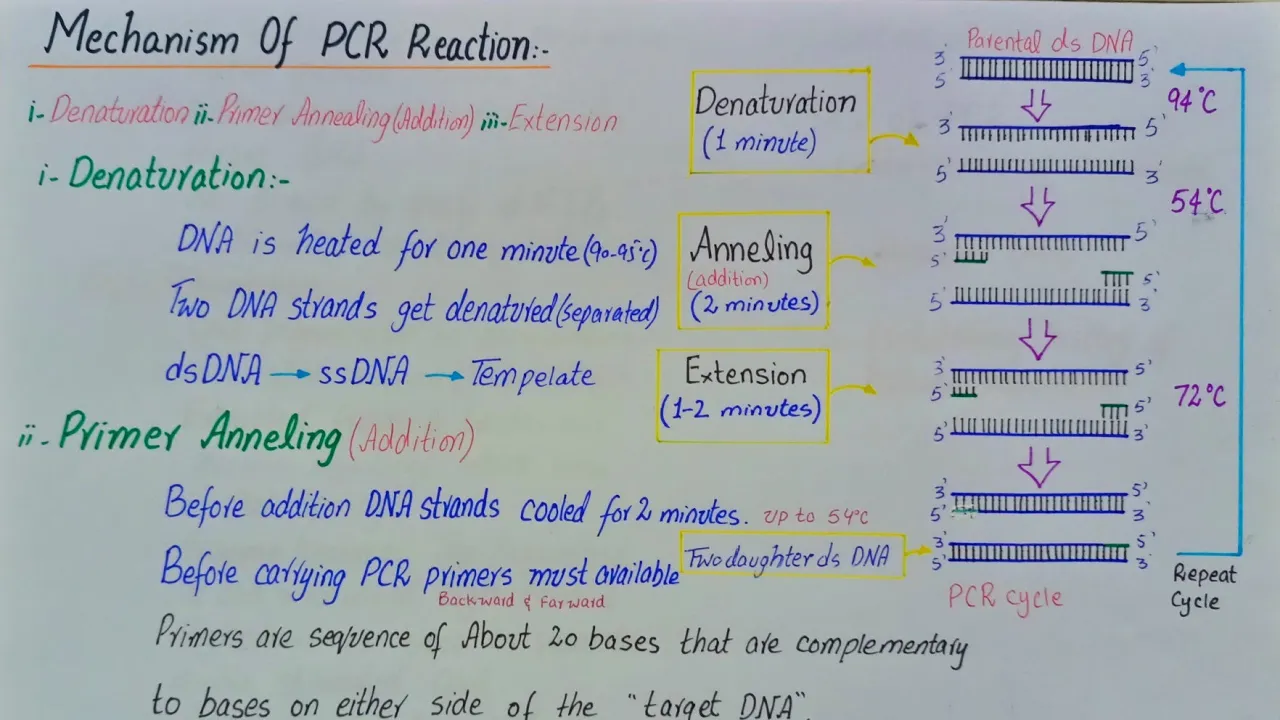
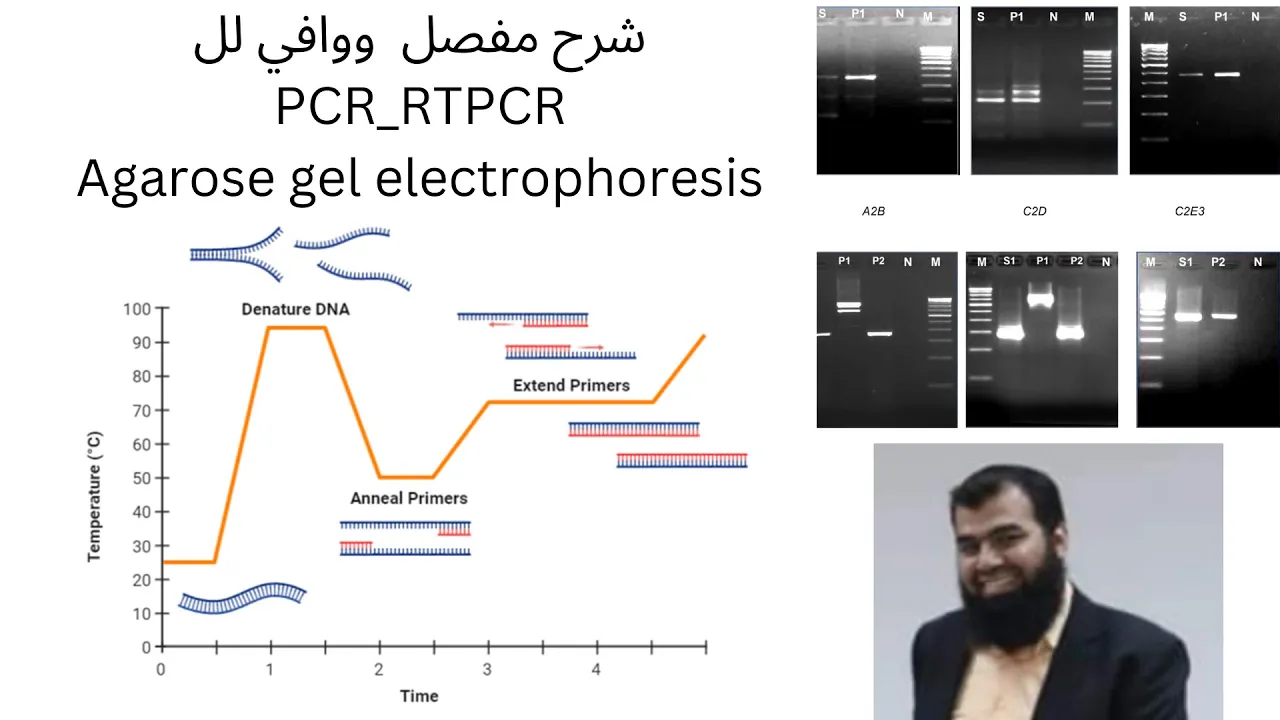
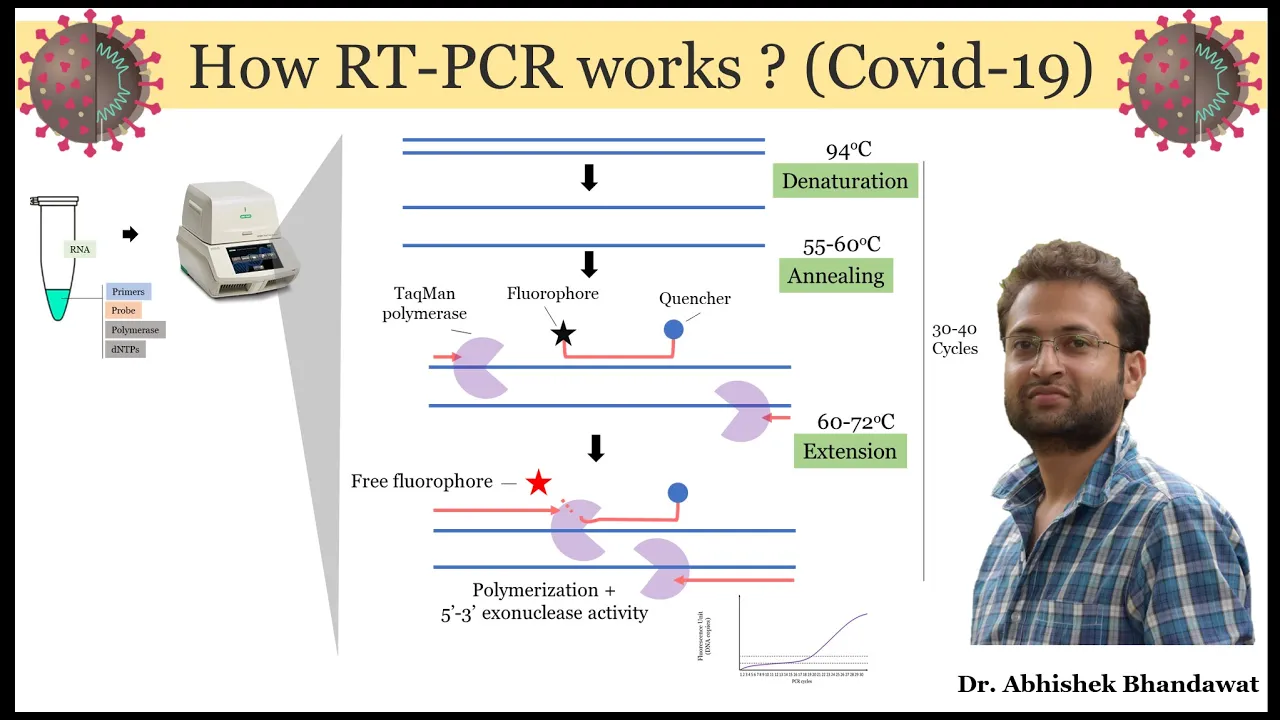
The basic mechanism and three main steps of the Polymerase Chain Reaction (PCR): denaturation, annealing, and extension.
The biological role of DNA polymerase and its requirement of a free 3'-OH group to initiate synthesis.
Basic thermodynamic concepts in molecular biology, specifically hydrogen bonding strength and how it relates to DNA melting temperature (Tm).
Utilizing bioinformatics software and online databases (e.g., NCBI Primer-BLAST, Primer3) to automate primer design and verify genomic specificity.
Troubleshooting failed PCR runs, including optimizing annealing temperature gradients, primer concentrations, and managing primer-dimer formation.
Designing specialized primers for molecular cloning, such as adding restriction enzyme sites, homologies for Gibson Assembly, or introducing mutations via Site-Directed Mutagenesis.
Understanding the distinct primer and probe design constraints required for Quantitative Real-Time PCR (qPCR) and Multiplex PCR assays.
356.1K views5.3Klikes4:44Original Release: 2020-07-30
Are you looking to design a primer for your PCR reaction but you're not sure where to start?
I'm Jennifer, Science Communications and Marketing Coordinator at Addgene and I'm here to help.
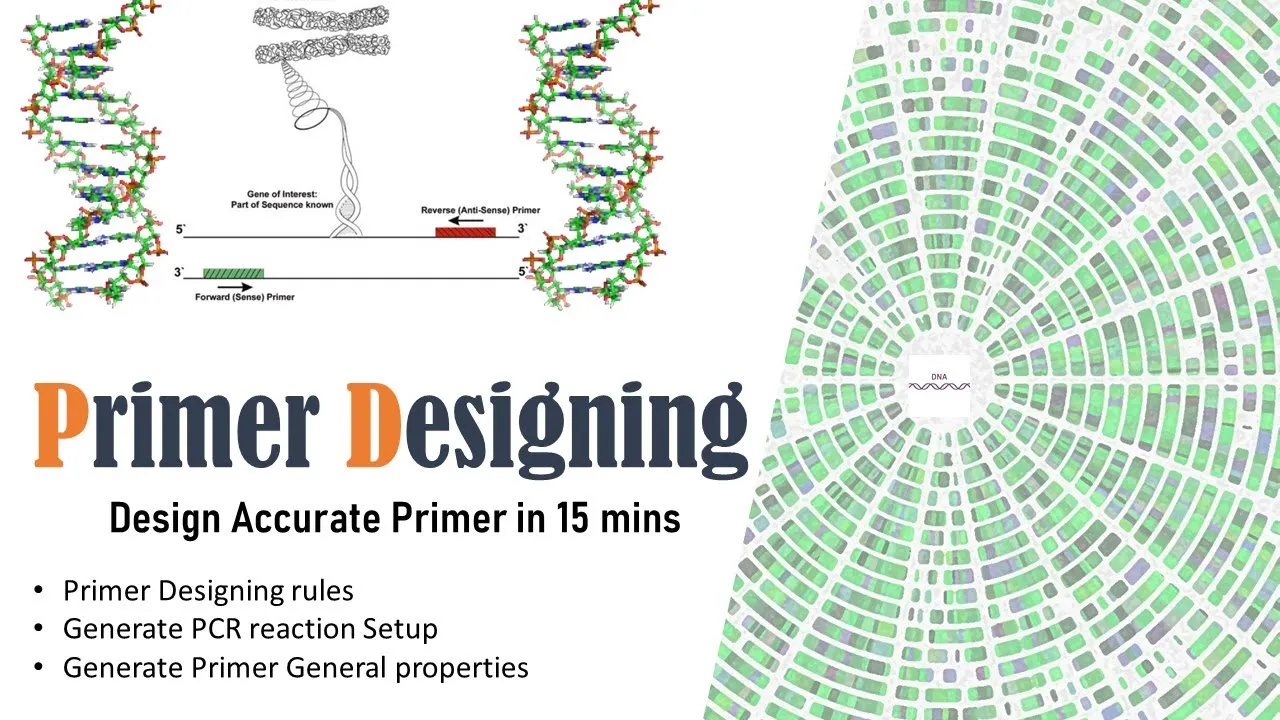
As you know PCR Reactions require two complementary oligonucleotide primers.
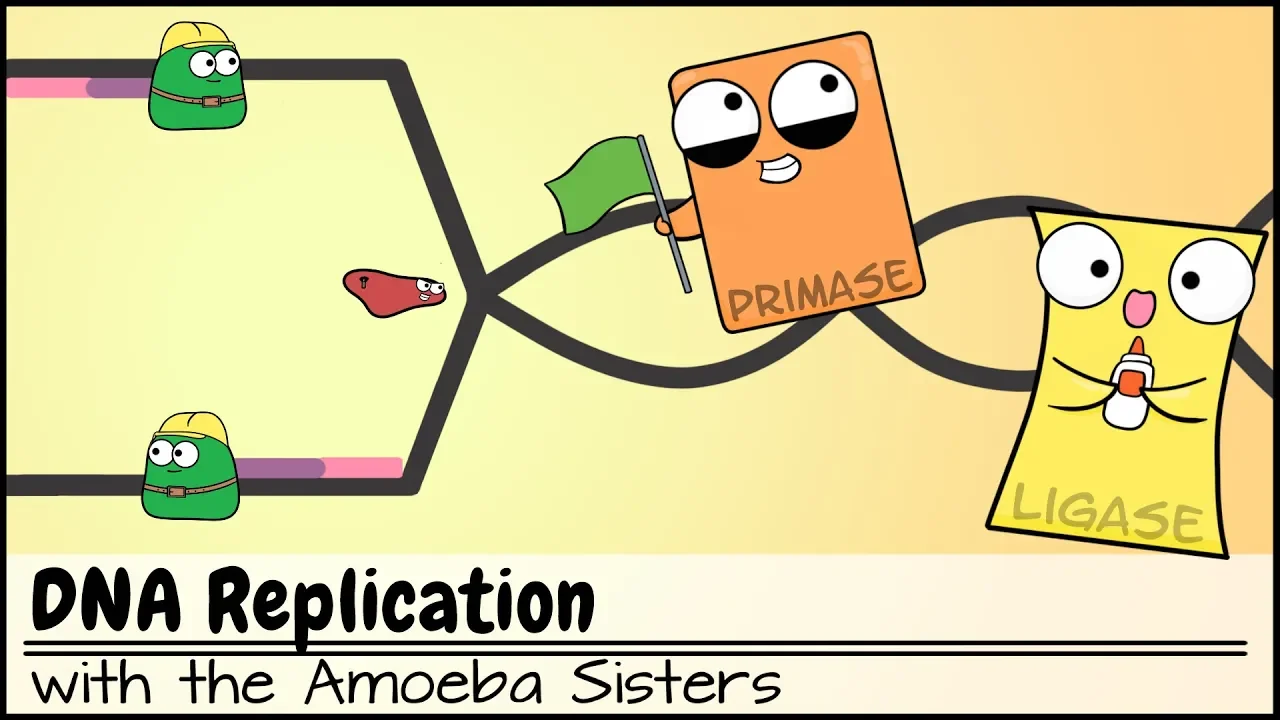
Primers are short, single stranded DNA fragments that anneal to the regions upstream and downstream of the DNA segment to be amplified.
Designing a working primer can be a bit tricky, with so many ways to design them and a number of small details that can derail your reaction.
So we're here with a few useful tips to guide you through the process.
There are several properties you'll need to consider to design succesful primers.
The length of the primer.
The anealing and melting temperature of the primers.
the GC content of the primer.
and the secondary structure of the primer.
We'll start with the primer length.
Generally you'll want your primers to be between 18 and 24 base pairs.
This is the optimal range to get the best yields.
If your primers are too short they could produce more non-specific DNA amplification products.
meaning that some of your DNA products aren't what you were trying to amplify.
But on the other hand if they're too long they can result in slower hybridization rates Next let's talk about annealing and melting temperatures.
Your annealing temperature is what allows the primers to base pair with the DNA.
The melting temperature is a temperature where half of the primers will dissociate from the DNA.
You want the kneeling temperature to be five degrees below the melting temperature, so that most of the primers bind to the template.
lowering the temperature any further however could result in more non-specific binding.
The two primers should ideally have similar melting temperatures.
There are many tools that can help you calculate this online but there's an easy way you can quickly do the rough math for yourself.
Simply add four degrees celsius for every G or C, and two degrees celsius for every A or T in your primer sequence.
Great so we have the length of the primer and the annealing and melting temperatures set.
But what about the makeup of the nucleotides in your primer?
The ideal makeup of a primer is between forty and sixty percent GC content.
The GC content is the percentage of Gs and Cs in the primer.
So for example, if a primer contains twenty base pairs total, and has six Gs and four Cs, It would have a 50 percent GC content.
You'll also want to include a GC clamp at the three prime end of the primer.
This means that you include two to three Gs and Cs to the three prime end of the primer if possible, given the constraints of your DNA sequence.
GC base pairs are useful because they because have three hydrogen bonds, one more than the AT pairs that have two hydrogen bonds.
Therefore GC pairs help promote stronger stronger and more specific binding to the template DNA, helping to ensure your reactions will work properly.
Now there's a secondary structure to consider.
Depending on the sequence of the primer there's a chance it could form hairpins or dimerize with itself or the other primer.
This means it could base pair with itself or base pair with the other primer instead of the template.
To prevent this use online tools to warn you of potential hair pins self-dimers or cross-dimers.
Check out Addgene's blog post for some programs and tools you can use.
Also be aware of repeats in your nucleotide sequence.
Too many repeats could cause mispriming, and the primer can anneal to unintended locations.
Avoid runs of identical nucleotides in the three prime portion of your primer too, for the same reason.
Congratulations! You just successfully designed a PCR primer!
If your primers do not give you the PCR product you're looking for You could try changing the conditions of your PCR reaction.
like the annealing temperature.
If still not having any luck, it might be time to go back to the drawing board and redesign your primers.
Thanks for watching remember to checkout our other protocol videos, and leave a comment below to tell us what videos you'd like to see, or let us know how we could improve Visit addgene.org/protocols to see more lab methods in action.
Addgene: a better way to share science.
Up Next

56:19
CRISPR Guide Design with Machine Learning | Jennifer Listgarten
@broadinstitute
2.8K views•2018-02-14
14:12
Quantitative Real-Time PCR (qPCR): Principle, Method & Data Analysis
@animatedbiologywitharpan
129.2K views•2023-09-06
4:47
AAV Transfer Plasmids Explained: Viral Vector Components & Elements
@addgene
39.2K views•2019-10-18
16:04
CRISPR and Genetic Engineering: How Gene Editing Works and Why It Matters
@kurzgesagt
30.5M views•2016-08-10
Related Study Plans & Knowledge Roadmaps
Structured learning paths in Biotechnology
biotechnology
AAV Production: Transfection, Prep & qPCR
01Introduction to Gene Therapy and AAV Biology
02Mammalian Cell Culture: Suspension HEK293 Cells
03Upstream Bioprocessing: Triple-Transfection Optimization
+ 2 more learning modules
18h5 modules
Explore Roadmap
biotechnology
Building Gut-on-a-Chip: PDMS, Cells & TEER
01Foundations of Microfluidics and Gut Anatomy
02Cleanroom Fabrication & PDMS Soft Lithography
03Epithelial Cell Culture and On-Chip Seeding
+ 2 more learning modules
26h5 modules
Explore Roadmap
biotechnology
Optimizing CFPS: E. coli Extract & Yield
01Fundamentals of Molecular Biology and Translation
02Introduction to Cell-Free Protein Synthesis (CFPS)
03Preparing E. coli Crude Lysate (The Extract)
+ 2 more learning modules
19h5 modules
Explore Roadmap
biotechnology
Haematococcus PBR: Design, Stress & Astaxanthin
01Biology and Life Cycle of Haematococcus pluvialis
02Bench-Scale Photobioreactor (PBR) Design and Engineering
03Culture Media Formulation and Inoculation
+ 2 more learning modules
15h5 modules
Explore Roadmap