













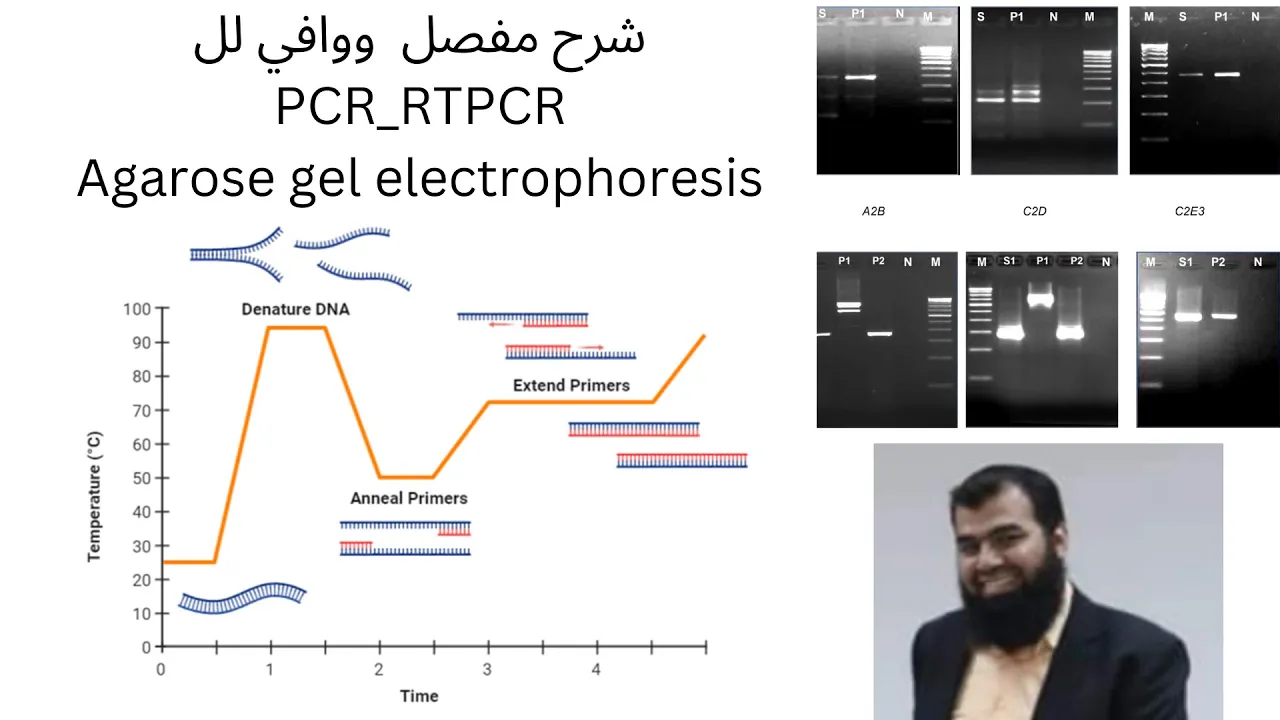








This video demonstrates how to design PCR primers using NCBI Primer BLAST, which combines Primer3 algorithm with BLAST database to generate target-specific primers while avoiding false positives; the process involves retrieving the gene sequence, extending it with intronic regions, defining search ranges, selecting appropriate databases, validating primers through tools like Primer Stat for GC content, melting temperature, and self-complementary checks, and performing manual curation when necessary to ensure primers meet the five fundamental design criteria: 18-24 base pair length, 40-60% GC content, 50-60°C melting temperature, absence of self-complementarity, and no cross-dimer formation.
PCR Primer Design Using NCBI Primer BLAST: In Silico Guide
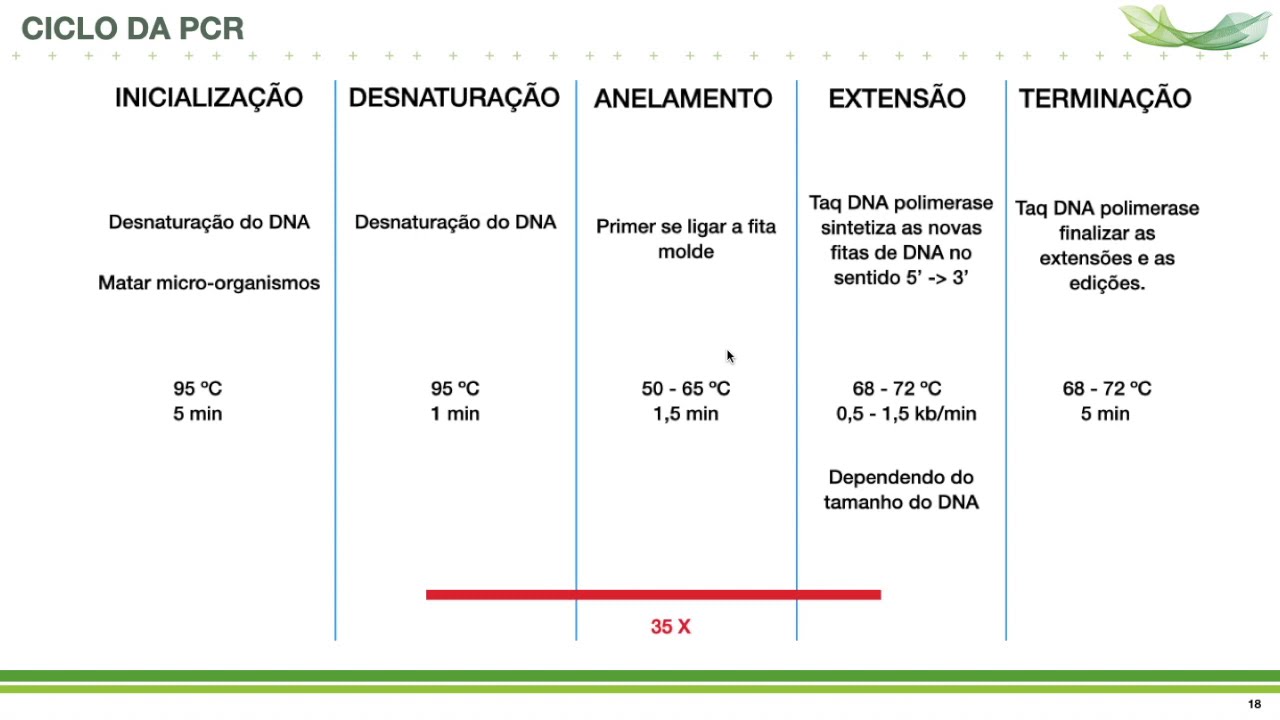
Added:Fundamental principles of Polymerase Chain Reaction (PCR), including the thermal cycling phases of denaturation, annealing, and extension.
DNA structure and biochemistry, particularly Watson-Crick base pairing, strand complementarity, and 5' to 3' directionality.
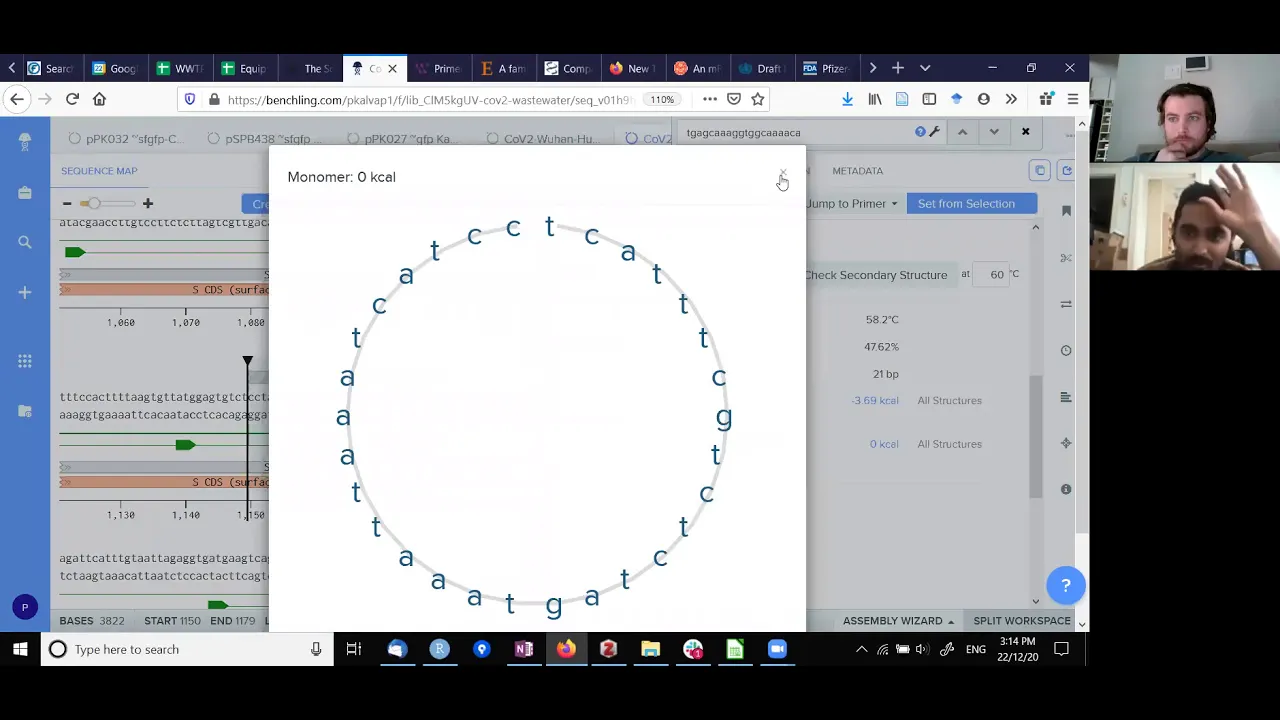
Key primer characteristics and thermodynamic parameters, such as melting temperature (Tm), GC content, and secondary structures like hairpins and primer-dimers.
Basic familiarity with the NCBI platform, including how to locate gene sequences, identify accession numbers, and interpret FASTA formats.
Wet-lab PCR execution and validation, including master mix preparation, thermocycler programming, and product visualization via agarose gel electrophoresis.
PCR troubleshooting methodologies to address common laboratory anomalies such as non-specific amplification, smear formation, or absence of target bands.
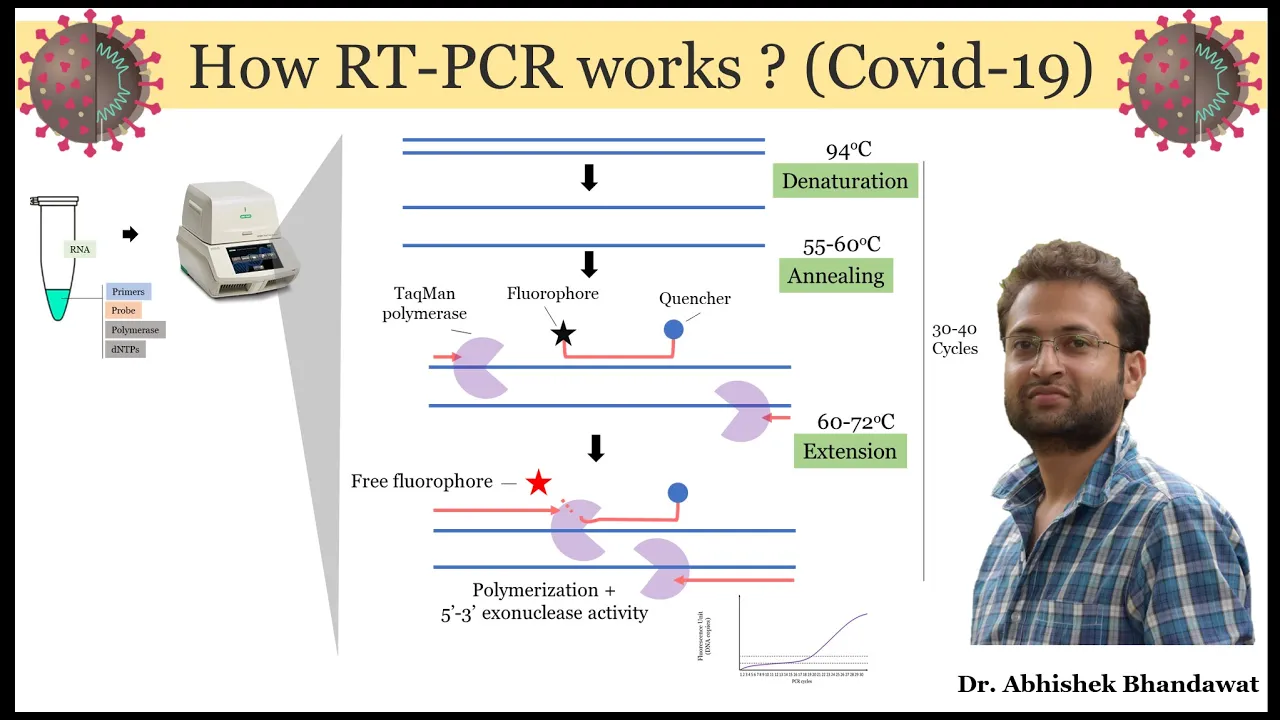
Advanced primer and probe design for Quantitative PCR (qPCR/RT-qPCR), including TaqMan probe placement and dye selection.
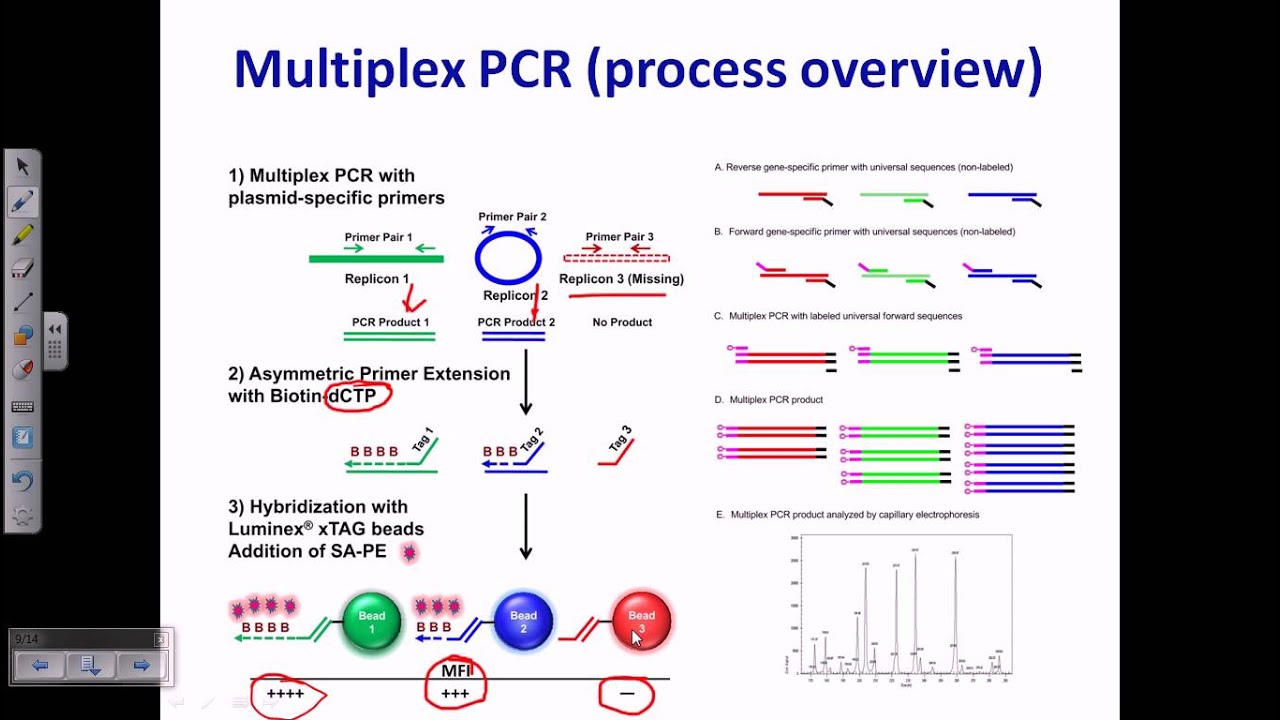
Multiplex PCR primer design, which involves coordinating multiple primer pairs to function simultaneously in a single reaction tube without cross-reactivity.
82.4K views2.3Klikes21:41Original Release: 2020-08-05
[Music] [Music] welcome back to bioinformatics baby channel my name is baba i'm an associate professor in bioinformatics in this video we are going to learn about how we can design a primer by using ncbi primer blast pcr is most commonly used method to amplify the dna of interest in many fields such as biomedical research diagnostic testing and forensic science the outcome of the pcr product is majorly depends upon the three factors one is the preparation of the template dna and the second one is reaction conditions and third one is designing of a good pair of a primers if you take the general requirement for designing of a primer we have to follow five different rules one is the length of the primer should be always in between the 18 to 24 base pair in length and the gc content should be balanced it means it should be around 40 to 60 percent gc content should be there and melting temperature you have to maintain in between the 50 to 60 degrees centigrade and we need to avoid the self complementary it means we need to avoid the help information if if the three prime end of the primer is complementary to the fibre end of the primer it is going to form a hairpin leg structure okay we have to avoid the self complementary primers and also the cross timer formation if the any any region of any region of the forward or reverse primer is complemented to each other they are going to form a dimer like structure okay these are the five things we have to remember before we go for the designing of a proper manual so luckily for us we need not to remember all these rules nowadays we have so many softwares are already available just you have to provide a sequence to the softwares or tools they are going to give a predictor primers for you so always we have to remember we have to cross check that whether these primers are covering our product or not whether they are following the rules of uh primary designing or not these things we have to cross check each and every set for each and every set of the primer that designed by the software so you can see here so many software nowadays so many tools or softwares are available for designing of a primer so out of them the primer 3 is a most most used or most commonly used tool for designing of a primers okay so here the major disadvantage with this other tools is they are not target specific it means so whatever the primer they will generate they are not going to check whether this primer has been in a homologous region with other genes or not so to avoid these circumstances we have a ncbi primer blast so this ncb primer blast will specifically use this primer 3 okay it is embedded with the parametry primer 3 along with the ncba blast so what it will do is not only it will generate primers for you and also it will give a target specific region here we are going to take example of mcc gene exon 2 its human colorectal mutant cancer protein exon 2 so we are going to design a primer for this mcc gene so we always need to remember the primer synthesis of the dna it majorly depends upon the various factor so it likes uh it depends upon the sequence of the dna and also it depends upon the type of reactions and and also itself is also majorly influenced by the type of instruments we are using so nowadays most of the most of the researchers are most of the research labs they are using the abi 3 3500 instrument which is a very commonly used instrument for the sanger sequencing so here what we will do is we are going to retrieve the nucleotide faster sequence from ncbr so the my aim is i want to cover the whole exon okay so i want to cover the whole exon let me see what is the length of the exon as i told you it the primer maximum capacity will be around thousand base pair always you have to if it is more than thousand paper what we need to do is we have to split your eggs on our uh your target region okay you have to split your target region into two then you can design it two different primers for that one so if it is more than two for for example just take the mcc gene it consists of nearly 14 exons are there if you want to cover all the 14 exon my advice is don't go for this anger sequencing it's always better to go for the exam sequencing which is much cheaper than the sanger sequence where it will cover the all the exons human dna sequence i want to cover the almost all exam 2 so i'm going to retrieve the sequence from ncbi uh in faster format i'm going to design a primer by using the ncb primer blast so i want to check the specific target site whether it's mapping with the same targets are they're mapping with the other target sites i'm going to cross check that one finally i'm going to validate this one whether these primers are following the five rules or not and also i'm going to look under the different properties of the primers by using the primer stack program okay so let us [Music] start [Music] uh [Music] [Music] you [Music] [Music] uh [Music] [Music] okay this is the second exon faster sequence okay so here let's copy the sequence and paste in the wordpad so here this is a exon for sql exam two sequence and just copying paste this sequence here so now i want to design a a primer for this sequence if i design a primer for this sequence i'm going to miss some of the regions okay at a starting always you have to remember your sanger sequencing when the start of the primer always you will find the shutterings okay so the mismatch shutterings always you will find once the it's crossed to the 50 to 60 base plate then only you will find various very smooth reading or smooth dna synthesis if i design the primer in a exon region always i have a chance to miss some of the very key residues at the fibre and three parameter so for this to avoid this region to avoid this sub kimchi i can go to the intronic regions okay i can go to the intronic region if you want to go to intronic region if you want to go to synthetic you have to extend the sequence so we can extend the sequence very easily in cbr so for example i'm going to extend the sequence so i'm going to add 400 more to it that means the sequence is going to start from 619 instead of 619 it's going to start from 419 okay stuff five prime region four one nine and here the three prime division i'm going to add the 100 base pair mode so the five prime region i added 500 base 200 base extra to sequence and here the three payment i added a 100 base pair extra okay if you click on the faster now we can see this eyelet sequence you will find so here copy the sequence again paste here okay so let us find where exactly the exam has been started copy okay so here paste here you can see here the exam has been started here okay so accent has started here let us see ending region so here this is the enduration so highlight everything the whole exon this might be helpful for us when we are starting the primary design okay so now we have the sequence we have the intronic regions are there exon region the five prime intronic region and the three prime intronic region has been added to the exon region the copy the sequence now it's time to start ncbi climate blast go to ncbi primer blast so you can click on directly pick primer here or you just open the home page paste this cup paste the sequence here okay so range here in this case we can add a range if you want to start a a primer if you want to have a primer in the specific region you can give this region here okay so for example in our case i'm going to give this region i just want to start my primer only in this region okay so only this region i want to start from one two from first base pair to i don't want to cover my i don't want to touch my target region okay so here one two seven have 173 one two one seven three region okay okay so for the reverse one we have to select uh starting from this region four we're going to select from 459 okay so here at the four 5 9 to the n region okay so let's see the end region also here so the end one is 5 4 5 so 5 4 5 okay so here this is the range want i want a primer only this region i don't want to give other h so why means as i told you so my target is our primer need to cover all the exon okay if you if you just keep this one as a default even it will search even it will search here also okay i don't want to search this i don't want to search the primer 3 in my target region okay so if you want to check the total primers for your sequence you can clear this field you can search by default the next one the primer parameter you if you already know the parameter sorry if you already know the primer you have to paste this sequence forward and reverse sequence here it will show you where exactly your primer has been there in the sequence and product size also you can you can if you want you can mention the product size how much product size you want so i just want i want by default it will cover my primary will cover approximately 300 to 400 base pairs for my sequence okay so it uh minimum of for 72 maximum of a thousand base pair it will cover so primer it is how many primer sets you want we just uh by default we're going to keep it 10.
keep your remaining remaining everything as the default parameters don't change anything so except here you have to select the database if your sequence is exon 1 coding 1 then you have to select the reference sequence database if your is if your sequence is including the intronic region then you have to select another intent database so in our case we included the both the exams and introns click on nr and click on get param great primer so one good thing with this ncbi primer blast is it will search first it will search is your sequence in a database it will map with the known or unknown gene for example now we pasted a sequence it identified the two regions are there so one is clone region and another is a known gene region so you have to select always known gene region so here this is our gene mcc gene and click on submit now we got the primer list so you can see here the first primer the first primer set so here it is forward primer and this is a reverse primer it is almost giving the 490 base pair product size for us okay let us find out where exactly it is there in our sequence okay copy the sequence your paste here you can see here this is located this region okay so here color them like this and the reverse one so you don't find the reverse one y means it is in reverse complementary sequence okay so you cannot find this sequence you have to convert this sequence into the forward sequence so here you have to use the tool reverse reverse complement type reverse complement in google like reverse complement you will find this first one okay so paste your sequence here and you can you can get the sequence here in this region so it is somewhere here here okay it is g cc tca dc tca right tctctc okay so this is a reverse sequence so now we have a reverse sequence so this is a reverse sequence and forward sequence so here the forward sequence okay so the major disadvantage with the ncb primer blast is so most of the time it's going to give a a false positive primers for you okay so always we have to cross check uh cross check all this primer with the one more tool which is a very good tool it not only give you a properties for you not only it will assess the primer quality for you and also it will give you how we can set up your pcr reaction so for this we have to go to the tool called as a primer start okay so click here the pcr primer start so this is a very good tool where even they have the offline worksheet is also available you where you can download this version in your system you can work with this one so here you simply need to paste the forward sequence and the reverse sequence okay so i'm going to copy this forward sequence here the reverse sequence of reverse sequence okay so copy paste here the reverse sequence click on submit so now it will show you a information for you now you can see here so we got an error error with the second first primer for a primer so the warning is gc is less than 40 40 okay don't worry about this warning you if you find the warning just ignore it as i told you it should be covered to 50 to to 60 degrees tm it will cover okay so 58 is it's just warning it negotiable but if you got the warning anywhere so anywhere and this uh anywhere like the lens single wear run cell phone link airpin you have to change the primer okay so you can see here clearly the gc content is very very low here only less than 40 percent so that's why we need to improve the gc content let us see where exactly it is there so here so the gc content is very less very less what i will do is i just want 20 base pair i don't want more than that one okay so i will i will remove this three base pair i can start my primer from here okay i can start in my primer here so i'm doing here my manual curation so i'm not depending on the software software is providing the false positive results for me so where the gc content is very very low in my primer so what i will do is so as my primer length is 24 base pair as i told you the length of the primer should be in between the 19 to 24 base pair i'm going to remove last three base pair so i'm going to start my primer starting from this region okay so i'm going to use this region here let us see whether it's going to work or not copy this region and let's forward paste here and click on submit now you can see here the gc content has been covered now the gc percentage is very good for us so like this you have to use the manual curation sometime to to pass your primer okay to get the very good primer and you also always need to you need to be very cautious when you are adding or shifting the frame you cannot delete the residuals in the middle of your primer so you always have to remember you have to deal with that in the fry prime region r3 prime region if you want to extend or if you want to base space to it okay you can do it even you can if you want to cross check this one you can do it in ncbi itself if you want to get the force of your primer okay you simply you have to paste this power primer here and paste the reverse primer okay so here this is known one click on get primer now you can see this scores has been improved a lot so it's 24 21 base pair in length it has been starting from tms pass it's more than 50 and here gc content also is a more than 40 is there self-complimentary score is less than eight okay so in according to primer three if the self-complementary score should be always less than eight self for three prime complementary should score should be always less than five so let's copy this one so this information is very useful for us when we are set upping your pcr reaction space this information okay so even as i told you here in prime minister set up your pci reaction by including all these parameters okay so here that's that's the beauty of this primer start not only it will give you a primer quality scores but also it will provide you with this information for you so on one more thing you have to remember when you're designing your primer always you need to 100 base pair away from your target side for example as i told you here my target side is this region that's why i selected 100 base pair away from this region so this is how we can design the primer by using the ncba primer blast and the primer stamp if you like this video please like share and subscribe to our channel thank you thank you so much for watching [Music] you
Up Next

12:10
Cinematic Framing: 5 Essential Techniques for Visual Storytelling
@InDepthCine
564.2K views•2023-07-30

12:54
Triumph of Orthodoxy Icon: Byzantine Art & History Explained
@BenCallan
2.1K views•2024-08-06

9:49
FastAPI vs Flask vs Django: Choosing the Right Python Web Framework
@TechWithTim
302.5K views•2024-05-26

1:42
Game of Thrones Opening Credits: A Cinematic Analysis
@gameofthrones
46.3M views•2011-04-18
Related Study Plans & Knowledge Roadmaps
Structured learning paths in General & Interdisciplinary Studies
general-studies
Elevator Engineering: History, Physics & Cities
01From Hoists to Safety Brakes: The Dawn of Vertical Lift
02Hydraulic vs. Traction: The Engineering Physics of Elevators
03Modern Speed, Safety, and Algorithms
+ 2 more learning modules
12h5 modules
Explore Roadmap
general-studies
Rubber: Material Science, History & Geopolitics
01Origins of Natural Rubber & Mesoamerican History
02The Chemistry of Natural Rubber & Vulcanization
03The Geopolitics of the Rubber Boom & Colonization
+ 2 more learning modules
12h5 modules
Explore Roadmap
general-studies
Containerization: Evolution, Logistics & Trade
01Ancient Trade & Bulk Cargo: Amphorae to Barrels
02The Industrial Revolution & Cardboard Packaging
03The Containerization Revolution: Malcom McLean
+ 2 more learning modules
12h5 modules
Explore Roadmap
general-studies
Textile Tech: Evolution, Labor & Global Impact
01Pre-Industrial Textiles: Handloom & Cottage Industry
02Mechanization: The Spinning Jenny to the Power Loom
03The Factory System & Global Labor Transformation
+ 2 more learning modules
10h5 modules
Explore Roadmap