

![GUÍA DEFINITIVA de cables: cómo enchufar todo sin romper nada [Parte 2: Video] • #Datazo](https://i.ytimg.com/vi_webp/NA7fJo6Ulck/maxresdefault.webp)



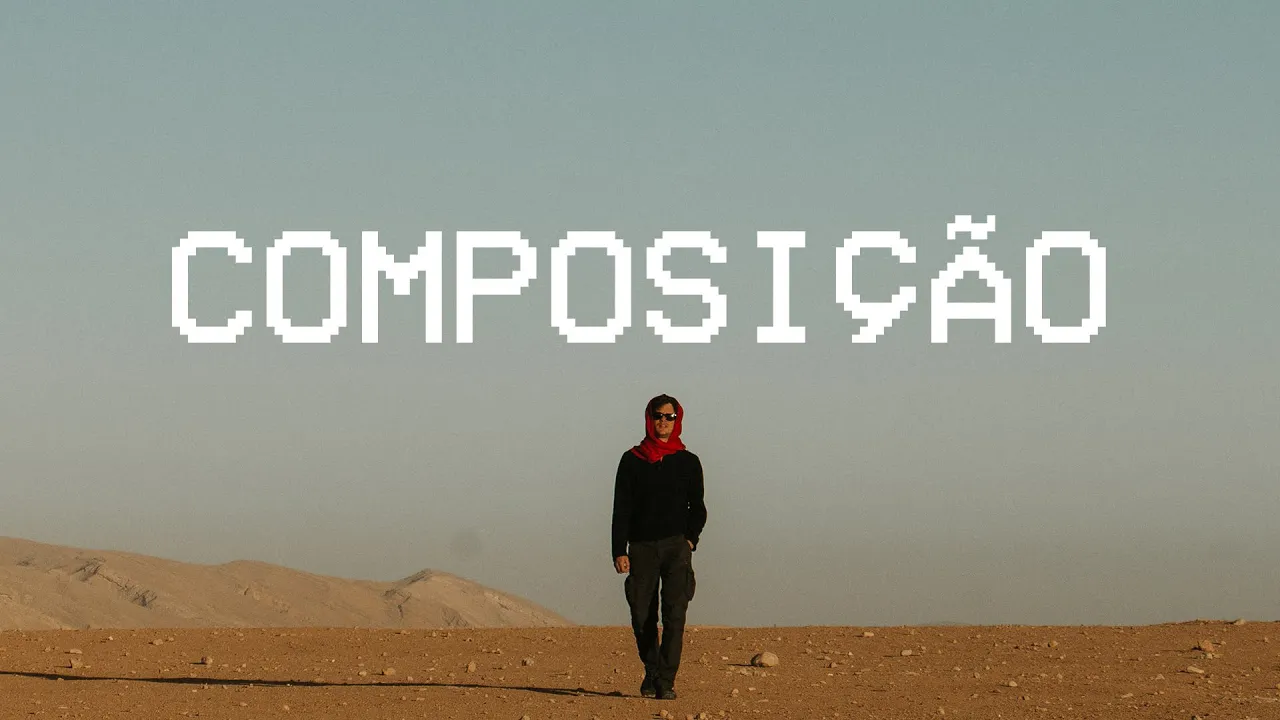

















Cinematic framing relies on five key techniques: (1) Using the background strategically to convey character information and environment, (2) Selecting appropriate lens focal lengths (wide-angle, medium, or telephoto) to control background compression and visual distortion, (3) Applying framing guidelines like the rule of thirds and leading lines to guide audience attention, (4) Choosing shot sizes and angles (wide, medium, close-up) to establish emotional relationships and spatial context, and (5) Balancing visual elements through symmetrical or asymmetrical composition, breathing room, and headroom to create visually compelling images that tell stories effectively.
Cinematic Framing: 5 Essential Techniques for Visual Storytelling
Added:Basic Camera Anatomy and Settings: Understanding focal lengths, sensor sizes, and how different lenses affect the field of view.
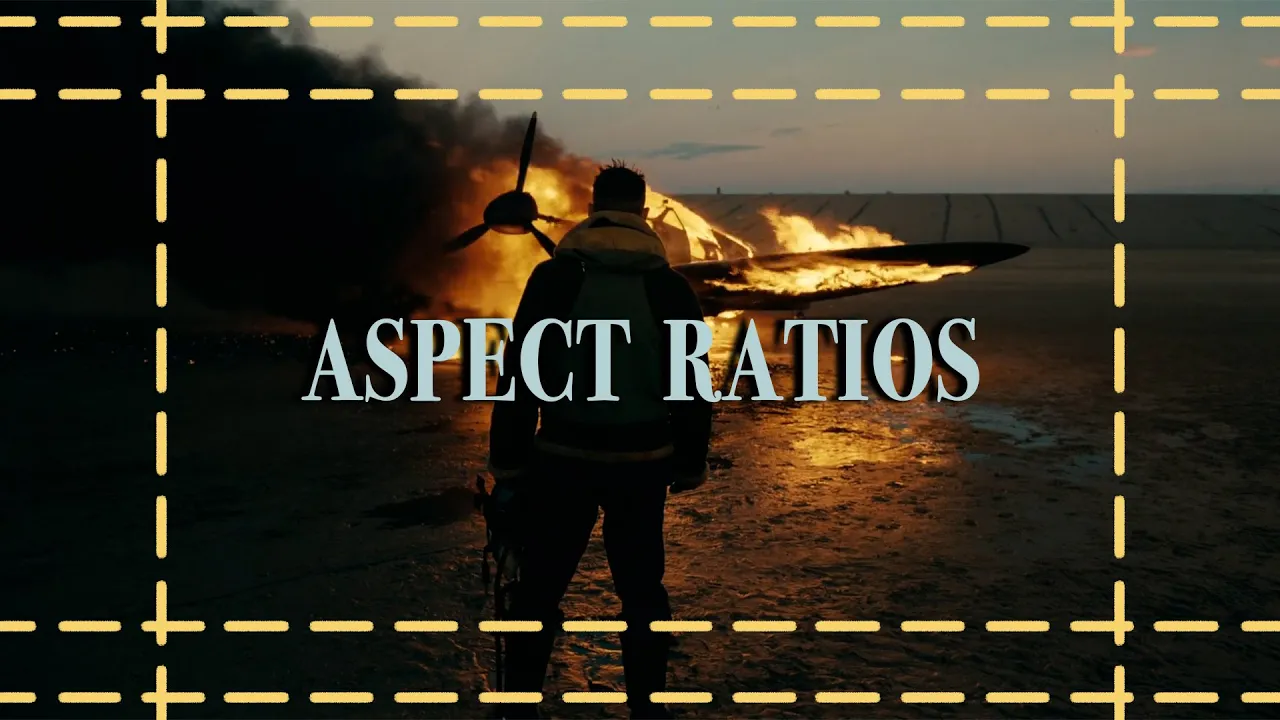
The Concept of Aspect Ratio: Familiarity with standard screen dimensions (e.g., 16:9, 2.39:1) and how boundaries define the cinematic canvas.
Fundamental Rules of Photographic Composition: Understanding basic concepts such as the rule of thirds, leading lines, and the importance of headroom and lead room.
Introduction to Visual Storytelling: A basic understanding of how non-verbal cues and environmental details in an image can convey emotion or narrative context.
Dynamic Framing and Camera Movement: Learning to combine static framing with pans, tilts, dollies, and tracking shots to guide the audience's eye dynamically.
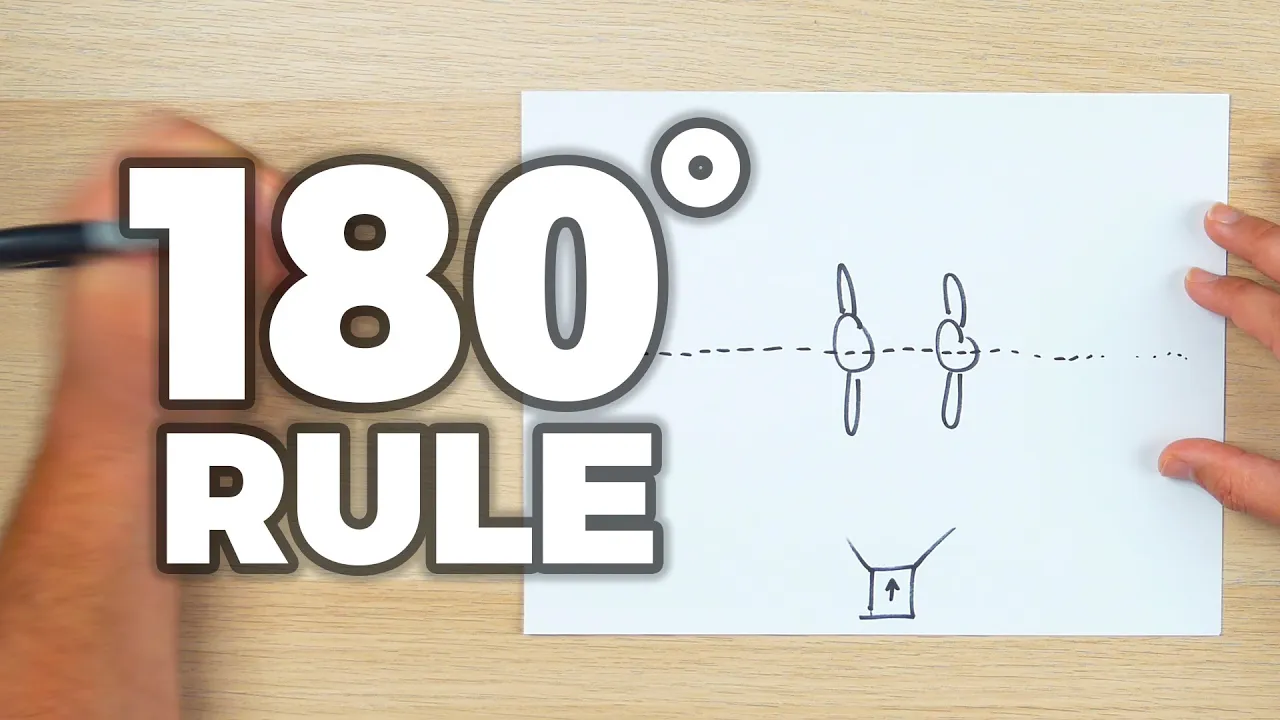
The 180-Degree Rule and Spatial Continuity: Understanding how to maintain consistent screen direction when cutting between different camera frames and angles.
Shot Listing and Storyboarding: Translating a script into a planned sequence of varied shots (wide, medium, close-up) to construct a coherent scene.
Lighting and Color Theory in Cinematography: Exploring how light direction, contrast, and color palettes interact with framing to establish mood and character psychology.
Advanced Composition Theories: Investigating complex visual techniques such as deep focus, negative space, and framing within a frame to add layers of meaning.
564.2K views21.8Klikes12:10Original Release: 2023-07-30
Filmmakers compose and visually present each shot within a frame. Frames can be of wide expanses, close up details, symmetrically balanced or even off kilter.
It’s also probably the easiest cinematography skill to practice: as all you need is to be able to snap away on a camera - including the one on the back of your phone.
But what is it that makes a good frame?
In this video, let’s go over five different techniques which may help you frame with more of a cinematic eye and tell stories using only images.
[TITLE] 1. Using The Background What we choose to include or exclude from each shot is a deliberate choice that any image maker should be aware of.
Most shots, whether in cinematography or photography, can be broken down into two components: the subject which the eye is most drawn to and the background, which the subject is placed against.
When filmmakers run through, or block, a scene with actors, one of the factors that they use to decide on the placement of the camera, and therefore the frame, is what background they want to place the subject against.
The background does a few things. First and foremost it’s a way of conveying information within a shot.
An isolated, tighter shot of a character against a white wall background includes limited information for the audience.
While shooting a character in front of a wider, carefully dressed set with windows reveals several layers of information. This person is sitting in a shabby dressing room, so perhaps he’s a performer.
The highrise building outside suggests that it’s in a city. He’s interacting with another character, but because he is in sharp focus, the camera is suggesting that the man sitting is the main subject in the scene.
For more untraditional, atmospheric filmmakers, who let stories play out slowly without much exposition, how they present each frame is especially important for the audience to glean as much information about the characters and their environment as they can.
A background can either be flat or have depth. This depends on the distance between the subject of the shot in the foreground and the distance to the objects in the background.
Normally, shots which have more depth to them are considered a bit more cinematic - as they create more separation between the foreground and the background and therefore a greater feeling of dimensionality, and more of an illusion of reality.
Like this shot which places a wall of highrises far off in the distance, rendering the looming city with a sense of scope while at the same time isolating the character.
This is also why documentary filmmakers often try to pull their interview subjects away from walls or backgrounds, both to render them more out of focus and to create more depth in the frame.
[TITLE] 2. Lens Selection Each frame is not only affected by the direction in which the camera is pointed, but also by the focal length of the lens that is chosen.
The focal length is the degree of magnification that a lens has and is denoted in millimetres.
An easy way to start thinking about focal lengths is by breaking them into three camps: wide angle lenses, medium lenses and telephoto lenses.
There aren’t any official millimetre categories when it comes to grouping focal lengths but I generally think of Super 35, spherical wide angle lenses being somewhere between 16mm and 25mm. With medium focal lengths being around 35mm to 65mm, and telephoto lenses approximately 75mm or longer.
Not only do wide, medium and telephoto lenses provide different levels of magnification, but they also change how the background of a frame is rendered.
The wider the focal length, the more the frame will be distorted and stretched and therefore the more background you will see. Whereas the longer the focal length, the more the frame will be compressed and the less background you will see.
Therefore when framing a close up shot of a subject it’s important to consider whether you want to use a super wide angle lens, with the camera physically closer to the actor, that displays more information in the background.
Or, whether you want to frame using a telephoto lens, with the camera further away from the actor, and show less of the background with a shallow depth of field.
[TITLE] 3. Framing Guidelines Although there is technically no right and wrong when it comes to framing, there are a few aesthetic and cinematic conventions or guidelines which have been widely adopted in filmmaking over the years.
One of the foundational framing guidelines is called the rule of thirds. This principle suggests dividing the frame into nine segments made up of two evenly spaced vertical lines and 2 evenly spaced horizontal lines.
You then place the most visually strong elements in the frame, like the subject along these lines, or at the intersection of these lines.
Probably the easiest example to show this is by framing the horizon. Usually cinematographers will either frame a landscape so that the sky portion occupies the top third of the frame and the earth portion occupies the bottom two thirds, or they will flip it and place the earth portion on the bottom third and the sky on the top two thirds.
Another convention is the idea of leading lines. These are where objects in a frame are lined up compositionally so that they create an invisible path which guide’s the audience’s gaze towards a specific part of the frame.
These lines can be created in symmetrical frames by finding elements that lead to a centralised point, like a doorway where a character is standing.
Filmmakers can also create a frame within a frame by composing the subject within a shape, like a mirror, a door or a window to create a more formal perspective.
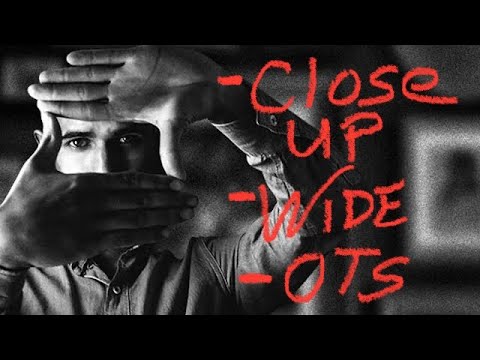
[TITLE] 4. Shot Size & Angle One of the most important decisions there is when it comes to framing is deciding how wide or tight you want your shot to be.
As we hinted at earlier, wider shots are great at establishing the environment around characters and familiarising the audience with the geography of the film’s world.
While tighter shots, where the subject occupies a large area within the frame, can be used to punch in and highlight details: whether those are an important object in the story or to better read and empathise with the emotion on someone’s face.
I’ve made a whole video on shot sizes before, which I’ll link below, but I think the biggest take away from it is the idea that, in life, our proximity to a person defines our emotional relationship to them.
Therefore, the tighter we frame a shot on a character, the more intimate it feels, while wider compositions feel more emotionally neutral and observational.
At the same time, the angle at which we point the camera at a subject also has a large effect on how frames can be perceived by audiences.
Most shots in filmmaking are taken from a neutral, or medium angle, where the camera is positioned roughly at the eye level height of a character without any significant vertical tilt.
This approximates the viewer’s own eye level and creates a level of empathy and identification with characters. It also conveys a sense of normalcy and realism as it’s not visually jarring.
Low angles, where the camera is positioned at a height below the character's eye line and angled upward, creates more of an uneven emotional connection, which is often used to make characters feel more powerful, physically larger, dominant, imposing and stronger.
While high angles, shot from a tall position with the camera tilted down, tend to have the inverse effect of creating a sense of vulnerability, diminished size or weakness.
[TITLE] 5. Balance Shots that are thought of as cinematic generally have a degree of balance to them. However, this balance can also be deliberately thrown off and subverted for effect.
A balanced frame is one where no part of the image has an overwhelming visual weight from elements that throws off other areas.
One way to think about this is in terms of negative space, empty areas in the frame without significant visual elements, and positive space, parts of the frame that draw the eye towards a focal point.
Filmmakers can create a symmetrical balance by centrally framing a subject and then equally weighting areas of negative space against the middle area of positive space.
Or they can frame shots with asymmetrical balance by placing the main subject in the image off-centre and then weighting the other side of the image with elements of negative space.
Other visual aspects like colour or areas of light and shadow can also be layered to either achieve symmetrical or asymmetrical balance within a shot.
When it comes to framing a dialogue scene between two characters, a common technique is to use a tik-tok or shot-reverse-shot: where each shot is taken from the same side of a 180 degree circle, in a way that may place the characters on opposite sides of the frame.
This introduces another two framing concepts: breathing room and headroom.
Breathing room is the amount of negative space between the subject and the edge of the frame.
Traditionally this space is left open in front of characters to give a sense of normalcy. Unless filmmakers want to deliberately introduce a bit more uncertainty or tension by leaving characters with limited or no breathing space.
Headroom is the amount of space above a subject's head. This can either be traditionally framed so that there is some negative space above the character, or the subjects can be given a haircut, so that they have no headroom and the top of their scalp is framed out - which may make the shot feel a bit tighter, more intimate and even tense.
There’s no magic tool that will allow you to create perfectly cinematic frames. Probably because there’s not really such a thing as a perfectly cinematic frame. Some movies may need uglier, off kilter shots, while others may benefit from a more precise, symmetrical form.
It always comes down to forming a perspective on a story that you then translate into a look.
Every brain will do this differently and interpret how the world is framed in different ways. But hopefully the next time you are practicing snapping photos or composing your next shot, you will have some of these techniques in the back of your mind that you can use to manipulate how you want your images to look.
This video was made possible thanks to all the incredible members on Patreon whose donations keep this channel going. If you’re interested in supporting please go check out the In Depth Cine Patreon or grab some of the original merch. Otherwise, until next time, thanks for watching and goodbye.
Up Next
19:40
Cinematic Composition: 5 Essential Framing Techniques
@Kriscoart
49.5K views•2020-11-24

12:54
Triumph of Orthodoxy Icon: Byzantine Art & History Explained
@BenCallan
2.1K views•2024-08-06
12:05
Essential Lighting Concepts for Cinematographers
@InDepthCine
418.2K views•2020-11-08

1:42
Game of Thrones Opening Credits: A Cinematic Analysis
@gameofthrones
46.3M views•2011-04-18
Related Study Plans & Knowledge Roadmaps
Structured learning paths in General & Interdisciplinary Studies
general-studies
Elevator Engineering: History, Physics & Cities
01From Hoists to Safety Brakes: The Dawn of Vertical Lift
02Hydraulic vs. Traction: The Engineering Physics of Elevators
03Modern Speed, Safety, and Algorithms
+ 2 more learning modules
12h5 modules
Explore Roadmap
general-studies
Rubber: Material Science, History & Geopolitics
01Origins of Natural Rubber & Mesoamerican History
02The Chemistry of Natural Rubber & Vulcanization
03The Geopolitics of the Rubber Boom & Colonization
+ 2 more learning modules
12h5 modules
Explore Roadmap
general-studies
Containerization: Evolution, Logistics & Trade
01Ancient Trade & Bulk Cargo: Amphorae to Barrels
02The Industrial Revolution & Cardboard Packaging
03The Containerization Revolution: Malcom McLean
+ 2 more learning modules
12h5 modules
Explore Roadmap
general-studies
Textile Tech: Evolution, Labor & Global Impact
01Pre-Industrial Textiles: Handloom & Cottage Industry
02Mechanization: The Spinning Jenny to the Power Loom
03The Factory System & Global Labor Transformation
+ 2 more learning modules
10h5 modules
Explore Roadmap