








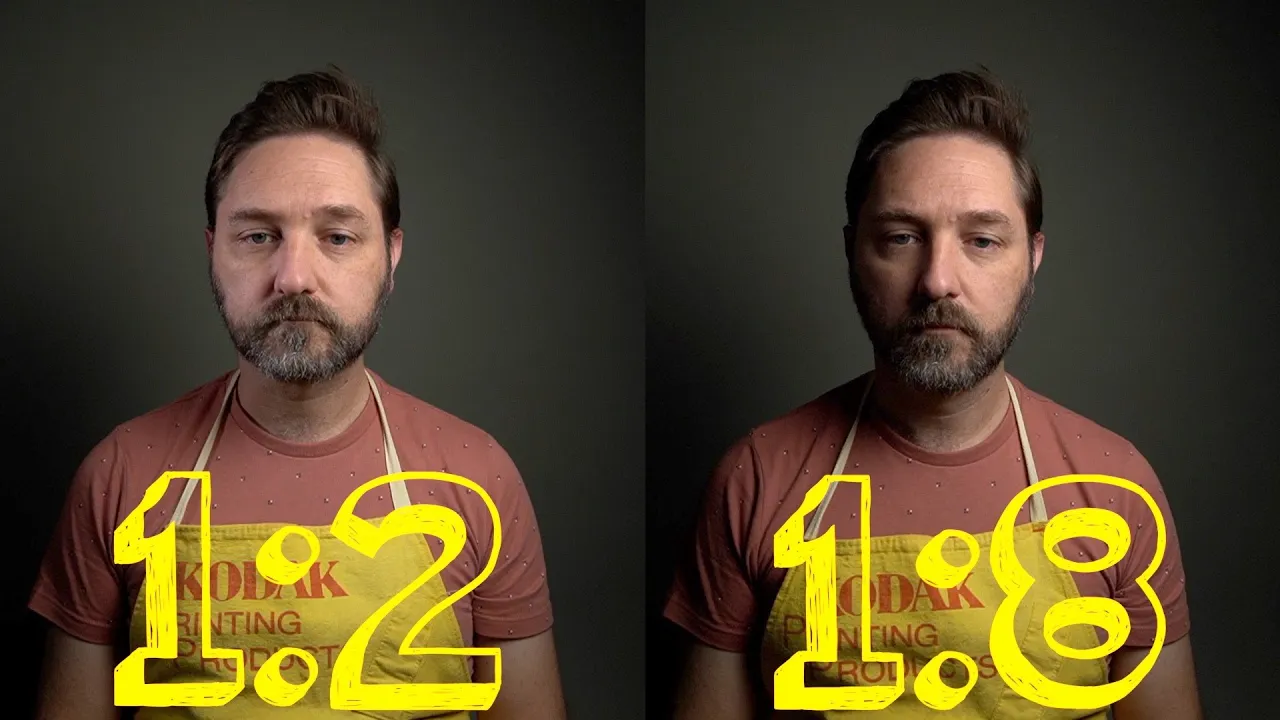
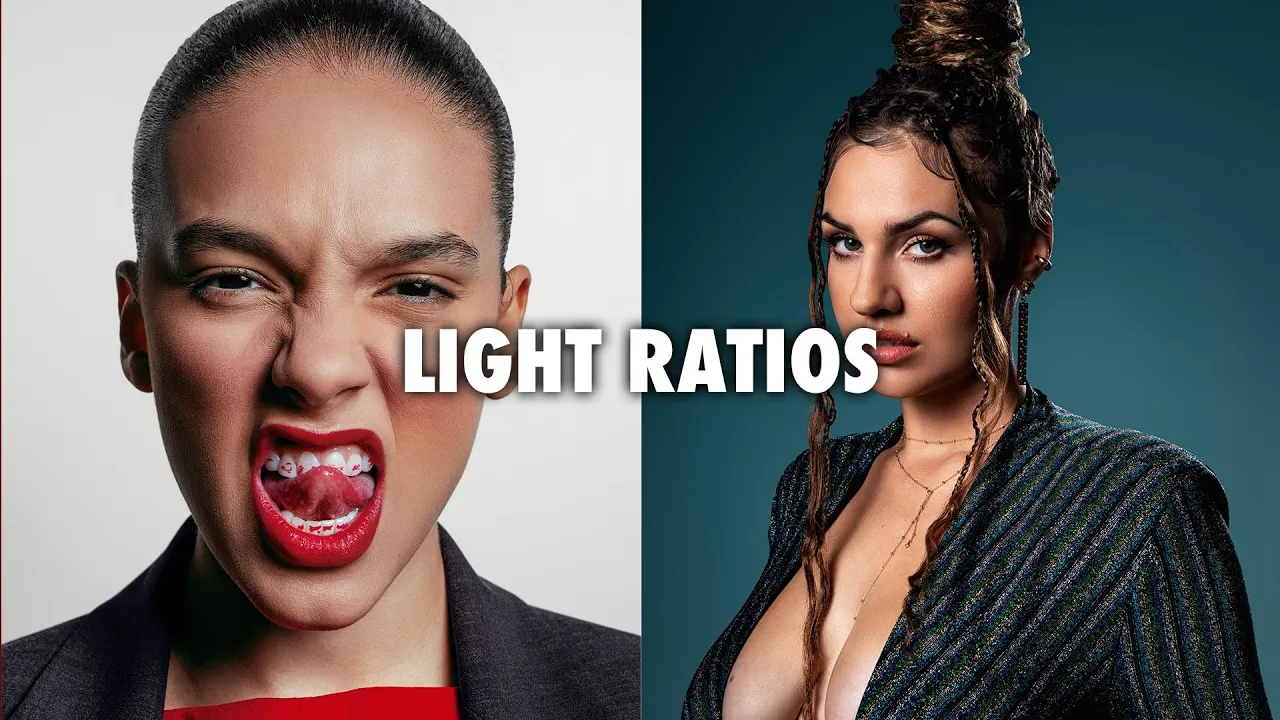

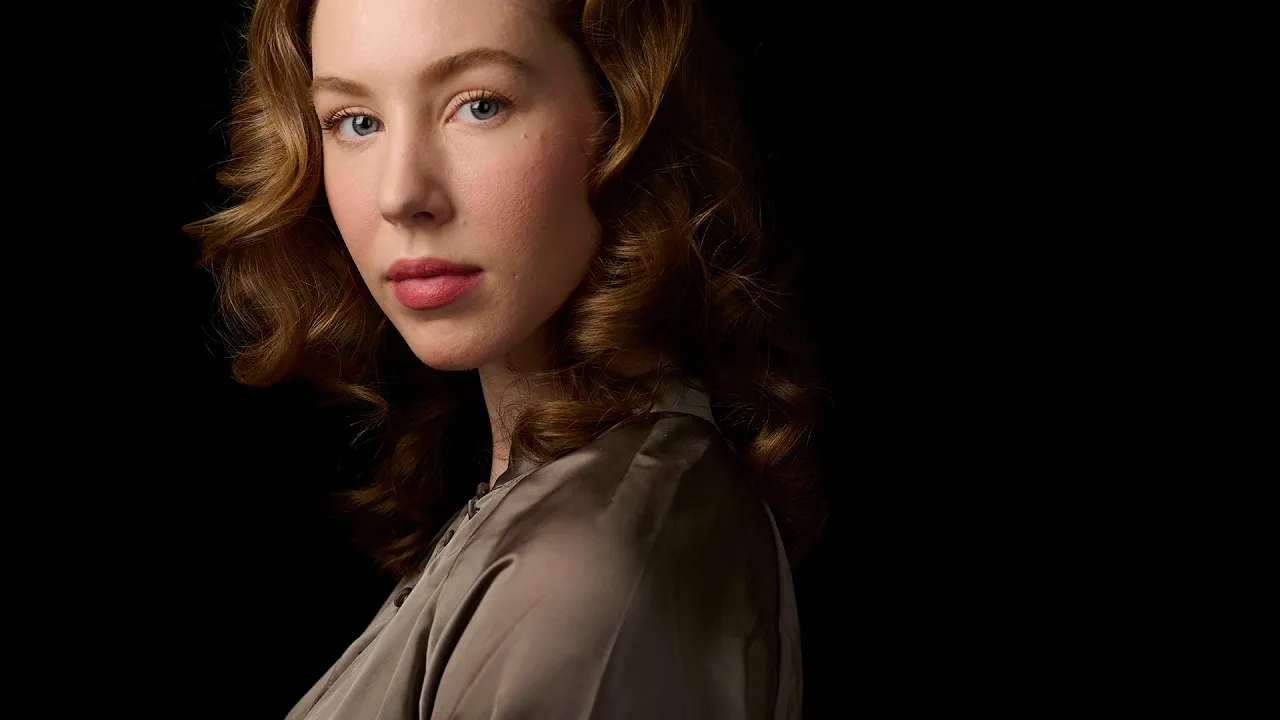





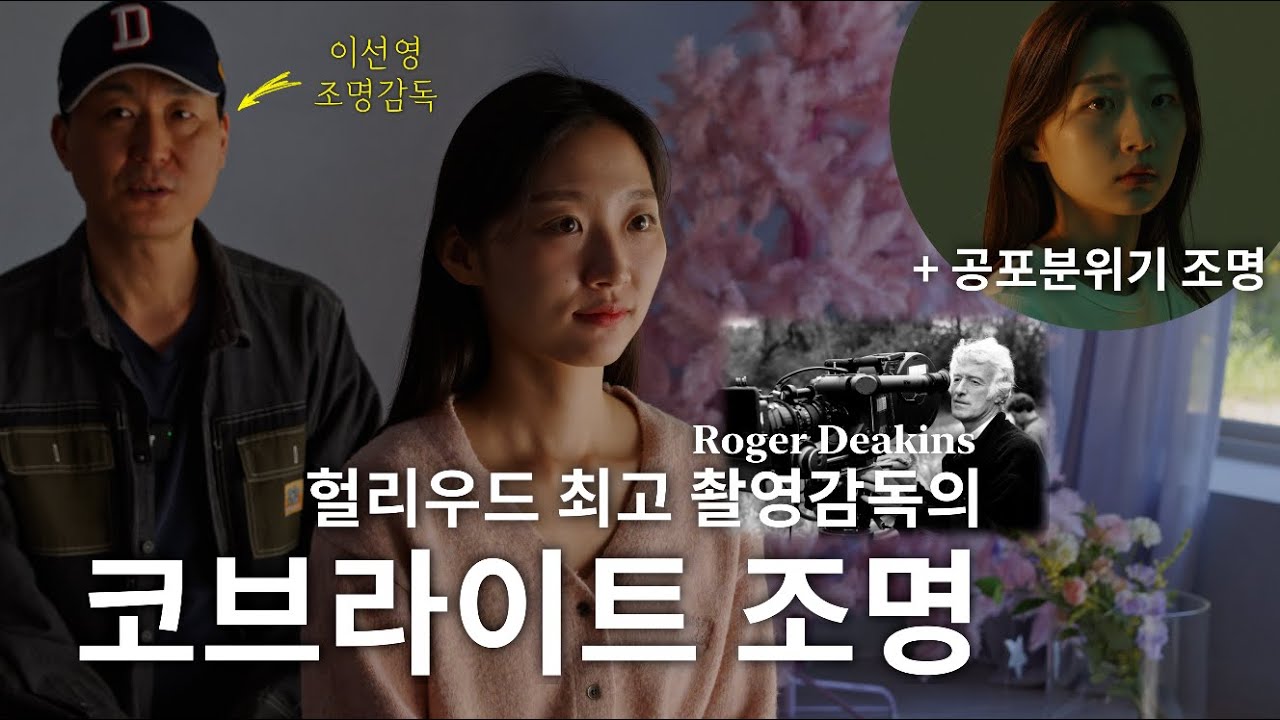
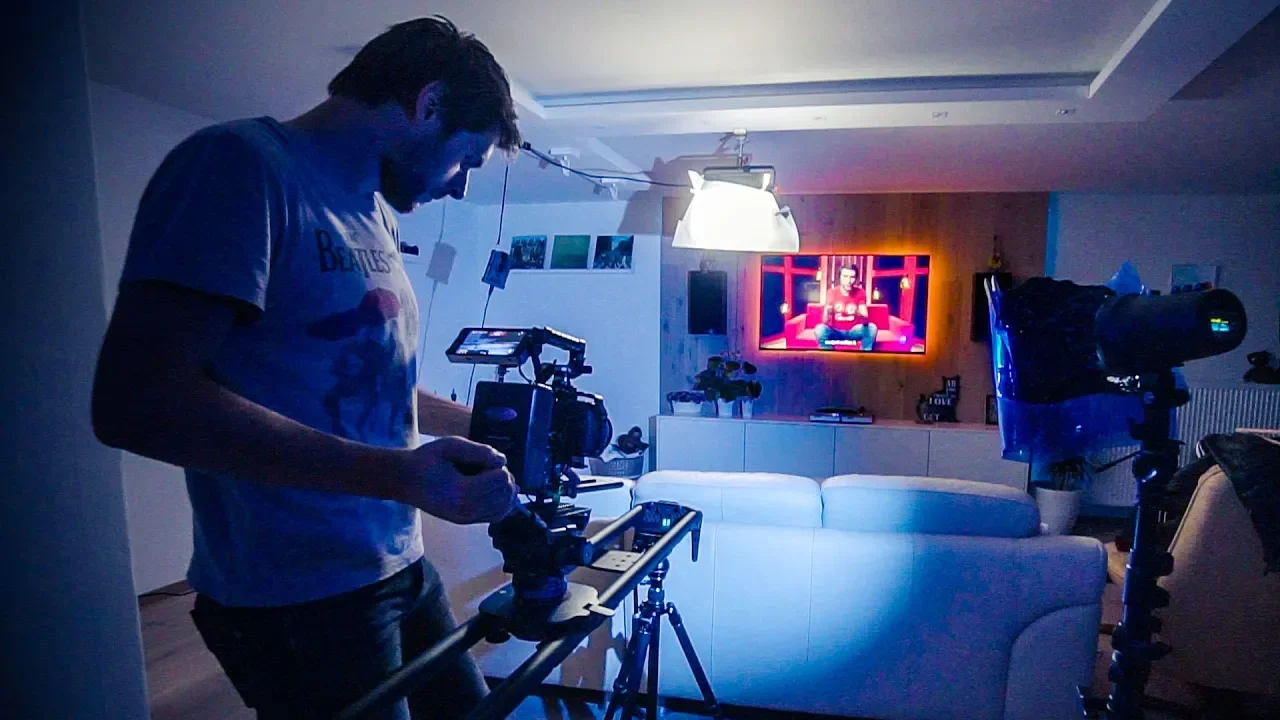

Cinematographers must master five core lighting concepts: Three Point Lighting (key, fill, and backlight for controlled illumination), High Key vs. Low Key (even exposure with minimal shadows versus dramatic contrast with deep shadows), Soft vs. Hard Light (diffused light with gradual shadows versus direct light with sharp edges), Colour Temperature (measured in Kelvin where warmer lights are around 3,200K and cooler daylight is around 5,600K), and Naturalistic vs. Expressionist (realistic ambient light replication versus stylized, emotional lighting manipulation). These principles provide a foundational framework that cinematographers can follow, break, or selectively apply based on creative vision, always ensuring deliberate and motivated lighting decisions.
Essential Lighting Concepts for Cinematographers
Added:Film or video is nothing more than a camera capturing different wavelengths of light.
One of the primary facets of a cinematographer’s job is using lighting to sculpt images and influence the feeling of a film visually. There are an infinite number of ways that DPs can paint with light: subtly, brashly, softly, firmly. The possibilities for expression are limitless.
There are however certain key principles which every cinematographer needs to know in order to use them as a base for their lighting.
In this video I’ll go over 5 of these concepts for cinematic lighting: Three Point Lighting, High Key Vs. Low Key, Soft Vs. Hard, Colour Temperature and Naturalistic Vs. Expressionist, which are all foundational to the knowledge of anyone who wants to be a filmmaker.
The direction and placement of light sources on set is one of the most important decisions DPs can make.
Although some may argue that strict three point lighting, the likes of which was a trademark in Classical Hollywood, has almost become obsolete amongst many modern cinematographers, I’d argue that it is still one of the most important principles in lighting today.
It refers to the three different lights traditionally used to light a scene: a key light, a fill light and a backlight. These three light sources can take the form of anything, from film lights, to the sun, or even practical lamps.
The key light is the strongest source of illumination and classically is set up at a 45 degree angle to the character. This creates contrast and lights up the face, leaving some of the face in shadow.
To soften the shadow and decrease contrast, a fill light, which is usually less powerful than the key, is set up on the other side of the face typically at around 45 degrees. This is used to ‘fill in’ or illuminate the face enough so that there is a controlled level of contrast.
Then finally, a backlight is set up at an angle behind the character, hitting the back of them. This creates an outline around them and increases the separation between the character in the foreground and the background.
While some DPs choose to use all three points of lighting, many don’t. For example, some may like high levels of contrast and choose to light with a strong backlight while not filling in the face at all.
Understanding the concept of three point lighting is still valuable, even if you decide to disregard one or even two of the lighting points.
This video is sponsored by Skillshare.
If you’d like to explore other videos on filmmaking topics such as lighting, editing, cinematography and directing Skillshare is the place to go.
Skillshare is an online learning platform with a community of millions and thousands of inspiring classes for creatives and those looking to deepen their existing passions.
With all of this content, real projects to create and the support of fellow-creatives, Skillshare empowers you to grow and enhance your skills by offering classes designed for real life application. Personally, I really enjoyed watching documentary filmmaker Ryan Booth’s class on DIY Cinematography about sculpting natural light to achieve enhanced realism in documentaries.
It’s specifically curated for learning, meaning there are no ads and they’re always launching new premium classes so you can stay focused and follow your creativity.
Skillshare is less than $10 a month with an annual subscription. The first 1000 people to use the link in my description will get a free trial of Skillshare Premium Membership.
Expressing your creative voice is more possible now than ever before. Explore classes to unlock your creativity.
In order to understand high and low key lighting we need to understand the idea of contrast ratios. This refers to the difference in luminance between the light part of an image, typically lit by a key light, and the dark part of an image.
Cinematographers often light so that there are different areas of exposure in different parts of the frame. This creates different planes of contrast in a 2D image, resulting in more depth.
For example, having a brightly lit subject against a dark background gives an image more separation.
When the difference between the lightest and darkest part of an image is high, the level of contrast or contrast ratio is high. This is characteristic of low key lighting.
These kinds of images have strong shadows with deep blacks, punctuated by areas of highlights. This style of lighting is achieved by minimising the amount of light sources used, for example using a single backlight with minimal fill.
High key lighting flips this. Exposure across the image is far more even, with minimal contrast and a brighter overall illumination with few shadows. Usually more light sources are used in order to light up all parts of the frame.
High key lighting, with its lighter, cheerier, more flattering luminance, is commonly applied to comedic content, beauty shots and stories which are more light hearted in nature.
Low key lighting’s lower levels have associations with drama, mystery, suspense or any story which is on the darker end of the emotional spectrum.
As with any creative field, there are no hard and fast rules, and cinematographers have been known to deliberately flip these lighting conventions on occasion, using low key lighting for comedy or high key lighting for horror.
The quality of light and how it is shaped is another important consideration in cinematography.
Hard or direct light comes from shining a source straight onto the subject. This results in hard, defined shadows, which have a clear line of separation between light and dark areas.
Lighting in this way adds a level of harshness and intensity to a scene, making it suitable for films with a gritty tone. It can be used to replicate artificial light sources like harsh sodium vapour street lamps or direct, toppy overhead fluorescents.
Soft or diffused light produces shadows with a gradient or a softer edge which wrap gradually around a subject.
This can be achieved by shining a light through diffusion before it hits a subject, bouncing light off a surface or combining these two methods by first bouncing then diffusing that same light in a technique called book lighting.
Diffusion comes in various strengths depending on how much you need to soften the light. Common diffusion materials include: white diffusion gels like a Lee 216 and textiles like a Full Grid Cloth or Silk.
In the past I’ve used low budget solutions for diffusion like using a white bedsheet, a shower curtain or even baking paper in front of a light.
Some common methods of bouncing light are to: use a textile, like a White Ultra Bounce on a 8x8, 12x12 or 20x20 frame, use a polyboard, like a white poly for softer bounce or a silver poly for slightly increased, harder bounced light, or just bouncing a light straight off a wall or ceiling.
The more light is diffused or bounced the lower illumination it provides. This is why larger, more expensive lights with a greater output are often required by DPs who want soft light.
Diffused light is generally used to replicate the quality of natural, bounced ambient light from the sun and is especially popular in beauty cinematography as it helps to soften and flatter features.
Visible light occurs on a spectrum of colour. Conventionally, colours along the blue/yellow axis are measured in Kelvins.
The warmer the colour temperature, the lower its Kelvin value will be. For example, a warmer, more orange, tungsten light will have a colour temperature somewhere around 3,200K, while a cooler, daylight HMI will be around 5,600K.
Just as cinematographers use different contrast ratios to create separation and depth, colour temperature can be used in the same way.
Lighting characters with a warm tungsten light against a cooler dusk sky creates more depth between them and the background.
Lights with different colour tints can also be used in this way, or to throw a monochromatic hue over the entire frame.
This can be achieved by either shining lights through coloured gels, or dialing a specific tint on the colour spectrum on an RGB LED light.
Gels can also be used to correct the native colour temperature of lights. For example, a scene may be keyed by 5,600K daylight from the sun.
A cinematographer may want to place a strong 3,200K tungsten light to fill in the face.
In order to balance the light so that the colour temperature remains the same colour as daylight, they could add a CTB gel to the tungsten light to achieve a uniform temperature across the frame.
There are two approaches to lighting a film. One is naturalistic lighting, which attempts to emulate and enhance the naturally occurring ambient light on a set.
Lighting in a realistic way can be used to draw an audience closely into the story, presenting the characters in a more objective style.
Expressionist lighting involves altering the colour, quality and shape of light in an unrealistic way, that is not true to life, for a jaring, emotional effect.
This lighting style can be used to present characters in a more subjective manner.
It’s also possible to bounce between these two approaches, lighting naturalistically for the most part and enhancing lights in an expressionist way for specific scenes.
To light naturalistically, DPs will often examine the set, see where and how the light falls naturally, then put up lights that emulate the direction, shape and quality of that ambient light.
Placing a large source outside a window and shining it through is one way of naturally replicating and enhancing the sun coming through that window.
Another naturalistic technique is to control the ambient light using black textiles to create shape and contrast. This is called negative fill.
Black subtracts light. So placing this material on one side of a character’s face for example will create more shadow while retaining a lifelike shape to the light.
These concepts form an important basis in filmmaking education. Once cinematographers fully understand all of these rules they can then choose to follow them, break them or apply some rules while disregarding others.
Whether you choose to use or ignore these concepts, it’s important that your lighting is always deliberate and based on motivated decision making.
You should always be able to explain to someone exactly why you place every light on a film set.
In order to enhance emotion through lighting you need to master the technical side of cinematography and know how to use it to your advantage, in order to manipulate the correct visual tone for each film that you shoot.
I’d just like to thank everyone for watching and supporting the channel. If you’d like to see these videos early please consider supporting me on Patreon by following the link in the description.
Until next time, thanks for watching and goodbye.
Up Next

Color Temperature & White Balance in Cinematography Explained
@StudioBinder
359.9K views•2022-01-24
Hollywood Fantasy Orchestrator RPG Expansion Pack Tutorial Walkthrough
@HighResolutionJapan
1.1K views•2024-03-08
Aspect Ratios in Cinema: A Guide for Filmmakers
@InDepthCine
143.3K views•2022-10-09

Game of Thrones Opening Credits: A Cinematic Analysis
@gameofthrones
46.3M views•2011-04-18
Related Study Plans & Knowledge Roadmaps
Structured learning paths in General & Interdisciplinary Studies