






![Structures, Powers, and Functions of CONGRESS [AP Gov Review, Unit 2 Topic 2 (2.2)]](https://i.ytimg.com/vi/wRT-yRyBXS8/maxresdefault.jpg)

















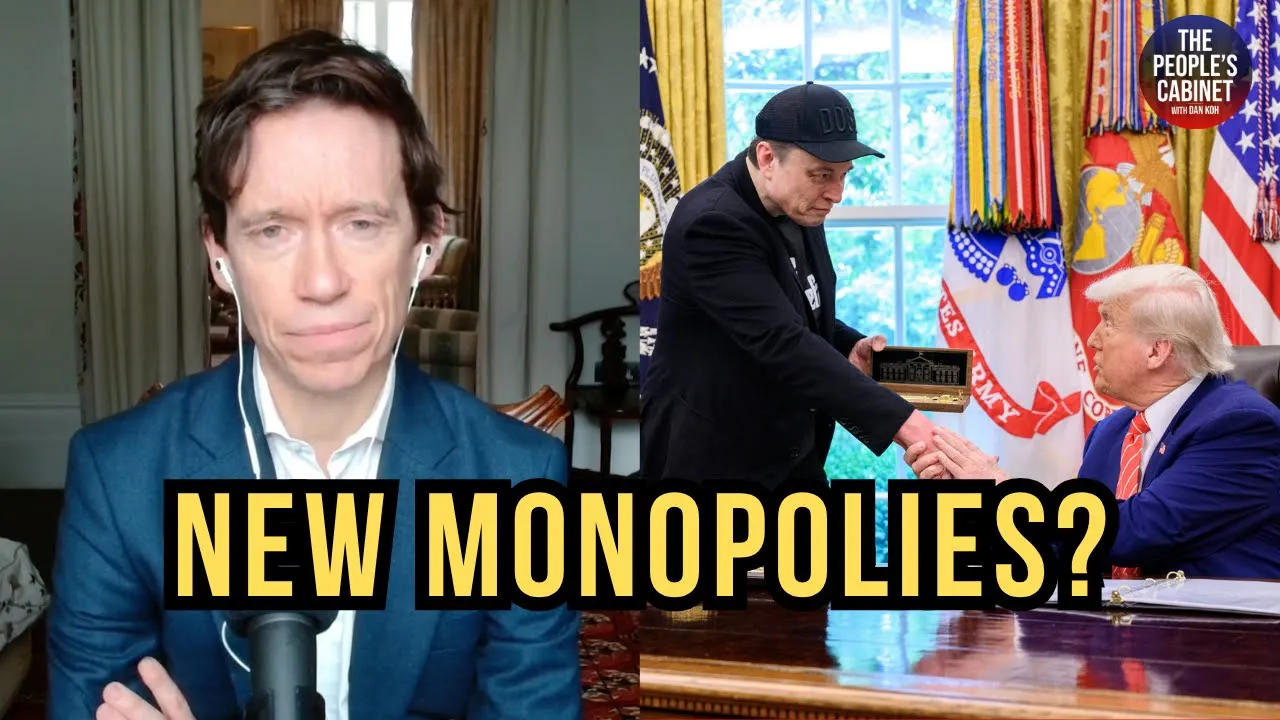
Congressional budget decisions often involve trade-offs between tax cuts for wealthy individuals and corporations versus funding essential public services like healthcare and food assistance. In the case discussed, Republicans proposed a $4 trillion tax cut plan that would require $880 billion in savings cuts, which they achieved by cutting Medicaid ($715 billion, affecting 8 million people), the Affordable Care Act ($358 billion, affecting 5 million people), and food assistance ($230 billion). Congressman Greg Landsman argues that this approach prioritizes tax cuts for the super wealthy over protecting vulnerable populations, and that a simpler solution would have been to modestly increase the corporate tax rate from 21% to 28%, which would have generated the necessary revenue without harming public services.
Trump Corruption, Healthcare Cuts, and Democratic Messaging
Added:Democrats in Congress are fighting against Republican plans to cut health care, voting access, and more. Helping lead the charge, Ohio Congressman Greg Lansman is here to discuss. Welcome back to Defending Democracy. I'm Mark Elias.
Let's get started. Congressman Greg Lansman, thank you for joining us.
Thanks for having me. All right, so I got to start where probably a lot of people are starting with you right now, which is you recently participated in a 26-hour long hearing. I didn't know that the House did 26-hour long hearings. You know, we occasionally hear about the senator who takes to the Senate floor for a really long time. I didn't realize whole committees take to the deis for that long. Uh talk about this and your your calling out um Republicans, which you did quite eloquently uh for frankly lying about what was in this budget bill. Yeah. So, uh this is the uh big beautiful bill as they call it. Um it is a disastrous bill and we're hoping that ultimately they don't have the votes and that we can kill the bill. Uh but the bill was broken up into uh pieces. Uh the tax pieces went to Ways and Means.
uh the the cutting of food assistance went went to the agriculture committee or a and the Medicaid cuts uh went to us at energy and commerce. But essentially uh they want to pass uh congressional Republicans and Trump uh want to pass a $4 trillion tax cut plan, most of which benefit uh the superw wealthy and big corporations. Now, uh they uh are going to add trillions of dollars to the debt.
And so there are deficit hawks who are very frustrated about this, but they'll accept uh some deficit spending. Uh and so uh in order to avoid just putting all of this uh on the on the the the nation's credit card, they said, "Look, you have to find uh $880 billion in savings cuts uh to to our committee." And so Republicans then uh the only the only way to do that is to cut Medicaid. So, they uh have a $715 billion cut to Medicaid in this uh bill that will cost uh about 8 million people uh health insurance. So, 8 million Americans will lose health insurance all to pay for tax cuts for for the superw wealthy and big corporations. The a committee uh is two uh 350 230 230 billion in cuts. They went about 20 hours debating, offering amendments, Democrats put up a big fight. Uh, and unfortunately along partisan party lines, they voted to cut $230 billion in food assistance. The lowest income folks in America will lose food assistance if this larger bill passes. And then in Ways and Means, they went about 2022 hours, too. I mean, they they they were at it for the whole night. Uh there is a uh $358 billion cut to the Affordable Care Act, which means another 5 million people will lose their uh health insurance coverage because they lost their subsidy. So, a total of 14 million Americans will lose their health insurance if this larger bill passes. So, the bill goes uh to these committees. They passed them. Again, we we fought them. We kept them in uh in our committee for 26 straight hours arguing with them over every aspect of this bill so that the American people know exactly what's going on and hopefully that is enough to kill this bill and the arguments that we made uh I think were very compelling. We spent 26 hours saying this is why uh this bill should die because you are not just taking uh healthcare away from millions of people but you're doing it you're doing it for one reason and one reason alone and that is to pay for tax cuts for the superw wealthy.
I mean it's actually hearing you tell this it is extraordinary that they basically broke up. So, like one one set of Republicans got to brag about giving tax cuts to billionaires. Another another got to sit there and cut uh health care for the neediest uh people in America and the third uh group it sounds like got to uh what take away food assistance. Yeah. I mean, what what do you what do you I ask this often times and I don't quite know um I don't quite know why I have an endless fascination with it. What do your Republican colleagues think they're doing? Like do they do they just think like they are there to do whatever Donald Trump's bidding is and like they don't care? Do some of them like believe this is actually all a good thing. Like what is going on with them? So I think uh and I said this in my closing statements um yesterday or the day before. I' I've lost track of time. When you sit in a committee uh markup for 26 hours it you know um you you lose track of the day.
In any event, uh I said and I truly believe this. I don't believe they came into Congress or this committee uh hearing wanting to take healthc care away from 8 million people. I don't think they wanted to cut Medicaid. Uh there's some waste fraud abuse across every single program that exists. And there are GAO reports uh that say here are some specific things uh to tackle waste fraud and abuse. We could have voted on that and passed it passed uh that in a bipartisan way in 10 minutes. They were given an assignment. The assignment from Trump and congressional Republican leadership was we have to pass these tax cuts that overwhelmingly favor the superw wealthy and and big corporations.
Um and we need you to find $880 billion in cuts. Really 1.3 trillion across multiple committees. Okay. And so being the good soldiers they are, they they came up with a scheme to take health care away from about 8 million people in our committee, 5 million in ways and means. And when you add up the cuts to healthcare and food assistance, it's $1.3 trillion.
Now, if they decided that they would take the corporate tax rate, which was 35%. In 2017, and then uh Trump lowered it to 21%. If they decided to just meet us in the middle and take it back up to 28%, which is still well below 35%. That would generate $1.3 trillion in savings.
That's the exact number uh of uh of cuts. So the healthc care cuts uh in our committee 715 billion uh ACA healthc care cuts 358 billion. The food assistance cuts 230 billion. That adds up to $1.3 trillion. Meaning that they could leave all of this alone and everyone would keep their health care and their food assistance by just moving tax rate by a few percentage points from 21 to 28. That's it. If that was the assignment, I think congressional Republicans would been like fine. I'll be right back with more of my conversation with Congressman Lansman in a moment. I founded Democracy Docket in 2020 to be the leading source for news, information, and analysis to keep you informed about what's happening in courtrooms around the country. Our growing team is now nearly two dozen, and it tracks the anti-democratic groups working to undermine free and fair elections and keeps you informed on Republican voter suppression tactics and more. Please take a second to become a premium member to Democracy Docket by clicking on the link above or in the show notes below.
So, I want to um one of the reasons why I wanted to have you on uh is because of where you're where you're from, what your district is. So, you are from Ohio's first uh congressional district, which contains all of Cincinnati. Uh but it is actually, you know, a pretty swingy district. I think you won it from a Republican uh incumbent uh uh year uh years ago. Uh and it's a you know, it's a it's a swing district. And so you hear from your constituents, I assume, that are both Democrats and Republicans and independents. You know, you're not you're not sitting in a in a, you know, a bastion of Democratic bubbleness. Um, and so what what do you hear from them, you know, on, you know, not just the Democrats, like what do you hear to the extent you can distill down? Because, you know, I realize you probably get a lot of different thoughts, but like what do people in your district think about what has been going on for the last few months? Because I assume a lot of them probably voted for Donald Trump. Yeah, a lot of them voted for Trump. Uh yeah, so my district is uh southwest Ohio, Cincinnati, and uh that part of Ohio.
It's equal number of Democrats, independents, and Republicans. A third live in the city, a third in the suburbs, a third in uh the rural part of Ohio. Uh perfect district in my opinion.
And uh it's a very pragmatic group of voters. They want what most Americans want uh which is uh they would like their government to be helpful when they need help and their government to leave them alone uh in regards to everything else. Just be there to help and and don't don't get in the way. Uh and so what they see is a ton of chaos. That that is one thing you hear over and over. This just feels like chaos. chaos is not great for our our our personal well-being because it's just constant in our face. Uh the the the border stuff, we wanted it fixed and we want immigration reform. This feels pretty chaotic and unlawful. Don't love that.
Uh we wanted uh you know someone to fix the economy and appreciate that it's broken for most of us. that, you know, the the the wealth gap is is insane. And because there's so much wealth accumulated at the top and with corporate consolidation, we just we've lost so much power and we're just all, you know, struggling to, you know, pay all of our bills. Our our bank accounts are just grim, right? That's that's a that's something I hear a lot. It's just like we're having a hard time and all we see is chaos from from this administration and this Republican uh Congress that's just going along with it and not saying, "Hey, you know, let's let's uh let's calm down a little bit."
Um and then there is a level of corruption that obviously you're seeing that people absolutely hate across the board, Republicans and Democrats.
You got all these billionaires who are are driving the decision-making. They're getting more contracts. Uh they're obviously making out uh well, and then with this tax plan, somehow they get they get all the benefits and and low-inccome people are going to have to either pay more with for health coverage and and to see a doctor or or to get a procedure or they're just going to lose their healthcare altogether. And then and then the guy goes the and and and and takes a $400 million you know bribe uh you know with with this private jet.
I mean it's just it you know plus the Trump memecoin which is essentially a Swiss bank account where people just deposit money and god knows what they get for it.
And both parties need to be anti-corruption and and they both parties have an opportunity to be anti-corruption. one is saying this is absolutely blatant corruption and the other one the speaker said that's not my lane that is a bad place to be and then finally they don't like the cruelty there's a level of cruelty you know I mean the tariffs it's chaotic but it's causing it's it's cruel in the sense that like people are going to lose their jobs if they haven't already you know banks in my district and businesses have talked to me about them just pulling back. They're just they're just not going to do much. And that hurts people.
The immigration staff, even even those who who are like me wanted to see, you know, real border security and immigration reform, you're just removing people without any process whatsoever is and taking them away from their family.
That's just cruel. You know, it's it's chaotic, but it's just mean and It does seem to be it's funny on the immigration of in particular it seems like the cruelty is actually the point you know the fact is that you know you have these situations in which you know they don't send Venezuelan migrants back to Venezuela they send them to a Salvador to El Salvador you know they they they've been you know they that there was someone I forget who it was who was released uh it was someone recently who was released who's like look I want to just leave the country and they tried to hold them in custody while they remove them from the country. Like there just seems to be a a level of it that is sort of intentionally cool. I think Trump will go down as as being one of the most corrupt uh presidents ever. Uh I think he will go down as being the first pick me president that I have a 13 and 15year-old. Like pick me is like somebody who's just like I'm cool, you know, pay attention to me. But but but he also will go down as as being, you know, the most obnoxious TV president.
like that. It was all for TV. It's all for attention and TV. And it didn't matter if if if someone's family was torn apart or if somebody lost their job. Uh it just none of that was of concern. It was just about making for good TV because he is obsessed with attention. So that is the other reason in cander I wanted to have you on because you have been one of the leading uh lights the bright lights leading advocate. I don't know I don't know if I'd say you were a leading advocate but you're certainly one of the leading success stories uh in trying to have democratic messaging be um you know more current, more vibrant.
I don't I I don't want to insult any of any of the folks of the caucus doing media other ways, but you but you know you you you have recognized I think the importance of independent media, prodemocracy media, new media outlets and the like and so talk to me about that. Um both from the standpoint of why it's important which I think people will intuit it but like how do you get this done? Yeah. So there's a a phrase that we use a lot in politics which is we got to meet people where they are and I think to a large extent people think about that in in sort of real life which means like go to their town you know do town halls uh you know go to their church go to their synagogue go to their mo you know meet people where they are in real life. Now it is also true that you have to do that on the internet that each of us spends some portion of our our day on the internet uh whether it's on Tik Tok or Instagram or listening to podcasts or YouTube you know uh shows we spend some time on the internet and so you got to meet people where they are there too and that's it and so meet people where they are in real life and meet people where they are on the internet and and so uh if you believe in that because that's a core for a a principle of democracy and building relationships and trust and and making sure that you understand what problems you need to solve. Uh because these are the problems that are most relevant to the people that you serve. You got to meet them where they are uh in both instances. And so I'm trying to get more and more of our folks uh just to go out there and explore uh which is like just just go and do podcasts and and and meet up with influencers and go on YouTube shows and just just be you. Just be the same person that shows up, you know, at a a at at church or uh at a town hall and, you know, don't try to don't try to pick up somebody else's stick, you know, just do you. So, I got to ask you like because when you say it, it makes perfect sense. And honestly, it makes perfect sense to me. I mean, you know, I I started um democracy docket in 2020 uh not thinking it would necessarily catch on the way it did. Right now, we have more than um uh we have more than 425,000 subscribers to our newsletter.
And this YouTube channel that we started really much more recently has 400,000 subscribers. And so there's clearly an appetite for people to get their their get some information, get you know hear from people like you and you know learn about politics and voting and voting in elections through these mediums. Why is there seemingly so much resistance among Democrats your some of your colleagues to it? I think that whatever resistance existed is starting to fade. I mean, yeah, I really do think they I'm seeing uh more and more our folks doing um this stuff uh these shows and jumping on podcast. I I I work with New Dem. New Dems is a a caucus within the Democratic uh caucus. We're the largest caucus.
We're about 115 members. Wow. Half the caucus. Yeah, it's more than half the caucus. and um I'm the comm's chair, vice chair of communications. And so we've had all of our members fill out a survey to say like what do you like talking about? What are you really interested in? Uh both politically and more importantly to some extent non-politically and then we're matching them up with shows uh and they love it, right? like this is, you know, cuz some are like one one member said to me, uh, you know, but I I'm I hike. That's my thing. There's no podcast on hiking. And I was like, yes, there is. There are so many podcasts. She And so I pulled up I don't know if it was Spotify or the podcast app. And I just typed in hiking and she was like, "Oh my god, there's so many." You know, and like there are people there that, you know, probably need to get connected to us. you know, we want to pull them in. Uh, so I I there's I I think people are getting over the hurdle. Okay. So, the other thing Well, first of all, I I thank you for coming on. I hope you tell others in your caucus that democracy do a good place to go to talk about voting rights, elections, and democracy. And I want to turn to that next. So, you um obviously uh supported uh the various voting bills that did not pass because none of your Republican colleagues uh supported them.
So, just for everyone's reference point, um, uh, Democrats when President Biden was in office, uh, tried to pass or in the House did pass the Freedom to Vote Act, the For the People Act, the John Lewis Voting Rights Advancement Act, all of which would have dramatically expanded voting rights, protected free and fair elections, done the kinds of things that frankly for, you know, the 40 years prior to Donald Trump were nonpartisan and bipartisan. I mean, the Voting Rights Act had been reauthorized on bipart large bipartisan votes. The uh the uh uh National Voter Registration Act was a bipartisan bill. The Help America Vote Act was a bipartisan bill.
I mean, these all used to be very bipartisan. Not a single one of your Republican colleagues, not one voted for any one of those bills. None. And then ultimately they were unable to get passed in the the the Senate. Um, so I sometimes say, you know, there is more room in the Republican party right now to be pro-choice. There is more more room in the Republican party right now to be um uh to want to restrict uh firearms than there is to be in favor of free and fair elections. And I'm just curious why that is and what what we should as Democrats, all of us, not just elected, but what we as Democrats should be doing about it. Uh power, I think, is the only answer. they uh it's the way to hold on to power is to suppress voters that aren't going to vote for them. Um and it's a really cynical approach because if they build a relationship with these voters, there probably a good chance they would vote for them. Um but it's power. Uh there's no other explanation. You're trying to, you know, stay in power or get more power by undermining people's ability to to vote.
And so voter suppression has been uh you know exploding all over the country since 2013 when the Supreme Court gutted the voting rights bill as you know as you talk about and uh you know it's one of the reasons why we are where we are is because of voter suppression. voter suppression uh happens all over the country and it's typically uh uh you know paperwork and and and you know driver's license uh ID requirements and all this other you know absurd stuff dropboxes your state the the Republicans limited dropboxes severely you know so it's um it's just finding new ways to add barriers uh for certain people and it's incredibly effective and one of the reasons why uh most or say 50% close to 50% of people don't vote is because of the barriers and because of voter suppression. And then there's partisan gerrymandering which is a disaster. It has created a a a politics in America that is fundamentally broken. Uh and Democrats and Republicans should be banned from doing partisan gerrymandering. And that's obviously what was in the bill. Dark money.
Getting dark money out of politics will make things so much cleaner and more productive. And these these three things together are some of the most important things that we can do to fundamentally change the country in a good way and shift power back to people and away from corporate interests and and and and those in in power politically. my frustration, and this is where Democrats, yes, you're right, that we didn't get a Republican, you know, vote on the John Lewis voting rights uh bill uh when we passed it in 2021, I think, maybe 2021 or 2022, but we also didn't force a vote in the Senate. Now, right, and this is Democrats, I think, need to say to the American people, look, we screwed up on a couple things.
The economy has been broken for decades and we tried to, you know, say it was it was it was okay because GDP was okay and unemployment, but it's been broken for decades. Uh and and the only way to fix it is to fix the tax code and and and and you know, our regulatory policies there. There has to be real fundamental changes to the economy so that every day Americans are doing okay and their bank accounts are okay and they can pay all their bills. We also have to admit that like we didn't get it right on the border and immigration, you know, uh like most of us want real border security and immigration reform. That was that was at the core of who we were and we dropped that ball. uh we haven't had a sound compelling you know vision for education reform and improving education outcomes neither party has for 25 years like we own that we also I think have to say we screwed up when we had the house and the senate and the presidency we screwed up by not forcing a vote in the senate or at least trying to end the filibuster for voting rights end the filibuster to end voting gerry partisan gerrymandering. I know there was a fight. We passed it in the House.
I know we tried, but did because Mark, you were close to this. Is it fair to say that there there was a bigger push on Build Back Better and and and those other things than there was on John Lewis? John Lewis to me that voting rights bill was the most important thing that that should have happened. and you you needed 60 votes which we weren't going to get with Republicans. So then we just needed to suspend the filibuster. Did we push hard enough on the Senate side to get it done? So look, I think that there is a legitimate question about that and whether frankly the bills were sequenced, right? I mean, you know, I I I had a Republican uh a former Republican, sort of never a Trumper say to me, uh don't you don't Democrats understand like you need to do the voting stuff first, you know, when when the president new president comes in and has the most power uh that they have in their administration uh you know to do that. That's why I was wait was it 21 or 22? Was it because it was HR1? The first bill HR1 was uh the for the people act and you passed that. Then uh you pa then the HR4 which was a John Lewis Voting Rights Advancement Act. Then as you recall you then passed what was sort of the mansion rewrite of it which the Senate had not passed which was called the the Freedom to Vote Act. So, the House Democrats actually passed three different bills, none of which uh the the Senate did and which, you know, I think maybe it would have been different if the ha if um uh if the Biden administration had taken up those bills earlier as as they did, but they ultimately did. It was much later in their agenda. But I want to pick on one of those pieces, which is the the um the partisan gerrymandering part of those bills. And I want you to explain to the audience because people watching this are not members of Congress, how it would be different, like how the if if people had districts that were like yours. Okay, obviously they're not all going to be mixtures of suburban um urban and and rural. But if rather than Democrat plus 25 districts and Republican plus 35 districts, if you had non-jerrymen districts and you had a bunch of districts that were I don't even know if yours is plus Democrat or plus Republican, but it's pretty even it's a pretty even balance. What how like we say that that's what we want, but what would the how would people's lives be different? Like how would how would constituents experience that? I think people's lives would be fundamentally different because Congress wouldn't be so broken. Congress is broken in part because everything ends up being hyperartisan uh for the most part unless somebody gets backed into a corner and and and and they desperately need the other side which may happen with this bill if if if it fails. Uh and so what would happen is is that you would start to see in legisl state legislatores and in the United States Congress uh the majority of people uh being pragmatic and normal and in the middle and and and and saying, "Oh, no, no. Let's get uh everyone in the room. I don't I don't want this to just be a Democratic bill or a Republican bill.
Let's let's get everyone in the room and figure out where the uh uh where the support is and what makes the most sense and then let's pass that." and you would just be knocking out bill after bill after bill after bill and all of these problems that never get solved because Congress is so broken and so hyperartisan. All those things start to get solved and then you're like, you know what, Congress is pretty cool.
They're getting stuff done and it's like it's improving my life. Yeah. And we wouldn't have a giveaway to billionaires and cutting Medicaid. No, cuz like the vast majority of these people don't want to they when I read through all of the simple t tax changes, they were like, you know, like the billionaire minimum income tax is like it's just taxing billionaires a a a a they just have to pay a certain amount because a lot of them find ways to not pay any taxes or a tax rate that's dramatically less than me or you. And so if you just said, "Look, you have to pay a minimum tax if you're a billionaire." That's a half a trillion dollars a year right there that pays for that. Like it's so posit everyone's like, "Yeah, it's the Elon Musk task t tax. It would pay for uh free community college. It would pay for housing, like all of the housing pro, you know, work that we want to do." Uh it would pay for uh the earned income tax credit that helped everyone pay all their bills during the uh uh the pandemic as part of the American uh recovery uh plan. It would pay for uh paid family leave. I mean it's just So I want to wrap up with this.
Um you go back to your districts all your district all the time. You speak to constituents of all of all political stripes and I am sure that you get a lot of people who tell you they are worried.
They're worried about the economy.
They're worried about their jobs.
They're worried about losing Medicaid.
Um, and they're worried about democracy.
They're worried that we are going to that we are headed down a road in which Elon Musk gets what he wants out of a tax code. He gets Starlink, you know, delivered all over the world in every trade deal. In every trade deal, right?
And they and your constituents are left holding the bag. And so, what do you tell them to do? Because the biggest fe question I get, I mean, just to be honest with you, is people say, "What am I supposed like what can I do? I feel helpless." Like you, Mark, you're talking to these members of Congress and they're members of Congress, but like what do you tell your everyday constituents that they can do to help fight the good fight?
So, I think there has to be a uh a national effort um that that we build and and this is something I've been working on and talking to leadership about uh that is more like the civil rights movement where there are some some very um uh specific things that we're trying to get done and we're organizing and we're we're trying to raise the consciousness of the country and they're clear specific things that communities are being asked to do.
there's demonstrations that are strategic and I do think that we're missing that. Uh and it has to be something similar to like, you know, a city that goes after the Olympics, right? Where everyone's continuing to do their jobs, but like you put a a team of amazing people together with an all-star leader and that's all they focus on. I think we're missing that. So, we need that. Uh in the meantime, until we get our marching orders, it's just fight.
It's just like, you know, go online, be loud about your uh your opinions and and and and your beliefs. There's there's no harm in it. Like, you know, be strategic, but, you know, be loud. Uh write opeds. Opeds, believe it or not.
It's just like people should do as many letters to the editor as they they're comfortable doing. Uh call into radio shows. Uh obviously, keep calling your members of Congress. It does help. Even if it's people like me, it it it it it fires up my team uh when they Does it matter? People ask me this all the time.
Does it matter? What if they're in a district with a Republican incumbent?
Does it matter to them or No, I hope so.
I mean, at least for me, uh I I I get a readout at the end of every week of every call. Um and and I look at that.
It's one of the things I do at the end of the week. Uh and I review the letters. Um so, yeah, I it it should make a difference. And so keep doing it.
And then big picture, you we got to get serious about uh grassroots organizing. And you know, this is just everybody like we we do a program called REACH where it's an app where, you know, we ask people to just go out there and and and build a network of their own voters, make sure they're registered. Uh if they're not registered or they got purged, help them get reregistered. And if everyone just becomes a a a voting uh voter registration uh get out the vote machine, you know, and that's not partisan. That's just, you know, democracy that that becomes a game changer.
Congressman Greg Lansman, thank you for joining me and thank you for everything you're doing for democracy. Thanks, Mark. Thanks so much for joining this episode of Defending Democracy. Please make sure you're subscribed to Democracy Dockets YouTube channel by clicking the subscribe link now. Also, make sure you're signed up for Democracy free daily and weekly newsletters to stay informed on the latest voting rights and election news.
[Music]
Up Next

AI Economy: Blueprint for a Post-Labor Society & Human Values
@BeyondtheBytePodcast
1.5K views•2025-08-19

Triumph of Orthodoxy Icon: Byzantine Art & History Explained
@BenCallan
2.1K views•2024-08-06

FastAPI vs Flask vs Django: Choosing the Right Python Web Framework
@TechWithTim
302.5K views•2024-05-26

Game of Thrones Opening Credits: A Cinematic Analysis
@gameofthrones
46.3M views•2011-04-18
Related Study Plans & Knowledge Roadmaps
Structured learning paths in General & Interdisciplinary Studies