



















Nuclear fission occurs when a heavy nucleus like uranium-235 absorbs a neutron and splits into two smaller nuclei (fission fragments), releasing additional neutrons and enormous energy; a chain reaction happens when these released neutrons cause further fissions, and critical mass is achieved when enough material is present that neutrons are likely to strike other nuclei rather than escaping, enabling either controlled energy release in nuclear reactors or explosive energy release in atomic bombs.
Physics for Future Presidents: Lecture 7 - Nuclear Weapons
Added:Basic atomic structure, including the roles of protons, neutrons, and the definition of isotopes (such as Uranium-235 vs. Uranium-238).
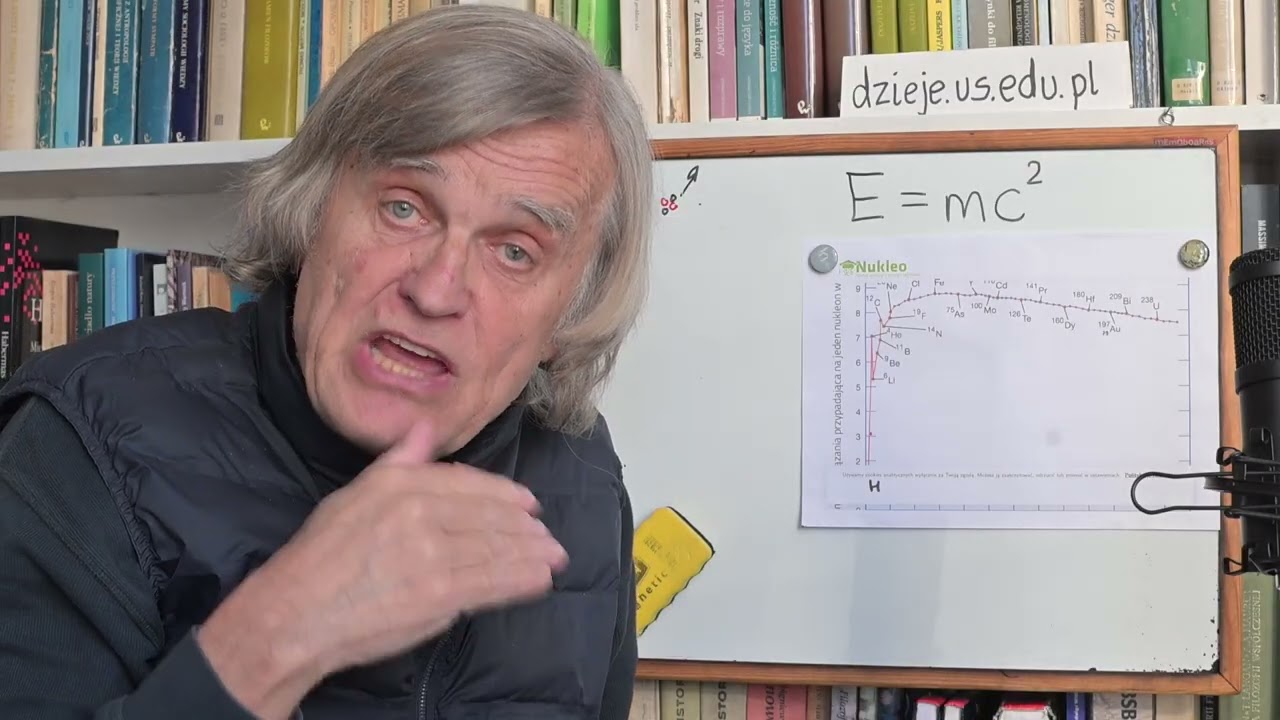
The concept of nuclear binding energy and Albert Einstein's mass-energy equivalence principle (E=mc²).
The fundamentals of radioactivity, including radioactive decay types (alpha, beta, gamma) and the concept of half-life.
The distinction between the strong nuclear force (which holds nuclei together) and electrostatic repulsion.
The physics of nuclear fusion and the design of thermonuclear (hydrogen) weapons.
The engineering challenges and safety protocols of peaceful nuclear power generation (fission reactors).
The history of nuclear proliferation, arms control treaties, and the geopolitics of deterrence (e.g., Mutually Assured Destruction).
Nuclear waste management, disposal strategies, and the environmental impacts of radiation.
4.3K views59likes1:13:39Original Release: 2017-07-28
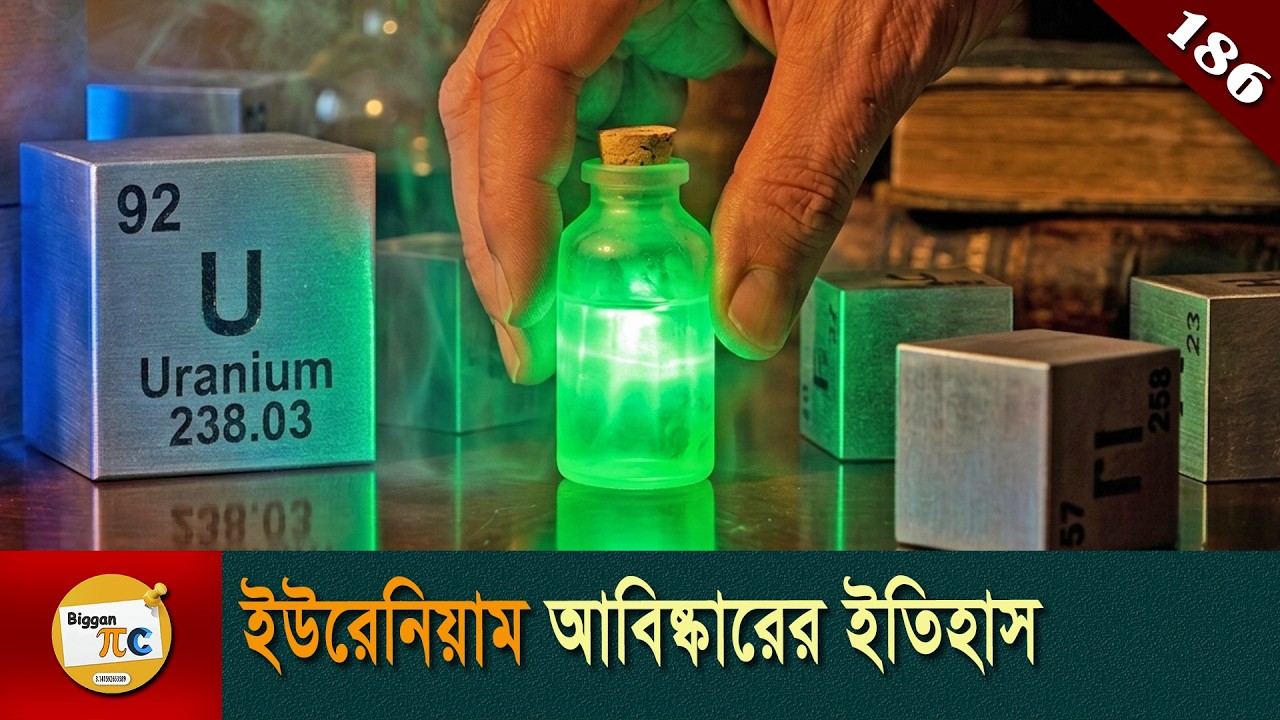
today we're doing nukes we're starting on nukes we got three days of nukes um a nuke is a kind of radioactivity it's based on a kind of radioactivity if you look on the chart you find there are these two elements that are particularly interesting one of them is called uranium it's found in nature there it is element number 92 so that means it has 92 electrons uranium has this again think of a flea think of a uh a flea or mosquito in the midst of Memorial Stadium and there's the nucleus and has 92 protons it's uranium 238 what that means with 238 that's called the atomic weight now all the weight is in the neutrons and in the protons but if you subtract 92 from this you find six and then four 146 neutrons has that many protons that many neutrons the neutrons have no electric charge but they serve as a glue the same time you put too many of them in there or you don't put them in the right place and the nucleus can become radioactive this is radioactive uranium 238 is Radioactive with a with a half life of uh actually I forget it's billions of years I do remember uranium 235 let's look at uranium 235 what's the difference it's still uranium that means it still has 92 electrons it's still uranium that means it still has 92 protons these little mosquito like things in the center that have all of the mass a proton weighs about 2,000 times as much as an electron so an electron is there it does have some Mass but it's really tiny 92 protons so but it has three fewer neutrons that's 143 neutrons turns out uranium 235 is radioactive it has a half life of about a billion years go back to the beginning of the solar system and there was lots of this stuff it was abundant and then it started decaying after 1 billion years it was only one half as much after another billion years only half of that after another billion years only half of that after another billion years only half of that and here we are and so it turns out that uranium 235 is about 0.7% of your ordinary uranium just because it's mostly decayed away this is DEC away too but has a longer half life so not much of it is gone other things have shorter half lives and they've gone even faster now there's something very special about uranium 235 and there's one other so this is called an isotope it's basically it's uranium it it has the same number of electrons so the same chemistry if you want I if you want to do chemistry with uranium doesn't matter which one you have they behave the same way one weighs a little bit more but you hardly notice that in chemistry the weight doesn't matter that much it's mostly the electrons so these are called different isotopes and we can say here's one isotope of uranium here's another this one is a rare isotope not really rare 7% That's not tiny where it's enough there so you can do something with it then there's another element this is one called plutonium it's over here it's done in light colors that's because it doesn't exist naturally it turns out cosmic rays and and and radioactive decay can produce tiny little bits of it but basically it's not there was first produced here on this campus by Glen seaborg Glen seaborg has sorgum named after him a while later where's sorgum there s element element 106 subor sorgum okay he discovered plutonium he did that here and he had to make it make it from other lighter Elements by adding neutrons getting decays and so on putting it together found this of plutonium plutonium 239 is a very interesting one there's another one plutonium 238 which is actually harder to make this one has a halflife of 24,000 years that's a number that comes up so often in the news you'll hear it cited over and over again I want you to know that number just because it's it it it turns out to be uh a um newswise an important number you'll hear it cited when people talk about nuclear waste storage you reading the newspaper okay good this this is important stuff this is this is the lecture that you'll probably use more than any other well I don't know I said that several times plutonium 238 which has one less Neutron has a property that its halflife is 80 years not only that but its radioactive decay is alpha particles alpha particles are really nice see they don't even get through your skin as long as you don't breathe them in and so plutonium 238 is produced in a special way and we used it in our probe that was launched just a couple weeks ago to go to Pluto why because it decays so rapidly that it has lots of energy it Heats it up gets very hot you can turn that heat something called a thermocouple into electricity so the power to broadcast back when you're way away in Pluto it takes 10 years to get there this stuff will still be producing a couple hundred watts of electricity so it can broadcast things back really nice for space it used to be illegal why was it illegal because it was plutonium and plutonium was considered really super dangerous by the public even though the experts knew it was quite safe and so laws were passed you cannot use this kind of stuff can't send it into space what if it crashes and so on there was a lot of I think harm done by the fact that people's fear of plutonium meant that people would pass laws make me illegal when in fact it was really quite harmless fortunately we're beyond that now and this plutonium is being used but these are the famous ones uranium 235 and plutonium 239 this has a halflife of about a billion years but they both share a property that is key to the rest of this lecture and that's the following suppose you have a neutron coming from somewhere you can make a neutron there are several ways to make a neutron one favorite way is to take something that's radioactive and produce alpha particles so we have a bunch here of atoms you have a little bit of polonium 2an or something like this it it's Radioactive if an Alpha's come out now you put a little buril next to it and it turns out that when an alpha particle hits a burum nucleus a neutron shoots out so boom out comes a neutron this is a way of making neutrons it's actually a very convenient way and you'll see one of the atomic bomb designs I will atomic bomb design I will show you has a little thing in the middle to make neutrons to make the bomb work and all it does is it takes the alpha particles and a little buril and they're sitting there happy as it can be the Alphas are coming out they don't go very far and you're bringing these things together and suddenly the alphas hit the buril out come neutrons so you can make neutrons that way you're not making them you're releasing them from the nucleus the alpha particle bangs into the burum and out comes a nucle a neutron if that Neutron comes to uranium and hits the nucleus it could stick to the nucleus certain probability will stick if it does that we no longer have uranium 235 we have uranium 236 now here's the key feature of uranium 236 it becomes highly Radioactive It's halflife the number is probably less than a billionth of a second I don't I don't remember what the number is and it doesn't just give off an alpha particle it explodes with something called fision the nucleus breaks into two pieces and they go flying apart they're repelling each other once it breaks once that nuclear force is broken by that extra Neutron going in just the wrong place the two sides break apart we get these two pieces flying out the pieces that come flying out are called fision fragments now you take any nucleus and break it up into two random pieces and the odds are those fision fragments will be radioactive and in fact most fision fragments are r radioactive that's called the nuclear debris or the nuclear waste so that's the origin of the nuclear waste we're going to be talking a lot about nuclear waste you will read a lot about nuclear waste oh by the way homework is due tonight but again it's a practice exam pick an essay exam and and answer it we had lots of essays posted on the typical exam question send it to your GSI in the normal way so make sure you do your homework tonight but anyway a neutron comes in here it it doesn't smash it apart this thing is almost coming apart anyway it's held together by the nuclear forces that Neutron comes in there and just unbalances those nuclear forces in such a way that this thing flies apart immediately into two pieces the pieces are different sizes the stuff that comes out because it's random pieces of nuclear material remember in the early solar system almost everything was radioactive because they were just random pieces of junk of course the stuff that's radioactive isn't here anymore so mostly we're left with either things that aren't radioactive like ordinary carbon or things that are radioactive with really long half- lives like potassium 40 but if you just break up a nucleus pieces are probably radioactive and most of them are and this stuff is bad it leads to two things one is nuclear fallout the other is nuclear waste so these are two issues that are going to be coming up over and over again in these lectures but that's where they come from plutonium the same way what happens is if a neutron hits this by the way it's not easy to get a neutron to hit the nucleus think of it it's like shooting a bullet into Memorial Stadium and trying to hit that mosquito most of the time you miss but when you do hit the mosquito breaks up releases enormous energy and you get two fision fragments Vision fragments radioactive debris that's very dangerous leads to nuclear waste and nuclear fallout now here's the discovery that makes this thing suddenly exciting fearsome dangerous useful not only do you get two fision fragments coming about but on average from the uranium you get two neutrons coming out too plutonium you get three neutrons coming out on average when this was discovered it was seen as the key to the Chain Reaction a chain reaction is well you got this thing and you send one Neutron in you can get the neutron from burum this thing fions outome two neutrons ah suppose you put enough uranium around here well you have to put a lot because it misses most of the nuclei right so if I just have one next to it it'll probably miss it's like hitting a mosquito in Memorial Stadium so you put more and more and more and more and you put enough of them in there so that it's likely to hit if you do that that's called a critical mass critical mass is when you put enough material there that it's likely to hit and you see the word critical mass actually depends on lots of things I mean suppose you have a critical mass and it looks and it looks like this it's not a critical mass anymore because the neutrons will fly out and they not going to hit anything so it's not just a matter of the mass you have to kind of put it into a sphere to really make it into a critical mass so that there's no way you can fly out without hitting something can't have it long and thin the geometry matters there's another thing suppose you compress it and take the same thing and push it into a small tight bundle well think of the atoms here you are in the middle and you're looking out you see the stars those are the other atoms you wonder if I go off in that direction will I hit one if you compress them and bring them really close and tight the space between them is much smaller you're more likely to hit it so the critical mass depends on whether you've compressed it or not so when we say the critical mass of something you have to recognize it it it's not just so many kilograms it's also the geometry the first atomic bomb on Hiroshima worked in the following way two pieces I don't actually know what the shape of the pieces was but let's just assume it's a hemisphere like this each piece was less than a critical mass what that means is on the average a neutron would come out it might hit might not but on the average you know it would would would go I mean would would leak out this was put inside of a gun it's called a gun design an ordinary explosive not gunpowder but probably some something called high explosive was put in here and uh it actually wasn't done with the fuse you know electronic ignition what what they do this thing was dropped over Hiroshima by the anola gay airplane there was a second airplane flying over Hiroshima from the US military was carrying my thesis advisory Louis Alvarez Lou Alvarez was flying over Hiroshima at the time the bomb was dropped he told me all sorts of stories about this um because he was given the job of measuring how big the explosion was and here's what happened this bomb was dropped dropped off a paracho by the way little story about Hiroshima Hiroshima was an undamaged City most of the cities of Japan had been destroyed hoshima had not been interesting reason why not the only reason they had not previously destroyed Hiroshima was that they were saving it for the nuclear bomb they wanted to have a city that was untouched so there would be no question they could examine it and find out how much damage was done by the nuclear bomb itself same thing was true of Nagasaki these were two cities that were chosen as important cities to bomb but they had not been bombed throughout most of the war this was dropped it's called a gun design uh you can find photos of was they gave it a nickname they called it little boy uh they had two bombs they had two bombs and only two bombs uh at the time they they dropped this uh dropped down on a parachute once it was above the city I'm not sure a thousand feet or just how above they detonated it in the air it did that because this does maximum damage this way you have line of sight to more if you do it down the ground you don't get as much damage as if you do it in the air they figured out the most damaging altitude to do it the way it worked was they detonated the high explosive this piece went flying towards this piece when they came together you had a critical mass at that point you had two pieces that when a neutron came and I don't know whether they used this trick to get neutrons I I think they might have they had one piece with alpha particles on it the other with pilum so when they come together suddenly you get some neutrons uh now this Neutron goes and causes a fision outome two neutrons each one of those causes a fision two four and now you ask how many times do you have to double you go from 1 to two to 4 8 16 32 64 uh 128 256 512 after 10 additional steps you're up a, a factor of a th that's after 10 steps 2 to the e is a th nine steps wait start we'll start with one 2 4 8 16 32 64 128 256 512 a th so 10 steps two to the 10th is a th 10 steps later you have another factor of a thousand in the number of neutrons you have a million that's in none another 10 steps another 10 steps you have a billion another 10 steps you have a trillion by the time you get up to about 75 steps you have avagadro's number that means basically every nucleus in that uranium has has visioned and released its energy the energy being a million times greater than an equal weight of TNT so there's your atomic bomb that's how it works use this doubling now of course there is a problem once this thing what's happening is when you get the fion these fion fragments are flying out and they have a lot of energy it's kinetic energy they Collide into things and heat everything up so what you're really doing is turning this into heat what the atomic bomb is really doing is taking that nuclear energy and creating a huge amount of heat now here we here we're going you know one billionth of a second two billionth of a second three billion of a second these things are probably doubling every 10 billionth of a second they d double double double you get to a certain point where now you have the same energy density as Dynamite at that point the thing blows itself apart and it stops that's no good that's like dynamite you could have dropped Dynamite so what's the secret the secret is that the neutrons are going really really fast you get up to the level of dynamite this stuff is all heated it's starting to blow itself apart and here it goes it blows self apart but meanwhile the neutrons are going real fast they're doubling doubling ding doubling doubling d d doubling doubling and before it blows itself apart you release even more energy so that's the trick of the atomic bomb it's one of the tricks is you use these fast super fast neutrons so the doubling takes place a lot faster than the blowing itself apart finally it gets up you know where all the energy is released and the thing and at that point you wait around for the thing to blow itself apart and what do you get well you get several things one is you get that enormous energy of the blast that's largely heat and and and the heat goes to this big explosion that's what kills killed most of the people estimates of from 50 to 150,000 people died in Hiroshima we don't really know the answer because it wasn't that much left so it's mostly this huge energy release now in addition some of these fion fragments are radioactive plus there's some radiation emitted there are gamma rays that are emitted from this explosion also some of the neutrons leak out these neutrons can also hurt people but as you learned last week the the death from radiation and from radioactivity at hirosima was really quite small most it was the blast you can't die of cancer if you're killed in a fireball so that's what happened at hirosima a few days later over Nagasaki another bomb was dropped it was not a uranium bomb here's the surprising thing about the uranium bomb and this is really important if you want to understand terrorism what's going on in Iraq Iran and and and and and North Korea this bomb was never tested why wasn't it tested well because we used up all the uranium we had I say we I was about six months old at the time a year and a half used up basically all the uranium we had why because it turns out uranium is very very hard to get uranium 235 as I'll explain that it has to be made out of uranium 235 uranium 238 pollutes it it keeps it from exploding you have to purified you have to have almost pure uranium 235 and that was very hard to do I'll be telling you that story in a moment was very hard to get uranium secondly this thing is such a simple design everybody is pretty sure it would work the design was easy look at it I mean there's stories that you'll see in the newspaper now and then some high school kid will get together and he'll draw this picture maybe he'll get it from one of the popular books that has it and then he'll show his teacher and the teacher will look at it and say wow let me call the newspapers I say I had a high school student who designed a nuclear bomb and they'll say oh really let let's check that so they'll take his sketch and they'll send it off to the Livermore laboratory and they'll talk to a bomb designer there and they'll say would this thing work and he'll look at the sketch and say yeah that'll work and then the newspaper headline is high school kid designs Adam Bomb that's how these stories come about by the way you've probably heard them you are now as educated as you need to be to compete with that headline Muller's class at Berkeley teaches students how to design atomic bombs you could just imagine what fun people could have with that one but I that's it okay now there's some details you have to get right but they're not hard and anybody who's worked with cannons can probably figure them out plus you get someone who has some background in nuclear physics not hard to do the hard part of the uranium bomb is getting the uranium that's hard plutonium is different plutonium it turned out requires a much more sophisticated design I talk about this a bit in the text I'll may come back to it uh in a later lecture but a plutonium bomb requires that you take that material and you compress it the reason has to do with some pollutants that they could not easily get rid of in plutonium uh plutonium 240 it turns out tends to predetonate the bomb it makes it go off before it's completely assembled so it turns out the compression is necessary here's what you need to know what I want you to know is that that a plutonium bomb requires an implosion what that means is you can make an implosion work with the uranium bomb too let me show you a design of an implosion bomb it's a nice design of an implosion bomb let me put this up there if we could put on this uh this thing and uh so here's a let me do it right side up let me zoom in so here we have a a somewhat detailed design this is a a little bit more impressive than you get from a typical high school student uh This was done by a real expert so let me uh zoom in and a couple of interesting features about this bomb it's round of course and and the roundness um is what you do for an implosion what you want an implosion means you you surround this thing with explosives so when the explosives go out they also push this thing in and compress it that's called an implosion very hard to do try squeezing a water balloon you see the problem you squeeze it here it comes out between your fingers so the implosion has to be exceedingly uniform very difficult to do this uses a more this is a somewhat sophisticated Advanced design use what's what are called explosive lenses we'll talk more about lenses when we get to Optics but basically the idea is you trigger see there are 32 detonators so you have to fire them all off simultaneously that's hard to do for the bomb Pro project in the United States they assigned turns out my thesis advisory Louis Alvarez was one of his jobs is to try to figure out how to make all these detonators go off at the same time he solved that problem and uh and and so he was responsible for part of the design of the Nagasaki bomb too uh so you get these detonators to all go off at the same time they begin causing an explosion that goes inward now but with these shapes these things that are that are called the the lenses what you do is to make the explosion go in just such a way that it comes to get together into a perfect sphere just as it's coming in this is a tricky thing to do I've seen the places in Los alos where they build these things they have machines that grind the high explosive to make them just the right shape you have to get them extremely uniform how do you have someone machinist working with this high explosive to grind it just the right shape what if it goes off he's dead so you just say oh take the risk what they wind up doing is they had The Machinist half a mile away working with a video camera Machining this thing remotely in order to machine the high explosives this is not the sort of bomb a typical terrorist group is going to put together you get a really high-tech country such as I don't know United States Britain France Israel or you get a lowtech country that's willing to give up feeding its people in order to put all of its money into be having a small high-tech sector on on nuclear explosives and and you pay a you know get get really top people and you know help everybody else let them starve so we're talking of course of North Korea then you could do that too so the this is where you were but a terrorist group isn't isn't going to do this in my opinion this is too hard to do there are other clever things put in this design some of them were classified for a long time is something he'll called a tamper the tamper turns out the explosion pushing against the tamper does a better job of compressing it they have reflectors in here the reflectors mean that when the neutron does leak out it bounces back that was one of the secrets that Heisenberg didn't come up with for for Hitler in World War II he didn't think of the reflector and as a result the critical mass that he was imagining would be needed was much much larger than it turned out was in the nuclear bomb of the United States because of the reflector his group didn't come up with that idea but it's in this plan here what else is in here they had the initiator in the beginning okay that's polonium and and brillium and the polonium and brillium when they come together in the compression produce the neutrons that start the thing going so this is the most elaborate accurate design I was able to find that's unclassified the reason that I was able to show you this is simply that this was was not a US Design This was a design that was drawn for the Senate by khed Hamza who was the bomb designer for Saddam Hussein he defected I think in 199 95 I think that was when it was almost didn't get out of the country because the US thought he was a fake but he was the guy in charge of the nuclear bomb program in uh in Iraq in 1995 you can see why the US intelligence agency drew the wrong conclusion that Saddam Hussein was deeply involved in this he had done this in 1995 at a time when he claimed to be abiding by the treaty but wasn't allowing full inspections he never did allow full inspections that's why it came as a shock to many of us when there actually were no bombs or even components of bombs that we could find in Iraq because as recently as 1995 this Chief bomb designer who defected actually knew a lot about the bomb design and they were doing tests so uh give people a little bit of slack when they say that they were mistaken it was a lot of reason to think there were bombs being designed there um so we we'll getting back to that I want to talk today also about nuclear reactors and other things um for a reason I'll come to so these were the two bombs uh the problem with making a plutonium bomb is making the implosion work I want you to know that that's the difficulty that's very hard that's very high-tech and it's a high-tech that you don't just get in the typical engineering school this is a thing where you get really good people you put them together they do lots of experiments they do lots of chemistry and lots of physics and they figure out how to make it work and it's not easy but it was done by a group of scientists in 1945 was done independently in in in Russia in France it's not you know if you have the resources and you know a few billion dollars you can do that not easy for a terrorist group to do it that's the problem with the plutonium bomb there are two types of bombs it's the plutonium bomb problem there is not getting the plutonium problem there is making the bomb out of it problem with the uranium bomb is getting the uranium so let me say a few words about that you start off with uranium natural uranium that you dig out of the ground natural uranium it's actually quite abundant uh in Granite it's typically a part per million of uranium part per million how much is that well if you have a cubic meter part per million is a cubic centimeter that's a lot how much do you need to make a that's just from Granite but if you go to uranium ores you find a lot more of it how much do you need to make a bomb well let me give you the number for plutonium because that's not classified want to know this this number this by the way this was an implosion design for uh uranium which is you know super fancy because you don't really need implosion but it will work better better if you have implosion and this thing was actually labeled as containing let's see oh that's it has reflectors here here 15 to 18 kilograms 15 to 18 kilograms well let's see density of uranium is about 15 to 18 something like that so 15 to 18 kilograms would be one liter one liter of UR like a quart of uranium will do it plutonium is smaller a cup of plutonium will do it a cup of plutonium that's the critical mass a cup full that's because you get three neutrons out so how do you get this uranium as I said it's it's not hard to get the uranium you could do it from Granite nobody bothers you go to uranium ores but then what you get is natural uranium which uranium 238 uranium 238 is 99.3% and then the uranium 235 which is mixed in with it is is 0.7% how do you now if you keep them mixed it will not work the reason it won't work is very important when the Chain Reaction starts and these neutrons fly off most of the neutrons will be grabbed by the uranium 238 and when they do that you don't get the fion actually what happens when a neutron hits Ur 238 is an interesting thing it turns uranium 239 uranium 239 decays then it decays again and you're left with plutonium so a neutron on uranium 238 gives you plutonium 239 there are a couple decays that take place in the Pro in the process but that's what you get this is how you get plutonium you get plutonium by making it from uranium 238 we'll be coming back to that over and over and over again you you'll be seeing that so you start with natural uranium if you can make the Chain Reaction going you can manufacture plutonium if you want a bomb you manufacture plutonium and then you extract it we'll talk about that that's that's called uh our reprocessing a word you'll have to know but I'll come to that in a moment if you want to extract the uranium 235 it's hard to do Lawrence after whom the Lawrence berly lab was named came up with a way of doing this during World War II he thought and we'll talk you know this is uses an electromagnetic method the idea was you build a big tank you vaporize your uranium you ionize it so it has a charge you run it through a magnetic field and turns out the uranium 235 will bend in the magnetic field a little more than the uranium 238 so here's the 235 here's the 238 so then you take this plate and you scrape off the uranium 235 and you do it again he did this was able to produce a little bit of pretty pure uranium 235s did that here at Berkeley this thing was was not a cyclotron which is what he got his Nobel Prize for he had to come up with a name for it so he decided he would honor the University of Cal of California and call it a cal utron named after our University the thing worked well and so General Groves had dozens of these things built in Oakridge Tennessee where by 1945 summer of 1945 they had separated out enough uranium for one bomb which they put into the Hiroshima bomb they never tested it and dropped it over Hiroshima killing 50 to 150,000 people named after Cal take that I don't know whether you're proud of that or ashamed I don't care that's the history um at the same time enrio fery at Chicago was frantically trying to build something that became called a nuclear reactor that's what the really most of this lecture is going to be on to make plutonium after the war the catons were basically not good ways to make uranium they started using different things they cried gaseous diffusion the real secret of gaseous diffusion was classified until recently but the gaseous diffusion plants in oakd Tennessee were huge we we we produced enormous amounts of uranium with buildings that were a mile long that's the size of these buildings and they were gases diffusion what you do there is you heat up the gas you take uranium mix it with Florine make uranium hexor you don't have to know these details but you'll come across them in the news they talk about about North Korea no I guess it's Iraq Iran having uranium hexif fluoride and we don't even like them to have uranium hexif floride uranium hexafluoride is a gas you don't have to heat it up very much to have it into a gas and then by running it through the magic material it turns out that because the Light Elements move faster thermal physics right the light things at the same temperature the light move faster you run them through this magic material you need a material that doesn't corrode Ur uranium hexafluoride is very corrosive you need something that can stand this stuff and they had just the right magic material to do that its name today is Teflon it was the high-tech material of Oak Ridge that was used for uh gaseous separation of uranium the fact that it was used that way was kept highly classified eventually the Space Program started using Teflon and uh the public caught up oh Teflon isn't this great stuff and there's still an urban legend out there that one of the technical results of the space program was the invention of Teflon well it was invented actually before World War II but its first big commercial use was to separate uranium using the fact that uranium 235 moves faster and so it comes out the end first subsequent to that they came up with a g with a centrifuge again it's a gas centrifuge now you'll hear a lot about centrifuges centrifuges are basically spinning tubes in which the heavier uranium heavier uranium hexol fluoride tends to go to the outer part they spend these things very fast as fast as they can to make it work well you have to go super fast the edge of this thing is going going a kilometer per second that's a fast they're spinning you need the strongest possible materials and so they came up with this material called maraging steel you'll read about that too raging steel as far as I know only has two commercial uses one of them is for centrifuges for Uranium the other is for golf clubs somay they'll use it in tennis rackets and other things too because this is where all the high tech goes to these days it goes to people who are willing to spend $300 for a golf club and if you have a steal that's stronger and harder than anything else hey you'll find some wealthy people well you know golf is played by by team members at Cal but what really supports golf is a large number of I think wealthy people who buy raging steel golf clubs anyway North Korea seems to have a real interest in golf clubs or centrifuges can't really tell which uh once again they have a tube that spins really fast I I visited one of these centrifuge plants and it's really impressive I mean it's smaller than this room and has these tubes in there and will separate out you know enough uranium every day for a bomb and you walk into the room and the thing is operating and you listen you don't hear a thing why not because these things are so well balanced they have to be well balanced to go that fast or they'll just rip themselves apart so they have them exquisitely balanced the design of how you build that is really highly classified uh a few people have figured it out there was a um Pakistani scientist auu Quan who had the designs for this he sold them to Libya and to North Korea and U and has gotten a great degree of infamy for having done this we found out about it because Libya decided um maybe it makes more sense now that the Soviet Union is not around to be friends with the US instead of enemies so they decided they would stop trying to make an atomic bomb we'll open up show you everything we have we go in there and say oh these are interesting designs what's the signature AQ Quan here down at the bottom Khan and uh he was so he was traced to Pakistan he was their Chief bum Minister over there and so he was uh thrown out and then U basically his sentence was commuted by the president so he gets noow punishment I I suspect the reason that happened this is this this is not physics I'm just giving you idle speculation now is that of course he didn't do that on his own it was the whole Pakistani government who was doing it um and so he wasn't really responsible but the Pakistani government wants to come across this good guy so they BL had someone to blame but anyway that's the gas there other Advanced ways too there's laser enrichment which has actually been accomplished at Livermore but doesn't seem to be uh and the whole idea here is to turn 7% into 90 95 100% uranium 235 because otherwise it won't work in the bomb now a little story um there was lots of reason to think in 1990 that Saddam Hussein was designing nuclear bombs I me it turned out he was okay people forget this because they confuse it with what happened in 2000 in 2000 we thought we're going to go in there and find all his bomb stuff and there's nothing there he dismantled it and so people say he wasn't doing it which is true but in 1990 he was and people had been searching and people sometimes oh by the way people forget that President Carter president uh uh Clinton bombed Baghdad in 19 no in 1998 bomb Baghdad in 1998 to destroy the nuclear facilities that he was suspected were there that was in 1998 a little bit more of history that we tend to forget he thought there were nuclear things going on there too but part of the reason was in 1990 we had searched for every possible thing we had looked for gas diffusion plants had some suspicious looking things but gas diffusion plants are big and they really didn't fit gas centrifuges that was the way to go he was probably doing gas centrifuges looked around but gas Cent are so easy to hide they fit in room smaller than this they're Hightech and so you try to look for people who are sending in maraging steel but you could use other types of Steel so there was no clear gas centrifuge plant laser enrichment he didn't seem to have the right kind of scientist to to do laser enrichment so it's a big mystery if he's doing a bomb program what is he doing anyway Saddam Hussein invaded Kuwait us went in retook Kuwait decided not to well actually reached an accommodation with Saddam they would not invade Baghdad they would leave him in power in return for detailed and complete inspections back then he allowed the UN to come in and give detailed and complete inspections and what came was a shock to me he was building devices to purify IR ium un found them I have a photograph wasn't gas diffusion it wasn't gas centrifuge it wasn't laser enrichment here's a photograph the UN found these devices they were for Uranium enrichment it destroyed them this is one of the blown up ones blown up by the United Nations that's actually a calutron the Primitive Tech technology that was used in World War II and then abandoned because there were so much better ways to do it but Saddam Hussein with his limited resources of only you know a few billion dollars he could spare and his limited scientific expertise had gone back to the easiest way to do it the way Lawrence had done it named after your University Sadam husin built calutron here as we can tell he did no major enrichment of uranium using these catons but here is a calutron one of Saddam Hussein's catron that was destroyed by the United Nations when it was found in 1990 I'll believe that up it's a pretty picture now we're gonna I'm going to come back over here now and talk more about other things so this is the story of nuclear bombs and we're going to be talking more about this too in the coming two lectures but what I'd like to do right now is move on quickly to nuclear reactors the reason is that tomorrow I'm having a minor operation and so when I come in on Thursday I'm not supposed to be too vigorous not supposed to bounce around because I will have uh probably an eye patch they're going to go into my eye and remove a film that's been growing in there it's kind of fun and uh it it is interesting I mean I I was at I was at the doctor's office last week and uh he said so do you want to be awake or asleep during the operation I said oh awake I wouldn't want to miss this it was it was in the reception room and and people turned around you know everybody likes to sleep during these things I like to see what's happening and boy when they're operating on your eye you really do see what's happening it's really so so those of you who gross out on this close your ears right now because what they do is they're going to give me local anesthesia I don't want any sedative or anything just local anesthesia and then what they do is they stick these needles in I said close your ears come on and there's a little film growing on my retina what they're going to do is peel it off and then suck it up and then pull the kns out it's really a minor operation but it's supposed to give me much better right now great vision in this eye and we're trying to get better Vision in this eye anyway interesting so that that's going to happen tomorrow then I hope to be in here on Thursday but what I'm going to do on Thursday is uh show a a film that I had intended to show next week I'm going to show it on Thursday because of this operation and it's a film about nuclear reactor uh very important film for you to watch so let me uh let me now spend the rest of the lecture talking about nuclear reactors in preparation for this so what is a nuclear reactor this is what enrio fery was doing in Chicago while Louis Alvarez was in Los Alamos and other places here's the way nuclear reactor Works what you do is you take uranium and you you take ordinary natural uranium unenriched that's what unrio firy was doing unenriched uranium and it doesn't work it doesn't work because the uranium 238 absorbs the neutrons but this is what they figured out if you surround it with carbon and you put it in little pieces so when a fision takes place the two neutrons leave and they don't run into any uranium any uranium 238 because that would absorb them that's bad but they leak out into the carbon carbon it turns out doesn't absorb neutrons at all the neutrons bounce off the carbon the carbon picks up a little bit of energy it heats up and the neutrons lose energy so the neutrons slow down this carbon is called a moderator and the purpose of the moderator is to slow the neutrons now so these neutrons slow down after a bunch of bounces and at some point they will actually hit their uranium again what they had discovered is that slow neutrons are not absorbed on uranium 238 they're just a little bit so if you slow down the neutrons with a moderator you can still get a chain reaction what they really wanted to do was not really get a double double double double because this thing would blow up what they really wanted to do is get on average one of the neutr so you want one you get uranium 235 ises fision fragments typically two fision fragments plus two neutrons one of those neutrons you want to hit another uranium 235 the other Neutron you'd like to hit uranium 238 making plutonium so this way every fision leads to one more fision so once this thing gets going it just keeps on going at the same level it doesn't get bigger bigger bigger bigger and explode that's what a nuclear reactor is so a nuclear reactor is it has a moderator that's the real key the moderator means you can work with unenriched uranium there are other moderators you could use in in in in in the United States we tend to use water as a moderator okay water is a moderator uh won't work with unenriched uranium you have to you have to have 3% uranium I 235 so we use slightly enriched what's called reactor grade uranium that's produced at Oak Ridge so this is the idea uh this is the basic idea and I'm going to be talking primarily about two different designs one of them is the carbon design the other is the water design in the United States most of our power reactors have these tubes coming down into water and this whole thing is in a big vessel full of water and and other than that the neutrons come out they're slowed down they come back in and one of them on average produces uh a plutonium and one of the average produces another fision so it keeps on going in the beginning you set it up so that you produce double double double double till you get the level you want then you put in control rods that absorb neutrons that make this thing keep in the steady state so here's a key thing to remember about the nuclear reactor in a nuclear chain reaction in a reactor you're not doubling anymore you want to keep it going at a constant rate you make this plutonium and then every once in a while you pull these things out and you separate out the plutonium okay um so that's called reprocessing you got to know this word you'll see this in the news all the time that separates the plutonium we allow many countries around the world by treaty we give them nuclear reactors we give them the uranium that we made in Oak Ridge their part of the bargain is that they give us the fuel when it's finished so we can separate out the plutonium and they don't get it so in exchange for giving them nuclear technology and giving them the uranium we get back the plutonium uh we don't want them to have it because then they could build a bomb when Iran says we are no longer allowing inspection of our facilities we are turning off the cameras the UN can no longer watch us the reason we fear that is they now can take the material out of their nuclear reactors remove it without us knowing reprocess it and get plutonium a friend of mine Mike May went to North Korea so that they could demonstrate to him that they had done reprocessing and they had they they handed him a piece of plutonium he said can I take it out of the jar and feel it they said sure took it out of the jar could feel the plutonium it was warm was about the right warmth for plutonium wasn't he worried about the radioactivity no because he knows you got to breathe this stuff in for it to be dang dangerous so he wasn't worried about that he washed his hands afterwards but he wasn't really worried about about but he could tell it was warm about the right warmth because he had worked with plutonium before so North Korea is doing this reprocessing reprocessing means you go into the reactor and you remove the plutonium now what's the big deal about nuclear reactors so let me talk about that now let's talk about reactor accidents about what happened to Chernobyl what happened what what is it that people worry about question there oh they yeah why couldn't terrorists grow blow up one of our reactors boy I sure hope they try I really hope they try this is's a whole story behind this I don't want to digress right now maybe I'll go into that uh uh on Thursday or or or or next Tuesday um I've actually visited a nuclear reactor down in Southern California with a counterterrorist group kind of terrorist group had planned an attack on the reactor and they went down there because the I went with them because the uh people who were defending the reactor had their counter plan and the question was how would it really work if they came in and tried to invade this reactor would the would the plan really work and I was just as impressed as hell with the details of this how they had protected this reactor against an attack they did such a good job that I realized well if you're a nucle Terror if you're a terrorist you want to blow up an apartment building in in Chicago using natural gas you don't want to go after a nuclear reactor it's so much easier so the long story on that but let me let me that's the quick answer yes well you don't give them fully enriched you give them 3% enriched and that you can't use that for a bomb because you won't get a chain reaction the uranium 238 is there this is getting the issue of the nuclear explosion in order for something to go off like a nuclear explosion you can't have the uranium 238 but but wait a minute you can if you have a moderator right so maybe this thing will explode like a nuclear bomb no this cannot explode for nuclear bomb for the same reason it works with unrisked uranium this is a tricky thing really wake up now and pay attention everybody there a key thing here in order to work with with reactor grade uranium only 3% you have to have the moderator otherwise the uranium 238 eats up all the neutrons if you have a moderator you have slow neutrons that means the chain reaction is slow it comes out it wanders around and then it finally finds another uranium Bo out comes two of them one of them goes to plutonium the other is wandering around finally it's a slow thing because of the moderator because it's slow suppose you start to overheat this happened in Chernobyl in Chernobyl they had a graphite reactor a very badly designed graphite reactor it started to overheat it had a positive temperature coefficient nothing like that would ever be made legal in any country that had any kind of oversight positive temperature coefficient means that when it gets hotter it starts reacting faster that's absolutely illegal in the United States and every other rational country but it wasn't in in the Soviet Union so the reaction started going faster and faster it still had the moderator because without the moderator it wouldn't work but it got going so fast that it got up to the energy density of TNT now at that point in the atomic bomb the reaction is going so fast because it has fast neutrons that that before the thing can blow itself apart the reaction Doubles Doubles Doubles Doubles Doubles and you've released all the energy of all the atoms before the thing can flow throw itself apart in in Chernobyl once it got up to the density of TNT the thing exploded and we never got a nuclear explosion you can't get a nuclear explosion you can't get the factor of a million if you have slow neutrons but you need slow neutrons or the reactor won't work at all so what happens in these things is the Chernobyl nuclear re reactor blew up like as if it were loaded with TNT there was an explosion but not a nuclear explosion not an atomic bomb type explosion just a pure Dynamite explosion well what's so bad about that well 36,000 people dead is what's the result of that why is that because it's not the explosion that killed people what happened is the explosion set the graphite on fire and the graphite started to burn now what's the problem with that what's the big deal about a fire the problem is all these fision fragments that are in these pellets they're highly radioactive those are the things you want to take out and you'd like to remove the plutonium from them you'd like to bury them under somewhere but instead they go up in the smoke so this highly radioactive stuff is going up in the smoke and that's what then spread over the city of Chernobyl and all the way up to Sweden and when you calculate it as I said you'll never see these deaths because they a tiny fraction of the other cancer deaths but uh when you but but but we calculate 36,000 real people each one of whom is probably a nice person and they're dead because of this would have lived long longer so it's a real tragedy 36 real thousand real deaths and it came about because of a reactor accident that ran away would never blow up like a nuclear bomb because it uses moderated neutrons if the neutrons aren't moderated then the chain reaction stops because then they're absorbed on the uranium 238 you can't have both to make it work with slightly enriched uranium reactive grade uranium you have to use slow neutrons if you use slow neutrons the thing can't explode well it can explode a little B enough to set the thing on fire and spread this radioactivity that's what happened what do people worry about for the American reactor you're not going to have a carbon fire probably you're not going to have a reactivity accident reactivity is when it starts getting hotter and it gets worse because it has negative reactivity if this thing overheats it tends to slow down the nuclear reaction so what do people worry about they came up with a what they call the worst case scenario worst case scenario and the worst that anybody can could come up with is a nuclear meltdown and let me show you how the Meltdown works this is the idea somehow a pipe breaks and you develop a leak in the reactor and this water all flows out what's the first thing that happens when the water flows out the chain reaction stops why does the Chain Reaction stop because because there's no moderator not a moderator The Chain Reaction so the first thing that'll happen in this worst case scenario is the Chain Reaction stopped by the way in the Chernobyl you know once this thing had the explosion The Chain Reaction stopped 1985 was it 86 uh the Soviet Union was in the beginning of the era of glass noos I had been there shortly before that had made four trips to the Soviet Union the glassos thing was very exciting they were doing their best to be open like the US was and uh they announced that they had this accident uh and and the Chain Reaction had stopped and the head of the Senate intelligence committee at that point said another blatant Lie from the Soviet Union anybody who knows anything knows that Chain Reaction hasn't stopped and I go I start crying part of the inspiration for this course any of you has ever had head of the Senate intelligence committee you will know the change they weren't lying here he is publicly accusing them in front of the world of lying and everybody who knew anything technical knew that he was wrong of course the change what so why did he say that well he was probably confusing the chain reaction with the radioactivity of the fision fragments of course there's a lot of radioactivity in there everybody knows that doesn't stop and that's the danger but the Chain Reaction had stopped which is all that they had said so the radioactivity continues on now once the water is all drained these things are full of radioactive particles so what happens with them well they're hot because they're radioactive the water was cooling them in fact that radioactivity contributes to the heating of the water this water is made hot and that's what goes and runs the turbines the hot water the the chain reactor is used to heat water and the water runs a turban that's how a nuclear reactor works so what happens when the water's all gone you left with the fuel the fuel gets hot it might melt so they put in very carefully design emergency core cooling system this is called the core or cooling system and that cools it off so there's no problem well if there's no problem then this is not the worst case scenario so therefore or let's assume the emergency emergency core cooling system fails all we're trying to get the worst case what's the probability it will fail well you can calculate that it's infant testal but you know people make mistakes in these calculations they don't realize things so let's do the worst case scenario by the way I believe in the nuclear industry that's the only industry in which we require a worst case scenario you have to assume that everything fails and then ask what happens we don't do this in the chemical industry worst case scenario in a chemical industry you know a truck full of chlorine driving right through a populated area of New York City and crashes and the fumes come out every now and then you see a train crash and they Evacuate the nearby cities because the trains carried chlorine or something like that but nobody analyzes worst case scenarios but in the nuclear industry they do people are beginning to catch on to this and so now there's a movement among those of us who are truly worried about greenhouse gases and carbon dioxide which we'll be talking more about later in the semester to that that maybe nuclear power is actually much safer for for us than than gasoline and coal and so there are some nice uped Pieces by Nicholas Kristoff for example or rather liberal columnist entitled nuclear is green so there may be a mood shift in this but let's go on with the worst case scenario so therefore the water's gone the emergency core cooling system fails this stuff just heats up what happens when it heats up well it it will melt so nothing's working the stuff will melt it'll dribble down and form a little puddle in the bottom now this stuff has rather thick steel I forget exactly how thick it is I think maybe a foot or two of of Steel and it's inspected all the time to make sure there are no cracks and things but worst case scenario let's say this pool happens to accumulate in a nice small area and it melts its way through and and dribbles out the bottom what happens then well this whole thing is surrounded by a concrete containment building made of reinforced concrete I forget again exactly how thick that is I used to know these numbers uh but it's probably you know 8 feet thick or something like that uh Chernobyl had no containment building none this has the steel and then it has the concrete so it gets to the bottom it should spread out and cool off but what if it doesn't spread out what if it somehow manages worst case scenario to come down and work its way through the containment building liquid stuff if you ever saw the it was the first alien movie where they sniff off this alien that's on the guy's face and out comes this acid that starts melting its way through the spaceship all the way down so maybe this stuff will do the same thing worst case scenario and continue on down then what happens gets into the ground okay big deal nah the gases can still escape and there are some gases that can escape and lead to bad levels of radioactivity if that happens so this is what people Analyze This is called the nuclear meltdown the movie The China Syndrome was about this the scenes where they say meltdown what does that mean it means we're all dead the connection to that logic I never understood but this gas can escape and and spread over the countryside and it's a bad amount of radio activity is it as much as J oh no nowhere near as much as Chernobyl why not well first of all it's only the gases that get out the rest gets into the ground oh that might get into the groundwater yeah but the difference between getting to the groundwater and and having come in Smoke and cover the city so this worst case scenario is not nearly as bad as Chernobyl Chernobyl was was worse than we can imagine possibly happening with a decent design I was in Cuba few years ago and there was a little tragedy there because uh we visited one of the their Villages one of their cities in the South where they had a nuclear reactor and they were dismantling it a country that is desperately poor were dismantling their nuclear reactor why it turns out it was given to them by the Soviet Union you know what kind of design it was was an exact replica of the CH of the Chernobyl nuclear reactor once the Chernobyl nuclear reactor went nobody in the world would ever run one of those things again this thing was just regarded as such a bad design once this had happened that even in a poor country like Cuba they felt they had to dismantle this give up the the electric power that they would have come from this this billion- dollar investment uh because of the design now how deep will this thing go well I I you've heard of Hospital humor you know you can look on the web and and if you have a friend who has cancer as I do you wanted to know if I knew any cancer jokes so I look up on the web cancer jokes and you find these huge compendium of cancer jokes these are jokes that cancer patients tell each other so every area has its humor in this thing the humor is where will this thing stop and the joke is when it gets to China right all the way down through the center of the earth I mean of course it wouldn't it would stop in the center of the Earth because then the gravity goes the other way but so this thing got the name The China Syndrome the nuclear meltdown where the stuff is headed to China but enough leaking out so that Jane Fonda can panic and think she's going to die uh that's that's in The China Syndrome movie is is the is is called The China Syndrome you I want you to know this this is what people worry about now there are other things they worry about too once you've had this thing operating for a year or two these things are full of radioactive fision fragments the ones that decay right away those are fine they give you more heat you use that heat to heat the water and run the reactor but after a while you're left with the things that live for you know 50 80 years something like strum 90 and that's not decaying enough and you've used up your uranium so you pull out the rods and put in fresh uranium you've used up most of the uranium and the Decay heat isn't doing you much good so what do you have now you have a rodad that's full of plutonium and fision fragments so what do you do with this well many people like in France think the right thing to do is you take the plutonium and you separate it out that's called reprocessing so reprocessing is a word I want you to know reprocessing in fact there it is reprocessing that's removing the plutonium and then the plutonium can also be used in a nuclear reactor it's a it's a fuel you put plutonium in in instead of of uranium and so uh that's what many countries do we decided back uh 30 years ago not to do that instead this plutonium stuff would be considered waste and so we decided we would bury it instead of reprocessing it why did we decide this if you go back into history I've tried to figure this out and there are people who will tell me and give me their opinions uh but I think the reason was that in those days uranium was cheap weren't about to run out plutonium had a bad name people thought it was far more dangerous than it really is and of course you can make bombs out of it there was discussion back in those days of something that was called the plutonium economy there would be so much plutonium around from reprocessing that people would start using it maybe to heat their homes or something like that and there was a very strong reaction against this we did not want to go to a future that had a plutonium economy and so it was declared that we would not reprocess instead we would keep it as waste because waste is no problem you just Buri it underground these days there's a great political uproar against burying plutonium underground why because it has half life of 24,000 years so it will keep on decaying for 24,000 years and even longer that's only its halflife and so now they don't want there are people who object to burying the waste there's a special place in Nevada called yucka Mountain which was a place has fewer earthquakes than almost anywhere else yaka Mountain they build these tunnels underground to store this stuff and now people are objecting it's it's not safe enough to put it there unless you can guarantee it safety for 24,000 years and hey you know by that time the Democrats will be back in charge of the White House or something I don't know 24,000 years how can you guarantee that therefore you shouldn't put in yucka Mountain my reaction is what do you mean you shouldn't put it there so where you going to leave it we have this waste you know where it's sitting it's sitting next to the nuclear reactors in a separate building and one of the things I was most worried about is not a terrorist going after the nuclear reactor but a terrorist going after these temporary waste waste sites that are right next to to the nuclear reactor why because it's not safe enough to bury them a mile underground so let's leave them in a building next to the nuclear reactor and people say no neither of them are good Solutions but the stuff doesn't go away so you need to put it somewhere and I I know I I what about transporting is there a danger in transporting it interesting story there because what they decided to do is they decide to make it so safe in the transportation that nobody would worry about that uh the people here who are in Psychology May appreciate this story if you decide you're going to make it so safe that nobody will worry about it you wind up really frightening people what they do is they put in these big concrete containers on big trucks and it's so safe that you could blow it up with dynamite and the truck will be destroyed but the container sits there undamaged they prove this so what do they do they have a nice cliff and they take the truck full of this nuclear waste and they drive it off the cliff they F the they they even load the truck with dynamite and gasoline so that as if it was sabotaged in some way this thing goes crashing down to the ground thing blows up in a big Fireball and there is the undamaged container the public sees this and they go crazy they associate death destruction explosions everything with nuclear waste nobody wants explosions like that in their Highway in their town so the psychology was done completely wrong and as a result there's a great uproar now against transporting it for for just that reason is
Up Next

14:49
Fukushima Nuclear Meltdown: Expert Analysis (Part 1 of 4)
@DoctorSaputo
503 views•2011-07-27

12:53
21cm Hyperfine Transition in Neutral Hydrogen: Radio Astronomy Basics
@AaronRobertParsons
12.4K views•2011-10-13

32:32
NMR Spin Physics I: Zeeman Effect, Resonance Condition & Larmor Frequency
@nptel-indianinstituteofsci8064
2.3K views•2024-01-17

27:14
Entropy and the Second Law of Thermodynamics Explained
@veritasium
27.5M views•2023-07-01
Related Study Plans & Knowledge Roadmaps
Structured learning paths in Physics
physics
Nuclear Physics (Decay, Fission & Reactors)
01Atomic Structure and the Binding Force
02Radioactive Decay and Half-Life
03Nuclear Fission Mechanics and Chain Reactions
+ 2 more learning modules
12h5 modules
Explore Roadmap
physics
Soft Matter (Polymers, Colloids & Rheology)
01Foundations of Soft Matter & Thermal Forces
02Polymer Physics and Macromolecules
03Colloids, Surfactants, and Self-Assembly
+ 2 more learning modules
38h5 modules
Explore Roadmap
physics
Analytical Mechanics: Lagrangian & Hamiltonian
01Mathematical Foundations: Calculus of Variations
02From Newtonian Mechanics to Constraint Dynamics
03The Principle of Least Action & Lagrangian Mechanics
+ 3 more learning modules
28h6 modules
Explore Roadmap
physics
General Relativity (Spacetime & Cosmology)
01Foundations of Relativity: Special Relativity
02The Geometry of Spacetime: Equivalence Principle & Curvature
03Einstein's Field Equations: The Mathematics of Gravity
+ 2 more learning modules
55h5 modules
Explore Roadmap