





















This lecture covers three key areas in rheumatology: (1) Understanding ANA testing where IFA is the gold standard with specific patterns (homogeneous, speckled, peripheral, nucleolar, centromere) that correlate with different autoimmune conditions, noting that 15% of healthy individuals may have positive IFA results; (2) Recognizing rheumatological emergencies including catastrophic antiphospholipid syndrome (requiring anticoagulation, steroids, plasmapheresis, and immunosuppressants) and scleroderma renal crisis (treated with ACE inhibitors); (3) Preventative measures including cardiovascular risk management (increased risk in RA, lupus, gout, and AS; EULAR recommends multiplying cardiovascular risk scores by 1.5 for RA patients), reproductive health considerations (hydroxychloroquine prevents neonatal complications in SSA/SSB positive patients), and steroid-sparing therapies (tocilizumab for giant cell arteritis, avacopan for vasculitis).
Rheumatology Pearls: Antibody Testing, Emergencies, and Prevention
Added:uh good afternoon everybody and welcome to grand rounds today it's my pleasure to introduce dr melissa wells dr wells is an internist and a rheumatologist she did her internal medicine training at the mayo clinic and then her rheumatology fellowship at duke and uh has been on the staff at mgmc since june of this year and she has kindly accepted our invitation today to provide us with a pocketful of rheumatology pearls and uh please join me in welcoming dr melissa wells thank you all right well um thank you for having me here to talk about the things that i find interesting which is rheumatology always happy to talk about it um looks like my slides are going so we'll go ahead and get started i don't have any financial disclosures associated with this talk today we'll be talking on three specific things understanding some of the antibody testing that goes into rheumatology covering a couple of emergencies in rheumatology and then some of the preventative measures that we do for our patients with traumatic diseases so if you're interested in some further reading here's some references so one of the most common questions that i get asked is which lab test do i order and i know there's a lot of confusion on this so hopefully this will help clear up on some of that so a a testing one of the most common things that rheumatology gets consulted on by itself this is a non-specific test it doesn't tell us a lot of information so getting a good history from the patient and a physical exam is very important into helping us make the diagnosis of autoimmune diseases the ifa is still considered a gold standard which we'll go over that in a second this will provide us information on how positive or the tighter for the a a as well as patterns which can provide some important clinical information the other side of this is a multiplex assay that uses bead antigens instead of a tissue culture to identify the auto antibodies unfortunately this can miss some of the less common auto antibodies so this is a cartoon of what doing an ifa is you get the serum dilutions of the sample that are placed onto tissue cultures that have two cells gets washed with the igg ana antibody and then washed after that's applied and then you see that place there and then you do another antibody application with the fluorescent tagging and do a wash to remove any excess antibody and then that's what's visualized underneath the microscope most of the time this is by somebody particularly like a person looking at it and then this is these are the different patterns that they can see so the homogeneous speckled peripheral nucleolar and centromere so this is what that looks like um a picture from the anapatterns.org this is the homogeneous pattern this can be associated with further antibody testing such as the double-stranded dna nucleo nucleosomes and histones this is another pattern that's commonly seen the nuclear nuclear fine speckled those can be associated with like the ssa um ssb with sjogren's um and then the mip2 tif-1 gamma tif1 beta and the coup thinking more about like myositis type related autoimmune diseases and this is another common antibody pattern that we see are the nuclear dense fine speckled um you might have seen on some of the lab tests that you get back the df s 70 or maybe associated with dfs 70. um this specific pattern is less associated with autoimmune disease and i'll show you some of that data here in a moment when we can several studies have been done to see what the positivity rate is within healthy populations and when using something like an elisa or multibeat assay sometimes that can have a positivity rate of 25 percent within healthy populations but then using the ifa that rate is 15 percent so you're capturing more people who have a positive ana but who do not have a autoimmune disease with something like an elisa or a multiplex the ifa is a little bit more specific also the good news as well most people who have positive anas don't further develop autoimmune diseases there are some other conditions to keep in mind when ordering an ana that can lead to positive anas autoimmune liver disease thyroid disease pulmonary hypertension chronic infections so we'll often see antibody production in patients who have chronic infections multiple sclerosis and then malignancy and sometimes with malignancies we'll see patterns that don't typically fit with autoimmune diseases such as like lupus or rheumatoid arthritis so this was a study that was performed a few years ago but they were looking at different a a patterns and titers to see and comparing people who were healthy versus patients with rheumatic diseases and seeing what tighters kind of break out who has who's more likely to have an autoimmune disease if you look over here that patterns start at one to eighty and go up to one to fifty one twenty our lab usually doesn't go up that high it usually stops at the twelve um uh right around in this area that uh one to twenty five sixty um but as the tighter becomes more strongly positive you have less healthy individuals who have a positive ana which is the reverse for patients with rheumatic diseases and then that was for all patterns but if we look at those patterns that i showed you the pictures for the nuclear fine speckled pattern even at 1 to 6 40 there were five healthy popul healthy individuals who had the positive ana but again the number dramatically drops as the tighter becomes more strongly positive while patients with rheumatic diseases become more strongly positive and then that other pattern that i showed you the dense fine speckled pattern was found only in the healthy individuals and even then some of them had some strongly positive a a levels so let's run through a couple of cases um and i want you to think about what tests would you order so let's say you're seeing a 65 66 year old female with dry eyes dry mouth um and she's got salivary gland enlargement so with this think about sjogren's syndrome so think about getting an ana ssa ssb um next you're seeing a 33 year old man he's got symmetric joint pain in the mcp's wrists ankles and his toes mtps this is worse in the morning he's got stiffness for an hour or more what are the tests that you're thinking about ordering for this patient so we're thinking something along the lines of rheumatoid arthritis so we're going to want to be checking a rheumatoid factor and a ccp to see if that is positive now let's say you're also seeing a 33 year old male but instead of having peripheral joint involvement this is low back pain morning stiffness for a couple of hours waking up at night and it's responding to non-steroidal anti-inflammatories so with this patient we're thinking more along the lines of ankylosing spondylitis and with back pain we're not necessarily thinking an ana is going to be useful in this in this setting so getting something like an hla b27 can be important now let's say this is an older gentleman with low back pain um in his 50s this is worse with activity but still responds to non-steroidals so this type of patient isn't fitting with the autoimmune types this is probably more either mechanical or degenerative in nature you wouldn't need to order an a a with something like this next let's say you're seeing a younger woman 26 years old joint pain facial rash she's got some blood and protein in her urine what are the tests that you're thinking about ordering so with this we're thinking could this be lupus so getting an a a double-stranded dna smith rnp ssa ssb can become important especially if she were to decide to become pregnant as well as antiphospholipid antibodies now i know this can be really confusing so i think it's really important to have tools to help out and dr mathum heshwar nathan who's a faculty member at duke um he puts together these little one pagers that he is what he calls them room one pagers that help nicely summarize the antibody testing and the with the condition and then summarizing the symptoms that go with that so if you're ever at confused you are about what tests you should order i mean obviously i'm here to help out but this can certainly help jump start some of the things that we just talked about all right now what is a rheumatological emergency now there's not a huge amount of room emergencies in rheumatology we do a lot of managing of our patients in the outpatient setting but there are some important things to think about i'm not going to cover all the emergencies in rheumatology but i was going to go over two cases so case number one 43 year old man presents with an unremarkable past medical history he's had six months of progressive dyspnea pleuritic chest pain and intermittent hemoptysis and he's had an acute worsening of his symptoms and presents to the emergency room review of systems is positive for decreased appetite fatigue and a 25 pound weight loss but he's not having any fevers chills or night sweats um the only medication he is taking is a recently prescribed inhaler for the dyspnea um for social history he works at a feather dye factory he uses alcohol occasionally and he recently quit smoking he had about a 10-pack your history of smoking no recent sick contacts or travel history he doesn't have any family history of bleeding disorders or cancers so examining him he's cardiac to kipnick but a-febrile he's norma-tensive and setting about 91 on room air um you auscultate bilateral crackles and wheezes on exam he's got a pad but no lymphadenopathy and these are his initial labs he's got a white count that's elevated at 15 000. he's a little bit anemic with a hemoglobin of 10 his platelets are 59 prolonged bleeding times apt ap apt and pt his creatinine is a little bit elevated liver function is unremarkable so he's admitted he gets some iv fluids started on antibiotics for presumed infection nebulizer treatments um he gets transfused for the anemia and the thrombocytopenia um undergoes bal which shows mild diffuse erythema and hemorrhage this is sent off um for infectious etiologies all of which have been negative but unfortunately his chest x-ray continues to show a worsening alveolar opacities echo shows moderate micro valve stenosis severe tricuspid regurge with severe pulmonary hypertension with a pressure of 74.
millimeters mercury ct of the chest shows extensive alveolar consolidation um and so far cultures are negative to date so we're thinking rheumatologic so we go ahead and order some labs um a a is one to forty so based off of our previous information that's not too strongly positive not too worried about that normal complement levels when we see people who have lung and kidney involvement we're always thinking about things like vasculitis including anchor-associated vasculitis and as well as things like good pastures but unfortunately his anchor testing and glomerular basement membrane antibody is negative so his initial pt and appt were prolonged so we got some further anticoagulation coagulopathy studies fibrinogen is elevated fibrinogen degradation products d dimer is up this factor eight activity if you look at the dilution the percent changes with dilution suggestive of inhibitor so lupus anticoagulant is the most common type of inhibitor so prompt some further testing um lupus anticoagulant was positive and anticardiolipin antibody igm is strongly positive at 96.
platelets unfortunately continue to fall gets treated with transfusion suffers general tonic colonic seizures treated with anti-epileptics head ct shows moderate to large acute infarction involving the left parietal occipital cortex get started on cyclophosphamide and plasmapheresis unfortunately expires 18 days after admission so i know we just went all over all of this but um i hope you've been thinking about what the diagnosis is so this patient had catastrophic anti-phospholipid syndrome so before we could get into the catastrophic side i thought it would be important to review the criteria for antiphospholipid syndrome there are two sets of criteria with this the clinical criteria and the laboratory criteria to meet the diagnosis for anti-phospholipid syndrome you need something from both um so the clinical side that's going to be your thrombosis so having blood clots peas splenic infarcts things like that oftentimes antiphospholimid is seen in people who have become pregnant and so pregnant morbidity goes along with this things that meet this criteria are unexplained deaths in normal fetuses over 10 weeks of gestation premature births um with normal morphology of the neonate before 34 weeks because of preeclampsia eclampsia or placental insufficiency or three or more consecutive pregnancy losses before 10 weeks of gestation and then with the labs to make the diagnosis these need to be confirmed on two separate occasions separated by 12 weeks so with the anti-cardiolypin antibodies either the igg or igm on the beta2 glycoprotein antibodies either the igg or igm both of those need to be above 40. so oftentimes even though the lab will read it out as above i think it's 13 or 14 on the lab that we have to 40 that would be an indeterminate lab it's not until you get above 40 that we start to call that strongly positive the patient in the case had a positive antibody of 96 and then lupus anticoagulant so catastrophic antiphospholipid syndrome is taking this a step further this is not common about one percent of patients with antiphospholipid syndrome might have experienced this complication but unfortunately it has a high morbidity of one in three patients will die treatment involves anticoagulation high dose of steroids plasmophoresis ivig cyclophosphamide rituximab to try and stop that process of the blood clotting systems that are involved with catastrophic anti-possible lipid syndrome include renal and pulmonary and cns as this patient had had but some of the other areas as well can be involved um these are the criteria to meet for either definitive or probable catastrophic antiphospholipid syndrome um the patient in the case had three or more organs involvement happened in a short period of time but he did not have the separate lab criteria because unfortunately he expired quickly with his presentation all right moving on to case number two so this is a 63 year old woman with a past medical history of gerd she's got new onset of pain swelling in her hands as well as a faint rash on her inner thighs forearms and raynaud's symptoms initial workup reveals a positive a a of one to six forty that's speckled positive ssa but negative for these other markers so seen by derm had a biopsy the biopsy of the inner thighs showed neutrophilic urticaria um but the biopsy of the forearm started morphia profunda got started on methotrexate but common side effect nausea and vomiting abdominal pain and was stopped so then got put on pregnant zone 60 milligrams a day one math after starting the pregnanzone she presented to the emergency room with severe abdominal pain nausea vomiting jaundice decreased appetite and an unintentional weight loss of 20 pounds with fevers and chills she's tachycardic lethargic looking pale with scleral icdrus she's got weakness in her bilateral upper and lower extremities and a diffuse abdominal pain on exam and the following slide is are her labs so these are her labs prior to admission and then at admission her creatinine had gone from normal to 2.7 on bu and it also increased to 53.
white count hemoglobin remained normal but her platelet levels had dropped significantly from 307 to 19.
total bilirubin and direct bilirubin had also increased total went up from 1 to 5.2 and direct from 0.2 to 1.1 transaminases were normal and during admission her dh got checked and was above a thousand and haptoglobin was less than six so nephrology and hematology were consulted um due to the presentation there was concern for ttp she got started on plasmapheresis unfortunately renal function worsened creatinine continued to drop to 3.7 or increased to 3.7 so there was concern for atypical ttp because of an elevated atoms 13.
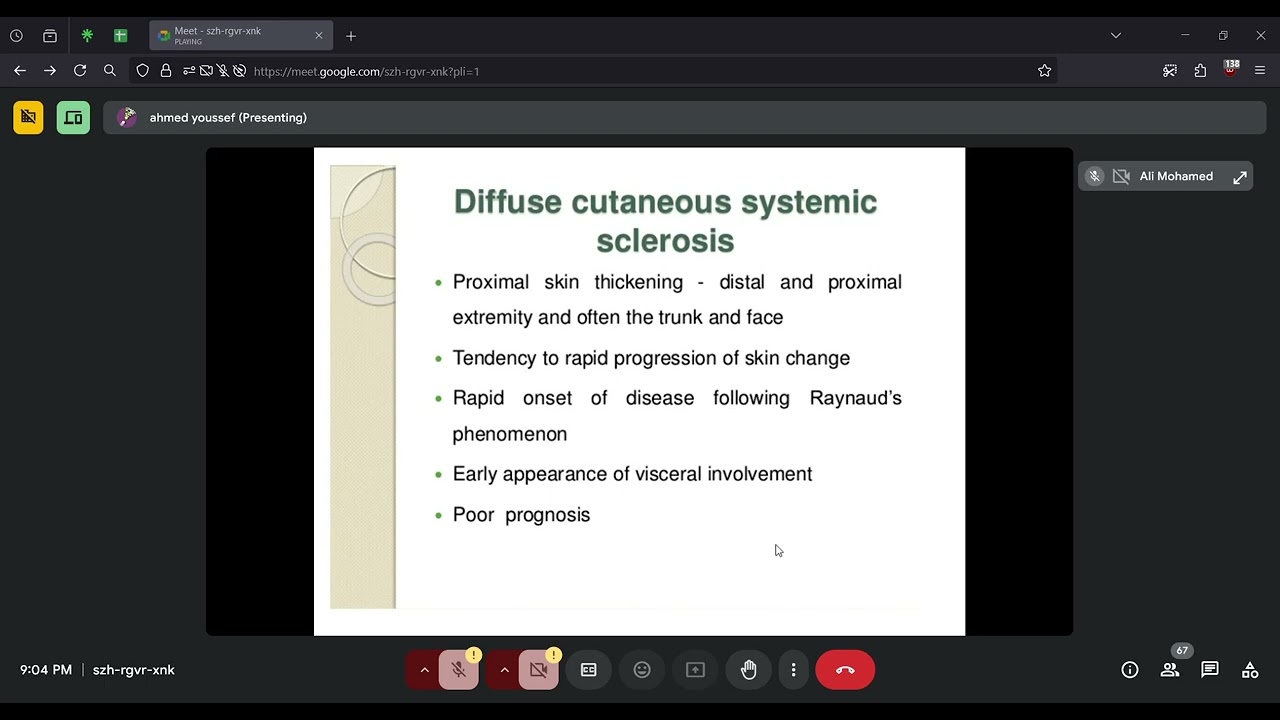
patient continued to be confused weak ictrick with joint pain especially in the hands so this is where rheumatology got consulted exam rheumatology found sclerodactyly extensive skin thickening contractions of the hand telangiectasias on the face periungual erythema capillary dilatations on kaploroscopy and calcinosis so repeat antibody testing because we like our lab test and a is still positive but not quite as strong on the titer the remaining of labs remain negative complements are normal chest ct shows nsap and small effusions so her kidney is biopsied and the kidney biopsy showed onion skin proliferation with the walls of the infernal capillaries and arterials necrosis and glomerular shrinkage so going through all of this i hope you've been thinking about the diagnosis this is third derma renal crisis so about two to fifteen percent of patients with diffuse sclerosis will develop scleroderma renal crisis it's more likely to happen in the first five years of diagnosis risk factors include steroid use cyclosporin and a positive rna polymerase so the patient in this case was on steroids before she presented to the hospital it was a high dose at 60 but there are studies to suggest that even lower doses can be attributed as well the patient in the case did not have a positive rna polymerase 3.
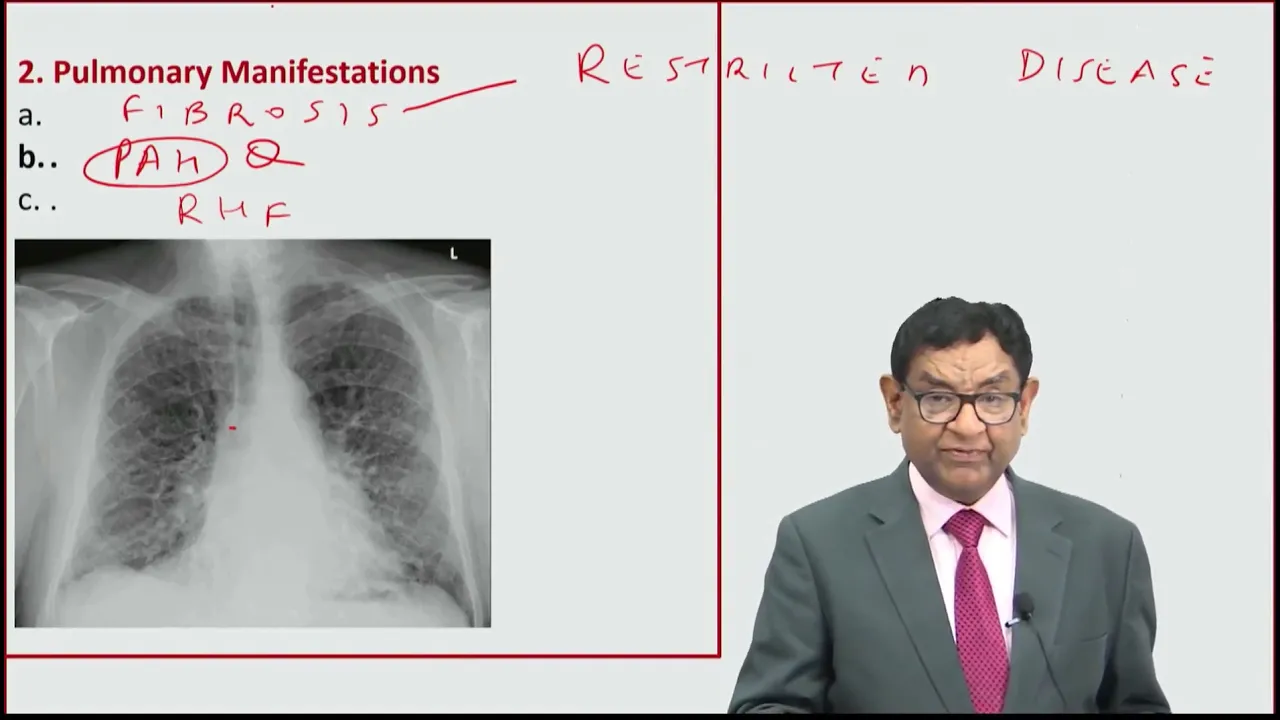
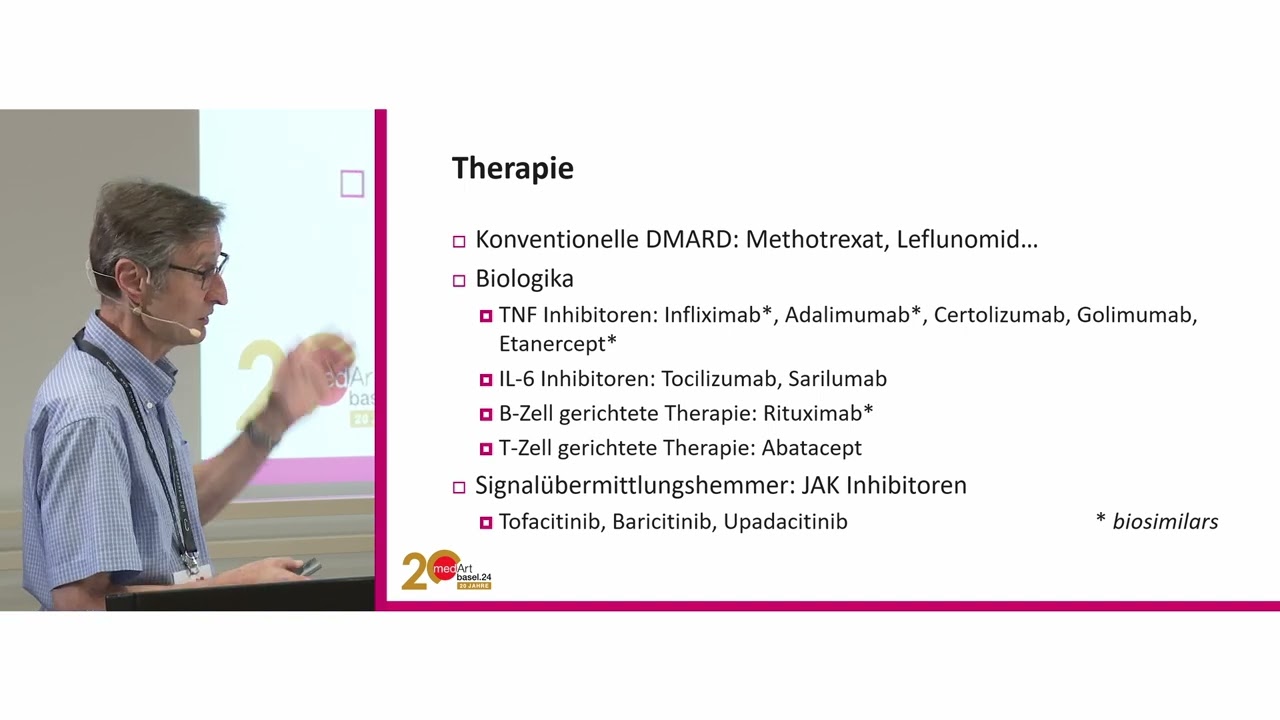
the mainstay of treatment is ace inhibitors 40 to 66 may recover renal function but the medium time to recovery is one year so these are the labs after admission so she got put on an ace inhibitor creatinine um did improve um this is about four to six months afterwards platelet counter returned to normal total bilirubin direct bilirubin also returned to normal ldh and the haptoglobin was not rechecked so thinking about scleroderma one of the earliest signs of it is renounce syndrome so in this picture you can see the white and blue discoloration typically there's a very well demarcrated line where this color change occurs and this is because the smaller vessels and the fingers are starting to um constrict and you're losing the blood flow if the fingers remain cold they can turn blue and then red with rewarming typically to make the diagnosis of reynolds it's it's two out of the three color changes are needed puffy fingers can also start to occur in scleroderma and the skin is starting to thick thicken sometimes this can be confused with some of the other rheumatic conditions such as something like rheumatoid arthritis or dactylitis from a spondyloarthropathy but the the skin is going to feel thickened and tight on exam and then this is towards the end of the condition you start to get sclerodactyly where the skin is not as puffy as before the fingertips start to kind of come to a point um sometimes you can have a little bit of rounding as well and in this patient they have contractures that are preventing them from laying their hands out flat this is looking at the causes of death of patients with scleroderma going back to the 70s to the early 2000s previously renal crisis was one of the leading causes of death in our scleroderma patients but then right around this time we started to get into the ace inhibitors and we see significant improvement in survival of these patients but then of course that leads to the development of other complications of this condition that lead to death in our patients such as pulmonary hypertension as well as pulmonary fibrosis so oftentimes in our patients we're doing pulmonary function tests and echocardiograms to look for early signs of these developing conditions and complications so leading into complications in our medic patients cardiovascular disease is very common in our patients with rheumatic conditions rheumatoid arthritis gout psoriasis psoriatic arthritis ankylosing spondylitis and lupus have all been associated with an increased risk of cardiovascular events and death interesting in our rheumatoid arthritis patients there's a lupus lipid paradox meaning that sometimes if the rheumatoid arthritis is very active the ldh and total cholesterols may be lower but the risk of cardiovascular events is still high in lupus patients global activity scores such as the salinas ledi to monitor for disease activity low complement 3 levels and lupus anticoagulation positivity are increased risk for cardiovascular disease if we break down this further this is looking specifically at our rheumatoid arthritis and gout patients which sometimes they can have overlaps in these conditions things that are thought to contribute to this risk include the inflammation from different and cytokines as well as ketosis traditional risk factors smoking a lot of our rheumatoid patients have been smokers hypertension and elevated uric acid levels has been associated with cardiovascular risk this leads to endothelial dysfunction and oxidative stress and then you develop vasoconstriction pro-thrombotic states elevated ldh and atherosclerosis medications such as nsaids and steroids are frequently used in these conditions which have risk factors for development of cardiovascular risk this is a study that looked at inflammatory arthritis but unfortunately there wasn't enough psoriatic arthritis patients and spondyloarthropathy patients to be included in the review but they looked specifically at the rheumatoid arthritis patients and found that tnf inhibitors did decrease the risk of cardiovascular events as well as methotrexate also favored improvement of cardiovascular events a vapor decreasing cardiovascular events while non-steroidal anti-inflammatories increase the risk of cardiovascular events as well as steroids increase the risk in cardiovascular events in our patients so we're still trying to wrap our heads around how to best manage this but i think it's important to note that there's an increased risk associated in these patients so being mindful of them when we're seeing them in clinic screening for hypertension and hyperlipidemia is important even though sometimes early in the disease course you can see lower ldh and cholesterol levels we just weren't rechecking in the future to make sure that they're not going up lifestyle modifications counseling on smoking sensation weight loss always important minimizing steroid use and non-steroidals whenever possible however it's hard when these patients are in pain we want to make sure that they're mobile and active to be able to do things but counseling them on risk factors can be important and then we often try to treat our patients to remission or low disease activity so working on advancing therapy if they're still having disease activity going moving towards medications such as biologics to try to help decrease the risk of cardiovascular events in rheumatoid arthritis patients um and then in lupus there have been studies to show that use of anti-malarials hydroxychloroquine have decreased the risk of cardiovascular events in our lupus patients so we always strongly encourage our patients to continue their anti-malarials unless there's a strong indication for them not to do that the european league for anti um against rheumatism or ulaar recommends using a risk modification calculated at 1.5 so if you get your cardiovascular risk factors and it doesn't account for something like rheumatoid arthritis the current recommendation is multiplying that times 1.5 to account for the higher risk of cardiovascular disease we're still trying to work out things for like lupus and other conditions but still in the works for that moving on to reproductive health this is a very important area of rheumatology oftentimes people are like oh you only see older people which is not true we see all ages in rheumatology and this is very important to our younger patients so the american college of rheumatology or acr strongly recommends that patients with rheumatic disease enter pregnancy with quiescent or low disease activity so i'm asking my patients often and early about this if they're of that age where they could become pregnant and then antibody status is very important in these patients so do they have antiphospholipid antibodies positive ssa or positive ssbe so this was from a fellows clinic um just a snapshot in time looking at patients who were on high-risk medications that could cause birth defects such as like methotrexate mycophenolate cyclophosphamide and whether or not they were on a contraception unfortunately in this study 23 percent of those women were not on effective methods of contraception and then there was even a high number within the study who hadn't even been asked if they were on contraception so when thinking about contraception choices going back to our antibodies the antiphospholipid antibody status becomes very important in these patients because if they are positive for antiphospholipid antibodies you want to try to avoid the estrogen-based products as that could increase their risk of blood clots but then they also and this is from the american college of rheumatology break it out further for lupus patients either in low disease activity or moderate high disease activity on which medications um the progesterone-based medications are preferred for contraception protection and then important for something like mycophenolate which has been associated with birth defects to require either an iud or two forms of contraception ssa and ssb carry special risks in patients who might become pregnant it's associated with neonatal lupus 10 of those patients might have a baby with a rash twenty percent of the children of the the newborns might have transient cytopenias thirty percent with mild transient transaminases but the one that we're really concerned about is complete heart block which occurs about two percent um and it's increased with subsequent pregnancies so if a woman has had a previous um child with a heart block then her risk dramatically increases with subsequent pregnancies however there was an exciting study that came out not that long ago that showed that hydroxychloroquine was extremely effective at presenting preventing recurrent complete heart block and it decreased that rate by 50 percent so now the um american college of rheumatology is conditionally recommending that all women who are positive for ssa and or ssb antibodies be treated with hydroxychloroquine during pregnancy to prevent this complication steroids so it might seem like us we use a lot of steroids in rheumatology and we do but we always have to be mindful of the complications of that so less is more when it comes to steroids so we're always trying to think of ways to decrease the amount of steroids that we're using so going back to our cases and thinking about our patients let's say you're seeing a 65 year old female who has a new onset of right temporal headache and jaw claudication she's tender on her right temporal artery and it's firm labs show elevated inflammatory markers with a sed rate of 75 and a crp of 6.5 so you astutely diagnose giant cell arteritis starter on pregnosone 60 milligrams per day and get a biopsy within two weeks of starting the steroids however that's a lot of steroids um and patients are older who get giant cell arteritis and are at risk for complications so um this is a study from 2017 in which tuscaloosa mav was used in our patients with giant cell arteritis and um going through these lines the the yellow line is the placebo with a 26 week taper of pregnazone the blue line right here is placebo with a 52-week taper of pregnazone the purple line is tosalucimab every other week and the green line is tosalusimab every week tracking out to 52 weeks this is showing that the amount of that uh and this is the patients without flares so as we go along they're more likely to have flare-ups so this is showing that the tosylusimab is decreasing the flare-ups um as well as decreasing the need to steroids so now we're trying to move towards using more medications such as tosylusimab which is steroid sparing in our patients to try to help um prevent some of the complications of long-term high-dose steroids as well as prevent these recurrent flare-ups tussollusimab the dose that's been approved is 162 milligrams every other week this targets the interleukin-6 cytokine these patients do need to be pre-skinned for hepatitis b c and tb however one of the biggest things that might limit its use is the increased risk for bowel perforation this is more likely to occur in patients who have diverticulosis or history of diverticulitis the risk is about one percent if they've ever had diverticulosis or diverticulitis and the risk is decreased to about half a percent if they've never had that so unfortunately sometimes this can be limiting in our elderly patients because they have had a history of diverticulosis or diverticulitis moving on to another case 35 year old male presents with fevers pneumonia respiratory failure and renal failure lab show low complement level four mark protein area positive c anchor of one to six forty and positive pr3 negative drug strain clio globulins a a and antiglomerular basement membrane renal biopsy shows diffuse necrotizing chrysant possy immune glitternary lunafridus so diagnosing him with anka-associated vasculitis so new this year oh and get started on steroids and rituximab for injection this is of course another condition that has high doses of steroids in use and new this year was the approval of a vaccupan to help limit steroid use so this is from the advocate trial in which the participants were ankus had anchor associated vasculatus and they could have been on rituximab or cyclophosphamide for induction um and then were on taping doses of pregnazone um the vacupan um was used at 30 milligrams twice a day and then the pregnant zone was tapered from there this did show a decrease of half of the use of the steroid which is why it did meet fda approval so vaca pan this is a small molecule inhibitor targeting the c5a receptor agonist so it blocks the c5a at the site of the receptor to prevent neutrophil attraction and activation um so this was the mean dose of the placebo group for pregnazone at 3 600 milligrams um over the course of treatment and the avapan group only had about 1300 milligrams of pregnazone so in summary just some take-home points on what we covered today any titers and patterns are helpful in the diagnosis and management of autoimmune disease the history can help you choose the antibody testing rheumatology emergencies are rare but have significant patient outcomes please don't give your scleroderma patients pregnanzone unless there's absolute indication for that cardiovascular disease is very common in our patients with rheumatic diseases antiphospholipid antibodies can impact contraception choices hydroxychloroquine [Music] can help out patients who might become potentially pregnant and preventing complications if they're positive for ssa or ssb and then working on trying to use more steroids bearing agents in our vasculitis patients so that is it you have a question okay and i'm gonna do some interesting radiation on policy so not a lot of uh crossover but i have had arthritis so my question for you is how do you feel about the whole foods plant-based diet in being part of the treatment regimen for arthritis okay so for those who can't hear the question the question was how do i feel about whole food plants based diet with patients with rheumatic conditions such as rheumatoid arthritis great question there's a lot of interest these days in diet and rheumatic conditions i have had some patients who specifically say i feel better if i avoid food x and i've heard all sorts of different things there are potential studies out there suggesting things like the mediterranean diet might be helpful um i've had some patients try specific things i don't know if anybody specifically has told me they've tried that diet but in general we are recommending leaner proteins lots of fruits and veggies the things in general um it's still a budding area of research within the rheumatology world well thank you for everybody who joined online and came in person [Applause] you
Up Next

Positive ANA Explained: Next Steps in Rheumatology
@Rheumatology101
634 views•2025-03-05

Graphic Medicine: Comics for Collaborative Healthcare Communication
@nationalpatientadvocate
189 views•2023-12-04

Neuroanatomy: Central and Peripheral Nervous System Divisions Explained
@AKLECTURES
136.2K views•2014-09-20

Stages of Labor and Vaginal Birth | Childbirth Animation
@nucleusmedicalmedia
52.1M views•2017-08-18
Related Study Plans & Knowledge Roadmaps
Structured learning paths in Medicine