















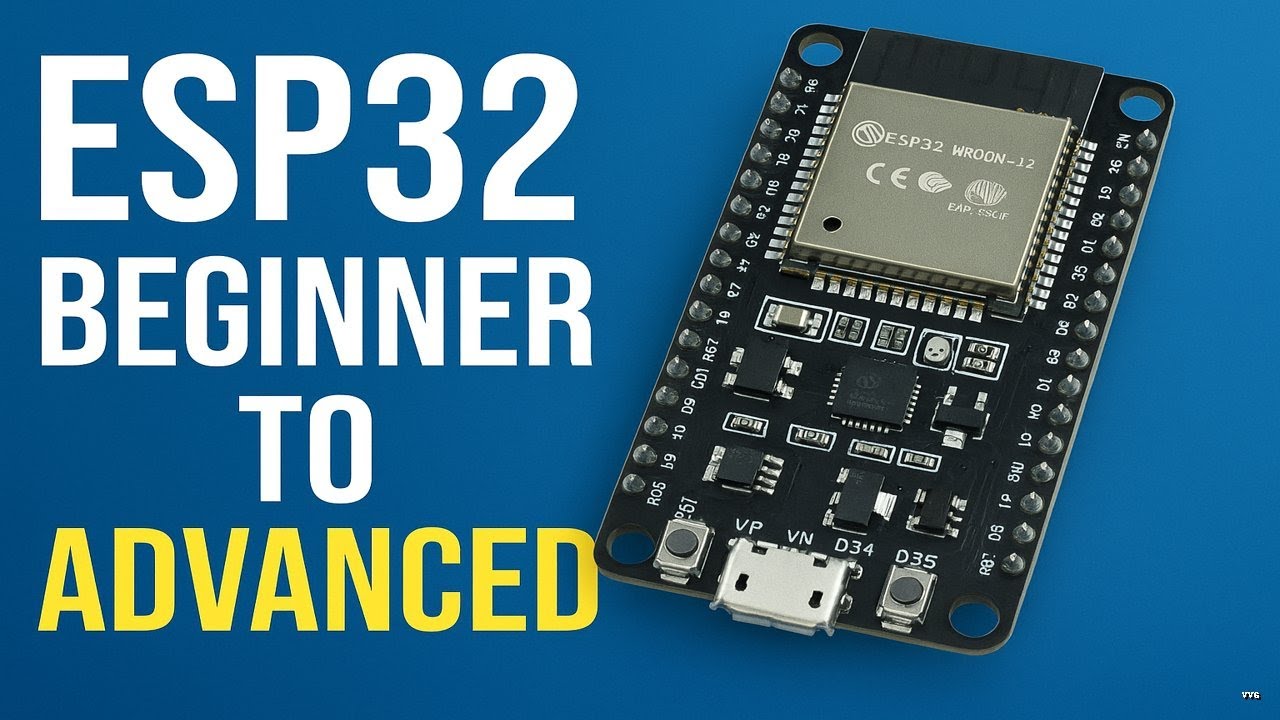










The Teensy 3.2 is a compact Arduino-compatible development board featuring a 32-bit ARM processor running at 72-96 MHz (6x faster than Arduino Uno), 256Kbytes of Flash memory (16x Arduino Uno), 64Kbytes of RAM, 34 5V-tolerant digital I/O pins, 21 analog inputs, and 12 PWM pins, with integrated audio capabilities through the Teensy Audio library for WAV playback, recording, synthesis, and analysis.
Teensy 3.2 Review: Powerful Arduino-Compatible Board | Setup Guide
Added:Basic understanding of microcontroller concepts, including GPIO (General Purpose Input/Output) pins and basic electronic circuits.
Familiarity with the Arduino IDE (Integrated Development Environment) and how to write, compile, and upload basic sketches.
Fundamental C/C++ programming concepts, such as variables, loops, conditional statements, and functions.
An introductory grasp of computer architecture differences, specifically comparing 8-bit (e.g., ATmega328 on Arduino Uno) to 32-bit (ARM Cortex-M) processors.
Exploring advanced hardware communication protocols like I2C, SPI, and multiple hardware Serial/UART ports on the Teensy 3.2.
Implementing Real-Time Operating Systems (RTOS) or utilizing hardware interrupts and Direct Memory Access (DMA) for time-critical applications.
Leveraging the Teensy Audio Library and Audio Shield for high-fidelity, real-time digital signal processing (DSP) and audio synthesis.
Programming the Teensy 3.2 as a Native USB device to emulate USB MIDI, HID keyboard/mouse, or custom USB flight controller joysticks.
47.3K views570likes4:54Original Release: 2015-12-26
Dear friends welcome to another video!
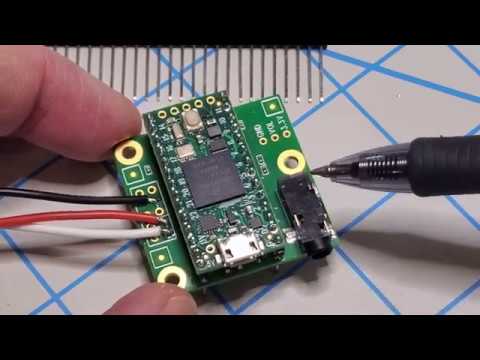
This is Nick from educ8s.tv and today we are going to take a look at the impressive Teensy 3.2 Arduino compatible development board, one of the most powerful Arduino compatible boards available today!
Without any further delay, let’s get started!
A few weeks ago Paul Stofreggen, the creator of Teensy, sent me an email and asked me if I would like a Teensy to make projects with it.
Of course my reply was positive and a few days later I received a package!
Two Teensys, an Audio board and a big 2.8 inch color TFT display!
Thanks Paul!
As you can see the Teensy 3.2 board is very small.
It is smaller than an Arduino Nano and it has the same size with an Arduino Pro Mini.
But despite its small size it outperforms these Arduino boards on every aspect!
The board uses a 32bit 72Mhz ARM processor which can be overclocked to run at 96MHz!
That’s 6 times the frequency of the Arduino Uno.
If you take in consideration that Teensy uses a 32Bit ARM processor the performance difference with a 8bit 16MHz Arduino board is huge.
The only board the can be as powerful as Teensy is the Arduino Due.
Teensy provides 256Kbytes of Flash memory to store your programs which is 16 times more than the flash memory of an Arduino Uno.
It has 64Kbytes of RAM and it supports Direct Memory Access.
It uses 3.3V logic levels but all of its 34 Digital Inputs and Outputs are 5V tolerant.
It also has 21 analog inputs and one true analog output, 12 PWM pins and much more.
The Teensy board is designed with Audio in mind as well.
Teensy with the Teensy Audio library can do WAV playback, recording, synthesis and analysis easily!
With this amazing online tool you can build your own sound system and it will automatically produce the code for you.
That’s really impressive.
I wonder why there is no tool like this for other Arduino libraries.
This tool is the future.
This is how things should be done.
There are many other things that Teensy offers, like an embedded RTC or a CAN bus, but you can find everything about Teensy on the product specifications page.
The cost of the Teensy 3.2 is 19.8$ and you can buy it online from the PJRC store.
You can find a link for it in the description of the video.
Now let’s see how to set up Teensy.
All you have to do is to visit the Teensy Website and download the Teensyduino add on for the Arduino IDE.
The installation is very easy, and after that you can program your Teensy as it was an Arduino board.
For example we can load the blink example.
I am going to modify it in order to blink the LED faster.
As you can see, all we have to do, is to select the teensy board and press upload!
Teensy claims that most programs written for Arduino work on Teensy as well.
I wanted to test this claim so I decided to load the code of the Real Time Clock project I had built lately on Teensy.
I connected the wires, I loaded the code, and without any change in the code, it runs flawlessly!
Of course since Teensy is much faster than the Arduino Uno, the program runs smoother on Teensy.
The display updates instantly with no visible flickering at all.
That’s really impressive!
My final word about Teensy is that I am really impressed with the performance, the software of it and the product as a whole.
Paul and his team have made an amazing job.
The software of it is really years ahead.
Paul has also made a ton of contributions to the Arduino community.
I really wish there were more developers like him in the Arduino community.
I am going to build projects around the Teensy board really soon, so stay tuned!
What do you think about the Teensy board?
Do you have any advanced projects that you would like to build with it?
Please post any ideas in the comments section below.
Thanks!
If you are new to the channel you may not know that my day is job is developing Android games and three weeks ago I published a new game on Google Play Store.
It is called Quiz of Knowledge and it is a quiz game that supports 5 languages and it is completely free.
If you like quiz games I am sure you are going to enjoy this one.
If you wish you can download it by clicking here or in a link in the description of the video.
Thanks!
If this is your first time here, I would love to have you subscribed.
In this channel I post videos about DIY projects every Saturday.
I build projects with Arduino, Raspberry Pi, I build robots and simple electronic circuits.
I hope you will join our community.
I love making things and helping people doing the same.
I hope that you will join our community.
Until next Saturday, Watch, Learn, Build!
Up Next
12:01
DC Motor Control with Arduino and L9110S Driver Tutorial
@BrainybitsCanada
108.4K views•2015-01-27

26:22
Walking in the City: Urban Rituals and the Flâneur in Contemporary India
@PSBTIndia
1.9K views•2016-08-02

9:49
FastAPI vs Flask vs Django: Choosing the Right Python Web Framework
@TechWithTim
302.5K views•2024-05-26

1:42
Game of Thrones Opening Credits: A Cinematic Analysis
@gameofthrones
46.3M views•2011-04-18
Related Study Plans & Knowledge Roadmaps
Structured learning paths in General & Interdisciplinary Studies
general-studies
Artificial Light: History, Tech & Human Impact
01The Pre-Electric Era: Fire, Oil, and Gas Lighting
02The Incandescent Revolution and Grid Electrification
03Gas Discharge and Fluorescent Illumination
+ 3 more learning modules
14h6 modules
Explore Roadmap
general-studies
Elevator Engineering: History, Physics & Cities
01From Hoists to Safety Brakes: The Dawn of Vertical Lift
02Hydraulic vs. Traction: The Engineering Physics of Elevators
03Modern Speed, Safety, and Algorithms
+ 2 more learning modules
12h5 modules
Explore Roadmap
general-studies
Rubber: Material Science, History & Geopolitics
01Origins of Natural Rubber & Mesoamerican History
02The Chemistry of Natural Rubber & Vulcanization
03The Geopolitics of the Rubber Boom & Colonization
+ 2 more learning modules
12h5 modules
Explore Roadmap
general-studies
Containerization: Evolution, Logistics & Trade
01Ancient Trade & Bulk Cargo: Amphorae to Barrels
02The Industrial Revolution & Cardboard Packaging
03The Containerization Revolution: Malcom McLean
+ 2 more learning modules
12h5 modules
Explore Roadmap