






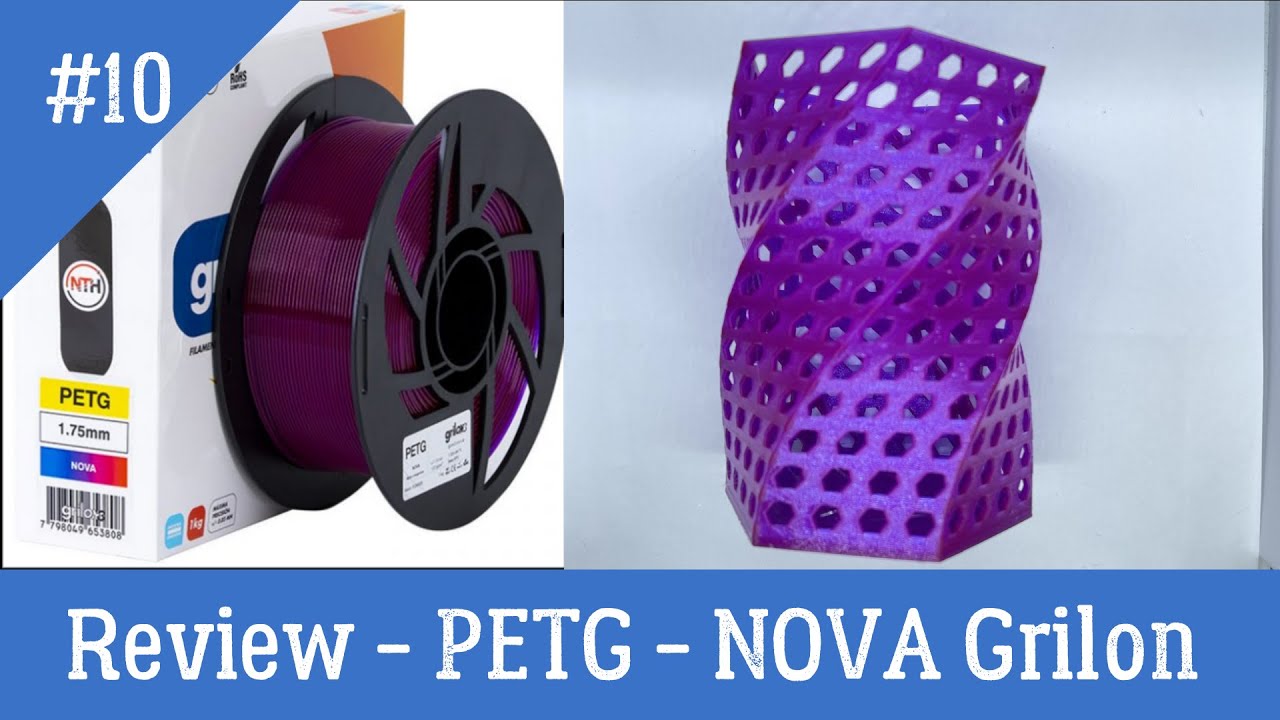



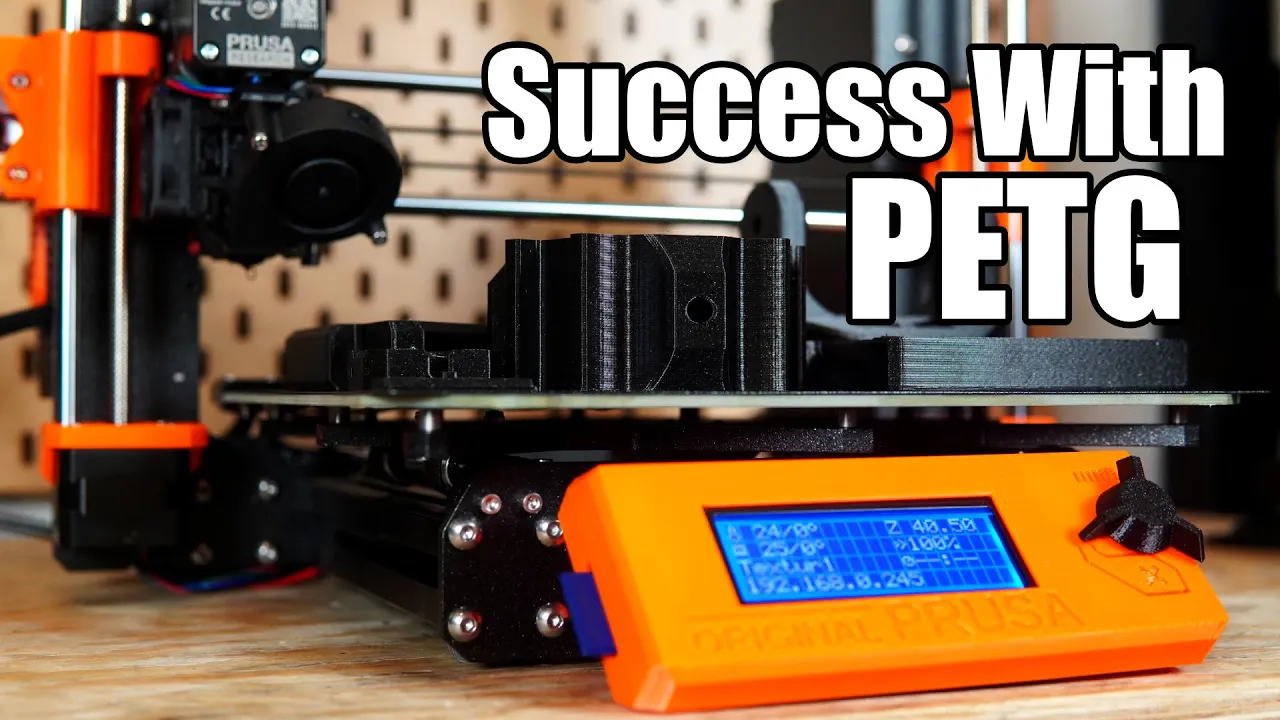




PETG filament quality can be assessed through multiple factors including diameter consistency (typically 1.6-1.7mm), spool condition, and material properties such as tensile strength (49 MPa) and flexural strength (68 MPa). High-quality PETG filament produces smooth, glossy prints with minimal stringing and layer lines when printed at appropriate temperatures (225-250°C nozzle, 80-120°C bed) and speeds (30-60 mm/s). The filament's dark gray color provides excellent visual contrast and professional appearance in finished prints.
KINLUOT Grey PETG Filament Review: Print Quality & Results
Added:Understanding of Fused Deposition Modeling (FDM) 3D printing fundamentals, including how layers are deposited and adhered.
Basic knowledge of different 3D printing filament types, specifically comparing PLA and PETG properties (such as temperature resistance and flexibility).
Familiarity with essential slicer software parameters, including nozzle temperature, bed temperature, retraction, and cooling fan speeds.
Awareness of common 3D printing issues like bed adhesion, warping, and stringing, which are highly relevant to PETG printing.
Advanced techniques for PETG management, such as proper filament storage, drying procedures, and moisture absorption prevention.
Methods for fine-tuning retraction settings and travel speed to completely eliminate stringing and oozing characteristic of PETG.
Exploration of post-processing methods for PETG, including mechanical sanding and chemical smoothing, to enhance surface finish and gloss.
Comparative analysis of PETG against other engineering filaments like ABS, ASA, and Nylon for functional, outdoor, or load-bearing applications.
180 views5likes34:24Original Release: 2023-03-12
[Music] thank you welcome back everybody today we're going to check out the king Lou cray petg filament all right see what we got here wow that's hard to see let's go over to the other camera there we go that's a little better okay as you can see it's King Lou tolerant.03 millimeter 3D printer filament premium quality material keep dry keep away from heat flammable stacking layers with an X I guess you don't stack in layers okay all right side it's just 3D printing filament top same thing the back we have temperature chart label on this side let's bring this up a little the place doesn't break it and it pretty much just says petg filament dot dot dot professional gray new made in China I hope they don't still use filament that would suck on the back here standard chart pla ABS hips ptg pla color change pcpa PVA wood and flexible so let's see for their petgs 230 to 250 on the little bit on the high side but normal uh heat bed which they call platform 80 to 120 C seems a little high but okay 40 to 100 millimeters.02 tolerances okay well let's see what's anything on the bottom nothing on the bottom see what's in the box all right oh we got a little booklet yo it is a manual make printing easier 3D printer filament made in China all right it's pretty give it that thank you very much for using our 3D printing consumables if you have any questions you're welcome to consult our mailbox we will serve you wholeheartedly with two exclamation points two so you know they care all right same printing chart I believe let's compare these sometimes they're different yep oh no little different here on the in the pamphlet bed temp it only says up to 110 C while in the Box it says 120 that's interesting also gives you it didn't didn't I cannot speak today density or maybe because I'm trying to read their writing uh that could be it a 1.19 grams per centimeter cubed it looks like so tensile strength 49 flexural strength 68.
it looks like they have black red yellow gray blue green cyan purple skin apparently is a light pink orange white rose red golden pink fuchsia coffee light green and yellow gold which yellow gold looks like tan at least by their picture pretty standard three questions after printing gradually no filament is extruded from the nozzle slippage temperature the standards why is the filament not easy to stick to the hotbed once again check temperatures or apply some PVA glue why does the drawing problem occur during printing the drawing problem during the printing process the nozzle of the 3D printer is at a high temperature when the nozzle moves to a new position the consumables are in a liquefied state and flow out naturally that says Q okay and then it says a is proposed that the printing temperature or printing speed can be lowered within the allowable range right interesting check out spool looks nice we're going to go over here to the other camera it's not so much glare cardboard spool label in the front nothing on the back holes at the bottom and the top see made from recycled material features good toughness bubbles free clog free tangle free easy printing tolerance.03 millimeters settings 230 to 250 bed temp 80 to 90. well there's a third range that seems a little more accurate but that's all over the place printing speed 30 to 60 millimeters per second that's a big Drop fan on no wait one kilogram and interesting nowhere does it say the collar does give its petg which I actually had to look for it doesn't really stand out but it does not give a color I guess they're just assuming for them gray is great maybe they only do a limited range interesting yeah that took me quite a while to find the petg all right let's go back to overhead open this guy up spool is a crushed feels like a thick bag it is not reusable and no no oh there we go one notch or somewhat easy opening foreign I need desk scissors all right one's silica gel looks good coiling is really nice look at that that's that's how they're supposed to come guys that that inspires confidence in us when we get a spool like this we're like okay that'll print fine and it doesn't look crushed anywhere oh is oh yeah it actually is just barely right here on this Edge you can see where it got crushed just slightly so if you're using some of those uh bottom spool holders that the spool rests in that might cause you some tippage knock knock over can we straighten it out straighten it out let's see if it rolls better still a little wobbly scary I don't trust those I have had plenty of schools just walk right off of them onto the floor middle of the night kind of a wake up all right let's see what we got all right oh smell test very finally it smells like when you've opened a pool float for the first time in the beginning of the summer yeah and a little bit of a paint smell just little interesting I wonder what it tastes like oh and it's left some residue it's a first I've never had a spool poop on my table spool poop I thought only the bamboos Made poop all right let's try the brake test good sign put sign yes brittle anywhere that's really good sign that off let's try the world's worst calipers because we're at negative zero apparently 1.6 which knows 1.7 0.6 0.6 1.6 1.6 feels fine yep 1.6 as super consistent in its size I really got to get good calipers if you don't want to buy me calipers could really use them uh you're not supposed to have just go oh that's really this so it looks really good we'll uh throw this on the printer see what happens I'm expecting some some good results spool looks really nice everything's really clean could use with a little bit more details uh I kind of feel like the back just empty everybody else fills out with advertising could at least even print into that maybe these spools go under well probably anybody's in bulk and everybody is buying the same ones so still a label would have been nice the inconsistency between three different sources of temperatures it's kind of surprising maybe I'll check their website see if they have a fourth temperature but yeah y'all stand by we're going to throw this on the printer we'll see what comes out of it we'll be right back [Music] foreign foreign [Music] foreign foreign [Music] foreign foreign foreign foreign foreign foreign foreign foreign [Music] foreign foreign foreign [Music] foreign foreign foreign foreign foreign foreign foreign thank you foreign foreign [Music] foreign foreign [Music] foreign welcome back everybody uh we are going to look at the results and uh of course I forgot to show you all the Amazon infos let's kick over to that I really gotta learn to write a script for this stuff uh but uh you know let's keep it real this is what it is I'm just like you guys just some dude at home with some printers like I'm better than people so we're just gonna keep reviewing the filament there you go you can see the Amazon page it was cheaper than that I cannot remember the exact price I know I did not pay 17.99 and I'm not going to go through my history to find out but they have a good selection of colors uh yeah decent so let's go over to the results all right here we are so here is our calibration Cube looks ah a knocked over Kitty again absolutely amazing really nice solid I do have a bit of layer lines but besides that everything is is just beautiful just beautiful no adhesion issues yeah worked great uh once again with the uh fired it off with that previous profile we've uh 225 and 55 on the heat bed at 100 millimeters a second which don't know if this filament is capable of all that since we had three different recommended settings there we go we got one little oh no kitty looks awesome bottom of the tail absolutely perfect feet absolutely perfect as gray shows up really well on camera gotta love that all the sides are Sharp bottom of the head there is absolutely perfect zero stringing I mean absolutely perfect now now all right on to the benchy nearly perfect looks great porthole looks awesome Archway looks awesome front window zero sagging in the bridging awesome I think I see two little hairs in there no stringing smokestack s awesome well I can really read it on the gray can read all of that pretty much read all of that yeah absolutely awesome so yeah really nice really nice results with this filament uh I already know what I'm gonna print with it I'm actually going to reprint a couple of these guys there you go because you can see the previous gray I used I don't remember which brand this was but it was absolutely just disgusting look at all the zits and the lines I mean it just it was a real struggle to print it did make it all the way but uh yeah not not too pretty look at that you can see under some under Extrusion in a few places it just did not print well well every other print before and afterwards was absolutely fine so it was just that one filament so yeah that's definitely going to print some of those it is a really nice gray it's a really dark gray it's very dark well compared to this guy I know it doesn't look that different let's get that ugly side out of there while there is no not ugly side on this thing at least y'all don't have to look at it every day but yeah this is actually good few Shades Darker so it was a very dark gray this is a little more silvery aluminum metal this is definitely very dark shiny oh yeah the bow came out perfect same as even a little more invisible than the last filament we tried so yeah really nice so far I believe that yeah that's the second king Loop we've tried I think I had good results on that one as well I'll have to go back and watch my own video to find out or I should I was smart it would have been making a chart for this once again if you've tried it let us know this helped you out let me know you've had similar results let me know you've had worse results lie to me now let me know let everyone know so we'll catch you all next time with the next review and you all have a good one [Music] [Music]
Up Next
13:06
Snapmaker 2.0 A350 Filament Guide: Eono PETG Review & Tangle Prevention
@JohnAldred
4.9K views•2021-03-18

26:22
Walking in the City: Urban Rituals and the Flâneur in Contemporary India
@PSBTIndia
1.9K views•2016-08-02

9:49
FastAPI vs Flask vs Django: Choosing the Right Python Web Framework
@TechWithTim
302.5K views•2024-05-26

1:42
Game of Thrones Opening Credits: A Cinematic Analysis
@gameofthrones
46.3M views•2011-04-18
Related Study Plans & Knowledge Roadmaps
Structured learning paths in General & Interdisciplinary Studies
general-studies
Artificial Light: History, Tech & Human Impact
01The Pre-Electric Era: Fire, Oil, and Gas Lighting
02The Incandescent Revolution and Grid Electrification
03Gas Discharge and Fluorescent Illumination
+ 3 more learning modules
14h6 modules
Explore Roadmap
general-studies
Elevator Engineering: History, Physics & Cities
01From Hoists to Safety Brakes: The Dawn of Vertical Lift
02Hydraulic vs. Traction: The Engineering Physics of Elevators
03Modern Speed, Safety, and Algorithms
+ 2 more learning modules
12h5 modules
Explore Roadmap
general-studies
Rubber: Material Science, History & Geopolitics
01Origins of Natural Rubber & Mesoamerican History
02The Chemistry of Natural Rubber & Vulcanization
03The Geopolitics of the Rubber Boom & Colonization
+ 2 more learning modules
12h5 modules
Explore Roadmap
general-studies
Containerization: Evolution, Logistics & Trade
01Ancient Trade & Bulk Cargo: Amphorae to Barrels
02The Industrial Revolution & Cardboard Packaging
03The Containerization Revolution: Malcom McLean
+ 2 more learning modules
12h5 modules
Explore Roadmap