
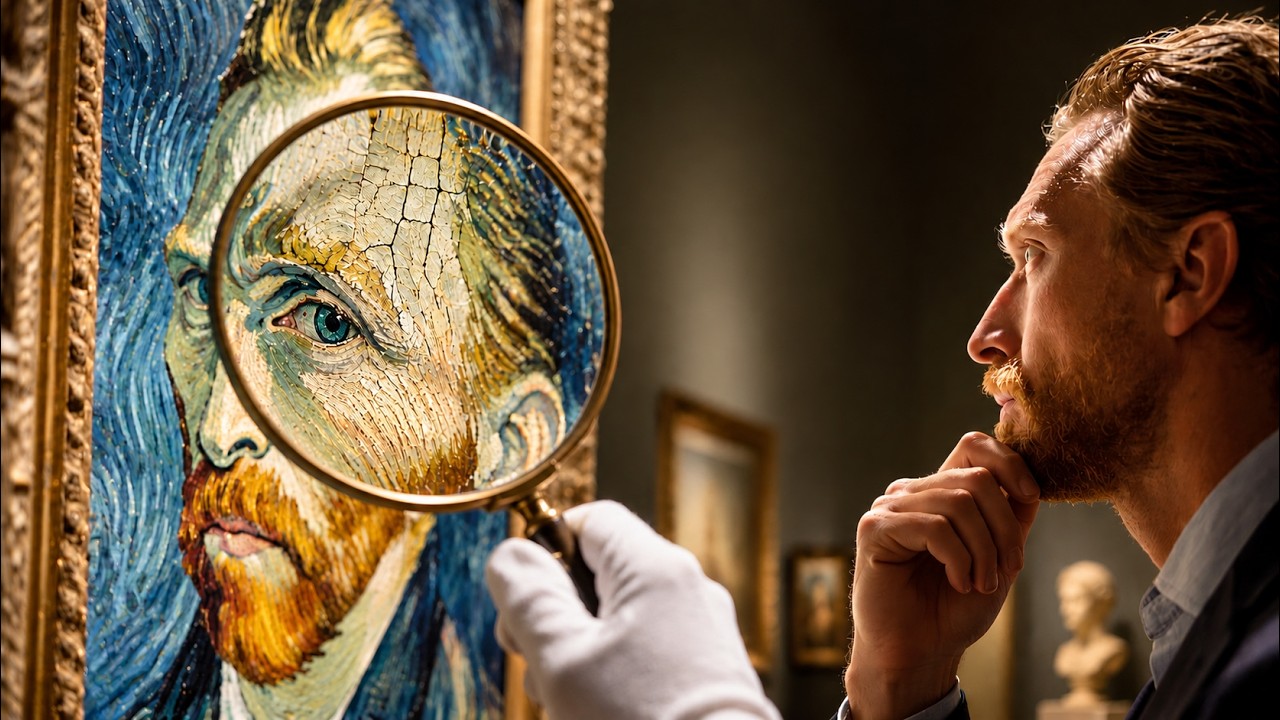









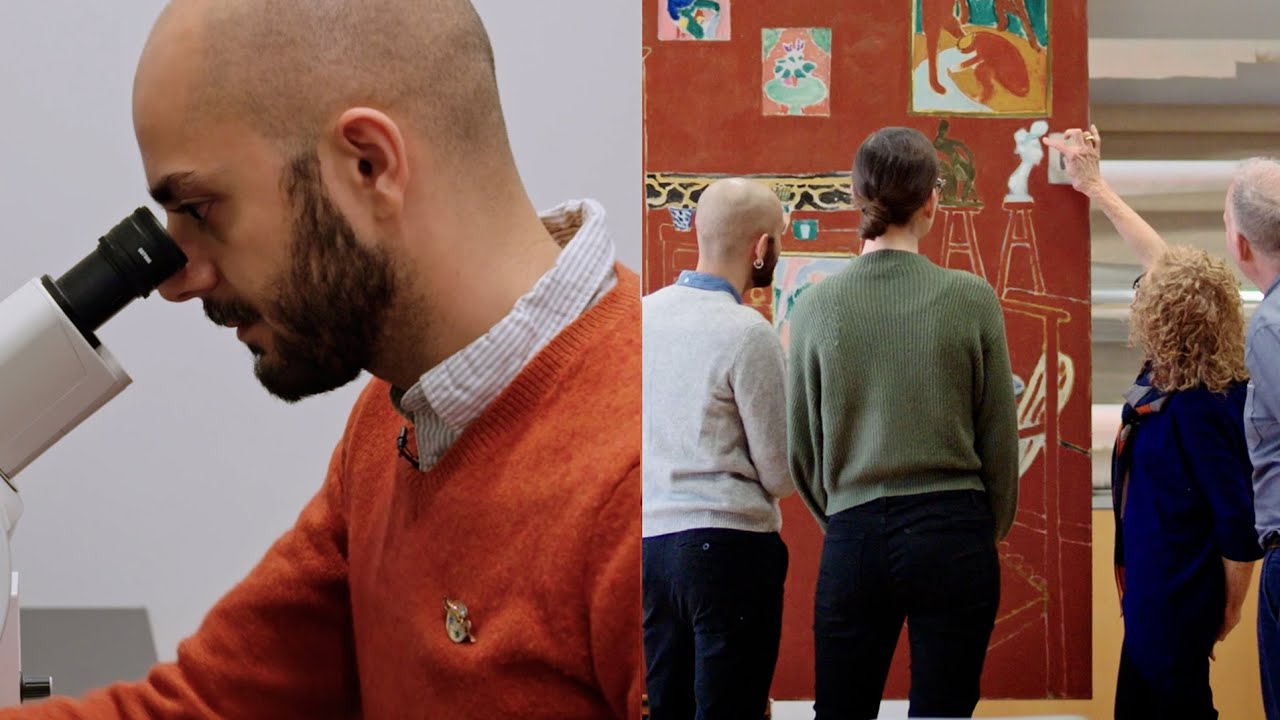
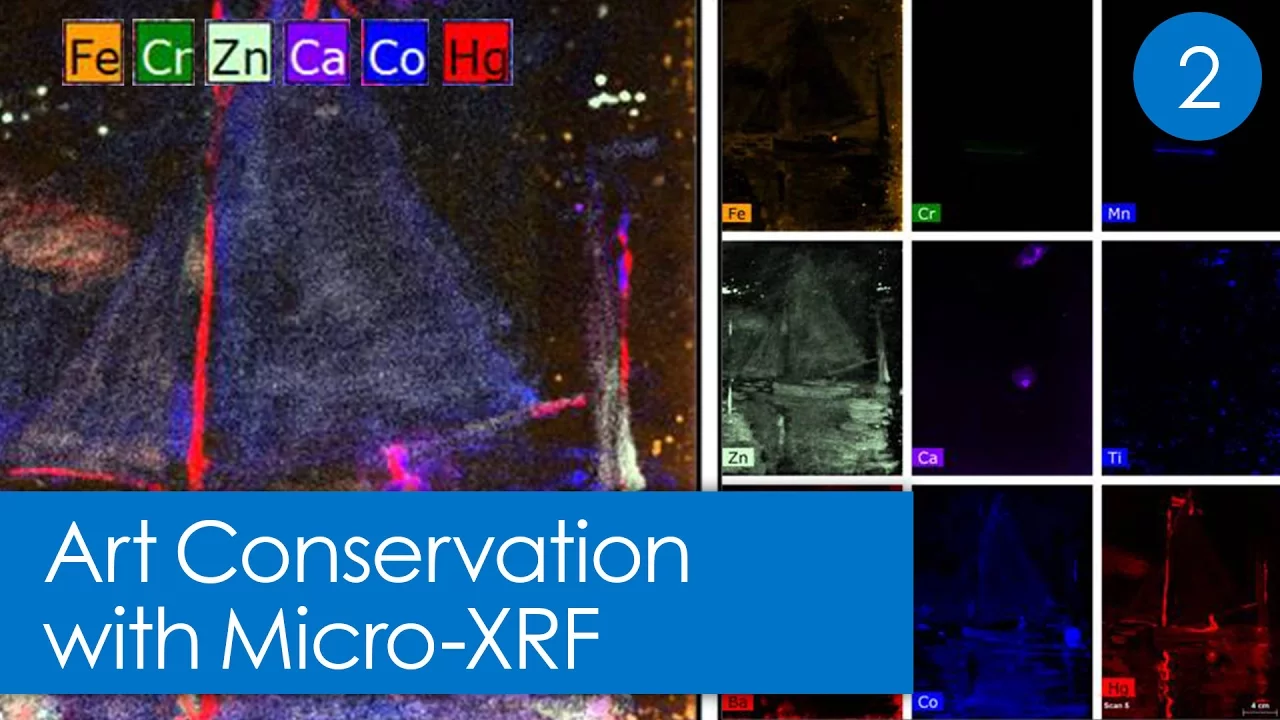






Art authentication requires combining multiple investigative approaches including forensic science (pigment analysis, infrared imaging), provenance research (examining ownership history and exhibition records), stylistic comparison with known works, and expert scholarly opinion to determine whether a disputed artwork is genuine or a forgery.
Uncovering a Lost Tom Roberts Masterpiece: Art Authentication
Added:An introduction to Australian Impressionism and the Heidelberg School, specifically the style, themes, and historical significance of Tom Roberts.
The fundamental triad of art authentication: provenance (documented history of ownership), connoisseurship (expert stylistic evaluation), and scientific analysis.
Basic knowledge of art materials, including the physical composition of oil paints, binders, and canvas, and how they degrade over time.
The role of archival research in art history, including how to locate and interpret primary sources like letters, ledgers, and exhibition catalogs.
Advanced non-destructive testing (NDT) technologies used in art conservation, such as X-ray fluorescence (XRF) spectroscopy, multispectral imaging, and dendrochronology.
The legal, ethical, and economic implications of art attribution, including how authentication affects market value and museum acquisition policies.
The methods and ethics of art restoration, exploring how conservators repair damaged works while maintaining historical integrity.
A case study analysis of famous art forgery scandals (e.g., Wolfgang Beltracchi or Han van Meegeren) to evaluate the evolving battle between authenticators and counterfeiters.
323.4K views4.3Klikes57:59Original Release: 2023-02-11
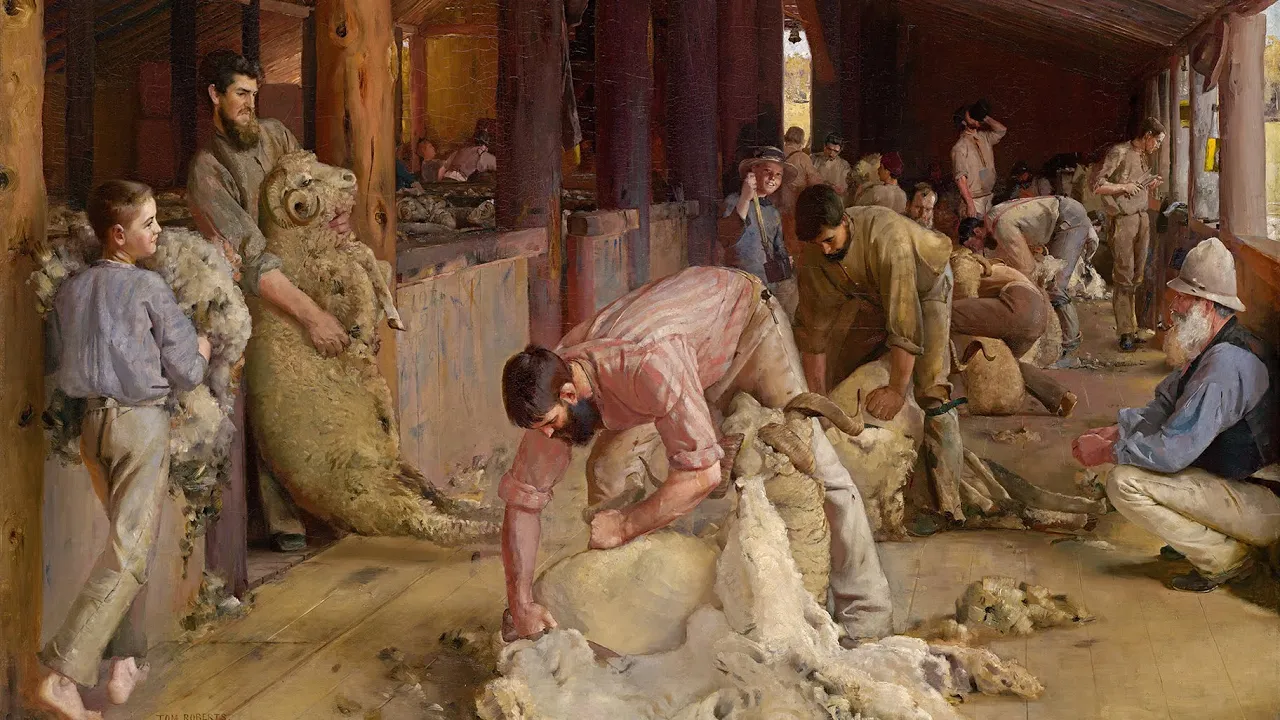
foreign [Music] the art world where paintings change hands for fortunes so thank you very much but for every known Masterpiece there may be another still waiting to be discovered this is it International art dealer Philip mold and I have teamed up to hunt for lost works by great artists we use old-fashioned detective work and state-of-the-art science to get to the truth science can enable us to see beyond the human eye oh wow every case is packed with surprise and Intrigue is it or isn't it afraid then but not every painting is quite What It Seems it's a journey that can end in Joy this is definitely by Paul De La Roche or bitter disappointment I can't cope with this roller coaster what a nightmare in this episode for the first time we travel to Australia where we're on the trail of a painting believed to be by one of the country's most famous artists Tom Roberts could the man responsible for these iconic works of life in the outback also have given us this intriguing picture of a dejected artist story that's been put into paint the stakes are high for the owners who are recovering from a dramatic change in their own circumstances I feel so responsible for our position [Music] it's a quest that delves into the artist's close links to Britain could forensic tests provide crucial new evidence wow that is our first link between Roberts and the painting but Australia's top artist is also one of the most faked Strokes in the sky you know particularly those flat-edged areas looks a bit like yours well this is terrifying it's a journey that could prove life-changing in this envelope here we have the destiny of your picture are you ready for it yeah [Music] you it's that gorgeous or whatever and I believe I can run download v-lee now we're often contacted by viewers from abroad who think they've discovered a lost masterpiece and very occasionally one is promising enough for us to bring the picture to the UK for a closer look one such special delivery has traveled over 9 000 miles from Australia it never fails to excite me when a picture comes that says for anticipation is it's one of the fun things about being an art leader and however much information you have before you see a painting Sing It In the Flesh that does it it's the moment when either your fantasies come crashing to the ground or or new hopes and Ambitions start arising [Music] on First Impressions this looks like one of those intriguingly evocative 19th century paintings and it's titled rejected this is exactly the sort of picture with which I'm familiar it's the Victorian genre painting this is a picture of the type you get a lot in the 19th century that tells a story so this is an artist it appears it's in a studio you've got all the props in the bottom right hand corner is an easel there he is looking at something that's been rejected presumably his own work of art that clearly is a painting that for some reason has failed to get into an exhibition they've thought about it and told him sorry mate you're not good enough we don't like it then you've got that really poignant way that his wife is looking up only just one eye you know you just make it out with a look of sympathy and empathy feels to me like a proper painting it feels to me high quality ambitious and what's also very clear is that this picture is signed Tom Roberts it says could it be that this is a work by the Tom Roberts a british-born painter who is now considered one of the greatest artists to have worked in Australia born in Dorset in 1856 Roberts emigrated down under with his family in 1869.
by the start of the 20th century his ambitious depictions of working life in the outback led to him being dubbed the father of Australian impressionism he was also an accomplished painter of interior scenes such as this picture the sculptor's studio [Music] today his Works take pride of place in Australia's museums and they are highly sought by collectors and this engaging scene could be worth as much as 200 000 pounds there's therefore a lot to gain if one can attach with absolute certainty that clear name in the bottom left-hand corner to this rather beguiling rather moving painting it's undoubtedly a beautiful work but the owners have contacted us because questions have been raised about his authenticity and they need our help Joe and Rosanna Natoli live in Queensland Australia the former mayor of a local Council Joe has always been a passionate art collector but a dramatic downturn in his fortunes means he now works at a fruit and veg Market [Music] his wife Rosanna is a popular TV presenter on a local news show a teenager who survived another Croc attack hasn't impressed the girl he was showing off to she says the incident was traumatic [Music] our shared background in television news provides an ideal way to get in touch I've invited Philip to join me in Broadcasting House in London for a late night satellite link up with Joe and Rosanna [Music] hi Philip hello there welcome to my domain well this makes a great change from the art World it certainly does I'm much more comfortable here I can tell you well I've just finished reading the BBC News at 10 Joe and Rosanna have got up early to speak to us we're speaking to you from the BBC studio and I gather Rosanna that you're a local presenter there that's right that's right so I'm sitting um of course in our studio here on the Sunshine Coast in Queensland Australia talking to you it's amazing isn't it well it's kind of surreal actually well let's talk about your picture how did you come to a quiet in the first place while I was just scrolling through different auction sites and all of a sudden I saw this name Tom Roberts come up Joe was looking at the website of a provincial English auction house back in 2013 selling a painting listed as being by Tom Roberts Australian with a suggested title contemplation and an initial estimate of just 60 to 100 pounds we could tell from the photographs that it was something special that there was something special about it and the subject matter spoke to us and I guess we just thought it was worth a chance so what happened in the end what did you end up paying for it well it started off obviously at 60 pounds it just kept going on and on obviously we weren't the only ones who thought this might be something special no it was it was very frantic and and the bidding kept going up and it got to a point where we knew that our limit was seven and a half thousand pounds when that bid came in for seven thousand Pounds I I took a deep breath and thought I had one more bed and this is it I waited patiently and it seemed like forever but eventually the hammer came down we acquired the work it was 2 10 2 15 in the morning I couldn't sleep waiting to tell Rosanna in the morning that we owned this Tom Roberts there's quite an Act of Faith but have you actually shown it absolutely a big leap yeah well good on you good on you but have you actually shown it to anybody out there to any academics or Scholars and got an opinion yeah so that's where it didn't go so well for us no I I ended up getting this expert opinion unfortunately the opinion came back negative they basically didn't believe there was any element of of the work in terms of style subject and and brush Strokes that resembled that of Tom Roberts the expert who examined the painting felt that there were no elements that related to Tom Roberts's work of the period and that therefore it was not likely to be authentic after gambling seven and a half thousand pounds on what they thought was a dead cert Joan Rosanna were destroyed for a leading expert to say no means that you've given us a bit of a challenge we're starting on a downer we are so hopeful that you can discover some of the truth behind this fascinating painting oh lovely people weren't they just but what a gamble my goodness but you know just to have taken that risk alone you know makes me want to help them I don't know whether it's by Tom Roberts but I think there's enough there for us to start on a on a project with this [Music] our first step is to track the work back to the point of sale the auction house who handle the painting agreed to pass a letter to the seller but we've received no further contact from the last owner leaving us with no information about the picture's Origins foreign we need to start our investigation much earlier in late 19th century London where Tom Roberts lived and worked I want to find out how this city shaped the early part of the artist's career and across town I'm on my way to the National Gallery as luck would have it the gallery is staging a special exhibition devoted to Australia's Impressionists which includes some of Tom Roberts's most famous works foreign if we're to prove that Joe and rosanna's picture is a genuine work by Roberts it's vital that we get to grips with what it is that characterizes his paintings and makes them so distinctive so I've arranged to meet Anthea Callan one of the world's leading experts on impressionism with a passion for Australian art we've got a rare opportunity to admire one of Robertson's masterpieces a breakaway look at this picture I have to say it's it's deeply dramatic oh absolutely absolutely the focus of the painting is the pioneering Colonial Australian man the whole composition is circling around him attempting to control this crazy flock of sheep so thirsty from drought that they're rushing to the dam knocking the the dogs for sex in the process Robert's composed this painting in 1891 only a decade before Australia became an independent country and this work is celebrated for capturing a sense of this newly emerging Nation what it shows us is not only what the Outback looked like but actually what went on there and this was visualizing a new national identity which was in the process at this period of formation and did the skillful lightness of the brush Strokes Roberts was pioneering the same style employed by some of the most famous impressionist painters of the period what I love is the way that the forms of the sheep go from Clarity to these shorthand blobs just just like one might see in someone like Monet absolutely yeah some of the mark making here is remarkably like Monet so we're talking about a a new country that's hatching and a new style of art modern techniques modern compositions contemporary subjects and Tom Roberts is out there in front it's evident from seeing this that we're dealing with a Storyteller an artist who Delights in the narration of emotion and drama could it be with a different story in mind we see those same skills in our picture [Music] meanwhile we've received an email from Joe in Australia which unexpectedly raises the stakes for our investigation Joe explains that he feels a strong connection to the image of a rejected artist because of recent events in his own life in 2016 three years after he bought the painting Joe's business went bust he was forced to sell their home and the family was left bankrupt this dramatic fall in fortunes has had a big impact on Joe's Mental Health and he's since suffered from depression [Music] I feel like placed my family my wife my children in that situation it was something that I felt totally responsible and and felt terrible about it's clear now this painting could be life-changing for Joe and Rosanna this painting is hope it represents the hope that we'll be able to have a home of our own again a place to bring up our family a place that is that is ours and also it's a chance for us to put the past behind us and move forward so it really is so very very important with so much riding on this picture I'm eager to find new evidence our research shows that Tom Roberts left Australia in 1881 aged 25 and traveled to London to enroll at the Royal Academy of Arts so I've come to investigate his time as a young student artist little is known about him in this period so I've asked the Academy's Chief archivist Mark Pomeroy to help me can we find any evidence here that links Tom Roberts to Joe and rosanna's painting we know that Tom Roberts was a student here at the Royal Academy what have you got in this wonderful archive here that can tell us a bit about that we have student records for everyone who ever attended the schools all the way from 1769 to now and so we're in the fortunate position of being able to check basic details for every artist who ever trained here just go to the entry for the hours and if we look at the top of the page here yes Robert Tom William painting December the 6th 1881 so that's the date he was formally admitted a student at the Royal Academy for Tom Roberts to come here all the way from Australia here to the Royal Academy that must have been an incredible thing for him it was a hugely ambitious step I mean even in the 1880s that Journey wasn't undertaken lightly London was the capital of the world to all intents and purposes and the Royal Academy was regarded as the greatest art school there were no more than 20 people a year being admitted to the schools and so it was incredibly exclusive and looking at the painting that we've got here I've got it on this tablet here would he have done a painting like this as part of his curriculum here how did it work no I suspect not the curriculum was incredibly formal and so you'd start off copying from antique casts of sculpture uh once you achieved a Proficiency in that you would be allowed into the life score where you draw from The Living Model and the painting schools where you would have to do several things including copying Old Masters and so at no point would you have been producing uh original positions yes that's right I find that extraordinary so you come here to learn to paint in Tom robson's case but you couldn't actually paint any of your own compositions in the whole three years so is there anything in here that gives you any clues that might link it to the academy in any way um well I suppose one could point at the Venus de Milo there um in that that was exactly the sort of classical cast that students would be expected to draw from and it's actually singled out in the laws of the schools as being one of the few so-called mutilated sculptures that students could submit a drawing of as long as they also submitted drawings of the missing parts and so he would have submitted the arms essentially with the Venus Milo in order to gain admission and then submit drawings of her arms to complete it could the Venus de Milo seen in our painting hint at Roberts's time here sadly it appears that the painting itself could not have been a part of the syllabus but student artists did create work in their own time and submit them for the Academy's prestigious annual exhibition who line of inquiry is it possible to find out if he ever exhibited it in any of the Royal Academy exhibitions here certainly we've got the records we've got the catalogs I could check now would you absolutely [Music] while Mark searches the archives I'm on my way to the courthold Institute of Art in style and composition I think Joe and rosanna's picture has all the Hallmarks of the late 19th century painting scientific evidence could help back this up and rule out her later hand [Music] so I've arranged for head of conservation of Eva bernstock to analyze the picture can't you find any forensic clues that can accurately date when it was painted so what have you been able to introduce about the period of the painting well it looks like it's it's painted using a fairly traditional middle 19th century painting technique you've got a white commercial priming on the stretcher so that's the layer upon which it's painted yes and then he's used um things like Vermilion a good range of Earth pigments some green earth and some yellow ocher some Prussian Blue for the drapery of the woman and mixed in with yellow ocher for the curtain so you're saying this is the traditional recipe for an artist working in the late 19th century yeah from the middle of the 19th century perhaps in the late 19th century too for a conventional painter but there's nothing you've found that would suggest that it's later than that period either well there are some areas of restoration as you would expect in a picture from this age and apart from those areas I have not found in in the original paint anything that was suggested it was a 20th century painting Aviva has found clear indications that the painting is amid to late 19th century work so if it is by Tom Roberts it would have to be in the early part of his career perhaps when he was living in London between 1881 and 1885.
Aviva has also employed infrared photography to look beneath the surface and she spotted some surprising details around the edges of the painting so you can see in the infrared image a lot more detail in the background yeah because I've also it was rather hazy and dark up there but what have you been able to make out well you see a violin on the top shelf here do you see the line in there and you can see a mirror or it might even be a canvas back to front and then a drawer which is pulled out with some more materials on it this type of detail is a characteristic of a formerly trained 19th century Academy artist and Aviva's infrared analysis of the back of the painting has also revealed something very promising next to the title rejected we can now see number one and alongside that what would appear to be several indistinct words there's an inscription which is you can see quite clearly in infrared what is it it is it's an address it says 10 James Street Haymarket SW something the postcode as well how extraordinary so we haven't just got the title of the picture and the proposed artist named Tom Roberts but we have an address to go with it we must find out about that can we establish a solid link between Tom Roberts and this address Fiona is investigating his time as a student in London so I need to update her on this new discovery you have one new message now this could be a lead and I'm wondering what he would possibly look into it hi Mark hi we're looking for two things now Not only was this painting exhibited here at the Royal Academy but also is there anything you can find that would link the address 10 James Street Haymarket Tom Roberts well we'll see because the address was something that all artists had to submit right so encouraging here we've got the original exhibition catalogs covering the 1880s and if we go to the index for 83 so he'd have been in his second year by then that's right and there's the eyes Robert's teeth 10 James Street Haymarket there we go wow this is a real breakthrough we found the same address that's written on the back of the picture that is our first link between Roberts himself and the painting and this places him living at 10 James Street in 1883.
that's right and submitting paintings successfully in this case was it this painting can we find out no well it's called brought back okay so it's not that one did he exhibit successfully any other year well luckily enough we've got another shot at this very next year 1884 oh here we are T Roberts basking a corn in the Alhambra well that's definitely not that one no it's not even close not remotely frustrating brought back was the first work Roberts had exhibited at the Royal Academy in 1883 while basking a corner in the Alhambra was displayed the following year although we've discovered that the address on the back of Joe's picture is where Roberts lived while studying here we can find no record of it being exhibited in the UK we've exhausted we have Avenues of research here now there's only one place we can go to hunt for new evidence Australia [Music] Tom Roberts returned down under in 1885 building his career and reputation here until his death in 1931.
Australia is now home to important collections of his early paintings and archives which could help us in our investigation but first we're on our way to meet jern Rosanna on the Sunshine Coast you know I used to dream about this place as a kid I used to dig holes in the garden just hoping to pop up here well I lost came here 20 years ago when I was a baby obviously naturally and how's your Aussie accent I love the accent out here don't you I said g'day welcome I cracked it no that's terrible we're about to be Chad Rosanna so definitely don't try it for a bit being here we really get a sense of a landscape that inspired Roberts the incredible light the sun-drenched colors and the vast almost never-ending sense of space it was here that Roberts became an artist of great maturity and vision [Music] if we do manage to prove this picture we'll be filling in a missing part of the biography of one of Australia's most important artists so many many missing facts at this stage I just I just hope Rosanna and Joe know what they're in for [Music] as Joe and Rosanna no longer have a permanent Home of Their Own we've arranged to meet them at rosanna's sister's house and after updating them about our progress so far the chance to talk face to face helps us understand just how difficult things have been you've had quite a time of it in recent years we have but we definitely have so you started up a a food business too yeah but unfortunately the Venture didn't go so well we had to sell our house to try and keep our business afloat we were selling art to try and keep our business afloat and then in February we on Valentine's Day we had to close the business you know when your house is on the line it you do what you can so I hope that things can turn around and almost lost my health I mean my feet are still numb from the amount of hours that I've worked in that business and still see a psychologist once a month to help me and this woman here has been so strong I mean she has been the woman in that picture who has been consoling me [Music] if this does turn out to be a picture by Tom Roberts what would it mean to you well it means so much to me in particular because I feel so responsible for our position oh honey what it's going to mean for us is that we might have a home again of Our Own and for us and for our children that's going to be truly amazing [Music] Joe is clearly broken by what he's been through I mean the pressure my goodness I can't imagine what it'd be like coming back and telling them that this picture is not by Tom Roberts I can't even better think about that I just fervently hope almost more than any program we've done that we come back with good news we just have to with a fresh sense of purpose we're leaving the Sunshine Coast in search of New Leads [Music] first we've all come to Melbourne to search for any evidence that could prove the painting is a genuine work by Tom Roberts it was here that Roberts lived and worked for long periods after he returned from London in 1885.
he led a new movement now dubbed Australian impressionism exhibiting Works alongside acclaimed contemporaries such as Arthur streeton [Music] Melbourne is home to some of the countries potent art collections in cluding some rare examples of Roberts's early paintings Rosanna and I are on our way to the National Gallery of Victoria there's one particular work here that Roberts composed in the same period we think our painting was made and I'm hoping it might display some very similar stylistic traits to Joe and rosanna's picture [Music] of one Mrs Abraham s of a friend of Tom Roberts painted here in Melbourne in 1888.
every artist has that own way of approaching a composition their own way of telling a story and what we're seeing here is a really specific way of doing so using all sorts of objects hints and props this woman is a fashionable lady what Roberts wanted to do was show with the plants with the Reeds on the table next to her look at that beautiful piece of Blossom and then an oriental pot next to it and the chair upon which is sitting that wicker chair more references to the subject's sophistication and cultivation you can begin to work out what type of woman she was on the basis of everything that's around her I think we find that in your picture you have the central figure in your case it's two figures and around and about these satellite objects that tell you more that give you hints give you clues about what's going on bottom right hand corner three cups on the table what isn't those about coming to teach three people a reference to the Friendship of the subject the subject's husband and the artist is possibly given as a wedding present now in your picture it's a bunch of paints it's brushes it's references to the artist at work put almost exactly in the same place in the same spot both these pictures are stage sets in which the props are telling you a story they're different stories but the means the manner by which the story is told is the same also strikes me is the invisible line that Roberts has used to help order the scene the SE Quirk is also visible in our painting an artistic device to help the viewer navigate a picture rich in detail so do you get a sense that your picture could be by the same hand I do the structure seems to be similar and that technique of all those little Curiosities once you see this work you can see that storytelling technique this is really encouraging there are significant stylistic similarities between this genuine work and Joe and rosanna's painting while Philip continues his inquiries Joe and I are following up a new lead our researchers revealed that while Tom Roberts was living in London he continued to be a member of an Australian art society and sent several paintings back to Melbourne to be exhibited could it be that the back of Joe's painting was marked up with a title and a dress for it to be sent back here to Melbourne for an exhibition [Music] the State library of Victoria holds records of the exhibitions that were held in Melbourne between 1881 and 1885.
the years Roberts was in London so Joe and I are taking a closer look this is interesting special notice to artists so these are the rules at the back of each frame must be written the name of the artist and the number do you remember the number on the back of your picture number one yeah could this explain why number one was spotted under the infrared written on the back the records detail each artist who is accepted for exhibition by name and title of work no sculpture okay so he's not in this one painstaking search might later catalogs contain any reference to Tom Roberts or Joan rosanna's picture Robertson yeah close frustratingly evidence okay that's the end all right let's look at the next one there it is okay yeah this is exciting now we need the title to sneeze Chillington churchyard Spanish water carrier the Thames by Westminster so this was painted in London and sent back here for exhibition yeah and that's it nothing else I was so hoping that we would find it here I got a mystery why is there a number and yet it's not listed here it's obviously not brought it back to Australia with no record of a Tom Roberts painting called number one rejected in The Archives of the State library of Victoria we're faced with two options either the painting remained undiscovered in the UK for over a hundred years or it's not quite what it appears to be as the expert who first examined it seemed to suspect could it be a clever fake to investigate the murky side of the market for Tom Roberts's work Rosanna and I are visiting the University of Melbourne we've arranged to meet Professor Robin sloggett an art conservator who has helped to identify several fake Tom Roberts paintings sold in Australia Robert I'm aware that as a result of your studies you're known as the queen of fakery out here thank you so in the case of of Tom Roberts can you can you give me sort of some sense of the scale the type of fakery that's out there um interesting artist important artist worth a lot of money so clearly Forge is going to be interested in Tom Roberts did you know that you'd enter such shark infested waters finding it hard to breathe right now we knew of course that Tom Roberts is a reputable and well-loved Australian artist and it makes sense that therefore the forges would take on his name but that's in hindsight it's very sensible to see and hear that now and not when you know we were making the decision to buy now I know you've got you've got two here from your sort of chamber of Horrors let's look at this one this looks to me like a reasonably competent picture very much in the Robert's style and that's what it's been created for to look like a reasonably competent picture not only in the Robert's style but by Roberts I can't help noticing those little flat-edged impasto filled brush Strokes in the sky it looks a bit like yours well this is this is terrifying the frightening thing is how clinical it is and how malicious some people might have been along the way that's what's frightening um this one is made by someone who's studied the techniques of Tom Roberts and then tried to make a work that someone would pay money for as if it were Tom Roberts and then let's look at the bag actually yeah there's a bit of a giveaway isn't it I mean what's interesting is this label which has clearly been added on so screams tricked up at you hmm although the brush Strokes look seductive Robin confidently identified this as a later fake but we know from our own scientific tests at The courthold Institute that our painting seems to be from the late 19th century but what about this picture it also seems to be from the right period but it too is a fake I mean it looks quite old let's have a look at the bag I mean look this is this is a 1900 stretcher and written on the back of this picture we also see the name Tom Roberts so this is an example of one that's been repurposed it's been sorry repurposed yesterday started off as something else and now it's been made into a Tom Roberts for the purposes of selling it everything about it is of the period so if you do tests on this you're not going to find something that you couldn't expect to find in 1890 painting which is gracious me laughs maybe the expert who viewed Joe and rosanna's painting believed it too had been repurposed a nightmare scenario that were Keen to rule out how do you feel for your husband if it's a fake because I know he would be devastated and no one wants to that news [Music] this case is now at a crucial stage for everyone involved so we've come to Sydney where there are some final leads we need to investigate if we are to have any chance of overturning the original verdict then the painting is not genuine I hope we're going to find here the evidence that's going to authenticate this painting for Jeff because having spent all this time with him I worry about his emotional fragility everything is riding on this picture for him and I can't bear to think what will happen if we don't prove it's genuine yeah I felt that very strongly with Rosanna as well but what we're lacking is any physical solid evidence anything on paper that testifies to the existence of this I just really hope somewhere here we can lay our hands on it because without it we're not going to be able to authenticate this picture in Australia's largest city we found a unique personal connection to Tom Roberts which we hope can help provide the New Evidence we need Joe and I are taking the painting to a direct descendant of Tom Roberts his great granddaughter Lisa Roberts is an accomplished artist herself and a keen student of her great grandfather's work here it is what do you think beautiful good yes I was wondering what you were going to say oh Joe it's so moving as a family member you are the closest we can get to Tom Roberts just does this speak to you of the man it certainly does screams Tom Roberts does it why why does it scream that to you on many levels the the subject the story the feelings but also I've just noticed these brush Strokes these wide Strokes that you get when you use a flat chisel shaped brush which Tom has been noted to be using before he came to London and these are The Strokes that he then further developed in his later times in Australia and I can see the beginnings of that in this picture so these are the really familiar marks to me this is encouraging Lisa is convinced the painting is a genuine work by her great-grandfather and she also has a fascinating theory about the unhappy artist in the picture [Music] and this is clearly Tom you think you think this is a self-portrait I do but so clearly his body [Music] hand I've seen in that position in photographs he had big hands and they're his ears and his long legs [Music] and the face the face yes so if this is a self-portrait this is a completely new theory for us so if true hugely important academically in terms of contributing to the knowledge about his work his first self-portrait I mean who would have ever saw that it could have been that Lisa also believes she can shed some light on what motivated Tom Roberts to paint this mournful emotional scene his mother had remarried a man who Tom didn't approval and so they they were estranged for a period of time so he went to London and he got into the rural Academy so he was proud and he wanted to tell his mother so he wrote her a letter and obviously in those days it had to come by ship it never reached her she died in the meantime so to me this painting could be maybe representing mother the love of it's his mother that he probably wanted particularly at this time there's a universal themes maybe that's why this painting resonates so much with me because that's me all over Lisa's belief that this is a self-portrait has provided the investigation with a tantalizing new Theory and in Sydney's State Library I've secured a rare opportunity to look through Tom Roberts's original sketchbooks they contain the artist's Preparatory drawings process of moving from sketch to Finnish painting was a technique Roberts was taught at the Royal Academy can I find any sketches here which could directly relate to Joe and rosanna's picture incredible things you know x-rayed Tom Roberts's mind you can see the way he's thinking the way he's developing ideas you can just imagine that that girl looking away in a painting possibly Street Scene one of the things that really struck me about your painting when I first saw it was that was that gesture of the hand on the face like a philosopher a thinker here is a man leaning on his hand now okay it's from another Direction but it gets better here it's now stronger it's more graphic we're getting warmer two sketches of a man with head in hand just like the figure in our picture there's one here I'd like you to look at in particular does that give you oh my goodness not bad eh here we have a drawing of a man and a woman consoling each other just like the central characters in Joe and rosanna's picture point is we know we're looking into the head of Tom Roberts here he's up to something and what he's up to can be found deeper into the book here oh my goodness oh wow and now the most compelling evidence of all a simple sketch of an artist in his studio with the edge of a painting in the corner it's emotionally slightly different I mean this guy is tearing his hair out he's having a sort of artistic nervous breakdown yeah there's despair but the point is look at the composition look at the whole concept an artist picture you know deep agitation in need of consolation he's thought about that hasn't he he's done that earlier yes yes here the curiosity is on the wall behind of course no that's a really good point these are props surrounded very much like your picture what you've got here shows he was heading in the direction of your painting I can't even believe that this exists and that you could find it it is a miracle they have come to us at a wonderful moment I mean we didn't have provenance there's a great Gap we needed something and I think we're looking at an astonishingly transformative piece of evidence oh wow that's extraordinary [Music] these sketches made by Roberts while he was studying at the Royal Academy appear to connect the artist directly to Joe and rosanna's painting could this be the final evidence that we need we've arranged to meet Joe and Rosanna at a Sydney restaurant our investigation is almost complete but with Joe now up to speed on the latest discoveries emotions are running High we wanted to have this moment together to celebrate what is a fantastic day incredible progress the only thing I would say I I hate even saying this is that Philip and I over the years making this series we we have been here before where all the evidence has been so strong and we have made such good programs but then the painting has not been authenticated you know all the news that we're discovering is moving forward to hear all of this gives us so much hope [Music] all right we have done as much as we can so what is my crucial is that we marshaled all the evidence stylistic forensic add the drawings put that case to the scholars will you have our blessing [Music] I've come to the art gallery of New South Wales to present the painting to one of the leading authorities on Tom Roberts Mary Eagle is a former curator and a scholar of his work the leading auction houses in Australia now look to her judgment to determine if a work is genuine before she assesses our case what are her first impressions of Joe's painting [Music] I like the still life painting done in the lower right so Dad is exquisite the painting of the lamp there is very beautiful it is really like the later work of Tom Roberts I also like particularly like the composition I dislike the painting of the figure I think he dominates the scene you know almost troubling way at least to me it's troubling because I think not well painted Tom Roberts became a very very good painter of faces but this face is slabby it looks like a molded cottage cheese rather than well it does [Music] we show this to Tom Roberts's great granddaughter and she felt very strongly that it's a self-portrait that it is this is actually Tom Roberts himself it certainly looks like him well it strikes me as being 80 of young men at his time at that time I'd be disappointed if Tom painted himself it would make this a confessional painting and I don't think he was so self-indulgent does it trouble you that we have over a century of missing provenance when it comes to this painting we have not managed to establish a paper trail that goes from our current owner back to the brush of Tom Roberts there's just a big gap there it's very disappointing because let's say someone has faked it let's say they used his sketchbooks used early paintings knew exactly what women wore at that time their scientific analysis is very useful provenance would be it really cement the picture wouldn't it and we don't have that problems to give you I'm afraid well I'm sorry about that what a pity [Music] well I've left Mary with the painting and I'll file of evidence and she's now going to consider it before she gives us her verdict there's some things about the painter she clearly liked very much others that she really did and I was a bit taken aback by how much she didn't like the Fig of the artist himself particularly the face and it's it's called rejected and I can only hope that she doesn't reject it and she delivers the verdict that Joe so desperately wants over the course of this investigation we found some compelling new evidence tests confirming the painting is a late 19th century work an address on the back of the painting matching a place where Tom Roberts lived in London convincing stylistic similarities to genuine works we've also compared the signature on Joe's painting to genuine examples and found several that bears striking similarities and most convincing of all Tom Roberts's sketchbooks which we believe show his Preparatory drawings for Joe and rosanna's picture one day later we received Mary Eagle's judgment we need to deliver the verdict to Joan Rosanna it's a decision which could change their lives so we've all arranged to meet at Sydney's State Library I only wish that Joe and rosanna's picture had not been turned down it's so much more difficult in the art world to reverse an opinion that's already been stated do I think we've done enough research have we made the case on paper yeah I think we have will it be enough though to reverse that view to make it authentic well we're about to find out I'm feeling very apprehensive at this moment it's um difficult to contain all of those emotions but I think we're ready to find out we're at a point in our life now that you know we need to move on and really discover what this painting is all about [Music] okay General Rosanna we've now got to the end game and in this envelope here we have the answer are you ready for it we're ready yeah okay on looking at the painting itself there is enough evidence particularly because particularly the composition and the painting of the still a lot of stuff are you getting me going to support the conclusion that it is by Tom Robert foreign [Music] I can read the rest of it now oh it fills a gap in what we know about Tom Roberts and I think it might be the first of his paintings that shows signs of his greatest traits the expression of feeling that trait may be overstated here but he was to achieve some of Australia's greatest paintings say something Joe I mean that's just amazing to hear that I mean wanted to hear that for so long he has felt responsible and he has felt that he was the one who put us in this situation so this for him is just about realizing that he has done the good Redemption Redemption Joe I wanted to contain upset it's time for me to put all those feelings into a box and put it away and I think I can do that now this will help you do that yeah so this brings up the subject of the valuation and what are we dealing with here well a pivotal early work by a man who went on to become the father of Australian impressionism there are Australian collectors who would love this and also museums we must be talking about a price in excess of two hundred thousand pounds that's just amazing that is wonderful and this is yours I'm so relieved [Music] my overwhelming feeling at the end of all that having come to the other side of the world is relief relief for Joe relief at this point he believed in for so long has come good and as I read that verdict at him I could almost see him stand taller and his back grows straighter and he is now proud proud of what he's achieved which is a great result and there's another aspect to all of this it's only by spending time here in Australia that I Rise how important Tom Roberts is to the history of arto here and in a sense we've we've put back a missing building block I'll put it another way a painting called rejected is now accepted if you think you have an Undiscovered Masterpiece or other precious object contact us at bbc.co.uk slash fake or Fortune foreign [Music]
Up Next
65:29
Victorian Radicals: Art, Industry, and Utopia | Tim Barringer
@NevadaArt
763 views•2021-03-17

26:22
Walking in the City: Urban Rituals and the Flâneur in Contemporary India
@PSBTIndia
1.9K views•2016-08-02

9:49
FastAPI vs Flask vs Django: Choosing the Right Python Web Framework
@TechWithTim
302.5K views•2024-05-26

1:42
Game of Thrones Opening Credits: A Cinematic Analysis
@gameofthrones
46.3M views•2011-04-18
Related Study Plans & Knowledge Roadmaps
Structured learning paths in General & Interdisciplinary Studies
general-studies
Artificial Light: History, Tech & Human Impact
01The Pre-Electric Era: Fire, Oil, and Gas Lighting
02The Incandescent Revolution and Grid Electrification
03Gas Discharge and Fluorescent Illumination
+ 3 more learning modules
14h6 modules
Explore Roadmap
general-studies
Elevator Engineering: History, Physics & Cities
01From Hoists to Safety Brakes: The Dawn of Vertical Lift
02Hydraulic vs. Traction: The Engineering Physics of Elevators
03Modern Speed, Safety, and Algorithms
+ 2 more learning modules
12h5 modules
Explore Roadmap
general-studies
Rubber: Material Science, History & Geopolitics
01Origins of Natural Rubber & Mesoamerican History
02The Chemistry of Natural Rubber & Vulcanization
03The Geopolitics of the Rubber Boom & Colonization
+ 2 more learning modules
12h5 modules
Explore Roadmap
general-studies
Containerization: Evolution, Logistics & Trade
01Ancient Trade & Bulk Cargo: Amphorae to Barrels
02The Industrial Revolution & Cardboard Packaging
03The Containerization Revolution: Malcom McLean
+ 2 more learning modules
12h5 modules
Explore Roadmap