





















Victorian radicals like John Ruskin and William Morris critiqued industrial capitalism by arguing that machine-made goods were inherently ugly and environmentally destructive, advocating instead for a return to natural materials and handicrafts; this artistic and design movement produced beautiful medieval-inspired works that simultaneously served as political statements against industrial exploitation and environmental degradation.
Victorian Radicals: Art, Industry, and Utopia | Tim Barringer
Added:The Industrial Revolution in Britain: The shift from agrarian economies to industrialized, urbanized societies and the emergence of factory labor.
Victorian Era Social Dynamics: The rigid class structures, labor exploitation, and rapid urbanization of 19th-century Britain.
Basic Concepts of Capitalism and Division of Labor: Understanding how mass production altered human labor, separating craft from the worker.
The Pre-Raphaelite Brotherhood: The mid-19th-century artistic movement that sought a return to the detail, intense colors, and complex compositions of Quattrocento Italian art.
The Arts and Crafts Movement: Examining how William Morris's design philosophies translated into a global decorative arts movement prioritizing handcraftsmanship.
Utopian Socialism and Guild Socialism: Investigating the political theory developments of the late 19th and early 20th centuries inspired by Ruskin and Morris.
Modernist Design Pedigree (Bauhaus and Art Nouveau): Tracing how Victorian radical theories on the unity of art and utility evolved into 20th-century design schools.
Contemporary Sustainable Design and Anti-Consumerism: Linking the Victorian critique of industrial mass production to modern ecological movements and ethical consumerism.
763 views12likes1:05:29Original Release: 2021-03-17
good afternoon everybody i think we're going to go ahead and get started my name is christian davies i'm the gene jones director of public programs here at the nevada museum of art we are very excited to have everybody joining us this afternoon or evening uh depending on where you're at uh for the opening public program for the victorian radicals from the pre-raphaelites to the arts and crafts movement uh exhibition tonight we've got a really great program for you i'd like to go ahead and start by saying a very heartfelt thank you to all of our generous sponsors who helped make this exhibition possible in this series of programs possible as well i know many of you are in attendance we we thank you um at this time i'm going to go ahead and bring on ann wolfe who's going to introduce this evening speaker and we'll get going from there thanks very much christian and welcome to all of you who are joining us um as you all know we were incredibly proud and excited to open the victorian radicals exhibition this weekend had a great response from our community and i just speak on behalf of the entire staff when i say that um we're just very proud to be able to bring this exhibition to uh northern nevada at uh after what has been a very very long year for so many of us so it's a thrill to have these amazing artworks uh in the museum right now so um it's my honor tonight to introduce uh dr behringer who sent me a very short like two or three sentence introduction which was incredibly modest i've added a couple things uh to that but um i'd just like to start by saying that the exhibition is actually curated by three individuals uh tim barringer as well as independent curator martin ellis and victoria osborne at the birmingham museums trust and of course we thank all of them for putting this exhibition together tim barringer specializes in the 18th 19th and 20th century art of britain and the british empire 19th century american and german art and museum studies following positions at the victoria and albert museum and the universities of london and birmingham and great britain he started teaching at yale university in 1998 where he is currently the professor and chair of the department of the history of art so tim's books include reading the pre-raphaelites and men at work art and labor in victorian britain as well as essay collections on victorian jamaica and the history of panorama painting he also greatly enjoys curatorial work you can tell that when you see the exhibition on view at the museum his uh some of just a couple of his past exhibitions include american sublime the book for that show has been on my shelf a favorite of mine since 2002 um also the pre-raphaelites victorian avant-garde which was on view at tate britain and the national gallery of art in washington dc as well as thomas cole's journey atlantic crossings on view at the metropolitan museum of art and the national gallery in london to kim we really look forward to hearing you speak tonight about this great exhibition victorian radical so thank you so much for joining us well thank you anne and thank you christian for the kind invitation to come of course there's nothing i would like to be more than to actually be there with you all um one of the things i when i first saw that the museum was interested in the show was like great i get to go to nevada again one of my favorite places so unfortunately that will have to be deferred for a little bit but i'm thrilled that the show is there and i was even more thrilled and actually really moved to hear that 600 people were in there safely enjoying the show just this weekend and you've had visitors back in looking at the art we had the show here in new haven connecticut where i'm speaking to you from today at yale um for just four weeks and then it had to close because coffee came and you know we didn't know what would happen and so it's just a thrill to see life coming back to slightly towards normal and to see you all able to enjoy this show so let me start by sharing my screen and we'll look at some of this work together so that's great there we go so i just want to say a little bit about this uh exhibition the title of my talk dystopia to utopia um i hope that will become clear why i use that title as we move through but victorian and radicals are probably two words that you don't usually use in the same sentence you know victorian conjures up bed and breakfast with frilly doilies and or your grandmother's closet or your great-grandmother's closet if you're my students or um you know something uh unchallenging threatening homely and then radicals is you know bold and and dramatic and wanting to change the world and we wanted to show that these things are connected and i do want to acknowledge my colleagues victoria osborne and martin ellis and victoria is uh still the curator at the exhibition at the um museum in birmingham uk where all of the objects come from this is the best collection in the world of victorian art and design martin was for nearly 30 years the curator of the decorative arts collection he's now an independent scholar and i taught at the university of birmingham right there for two years before moving to yale so my first experience as a teacher was bringing my students to sit on the floor in little groups looking at these paintings the very paintings you have now in your gallery so it's a very very happy uh reuniting of my interests with my earliest experiences and the thought of being able to bring these things and share them with american audiences has been just delightful now this is how we hung the opening of the gallery at yale and i'm dying to see some shots of your installation which i know will be very very beautiful as well um but what we did want to do uh in this in this uh initial sort of um uh view of the exhibition was to introduce birmingham itself because there is a reason for the kind of argument that we want to advance in this show the show is an argument about industry and it's not just a celebration of industry although birmingham is one of the great industrial cities of the world it was if you like it was chicago before chicago it was the great metalworking city of the 1820s 30s 40s 50s of the victorian moment it was the place where for the first time in the history of the world you could actually see mechanization you could see factories you could see smoke you could see huge amounts of money being made and lost you could see terrible suffering and inequality all of the problems that we see in the world outside now in a way started in birmingham or at least started in in britain the first industrial nation it was in britain where the industrial revolution really first began um you might say first in first out because it also collapsed there um in my childhood in the 1980s that we britain became in a way the first post-industrial nation rather tragically um but in those moments of the 19th century just looked as if birmingham was a kind of mixture of heaven and hell it had this glowing red furnaces all over it there was the air was almost unbreathable with particles of carbon on the other hand this was the place where dreams were made fortunes were made where um where objects were produced in a quantity and of a quality and of a precision that had never been known before birmingham was really famous for its metal work for its metal working trades artists to get a view of birmingham had to step away from the city there were no grand squares particularly no no big vistas it was all workshops so you had to go out to the parkland around the city to get this distant prospect um and in fact i wanted to raise the issue of the industrial revolution and the anthropocene um as it's now called um uh but of course nobody in the 19th century realized that that was that that was what they were living through and i want to take you back a little bit further to this picture which is made in 1801 i was recently reading a very scholarly account which said that 1800 was the year at which it became impossible for what mankind had done to be reversed it was the year when the carbon in the atmosphere the changes in the environment had already reached a point of no return and so um this is painted in 1801 i like to call this work the first painting of the anthropocene the first painting of the industrial era it's actually by an artist called lutherborg colebrook dale by night coal brookdale not too far from birmingham is one of the great iron founding sites and if you go close i think the lutherberg intuited looking at the industrial revolution that this was a letting loose power of awesome magnitude but also danger that you know the world will be changed and reshaped by industry but also the world could be destroyed by it i think that's a story which runs through our exhibition but we'll see that it's responded to in various ways by our victorians uh victorian radicals now one of the objects i love most in this show and i will say it's it's a really delightful show for me because it includes material objects as you if you've seen it you'll know three-dimensional things products material culture we might call decorative arts things which you could have in your house as well as some of the great paintings of the 19th century normally these shows are in separate museums so um in london if you visited london you'll know that the paintings are at the tate gallery of tate britain and the material objects are at the victorian album museum in birmingham they're both in the same under the same roof and that made it possible for us to tell a much more complicated story about how art and design responded to the changing world of the 19th century and one of my favorite objects was made in birmingham and that is a clock made in 1851 by a clockmaker called evans and this seems to catch something of the flavor of our exhibition because if you look at the front it's a sort of decorative gothic structure i hope you can see my little pointer i think you can and it looks um almost as if it's looking back to the middle ages to a medieval cathedral or something it's certainly highly decorative and doesn't look at all modern go around the back and you suddenly see that we're looking at modern machinery we're looking at a timepiece that a clock which is precision engineered in those birmingham forges let's get closer and there it is that's the 19th century for you this is the century that invented the railway train the telegraph the photography moving pictures and all kinds of mechanical apparatus so i just love the clock um combining all those things now this is not the most beautiful object in the exhibition but it's in a way one of the most significant and actually when we installed the show at yale i persuaded my colleagues to bring this thing right to the front so the first thing you see is this scary pink carpet with massive massive pink and blue flowers on it it's fantastic i have to say when we unrolled it for the first time to look at it we could still smell the smell of the dyes it had not i think been unrolled since um well more than once anyway since the great exhibition of 1851 when it was first shown and it was shown as a masterpiece of machine manufacturing this uh this carpet was made by a company called crossley in a place called halifax which is not 10 miles from where i was born and grew up in the north of england um in yorkshire this the heart of the textile part of the industrial revolution birmingham was all about metal work now the proud boast of the victorians is that you could make hundreds of these things you could make thousands of them identical you could sell them all over the world and each one would be the same and um in almost no human hand had been involved in its weaving because it was woven on a power loom the um the wool was spun on through through mechanized processes the dyes are made from chemicals not from natural products this was a masterpiece it's a kind of you know an ikea a walmart object you can buy them everywhere whether it's the most beautiful thing in the world is another matter but certainly it was um you know it was a new kind of production and the people who made these made a fortune cross lease mills very very successful business venture um get close to it you know this is a it's a it's an amazing technical accomplishment is it an amazing aesthetic accomplishment well i um uh sort of condense the entire argument to the exhibition by putting this object next to it you'll see this i think in your show at the at the end which is where it appears in the catalogue and this is a very very beautiful bed cover handmade by mary jane newell a um a teacher at the birmingham school of art a woman um practitioner of textile design um made in 1908 now that the carpet we just looked at was made in 1851.
so this is a unique object it's a handmade object it's dyed the linen is hand hand woven and then dyed into we're using using organic dyes made from vegetables around the edge mary jane newell has individually embroidered every letter of a poem beautiful poem by john keats the rainbow comes and goes and lovely is the rose when you get closer to it you can see all kinds of marvelous details like the owl who appears in the poem and the moon appears in the poem beautifully woven into this unique object i was standing uh with these two objects with my students my yale wonderful yale students in those three weeks when the show was open and it was quiet and and one of the students who didn't say much normally just said this thing is spiritual this object is spiritual and i it gets sent to shiver down my spine because she had absolutely identified the fact that the industrial thing um versus the handmade thing have totally different qualities this is a big brash powerful successful expensive money making this is artistic handmade does no damage to the environment is made from vegetable stuffs that you could find in the united kingdom mainly not indigo but the others um so by putting those two things together we kind of reverse the history that the 19th century told about itself the 19th century said you know everything before us the victorians was handmade primitive crude you know old-fashioned clumsy and now we make things which are brash and machine-made and identical and hygienic and you know powerful money-making and what mary j newell and my student intuited this did was to turn that history on its head and say no actually the industrial object is what's going to be the death of us all and think when you think about crossley's factory in halifax of the tiny children whose little fingers were used to go into the machines when the when the little threads got tangled they had to put their tiny fingers in to pull the threads clean and sometimes they would start the machine up to save money before the fingers were out and you can imagine there is metaphorically fortunately not literally blood on this industrial carpet so we're telling a story which is a story of progress but it's not a story of industrial progress it's a story of perhaps political progress in this exhibition now let's move on so those are the kinds of factory settings in which these identical objects would be made steam power think about that burning coal to make um to boil water to send pistons moving and then these leather um amazing drive belts making these um machines spin and weave at great huge speed with the laborer has no skill at all unlike our friend mary jane newell no skill just working you know to the clock i mentioned the great exhibition which is where that um wonderful uh slash horrible carpet was uh was shown this was a a an extraordinary thing the enormous building that was created in hyde park in london 1851 feet long for 1851 the year it was made um and it was an it was an exhibition of things made all over the world and the idea was every country brings its stuff to london to compare to things made in britain now what did those things look like well they looked like the stuff that you see at the beginning of our exhibition this amazing crystal um or actually cut glass object on the right or the reproduction statue that you see on the left which was reproduced industrially so that anyone could buy one in the gift shop and take one there were hundreds of thousands of of these such um parry and wear statues made in the 19th century but i want to think most about this um fruit bowl at least that's what we'll start calling it this fantastic object on the right because this is an industrially produced object now of course it's not made by a machine it's made by an incredibly skilled craftsman but a machine is needed in order to cut so deeply into glass you have to have a saw which moves at industrial speed which allows you to amazingly to hand hold this thing move it into the saw so that the saw can cut through the glass without smashing it so you have to have a steam-powered saw and of course terrible bits of glass flying everywhere in your eyes and so on but it sparkles it sparkles as if it was rock crystal as if it was some precious object now this is such a great victorian object because we we showed it like this at yale and this is how it probably is shown where you are but in fact if you um if you look at the original description of it it's described as a fruit bowl a parent or a um a a rhubarb dispensing um bowl or it could be used for celery now i thought how the heck do you put celery in this thing well this is these are the victorians very very practically minded you turn it upside down and then you can stick celery in the other side now when the exhibition was shown in seattle which is uh near the as you know um there's a certain danger of of earthquakes and we decided to install it the other way up so it's much less likely to fall over and you can have it in seattle it's it's a celery bowl in new haven it's a fruit bowl it's a fantastic object vulgar brilliant um even in the 1850s even at the great exhibition some designers were saying enough enough bling enough of this extreme industrialization this this everything shiny everything has brass knobs on it on the left we have a very simplified design which is a beautiful beaker in the exhibition in which natural forms are being used in a very very refined and sensitive way but on the right we have an object which is a key to the main argument of our exhibition by a victorian radical i would say the artist here is augustus pugin and he basically said industrialization has got it wrong that everything in the modern age is ugly that everything in the medieval area was beautiful and that was because it was simple and religious and everyone cared about one another and you know essentially things have gone to hell and that birmingham is a kind of hell um now what did pugin design well he designed the palace of westminster which is uh at least he decorated big ben in the gothic style so this is a sort of use of the gothic for national purposes but what i'm interested in for the uh this lecture for our exhibition is a book he published called contrasts because this lays out the changes since 1440 medieval era here's a town in 1440 with the churches and the village green and here's the same town it might be birmingham in 1840 so you know the victorian period and look what's happened the village green has a prison built on it the churches are abandoned neglected at least the beautiful gothic ones and instead there's workshops and factories and tenement buildings there's a gas works here and even in the foreground the little beautiful little parish church has been replaced by a methodist chapel pugin was a catholic and he did not appreciate that so he's telling us things are going backwards how can we return to how can we return to the world where things are beautiful well we can start using medieval style for our stained glass windows in church almost every church in america that you go to that has a gothic window thank you pugen he was the person who revived the art of stained glass making this was a moment of revolution too this moment a political revolution because um the industrial revolution worked very well for a small group of people the owners of the factories and not so well for a much larger group the workers and there was a demand not only for fair uh distribution of the wealth of the country but also for the vote the vote which was denied to the majority of the population because they didn't own property this uh revolutionary gathering took place in 1848 and you can see the poster this is the chartists like all the chartists because they had a document a charter demanding what they say here a fair day's wages for a fair day's work well we're still waiting for that um but they also say we are the slaves of capital it's interesting because uh britain had already abolished slavery in its empire in 1838 of course there was still slavery in the united states this is 1848 and the working men of london are saying that they are suffering like the enslaved in jamaica and other colonies um now in this crowd were a group of young artists and that is who i'm going to turn to next not because they really were charges just because they wanted to see what was going on this this revolution um in front of them incidentally what did happen in 1848 was um france had a revolution germany had a revolution um all over europe there were revolutions in england it rained everyone went home had a cup of tea there was no revolution we're still waiting for one um okay now those young artists who are at that uh at that that amazing chartist demonstration went back to the royal academy schools where they were being taught the most conservative kind of art making in the world beautiful accomplished artists like william ettie who painted this great work that's in the show but i mean honestly this could have been painted in i don't know 17 20 16 20 15 80. there's nothing new about it there's nothing victorian he's it's a mythological painting um it quotes from rubens it's all about a kind of classical beauty and to the you coming back from a a revolution you don't want to paint like this um and other uh british artists of this period were creating nostalgic landscapes which took us back to what it used to be like before the industrial level it's a beautiful painting by david cox who lived in birmingham um and this is what he remembered from his childhood of the little village harborne that where he grew up that's also where i had my little apartment when i was in at the university of birmingham i can tell you harbor does not look like this anymore harborne has a railway station it has factories it has a canal in other words this is nostalgia for a lost world and this is what the boys uh these these art students i'm talking about were forced to do copy classical sculpture they did it brilliantly this is john everett milley as a 16 year old but they all got together this group of young art students in milay's house you can still see it there in london there's a plaque on the wall and they just decided that this is all wrong that art should uh reference the world outside now they were spent they spent their time copying particularly the work of the artist raphael they were told this is the best artist in the history of art this is your model spend five years copying raphael and then we might let you do something on your own the gallery uh in london the national gallery was actually in the same building as the school the royal academy art school so they could see this at painting everyday paintings like this every day and the curator of that school started buying old italian paintings to show just how primitive that's the word they use of course comes from colonial anthropology how primitive the paintings of the earlier period before raphael were and you can imagine what the students did they did what all my students do which is to take whatever i say and say the opposite right because that's in the nature of you know student development so they decided to take the pictures that their tutors said were primitive instead of the perfect raphael and to become pre-raphael ites let's just see how they did that so here is a painting by the same melee who just did that drawing of the of the classical sculpture and look at the way that he's compressed the picture space he's using gold he's using blocks of color he's taken those from paintings by lorenzo monaco and you can actually see this is a quattro center for the early 15th century or late 14th century painting by a a very distinctive artist collected in london look at those faces uh and the blocks of color um milay is learning deliberately not to paint sophisticated high raphaelist art but to paint something true true love of young young people this is a story about the the uh lorenzo and isabella isabella falls in love with lorenzo and it all ends really really badly but if you're a 19 year old art student that's the kind of story you're interested in they also saw a really bad painting according to the national gallery which had been brought because it was all wrong the perspective is wrong crummy art it was bought to show how bad art was in the 15th century before raphael this is jan van ike's arnolfini wedding and i think you can imagine how that impacted these young artists painting crisp and precise pictures of what the world really looks at as if looking in a mirror they started drawing in this amazing style which is really quite unlike anything they've been taught to do it's almost as if they're relearning the whole history of art from the medieval onwards and then they started painting the real world this is an artist called arthur hughes who was one of these pre-raphaelites although he wasn't actually a member of the original club and how do you paint the world in the same way let's just go back and look at the way that jan van ike painted the world in 1434 and in this famous picture the arnolfini wedding portrait he paints the world in exact detail every inch hair by hair and so does arthur hughes of course he paints modern life so he paints modern dresses made in these you know pretty lurid colors and it was great that we were able to put one of the dresses in the room i know you've you've installed one of the dresses in the room with the painting so you can really look at these victorian colors and look at the way that hughes like van ike paints precisely what he sees he paints a modern scene and this is called the long engagement it's a great victorian story the the man of the cloth he's a sort of assistant vicar um curet has um proposed marriage to a nice middle-class girl um we'll discover her name in a minute um her father won't let her marry him until he's got a promotion to a much more well-paid job in the church and this is taking him some time so uh here he is he's looking up to god for some assistance in this matter she's a little sad look at the detail with which this pre-raphaelite this um van ike like detail in which the modern world is represented also the sentimental if you like or you could just say the emotional quality of these works even the dog is faithful but his name is fido and we even see the weave of the man's trousers now think of that um factory in in yorkshire making the cloth for this this is machine woven modern cloth amazing details in the background we've got all of nature it kind of amuses me that the squirrels are allowed to get on with their sex life but the human beings in victorian england have to wait for many years look at the precision with which um botany is represented the different trees i think that's an ash tree the wild rose um the ivy which climbs up the um up the the side of the um the the tree in the same way that amy will discover here she is here's her name amy clings to her beloved but he's carved her name in the tree and it's so long ago that the ivy has grown over it right um now that's pre-raphaelite modern life painting the man who gave a kind of philosophical grandeur to this project was the critic john ruskin and john ruskin really is one of the first critics of the anthropocene he saw by looking really closely at nature in a kind of pre-raphaelite way the damage that was being done by industrialization he saw the melting early on of the glaciers in the alps he noted the layer of soot which was was deposited even hundreds of miles away from the nearest factory on the uh on these these um swiss um uh deposits of ice at the top of the alps he commissioned john everett miller to paint his portrait in scotland but he really wanted a portrait of the rocks the history of geology of the water of the plant life of the area it was a sort of scientific looking made all the more intense by the fact that photography had just been invented what can painting do that photography can't do it can capture color at this time it can capture movement um now ruskin was one of the first people to really criticize the industrial world and to say it causes terrible damage to the environment it causes terrible damage to society divides and he said you know division of labor in the factory is not labor that's divided it's human beings who are broken into bits so this was a very important early critique of industrialization now some pre-raphaelite paintings are a bit more fun and i did want to share this one with you do go and have a look at it if you can get into the exhibition this is called the pretty bar lambs um and um the reason i find it particularly delightful is it's a study obviously of spring spring sunshine the artist's wife and and uh little baby daughter out in the in the sunshine if you get closer every blade of grass is represented meticulously ford maddox brown is the name of the artist um pretty bar lambs and what i want to share with you is this detail of the two sheep springing into the air it's just that time of year now in england where the lambs are starting to bounce around gambling in the fields and he catches them in mid-flight and this is long before the camera is able to do this long before cameras had shutters at all so these two sort of vertical takeoff sheep i think are absolutely charming natural details this kind of detailed painting caused a revolution in the representation of history as well this is the moment when historians are doing deep research into um documents and archaeologists are busy looking at the the record the scientific record of lives lived but what about the life of christ himself what if christ isn't to be portrayed as raphael or the traditions of the church insisted but as a young boy you know born in the year zero um a young boy who goes according to the bible into the temple disputes with the jewish doctors with the with the rabbis um and is suddenly found by mary and joseph um this amazing moment what if we actually reconstructed precisely what that might have looked like using historical sources and ethnographic sources you know um uh in in the case of this artist william holman hunt the paintings called the finding of the savior in the temple he actually um you know was unable to persuade people in the holy land when he traveled there to sit for him but when he came back to london he went to a synagogue in the east end of london and asked two very very ancient jewish men to sit for him just to get the right type of face now there's all sorts of problems we could start to find with this kind of painting but the idea of it is truth it's not actually true but the idea is to get to the scientific truth of the moment the human moment when mary you know is reunited with the sun um when uh the architecture of the of the temple is reconstructed not actually accurately but holman hunted did the best he could um and also the painting is filled with signs the cross of course on christ's belt is a prefiguration of the crucifixion but look at the way that holmen hunt paints every thread in this amazing painting the the bird could just be a you but of course it could also be a symbol of the holy spirit apply that same level of truth to what you see around you in england and you will find some very shocking things you'll find that uh victorian england is cruel that terrible things happen that men are sent out to break stones to make the road surfaces for the new roads and in this case um it's too much for this man how do we know that he's succumbed and died this is the stone breaker by henry wallace we know that he is almost like a crown of thorns very powerful details um and botanical detail but we know that because this little creature a weasel has climbed onto his foot a weasel would only do that if it was or it could be a stoat you could only do that if uh the body was cold so we know that he's died and that he's a victim of the cruelty of this new capitalist victorian system and this painting and i could spend hours on this but i'm just going to very quickly introduce it to you because this is a self-portrait of victorian england i have to say my favorite work in the exhibition you can spend hours with it it's called work by forward maddox brown it shows a street in london with guys digging a hole in the road why would you even bother to paint that well because the philosophers who are standing on one side will tell us that the only way that britain got to be this great nation is by hard work this is the victorian gospel of labor and here is the hero the hero of this composition is not the um you know the king or the prime minister it's not certainly not boris johnson it's um it's a uh really remarkable uh image of the working man as hero posed in the pose of a classical god apollo now just uh why what i think is a wonderful uh detail here ford maddox brown gives us the whole of the english class system in dog form so we have people of all classes but we also have dogs of all classes it's a bit of humor go and look at them when you're in the gallery working dog this is a jack russell that goes down and kills rats in the hole a mutt an abandoned dog someone we should take care of a fancy dog a silly dog a bourgeois dog that doesn't do any make any use for itself belongs to this lady and finally at the back the hunting dog the aristocracy so there you are the entire english class system in canine form there's a bit of fun there in the exhibition but there's a serious point to this painting and this figure at the left gives us that point which is this is a man who's so poor barefoot um that he's been completely forgotten by society and if any of you know your english flowers you'll know that these are forget-me-nots so forget me not otherwise there will be a revolution um a wonderful image there's the forget-me-nots i did when we had this in an exhibition in 2012 managed to get this onto the national news and i was so hoping that um the prime minister at the time david cameron might watch our three-minute section on the six o'clock news about this painting and completely change his politics but didn't work never mind i'm going to move on now the last move in our exhibition really shows how um the the artists the victorian radicals turned away from this sort of very direct politics and direct painting to a much more poetic form of relationship with the past but that in itself actually then made its way back into design and manufacturing and that's where we end the exhibition so dante gabriel rossetti who is one of the pre-raphaelite painters turned away from all that harshness of real life into a kind of fantasy world and you can see here his amazing picture of saint george and princess cyber saint george who killed the dragon there it is um and this also introduces another major theme in our exhibition which we couldn't really bring in in the first couple of rooms which is uh the pioneering work of women artists on the left is a work by elizabeth siddal called lady claire it's a it's a complicated story and i'll just leave it there but just to say that i want you to compare the style of elizabeth siddall who's obviously influenced by rosetti with rosetti himself siddall was originally a model of rossettis always wanted to be an artist gradually learned to be an artist and then created works that i think are even more powerful than those of dante rosetti this is very detailed and flamboyant and and sort of spectacular but look at the power of that s curve i am going out into the world says the girl that the the the nun says no no come and save your soul with us what a powerful um piece of design um also about a woman making choices in her own life which is a very important theme for victorian women here is another later work by rosetti which establishes that pre-raphaelite type that you're all i'm sure familiar with because it's it's everywhere all over the internet very interesting this is very popular with you know young people today um especially actually when we did an exhibition in russia they loved this stuff six hundred thousand people came to see it um including supermodels the whole thing what's interesting here is that there's a very particular kind of beauty a very particular image of a kind of poetic beauty this is the model here is jane uh one called jane burden who married william morris we'll come to him in a second so he's jane morris and here is rosetti's picture of her but for me the showstopper in this part of the show is not the female imagery it's this this is a work by simeon solomon an artist who is remarkable for being um what we would now call an out gay artist he was a homosexual and made no secret of it in victorian london he took the female type of um rossetti and transformed uh a in basically a male figure into a kind what one might call um a kind of trans image of the uh the god bacchus this is still a challenging picture for us today i tried to get the yale center for british art to use this as our poster image just a bit too edgy too edgy for them but um it's an image which bends gender it's all about beauty it's all about beauty but beauty which is not coded distinctly masculine or feminine these are radical radical victorian images and now um the two guys who dominate the end of our exhibition um on the left edward byrne jones painter but also a designer on the right william morris um nicknamed topsy he was an incredibly energetic figure when he died um his doctor said he just died of being william morris and doing more than any ten men in normal lives he was a designer essentially but he was also a poet he was a socialist campaigner he wrote novels um he designed um the smallest and the largest objects let's see why these guys are so important well first of all they went up to oxford to become priests but then they realized they didn't really believe in religion um so they moved to london like many people from uh universities everyone from yale moves to new york everyone from oxford and cambridge moved to london they got this apartment and they filled it with medieval junk really luckily for morris he was wealthy enough to then turn this vision into an entire building so he built his own home the red house you can visit it now in london 1860 and created an interior inside it which um and then married jane and and they lived there together an interior which reimagined what the medieval might be like nothing machine made in this house nothing from the crystal palace none of those you know um cut glass objects that we have in our exhibition this is handmade new victorian medium they have frescoes on the wall they have handmade furniture based on medieval examples some of the objects were so traditional so sort of ancient in style they were actually the most modern thing you could imagine they just missed out the whole decorative victorian excess so these are the glasses that were made for william morris's table for that house the red house by his friend philip webb they're in the exhibition go and see them i think you would imagine they could be from 1920 i was just talking to christian about this before you know they would fit in anyone's mid-century modern house these are exquisite pure designs 1860 victorian radicals rossetti was the designer who took pugen's idea of stained glass and turned it into a new art form something quite dramatic secular and religious and gradually william morris started bringing his friends together to pioneer a new way of making things this overturns everything we've seen in the exhibition so far all of that machine made um stuff all of the material from the great exhibition was multiple was made by no individual person it was made by machines by the division of labor by cruel conditions morris said if a thing is not made with the whole heart of the worker who designs it and makes it it is an ugly object the beauty lies in a thing being made by one person from scratch and these tiles are an example of objects made by morris and company he actually formed a kind of anti-corporation to make textiles using hand technology and organic dyes based on and this is my favorite one the the beautiful strawberry thief textile based on things he saw in his own garden and um when i visited kelmscott house where maurice lived a couple of summers ago in the middle of summer there was a patch of strawberries out here and i actually saw a thrush this bird that you can see so clearly here land down there eat a strawberry and fly away and it i have to say that was one of those moments where you just feel william morris sitting in the room with you because he says only natural forms natural dyes hand work will make these beautiful objects of course the trouble was they were terribly expensive and he never resolved that paradox um he made however most gorgeous textiles you'll see them in the show wallpapers printed wallpapers hand printed with wooden blocks not on rollers in a steam press in which little fingers get chopped off his friend william de morgan applied the same um sort of idea to making ceramics this beautiful object on the right in the show influenced by islamic ceramic design but very distinctly of the victorian era and morris gradually became more and more radical he ultimately believed that the industrial world had to be overturned that there had to be an actual revolution of course there hasn't been but he wrote an extraordinary novel which i really recommend you this is your reading list to take away from the show a novel called news from nowhere where he goes to sleep one night in victorian london with all the smoke and the railway and the gas works and and he wakes up and it's beautiful again it looks like this it's clean and tidy and he goes outside and he gathers from someone that it's the year 2103 and that there's been a revolution and the anthropocene has been reversed and the sky is clear and the pollution is gone and he's woken up in a perfect medieval world a kind of pre-raphaelite post-industrial world it's an amazing novel written in 1890 let's look at some of the artists who are very briefly some of the artists who were influenced by him because a whole generation of artists many of them women were influenced by morris and company by the textiles by the metal work and also by the pre-raphaelites by looking closely at nature as ruskin john ruskin had said this is kate bunce's wonderful picture musica in which she demonstrates the art of music but also many other arts the art of uh textile manufacturing the arts of metalwork and and kate bunce actually taught in birmingham at the birmingham schools of art and you can see that metal work here this beautiful jewelry is what birmingham's um victorian radicals chose as their own particular preferred medium so at the end of the show we have some amazing objects this is a textile made by william morris's daughter mae morris with these exquisite little it's a child's child's smock with these exquisite little pieces of embroidery on it but this is what i wanted to share with you the jewelry that comes at the end of the exhibition is not bling it's not that kind of um you know faberge sort of highly valuable um gems it's it's semi-precious stones or in this case it's enamel but it's handmade and it's personal um and it almost looks as if it comes from the medieval world to get close to this you can see how personal this is um a wonderful necklace made in 1893 by an artist called george frampton who's also a sculptor you can just make out c-h-r-i-s christa bell this was the necklace that he gave to his wife christobel frampton who was also a designer there are many um man and woman couples of of designers towards the end of our exhibition there it is look you can see christabel 1893 where that is the engagement present that anyone would want and suddenly we start seeing handmade metal objects not banged out on a machine or by a bunch of laborers in a division of labor hand made by members of what became known as the arts and crafts movement which sprung out of william morris here we've got a fantastic cigar box here cigarette box by an artist called anne griezdale subs women designing metal work imagine what queen victoria would have thought of that well these are victorian radicals and finally we come back to where i started to this gorgeous handmade object and i could i hope you can see now how this object is the end of a long process of criticism and of change which began with the idea that something was going terribly wrong when carpets are made at the cost of little fingers when carpets are made at the cost of the environment when they're big and vulgar and the idea that going back to something meaningful something which can be made without cost or violence is actually a really radical proposition i often think when i'm going around walmart and of course i do go there because william morris never figured out the whole issue of things being too expensive to be made by hand but emma if i'm among you know a pile of brightly colored plastic objects made probably by some uh somebody in a factory in china who had terrible terrible environmental conditions i think of this object you know and i think maybe they had it right maybe the victorian radicals understood the kind of whirlwind that we were going to reap at the end of the 21st century so although this is an exhibition with many delights and i hope you enjoy every one of them it is also an exhibition with quite a serious point thank you so much for your attention i'd love to try and answer some of your comments or questions and please disagree with me that's what it's all for dr rader thank you so much that was uh that was truly amazing um and please use the the chat feature or the q a feature to cue up any questions that you might have you have one question that came in during the talk from kathleen which is um i think it's a really interesting question thinking about the global perspective at the time kathleen's question is that she's wondering how in specifically thinking and connecting to the french impression is how they had materials that were newly available to them such as the paint tube and whatnot that allowed them to paint in new ways how did the advancements uh if there were advancements in materials at the time um changed the way that these artists were able to create this revolutionary way of painting and shift their thinking about the works that they were creating in an um a secondary similar question i guess is um how would how are artists in the rest of the world uh and the connection between artists in france in particular responding to this work and to these shifts and thinking yes that's a great point i mean um we've been taught to imagine that uh french impressionism is is modern art that's what you know the textbook will tell you and often you'll get a comparison with one of these paintings to say that um you know these guys got it wrong right that the british were now backwards or too literary or sentimental or whatever and you know you could make that argument i think that argument was more convincing when um mod contemporary art was things like jackson pollock and painting so you can see a line from you know corby to manny to monitor go go into whatever picasso and now that's that's dead i mean that kind of painting is over and so um there's many different kinds of modern contemporary art many of which are interested in questions of ecology and the body and things that impressionist painting didn't deal with so you know i think we can now look back to the 19th century and say well actually many things are happening in that century france was a much less developed economy than britain in the 19th century much much less industrialized and i think the impressionists frankly were rather backward in the fact that they didn't they didn't uh pizarro did but but the rest of them were interested in what the world looked like but they weren't so interested actually in the analysis of the social implications of what they were looking at it was a kind of landscape of visual pleasure which is delightful that's why we want to have them over the couch but it doesn't come with an analysis of what's happening so um for example in those images of of railways crossing the seine by monet and you can see that the water is this strange color it turns out that's dye from the local factory i don't think monet was that bothered necessarily about those sorts of changes so the ecological critique comes from the people who've suffered it most for longest um and birmingham is a hell of a lot more of a mess than paris was so that i think is one is one way of thinking about now in terms of specifically of paint uh availability um the pre-impressionist and bought a lot of their um paints from a firm called roberson which was based in in london's and they made aniline dyes they made chemicals so the brits were quite good with chemicals or the germans were even better so your really best chemicals come from germany in the 19th century these very very complicated um chemical processes in the rural valley and so on so everyone wanted the brightest colors that they could get it was william morris who blew the whistle on that because if you use those colors you end up with carpets like the one we started out with and if you want a really beautiful color a subtle color just remember the strawberry thief the colors in that those are made by william morris getting local plants and making big vats of dye um apparently his arms were purple up to his up to his shoulders because he spent his time sort of making this die organic dyed not paint in a tube not poisonous and not polluting so in a funny way um you know what's so difficult for us to understand about the victorians is they understood that the medieval is more modern than than the now that there's something sustainable about say um you know handmade things indigenous cultures you know that we now starting to understand that the people who looked after this land that we live in for you know 35 000 years did a good job and we took 400 to really mess it up and set it on fire so you know that that idea that industrialization is actually not progress is what the victorian radicals had to tell us i think one one quick note there that i think is really fascinating for me and listening to uh to your answer which was wonderful thank you is that we find ourselves in the midst of a technological revolution at this moment and we see this return to um looking back to indigenous cultures for inspiration and for guidance and how to take care of the planet and you see this this rise in return to craft and a lot of natural dyes and natural plants and homeopathy and things of that nature um it's it's like we've kind of cycled back through uh we're going to try to get to as many of these questions as we can but i do want to ask anne do you have any questions dr behringer this evening yeah i do have one for you um i i wanted to ask uh you know many of the paintings in the exhibition obviously have religious themes is it possible to generalize about sort of the religious disposition of the brotherhood artists or were they practicing a particular religion in response to sort of this increased secularization or how would you that's a great point um i think everyone in the 19th century struggled with with how to match up the religion they grew up with with the world they saw around them how can you you know how can you make it feel relevant um and william holman hunt had a an evangelical awakening so he's the one of the all the artists in the show who actually you know doubted he was you know as a teenager he kind of lost his faith but then he literally woke up one night with a with a with a new birth the rebirth and that's what set him on the road to actually going to um you know to jerusalem and to nazareth to actually paint the life of christ in situ he was really believed that you know if you if you don't if you get rid of the church you go straight to the truth of the bible you can get to the heart of it so he was a proper 19th century evangelical he also interestingly supported very strongly the founding of the state of israel so he was really mixed up in religious thinking william morris and edward byrne jones who went to oxford to become priests i mean they were you know they were actually theology undergrads completely dropped it they um they essentially transferred their religious feelings into feelings about beauty and social truth so they ended up as sort of yeah they still decorated churches but they didn't really they weren't really christian in that sense and of course a lot of the artists were purely secular the one who's the most powerful if you want to read a victorian mind trying to deal with this complicated question is is john ruskin the great writer and critic and he started off he was brought up by his mother learned the bible significant chunks of it off by heart it's why he wrote so beautifully he had this language but in his middle life as he spent more time in the industrial world his faith started to crumble and he describes that with wrenching or um realism in his in his text so it's a mixed it's a mixture um that you know that everyone was looking for those sorts of truths but they didn't always find them in conventional religion thank you great question thank you time for for perhaps one more question there is one question that i'm going to answer by way of um also um pointing everybody towards the programs that we have there's a question several questions about notable women artists in the movement and of the time and uh to answer that question i'm going to say i think it would be fantastic for folks to join us on april 2nd we've got author uh christian sternell walker coming to talk about the pre-raphaelite girl king um uh she's got a book which features you know over 50 movers shakers and thinkers of this time um and that's on april 2nd you can find more information on our website and then um on april 22nd we've got um curator wendy kaplan from uh lacma coming to join us with uh a talk type of women in the arts and crafts movement so we're gonna we're gonna hold that for a little bit later in the exhibition there's a number of notable women that are featured in the exhibition uh that you can you can see but i think i'd like to close this today um which will do the time with this question that betsy asked us um dr berger can you talk about what spurred the end of this movement or rather the evolution or how this this movement evolved and moved past a period that we would think of as the height of the pre-raphaelite brotherhood and this arts and crafts movement and what it moved into that's a great question thank you betsy yes um well i think the answer is it never ended what's really fascinating is that the design element of it was more obviously picked up in the 20th century than the painting element of it so um there's a wonderful book by a historian called nicholas pefsner called pioneers of modern design and you pull it off the shelf you think you're going to get i don't know le corbusier in paris and you're going to get you know eames and you're going to get those sorts of names and the first chapter is on pugin and the second chapter is on william morris and and pervisor who shouldn't know because he was born and brought up in the bauhaus in germany which is the ultimate kind of modernist design school um he actually saw that in order to have modern design you have to have industry and in order to in order to have a kind of avant-garde design you have to react against that industry so the sort of simplification of design and the idea of form follows function which is the heart of modern design is there in pugen's book contrasts which i shared with you in 1840 look at william morris's glassware in your exhibition and you have some of the most in the expression york museum right now you'll see some of the most incredibly simplified and um sort of stylized modern design that you could you could imagine um and so that's the way that it moves into the into the 20th century um frank lloyd wright hugely influenced by william morris for example so there's a there's a line through um through those elements and what's fascinating is that in the 1960s um rock bands and um you know uh sort of uh hipster you know hippies picked up pre-raphaelite style um you know when i when i was first aware of looking at magazines it was twiggy twiggy used to wear she was the great british 1960s model she used to wear william morris fabrics and um there was a sort of return to that if you look at the beatles albums sergeant pepper look at the cover totally victorian completely pre-raphaelite so there was a sort of revival in the in the 60s and then in the 1970s everyone started doing exhibitions again of these supposedly forgotten artists so burn jones 1975 and then in in the 80s when you know the age of the shoulder pad and and you know suddenly the victorians were back i was an undergraduate in 1984 and i went to an exhibition tape called the pre-raphaelites and that was the end of my career in banking you know i from that point on i knew i had to work on this stuff because they put it on the wall but they didn't have anything to say about it yet everyone loved it everyone loved it in the 80s and since then you know our show that we did in um at tate and uh went to washington and moscow over a million people came which is you know astonishing to me but they love it um i was so happy when these russian supermodels with you know like things through their noses and on 12-inch heels were teetering around the exhibition go put you know pre-raphaelites they love it so in a funny way it's always been there but i think the design element was there through the whole 20th century and the painting aspect particularly when people started painting bodies again you know in the 80s david hockney really interested in the pre-raphaelites i had a great conversation with him about this um he paints these landscapes with these brilliant greens and yellows where does that come from well yeah marne but actually you know pre-raphaelite so anyway i think i hope that's an answer to your question at least that explains why i'm excited about it even if it doesn't explain the whole history of art thank you absolutely i think it's um no and when you mention david hawking maybe also think about an artist such as like alex katz for example yes just in some of the posing and color blocking that he's using there's a very direct lineage that can be drawn back to the bureau after lights and um uh yeah that's a tremendous note to end on um i'd like to thank you again very much ranger for spinning this afternoon with us and bringing us uh ushering us into the world of victorian radicals um it has been an absolute delight and know that our audience has been very happy to to spend some time with you uh my pleasure thank you very much um for joining us today and um i'd like to again thank all of our wonderful sponsors and donors who made this exhibition possible to be able to bring these masterworks to northern nevada and share them with our audiences which is a great point to remind everybody the museum is open come and see the exhibition um it's tremendous visit it more than once i think you'll you'll need more than one visit to really be able to take this in um and i would also encourage you to visit nevadaart.org to check out all the other upcoming programs that we have related to this exhibition uh this month next month and into may before the exhibition closes i believe at the end of may with that thank you everybody for joining us uh spending the afternoon with us dr behringer thank you so much again and we will see you next time thank you good night thank you everybody you
Up Next
27:56
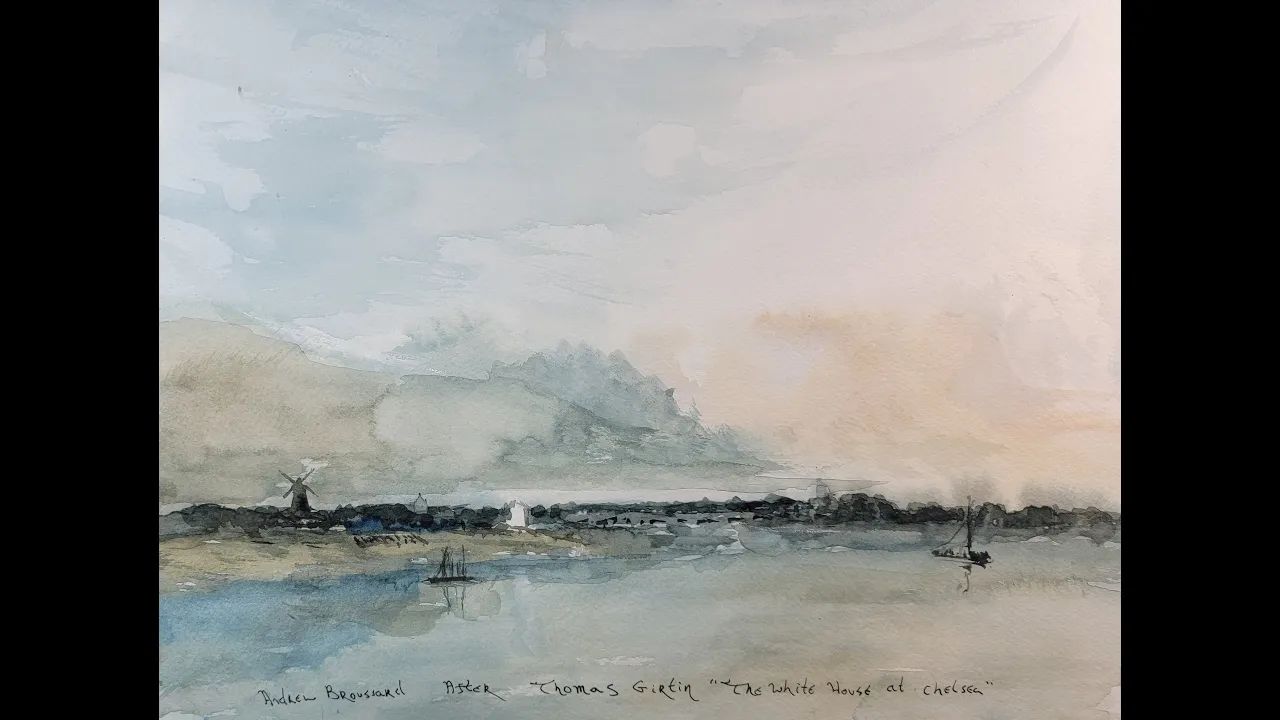
Master Study Sketch: Watercolor Techniques in Thomas Girtin's 'The White House at Chelsea'
@AndrewBroussardWatercolors
603 views•2022-05-08

12:54
Triumph of Orthodoxy Icon: Byzantine Art & History Explained
@BenCallan
2.1K views•2024-08-06

9:49
FastAPI vs Flask vs Django: Choosing the Right Python Web Framework
@TechWithTim
302.5K views•2024-05-26

1:42
Game of Thrones Opening Credits: A Cinematic Analysis
@gameofthrones
46.3M views•2011-04-18
Related Study Plans & Knowledge Roadmaps
Structured learning paths in General & Interdisciplinary Studies
general-studies
Elevator Engineering: History, Physics & Cities
01From Hoists to Safety Brakes: The Dawn of Vertical Lift
02Hydraulic vs. Traction: The Engineering Physics of Elevators
03Modern Speed, Safety, and Algorithms
+ 2 more learning modules
12h5 modules
Explore Roadmap
general-studies
Rubber: Material Science, History & Geopolitics
01Origins of Natural Rubber & Mesoamerican History
02The Chemistry of Natural Rubber & Vulcanization
03The Geopolitics of the Rubber Boom & Colonization
+ 2 more learning modules
12h5 modules
Explore Roadmap
general-studies
Containerization: Evolution, Logistics & Trade
01Ancient Trade & Bulk Cargo: Amphorae to Barrels
02The Industrial Revolution & Cardboard Packaging
03The Containerization Revolution: Malcom McLean
+ 2 more learning modules
12h5 modules
Explore Roadmap
general-studies
Textile Tech: Evolution, Labor & Global Impact
01Pre-Industrial Textiles: Handloom & Cottage Industry
02Mechanization: The Spinning Jenny to the Power Loom
03The Factory System & Global Labor Transformation
+ 2 more learning modules
10h5 modules
Explore Roadmap